
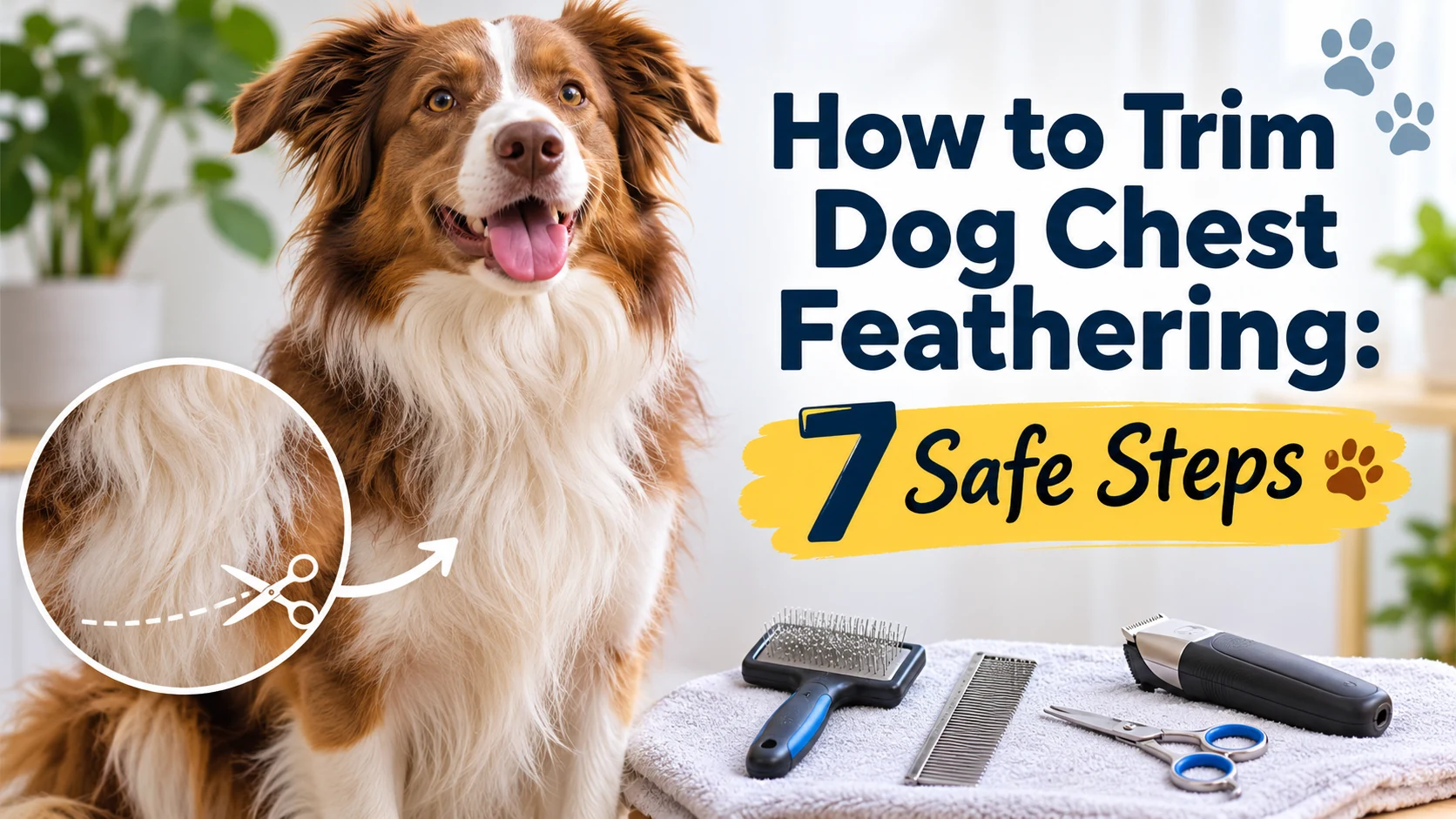
Quick Answer
To trim dog chest feathering, brush and fully detangle the coat, identify only the loose ends that need shaping, then make small, careful trims with appropriate grooming scissors while your dog stands calmly. Follow the coat’s natural outline rather than cutting it short. Do not use scissors on tight mats or near skin you cannot clearly see.
Long chest feathering gives many dogs their distinctive fluffy front, but the hair can become uneven, collect debris, or tangle where a collar or harness rubs. A light tidy-up can help without removing the natural shape of the coat.
The important distinction is between trimming free-hanging hair and removing a mat close to the skin. The first may be manageable for a calm dog and a prepared owner; the second is best left to a qualified groomer or veterinarian.
What Is Dog Chest Feathering?
Chest feathering is the longer hair that hangs from the front of a dog’s neck and chest. It is sometimes called the chest bib or ruff. It is especially noticeable on many long-coated dogs, although its texture, density, and natural outline vary widely.
Not every fluffy chest needs cutting. If the feathering is clean, comfortable, and easy to comb, brushing may be enough. Consider a small trim when loose ends look irregular or catch dirt. If the coat is double-coated, avoid shaving the chest simply to make it look flatter; ask a groomer how best to maintain that particular coat.
Which Tools Are Safest for Trimming Chest Feathering?
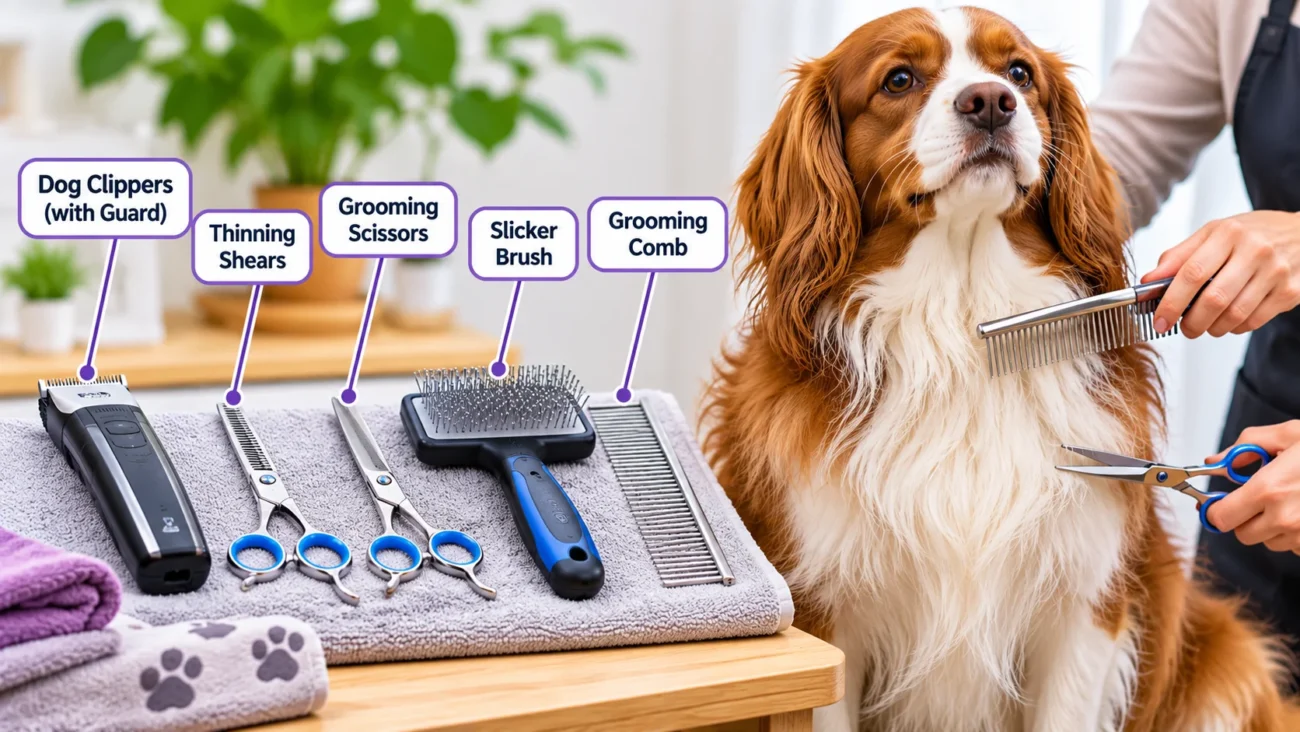
Prepare the coat before introducing scissors. Use tools appropriate to your dog’s hair type and keep the session short.
- Suitable brush: Loosens surface tangles without excessive pulling.
- Wide-tooth and finer comb: Helps check whether the hair is free of tangles, including at the base of the chest.
- Dog-grooming scissors with rounded tips: For modest shaping of clearly visible, free-hanging hair when you know how to handle them safely.
- Thinning shears: Optional for someone already comfortable using them; they can soften a hard trim line but can still injure skin.
- Non-slip surface, good lighting, and treats: Help the dog remain steady and comfortable.
Do not use ordinary household scissors or try to work through dense mats. The American Kennel Club’s home-grooming guidance emphasizes using sharp grooming tools only with appropriate instruction, especially around sensitive areas.
How to Trim Dog Chest Feathering in 7 Safe Steps
These steps are for a small cosmetic trim of untangled outer hair, not a close cut or mat removal. If your dog will not remain still or you cannot clearly distinguish hair from skin, stop and use a professional groomer.
1. Set up a calm grooming space
Choose a stable, non-slip surface with bright light. Have your dog stand or sit naturally rather than forcing the neck upward. Give the dog a chance to sniff the brush and settle. If you need someone to help, they should calmly reward the dog, not restrain a struggling animal.
2. Brush the chest in the direction of hair growth
Work gently from the outer ends toward the coat’s base, separating small sections if necessary. Avoid dragging a brush through resistant knots. Regular brushing helps prevent mats and gives you a clearer picture of the true chest shape, as explained in the ASPCA’s dog-grooming tips.
3. Check underneath for hidden tangles and skin problems
Part the hair with your fingers and inspect the base of the chest, lower neck, and the area beneath harness straps. Look for knots, redness, sore spots, or skin folds hidden in the coat. Only continue if the area is comfortable and the hair can be combed freely.
4. Decide what actually needs trimming
Let the brushed hair fall naturally. Find a few flyaway ends or an uneven edge rather than trying to create a completely new chest silhouette. The aim is to preserve the dog’s natural feathering, not to make the chest uniformly short.
5. Trim tiny amounts from clearly visible ends
With your dog stationary, hold a small section of loose feathering away from the body and make minimal cuts only to ends that are clearly separated from skin. Keep scissor tips directed away from the dog’s body. Do not slide blades down toward the throat, armpits, or chest folds. Pause immediately if the dog turns, flinches, or moves.
6. Blend the outline instead of cutting a straight shelf
Comb the hair back into its natural fall. If an obvious step remains, consider only a few additional tiny adjustments to loose ends. Experienced handlers may use thinning shears for subtle blending, but beginners should leave a slightly uneven natural edge rather than risk overcutting.
7. Check comfort and stop early
Brush the chest once more and view it from the front and both sides. Make sure the hair lies comfortably under the collar or harness and that nothing pulls when your dog moves. Reward your dog, inspect for any irritation, and finish the session. You can always tidy a little more another day.
Safety warning
Never cut tight chest mats with scissors. A mat can pull skin into the tangled hair, making a serious cut possible even when the blades appear to be away from the body. Ask a professional groomer or veterinarian to remove close-to-skin mats safely.
How Much Chest Feathering Should You Remove?
For a routine tidy-up, remove as little as possible. There is no universal length that suits every dog: coat type, natural silhouette, season, and the dog’s comfort all matter. If the feathering is healthy and not causing practical problems, leave most of it intact.
- Long, flowing feathering: Target only stray ends while keeping the natural outline.
- Dense, double-coated chest: Prioritize brushing and removal of loose undercoat with coat-appropriate tools; avoid close shaving for appearance alone.
- Hair rubbing under a harness: Check harness fit and untangle the coat first. A haircut alone will not fix a poorly fitting harness.
- Previously overtrimmed chest: Let it grow out while maintaining a gentle brushing routine.
What Mistakes Should You Avoid?
The most common trouble comes from trying to fix too much hair at once. Small grooming sessions are generally easier to control than a rushed makeover.
- Cutting before combing: Hidden tangles can make the hair appear longer or shorter than it really is.
- Using scissors to remove mats: Skin can be hidden inside the knot and injured by a sudden movement.
- Trimming against the skin: This increases the chance of nicking folds, especially under the neck.
- Taking off too much: A short, blunt line may look unnatural and cannot be quickly corrected.
- Continuing when the dog resists: Stress and sudden movement make cutting tools unsafe.
How Can You Keep Chest Feathering Neat Between Trims?
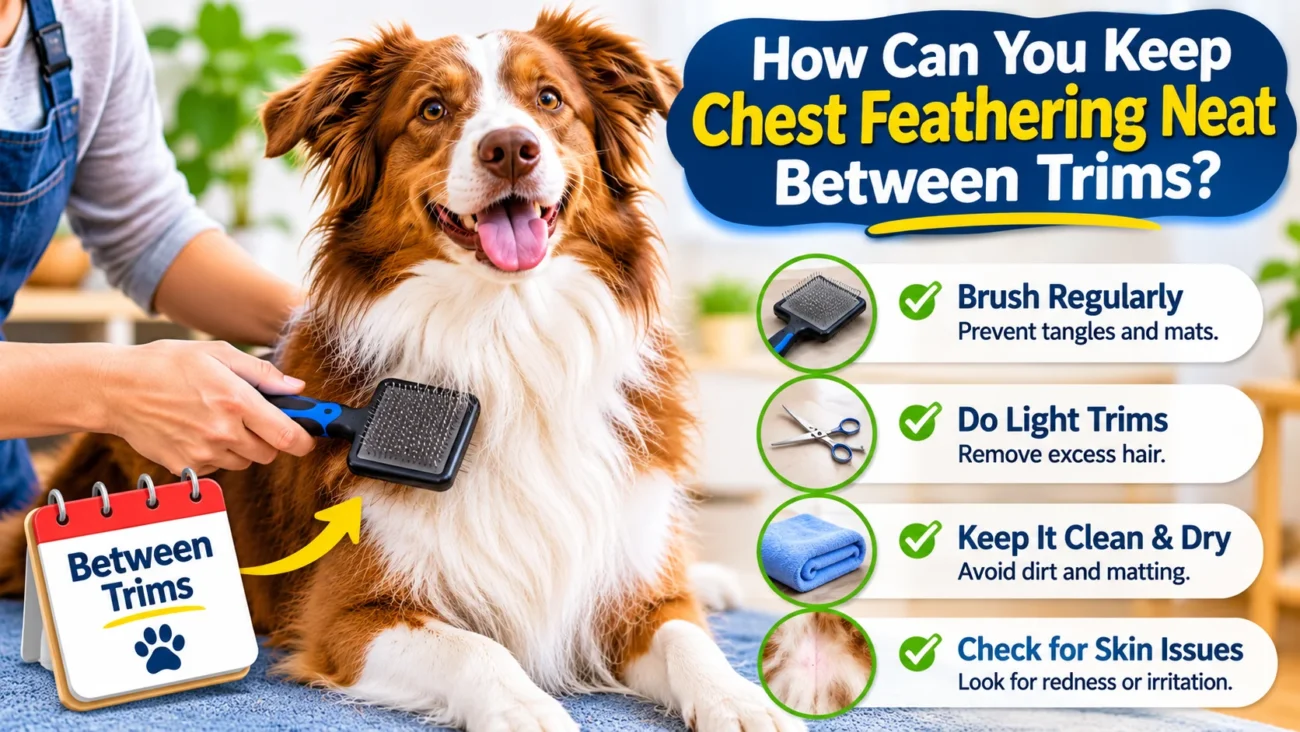
Consistent brushing usually matters more than frequent cutting. Check the lower neck and harness-contact areas whenever you brush, gently remove debris, and make sure the coat is fully dry after washing before assessing its length.
The ideal brushing schedule depends on coat length, density, and how quickly the hair tangles. The RSPCA’s guidance on brushing dogs recommends working in the direction of hair growth and stopping if grooming causes distress.
When Should a Groomer or Veterinarian Handle the Chest?
Use a professional groomer when the chest has dense or close-to-skin mats, the dog’s outline needs substantial reshaping, or you cannot safely handle the scissors around a moving dog. A veterinarian should assess areas with pain, inflammation, wounds, discharge, or suspected skin disease before cosmetic grooming continues.
The ASPCA’s advice on matted coats specifically warns against cutting mats with scissors because a pet may move suddenly and be badly injured.
Frequently Asked Questions
Can I trim chest feathering without scissors?
Yes. If the hair is simply fluffy or untidy, brushing and combing may provide enough improvement without any cutting.
Should I trim chest feathering when it is wet?
For a light home tidy-up, use clean, fully dry, detangled hair so you can judge the natural outline. Wet hair can lie differently and make the final length harder to assess.
Can I use clippers on my dog’s chest bib?
Only when appropriate for the coat and handled by someone trained to use them. A close shave is usually unnecessary for a simple feathering tidy-up; consult a groomer before clipping a double-coated chest.
How often does chest feathering need trimming?
There is no fixed schedule. Trim only when loose ends genuinely need tidying; many dogs benefit more from regular brushing than frequent haircuts.
Why does the chest hair tangle around a harness?
Friction and movement can encourage knots where the harness contacts long hair. Check the fit, brush the contact areas, and ask a groomer for help if tangles become tight.
What if my dog will not stay still for a chest trim?
Stop using cutting tools. Practice short, reward-based brushing sessions and seek a professional groomer if the dog remains uncomfortable or cannot be handled safely.
Final Thoughts
Trimming dog chest feathering should be a modest finishing touch, not a drastic cut. Brush first, check the skin, shape only a few visible loose ends, and stop if your dog is uneasy. For mats, sensitive areas, or major shaping, professional grooming is the safer choice.


