

Quick Answer
To trim dog belly hair safely, first brush and inspect the coat, then use a clean, pet-safe clipper with a suitable guard on loose, unmatted hair. Keep the skin flat, avoid nipples and genital areas, and work in short strokes without pressing the blade into the skin. Stop whenever your dog becomes uncomfortable. The VCA grooming guidance recommends professional help for difficult matting.
7 Quick Steps
- Prepare your tools: Clean the clipper, fit a suitable guard, and provide good lighting.
- Calm your dog: Practice gentle handling and reward relaxed behavior.
- Inspect the belly: Check for nipples, folds, redness, sores, and mats.
- Brush the hair: Remove loose tangles without pulling the skin.
- Trim carefully: Make gentle, short passes over safe, flat areas.
- Blend the edges: Leave sensitive spots untouched and avoid an excessively close shave.
- Check the skin: Remove loose hair and watch for irritation.
Important Safety Tip
- Never cut through a tight mat with scissors. Ask a trained groomer or veterinarian to handle close-to-skin matting.
Learning how to trim dog belly hair can make everyday grooming easier, especially for long-haired dogs. The challenge is protecting delicate skin while keeping the coat comfortable and tidy.
I recommend treating belly grooming as a gentle maintenance task rather than a close shaving session. This guide explains the equipment, techniques, warning signs, and mistakes worth avoiding.
What Does Trimming a Dog’s Belly Mean?
Trimming a dog’s belly means shortening excess hair along the underside of the abdomen while protecting sensitive skin. The goal is to improve coat manageability without removing more fur than necessary.
A belly trim differs from a full-body haircut because the abdominal area contains skin folds, nipples, and nearby genital structures. Those features make careful positioning essential.
- Maintenance trim: Shortens long hair that collects dirt or becomes tangled.
- Sanitary trim: Removes selected excess hair near areas exposed to urine or feces.
- Full belly clip: Shortens a broader area and usually requires professional judgment.
- Medical clipping: Removes hair for veterinary care and should follow veterinary instructions.
Not every dog needs its belly trimmed. Dogs with naturally short, clean coats often benefit more from gentle brushing and regular skin checks.
Should You Trim Your Dog’s Belly Hair?
You should consider a belly trim when excess hair repeatedly traps dirt, tangles, or makes hygiene difficult. Avoid trimming merely because the hair looks long.
The right choice depends on coat type, skin condition, and your dog’s grooming tolerance. A trained groomer can help determine whether trimming is appropriate.
Signs a Belly Trim May Help
- Frequent tangles: Long abdominal hair knots during everyday activity.
- Dirty underside: Mud or outdoor debris repeatedly clings to the coat.
- Urine contamination: Excess hair near the urinary area becomes soiled.
- Uneven coat: Loose hanging hair catches on objects or brushes the ground.
- Maintenance problems: Ordinary brushing no longer keeps loose hair manageable.
When Should You Avoid Trimming?
Do not clip over inflamed skin, suspicious lumps, wounds, or painful areas. Arrange a veterinary examination before grooming those locations.
Stop if your dog repeatedly pulls away, snaps, trembles, or becomes distressed. Forcing the trim increases the chance of accidental injury.
- Open wounds, swelling, or bleeding
- Severe redness or unexplained rashes
- Tight mats attached close to the skin
- Unusual lumps or painful abdominal areas
- Recent surgery or healing incisions
For double-coated dogs, unnecessary clipping can alter the coat’s appearance and function. Ask a knowledgeable groomer before removing a substantial amount of undercoat.
Which Tools Are Safest for Trimming Dog Belly Hair?
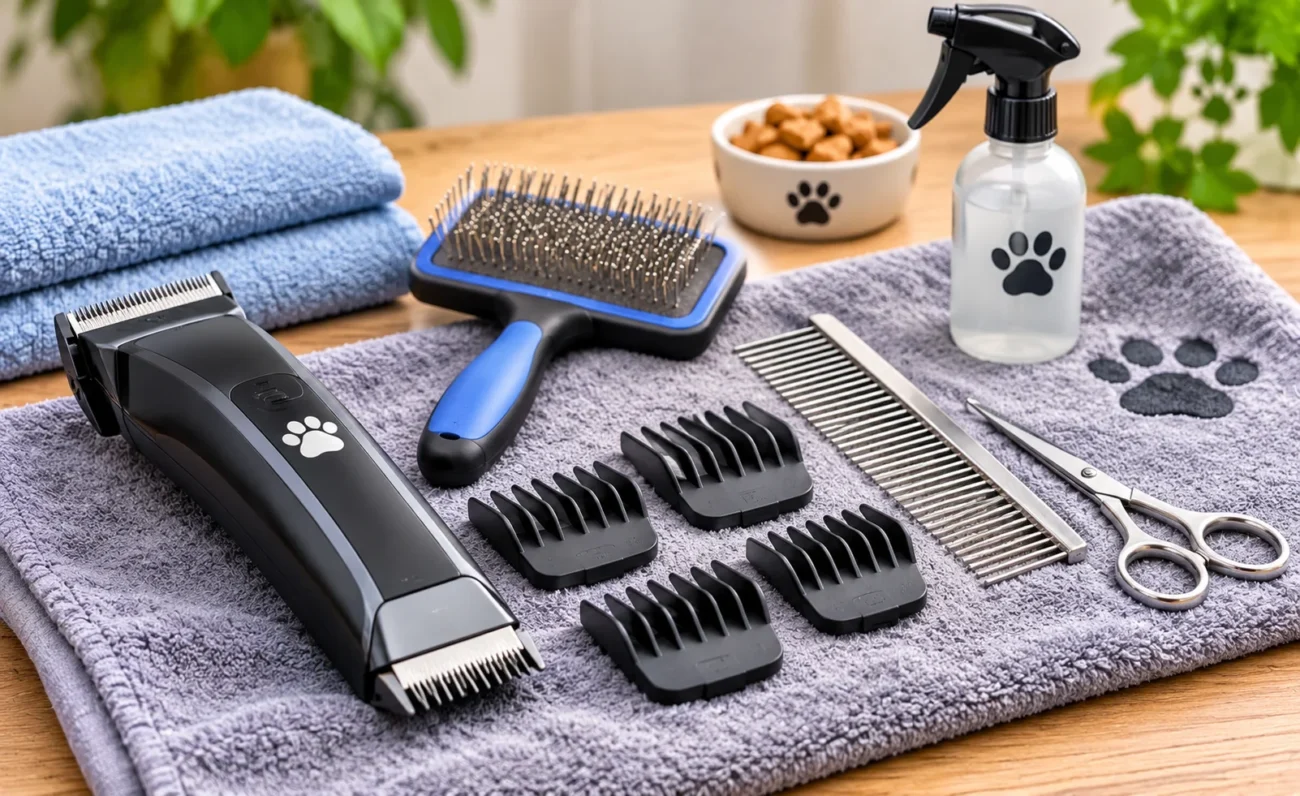
A suitable pet clipper, correctly fitted guide comb, gentle brush, and metal comb are useful for routine belly grooming. Tool control matters more than the number of accessories.
Clippers designed for pets offer specialized blades and attachments for animal coats. However, even professional equipment can cause cuts or irritation when used incorrectly.
Essential Grooming Equipment
- Pet grooming clipper: Choose a manageable, properly maintained model with appropriate blade options.
- Guide comb: Maintains a longer cutting length when compatible with the clipper and coat.
- Soft slicker brush: Gently separates loose hair and minor tangles.
- Metal grooming comb: Checks whether loose sections are free of knots.
- Non-slip surface: Helps prevent sudden slipping during grooming.
- Small treats: Reward calm handling and positive grooming behavior.
- Clean towel: Removes loose trimmed hair and surface dirt.
Dog Belly Grooming Tools Compared
| Tool | Best Use | Main Caution |
|---|---|---|
| Guarded pet clipper | Shortening loose, unmatted belly hair | Guards do not prevent every nick |
| Small detail trimmer | Controlled trimming by a trained handler | Small blades can still catch skin |
| Slicker brush | Separating loose tangles | Excess pressure can irritate skin |
| Metal comb | Checking for hidden knots | Never force through mats |
| Grooming scissors | Professional finishing away from skin | Unsuitable for close-to-skin belly mats |
For beginners, I favor leaving more coat length rather than aiming for a close finish. This gives greater room for error, although no cutting attachment eliminates injury risk.
Avoid household scissors around abdominal folds. According to American Kennel Club home-grooming guidance, sensitive-area clipping requires proper training.
How to Trim Dog Belly Hair in 7 Safe Steps
Start with a calm dog, a comfortable position, and a clear view of the belly. If you have never used clippers near sensitive skin, get hands-on guidance from a professional first.
These seven steps are intended for routine maintenance on healthy, accessible, unmatted coat. They are not instructions for removing severe mats or performing medical clipping.
Step 1: Prepare Your Grooming Area
Choose a quiet room with bright lighting and a stable, non-slip surface. Keep the clipper, comb, towel, and treats within easy reach.
Inspect your clipper before turning it on. Confirm the blade is clean, properly attached, lubricated according to its manual, and cool.
- Remove distractions from the room.
- Fit an appropriate guide comb.
- Check that cords cannot become tangled.
- Keep the floor clear and dry.
- Arrange a second adult to help only if your dog accepts gentle assistance.
Step 2: Help Your Dog Feel Comfortable
Let your dog investigate the switched-off clipper before using it. Reward relaxed behavior with a small treat and gentle praise.
Next, briefly turn the clipper on at a comfortable distance. Stop and try another day if the noise triggers persistent fear.
- Practice gentle belly handling without cutting hair.
- Reward brief moments of stillness.
- Introduce the clipper sound gradually.
- Keep early sessions short.
Never force your dog onto its back. Many dogs feel safer standing naturally while a trained handler provides gentle support.
Step 3: Inspect the Belly and Identify Sensitive Areas
Part the hair and inspect the skin before cutting anything. Find the nipples, skin folds, genitals, and any unusual spots.
Remember that male and female dogs both have nipples. Long hair can conceal these small structures surprisingly well.
- Identify each visible nipple.
- Look for folds that could catch in a blade.
- Check the skin for redness or tenderness.
- Locate tight knots and matted sections.
- Leave uncertain or sensitive areas untrimmed.
Never pass a clipper blindly through thick hair. If you cannot clearly see the skin and safely control the tool, stop.
Step 4: Brush and Detangle the Coat
Gently brush the belly hair to remove loose debris and surface tangles. Support the coat without pulling tightly against the skin.
Use a metal comb to identify sections that move freely. A comb that repeatedly catches may indicate matting that requires professional attention.
- Begin at the ends of longer hair.
- Work toward the roots gradually.
- Use light pressure around sensitive skin.
- Stop when brushing causes pain or resistance.
Do not cut beneath a mat with scissors. VCA’s coat-care safety advice warns that doing so risks cutting the skin.
Step 5: Trim Only Safe, Accessible Belly Hair
Begin on a clear, flat section of healthy skin where the coat is loose and unmatted. Follow your clipper manufacturer’s instructions for blade angle and guide-comb use.
Use gentle, controlled strokes in the natural direction of hair growth. Avoid pressing downward or repeatedly passing over the same spot.
- Keep the skin supported and free of folds.
- Trim only where you have a clear view.
- Keep the cutting head away from nipples.
- Do not clip directly across genital structures.
- Pause frequently to check blade temperature.
- Stop immediately if your dog moves unexpectedly.
I prefer a gradual trim with several visual checks over trying to finish in one continuous pass. Maintaining control is more important than removing every uneven hair.
Step 6: Blend the Hair Without Shaving Too Closely
Once the excess hair is shorter, inspect the result before making further passes. A practical maintenance trim does not need a perfectly uniform finish.
Leave more length wherever skin folds, nipples, or poor visibility make trimming difficult. Ask a professional groomer to handle precision work around these structures.
- Look for obvious long tufts on safe, flat areas.
- Use the same longer guard when practical.
- Avoid shaving to bare skin for cosmetic reasons.
- Do not chase isolated hairs near sensitive anatomy.
Be especially cautious with loose abdominal skin. Even a minor movement can bring a fold into contact with the cutting blade.
Step 7: Clean the Area and Check for Irritation
Remove loose hair with a soft, clean towel. Inspect the skin for redness, scratches, or signs of discomfort.
Reward your dog for cooperating and end the session calmly. Clean and maintain your grooming equipment according to its instructions.
- Check for accidental nicks or unusual redness.
- Remove loose fur without vigorous rubbing.
- Clean and dry the clipper attachments.
- Monitor excessive licking or scratching afterward.
- Contact your veterinarian if the skin appears injured or painful.
A short, successful grooming session is better than an extended stressful one. You can leave cosmetic finishing to a qualified groomer.
How Short Should You Trim a Dog’s Belly Hair?
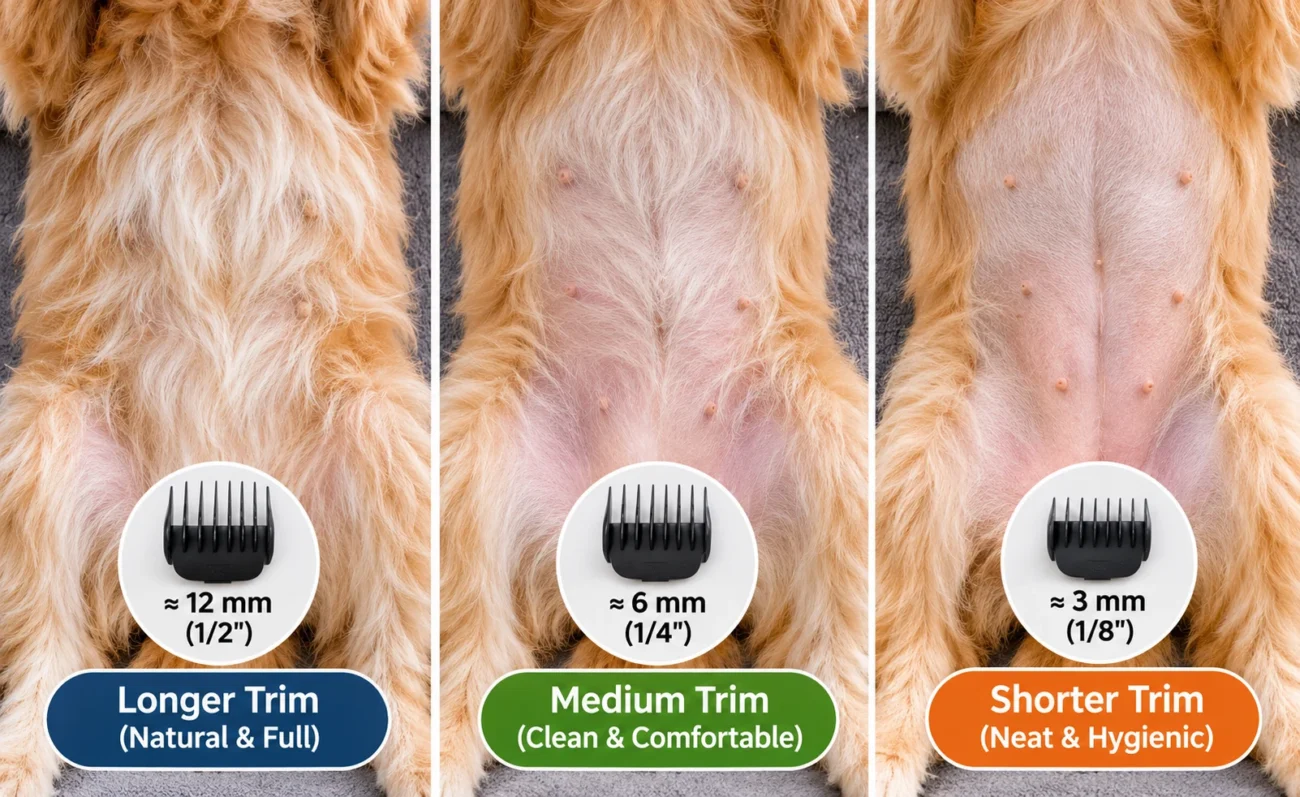
There is no single ideal belly-hair length for every dog. Coat texture, skin sensitivity, hygiene needs, and grooming experience all influence the safest choice.
For routine home maintenance, retaining some coat length is usually more sensible than a close shave. Use a suitable guard only when the coat is unmatted and the attachment operates correctly.
Does Blade Size Matter?
Yes. Clipper blade numbers refer to different cutting lengths, and higher blade numbers generally leave less hair.
For example, Wahl lists its adjustable 5-in-1 blades with the following approximate lengths:
| Blade Setting | Approximate Hair Remaining |
|---|---|
| #9 | 2 mm |
| #10 | 1.8 mm |
| #15 | 1.5 mm |
| #30 | 0.8 mm |
| #40 | 0.6 mm |
These measurements describe the manufacturer’s blade settings, not recommended belly-trimming lengths. Very short settings can leave sensitive skin more exposed.
Compatible guide combs can leave considerably longer hair. Check your exact clipper instructions and obtain professional training before using bare blades near the abdomen.
What Mistakes Should You Avoid When Trimming a Dog’s Belly?
The most serious mistakes involve poor visibility, rushed cutting, and inadequate control of skin folds. Even calm dogs may move suddenly during belly grooming.
Preventing an injury matters more than achieving a perfect haircut. Watch for these common problems:
- Using scissors on mats: Trapped skin can be accidentally cut.
- Clipping without inspection: Hidden nipples and lumps may be injured.
- Using a hot blade: Heated metal can irritate or burn the skin.
- Pressing too firmly: Excess pressure increases discomfort and injury risk.
- Trimming a moving dog: Sudden movements can cause accidental cuts.
- Shaving too closely: Sensitive skin may become irritated.
- Ignoring body language: Persistent stress can make future grooming harder.
The AKC professional grooming standards address clipper sensitivity, burns, tool selection, and humane handling. These principles also matter during home grooming.
How Should You Trim Different Types of Dog Coats?
Belly-grooming methods should reflect your dog’s coat type rather than following one universal trimming pattern. Some coats need regular shortening, while others need little cutting.
Long-Haired and Curly-Coated Dogs
Dogs with growing or curly coats may develop tangles along the underside. Regular brushing and appropriately scheduled professional grooming can reduce matting.
Examples include Poodles, Bichon Frises, and many long-coated companion breeds. Individual grooming needs still vary.
Double-Coated Dogs
Double-coated breeds often benefit from brushing, undercoat care, and targeted hygiene maintenance rather than broad shaving. Their coat structure deserves special consideration.
For breeds such as Golden Retrievers and German Shepherds, consult a groomer before significantly shortening the belly coat. Unnecessary shaving may affect coat regrowth and appearance.
Short-Haired Dogs
Short-haired dogs rarely need routine abdominal clipping unless a specific hygiene or veterinary concern exists. Washing, gentle brushing, and skin inspection are often sufficient.
Trimming for appearance alone may offer little practical benefit. When in doubt, leave healthy short hair untouched.
How Often Should You Trim Your Dog’s Belly?
There is no fixed trimming schedule suitable for every dog. Check the belly regularly and trim only when excess hair becomes difficult to maintain.
Coat growth, outdoor activity, and comfort determine how often attention is needed. A groomer can help establish an individual schedule.
- Fast-growing coats: Check regularly for new tangles and overgrowth.
- Long, feathered coats: Monitor dirt collection and loose knots.
- Double coats: Prioritize brushing over routine clipping.
- Short coats: Trim only when there is a clear need.
- Sensitive skin: Ask your veterinarian before establishing a clipping routine.
Do not assume frequent trimming is automatically better. Regular skin checks and sensible brushing often prevent bigger grooming problems.
When Should a Professional Groomer or Veterinarian Handle the Belly?
Professional help is the safer choice when the coat is tightly matted, the skin looks abnormal, or the dog resists handling. Sensitive abdominal clipping is a skill that benefits from supervised training.
Veterinary attention is particularly important if grooming reveals a painful lump, wound, infection, or unexplained swelling. Do not attempt to diagnose or treat these findings by shaving over them.
- Extensive matting near the skin
- Severe fear, biting, or inability to remain safely positioned
- Inflamed or infected skin
- Recent abdominal surgery
- Unexplained lumps, swelling, or pain
- Repeated irritation after previous grooming sessions
Dogs with painful hot spots may require veterinary treatment rather than routine grooming. VCA explains that treatment sometimes includes professional clipping and other medical care.
Leaving a difficult area untouched is a responsible decision. You can still maintain the rest of the coat through gentle, comfortable brushing.
Which Dog Grooming Clippers Are Worth Considering?
If your dog needs ongoing coat maintenance, a quality clipper can make grooming more manageable. Choose equipment based on handling comfort, blade maintenance, and the manufacturer’s intended uses.
The following two models are established pet-grooming clippers with adjustable blades. Their ratings below represent editorial suitability for their stated use cases, not verified customer-review scores or hands-on test results.
🏆 Versatile Grooming Pick
Wahl Bravura Lithium Cordless Clipper
★★★★☆ 4.5/5 editorial suitability
The Bravura offers an adjustable 5-in-1 blade, corded or cordless operation, and up to 90 minutes of runtime. I consider it a versatile choice for trained handlers who need controlled maintenance grooming, although sensitive belly areas still demand caution.
🔋 Removable-Battery Pick
Wahl Arco Cordless Animal Clipper
★★★★☆ 4.3/5 editorial suitability
The Arco features a 5-in-1 blade and two removable battery packs, each rated for up to 80 minutes of operation. I like the interchangeable-battery design for ongoing grooming tasks, provided the user has learned safe clipping technique.
These products are grooming tools, not substitutes for training. If you cannot safely see and control the cutting area, choose professional grooming instead.
Frequently Asked Questions About Trimming Dog Belly Hair
Can I trim my dog’s belly hair at home?
Yes, limited maintenance trimming may be possible at home when the skin is healthy, the hair is unmatted, and you have learned proper clipping technique. Use suitable pet-grooming equipment and avoid sensitive structures. If you are inexperienced, ask a professional groomer to demonstrate the process first.
Is it safe to shave a dog’s belly completely?
Completely shaving a dog’s belly is not usually necessary for routine hygiene. Very close clipping increases the importance of blade temperature, skin positioning, and correct technique. Consult a professional before removing hair close to nipples, folds, genitals, or irritated skin.
Can I use scissors to trim dog belly hair?
Scissors are particularly risky around loose abdominal skin and tight mats. A sudden movement can cause a serious cut. Avoid cutting close to the skin, and never attempt to remove tight matting with scissors. Professional grooming is safer for difficult areas.
Why is my dog’s belly red after grooming?
Redness after grooming can result from friction, clipper irritation, product sensitivity, or another skin problem. Stop further clipping and monitor your dog for pain, licking, or worsening irritation. Contact your veterinarian if redness persists, spreads, or accompanies wounds or discomfort.
Do all dogs need their belly hair trimmed?
No. Many dogs maintain a comfortable, clean belly without trimming. Long-haired dogs may need occasional maintenance, while short-haired breeds often need only brushing and inspection. Coat type, hygiene concerns, and veterinary advice should guide the decision.
Final Takeaway: Keep Your Dog’s Belly Trim Safe and Comfortable
Trimming a dog’s belly should focus on comfort, cleanliness, and careful handling rather than an extremely short haircut. Inspect the skin, groom only safe areas, and use properly maintained equipment.
Above all, respect your dog’s body language and avoid forcing the process. When mats, sensitive anatomy, or skin problems make trimming difficult, a professional groomer or veterinarian is the better choice.
My recommendation: Start with gentle brushing, learn safe clipper handling from a professional, and remove only the hair that truly needs attention. A comfortable dog is the best grooming result.


