
Quick Answer
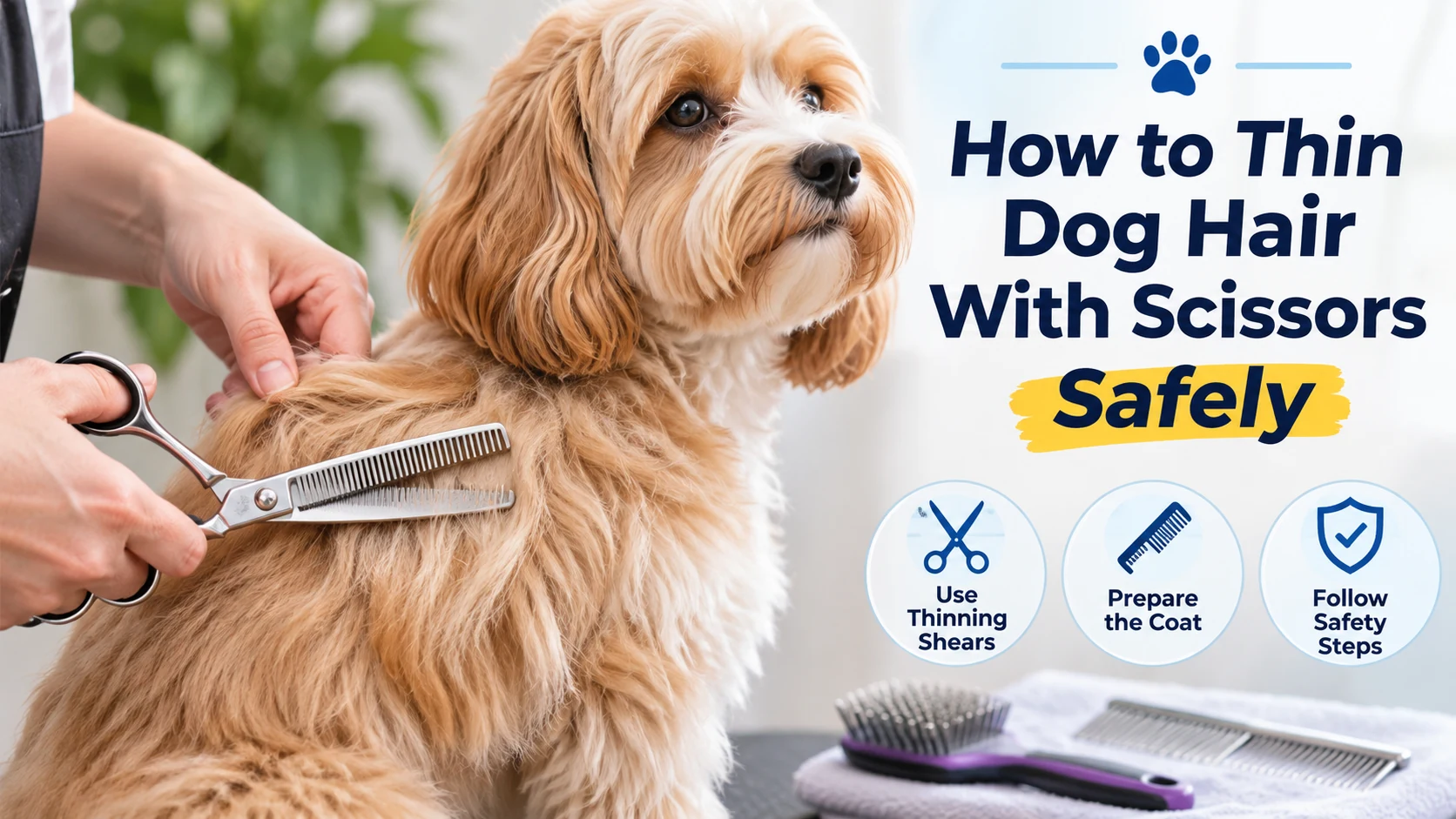
To thin dog hair with scissors, use dog-grooming thinning shears rather than ordinary straight scissors. Brush and comb the coat first, identify areas with excess bulk, and make small, controlled cuts through the outer lengths of the hair. Comb after each pass and stop before removing too much. Never cut into mats or work close to the skin, eyes, or other sensitive areas without professional instruction.
Thick or uneven dog hair can be difficult to manage, especially around the legs, chest, and longer feathered areas. Thinning scissors can create a softer, more natural-looking finish without cutting every hair to the same length.
However, not every coat benefits from thinning. The right method depends on whether your dog has continuously growing hair, a shedding double coat, a wiry coat, or naturally sparse fur.
This guide explains how to use thinning shears, where they are useful, and when brushing or professional grooming is the better option.
Can You Thin Dog Hair With Regular Scissors?
Regular scissors can shorten dog hair, but they are not the best tool for evenly reducing coat bulk. Straight scissors cut most or all of the hairs caught between their blades, creating a defined edge that can look blunt or uneven.
Thinning shears have one or two toothed blades. Their design cuts only some hairs during each closure, allowing the surrounding hair to retain more of its original length.
This makes thinning shears useful for:
- Softening visible lines left by a previous haircut.
- Blending longer hair into shorter areas.
- Reducing selected areas of excess bulk.
- Creating a natural finish on appropriate coat types.
- Refining feathering around the legs and body.
Thinning shears are still sharp cutting tools. Their toothed design does not make them safe to use against the skin or on a moving dog.
Which Scissors Work Best for Thinning Dog Hair?
The best choice for gentle thinning is usually a suitable pair of dog-grooming thinning or blending shears. Straight and curved scissors have different purposes and should not be treated as interchangeable tools.
| Scissor Type | Main Purpose | Main Limitation |
|---|---|---|
| Thinning shears | Reduce selected bulk and soften transitions. | Repeated cuts can create patchy areas. |
| Blending shears | Blend different lengths and soften scissor marks. | May remove more hair than expected. |
| Straight scissors | Shorten hair and create defined edges. | Can leave visible straight cutting lines. |
| Curved scissors | Shape rounded outlines. | Require careful control near body contours. |
Manufacturers sometimes use the terms “thinning” and “blending” differently. The actual tooth pattern and cutting action matter more than the product label.
For a beginner, a groomer can recommend an appropriate shear based on the dog’s coat and demonstrate how much hair it removes.
How to Prepare Your Dog Before Thinning the Coat
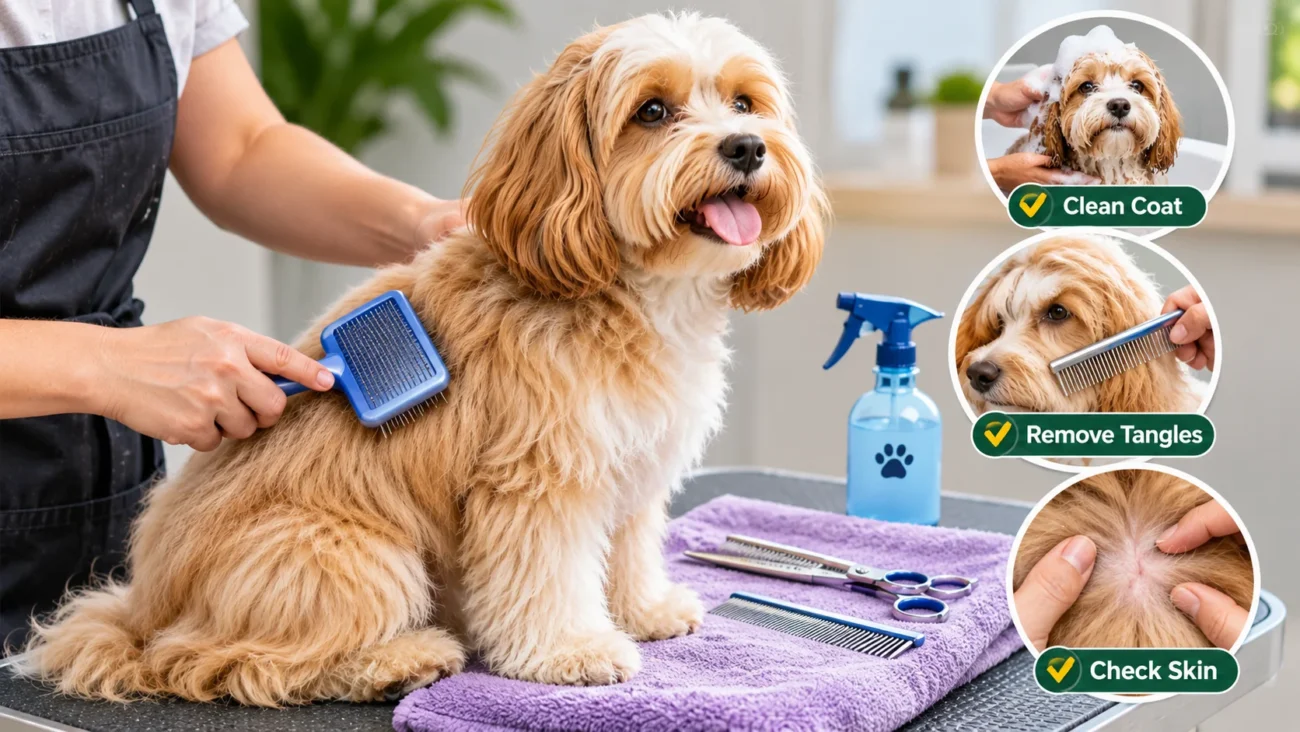
Proper preparation is essential because tangled, dirty, or damp hair can make scissor work unpredictable.
Brush and Comb Thoroughly
Use a brush suited to your dog’s coat, followed by a grooming comb to check for hidden tangles.
Pay attention to areas behind the ears, around the legs, and underneath the chest, where tangles may be difficult to see.
If the comb cannot move comfortably through an area, do not begin cutting there.
Check the Skin and Coat
Look for redness, tenderness, irritated patches, wounds, or unusually sparse areas. Avoid scissor work over any suspicious or uncomfortable area.
If the hair is naturally thin or has recently started falling out, thinning is inappropriate. A veterinarian should assess unexplained hair loss.
Choose a Stable Grooming Area
Use a nonslip surface with good lighting. Keep your dog comfortably supported and avoid placing them where they could jump or fall.
Let the dog see and smell the grooming tools before beginning. Reward calm behavior and use short sessions.
Grooming Tip
Start with a small, easily accessible section of loose outer coat where you can clearly see the hair and underlying skin. A successful short session is better than trying to finish an entire haircut while your dog becomes restless.
How to Thin Dog Hair With Scissors: Step-by-Step
Use this method only on a clean, dry, thoroughly detangled coat that is suitable for thinning. If you have not used grooming shears before, ask a professional groomer to demonstrate the technique first.
Step 1: Identify the Areas That Need Thinning
Examine the coat in its natural position and identify areas that appear noticeably bulkier than the surrounding hair.
Common candidates on suitable coats include longer leg furnishings, chest feathering, and transitions between trimmed and untrimmed sections.
Avoid thinning large portions of the body simply to make the coat lighter. This is especially important for double-coated breeds.
Step 2: Separate a Small Section of Hair
Use a comb to lift and separate a manageable section of clean hair.
Keep the section loose enough to see where it begins and ends. Position the comb between the cutting area and the skin when practical, but do not assume a comb eliminates injury risk.
Only cut hair that is clearly separated from the skin.
Step 3: Position the Thinning Shears Carefully
Hold the thinning shears so the blades work through the visible outer lengths rather than pointing toward the skin.
Follow the direction in which the hair naturally falls. The precise angle depends on the coat, the shear design, and the desired finish.
Keep your fingers and the dog’s skin outside the cutting path. Never insert the blade tips into a dense or tangled section where you cannot see what they may touch.
Step 4: Make One Gentle Cut
Close the shears once through the selected section without pulling or twisting the hair.
Begin near the outer portion of the coat, away from the skin. Avoid repeatedly closing the scissors at the same point.
A single conservative pass helps reveal how the specific coat responds before additional hair is removed.
Step 5: Comb the Hair and Check the Result
Comb the section in its natural growth direction to release the cut strands and evaluate the remaining coat.
Look for:
- A smooth transition between neighboring areas.
- No obvious holes or short patches.
- Enough remaining hair to preserve the natural coat shape.
- No pulling, discomfort, or skin irritation.
If the area already looks balanced, stop. More cutting does not automatically produce a better finish.
Step 6: Blend Only Where Necessary
If another section still appears bulky, repeat the process in a different area, working gradually.
Use fewer passes around transitions where long and short hair meet. This helps prevent sharp changes in density.
Do not try to correct every small difference by repeatedly cutting the same spot.
Step 7: Finish With a Full Comb-Through
Comb the treated areas again and allow the coat to settle naturally.
Inspect the overall shape from both sides. Remove loose cut hairs with a suitable brush and check the skin for any signs of discomfort.
Clean and store the grooming shears according to the manufacturer’s instructions.
Which Dog Coat Types Can Be Thinned Safely?
The suitability of thinning depends on coat structure, not simply how thick the hair looks.
| Coat Type | Recommended Approach |
|---|---|
| Curly or continuously growing coats | Selective thinning can help blend trimmed sections when coat condition permits. |
| Silky or long drop coats | Light blending may work, but excessive thinning can create visibly uneven ends. |
| Double coats | Prioritize appropriate brushing and loose-undercoat removal rather than widespread scissor thinning. |
| Wire coats | Consider coat-specific techniques such as hand stripping when preserving texture matters. |
| Short, smooth coats | Usually need brushing rather than thinning scissors. |
Some double-coated dogs have substantial undercoat that naturally sheds. Cutting that coat is different from removing loose, shed hair through appropriate brushing.
Likewise, hand stripping is a specialized approach used for certain wire-coated breeds. The American Kennel Club’s explanation of hand stripping describes why coat texture and grooming technique matter.
Where Should You Avoid Using Thinning Scissors?
Avoid using thinning scissors in areas where skin is difficult to distinguish from hair, where the dog moves unpredictably, or where sensitive structures could be injured.
Particular caution is necessary around:
- Eyes: Sudden head movements can bring the scissors dangerously close to the eye.
- Ears: Thin ear flaps can fold or become hidden inside longer hair.
- Armpits and groin: Loose skin and folds increase the risk of accidental cuts.
- Paw pads: Small spaces and sensitive skin make scissor work difficult.
- Matted areas: Tight mats may pull the skin into the tangled hair.
Safety Warning
Never use thinning shears or ordinary scissors to cut tightly matted hair close to your dog’s skin. Skin can be trapped inside the mat and accidentally cut. A qualified groomer or veterinarian can determine the safest removal method.
For additional home-grooming precautions, see the AKC’s home dog-grooming safety guidance.
What Mistakes Should You Avoid When Thinning Dog Hair?
Most poor thinning results come from removing too much hair, cutting without preparation, or using the wrong technique for the coat.
- Using ordinary household scissors: They may be poorly suited to grooming and can create uneven cuts.
- Cutting repeatedly in one location: This can create thin patches or holes in the coat.
- Working through tangles: Tangles can hide skin and cause the scissors to pull.
- Thinning too close to the roots: Short sections may become visible after the surrounding hair settles.
- Removing too much undercoat: This can interfere with the intended structure of some coats.
- Grooming a restless dog: Sudden movement increases the chance of injury.
Do not keep trimming simply because the hair still feels dense. Some coats are naturally designed to have substantial volume.
How Can You Make Thinned Dog Hair Look Natural?
A natural finish depends on gentle transitions, proper coat preparation, and preserving enough length and density to maintain the dog’s normal appearance.
Instead of cutting straight across a wide section, use thinning shears sparingly on the visible transition where the coat needs blending.
Comb after every small adjustment. If the hair looks uneven only because it is lying in different directions, brushing may correct the appearance without additional cutting.
Check the coat in normal lighting and from several angles before deciding whether another pass is necessary.
Key Insight
Thinning removes selected hairs to soften bulk or transitions. It is not the same as deshedding, which removes loose hair that is already being shed. Choosing the wrong method can create unnecessary coat damage or an uneven appearance.
How Often Should You Thin Your Dog’s Hair?
There is no universal thinning schedule. Frequency depends on the coat type, growth pattern, grooming style, and how quickly bulky areas return.
For dogs with continuously growing hair, thinning may occasionally be part of a routine haircut. Dogs with shedding double coats often benefit more from regular brushing than repeated thinning.
Inspect the coat before every session rather than thinning automatically on a fixed date.
If the hair remains balanced and manageable, additional thinning is unnecessary.
When Is Professional Grooming the Better Choice?
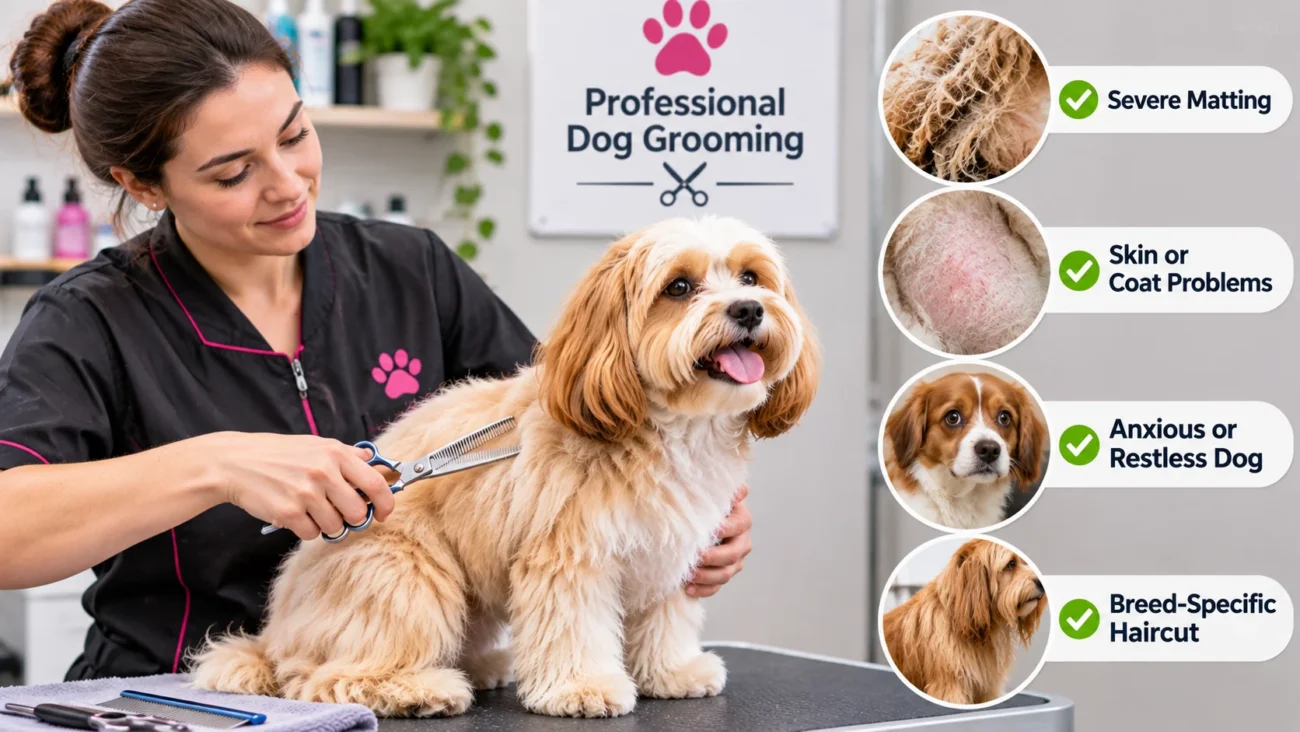
Professional grooming is preferable when the coat requires substantial reshaping, the dog cannot remain comfortably still, or the cutting area is close to sensitive skin.
Seek professional assistance if:
- The coat has extensive or tight matting.
- You cannot clearly see or separate the skin from the hair.
- Your dog becomes frightened, defensive, or highly restless.
- A breed-specific trim or specialized coat technique is needed.
- Previous thinning has left obvious uneven or sparse sections.
- You are unsure whether the coat should be thinned at all.
If you notice unexplained bald spots, redness, persistent scratching, or sudden hair loss, seek veterinary advice before attempting cosmetic grooming.
Frequently Asked Questions
Can thinning scissors damage a dog’s coat?
Yes. Excessive or poorly placed thinning can create uneven patches, remove too much protective hair, or alter the intended finish of certain coat types. Use them selectively and ask a groomer about coat-specific risks.
Can I use human thinning scissors on my dog?
Human thinning scissors are not necessarily appropriate for dog grooming. Blade design, handling, and performance may differ. Choose tools intended for canine coats and have a groomer demonstrate their safe use.
Should dog hair be wet or dry before thinning?
Dry, clean, detangled hair is generally easier to assess when blending or thinning because you can see how the coat naturally falls. Some professional techniques use different preparation methods.
Can thinning scissors help remove a dog’s shedding undercoat?
They are not a replacement for proper deshedding tools. Thinning shears cut hair, whereas suitable brushes and combs remove loose shed hair. For a double-coated dog, ask a groomer which brushing tools are appropriate.
What should I do if I accidentally thin one area too much?
Stop cutting that section. Comb the surrounding hair into its natural position and avoid trying to fix the patch by removing more hair. A groomer may be able to improve the outline while the shorter hair grows back.
Can I thin my dog’s hair if the coat is already sparse?
Usually not. Removing more hair from an already sparse coat can make the area look thinner. If hair loss is new, patchy, or accompanied by skin changes, arrange a veterinary assessment instead of additional trimming.
Final Takeaway
Thinning dog hair with scissors works best when the goal is to soften excess bulk or blend uneven lengths on a coat that is suitable for the technique.
Use proper grooming shears, prepare the coat thoroughly, and make only small adjustments while keeping the cutting blades away from the skin.
If the coat is matted, naturally sparse, heavily double-coated, or difficult to manage safely, brushing, veterinary assessment, or professional grooming may be more appropriate than thinning.


