
Quick Answer
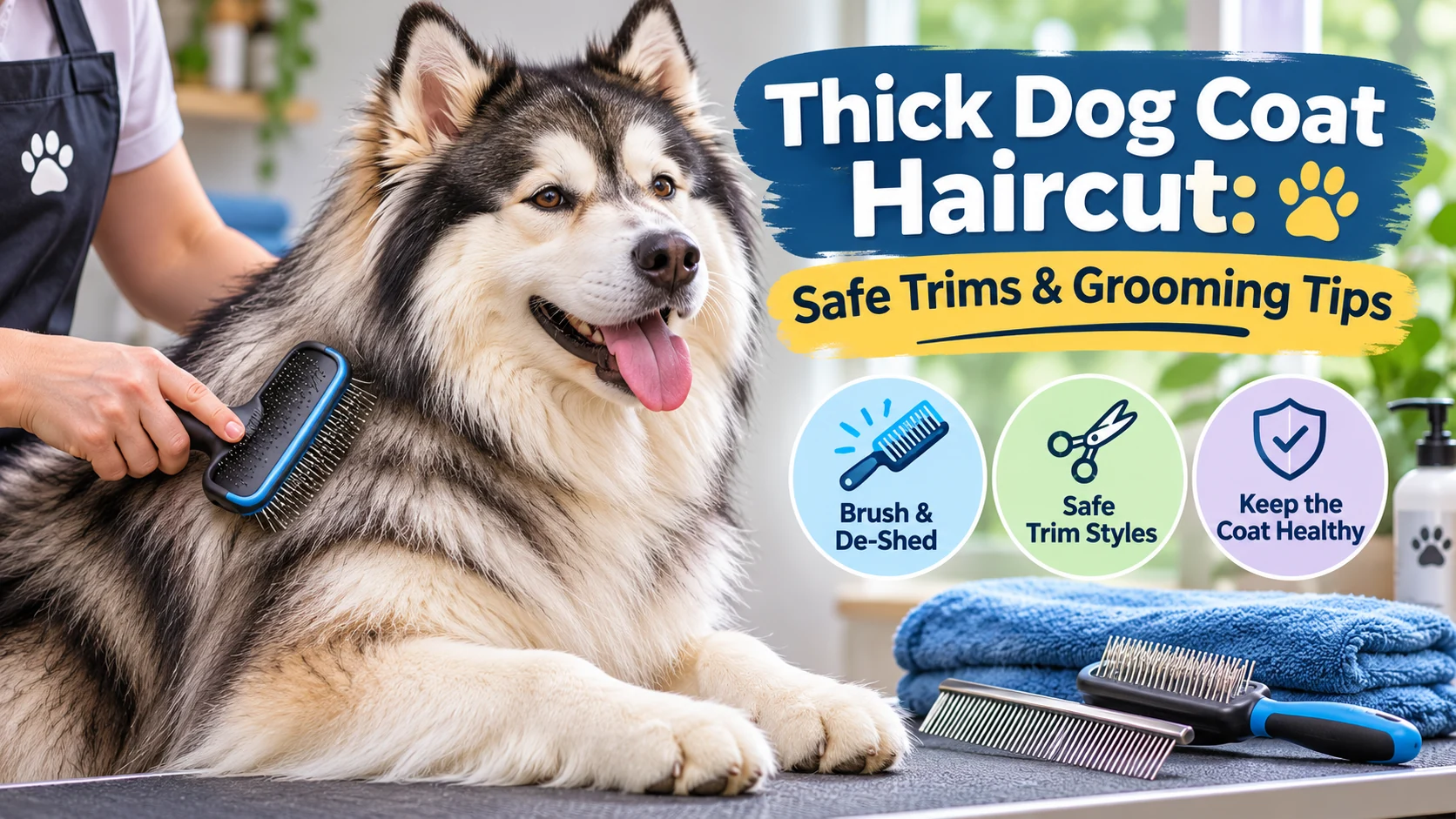
The safest thick dog coat haircut depends on the coat’s structure, not how fluffy it looks. Most double-coated dogs need thorough brushing, de-shedding, and perhaps a light outline or hygiene trim—not an all-over shave. Dogs with dense, continuously growing hair, such as many Poodles and curly-coated mixes, often benefit from regular, longer-length clips. Have a groomer assess tight mats or an uncertain coat type before cutting.
A thick coat can look overgrown even when the outer hair is doing exactly what it should. Cutting that hair may improve maintenance for one dog and create avoidable problems for another. Before choosing a style, identify the coat and decide whether the real issue is length, loose undercoat, tangles, or hygiene.
Does a Thick Dog Coat Actually Need a Haircut?
Not always. Thickness describes how much hair a dog has, but it does not tell you whether that hair needs regular clipping. A dense double coat sheds naturally; a dense curly or wavy coat may keep growing and need its length maintained.
Part the hair at the shoulder and look for a layer of shorter, soft, woolly hair beneath longer guard hairs. That suggests a double coat. A coat that grows into long curls or waves, with comparatively little loose hair shedding, may be a clipping coat. Mixed breeds can have combinations of these features, so appearances alone are not a reliable diagnosis.
Use this practical starting point before booking a haircut:
| Coat type | Common examples | Usually appropriate |
|---|---|---|
| Dense double coat | Husky, Samoyed, Pomeranian | De-shedding; limited tidying if needed |
| Feathered double coat | Golden Retriever, Australian Shepherd | Brush-out and light feather or outline trim |
| Dense, growing curly coat | Poodle; some curly-coated mixes | Scheduled clipping with a maintainable length |
| Unknown or mixed coat | Mixed-breed dogs | Coat assessment before deciding on clippers |
The important distinction is removing loose undercoat versus shortening growing hair. Both can make a dog look neater, but they solve different problems.
Which Haircut Styles Are Safest for Thick-Coated Dogs?
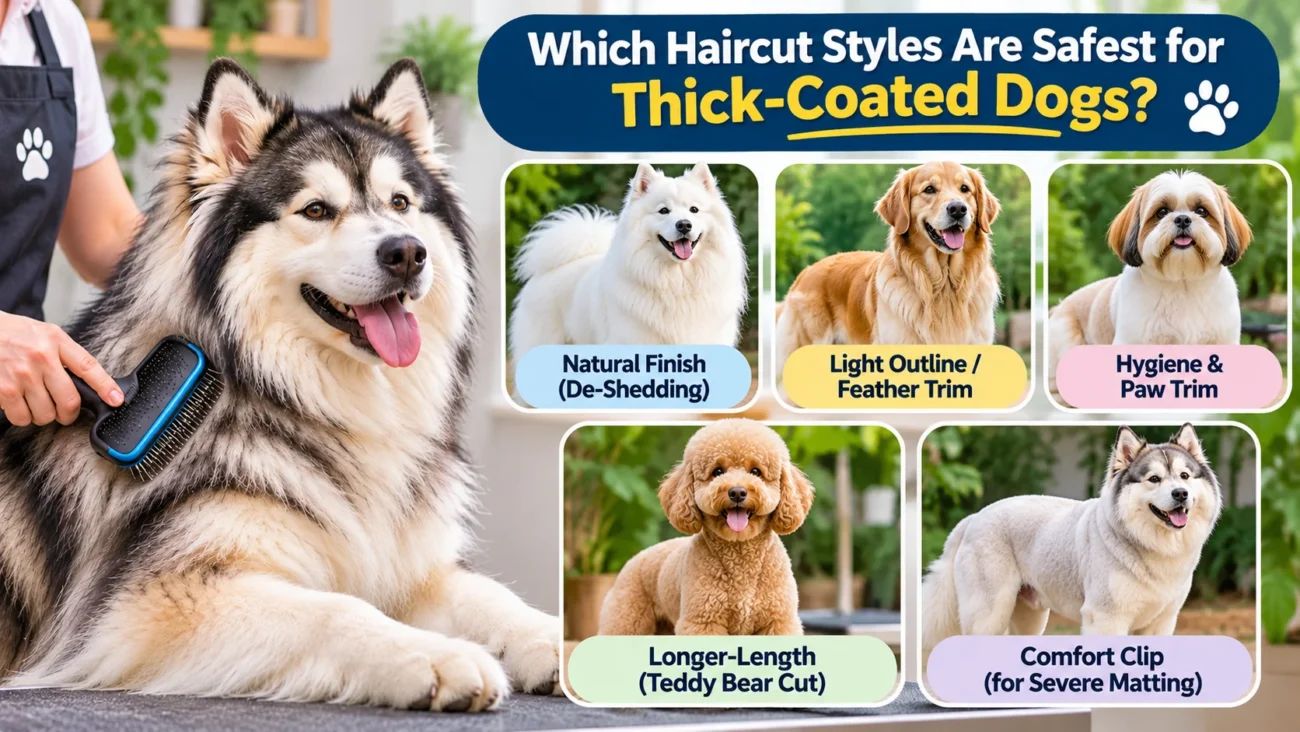
Choose the least invasive service that solves the dog’s actual problem. These options are more useful than selecting a style from a photograph without considering coat type.
1. Natural Finish With a De-Shedding Treatment
For Huskies, Samoyeds, and other heavy shedders, a bath, thorough drying, undercoat removal, and comb-through may provide the tidy appearance you want without shortening the protective outer coat. This is a grooming service rather than a haircut, but often the right answer to excess bulk.
2. Light Outline or Feather Trim
Some thick-coated dogs develop long, untidy feathering around their legs, chest, and hindquarters. A professional can lightly shape protruding ends while keeping the overall coat length and natural outline. Ask for a light outline trim, not a short body clip; the terms can be interpreted differently between salons.
3. Targeted Hygiene and Paw Trim
Hair that traps waste around the rear or bunches around paw pads may need localized trimming. This does not require shortening the whole body. Because paw pads, groin folds, and the area around the anus are easy to injure, let a trained groomer handle close work, especially with a wiggly dog.
4. Longer-Length Puppy or Teddy Bear Cut
For dense coats that require clipping, including many Poodles and some curly mixes, a longer, even body cut can reduce daily maintenance while preserving a soft shape. A rounded face or slightly fuller legs are optional. The name of the style does not specify the exact length, so show the groomer a picture and discuss how much brushing you can realistically do.
5. Comfort Clip for Severe Matting
If large areas are tightly felted against the skin, the safest result may be a short professional clip, even on a dog normally kept in a full coat. This is an exception based on welfare, not a recommended everyday style. The groomer should explain the condition and the likely result before proceeding.
Why Is Shaving a Thick Double Coat Usually Discouraged?
A double coat has a softer insulating undercoat and longer guard hairs that help shield the skin. Shaving cuts through both layers rather than simply removing loose hair. It can expose skin to more sunlight and may lead to uneven or delayed regrowth in some dogs.
The American Kennel Club’s double-coat grooming guidance generally advises against shaving these coats except when severe tangling and build-up make ordinary maintenance impractical. A veterinary procedure or another genuine medical need can also justify clipping.
Shaving does not stop shedding. It just makes shed hairs shorter. It is also not a dependable way to prevent overheating. Removing loose undercoat and managing the dog’s environment usually make more sense than stripping away its full outer coat.
Warning
Do not use a close shave simply because a dog looks hot or bulky. First confirm the coat type and check for impacted undercoat, matting, or a medical reason to clip.
How Do You Groom a Thick Coat Before Any Trimming?
For most dogs, the most valuable home task is a gentle, complete brush-out. Only work on a dog that is calm enough to remain comfortable, and stop if brushing causes pain or distress.
- Check the skin and coat. Part the hair around the ears, collar, armpits, tail base, groin, and hind legs. Look for tight knots, redness, sores, parasites, or tender patches. Do not pull at painful areas.
- Choose tools for the coat. A suitable slicker brush and metal comb help with long or curly coats. A gentle undercoat rake may help double coats; select a tool whose teeth do not scratch the skin.
- Brush in small sections. Lift a layer of hair, work lightly from the ends toward the roots, and move to the next section. This line-brushing approach helps reach loose hair hidden beneath a fluffy surface.
- Use a comb to check your work. A brush can glide across the top while leaving knots close to the skin. If a comb snags, return to gentle detangling rather than forcing it through.
- Bathe only when the coat is ready. Deal with manageable tangles first because bathing can tighten mats. Use dog-formulated shampoo, rinse thoroughly, and make sure the dense coat dries completely.
- Decide whether cutting is still necessary. Once the loose coat is removed, you may find that no haircut is needed. If shaping or clipping is still appropriate, describe the intended areas and length to your groomer.
The RSPCA’s dog-grooming guidance recommends regular, thorough care for double coats and gentle strokes that do not tug hair or scrape skin.
What if the Thick Coat Is Already Matted?
First distinguish a loose tangle from a tight mat. A small knot near the outer ends may separate with patient, gentle combing. A dense mat close to the skin, especially one that restricts movement or feels painful, needs professional assessment.
Never slide scissors underneath a mat. Dog skin can be pulled up into tangled hair and accidentally cut. The ASPCA’s advice on matted coats specifically warns against cutting mats out with scissors.
Tell the groomer where you found the mats and whether your dog objects to touching them. When substantial matting makes prolonged brushing painful, a carefully planned clip may be kinder. If you see open sores, swelling, discharge, or significant skin pain, arrange veterinary care rather than a routine cosmetic appointment.
How Often Should Thick-Coated Dogs Be Groomed?
A fixed haircut schedule will not work for every thick coat. Use coat condition as the guide:
- Heavy-shedding double coats: check and brush regularly, often several times a week and more frequently during heavy shedding. Professional de-shedding can help when home brushing no longer keeps up.
- Long feathered coats: inspect friction points frequently; arrange a tidy trim when feathering interferes with cleanliness or becomes difficult to manage.
- Dense curly or growing coats: comb frequently and arrange maintenance haircuts on a schedule agreed with your groomer, commonly around every four to eight weeks depending on length and matting tendency.
Reassess the routine after swimming, wet weather, coat changes, or an increase in tangles. If a comb no longer reaches the roots without catching, shorten the interval between grooming sessions.
What Should You Ask a Groomer for?
Explain the problem rather than just requesting a “summer cut.” A useful request might be: “Please assess whether this is a double coat. I’d like loose undercoat removed, with only a light paw, hygiene, and outline tidy if appropriate. Please check with me before any short body clipping.”
For a dense curly coat, explain your preferred body length, how much time you can spend brushing, and which areas mat first. Bring one clear reference photo, but accept that coat texture and condition may limit the exact result.
Ask what happens if severe mats are discovered during the appointment. Agreeing on that possibility in advance helps avoid a surprise shave and keeps the dog’s comfort central to the decision.
Will a Haircut Keep a Thick-Coated Dog Cooler?
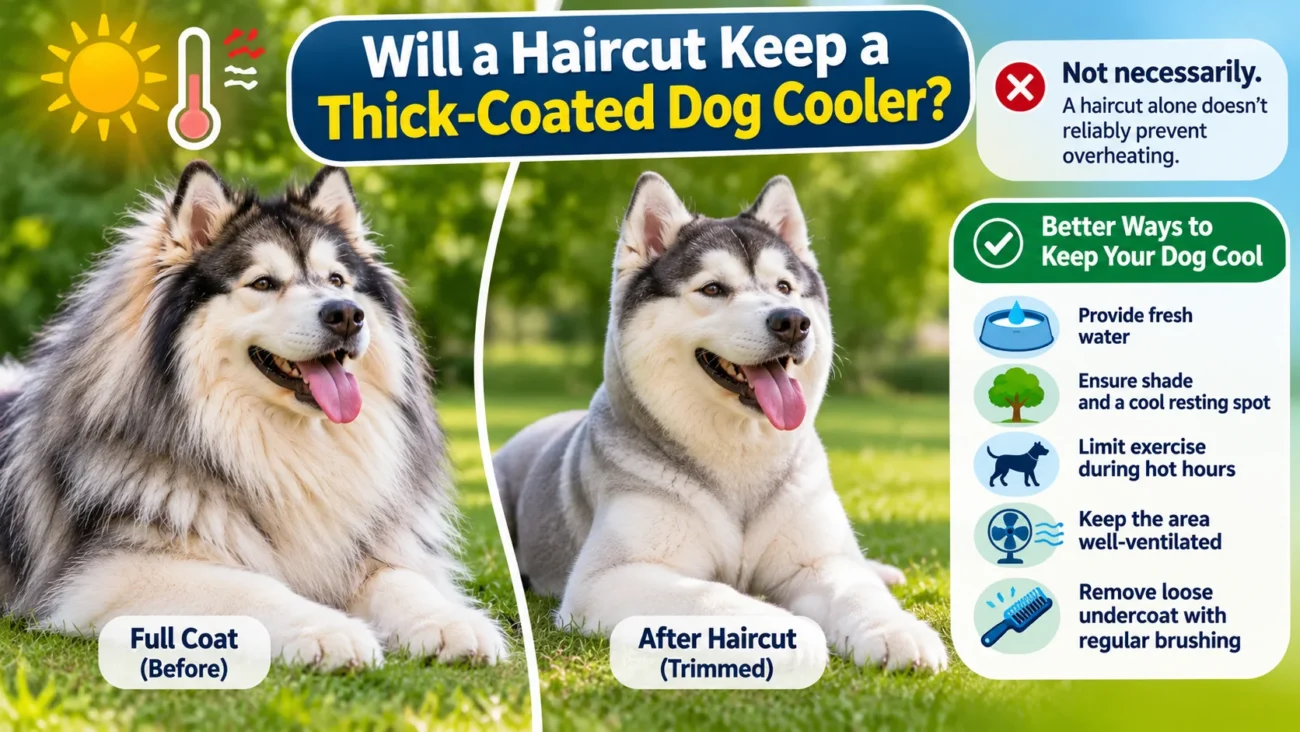
Not reliably. Coat care may improve comfort, but a short haircut is not a substitute for shade, fresh water, ventilation, and limiting exercise during hot weather. Dogs can overheat regardless of hair length.
Watch for unusually heavy panting, excessive drooling, weakness, vomiting, confusion, or collapse. Suspected heatstroke needs immediate cooling and urgent veterinary care, not a grooming appointment. These symptoms can indicate a medical emergency.
Related Product
Dog Grooming Slicker Brush and Metal Comb
A coat-appropriate brush and comb help remove loose hair and check for hidden tangles between professional grooming visits.
As an Amazon Associate, we earn from qualifying purchases.
Frequently Asked Questions
How can I tell if my mixed-breed dog has a double coat?
Part the fur and look for short, soft undercoat beneath longer guard hairs. Mixed coats can be hard to classify, so ask a knowledgeable groomer before choosing a body clip.
Does a haircut stop a thick-coated dog from shedding?
No. Cutting hair changes its length, not the shedding cycle. A gentle brush-out or professional de-shedding service is usually more useful for controlling loose fur.
Can thick fur between a dog’s paw pads be trimmed?
Yes, when overgrown hair traps debris or affects footing, a careful paw-pad tidy may help. Leave close trimming to a groomer if you cannot clearly see the skin or your dog moves suddenly.
Should I bathe my dog before removing mats?
Usually not. Wetting a tangled coat can tighten knots. Gently deal with minor tangles first, and have a professional assess tight or painful mats before bathing.
Will a shaved double coat grow back normally?
It may, but regrowth can be slow or uneven, particularly in some plush-coated dogs. If regrowth is patchy or the skin looks unhealthy, seek veterinary advice.
Is a thick coat alone a reason to book a professional haircut?
No. Book a coat assessment if the fur is difficult to maintain, tightly tangled, or affecting hygiene. The right service could be a brush-out, a targeted trim, or a haircut appropriate for a growing coat.
Conclusion
The best haircut for a thick-coated dog is often the one that removes the least hair necessary. A healthy double coat usually needs consistent brushing, occasional de-shedding, and perhaps a small tidy rather than shaving. Dense, continuously growing coats are different: they may need scheduled clipping to stay comfortable and manageable. Check for hidden mats before bathing, choose tools for the actual coat type, and ask the groomer to explain any proposed short clip. Those steps protect the dog’s comfort while still keeping a full coat looking clean and cared for.


