
Quick Answer
For a safe straight dog hair trim, identify the coat type first, brush and comb until it is free of tangles, and trim only the length that interferes with comfort or hygiene. Long, continuously growing straight coats may benefit from regular shaping; short straight coats usually need brushing rather than haircuts. Avoid close shaving of double coats unless a veterinarian or qualified groomer identifies a specific need.
A straight-looking dog coat is not one grooming category. A Yorkshire Terrier’s long, fine hair, a Golden Retriever’s straight feathering, and a Beagle’s short coat may all look straight, but their trimming needs differ. The safest plan starts with coat structure, not the hairstyle in a photograph.
Does Straight Dog Hair Actually Need Trimming?
Sometimes—but not automatically. Dogs with long hair that keeps growing often need occasional length control around the feet, face, and body. Straight-coated dogs with naturally short fur may never need a body haircut. Dogs with a substantial undercoat generally benefit more from deshedding and careful tidying than from a close clip.
| Coat situation | Usually appropriate | Watch out for |
|---|---|---|
| Long, fine, straight hair | Combing, hygiene trims, length shaping | Knots close to skin |
| Straight outer coat with dense undercoat | Brushing, undercoat care, light feathering trim if needed | Unnecessary close shaving |
| Short, smooth, straight fur | Brush or grooming mitt | Cutting a coat that is already short |
The visible direction of the hair alone cannot tell you whether clippers are appropriate. Check the density at the skin and ask a groomer if you cannot tell whether your dog has a double coat.
Which Tools Are Safest for Straight Dog Hair?
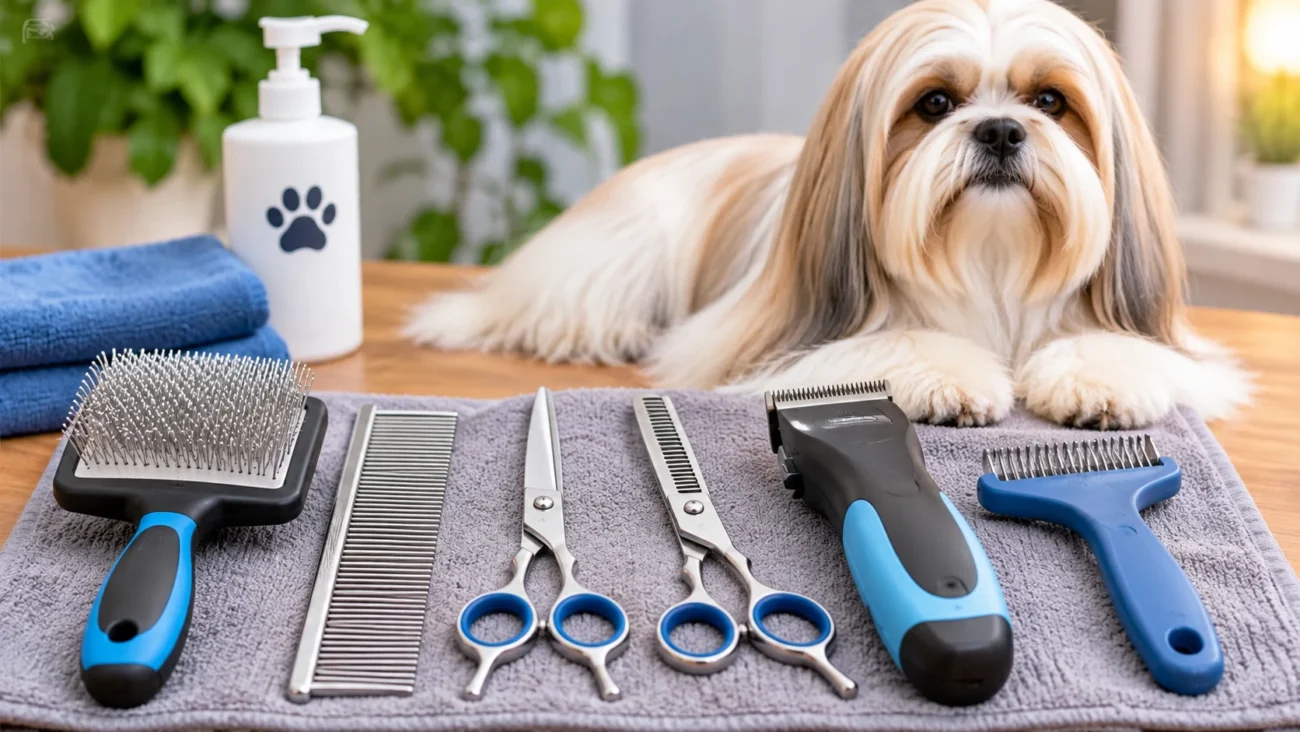
Choose grooming tools for your dog’s hair length, texture, and tolerance—not simply the label “straight coat.”
- Metal comb: Checks whether tangles remain near the skin after brushing, particularly behind ears and under collars.
- Pin brush or gentle slicker: Helps detangle longer coats; apply light pressure and avoid scraping skin.
- Soft bristle brush or rubber mitt: Removes loose hair from short, smooth coats without cutting them.
- Dog-specific clippers with an appropriate guard: Useful for some maintained, clip-friendly coats after training and proper preparation; not a universal choice.
- Blunt-tipped grooming scissors: Appropriate for small, clearly visible fringe adjustments only if you have been shown safe handling. They are not tools for cutting out tight mats.
The American Kennel Club’s home-grooming guidance recommends using coat-appropriate brushes and learning safe procedures before trimming delicate areas.
How Do You Trim Long, Straight Dog Hair Safely?
Start with a small maintenance trim rather than an ambitious full-body haircut. A dog that is tense, painful, heavily matted, or constantly moving is not a safe candidate for DIY cutting.
- Check the skin and coat. Look for mats, redness, sores, burrs, and sensitive patches. Do not cut across an area you cannot clearly inspect.
- Brush and comb thoroughly. Work in small sections, gently supporting the hair. Stop tugging if a knot is tight or painful; seek professional help for attached mats.
- Bathe only when appropriate, then dry fully. Use dog-formulated products. Never run electric clippers over wet hair unless the device and professional technique explicitly support it.
- Choose one modest goal. For example, shorten hair dragging on the floor or tidy a visible outer edge. Leave eye corners, skin folds, ear canals, genitals, and tightly packed paw-pad hair to someone trained to work there.
- Keep skin protected and your dog still. Use a non-slip surface, good lighting, calm handling, and frequent breaks. Never restrain a panicking dog to finish a haircut.
- Trim in small increments. On a coat suitable for clipping, use the correct guard and follow manufacturer and groomer instruction. For visible longer fringes, avoid pointing scissor tips toward skin and do not cut when the dog moves.
- Comb again and inspect. Check that no hair pulls when the dog walks, no uneven section rubs the skin, and no redness developed.
Warning
Do not slide scissors underneath a mat or try to cut a mat flush with the skin. Tight matting can pull skin into the hair, making accidental cuts surprisingly easy. A professional groomer or veterinarian can determine the safest removal method.
Which Straight-Coat Trim Styles Make Sense?
The most practical style is one that reduces maintenance without sacrificing a coat’s natural function.
Light outline trim
Tidies stray ends along the belly, legs, and tail on suitable longer coats. It preserves most length and avoids changing the overall coat structure.
Shorter, manageable pet trim
May suit long, fine, continuously growing hair when daily combing is difficult. Ask a groomer to choose a length appropriate for the coat and the dog’s skin rather than requesting the shortest possible blade.
Feet and hygiene tidy
Targets hair that traps debris or gets in the way of walking and toileting. Because the skin is thin and the dog may move suddenly, these areas deserve particular care and often professional attention.
For double-coated dogs, a brush-and-tidy appointment may be more appropriate than any recognizable “haircut.”
Can You Shave a Straight-Haired Dog?
Straight hair does not by itself make shaving safe. A close shave may be appropriate for some clip-maintained single coats, but it is generally not a routine solution for a healthy double coat. The undercoat and outer guard hairs have different functions, and shaving can create coat-management problems while exposing skin.
For dogs whose hair is short already, shaving offers little normal grooming benefit. If severe matting, injury, or a medical procedure makes clipping necessary, let a veterinarian or qualified groomer choose the method. The VCA Animal Hospitals coat-care guide also emphasizes preventing tangles and using clippers—not scissors—for mat removal.
How Often Should You Brush or Trim Straight Hair?
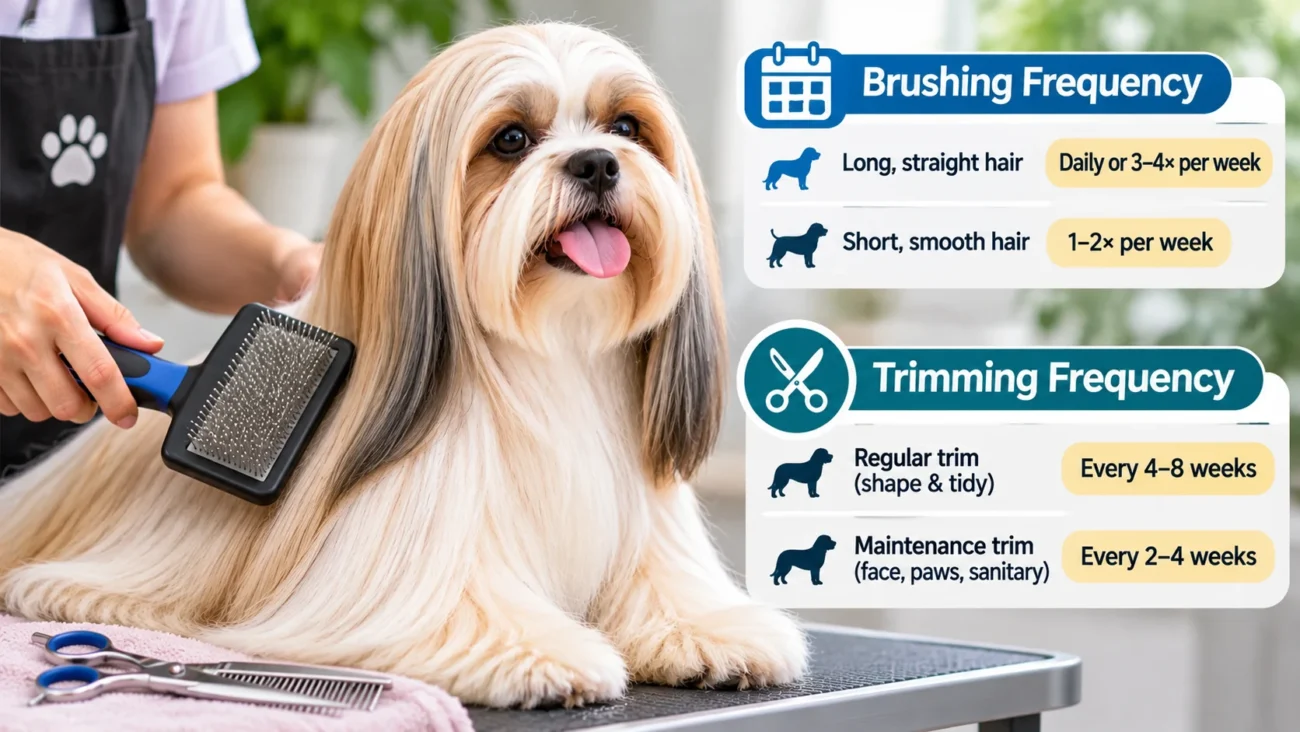
There is no universal haircut calendar for all straight-haired dogs. Long coats that knot easily may require daily or near-daily comb checks, while short smooth coats often need only routine weekly brushing. Some long-haired pets require professional appointments every few weeks; others need less frequent trimming if they remain comfortable and tangle-free.
Use observable signs to adjust the routine: hair obscuring vision, catching dirt, tangling behind the ears, or interfering with paw contact means grooming is due. A coat that stays clean, comfortable, and well combed does not need cutting just because a certain number of weeks has passed. The ASPCA’s grooming guidance likewise varies brushing recommendations by coat characteristics.
Tip
After brushing a long straight coat, pass a comb gently through high-friction spots—behind the ears, armpits, collar line, and hind legs. If the comb snags, the coat is not fully detangled, even if the surface looks smooth.
What Mistakes Should You Avoid?
- Assuming all straight coats can be shaved: Coat density and growth pattern matter more than hair direction.
- Trimming before removing tangles: A guard can catch, and a neat-looking surface can hide knots.
- Cutting mats with scissors: Hidden skin folds make serious cuts possible.
- Using human hair products or overheated tools: Dog skin and grooming equipment have different requirements.
- Working too close to eyes or paw pads: Sudden movement can turn a small tidy into an injury.
- Continuing when the dog is distressed: Stop and arrange a calmer professional approach.
When Is a Groomer or Veterinarian the Better Choice?
Choose a professional groomer for a full haircut, dense undercoat, hard-to-reach hygiene areas, or matting you cannot gently comb out. Choose a veterinarian when you find painful skin, oozing sores, unexplained hair loss, a suspicious lump, or marked discomfort. Grooming cannot diagnose or treat the underlying cause.
Tell the groomer whether your priority is preserving length, minimizing tangles, tidying the paws, or managing shedding. Ask specifically whether your dog’s coat is single or double and whether the proposed trim will alter the protective outer coat.
Frequently Asked Questions
Does trimming straight dog hair make it grow back thicker?
No. Cutting changes the appearance of the hair ends, not the number of follicles or the biological thickness of new hair.
Can a straight-haired puppy get a haircut?
Gentle grooming familiarization can start early, but the timing and extent of a first trim depend on vaccination guidance, temperament, coat development, and the groomer’s assessment. Keep early sessions short and positive.
Should I trim straight hair above my dog’s eyes?
If hair blocks vision, ask a professional to tidy it safely. Scissors near moving eyes carry a high injury risk, especially when a dog resists handling.
Can I trim my dog’s straight coat while it is wet?
For routine home maintenance, brushing, drying, and reassessing the coat first is safer. Wet hair can hide tangles and makes length harder to judge; follow any specialized clipper instructions only under trained guidance.
Why does a straight coat look uneven after trimming?
Hair can settle differently once combed and fully dry, while inconsistent tension or cutting angles create visible steps. Avoid repeated aggressive correction; a groomer can blend an uneven edge.
What if my dog dislikes brushing before a trim?
Try brief sessions with rewards, gentle pressure, and a suitable tool. Stop if handling causes pain or panic, and arrange professional help rather than forcing the session.
Final Takeaway
A successful straight dog hair trim starts with knowing the coat, not selecting a blade length. Brush first, choose the smallest useful trim, protect sensitive skin, and leave tight mats or complicated cuts to a qualified professional. The right result is a comfortable dog with a coat that is easier to maintain—not necessarily a shorter dog.


