
Quick Answer
Silky dog coat trimming involves shortening and shaping fine, flowing hair to improve comfort, cleanliness, and manageability. Brush and comb the coat thoroughly, remove loose tangles, and wash and dry the hair before trimming. Leave sensitive areas and tightly matted hair to a professional groomer. Most long silky coats benefit from daily brushing and professional trimming approximately every four to eight weeks, depending on the breed and haircut.
A silky dog coat can look perfectly smooth on the surface while hiding stubborn tangles underneath. Trimming helps manage excess length, but cutting the hair without proper preparation can leave uneven patches, damaged ends, or accidental skin injuries.
The right approach depends on your dog’s coat structure, lifestyle, tolerance for grooming, and the amount of maintenance you can realistically provide.
What Is a Silky Dog Coat, and Why Does It Need Trimming?
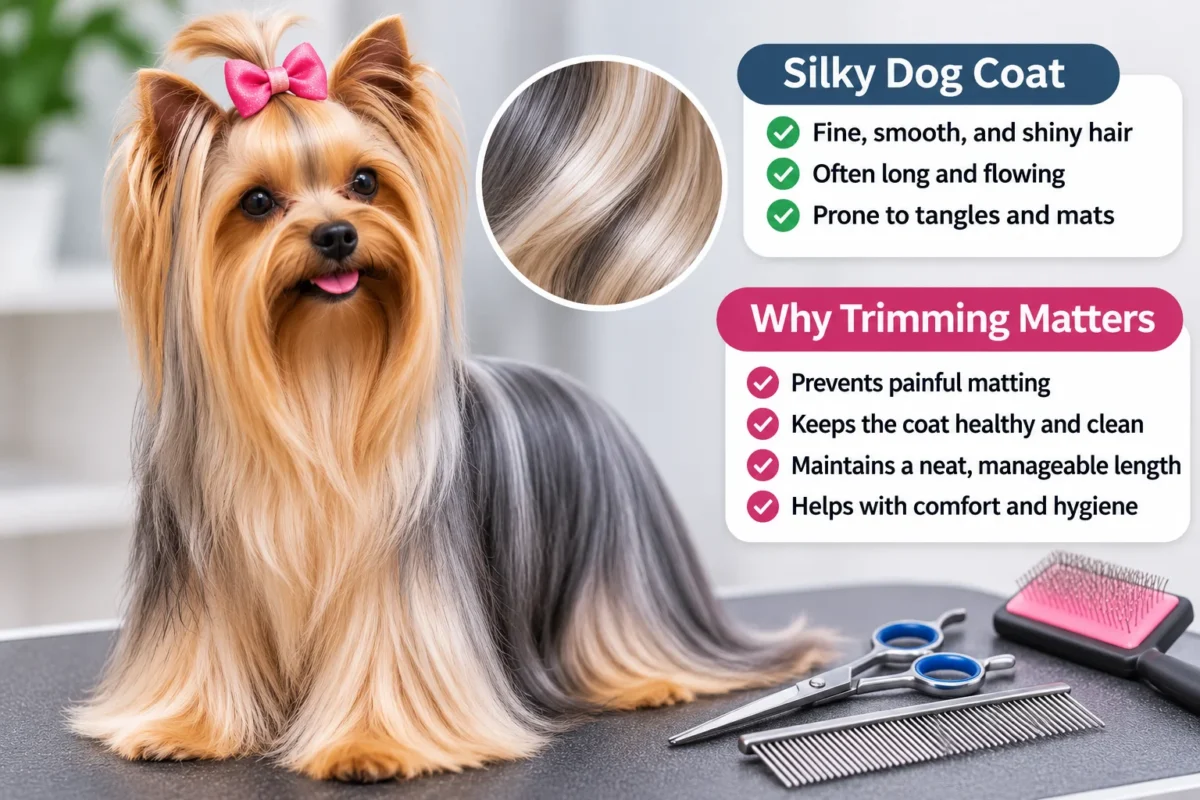
A silky dog coat consists of fine, soft hair that typically falls smoothly against the body. It may be straight or slightly wavy, with longer growth around the legs, head, ears, and tail.
Breeds commonly associated with silky coats include:
- Yorkshire Terriers
- Maltese
- Australian Silky Terriers
- Afghan Hounds
- Cocker Spaniels
- Irish Setters
However, these breeds do not all have identical coat structures. A Yorkie’s continuously growing body hair requires a different approach from a spaniel’s silky feathering.
Regular trimming can reduce the amount of hair that collects dirt, interferes with movement, or becomes tangled around frequently moving areas. It also makes brushing and bathing more manageable.
Silky describes the texture of the hair, not necessarily the structure of the entire coat. Identify your dog’s actual coat type before deciding how much hair to remove.
How Short Should You Trim a Silky Dog Coat?
Choose a length that keeps your dog comfortable while preserving appropriate skin coverage and making routine brushing manageable. There is no universal haircut length for every silky-coated breed.
These are three common grooming approaches:
| Trim Style | Best For | Maintenance |
|---|---|---|
| Full-length coat | Traditional breed appearance or showing | High |
| Puppy or pet cut | Everyday companion dogs | Moderate |
| Maintenance trim | Preserving length while tidying selected areas | Depends on remaining length |
A shorter pet cut is often practical for companion dogs, particularly when their long hair repeatedly collects outdoor debris. Keeping a full-length coat makes more sense when you can maintain it consistently without allowing mats to develop.
For breed-specific guidance, the American Kennel Club’s Yorkshire Terrier grooming guide explains the different maintenance requirements of traditional show coats and shorter pet trims.
What Tools Do You Need for Silky Dog Coat Trimming?
The most useful grooming tools are those that separate fine hair gently, identify hidden tangles, and allow controlled trimming without unnecessary pulling.
- Pin brush: Suitable for gently smoothing long, flowing hair.
- Metal grooming comb: Helps detect knots missed during brushing.
- Soft slicker brush: Useful for selected tangled areas when used gently.
- Dog-safe detangling spray: Provides lubrication during brushing.
- Pet grooming clippers: Used by trained handlers for controlled body trimming.
- Dog shampoo and conditioner: Help prepare the coat for grooming.
- Non-slip mat: Provides stable footing during grooming.
A brush and a comb perform different jobs. The brush separates and smooths the hair, while the comb checks whether tangles remain closer to the roots.
Avoid aggressive tools designed primarily to remove dense undercoat unless a groomer confirms that they suit your dog’s coat structure.
How to Trim a Silky Dog Coat Safely: Step-by-Step
Safe grooming begins with coat preparation rather than cutting. Beginners should concentrate on brushing, bathing, and basic maintenance while learning clipping techniques directly from an experienced groomer.
1. Inspect the coat and skin
Run your fingers through the coat and examine areas where friction encourages tangling. Pay particular attention behind the ears, underneath the collar, around the armpits, and along the inner legs.
Look for redness, sores, dense mats, or unusual sensitivity. Delay trimming if the skin appears irritated or injured.
2. Brush and comb before bathing
Divide longer hair into manageable sections. Begin near the ends and gradually work toward the roots without pulling against the skin.
Support the hair above a loose tangle with your fingers to reduce traction. Apply a suitable dog detangling product if necessary.
Finish by checking each section with a metal comb. If the comb repeatedly catches, the coat needs additional preparation before trimming.
3. Bathe and condition the coat
Once loose tangles are removed, wash the dog with lukewarm water and a dog-specific shampoo. Apply conditioner according to its instructions and rinse thoroughly.
Do not scrub long hair into a circular mass. Work gently along its natural direction to minimize unnecessary tangling.
4. Dry the hair completely
Use an absorbent towel to blot moisture instead of rubbing the hair vigorously. If your dog tolerates a dryer, use a gentle, low-temperature setting and keep the airflow moving.
Drying helps the hair settle into its natural shape. Comb through the coat again before evaluating how much length needs removing.
5. Trim suitable areas gradually
If you have received practical clipping instruction, begin with an uncomplicated body area using an appropriate guard and the recommended coat direction.
Start conservatively rather than immediately choosing a very short setting. Check the blade temperature regularly and stop if the equipment catches the hair or makes your dog uncomfortable.
Do not attempt to clip skin folds, tight mats, or sensitive areas without suitable training.
6. Check the finished coat
Allow the dog to stand naturally before assessing the shape. Hair that appears uneven while being held or lifted may fall differently once released.
Comb the finished areas and check for skin irritation or discomfort. Avoid repeatedly shortening the coat just to correct minor cosmetic differences.
Warning
Never cut tightly matted hair with scissors. Dog skin can become trapped inside a mat, making it difficult to distinguish hair from skin. Painful or extensive matting requires professional removal.
Which Areas Need Special Attention During Trimming?
The face, ears, feet, and sanitary areas require greater care because delicate skin and unexpected movement increase the risk of injury.
Face and eyes
Long facial hair can obstruct vision or repeatedly contact the eyes. A suitable topknot or professional facial trim can help keep the hair away from them.
Never point scissors toward the eyes or attempt cutting when your dog frequently moves its head.
Ears and feathering
Fine hair behind the ears frequently develops knots that are difficult to see. Comb these areas regularly, taking care not to pull on the ear itself.
Leave close trimming around the ear margins to someone trained to identify where the skin ends.
Paws and sanitary areas
Excess hair around the feet may collect moisture and debris. Hair around the rear can also become soiled during normal activities.
Professional maintenance trims help manage these areas without requiring a complete haircut. The AKC’s home grooming safety guidelines recommend proper instruction before using cutting tools around delicate areas.
How Often Should You Trim a Silky Dog Coat?
Professional trimming approximately every four to eight weeks is a useful starting point for many long-haired companion dogs. The actual interval depends on hair growth, breed, coat length, and grooming needs.
Use the following schedule as a flexible maintenance plan:
| Grooming Task | Suggested Frequency |
|---|---|
| Brushing and combing | Daily for long coats |
| Checking friction areas | Daily |
| Bathing | According to coat condition and skin needs |
| Professional haircut | Approximately every 4–8 weeks |
| Maintenance trims | As needed |
Arrange an earlier appointment if the hair starts obstructing vision, collecting excessive dirt, or developing recurring tangles despite regular brushing.
A calendar is useful, but the condition of the coat should determine when grooming is necessary.
Common Silky Coat Trimming Mistakes to Avoid
Many grooming problems begin before the clippers are switched on. Poor preparation can make an otherwise straightforward maintenance trim uncomfortable.
- Brushing only the surface: Leaves hidden knots underneath smooth-looking hair.
- Bathing a heavily tangled coat: Can make existing tangles more difficult to separate.
- Using household scissors: Increases the risk of uncontrolled cutting and skin injuries.
- Choosing an excessively short haircut: May remove more protective coverage than necessary.
- Using overheated clipper blades: Can cause discomfort and thermal injury.
- Forcing a frightened dog to continue: Makes safe handling more difficult and can worsen grooming anxiety.
Stop when your dog becomes restless, repeatedly pulls away, growls, or shows signs of distress. Several calm maintenance sessions are preferable to completing an entire grooming routine through force.
How to Maintain the Silky Texture Between Haircuts
Maintaining coat texture requires gentle handling, appropriate conditioning, and consistent removal of loose tangles. A haircut alone cannot prevent friction-related damage or resolve underlying skin problems.
Focus on the areas that experience repeated rubbing from harnesses, collars, bedding, and normal movement. Check underneath accessories after walks rather than waiting until the next grooming appointment.
The ASPCA’s dog grooming recommendations emphasize routine brushing to maintain hair condition and prevent tangles, particularly in long-haired breeds.
Grooming Tip
After brushing, gently pass a metal comb through the areas behind the ears and underneath the front legs. These quick checks can reveal early tangles before they become difficult-to-remove mats.
When Should You Take Your Dog to a Professional Groomer?
Professional grooming is preferable when the haircut requires close clipping, complicated shaping, mat removal, or handling a dog that cannot remain comfortably still.
Book a grooming appointment if:
- The coat contains dense or widespread mats.
- Your dog repeatedly resists clipping.
- You cannot safely identify the skin beneath tangled hair.
- Breed-specific shaping is required.
- Facial or sanitary trimming exceeds your skill level.
If you discover open sores, persistent redness, unusual hair loss, painful skin, or discharge, arrange a veterinary examination instead. These signs may indicate a problem that cosmetic grooming cannot address.
Related Product
Stainless Steel Dog Grooming Comb
A grooming comb with rounded teeth and different tooth spacings helps separate fine hair and identify hidden tangles before trimming.
As an Amazon Associate, we earn from qualifying purchases.
Frequently Asked Questions

Does trimming a silky dog coat make the hair grow thicker?
No. Trimming cuts the existing hair shaft rather than changing the hair follicle. Newly cut ends may temporarily look or feel different because their naturally tapered tips have been removed.
Can you shave a silky-coated dog in summer?
A shorter haircut may be appropriate for certain silky-coated breeds, but shaving close to the skin is not automatically beneficial. Coat structure, skin protection, and the dog’s individual needs should guide the decision.
Why does my dog’s silky coat look uneven after trimming?
Hair growing in different directions, incomplete drying, and inconsistent clipping pressure can produce uneven results. Allow the coat to settle naturally before attempting further corrections.
Can I use human hair clippers on a silky-coated dog?
Pet grooming clippers are generally a more suitable choice because they are designed for animal coat grooming. Ask a groomer which blade and guard combination is appropriate for your dog’s hair.
When can a puppy have its first silky coat trim?
Introduce gentle brushing and grooming handling early. The timing of the first professional haircut depends on coat development, health, vaccination arrangements, and the puppy’s ability to tolerate grooming comfortably.
Should I trim my dog’s whiskers during facial grooming?
Avoid deliberately trimming whiskers during routine home grooming. They serve a sensory function, and inexperienced cutting around the muzzle can also increase the risk of accidental injury.
Conclusion
Successful silky dog coat trimming starts with understanding your dog’s coat structure and choosing a practical haircut that supports comfort and cleanliness. Gentle brushing, thorough coat preparation, and regular maintenance are more valuable than achieving a perfectly symmetrical appearance.
Keep the coat at a length you can maintain consistently, inspect frequently tangled areas, and avoid cutting tightly matted hair yourself. Use professional grooming for sensitive areas and unfamiliar clipping techniques. A manageable grooming routine will help preserve the coat’s natural appearance while making everyday care easier for both you and your dog.


