
Quick Answer
Most naturally short-haired dogs do not need regular haircuts. Breeds such as Boxers, Beagles, and Labrador Retrievers benefit more from brushing, bathing, and removing loose fur than body clipping. Light trimming around the paws or sanitary areas may be appropriate when necessary, but shaving the entire coat should generally be avoided, especially in double-coated breeds.
A short haired dog haircut should improve comfort and hygiene without removing the protective coat your dog naturally needs. Unlike Poodles or Shih Tzus, many short-haired breeds already have a coat that maintains a relatively consistent length.
The right grooming approach depends less on appearance and more on coat density, shedding patterns, skin condition, and whether your dog has an undercoat.
Do Short-Haired Dogs Actually Need Haircuts?
No, naturally short-haired dogs generally do not need full-body haircuts. Their coat grows and sheds according to a natural hair-growth cycle, making regular clipping unnecessary for ordinary maintenance.
Short-coated dogs still need grooming because dead hair, dirt, and debris accumulate even when their fur looks neat.
According to the People’s Dispensary for Sick Animals (PDSA), short-haired breeds generally need brushing but do not usually require regular haircuts.
A haircut may be appropriate in limited situations, including:
- Excess hair extending beyond the paw pads.
- Recurring hygiene problems caused by longer hair around the rear.
- A veterinary procedure requiring localized clipping.
- A mixed-breed dog with areas of longer, continuously growing hair.
If your dog’s coat already lies close to the skin and remains free of tangles, removing more hair is unlikely to provide a meaningful grooming benefit.
Why Coat Type Matters More Than Hair Length
Before choosing a haircut, determine whether your dog has a smooth coat, a dense double coat, or hair that has simply been clipped short. These categories require different grooming approaches.
Naturally Short and Smooth Coats
Boxers, Whippets, Doberman Pinschers, and smooth-coated Dachshunds have fur that sits close to their bodies. Their grooming needs usually focus on removing dead hair and maintaining healthy skin.
Because there is little excess length to remove, clipping can unnecessarily expose the skin.
Short Double Coats
Labrador Retrievers and Beagles have short coats that include a softer undercoat beneath protective outer hairs.
These dogs can shed considerably despite their short appearance. The appropriate solution is generally undercoat maintenance rather than shortening both layers.
Long-Haired Breeds With Short Haircuts
A Poodle or Shih Tzu wearing a short puppy cut is not the same as a naturally short-haired dog. These breeds still require periodic trimming because their coat characteristics have not changed.
Key Insight
Short hair describes the length of the coat, not its structure. Two dogs with similarly short fur can require completely different grooming tools and maintenance routines.
6 Safe Grooming Styles for Short-Haired Dogs
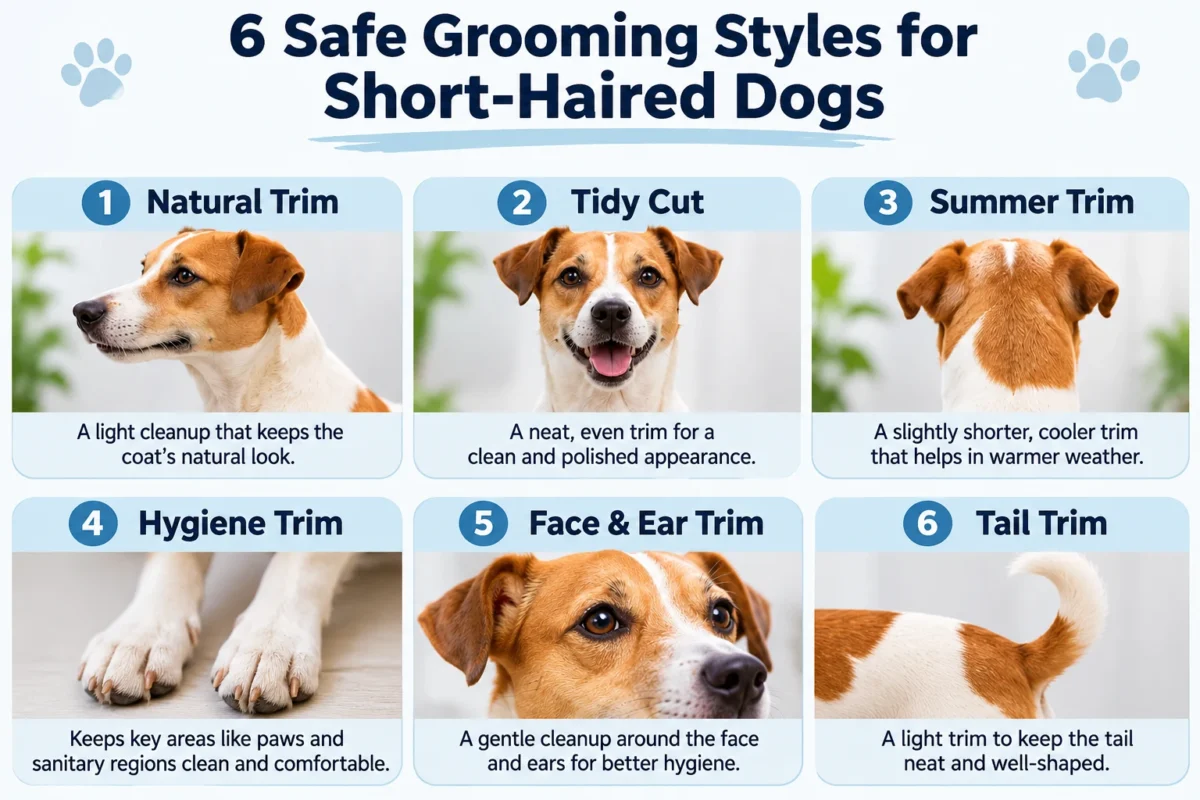
The most suitable styles for naturally short-haired dogs preserve their existing coat while improving cleanliness and appearance. Not every useful grooming style requires cutting hair.
1. Natural Coat Finish
A natural coat finish combines bathing, brushing, drying, and removing loose hair without clipping the body.
It works particularly well for Boxers, Great Danes, and other smooth-coated breeds that have little excess fur to trim.
2. De-Shedding Groom
A de-shedding groom removes loose hairs that are ready to fall out. It is especially useful for short double-coated dogs such as Labradors and Beagles.
Unlike shaving, this approach aims to preserve healthy attached hairs while reducing the amount of loose fur around your home.
3. Paw Pad Trim
Some dogs develop longer hair between their paw pads. A localized trim may help prevent debris from accumulating and keep excess hair from covering the pads.
If the hair does not extend beyond the pads or cause problems, trimming is unnecessary.
4. Sanitary Trim
A sanitary trim removes excess hair around the rear or genital area when it repeatedly collects urine, feces, or dirt.
Most smooth-coated dogs do not require this service. When necessary, a professional groomer should handle the sensitive areas.
5. Light Outline Trim
A light outline trim tidies isolated areas where hair grows noticeably longer than the surrounding coat.
This option is more relevant to mixed-breed dogs with uneven coat lengths than uniformly smooth-coated breeds.
6. Short Maintenance Cut
A short maintenance cut is suitable for breeds with longer-growing hair that their owners prefer to keep short, such as Poodles and certain Poodle mixes.
It should not be confused with shaving a naturally short-coated dog.
Which Haircut or Grooming Style Suits Your Dog?
Use your dog’s natural coat characteristics to choose the appropriate grooming service.
| Dog Breed | Suitable Grooming | Body Haircut? |
|---|---|---|
| Boxer | Bath and rubber brushing | Usually no |
| Labrador Retriever | Undercoat maintenance and brushing | No routine clipping |
| Beagle | Brushing and de-shedding | Usually no |
| French Bulldog | Gentle brushing and skin-fold care | Usually no |
| Doberman Pinscher | Natural coat finish | Usually no |
| Smooth Chihuahua | Soft brushing and bathing as needed | Usually no |
| Mixed-Breed Dog | Coat-specific grooming | Depends on coat |
The general pattern is simple: naturally short coats need maintenance rather than shortening, while longer-growing coats may benefit from controlled clipping.
How to Groom a Short-Haired Dog at Home
You can manage much of a short-haired dog’s routine coat care at home without using scissors or electric clippers.
- Inspect the coat. Check for redness, bald patches, bumps, parasites, wounds, or unusual tenderness before brushing.
- Remove loose fur. Use a soft-bristle brush or rubber grooming mitt suitable for your dog’s coat density.
- Bathe when needed. Use lukewarm water and a dog-specific shampoo appropriate for the dog’s skin condition.
- Rinse thoroughly. Remove shampoo residue, paying particular attention to the underside, legs, and areas where dirt accumulates.
- Dry the coat. Blot excess water with a towel. Make sure skin folds and dense areas are appropriately dried.
- Finish with gentle brushing. Once the coat is dry, remove remaining loose hairs without repeatedly scraping the same area.
The ASPCA’s dog grooming guidance identifies rubber brushes and bristle brushes as useful options for smooth-coated dogs.
Keep grooming sessions short if your dog becomes restless. Reward relaxed behavior instead of forcing the dog to remain still through an uncomfortable session.
Can You Shave a Short-Haired Dog in Summer?
Routine summer shaving is generally unnecessary and should be avoided, particularly when your dog has a double coat.
The protective outer hairs help shield the skin from sunlight and environmental exposure. Removing them does not necessarily improve the dog’s ability to tolerate hot weather.
The American Kennel Club’s double-coat grooming guidance also explains that the inner and outer coat can regrow at different rates following shaving.
A better summer care routine includes:
- Removing loose undercoat through appropriate brushing.
- Providing fresh drinking water and shaded resting areas.
- Scheduling walks during cooler parts of the day.
- Limiting strenuous activity in hot conditions.
Warning
Do not shave your dog as a substitute for heat protection. Excessive panting accompanied by weakness, vomiting, confusion, or collapse can indicate a heat-related emergency requiring immediate veterinary attention.
Will a Short Haircut Reduce Dog Shedding?
A haircut shortens individual hairs, but it does not stop the natural process through which a dog sheds its coat.
After clipping, fallen hairs may be shorter and less noticeable at first. However, the follicles continue their normal growth and shedding cycles.
For a short-haired dog that sheds heavily, focus on:
- Regular brushing with coat-appropriate tools.
- Additional grooming during periods of increased shedding.
- Bathing when appropriate for the dog’s skin and lifestyle.
- Veterinary assessment if shedding changes suddenly or produces bald patches.
A professional de-shedding appointment may remove a substantial amount of loose fur, but it cannot permanently eliminate shedding.
How Often Should You Groom a Short-Haired Dog?
Weekly brushing is a reasonable starting point for many short-haired dogs. Increase the frequency during heavy shedding periods or when loose hair accumulates quickly.
| Grooming Task | Suggested Frequency |
|---|---|
| Brushing | Weekly or more often during shedding |
| Bathing | Based on dirt, odor, and skin needs |
| Ear inspection | Weekly |
| Nail inspection | Every few weeks |
| Paw or sanitary trimming | Only when necessary |
| Full-body haircut | Generally unnecessary |
Treat this schedule as a starting point rather than a strict calendar. A dog with allergies or another skin condition may need a different routine recommended by its veterinarian.
What Should You Ask for at the Dog Groomer?
For a naturally short-haired dog, request a bath-and-brush service rather than automatically booking a full haircut.
Describe the result you want, especially if shedding or hygiene is your main concern. A useful request would be:
Please bathe and brush my dog, remove loose fur, check the nails and paws, and preserve the natural body coat. Only trim areas that genuinely need it.
If your dog has a dense coat, ask whether the groomer has experience working with short double-coated breeds.
Tell the groomer about any previous skin irritation, allergies, handling difficulties, or sensitive areas before the appointment begins.
If the proposed service includes body clipping, ask why it is necessary. A clear explanation should relate to your dog’s actual coat condition rather than a standard grooming package.
When Is Professional or Veterinary Help Necessary?
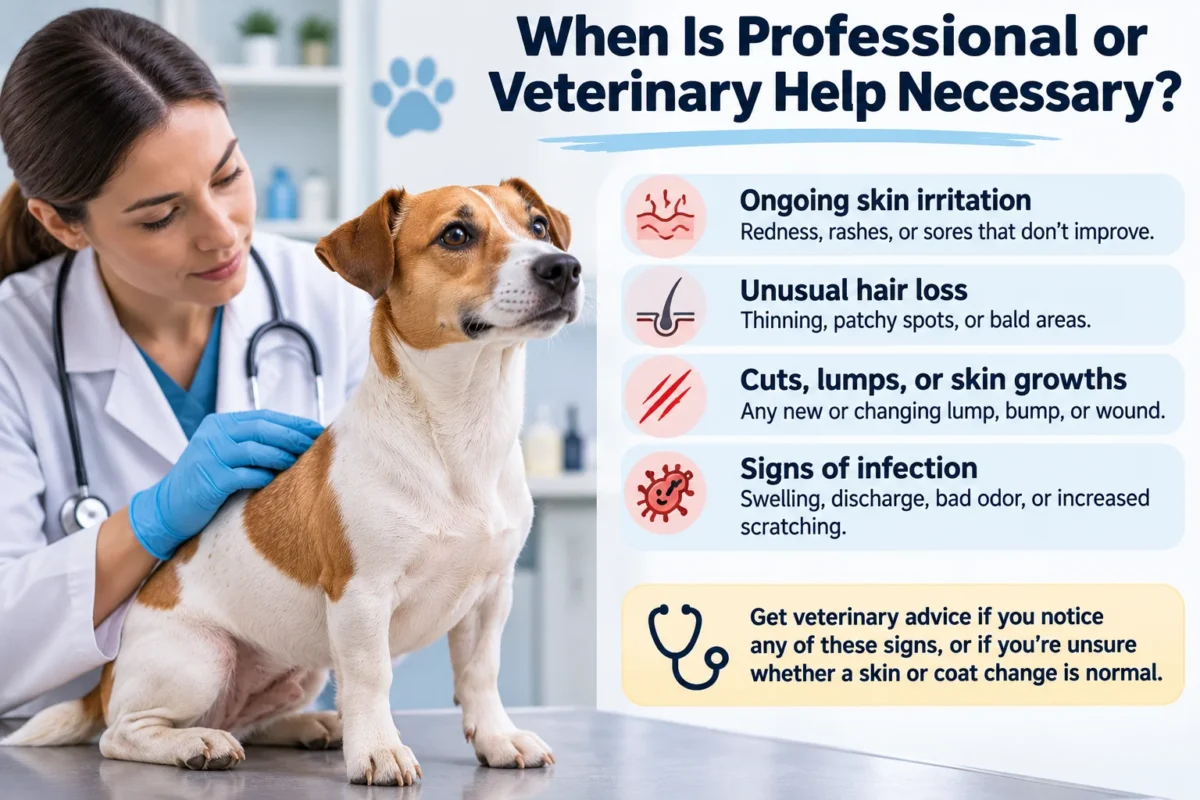
Seek professional grooming assistance when your dog needs trimming close to sensitive skin, has tightly tangled hair, or cannot remain comfortable during grooming.
A veterinarian is more appropriate when you notice persistent itching, inflamed skin, unexplained hair loss, sores, or an unusual odor that returns shortly after bathing.
These changes may reflect an underlying health problem rather than a need for a haircut. Avoid clipping affected areas yourself simply to improve their appearance.
Related Product
Rubber Grooming Brush for Short-Haired Dogs
A flexible rubber grooming brush helps lift loose hair from smooth coats without requiring unnecessary body clipping. Choose a soft design suitable for your dog’s skin sensitivity.
As an Amazon Associate, we earn from qualifying purchases.
Frequently Asked Questions
Can short-haired dogs get a teddy bear haircut?
A teddy bear haircut requires enough coat length to create a rounded, fluffy appearance. Naturally smooth-coated dogs generally do not have sufficient hair for this style, although longer-coated mixed breeds may be suitable.
Should I trim my short-haired dog’s whiskers?
Routine whisker trimming is unnecessary. Whiskers provide sensory information, so avoid cutting them purely for cosmetic reasons.
What happens if a short-haired dog is accidentally shaved?
The exposed skin may become more sensitive to sunlight and irritation. Protect the dog from excessive sun exposure, monitor the skin, and seek veterinary advice if irritation or abnormal regrowth develops.
Can a short-haired puppy have a haircut?
Naturally short-haired puppies rarely need haircuts. Gentle introductory brushing, handling, and appropriate bathing help establish a positive grooming routine without unnecessary clipping.
Do short-haired dogs need conditioner after bathing?
Conditioner is optional for many smooth-coated dogs. If you use one, select a dog-specific product suitable for the coat and skin, and follow its application instructions.
Can I use human hair clippers on my short-haired dog?
Human hair clippers are not the preferred tool for dog grooming. Pet-specific equipment is designed for animal coats, but naturally short-haired dogs generally do not need body clipping in the first place.
Conclusion
The best short haired dog haircut is often no haircut at all. For naturally smooth-coated and short double-coated breeds, brushing, appropriate bathing, and loose-hair removal provide a more suitable approach than shaving.
Choose localized trimming only when excess hair creates a genuine hygiene or maintenance problem. If you own a mixed-breed dog, base grooming decisions on its actual coat structure rather than its appearance alone.
Preserving your dog’s natural coat while maintaining clean, comfortable skin is the most practical goal. A consistent grooming routine and a clear understanding of your dog’s coat type matter more than achieving a particular haircut style.


