
Quick Answer
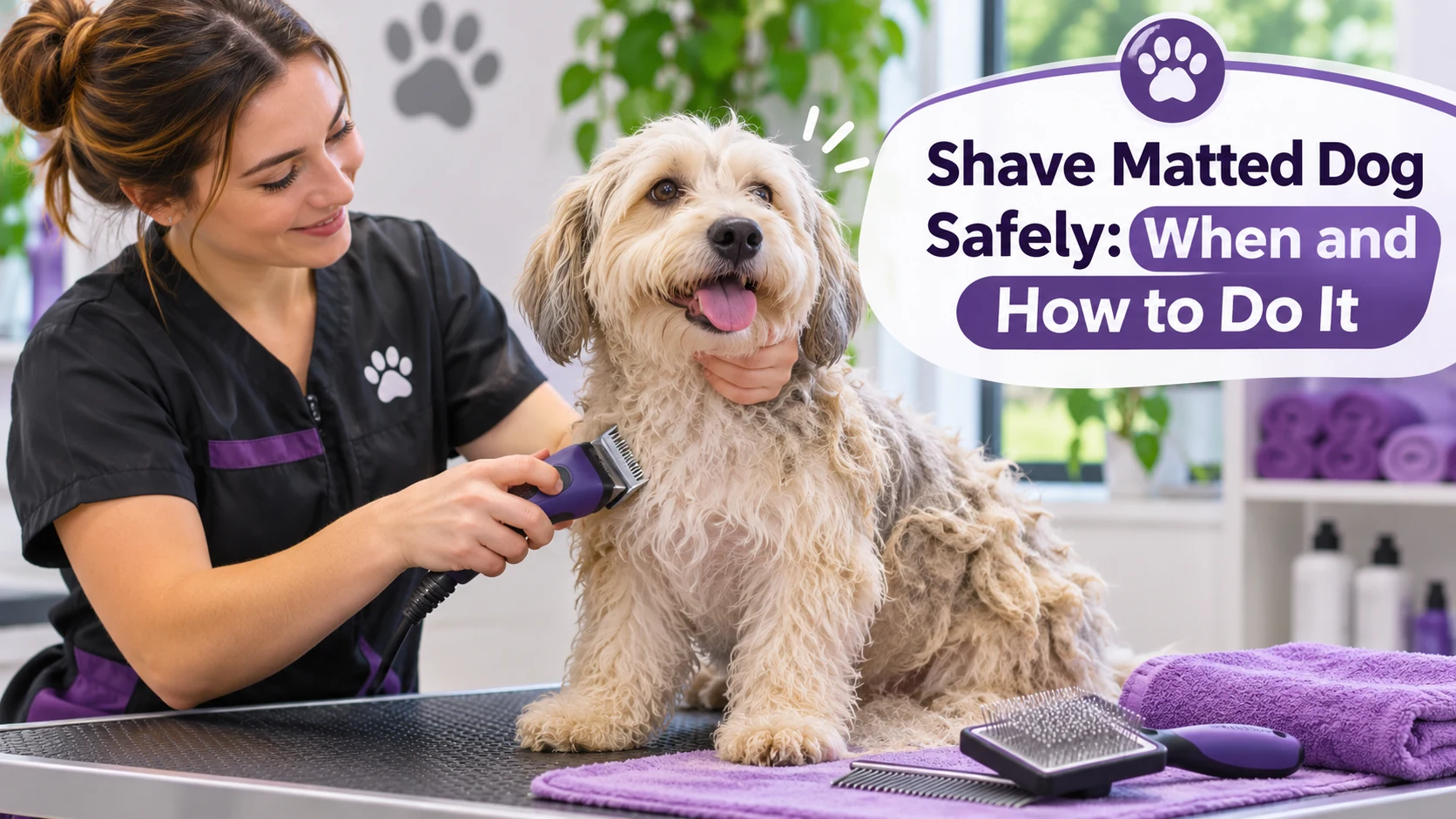
To shave a matted dog safely, first have a groomer or veterinarian assess how tightly the coat is attached to the skin. Severe, skin-tight mats usually need removal with professional pet clippers, not scissors or forceful brushing. Do not attempt a close shave at home if you cannot clearly see the skin, your dog is painful, or the mats cover sensitive areas.
A tangled coat can look like a cosmetic problem, but a tight mat continuously pulls on the skin beneath it. If you are searching for how to shave a matted dog, the most useful first step is deciding whether any part of the job is safe to handle yourself.
Some loose tangles can be brushed out gently. Dense mats, especially those pressed against the skin, are different: removing them can reveal irritation, sores, or injuries that were hidden by the coat. A short haircut is often the kindest solution, even if it is not the style you originally wanted.
When Does a Matted Dog Need to Be Shaved?
A dog may need to be shaved when mats are too tight, widespread, or painful to remove by gentle combing. The decision depends on the condition of the coat and skin, not simply how untidy the hair looks.
- Loose, isolated tangles: A groomer may be able to separate them without shaving.
- Dense mats that sit against the skin: Clipping is often safer and less painful than repeatedly pulling with a brush.
- Large, connected sheets of matted hair: A professional shave-down may be necessary.
- Mats with moisture, odor, sores, or significant tenderness: Arrange veterinary assessment before removal.
Try not to judge the severity by the outside of the coat. A dog can have fluffy-looking hair on top and a compressed layer of tangles underneath. A groomer can assess the coat down to the skin without forcing a comb through painful areas.
Why Is Shaving Matted Fur Risky?
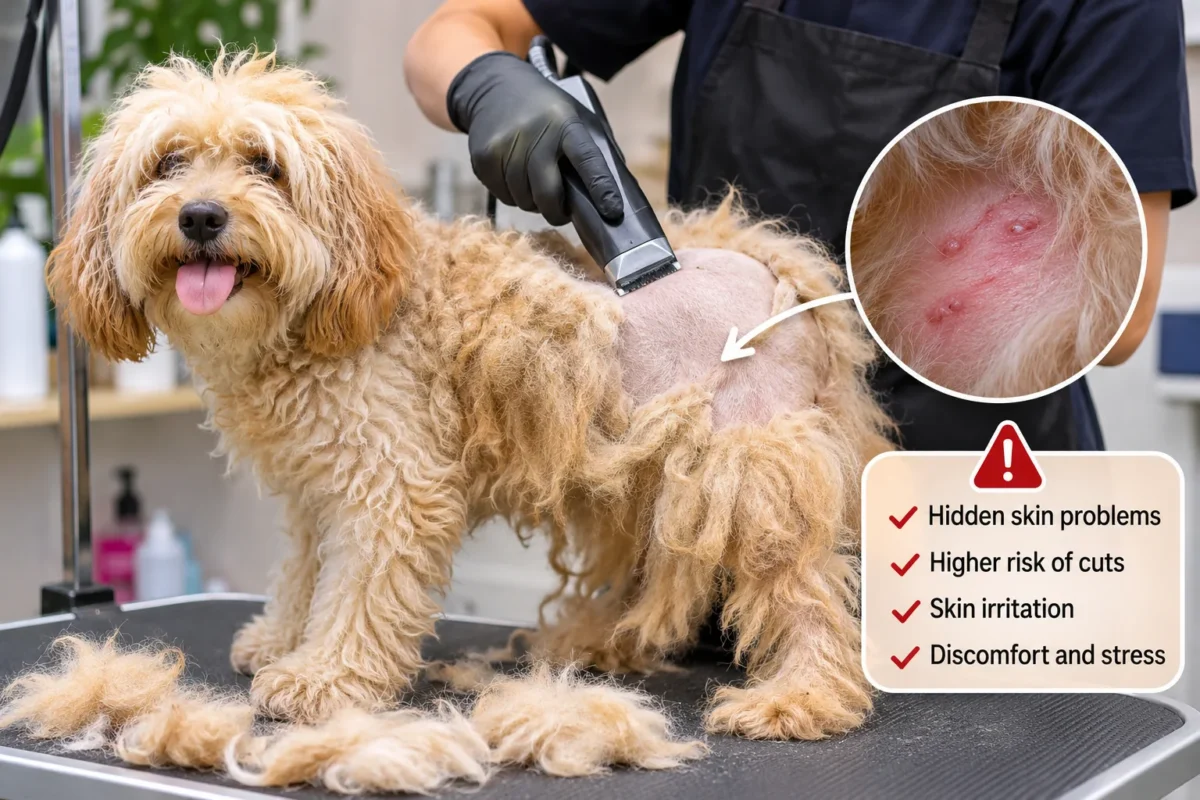
Matting can pull loose skin upward into the tangled hair, making the boundary between hair and skin difficult to identify. A blade, scissor tip, or sharp grooming tool can injure that hidden skin, even when someone believes they are cutting only fur.
Tight mats can also trap dirt and moisture, restrict normal coat care, and conceal inflamed skin. According to the ASPCA’s guidance on matted coats, severe cases can cause significant medical problems. This is why mat removal should be treated as a comfort and health decision rather than simply a styling task.
Warning
Never slide scissors under a tight mat, use a human razor on the skin, or pull a mat away from the body to create a cutting gap. The skin may be stretched into the knot. Seek professional help rather than guessing where the skin ends.
Should You Shave a Matted Dog at Home or Visit a Groomer?
For tight or extensive matting, visit an experienced groomer. If the dog has wounds, marked pain, severe distress, or a suspected infection, contact a veterinarian instead. Home grooming is suitable only for limited, low-risk coat maintenance when you have the skills and your dog remains comfortable.
| What you notice | Best next step |
|---|---|
| A small, loose tangle that does not pull the skin | Try gentle brushing if your dog tolerates it |
| Tight mat you cannot separate from the skin | Book a professional groomer |
| Mats around ears, armpits, groin, or other skin folds | Have a professional clip the area |
| Bleeding, open sores, swelling, bad odor, or obvious pain | Contact a veterinarian promptly |
If a dog snaps, panics, or cannot stand comfortably for grooming, tell the salon before the appointment. A veterinary team may need to develop a pain-control or sedation plan for a difficult or medically complicated shave; never give sedatives yourself without veterinary direction.
How Do Professionals Shave a Matted Dog Safely?
Professional groomers begin with assessment and proceed only when they can identify a safe way to remove the coat. The following stages explain what to expect from a safe service, not instructions for attempting a skin-tight shave yourself.
1. Examine the coat, skin, and dog’s comfort
The groomer checks where mats sit, how extensive they are, and whether the dog reacts painfully to touch. Visible lesions or illness may mean the appointment should be moved to a veterinary clinic.
2. Choose appropriate pet clippers and blade length
A trained professional selects equipment according to coat density, skin sensitivity, and the space beneath the mat. There is no universally safe blade number for every matted dog. Forcing a blade under a mat that leaves no safe clearance can cut or abrade the skin.
3. Remove the mat in controlled sections
Professional clipping aims to avoid pulling the skin, catching folds, or repeatedly passing hot blades across sensitive areas. The groomer may need to stop and reassess as hidden skin becomes visible. Mats near thin skin or delicate structures require extra caution.
4. Check the newly exposed skin
Once the coat is removed, a professional looks for redness, bruising, abrasions, sores, or parasites. Previously hidden problems should be reported to the owner, and concerning findings need veterinary attention. A bath may be postponed or modified if the skin is damaged.
5. Arrange recovery and a realistic maintenance plan
The finished haircut may be much shorter or uneven compared with a normal trim because different mats require different removal depths. Comfort and skin protection take priority over appearance. Ask the groomer which brush, comb, and appointment interval suit your dog’s actual coat.
What Can You Safely Do at Home Before the Appointment?
Keep your dog comfortable and avoid making the mats tighter or more painful. You do not need to perform a partial shave before visiting a groomer.
- Look without pulling: Note where the tangles are and whether your dog seems sore, itchy, or reluctant to be touched.
- Stop brushing tight areas: Repeated attempts can irritate the skin and turn grooming into a frightening experience.
- Keep the coat reasonably dry: Avoid soaking dense mats or leaving moisture trapped next to the skin.
- Explain the problem when booking: Mention the extent of matting, any skin changes, and your dog’s age, mobility, or handling concerns.
- Choose the right appointment: Ask whether the salon can manage severe matting or whether a veterinary groom is more appropriate.
Do not assume that a dematting spray, conditioner, or oil can loosen a solid felted mat. Such products may help with light tangles, but they do not make unsafe cutting safe.
Which Areas Are Especially Dangerous to Shave?
Thin skin, folds, small appendages, and moving body parts make certain areas harder to clip safely. Even experienced groomers take additional precautions when working around them.
- Behind the ears: Skin can be thin and caught inside tight knots.
- Armpits and groin: Folds can catch in clipper blades.
- Between paw pads: Delicate structures and sudden movement increase injury risk.
- Near the eyes and muzzle: A frightened head movement can make clipping unsafe.
- Genitals and around the anus: Sensitive tissues and soiling may require specialized care.
If mats obstruct urination, defecation, or normal movement, seek prompt professional assessment. Do not cut them out with household scissors, even if the area seems urgent.
How Should You Care for Your Dog After a Matted Shave?
After a close shave, check your dog’s skin gently and follow the groomer’s or veterinarian’s instructions. Skin that was hidden for weeks may be sensitive, and some dogs need time to adjust to the new feel of their coat.
- Monitor discomfort: Watch for persistent licking, scratching, rubbing, flinching, or increased sensitivity.
- Protect exposed skin: Limit harsh sun and cold exposure while the coat is short, using appropriate shade, shelter, or clothing if your dog tolerates it.
- Avoid irritating products: Skip human shampoos, fragranced sprays, and home remedies on reddened skin.
- Keep grooming gentle: Resume brushing only when the skin is comfortable and the coat has enough growth to maintain safely.
- Follow up on lesions: Redness that worsens, swelling, discharge, bleeding, or marked pain needs veterinary advice.
Some dogs scratch more immediately after mat removal because the skin is newly exposed or the short hair feels unfamiliar. Do not assume this is always harmless irritation; persistent or intense scratching deserves evaluation.
How Can You Prevent Your Dog’s Coat From Matting Again?
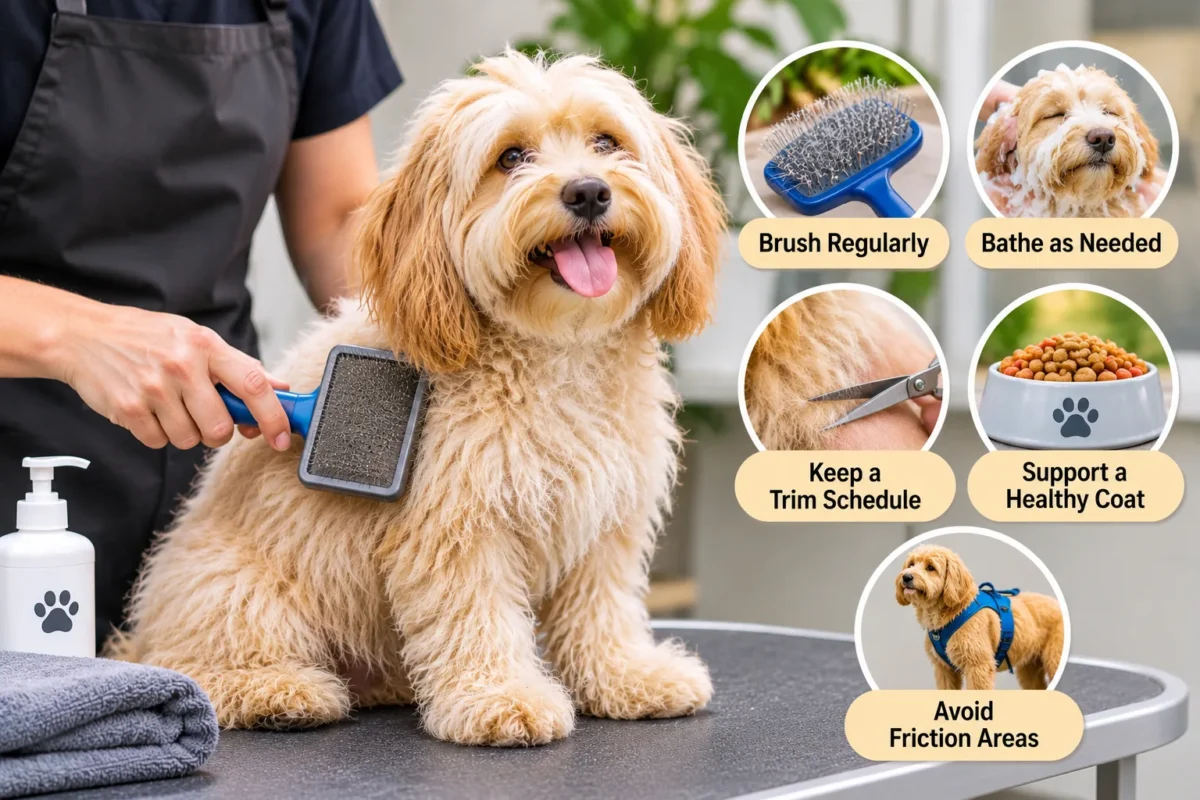
Prevention means brushing all the way through the coat on a schedule that matches hair type, length, and lifestyle. Lightly brushing only the top layer may leave knots developing close to the skin.
Use an appropriate brush to separate the hair gently, then check with a comb in easy-to-mat areas such as behind the ears, under a collar, around the legs, and beneath the chest. If a comb catches, do not yank it through. Work on loose tangles patiently or ask your groomer to demonstrate an appropriate method.
Practical Tip
Ask your groomer to show you how to check the coat at skin level and which areas need extra attention. A simple routine that your dog accepts is more sustainable than occasional long, uncomfortable brushing sessions.
Dogs with long, curly, or continuously growing coats may require frequent at-home maintenance and scheduled professional haircuts. Dogs with double coats need coat-specific advice: shaving is not a routine solution to shedding or hot weather, although severe matting can sometimes make clipping medically or practically necessary. The American Kennel Club’s double-coat grooming guide explains why coat type changes the grooming decision.
Frequently Asked Questions
Is shaving a severely matted dog painful?
Removing tight mats can be uncomfortable because the coat pulls on the skin. Professional clipping is often less painful than prolonged dematting, but irritated skin and severe cases may require veterinary care or pain management.
Can I use human hair clippers to shave mats?
Do not rely on human hair clippers for skin-tight dog mats. They may struggle with dense pet coats, and the larger concern is the risk of cutting hidden skin. Have tight mats removed using appropriate professional techniques.
Should I bathe my dog before removing mats?
Usually, do not bathe a severely matted coat before professional assessment. Wet mats can be harder to manage and moisture can remain trapped against the skin. Ask the groomer how they want the dog prepared.
Will the fur grow back after shaving?
Many dogs regrow their coat, but the rate and appearance depend on breed, hair cycle, age, health, and coat type. Double-coated dogs can experience uneven regrowth. Ask a veterinarian about persistent baldness, skin changes, or unusually slow regrowth.
Can a matted dog be shaved without sedation?
Yes, many dogs can be clipped without sedation by an experienced groomer. Dogs with extreme pain, serious skin problems, or severe distress may need veterinary assessment and a supervised plan; sedation is not a routine home grooming tool.
Final Thoughts
If your dog’s fur is tightly matted, prioritize relief over the finished haircut. A professional can decide whether careful dematting is realistic or a shave is safer, while a veterinarian should assess injuries or significant discomfort. Once the skin has recovered, a manageable brushing routine and regular grooming appointments can help prevent the problem from returning.


