
Quick Answer
The best senior dog haircut is a comfortable, easy-to-maintain trim suited to your dog’s coat type, mobility, and health. For older dogs with arthritis, sensitive skin, or limited stamina, choose gentle handling, non-slip surfaces, shorter grooming sessions, and practical hygiene trims. Avoid unnecessary shaving, especially on double-coated breeds, and prioritize your dog’s comfort over a perfect appearance.
A senior dog haircut should make everyday life easier, not create another source of discomfort. As dogs age, standing for long periods, having their paws lifted, or tolerating noisy clippers can become increasingly difficult.
A haircut that worked perfectly when your dog was younger may now require adjustments. The goal is to maintain a clean, manageable coat while reducing physical strain and stress.
Here’s how to select a suitable haircut, prepare for grooming, recognize discomfort, and maintain your older dog’s coat between appointments.
What Is a Senior Dog Haircut?
A senior dog haircut is a grooming approach adapted to an older dog’s physical abilities and individual needs. Rather than referring to one specific hairstyle, it prioritizes comfort, hygiene, coat health, and safe handling.
For example, an older Poodle might benefit from a shorter, manageable trim that reduces brushing time. A senior Golden Retriever generally needs brushing, undercoat maintenance, and selective trimming rather than a full-body shave.
The difference is not simply hair length. A senior-friendly haircut also considers how long the dog must stand, which body positions are required, and whether the grooming process causes discomfort.
Why Do Senior Dogs Need a Different Grooming Approach?
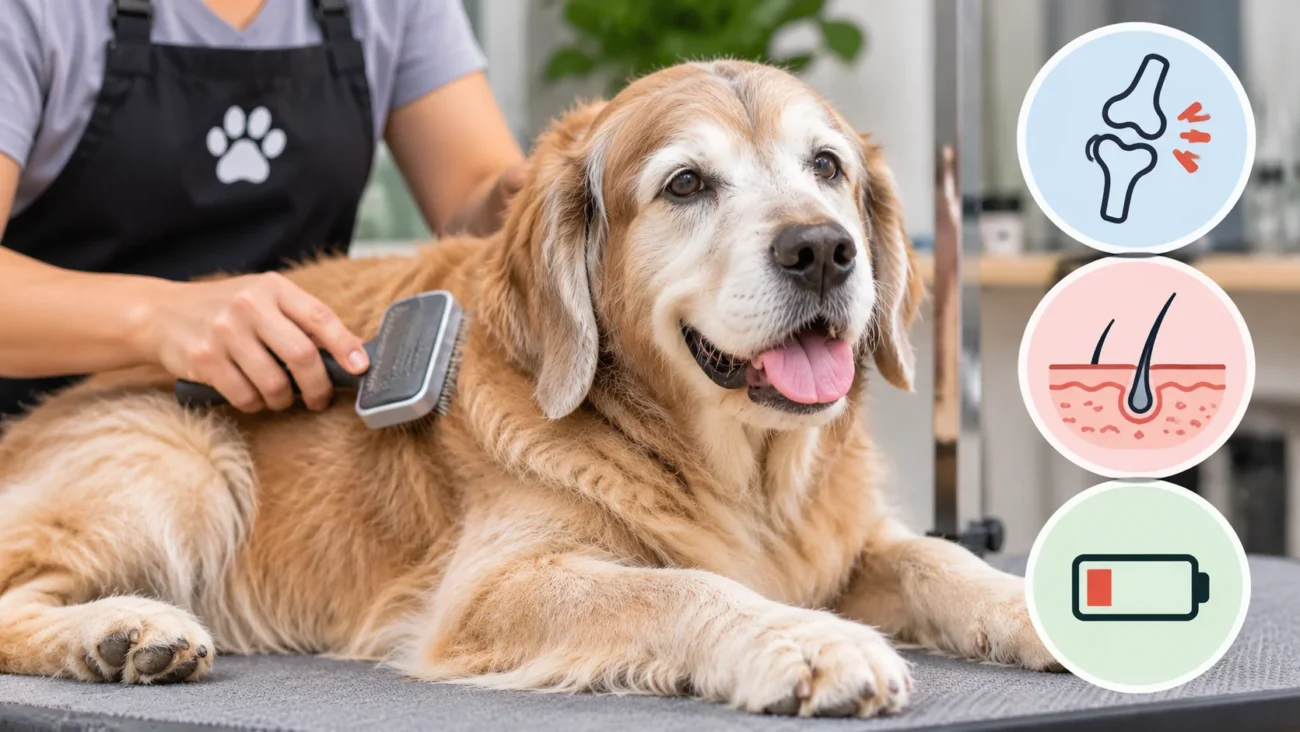
Senior dogs may experience age-related changes that make ordinary grooming more challenging. These changes vary considerably between individuals, so grooming should reflect the dog’s actual abilities rather than age alone.
Arthritis and Joint Stiffness
Dogs with arthritis may find it painful to stand still, lift their legs, or turn into certain positions. Even gentle grooming can become uncomfortable when sensitive joints are repeatedly manipulated.
Supportive handling, a stable surface, and opportunities to sit or lie down can reduce unnecessary strain.
Skin and Coat Changes
Some older dogs develop thinner coats, dry skin, lumps, or other skin changes. Groomers should identify sensitive areas before using clippers or brushes.
New growths, wounds, persistent redness, or unexplained hair loss should be evaluated by a veterinarian rather than treated as ordinary grooming problems.
Reduced Stamina and Sensory Changes
Older dogs may tire during lengthy grooming appointments. Hearing or vision changes can also make unfamiliar handling or equipment more startling.
Predictable movements, calm communication, breaks, and a quieter environment may make grooming easier.
The American Animal Hospital Association’s senior care guidelines emphasize low-stress handling and accommodations for reduced mobility.
Which Haircut Styles Are Best for Senior Dogs?
The best hairstyle depends on coat structure, matting risk, grooming tolerance, and hygiene needs. A shorter haircut is not automatically appropriate for every senior dog.
| Haircut Style | Suitable For | Main Benefit |
|---|---|---|
| Short maintenance trim | Clipper-suitable, continuously growing coats | Less frequent detangling and easier cleaning |
| Modified puppy cut | Poodles, Shih Tzus, and similar coat types | Simple, balanced coat maintenance |
| Sanitary trim | Dogs needing better hygiene around the rear | Helps prevent waste from collecting in fur |
| Selective feather trimming | Long-haired or feathered coats | Controls excess length without removing the whole coat |
| Brush-out and tidy | Short-haired and many double-coated dogs | Maintains natural coat function with minimal clipping |
For an older dog that becomes uncomfortable during long appointments, a simple maintenance trim may be preferable to a detailed breed-style haircut. However, coat type must always guide how much hair can safely be removed.
Should You Shave a Senior Dog?
Usually, shaving is unnecessary unless the dog’s coat type or a specific medical or grooming need justifies it.
Many double-coated breeds, including Golden Retrievers, German Shepherds, and Huskies, should not be routinely shaved. Their coats provide important insulation and protection.
The American Kennel Club’s double-coat grooming guidance explains why routine shaving is generally discouraged.
Severe matting, a veterinary procedure, or certain medical conditions may require exceptions. Discuss these situations with a veterinarian or qualified groomer.
How Can You Give a Senior Dog a Safe Haircut at Home?
A safe home haircut starts with evaluating your dog’s comfort and limiting the session to tasks you can perform confidently. If your dog is painful, severely matted, or unable to tolerate handling, professional assistance is the safer choice.
Step 1: Check Your Dog’s Comfort and Coat
Before starting, examine your dog’s coat for tangles, lumps, sores, irritated areas, and dirt. Observe whether your dog can stand comfortably and tolerate gentle touching.
If your dog has recently developed unexplained pain, marked weakness, or unusual skin changes, postpone the haircut and ask your veterinarian for advice.
Step 2: Prepare a Comfortable Grooming Area
Choose a quiet, well-lit space with stable footing. Place a secure non-slip mat on the floor or another appropriate grooming surface.
Keep brushes, a comb, suitable pet clippers, towels, and treats within reach. Avoid forcing a dog with mobility problems onto an elevated table.
Step 3: Brush the Coat Gently
Use a brush appropriate for the coat type. Work in small sections, supporting the skin and avoiding excessive pulling.
If a tangle cannot be separated without discomfort, do not force the brush through it.
Severe mats can conceal the skin and make removal hazardous. Professional clipping may be necessary.
Step 4: Trim Only Appropriate Areas
If your dog’s coat is suitable for clipping, use pet grooming clippers with an appropriate guard or attachment and follow the direction of hair growth when suitable for the equipment and coat.
Begin with an accessible area your dog tolerates well. Keep the clipper blade clean and check frequently for heat.
Avoid working over lumps, folds, wounds, irritated skin, or sensitive anatomical areas without professional guidance.
For delicate areas near the eyes, ears, paws, and genitals, professional grooming is often safer than attempting a precise cut at home.
Step 5: Allow Frequent Breaks
Stop before your dog becomes exhausted. Some older dogs may tolerate only a few minutes of active grooming at a time.
Let your dog sit or rest when needed. There is no requirement to complete a haircut in one session if the remaining coat can safely wait.
Step 6: Finish With a Gentle Inspection
Remove loose hair and examine the skin for accidental nicks, irritation, or areas needing further attention.
Reward calm behavior and allow your dog to rest. Record any tenderness or new skin changes to discuss with your veterinarian.
Safety Warning
Never use scissors to cut tightly matted hair close to a dog’s skin. Mats can pull delicate skin into the tangled fur, making accidental cuts more likely. Ask a professional groomer or veterinarian to remove difficult mats safely.
How Should You Groom a Senior Dog With Arthritis?
For a senior dog with arthritis, reduce the amount of standing, turning, and limb manipulation required during grooming.
Choose a stable, non-slip surface and let the dog remain in a comfortable position whenever possible. Groom one accessible area at a time rather than repeatedly repositioning the entire body.
- Use gentle support instead of pulling the dog into position.
- Avoid forcing painful joints through a full range of motion.
- Offer rest breaks whenever standing becomes difficult.
- Consider floor-level grooming for dogs that struggle with elevation.
- Ask your veterinarian about pain management if grooming consistently causes discomfort.
Do not give additional pain medication or sedatives without veterinary instructions.
A professional groomer experienced with older animals may be able to adjust the appointment to accommodate joint pain. Dogs with severe mobility limitations may need a veterinary-assisted grooming plan.
How Often Should a Senior Dog Get a Haircut?
Haircut frequency depends mainly on coat type, hair growth, hygiene, and the dog’s tolerance for grooming. Age alone does not establish a fixed schedule.
Many continuously growing coats need professional maintenance every several weeks, while short-haired and double-coated dogs may require little or no routine clipping.
For an older dog, shorter maintenance sessions may sometimes be easier than waiting until the coat becomes severely tangled.
Watch for practical signs that attention is needed:
- Hair regularly obstructs vision.
- The coat is becoming tangled or difficult to brush.
- Waste collects in fur around the hindquarters.
- Long hair creates hygiene difficulties.
- The coat requires more handling than your dog can comfortably tolerate.
If grooming has become stressful, discuss a simpler cut and individualized maintenance schedule with your groomer.
When Should You Choose a Professional Groomer?
Professional grooming is particularly useful when a senior dog needs extensive clipping, has sensitive skin, or cannot comfortably tolerate home grooming.
Look for someone who has experience handling older dogs and is willing to modify their routine.
Before booking, ask whether the groomer can:
- Schedule a quieter appointment.
- Provide non-slip footing and appropriate physical support.
- Allow the dog to sit or lie down when practical.
- Offer breaks or shorter appointments.
- Avoid unnecessary restraint and prolonged standing.
- Contact you promptly if the dog becomes uncomfortable.
Share relevant information about arthritis, heart or breathing conditions, vision or hearing loss, skin growths, medications, and previous grooming difficulties.
A mobile groomer may also be useful for dogs distressed by travel. The AAHA recommends considering mobile grooming as a way to reduce stress for some senior pets.
How Can You Maintain a Senior Dog’s Haircut Between Appointments?
Consistent, gentle maintenance can reduce the need for lengthy grooming sessions and help you discover skin or coat changes early.
Focus on small tasks rather than trying to do everything at once.
- Brush according to coat type: Use gentle strokes and avoid pulling on tangled areas.
- Check the skin: Look for new lumps, redness, sores, or unusual hair loss.
- Keep hygiene areas clean: Remove dirt and waste from fur promptly using pet-appropriate cleaning methods.
- Monitor nails and paw hair: Arrange safe nail care and address hair that interferes with traction.
- Keep bedding clean: Dry, comfortable bedding supports skin hygiene, especially when mobility is limited.
- Make handling positive: Reward cooperation and stop when your dog becomes uncomfortable.
Regular grooming also creates an opportunity to notice changes that deserve veterinary attention. VCA Animal Hospitals provides additional advice on maintaining a dog’s coat and skin.
Practical Tip
Separate grooming into small, manageable tasks. For example, brush the back during one calm session and attend to the legs during another. A comfortable, cooperative dog is more important than completing the entire grooming routine on a fixed schedule.
What Signs Mean You Should Stop Grooming?
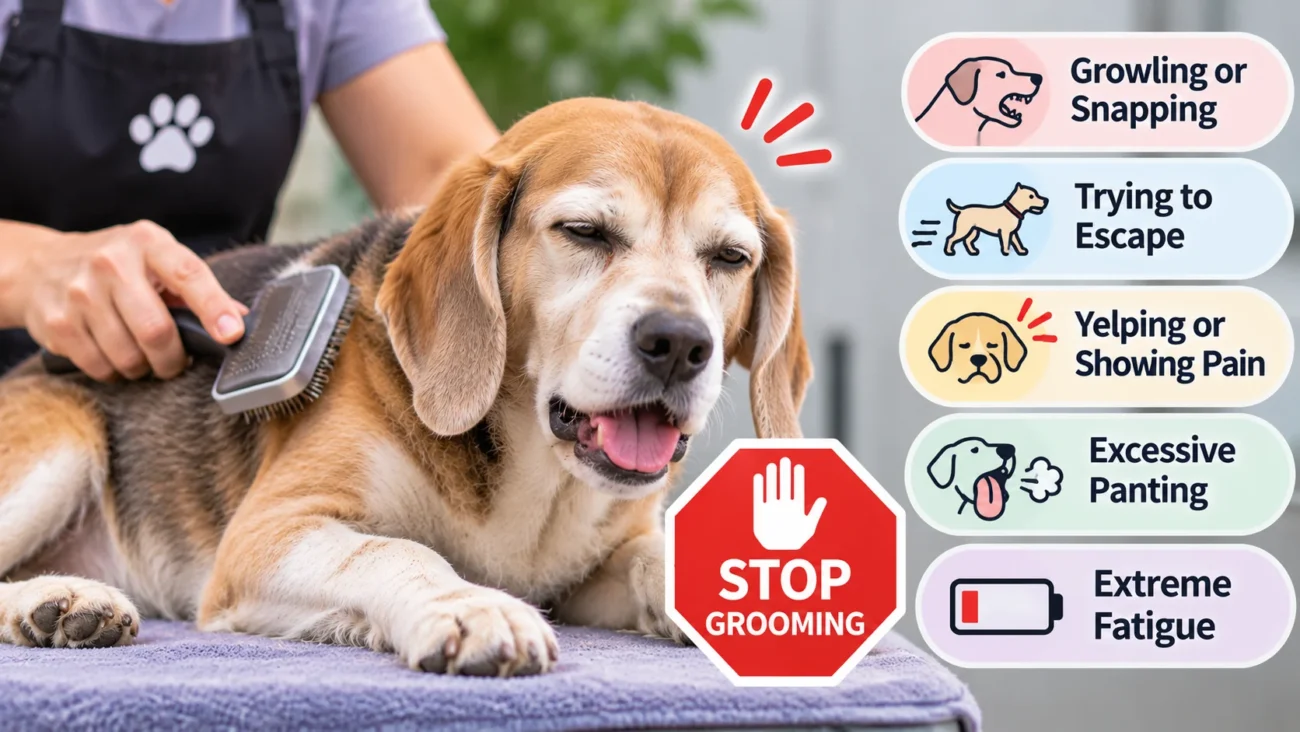
Stop grooming when your senior dog shows signs of pain, significant distress, or physical exhaustion. Continuing through discomfort can increase the risk of injury and make future grooming harder.
Warning signs include:
- Repeated attempts to escape or pull away.
- Growling, snapping, or sudden defensive behavior.
- Yelping when a body part is touched.
- Shaking, unusual panting, or marked agitation.
- Difficulty standing or repeated loss of balance.
- Severe fatigue or inability to remain comfortable.
Some signs may reflect pain, anxiety, or an underlying illness rather than simple dislike of grooming.
If your dog suddenly becomes intolerant of handling, arrange a veterinary assessment. Difficulty breathing, collapse, or severe weakness requires prompt veterinary attention.
The AKC explains that conditions such as arthritis and other painful problems can make dogs resist brushing.
What Common Senior Dog Haircut Mistakes Should You Avoid?
Most problems arise when grooming expectations are not adjusted to the dog’s changing comfort and physical abilities.
- Choosing appearance over comfort: Complicated hairstyles may require unnecessary handling and extended standing.
- Shaving without considering coat type: Removing a protective double coat can create avoidable problems.
- Ignoring resistance: Sudden grooming intolerance may indicate pain or another health concern.
- Cutting mats with scissors: Skin can be trapped within tightly matted fur.
- Using slippery surfaces: Unstable footing increases strain and the possibility of falls.
- Forcing a complete appointment: Shorter sessions may be more appropriate for dogs with reduced stamina.
- Overlooking new skin changes: Unusual lumps, wounds, or hair loss deserve attention rather than being clipped over.
A successful senior haircut should leave your dog comfortable, clean, and easier to care for.
Frequently Asked Questions About Senior Dog Haircuts
1. Is it safe to give a 15-year-old dog a haircut?
It can be safe if the dog is medically stable and tolerates grooming comfortably. Chronological age alone does not determine safety. A veterinarian should assess dogs with significant illness, weakness, or pain before a demanding grooming appointment.
2. Can a senior dog get a puppy cut?
Yes, a modified puppy cut can work for older dogs with suitable, continuously growing coats. The length should be chosen for comfort and easy maintenance rather than appearance alone. It is not appropriate for every coat type.
3. Should an old dog be bathed before a haircut?
Not always. Bathing can help with coat preparation, but a full bath may be tiring for a frail dog. A groomer may modify the bathing routine based on coat condition, skin health, and the dog’s stamina.
4. Can a senior dog be groomed while lying down?
Yes. Some brushing and trimming tasks can be performed while a dog rests in a comfortable position. The groomer must still maintain safe access and avoid forcing the dog to roll or stretch painfully.
5. Is sedation necessary for grooming an elderly dog?
No. Most senior dogs do not automatically require sedation. If grooming cannot be completed safely because of severe pain, fear, or matting, a veterinarian can determine whether medically supervised sedation or another approach is appropriate.
6. What if my senior dog refuses to be groomed?
Stop the session and consider whether pain, fear, sensory changes, or fatigue could explain the resistance. If the behavior is new or persistent, arrange a veterinary examination and discuss a gentler grooming plan.
Final Thoughts: Choose Comfort Over the Perfect Haircut
A senior dog haircut should support your dog’s comfort, cleanliness, and quality of life. The most suitable approach depends on coat type, physical condition, grooming tolerance, and the amount of maintenance needed.
Choose a manageable style, provide secure footing, use gentle handling, and allow breaks. For dogs with arthritis, severe matting, or medical concerns, work with a veterinarian and an experienced groomer to develop a safe plan.
The best result is not necessarily the shortest coat or the neatest hairstyle. It is a comfortable older dog whose coat remains clean, healthy, and manageable.


