
Quick Answer
If your dog is scared of a haircut, stop trying to complete the trim while they are frightened. Help them become comfortable with gentle handling, grooming tools, and clipper sounds through gradual, reward-based practice. Keep sessions short, watch for stress signals, and never force a frightened dog to stay still. If your dog panics, becomes aggressive, or may be in pain, seek veterinary or qualified grooming support.
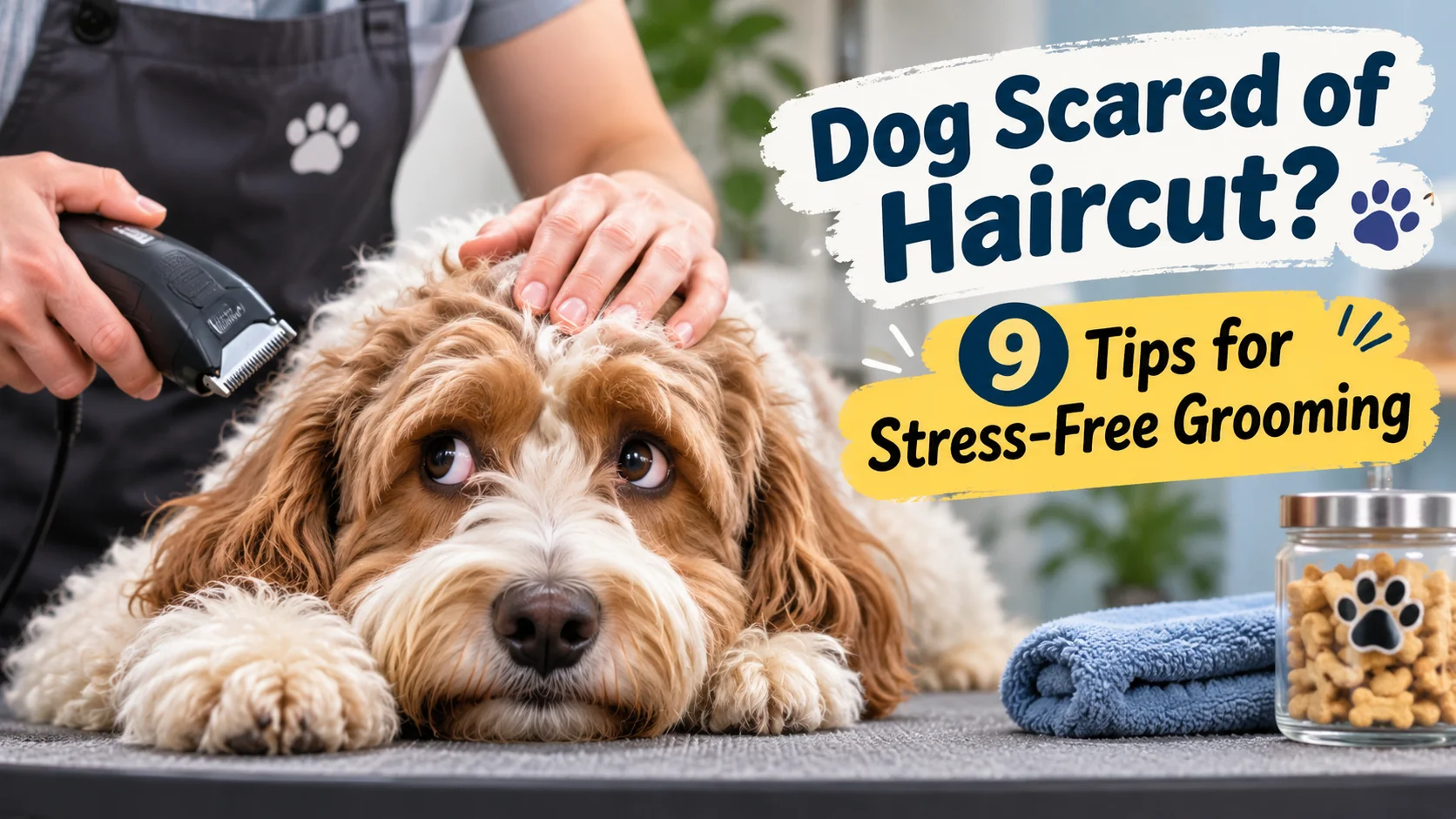
A dog scared of a haircut may tremble when clippers appear, pull away from scissors, or refuse to stand on the grooming table. Some dogs become frightened before trimming even begins.
The problem is not necessarily stubbornness. Haircuts involve unfamiliar sounds, vibrations, physical handling, and sometimes uncomfortable sensations. A dog that has experienced a painful or frightening grooming session may also remember that experience.
The goal is to help your dog feel safer during grooming rather than simply getting the haircut finished. The following nine approaches explain how to recognize the problem, reduce fear, and decide when professional assistance is the better option.
Why Is Your Dog Scared of a Haircut?
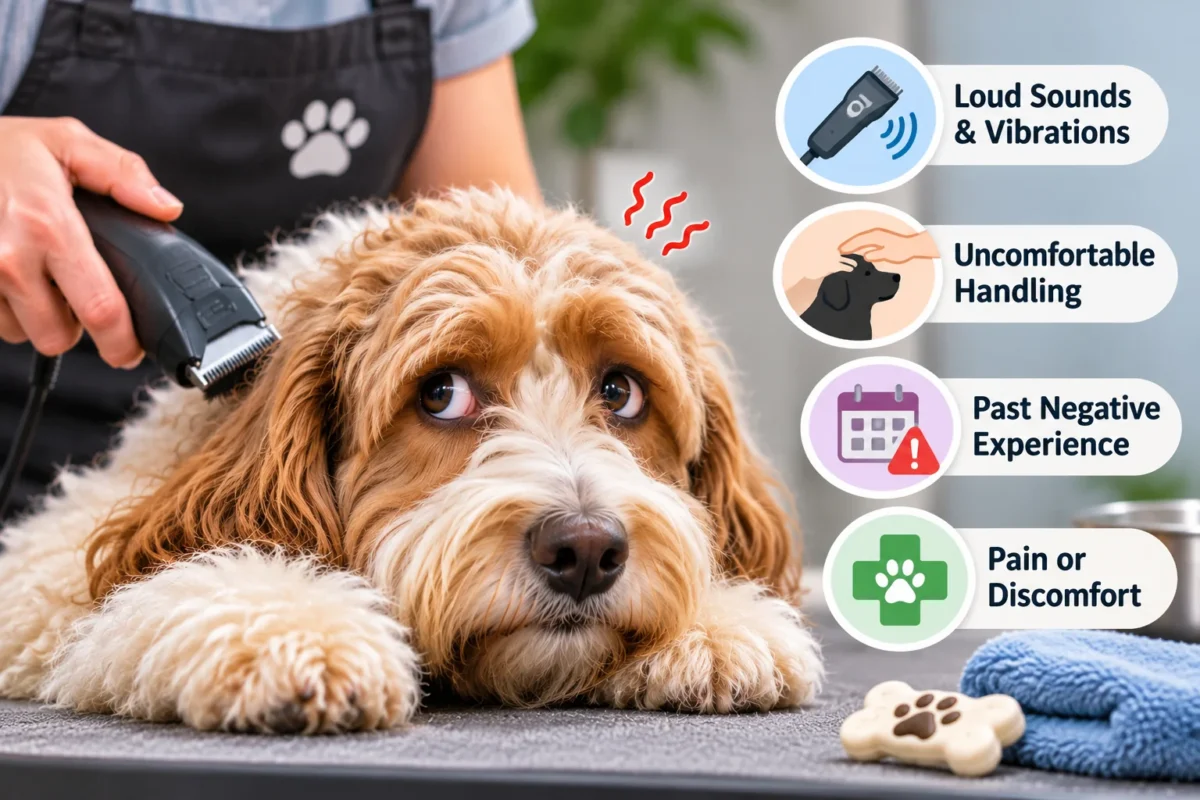
Dogs may fear haircuts because of clipper noise, uncomfortable handling, unfamiliar surroundings, previous experiences, or underlying pain. The trigger is different for every dog, so identifying what causes the reaction is the first step.
Loud Sounds and Clipper Vibrations
Electric grooming clippers produce buzzing sounds and vibrations. A dog that is sensitive to noise may become uncomfortable as soon as the tool is switched on.
Others tolerate the sound but become frightened when vibrating clippers touch their coat.
Uncomfortable Handling
Haircuts require dogs to remain relatively still while their legs, face, ears, belly, and tail are handled.
Some dogs dislike having their paws lifted or their heads held. Others feel insecure on raised or slippery grooming surfaces.
Previous Frightening Experiences
A painful tug on tangled hair, a minor clipper injury, or overly forceful restraint can create an unpleasant association with grooming.
Dogs may begin anticipating discomfort whenever they see the same tools or enter the grooming area.
Pain or Physical Discomfort
Skin inflammation, painful matting, ear problems, arthritis, or injuries can make grooming uncomfortable.
If a previously relaxed dog suddenly becomes frightened during haircuts, arrange a veterinary assessment rather than assuming the issue is purely behavioral.
How Can You Tell If Your Dog Is Too Scared for a Haircut?
A dog may be too frightened to continue grooming when their behavior changes from mild uncertainty to persistent avoidance, distress, or defensive reactions.
Watch for these signals:
- Body tension: stiff posture, lowered body, tucked tail, or ears pinned back.
- Avoidance: repeatedly turning away, hiding, backing up, or trying to escape.
- Stress behaviors: repeated lip licking, yawning, shaking off, or panting unrelated to heat.
- Physical distress: trembling, excessive drooling, or difficulty settling.
- Defensive behavior: growling, snapping, or attempting to bite.
- Freezing: remaining unusually motionless with a tense body or frightened expression.
One behavior alone does not always prove fear. Consider the dog’s normal behavior, the surrounding situation, and whether several signals appear together.
Safety Warning
Stop using clippers or scissors if your dog struggles, freezes in fear, growls, snaps, or attempts to escape. Never continue cutting near a moving dog’s eyes, ears, or sensitive skin. A frightened dog’s sudden movement can cause accidental injuries.
How Do You Help a Dog That Is Scared of Haircuts?
The most useful approach is gradual desensitization paired with positive experiences. Instead of forcing your dog through a complete haircut, introduce manageable parts of grooming while the dog remains relaxed.
These nine steps can help you build tolerance safely.
1. Start With Grooming Tools Switched Off
Place an unplugged or switched-off clipper where your dog can see it without becoming frightened.
Reward relaxed behavior with a small, tasty treat. Allow your dog to approach or investigate voluntarily, without pushing the tool toward them.
If your dog backs away or refuses food because they seem worried, increase the distance.
Repeat until the tool’s presence no longer causes noticeable concern before attempting another step.
2. Introduce Clipper Sounds Gradually
Some dogs tolerate the appearance of clippers but react strongly when they start buzzing.
Switch on the clippers at a distance where your dog remains comfortable. Pair the brief sound with a favorite reward, then switch the clippers off.
Over separate successful practices, gradually decrease the distance or increase the duration. Change only one difficulty at a time.
If your dog becomes frightened, return to a quieter, shorter, or more distant exposure.
3. Practice Gentle Touch Before Trimming
A dog may be more concerned about being held than about the grooming tool itself.
Begin with brief, gentle contact on a comfortable area such as the shoulder or chest. Offer a treat and release your hand.
As your dog becomes comfortable, practice touching other areas that need grooming.
Avoid lifting paws, holding the chin, or manipulating sensitive areas until your dog can accept simpler handling without fear.
4. Create a Calm Grooming Environment
A quiet, familiar setting can reduce unnecessary stimulation.
- Choose a room away from sudden noises and household activity.
- Use a stable, non-slip surface.
- Provide comfortable lighting.
- Keep grooming tools organized and within reach.
- Allow your dog to stand or settle in a natural position.
For many dogs, a secure floor-level area is less intimidating than a raised grooming table.
Avoid restraints intended to prevent an actively panicking dog from escaping. Seek professional help if safe handling is not possible.
5. Use Rewards to Build Positive Associations
Reward-based training helps your dog associate grooming-related sights, sounds, and handling with pleasant experiences.
Use small portions of a food your dog enjoys and can safely eat. Offer rewards during easy exposures before fear develops.
For example, you might briefly show the clippers, provide a treat, and then put the clippers away.
If your dog is too distressed to eat, do not simply offer better treats and continue cutting. Reduce the intensity of the experience instead.
6. Keep Haircut Practice Short
Short, successful practice sessions are usually more productive than lengthy sessions that end in distress.
For an especially nervous dog, an early session may involve only looking at clippers or accepting a few seconds of gentle handling.
Actual trimming should begin only after your dog tolerates the necessary preparation and handling.
End while your dog is comfortable. A complete haircut does not need to happen in one sitting.
Practical Tip
Measure progress by your dog’s comfort, not by the amount of hair removed. A dog that calmly accepts the sound of clippers has made meaningful progress even if no haircut happens that day.
7. Teach Your Dog That They Can Request a Break
Cooperative care training encourages dogs to participate voluntarily in grooming procedures.
For example, a dog can learn to rest their chin on a target or remain on a comfortable mat while being gently handled.
The handler pauses when the dog lifts their chin or moves away.
Giving a dog a predictable way to stop interaction can make the experience less threatening.
Teach this behavior separately before using it during actual haircutting.
8. Choose a Groomer Experienced With Fearful Dogs
If your dog needs a haircut but is not comfortable with home grooming, look for a professional experienced in low-stress handling and reward-based methods.
Explain your dog’s triggers before the appointment.
Ask whether the groomer can offer a quiet appointment, introductory visits, shorter sessions, or a partial groom.
A responsible groomer should be willing to pause or stop when continued handling would be unsafe.
A shorter, less polished haircut may be a better outcome than pushing a frightened dog through a full styling session.
9. Get Veterinary Help When Fear Is Severe
Some dogs experience fear that cannot be managed with basic home practice, especially when pain, severe matting, or aggressive defensive behavior is involved.
A veterinarian can assess potential medical causes and recommend an appropriate management plan.
For severe anxiety, veterinary-guided behavior treatment or prescription medication may sometimes be appropriate. Never give your dog human sedatives or unprescribed calming medication before grooming.
What Should You Do If Your Dog Is Scared of Hair Clippers?
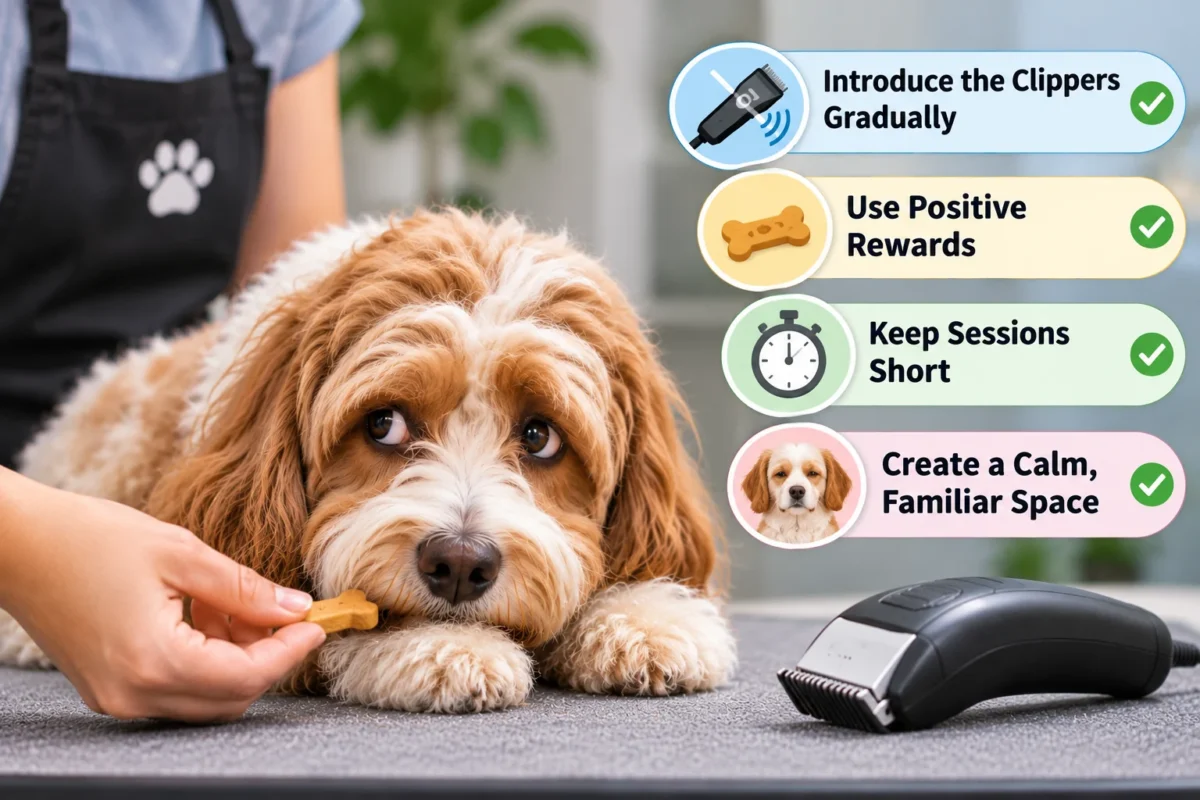
If clippers are the main trigger, separate training for their appearance, sound, vibration, and contact with the coat.
A simple progression is:
- Show switched-off clippers from a comfortable distance and reward relaxed behavior.
- Move the switched-off tool closer over multiple successful sessions.
- Introduce a brief clipper sound from farther away.
- Gradually practice the sound closer to your dog.
- Introduce gentle contact with the switched-off tool on a less sensitive body area.
- When your dog comfortably accepts each earlier stage, practice brief contact with the vibrating tool without cutting hair.
- Consider a very small amount of actual trimming only when the dog remains comfortable and the handler can perform it safely.
This is a progression, not a checklist to finish in a single day. Some dogs need many separate sessions, and some require professional behavior support.
Always use suitable, maintained pet-grooming equipment. Hot blades, snagging tools, and pulling against tangled hair can create discomfort and make fear worse.
Should You Stop or Continue When Your Dog Is Afraid?
Continue only when your dog remains comfortable and you can safely control the grooming equipment. If fear increases, pause and reduce the difficulty. If your dog panics, struggles forcefully, or becomes defensive, stop the haircut.
The following guide helps distinguish manageable practice from situations needing assistance.
| Dog’s Behavior | Recommended Action |
|---|---|
| Relaxed, accepting rewards, comfortable with handling | Continue gentle practice at the current difficulty. |
| Looking away, mild avoidance, increasing tension | Pause and return to an easier training step. |
| Persistent trembling, hiding, repeated escape attempts | Stop the haircut and reassess the plan. |
| Growling, snapping, biting, or panic | Stop immediately and seek qualified assistance. |
| Pain, injured skin, or severe matting | Arrange veterinary assessment before attempting removal. |
These are practical observations rather than a diagnostic scale. Behavior must always be interpreted in context.
What If Your Dog Needs a Haircut but Is Too Frightened?
If your dog urgently needs coat care but cannot tolerate a haircut, the safest approach depends on the condition of the coat and the severity of the fear.
For minor cosmetic trimming, postponing the haircut while you work on comfort is often reasonable.
However, severe matting, soiling, skin problems, or hair obstructing necessary hygiene may require professional attention rather than waiting for training to resolve the problem.
Do not pull apart tightly matted fur or cut close to the skin with scissors. Matted skin can be difficult to distinguish from hair and is vulnerable to accidental cuts.
A veterinarian can assess painful or severe matting and help determine whether medically supervised grooming is necessary.
How Can You Prevent Haircut Anxiety From Returning?
Continue practicing comfortable grooming experiences even when your dog is not due for a haircut.
Regular, low-pressure handling helps keep grooming tools and procedures familiar. Avoid saving every handling exercise for the day of an appointment.
- Practice gentle coat brushing without pulling.
- Occasionally show grooming tools and reward calm responses.
- Maintain a clean, manageable coat appropriate for your dog’s breed and coat type.
- Continue teaching voluntary participation and break signals.
- Tell professional groomers about your dog’s preferences and known triggers.
- Watch for changes in tolerance that may indicate a new health problem.
Progress may not follow a straight line. A dog that was comfortable during one session may need an easier approach the next time.
Respond to the dog’s behavior rather than pushing ahead simply because a previous session went well.
Frequently Asked Questions
Can a dog overcome fear of haircuts?
Many dogs can become more comfortable with haircuts through gradual, reward-based training. Improvement depends on the trigger, severity of fear, physical health, and training approach. Some dogs need ongoing accommodations or professional support.
How long does it take to get a dog used to grooming clippers?
There is no reliable fixed timeline. Some dogs improve after several comfortable sessions, while others require weeks or longer. Move forward only when your dog remains relaxed at the current step.
Why does my dog suddenly hate haircuts?
Sudden haircut fear may result from a painful experience, sensitivity to a particular tool, or a developing medical problem. A veterinary examination is appropriate when a dog unexpectedly reacts to handling they previously tolerated.
Is it okay to hold a scared dog still for a haircut?
Do not forcibly hold a panicking or struggling dog in place to finish a haircut. This can increase fear and the risk of injury. Necessary handling should be planned with qualified professionals using appropriate safety measures.
Can I use scissors instead of clippers if my dog is scared?
Not automatically. Scissors may avoid clipper noise, but they can cause serious injuries if a frightened dog moves suddenly. Trimming near the face, skin folds, or matted areas is best left to a trained professional when the dog cannot remain comfortable and still.
Should I give my dog calming medication before grooming?
Only give medication specifically recommended or prescribed by your veterinarian. Some dogs with severe grooming anxiety may benefit from veterinary-guided treatment, but medication choice and safety depend on the individual dog’s health and behavior.
Final Thoughts
A dog scared of a haircut needs patience, gradual training, and an approach that respects their comfort. Start by identifying the trigger, introduce tools through positive experiences, and give your dog a reliable way to take breaks.
Never prioritize a finished hairstyle over your dog’s safety. When fear, pain, or severe matting makes grooming difficult, professional assistance can help protect your dog’s welfare while developing a more manageable long-term routine.


