
Quick Answer
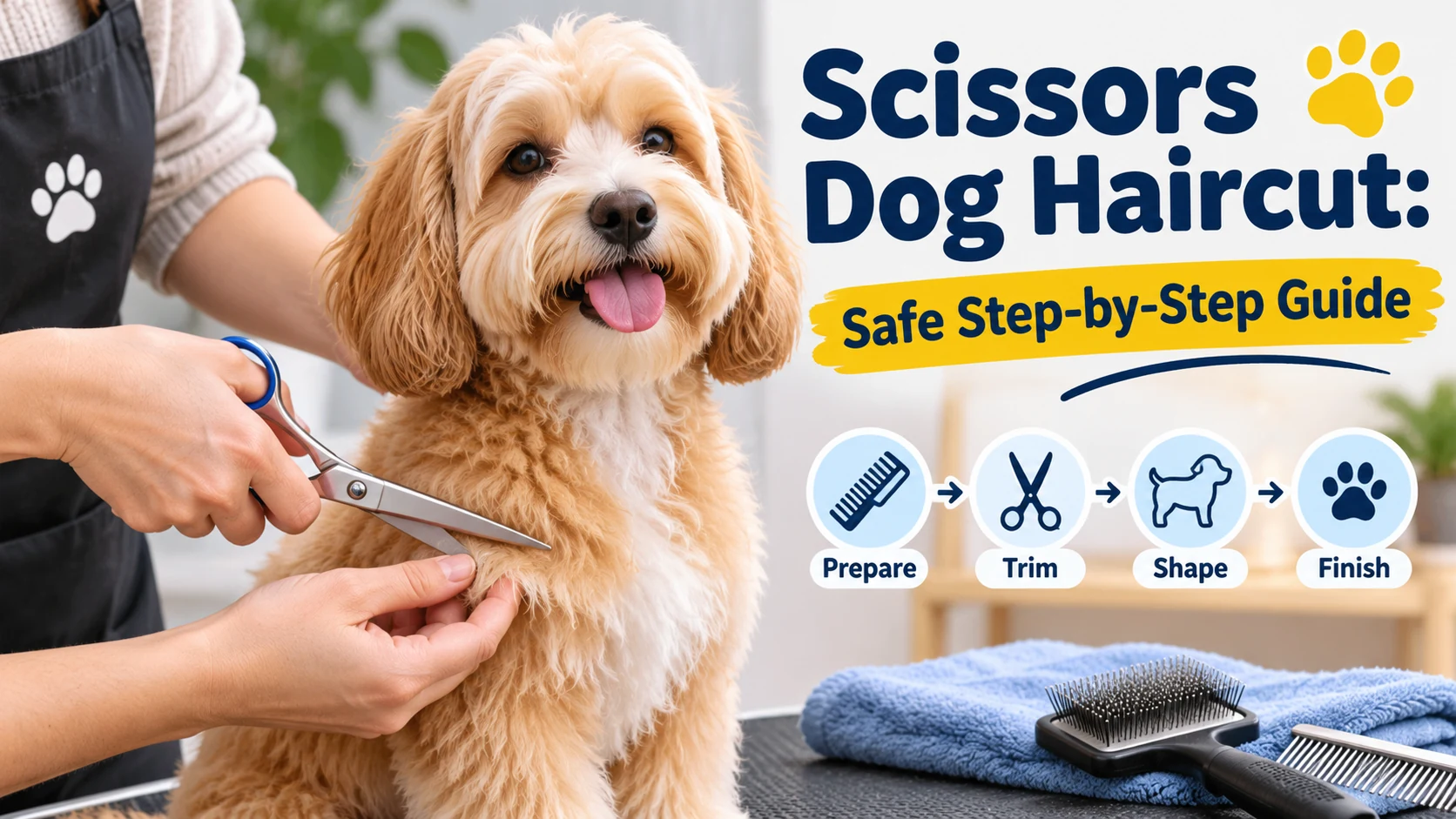
A scissors dog haircut can safely tidy loose, overgrown hair when your dog is calm, the coat is clean and dry, and you can clearly see the hair being cut. Use dog-grooming scissors, remove only small amounts, and keep the blades away from skin, eyes, ears, and other sensitive areas. Never cut tightly matted hair with scissors. Leave difficult areas and full haircuts to a qualified groomer.
Giving your dog a haircut with scissors can help maintain a neat appearance between professional grooming appointments. However, cutting dog hair is different from cutting human hair because a dog’s skin can be loose, thin, and hidden beneath the coat.
A successful home trim is less about creating a perfect hairstyle and more about removing unnecessary length without causing discomfort. Understanding your dog’s coat, preparing the right tools, and recognizing when to stop are essential.
Can You Safely Cut Your Dog’s Hair With Scissors?
Yes, you can use scissors to trim certain areas of your dog’s coat, provided the hair is accessible, free of mats, and sufficiently separated from the skin. A small maintenance trim is generally more appropriate for beginners than a complete haircut.
Scissor trimming may be useful for shortening long feathering, tidying uneven coat ends, or maintaining a previously established haircut.
However, not every dog needs its coat cut. Short-haired dogs usually benefit more from brushing and bathing, while some double-coated breeds should retain their protective coat structure.
Before trimming, consider three questions:
- Coat type: Does the coat normally require cutting, or is regular brushing more appropriate?
- Dog behavior: Can your dog stand or sit calmly without sudden movements?
- Visibility: Can you clearly distinguish the loose hair from the underlying skin?
If any answer raises concerns, postpone the haircut and seek advice from an experienced groomer.
Which Scissors and Grooming Tools Should You Use?
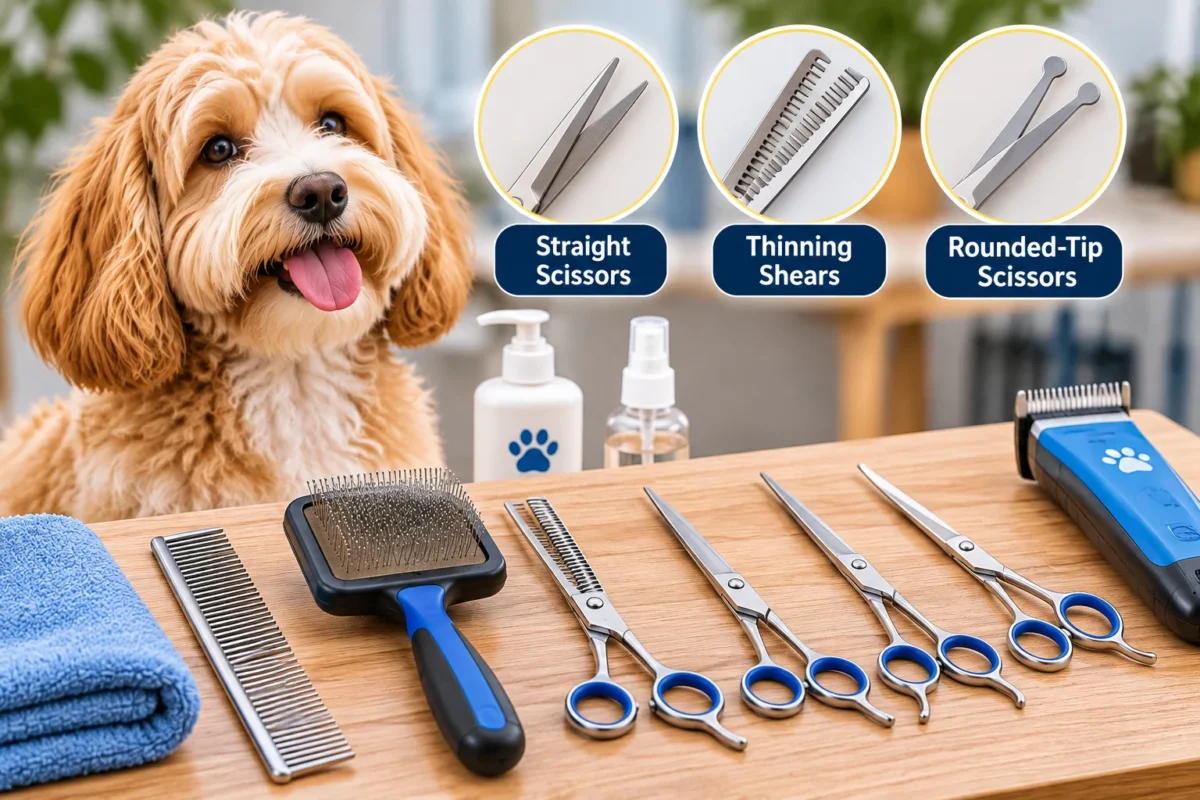
Dog-grooming scissors are designed for controlling coat length and shape. Different blade styles serve different purposes, although beginners should prioritize safe handling over complicated styling.
| Tool | Primary Purpose | Safety Consideration |
|---|---|---|
| Straight grooming scissors | Tidying accessible coat ends | Keep blades away from the skin |
| Rounded-tip scissors | Small maintenance trims | Rounded tips do not eliminate cutting risks |
| Curved grooming scissors | Creating rounded outlines | Require careful blade positioning |
| Thinning shears | Softening visible trimming lines | Can remove more hair than expected |
| Grooming comb | Separating and checking the coat | Never pull painfully through tangles |
For basic home maintenance, a suitable grooming comb, brush, and small pair of quality rounded-tip grooming scissors may be sufficient. A non-slip grooming surface and treats can also help keep the experience comfortable.
Avoid damaged, loose, or poorly maintained scissors. Do not assume ordinary household scissors are suitable for safely trimming a moving animal.
How Do You Prepare Your Dog Before a Scissor Haircut?
Preparation makes scissor trimming easier and reduces the temptation to cut through tangled or dirty fur.
- Choose a quiet location. Work somewhere familiar, with good lighting and minimal distractions.
- Secure a non-slip surface. Keep your dog comfortably supported and never leave them unattended on an elevated grooming table.
- Brush the coat. Gently remove loose hair and manageable tangles using a coat-appropriate brush.
- Check for mats. Examine areas behind the ears, under the legs, around the collar, and near the tail.
- Clean and dry the coat. When bathing is appropriate, use dog-specific shampoo and dry the coat thoroughly before trimming.
- Introduce the scissors. Allow your dog to become familiar with the closed tool before beginning.
Dogs that are unfamiliar with grooming may benefit from several short practice sessions involving gentle brushing, handling, and rewards before any cutting begins.
Warning
Never try to cut out tightly matted hair with scissors. Skin can become trapped inside a mat, making accidental injury possible. Contact a professional groomer or veterinarian for safe removal, especially if the skin looks irritated or painful.
The VCA Animal Hospitals coat-care guidance explains why scissors should not be used to remove mats.
How to Give Your Dog a Scissors Haircut Step by Step
Begin with minor adjustments to hair that extends beyond the natural outline of the coat. Avoid trying to create a completely new hairstyle during your first grooming session.
Step 1: Brush and Examine the Hair
Comb through the area you intend to trim. Look for loose hair ends and confirm that the skin beneath them is clearly separated from the intended cutting line.
If the comb catches or your dog reacts with discomfort, stop and investigate rather than pulling harder.
Step 2: Establish a Conservative Trimming Length
Decide which loose ends genuinely need shortening. Keep the initial haircut longer than your intended final appearance because you can remove additional length later.
Preserving more hair also helps avoid exposing skin or creating unexpectedly uneven sections.
Step 3: Trim Small Sections of Accessible Hair
Position the scissors so the cutting path stays clearly away from the skin. Trim only visible, freely hanging hair, taking small amounts with controlled movements.
Never cut into a thick section when you cannot see where its base begins. Avoid pulling hair tight because that can move the skin toward the blades.
Step 4: Work Around the Coat’s Natural Shape
Follow the existing coat outline instead of cutting a straight line across every area. For example, a small adjustment to long chest feathering may look more natural than shortening the entire section evenly.
Take particular care around joints, loose skin, and body folds. These are not appropriate places for blind scissor cutting.
Step 5: Comb and Recheck the Results
After each small section, comb the coat into its normal position. Inspect the outline from a comfortable distance to see whether more trimming is actually necessary.
Do not repeatedly cut one area in pursuit of perfect symmetry. Minor unevenness is preferable to accidentally cutting too close.
Step 6: Stop Before Your Dog Becomes Stressed
Watch for attempts to escape, repeated head turning, trembling, growling, or difficulty remaining still. Close and put down the scissors whenever your dog moves unexpectedly.
Reward calm cooperation and finish the session while your dog is comfortable. The remaining work can be handled during another session or by a groomer.
How Should You Handle the Face, Paws, and Tail?
These areas require greater caution because sudden movement and hidden skin structures make scissor injuries more likely.
Face and Eye Area
Hair blocking your dog’s vision may need maintenance, but trimming immediately beside the eyes is not a suitable beginner task.
Arrange a professional demonstration before attempting facial trimming. Never point an open scissor blade toward an eye, nose, lip, or moving head.
Paws and Between the Toes
Long hair extending beyond the outer paw outline may sometimes be tidied with careful guidance. However, the skin between toes and paw pads is delicate and difficult to distinguish from surrounding fur.
Do not insert scissors between the pads or cut hair blindly beneath the foot. A professional can determine whether trimming is necessary for traction or hygiene.
Tail and Rear Area
Long tail feathering may be lightly shortened if it hangs freely and the cutting line is clearly separated from the tail itself.
Be especially cautious around the tail base, anus, and genital area. For sanitary trimming, professional grooming is the safer choice for inexperienced owners.
The ASPCA’s at-home grooming recommendations discuss careful trimming around the face, feet, and tail.
Which Dog Coat Types Are Suitable for Scissor Trimming?
The suitability of scissors depends on the coat’s structure, not simply its length.
- Continuously growing coats: Dogs such as Poodles may need regular haircuts, although complete styling often requires professional training and clippers.
- Long, silky coats: Light trimming may help manage excess length while preserving the coat’s natural appearance.
- Wavy coats: Accessible ends may be tidied, but tangles must be addressed before cutting.
- Wire coats: Some benefit from hand stripping rather than ordinary cutting, depending on coat condition and grooming goals.
- Double coats: Usually need brushing and controlled maintenance rather than extensive shortening or shaving.
- Short, smooth coats: Normally do not require scissor haircuts.
For a double-coated breed, ask a groomer about the protective outer coat and insulating undercoat before significantly reducing coat length.
Practical Tip
If you are unsure whether your dog’s coat should be cut, ask a qualified groomer to identify the coat type and demonstrate an appropriate maintenance routine before using scissors at home.
What Common Scissor-Trimming Mistakes Should You Avoid?
Most avoidable problems arise from rushing, poor visibility, unsuitable equipment, or attempting work beyond the owner’s experience.
- Cutting mats: Hidden skin may be caught inside tightly tangled hair.
- Trimming too much at once: Large cuts are harder to control and correct.
- Working on a moving dog: Unexpected movement can bring skin into the blade path.
- Ignoring coat type: Excessive cutting may interfere with the intended coat structure.
- Using blunt or damaged scissors: Poorly functioning tools reduce control.
- Forcing restraint: Struggling or distressed dogs should not be subjected to continued scissor work.
Another common mistake is treating rounded-tip scissors as injury-proof. The tips may reduce some risks, but the cutting edges remain sharp.
How Often Should You Give Your Dog a Scissor Trim?
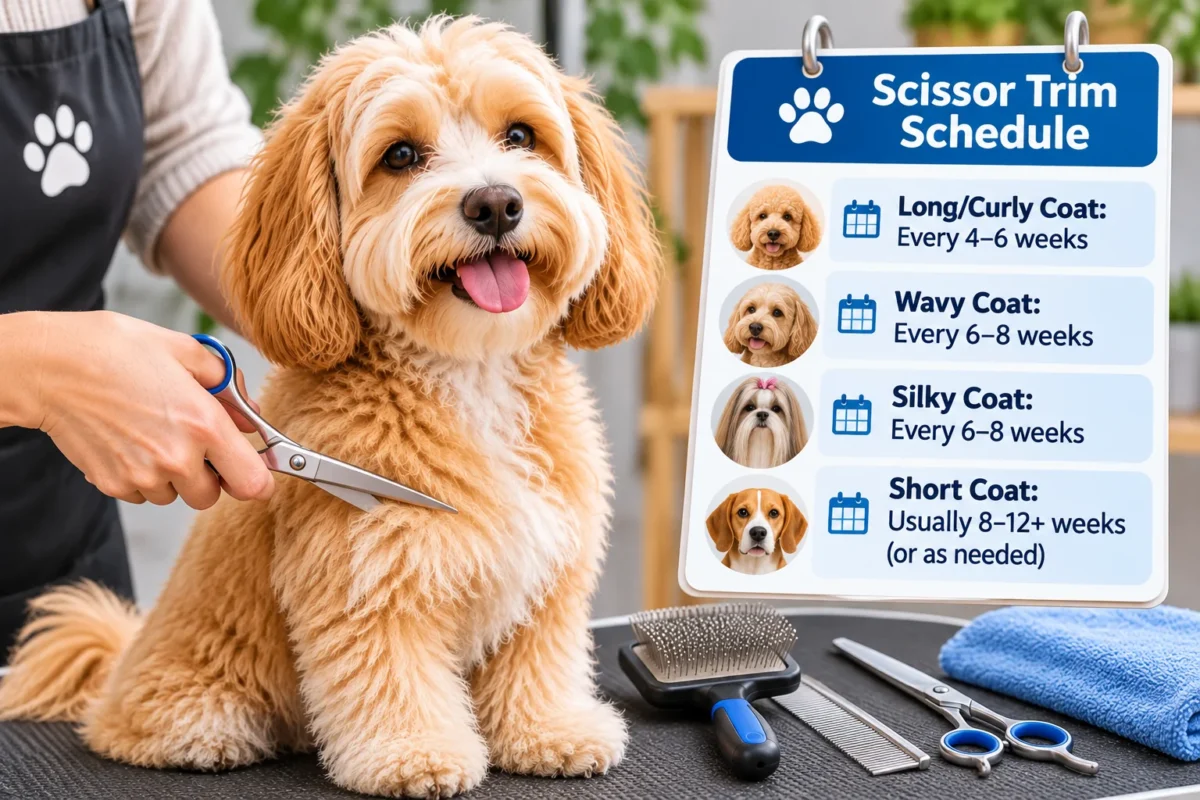
There is no universal trimming schedule. The appropriate interval depends on coat growth, hairstyle, activity level, and whether excess hair interferes with comfort or hygiene.
Dogs with continuously growing coats generally need more frequent professional grooming than dogs with naturally short or seasonally shedding coats.
Check the coat regularly for tangles, excess length, and changes in skin condition. Brush according to the needs of the individual coat rather than relying on frequent haircuts to prevent matting.
If the coat stays manageable and the dog remains comfortable, there may be no reason to trim simply because several weeks have passed.
When Should You Choose a Professional Groomer or Veterinarian?
Professional help is appropriate whenever safe trimming requires working close to hidden skin, sensitive structures, or a dog that cannot remain comfortable during handling.
Contact a qualified groomer for extensive coat shaping, tightly tangled hair, sanitary trimming, or difficult facial work. Veterinary assessment is more appropriate when grooming reveals:
- Bleeding, cuts, or open wounds
- Inflamed, swollen, or painful skin
- Unusual lumps beneath the coat
- Persistent scratching or signs of infection
- Severe matting accompanied by discomfort
Do not attempt to cut hair away from an unexplained painful skin lesion. If an accidental cut occurs, stop grooming immediately and seek veterinary advice, particularly for bleeding, a deep wound, or an injury near the eye.
Frequently Asked Questions
Can I cut my dog’s hair with regular scissors?
Purpose-designed grooming scissors are preferable because they offer better control for coat maintenance. Ordinary household scissors may be unsuitable, particularly near moving or sensitive body parts.
Is it better to cut dog hair wet or dry?
For a simple maintenance trim, clean, fully dry hair generally makes the natural coat shape easier to assess. Professional groomers may use other techniques according to coat type and styling needs.
Can scissors replace dog grooming clippers?
Not always. Scissors are useful for selected finishing tasks, while clippers may be more appropriate for certain full-body haircuts. Both require proper technique, and neither should be used blindly against the skin.
What if my dog refuses to stay still?
Stop cutting and return to gentle grooming practice using short sessions and positive rewards. If your dog remains anxious or difficult to handle, use a professional groomer rather than forcing the haircut.
Final Thoughts
A scissors dog haircut is best approached as careful coat maintenance rather than a complete transformation. Start with clean, untangled hair, make small adjustments, and stop whenever visibility or your dog’s comfort becomes uncertain.
Good grooming protects the dog’s comfort and skin as well as its appearance. When a task requires cutting near sensitive areas or removing severe mats, professional care is the safer option.


