
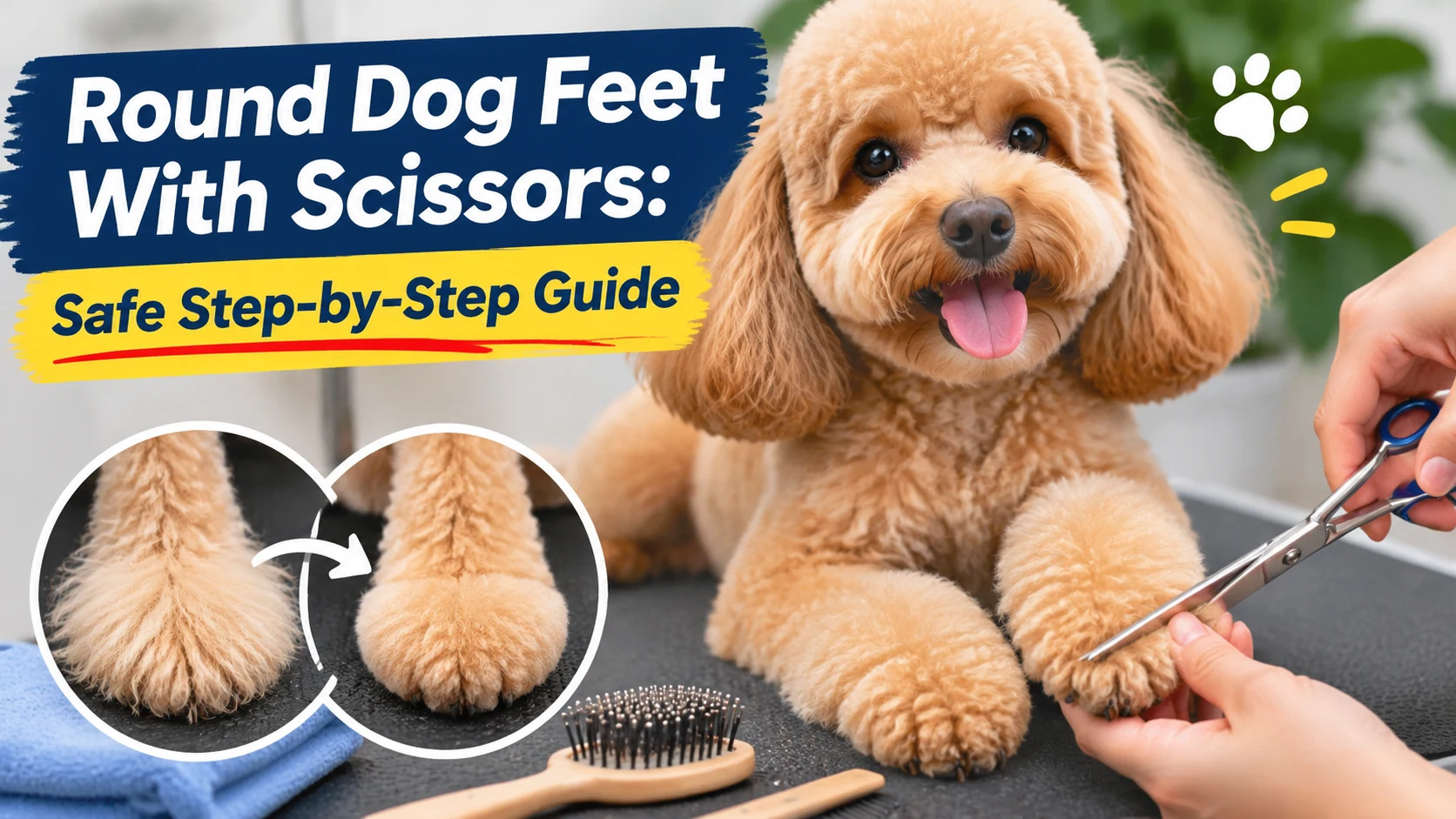
Quick Answer
To round dog feet with scissors, comb the clean, dry fur outward, then use small, controlled snips with blunt-tip grooming scissors to follow the natural outline of each paw. Work only on fur you can clearly see outside the foot; do not insert scissors between the pads or cut tight mats. If your dog jerks its paws away, stop and ask a groomer for help.
A tidy, rounded foot can make a dog’s paws look balanced without stripping away all their natural feathering. The challenge is knowing where the coat ends and delicate skin begins. The easiest place to start is the visible outer edge of a calm dog’s paw—not the spaces between the toes.
What Does It Mean to Round a Dog’s Feet?
Rounding a dog’s feet means shaping the hair around the outer edge of the paw into a soft, curved outline. Instead of leaving long tufts extending beyond the toes, the groomer trims the protruding coat to make the foot appear neat and naturally compact.
The appearance varies with coat and breed. A curly-coated dog may have a fairly tight, plush round foot; a spaniel or retriever may keep more natural feathering. A rounded outline is a styling choice, while trimming excess hair underneath the paw is a separate maintenance task.
Which Scissors Are Suitable for Rounded Dog Feet?
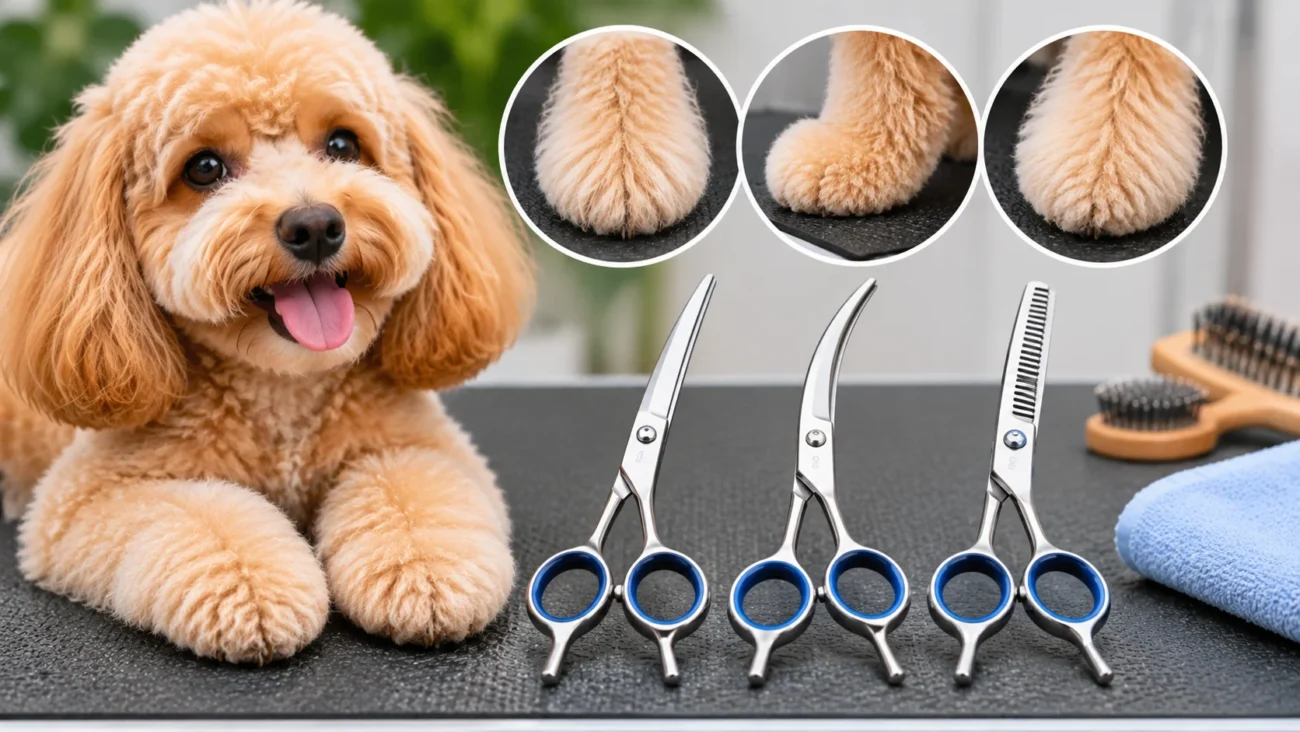
Small, sharp dog-grooming scissors with blunt or rounded tips are the most approachable choice for visible outline touch-ups. Curved shears can help follow a rounded contour, but they require the same careful handling as straight shears; a rounded tip is not a guarantee against cuts.
| Tool | Best use | Important limitation |
|---|---|---|
| Small blunt-tip straight shears | Visible fringe around the outside of a paw | Must still be kept away from toes, pads, and moving skin |
| Curved grooming shears | Blending an outer paw outline into a smooth curve | Not a shortcut for beginners; cutting edge can still injure |
| Thinning or blending shears | Softening a visible harsh edge where appropriate | Not needed for a basic paw tidy |
| Small paw trimmer | Pad-area hair maintenance after a professional demonstration | Can still catch sensitive webbing if used incorrectly |
Also prepare a fine-tooth comb, a towel, good lighting, and small treats. Avoid large household scissors: their length and pointed ends make fine work around paws harder to control.
How to Round Dog Feet With Scissors, Step by Step
These steps are for a simple outer-edge tidy on a cooperative dog, ideally after a groomer has demonstrated safe scissor positioning. They are not instructions for cutting between the toes or removing mats.
- Set up a secure, non-slip surface. Keep your dog comfortably supported and all tools within reach. If the dog needs restraint to prevent sudden movement, pause rather than forcing the trim.
- Inspect each paw. Look for redness, swelling, cuts, lodged material, sore areas, or tightly tangled fur. Do not trim over a problem you cannot clearly identify.
- Clean and dry the fur. Wipe away grit and mud, then dry thoroughly. Clean, dry hair is easier to comb into its natural shape.
- Comb the foot hair outward. Gently lift the loose hair around the toes so the strands extending beyond the natural paw boundary are easy to distinguish.
- Start with the front outline. With the foot resting naturally and the scissors kept outside the toes, take tiny snips from the visible protruding fringe. Keep the entire cutting path in view.
- Round the sides gradually. Follow the outside curve toward either side instead of cutting a deep arc in one motion. Leave enough hair for a soft, natural shape.
- Comb again and check from above. Repeatedly brushing the fur outward reveals uneven tufts. Remove only the obvious excess rather than chasing perfect symmetry.
- Assess the paw on the floor. Let your dog stand comfortably and compare the foot outlines from the front and top. Stop once they look tidy; repeat only if your dog remains relaxed.
Tip
Aim for a neat outline, not the shortest possible coat. Small adjustments with combing in between are easier to control than one large cut.
Should You Use Scissors Between Dog Paw Pads?
Not without proper training. The skin between the pads and toes is delicate, and hair can conceal its folds. Even scissors sold with rounded safety tips can nick skin if the dog moves or the blades enter a hidden crease.
Excess hair beneath the foot can interfere with traction or collect dirt, but treating that problem is different from shaping the outer foot. The American Kennel Club’s home-grooming guidance recommends learning sensitive-area trimming techniques from a groomer, breeder, or veterinary team before trying them yourself.
If hair is packed tightly between the pads, request a professional pad trim. Do not push scissor tips into the spaces or attempt to cut out mats attached close to skin.
How Do You Avoid an Uneven or Boxy Paw Shape?
The usual cause of a square-looking finish is trimming the front and sides as separate straight lines without softening where those lines meet. A rounded shape comes from a continuous outer contour rather than removing more hair overall.
- Keep the natural footprint: use the toe outline as your reference, not an imagined tiny circle.
- Comb between passes: hair that falls back into place can change the silhouette.
- Check both sides: one side may have more natural feathering than the other.
- Blend conservatively: a slightly fuller foot is preferable to exposing skin with an aggressive correction.
If the dog has a very curly, dense, or heavily feathered coat, ask a groomer which outline suits that coat type. A show-style finish and an easy-care family-pet trim may differ considerably.
What Mistakes Make Scissor Trimming Unsafe?
The biggest risks come from cutting hair whose base is hidden, attempting to trim a paw that keeps moving, and mistaking a mat for loose fur.
- Cutting through tight tangles: skin may be pulled into the mat and injured.
- Pointing blades toward toe spaces: the webbing is easy to miss.
- Holding the leg in an awkward position: the dog may jerk or resist.
- Using blunt, oversized, or household scissors: poor control encourages pulling and repeated cutting.
- Continuing when stressed: persistent paw withdrawal, growling, or attempts to escape mean the session should end.
Warning
Never cut a tight mat away from a paw with scissors. If you see bleeding, an open wound, swelling, marked pain, or a foreign object embedded in the paw, stop grooming and contact a veterinarian.
How Often Should Dog Feet Be Trimmed?
Trim when the hair begins to extend beyond the desired outline or collect dirt, not according to a rigid calendar. Coat growth, the dog’s activity level, and how much hair grows beneath the pads vary widely.
Check the paws during routine brushing, especially after muddy or wet walks. Regularly checking for mats and debris matters more than maintaining a perfectly rounded cosmetic shape. Guidance on paw-pad maintenance and mat prevention explains why the spaces around toes deserve attention.
When Is a Professional Groomer the Better Choice?
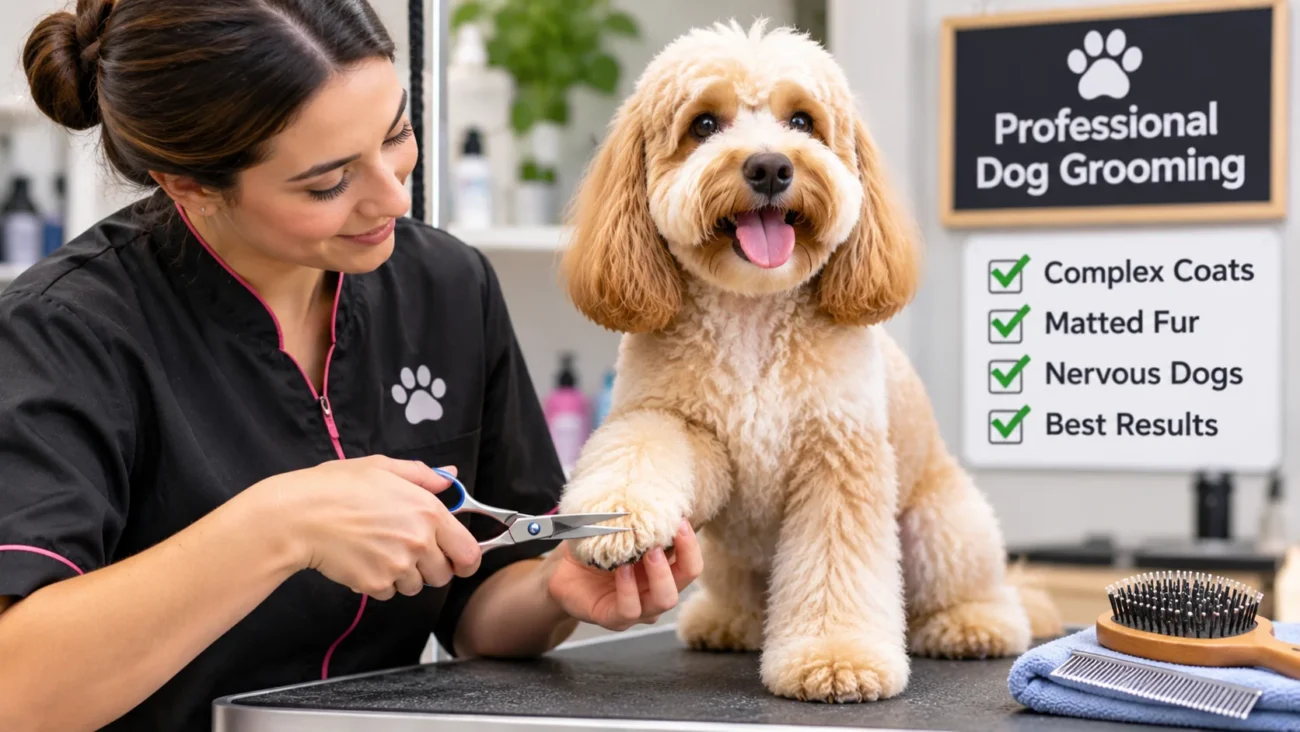
Choose a groomer when the hair is heavily matted, skin is hidden, the dog consistently pulls away, or you want a precise breed-style foot trim. A groomer can also demonstrate where the safe visible outline ends and how to introduce paw handling without a struggle.
For a dog whose paws are sore, inflamed, bleeding, or persistently licked, prioritize a veterinary assessment rather than treating the issue as a haircut problem.
Related Grooming Tool: Blunt-Tip Dog Scissors
For visible outer-foot touch-ups, look for compact dog-grooming scissors with rounded tips, a comfortable grip, and blades you can control with small snips. Do not use them to cut paw-pad mats.
As an Amazon Associate, we earn from qualifying purchases.
Frequently Asked Questions
Can beginners round a dog’s feet with scissors?
Beginners can learn simple outer-edge touch-ups, but should first get a demonstration from a qualified groomer and work only when the dog is calm and the cutting area is fully visible.
Are curved scissors better than straight scissors for dog feet?
Curved shears can make a rounded outline easier to visualize, while straight blunt-tip shears work for careful small adjustments. Control and safe positioning matter more than blade shape.
Can I round my dog’s feet without shaving the paws?
Yes. You can tidy only the visible hair beyond the outer foot outline. This does not replace separate care for overgrown hair beneath the paw pads.
Why does my dog pull away during paw trimming?
Some dogs dislike paw handling or find the position uncomfortable. Pain, mats, and anxiety can also contribute. Stop the scissors, reward calm handling in short sessions, and seek professional advice if resistance persists.
Should the fur be wet or dry before shaping rounded feet?
Dry, clean, combed fur is usually easier to shape consistently because you can see where the coat naturally falls. Do not trim over dirt, hidden tangles, or wet clumps.
Does trimming paw hair help prevent slipping?
Removing excess hair that covers the pads can improve contact with the floor for some dogs. A cosmetic trim around the outside of the paw alone may not change traction; persistent slipping warrants further evaluation.
Final Takeaway
For rounded dog feet, work on the visible outer silhouette, use small controlled snips, and let the dog’s comfort set the pace. Leave hidden pad hair, tight mats, and difficult foot handling to a professional. A clean, comfortable paw is more important than a perfectly circular trim.


