
Quick Answer
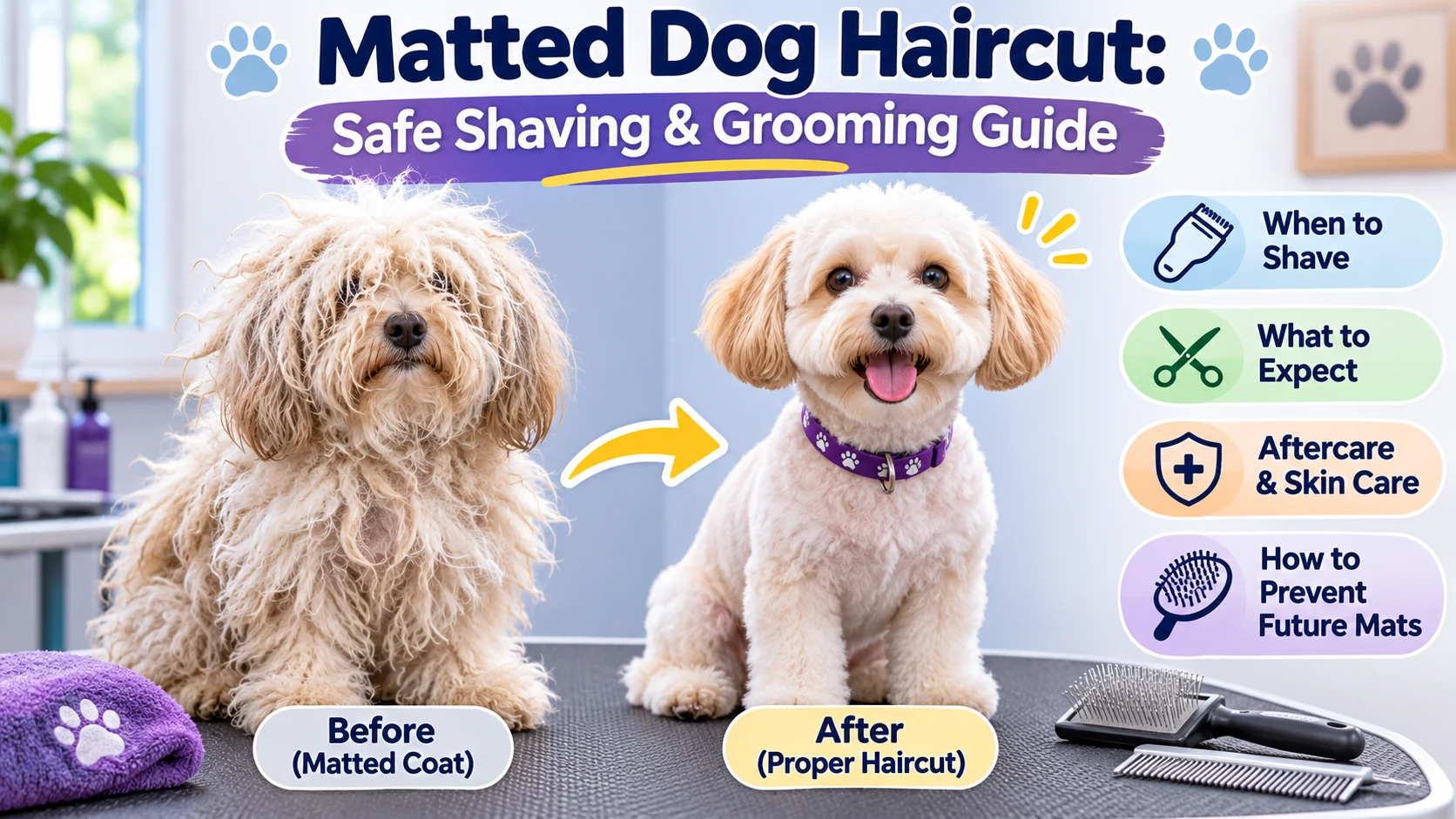
A matted dog haircut usually involves carefully clipping away tangled fur rather than cutting through knots with scissors. Small, loose tangles may be gently combed out, but tight, painful, or widespread mats need a professional groomer or veterinarian. The safest haircut may be shorter than you expected because your dog’s comfort and skin protection come before the style.
If you have been told your dog needs a shave-down, you may be wondering whether the coat can be saved. The answer depends less on how fluffy the dog looks and more on how tightly the hair is tangled near the skin.
How Can You Tell Whether Your Dog Needs a Haircut or a Shave?
Loose tangles and tightly felted mats require different approaches. If individual hairs can separate gently without pulling your dog’s skin, careful brushing may be possible. When hair forms a dense layer close to the body, professional clipping is usually the more comfortable choice.
Do not judge matting by the outer surface alone. A curly or long coat can look tidy on top while dense tangles remain underneath. You can part the hair and look for knots, but do not tug or force a comb against the skin to investigate.
| Coat condition | Likely grooming approach | What to do |
|---|---|---|
| A few soft, loose tangles | Gentle finger separation and combing | Stop if the dog resists or the skin pulls. |
| Isolated, tight knots | Professional spot clipping may be needed | Arrange a groomer assessment. |
| Large patches or a felted, pelted coat | Professional shave-down is often necessary | Avoid home cutting and prolonged brushing. |
| Mats with wounds, discharge, or marked pain | Veterinary assessment before or during removal | Contact your veterinarian promptly. |
Why Do Groomers Shave Matted Dogs Instead of Brushing Everything Out?
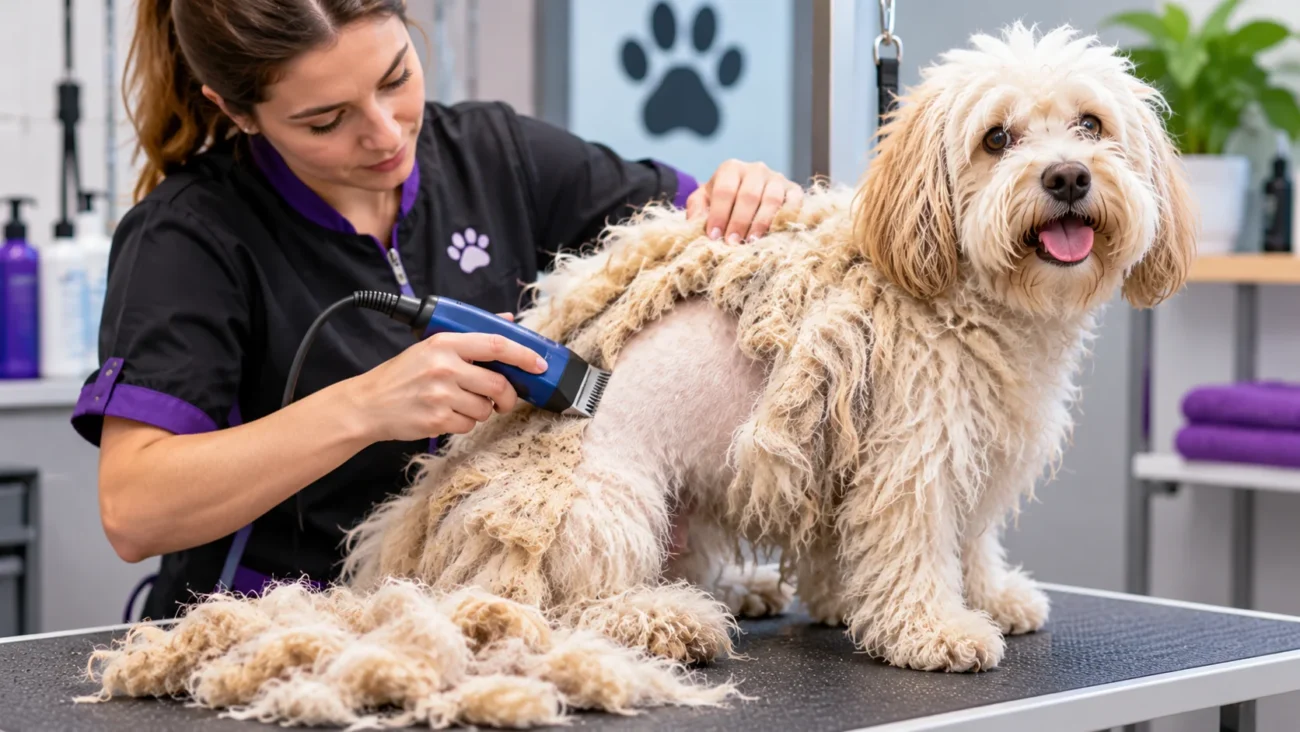
Groomers recommend shaving when brushing would be excessively painful, lengthy, or damaging. A tight mat grips surrounding hairs and skin, so pulling a comb through it can hurt each time the dog moves.
Mats may also trap moisture, debris, and waste or conceal irritated skin. The ASPCA’s guidance on matted coats explains why advanced matting can become a health issue rather than just a grooming problem.
Shaving does not mean every dog must be clipped to the same length. A groomer may save a comfortably combable area while clipping tight patches elsewhere. But if the coat is matted continuously from the skin outward, preserving a long, even haircut may not be realistic.
Warning
Never slide household scissors beneath a mat. Dog skin can be pulled into the tangled hair and accidentally cut. Do not attempt a close shave with human clippers or razors either; leave tight mat removal to trained professionals.
What Happens During a Professional Matted Dog Haircut?
A professional matted-coat appointment starts with examining the dog, not choosing a fashionable trim. The groomer needs to know how close the mats sit to the skin, how much of the coat is affected, and whether the dog can tolerate handling.
- Coat and comfort assessment: The groomer checks affected areas and looks for visible skin concerns or signs of pain. Problems that suggest illness or injury may require veterinary care.
- Haircut discussion: You are told whether gentle detangling, limited spot clipping, or a more extensive shave is realistic. Ask to agree on the plan before work begins.
- Careful mat removal: Trained staff use appropriate dog-grooming equipment to remove mats in manageable sections, without forcing blades through hair they cannot safely pass beneath.
- Skin reassessment: Once the coat is removed, previously hidden irritation, debris, or wounds may become visible. A veterinarian should evaluate concerning findings.
- Cleaning and finishing: Bathing, drying, and any final shaping are adjusted to the dog’s skin condition and tolerance. A polished style is secondary to comfort.
An especially frightened, painful, elderly, or medically fragile dog may need a veterinary grooming plan. If sedation is appropriate, that decision belongs to a veterinarian; it is not something to attempt at home.
Which Matted Areas Need Extra Care?
Some mats deserve quicker professional attention because they sit on delicate skin or interfere with ordinary movement and hygiene. Common trouble spots include behind the ears, beneath collars and harnesses, under the front legs, around the groin, between toes, and near the tail.
Matting near the eyes can affect visibility. Knots around the rear can hold urine or feces against the skin. Tight bands of tangled hair around a limb need urgent assessment if there is swelling, pain, or difficulty moving.
Do not try to pull a knot away from a thin-skinned ear, eyelid, armpit, or genital area so you can cut behind it. Moving the mat can lift the skin with it.
If there is bleeding, discharge, a strong unpleasant skin odor, significant swelling, marked pain, or trouble urinating or defecating, contact a veterinarian rather than booking an ordinary cosmetic haircut.
What Can You Safely Do at Home Before the Appointment?
Keep home care limited to what your dog comfortably tolerates. You do not need to remove every mat before visiting a groomer, and trying to do so can make an already sore area worse.
- Identify the affected areas: Look and feel lightly without pulling. Note whether knots sit behind the ears, beneath equipment, or near the rear.
- Leave tight mats alone: Avoid scissors, razors, forced brushing, and repeated use of sharp dematting tools on skin-adherent knots.
- Work only on loose tangles: If the dog is relaxed and the hair separates easily, support the hair near its base and tease the outer ends apart with your fingers or a suitable comb.
- Stop at discomfort: Flinching, turning away, crying, growling, or repeated escape attempts mean the session should end.
- Keep the dog comfortable: Minimize rubbing from tight clothing or harnesses and arrange professional care rather than waiting for mats to spread.
A bath is not a substitute for mat removal. Water and rubbing can make existing tangles harder to manage, so ask the groomer how to handle cleaning first. Once the coat is free of tight mats, resume ordinary dog-safe bathing and thorough drying as advised by your groomer or veterinarian.
How Should You Care for Your Dog After a Matted Haircut?
After mat removal, the skin may feel unusually exposed or sensitive. The dog may look dramatically different, especially after a full shave-down. Appearance alone does not indicate that something went wrong.
For the first day or two, observe rather than repeatedly rubbing or brushing the newly clipped skin. Notice whether your dog is comfortable walking, resting, and being touched. Ask the groomer what they observed underneath the coat and whether a veterinary check is needed.
- Watch the skin: Mild temporary sensitivity can occur, but persistent redness, sores, increasing swelling, discharge, or intense licking warrants veterinary advice.
- Avoid unnecessary products: Do not apply human creams, fragrances, medicated shampoos, or antiseptics to irritated skin unless your veterinarian directs you.
- Protect exposed areas: Limit intense sun exposure and keep your dog appropriately warm in cool conditions without causing new rubbing or overheating.
- Respect the recovery period: If the dog seems sore, postpone vigorous brushing and ask when gentle coat maintenance can restart.
Hair regrowth varies with breed, coat type, health, and the amount clipped. Some coats return relatively predictably; others, particularly certain dense double coats, may regrow slowly or unevenly. A veterinarian can assess unusual or prolonged failure to regrow.
The American Kennel Club’s home grooming safety advice also recommends professional attention for clipping and warns against attempting to cut mats out yourself.
How Do You Prevent Matting After the Hair Grows Back?
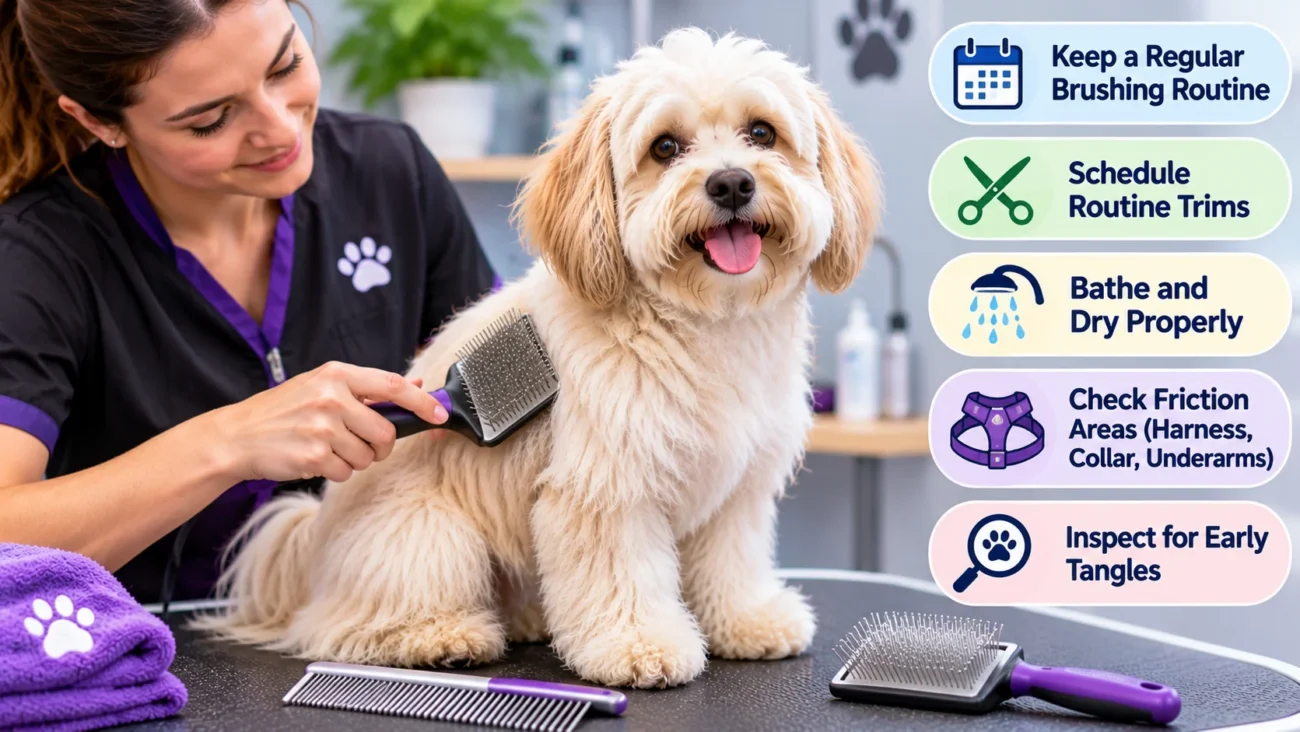
The best prevention plan matches the haircut length to the amount of grooming you can realistically maintain. A longer fluffy coat can be lovely, but it needs consistent attention all the way down to the skin, not merely a quick brush over the surface.
Build a routine around the places where friction and moisture collect. Check behind the ears, under the legs, around collars, beneath the tail, and anywhere a harness or clothing rubs. Longer, curly, silky, or dense coats may need daily attention; simpler coats may need less.
Use a brush and comb for different jobs
A coat-appropriate slicker brush can lift loose hair and small tangles. A smooth, wide-to-fine metal grooming comb helps check whether hair remains knotted underneath. Comb carefully, without scraping skin or forcing teeth through resistance.
Schedule grooming before the coat becomes unmanageable
Ask the groomer how often your dog’s particular coat needs a trim and whether a shorter maintenance cut would be more practical. A dog whose coat mats quickly may benefit from more frequent appointments rather than repeated shave-downs after long gaps.
After swimming, wet walks, or bathing, check for tangles and dry the coat appropriately. Regular, brief sessions with treats can help a dog learn that handling and brushing are predictable rather than painful.
Practical Tip
Ask the groomer to demonstrate a gentle comb-through on one trouble spot. Learning what an actually tangle-free coat feels like can prevent hidden mats better than brushing longer without checking your technique.
What Should You Tell the Groomer Before the Haircut?
Explain when the coat was last groomed, where you have found mats, whether your dog has painful areas, and how they usually react to brushing. Mention known medical problems, medications, previous grooming difficulties, and skin concerns.
Show a picture of your preferred style if you have one, but make clear that you want the least stressful safe option. Ask whether spot clipping is possible, what might change the plan during grooming, and when the salon will contact you for approval.
Related Product
Metal Dog Grooming Comb
A smooth-toothed metal comb can help check for loose tangles during routine coat care after professional mat removal. It is not a tool for forcing apart tight mats.
As an Amazon Associate, we earn from qualifying purchases.
Frequently Asked Questions
Will my dog’s fur grow back after a matted shave-down?
Usually, yes, but the speed and texture of regrowth depend on the individual dog and coat type. Ask your veterinarian about bald patches or unexpectedly slow regrowth, especially in dense double-coated breeds.
Can a severely matted dog still get a teddy-bear haircut?
Only if enough coat remains safely combable to hold that style. Tight, widespread mats may require a much shorter haircut first. Your groomer can help plan a longer style once healthy coat growth and maintenance permit it.
Can double-coated dogs ever need shaving for matting?
Yes. Although routine close shaving is generally discouraged for many double coats, severe matting can make professional clipping necessary for welfare reasons. Discuss coat-specific regrowth concerns with a groomer or veterinarian.
Should I bathe my dog before a mat-removal appointment?
Generally, no. Wetting and rubbing an already matted coat can worsen tangles. Ask the grooming professional to decide when bathing is appropriate in the removal process.
What if my dog panics during mat removal?
Stop any home attempt and tell the groomer about the behavior. If grooming cannot be completed safely, a veterinarian can assess discomfort and discuss an appropriate handling or medical plan.
Can I cut one small mat from behind my dog’s ear?
Do not use scissors close to the ear or skin. These areas are especially easy to injure because the skin can be hidden inside the knot. Have a trained groomer evaluate and remove the mat.
Conclusion
A matted dog haircut should solve a comfort problem, not simply change a dog’s appearance. Gentle detangling can work for a few loose knots, but dense or painful matting usually calls for a groomer or veterinarian who can remove it safely. Do not use scissors to rescue a long style.
After the haircut, check for skin irritation, follow any professional aftercare advice, and choose a realistic brushing and trimming routine. The goal is a comfortable dog with a coat you can keep free of painful mats.


