
Quick Answer
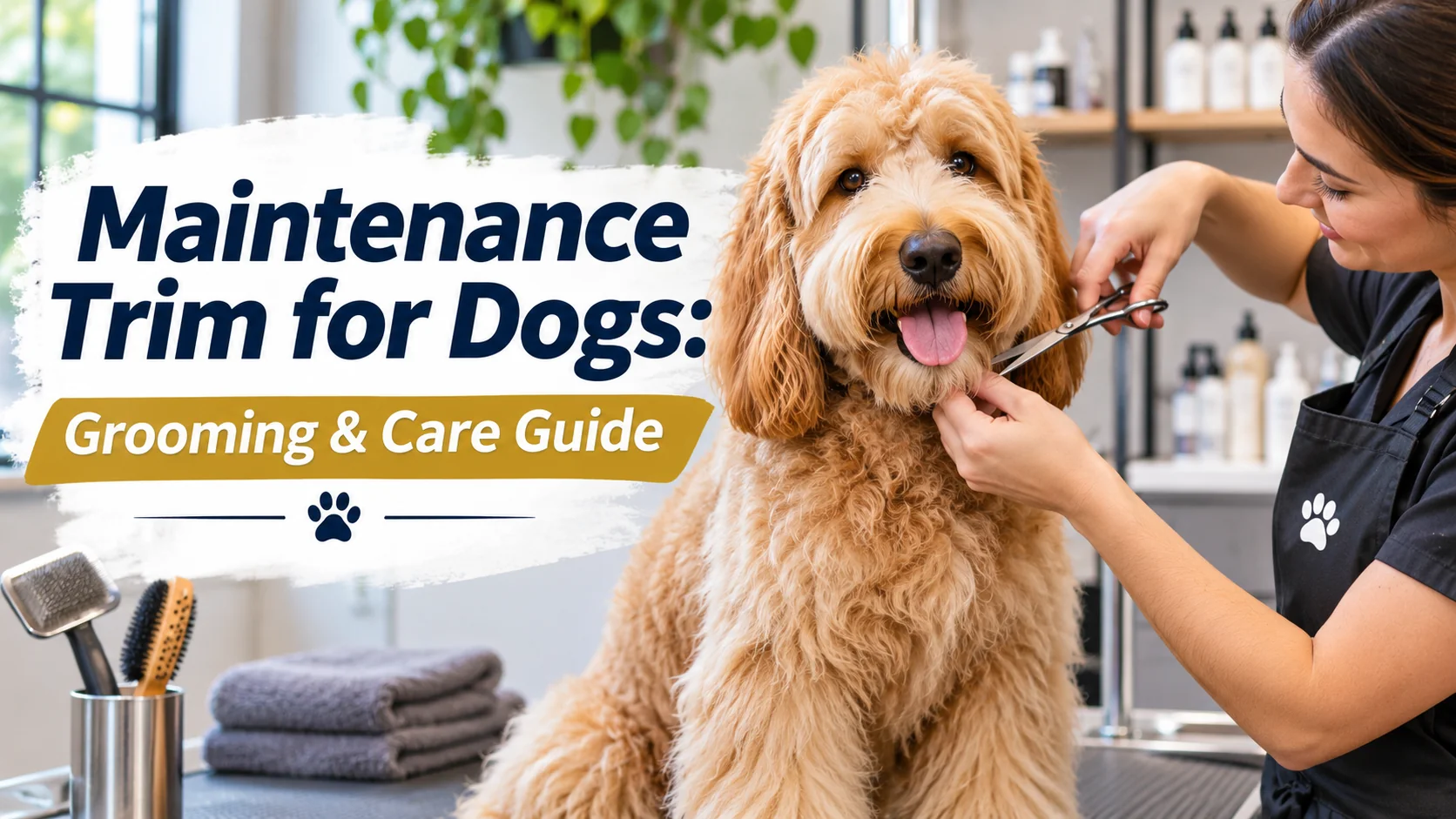
A maintenance trim for dogs is a light grooming service that tidies the face, feet, sanitary areas, and other overgrown sections without significantly shortening the body coat. It helps maintain an existing haircut between full grooming appointments. A maintenance trim works best when the dog’s coat is clean, manageable, and free from significant matting.
Your dog’s haircut may still look good several weeks after grooming, even though the hair around the eyes, paws, and rear has become messy. Instead of scheduling another complete haircut, a maintenance trim may be enough to restore a neat appearance.
The key is knowing when a small tidy-up is sufficient and when your dog needs more extensive grooming.
What Is a Maintenance Trim for Dogs?
A maintenance trim is a targeted grooming service that removes unwanted hair from specific areas while preserving the dog’s existing haircut and overall coat length.
Groomers may also call this service a mini groom, tidy-up trim, maintenance groom, or face, feet, and fanny trim. The exact meaning depends on the salon.
Unlike a puppy cut or kennel cut, a maintenance trim does not establish a new all-over coat length. It maintains a style your dog already has.
For example, a Goldendoodle with a teddy bear haircut may develop overgrown facial hair and untidy paws before its body needs shortening. A maintenance appointment can address those areas without removing the fluffy body coat.
What Does a Dog Maintenance Trim Include?
A maintenance trim generally focuses on areas where hair interferes with everyday cleanliness, comfort, or the appearance of an existing haircut.
Face and Eye Area
The groomer tidies overgrown hair around the eyes, muzzle, beard, and facial outline. This is particularly useful for dogs whose facial hair grows continuously.
The objective is to maintain clear visibility and a neat appearance without unnecessarily changing the shape of the head.
Feet and Paw Pads
Hair around the feet is neatened, and excess paw-pad hair may be carefully shortened where appropriate. This can make the paws easier to inspect and clean after outdoor activities.
Sanitary Areas
A sanitary trim removes excess hair around the rear and appropriate areas near the genitals. This helps reduce the amount of urine and fecal residue that becomes trapped in longer hair.
Tail, Ears, and Feathering
Some maintenance services include light tidying around the tail, ear edges, and longer feathering on the legs. These areas are usually optional and depend on the existing haircut and coat type.
Bathing, Brushing, and Nail Care
Many salons offer a bath, blow-dry, brush-out, and nail trim as part of a maintenance grooming package. Others charge separately for these services.
Always confirm what is included before booking, especially if your dog needs substantial brushing or detangling.
Maintenance Trim vs. Full Groom: What Is the Difference?
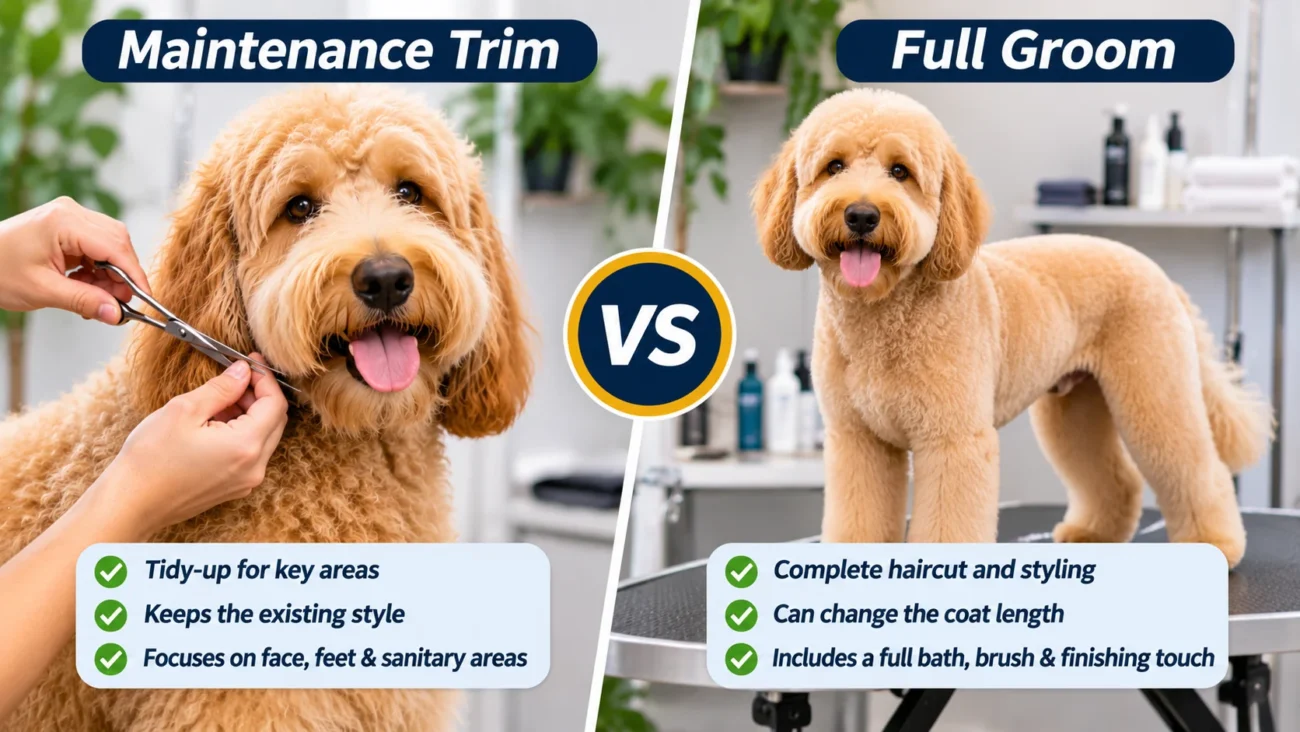
A maintenance trim preserves the existing haircut, while a full groom can reshape the entire coat and establish a different body length.
| Feature | Maintenance Trim | Full Groom |
|---|---|---|
| Main purpose | Maintain an existing style | Renew or change the haircut |
| Body coat | Mostly unchanged | May be shortened throughout |
| Face and paws | Targeted tidying | Complete styling as needed |
| Bath and nail care | Package-dependent | Commonly included |
| Best suited for | Manageable coats needing minor attention | Dogs needing extensive trimming or coat restoration |
A maintenance trim makes sense when you are happy with your dog’s current body length. If you want the entire coat noticeably shorter, request a full haircut instead.
A standalone sanitary trim is narrower still because it addresses hygiene-related areas rather than maintaining the overall hairstyle.
Which Dogs Benefit Most From Maintenance Trims?
Dogs with continuously growing hair, long facial furnishings, or coats that require regular shaping are particularly suitable for maintenance trims.
- Poodles: Benefit from facial, paw, and sanitary maintenance between haircuts.
- Goldendoodles and Labradoodles: May need frequent brushing and localized tidying to preserve longer styles.
- Shih Tzus: Often need attention around the eyes and muzzle.
- Maltese: Benefit from keeping longer facial and sanitary hair manageable.
- Bichon Frises: Can maintain their rounded appearance with regular grooming.
- Yorkshire Terriers: May need targeted maintenance around the feet, face, and rear.
Breed alone does not determine how much trimming a dog needs. Coat texture, existing haircut, activity level, and brushing habits are equally relevant.
What About Double-Coated Dogs?
Golden Retrievers, Huskies, and other double-coated breeds generally benefit more from appropriate brushing, bathing, and loose-undercoat removal than frequent body clipping.
Limited paw or hygiene trimming may be appropriate, but routine shaving of the protective body coat should be avoided. The American Kennel Club’s double-coat grooming guidance explains why maintaining the natural coat is important.
Short-coated breeds such as Beagles and Boxers generally have little need for haircut maintenance, although they still require routine hygiene and coat care.
How Often Does a Dog Need a Maintenance Trim?
For a dog with a regularly styled, continuously growing coat, a maintenance trim every three to four weeks can be a practical starting point. However, the appropriate interval depends on how quickly the coat becomes difficult to maintain.
Professional grooming intervals of four to six weeks are commonly suggested for continuously growing coats, although individual dogs may need different schedules.
For example, a dog receiving a full haircut every six weeks could have a maintenance appointment halfway through that cycle.
Adjust the schedule according to:
- How quickly facial and paw hair grows.
- Whether the coat develops tangles between appointments.
- How often the sanitary areas become soiled.
- The length and complexity of the existing haircut.
- Your dog’s tolerance for brushing and grooming.
Tip
If your dog’s feet or face consistently become untidy before the next haircut, schedule a maintenance appointment earlier rather than waiting until those areas become difficult to manage.
Signs Your Dog Is Ready for a Maintenance Trim
Your dog may be ready for a tidy-up if the body coat remains manageable but specific areas are becoming overgrown.
Common signs include:
- Facial hair falling across the eyes.
- Excess hair collecting moisture around the mouth.
- Untidy hair around the feet.
- Urine or fecal residue collecting in longer fur.
- Uneven hair around previously shaped areas.
- Longer feathering collecting outdoor debris.
Check beyond the visible outer coat. A dog can look fluffy and well-groomed while developing hidden tangles close to the skin.
Pay particular attention behind the ears, underneath the collar, around the armpits, and along the inner legs.
How to Maintain Your Dog’s Coat at Home
Regular home grooming keeps minor problems from becoming reasons for an unexpected full haircut.
- Inspect the coat. Look for redness, debris, tangles, or sensitive areas before brushing.
- Brush in small sections. Use a brush suitable for your dog’s coat and avoid repeatedly scraping the same area.
- Check with a grooming comb. On longer coats, gently check whether tangles remain beneath the surface.
- Clean the face. Remove ordinary dirt around the muzzle and eyes using a soft, damp cloth.
- Inspect the paws. Check for trapped debris, irritation, and overgrown hair after walks.
- Keep hygiene areas clean. Gently remove residue and dry damp fur thoroughly.
- Arrange professional trimming. Book a groomer when sensitive areas need hair removal or the coat becomes difficult to manage.
Long or curly coats may need daily brushing. Shorter coats may require less frequent attention.
The ASPCA’s dog grooming recommendations provide additional guidance on routine brushing, bathing, and hygiene.
Warning
Never cut tight mats with scissors. Skin can become trapped inside the matted hair, making accidental cuts more likely. Leave trimming around the eyes, genitals, and between the paw pads to an experienced groomer if you lack the necessary training.
When a Maintenance Trim Is Not Enough
A maintenance trim is unsuitable when extensive matting, excessive body-coat growth, or skin problems require more comprehensive attention.
Consider a full grooming appointment when:
- The entire body coat has become longer than desired.
- Multiple areas contain knots that cannot be brushed out comfortably.
- The existing haircut has lost its overall shape.
- Keeping the current coat length requires more brushing than you can reasonably provide.
Severe matting may require professional clipping rather than prolonged detangling. According to VCA Animal Hospitals’ coat-care guidance, extensive mats should be addressed by a qualified groomer or veterinarian.
Persistent redness, sores, unusual discharge, painful skin, or unexplained hair loss warrant veterinary attention rather than cosmetic trimming alone.
What Should You Tell Your Groomer?
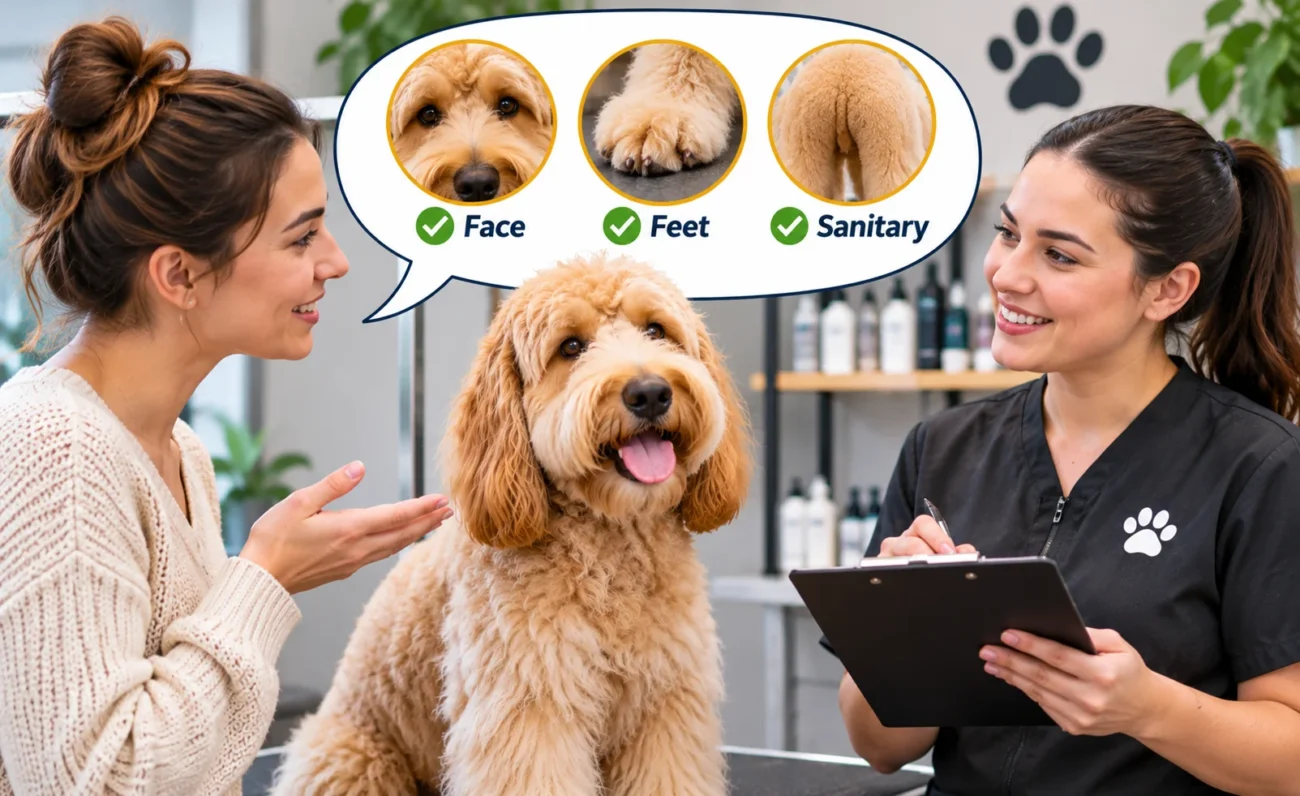
Describe the areas you want maintained rather than relying entirely on the term maintenance trim.
A clear grooming request could be:
“Please tidy the hair around the eyes, feet, and sanitary areas while keeping the current body length and facial shape.”
Confirm whether bathing, brushing, nail clipping, ear care, and minor body shaping are included. Mention any areas where your dog dislikes being handled or has previously experienced irritation.
If you want to grow the coat longer, explain that before the appointment. This allows the groomer to preserve length where the coat condition permits.
Frequently Asked Questions
Is a maintenance trim a type of dog haircut?
It is a partial haircut intended to maintain an existing style rather than create a new all-over coat length.
Can puppies get a maintenance trim?
Yes. Gentle, age-appropriate grooming can help puppies become comfortable with handling and trimming. Follow your veterinarian’s vaccination and health guidance before visiting a salon.
Is a maintenance trim cheaper than a full groom?
It may cost less because less haircutting is required. However, pricing depends on the salon, dog size, coat condition, and included services.
Can a maintenance trim include the belly?
Yes. Appropriate belly or hygiene-area tidying may be included, depending on the dog’s coat and the services agreed upon with the groomer.
Can I request a maintenance trim without a bath?
Some groomers offer standalone trimming services without bathing. Others require a clean, dry coat or include a bath in their maintenance package.
Does a maintenance trim reduce shedding?
Not by itself. Removing excess hair from specific areas does not change a dog’s natural shedding cycle. Appropriate brushing and undercoat care are more relevant for shedding management.
Final Thoughts
A maintenance trim for dogs is a practical way to preserve an existing haircut, improve everyday hygiene, and keep overgrown areas manageable between full grooming sessions.
Combine targeted trimming with regular brushing, coat inspections, and a grooming schedule suited to your dog’s individual needs. Choose a full groom when the overall coat length or condition requires more extensive attention.


