
Quick Answer
The best long-haired dog haircut depends on your dog’s coat type, lifestyle, and grooming needs. Puppy cuts, teddy bear cuts, and kennel cuts work well for many dogs with continuously growing hair. Double-coated breeds generally benefit from light trimming and de-shedding rather than shaving. Choose a length you can maintain comfortably between grooming appointments, and prioritize healthy skin and a tangle-free coat over appearance.
A beautiful long coat can quickly become difficult to manage when it collects dirt, develops tangles, or interferes with your dog’s everyday activities. The right haircut makes routine care easier without unnecessarily removing protective hair.
The main challenge is knowing which styles suit your dog’s coat. A haircut that works perfectly for a Shih Tzu may be inappropriate for a Pomeranian or Golden Retriever.
What Are the Best Haircut Styles for Long-Haired Dogs?
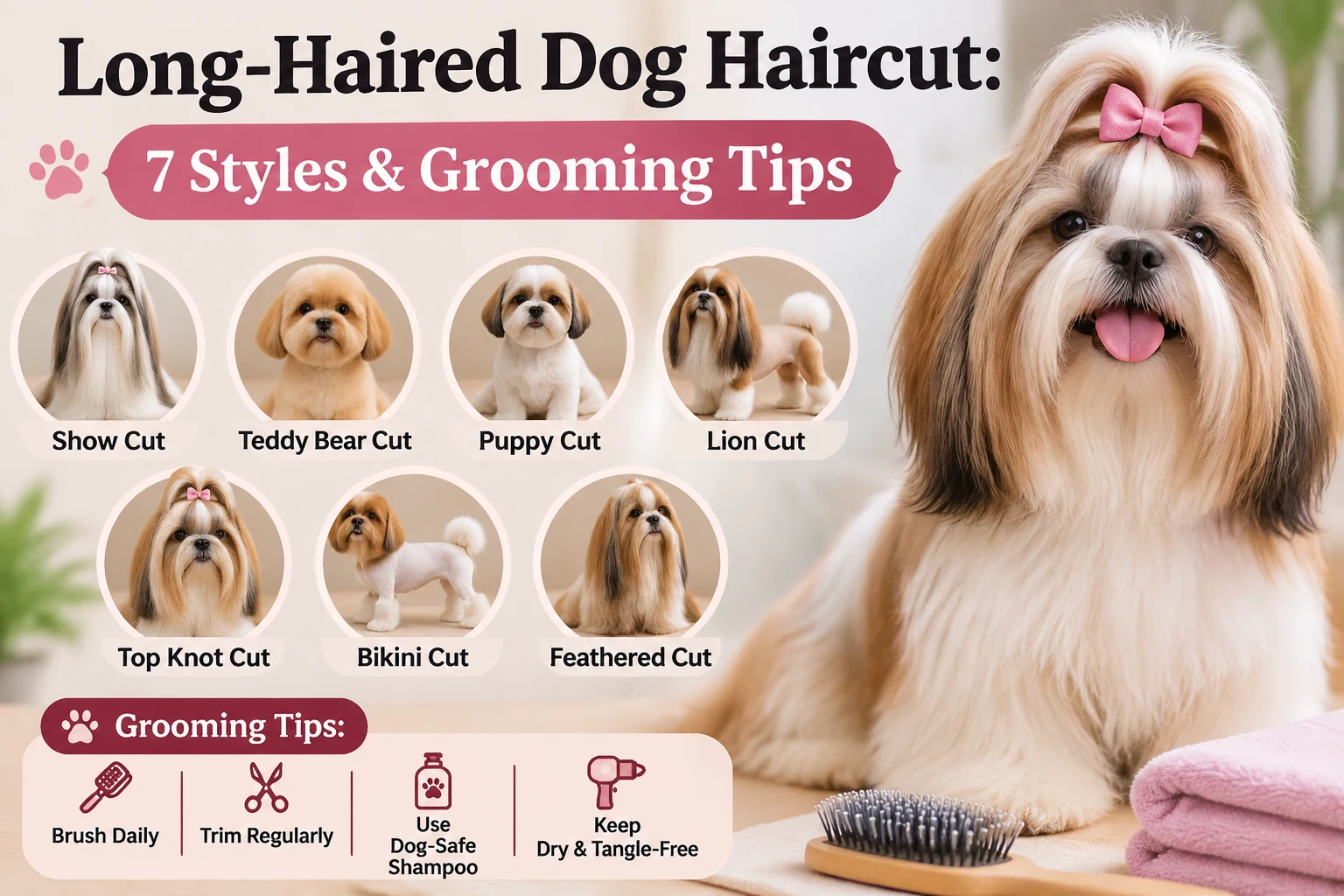
The most practical long-haired dog haircut styles include the puppy cut, teddy bear cut, kennel cut, lamb cut, full-length trim, outline trim, and sanitary trim. Each offers a different balance between appearance and maintenance.
These seven options provide a useful starting point when discussing your dog’s haircut with a groomer.
| Haircut Style | Appearance | Best For | Maintenance |
|---|---|---|---|
| Puppy cut | Short, even coat | Everyday grooming | Low to moderate |
| Teddy bear cut | Rounded, fluffy face | Suitable curly and silky coats | Moderate |
| Kennel cut | Short body coat | Active dogs with suitable coats | Low |
| Lamb cut | Short body, fuller legs | Poodles and suitable curly coats | Moderate to high |
| Full-length trim | Long, flowing hair | Traditional breed appearance | High |
| Outline trim | Natural coat with tidy edges | Many double-coated breeds | Coat dependent |
| Sanitary trim | Targeted hygiene trimming | Dogs needing hygiene support | Coat dependent |
Lower haircut maintenance does not necessarily mean less frequent brushing. Even shorter coats can form mats, particularly where the legs, ears, and collar create friction.
1. Puppy Cut
The puppy cut leaves the body hair at a relatively uniform length, making it a practical choice for many Maltese, Shih Tzus, Yorkshire Terriers, and similar pets.
Despite its name, adult dogs can have this haircut. Ask your groomer to confirm the finished length because the term does not describe one universal haircut measurement.
2. Teddy Bear Cut
A teddy bear cut creates a soft, rounded face with a neatly shaped body. It is particularly popular with owners of Bichon Frises, Poodles, Goldendoodles, and other suitable fluffy or curly-haired dogs.
The longer facial hair requires regular attention, especially around the mouth and eyes. The round shape also becomes less defined as the coat grows.
3. Kennel Cut
A kennel cut keeps the body hair relatively short to simplify everyday maintenance. It can suit dogs that frequently play outdoors, collect debris, or struggle with longer hair.
This style should not be treated as permission to shave every long-coated breed. The appropriate length still depends on the underlying coat structure.
4. Lamb Cut
The lamb cut combines a shorter body with fuller hair on the legs. It creates a balanced silhouette while reducing the amount of long hair across the torso.
It works particularly well on suitable curly-coated dogs. However, the fuller legs need consistent brushing because they can collect mud and develop tangles.
5. Full-Length Trim
A full-length trim preserves most of the dog’s natural hair while tidying uneven ends and areas that interfere with movement.
This option suits owners who enjoy the traditional appearance of long-coated breeds and have enough time for regular coat care. A topknot can also help keep suitable facial hair away from the eyes.
6. Outline Trim
An outline trim follows the dog’s natural body shape without dramatically shortening the main coat. The groomer may tidy feathering, feet, and uneven edges where appropriate.
For many Golden Retrievers, Collies, and similar double-coated dogs, this approach preserves the natural appearance while addressing untidy areas.
7. Sanitary Trim
A sanitary trim removes excess hair from selected areas around the rear, genital region, and sometimes the lower abdomen. Its main purpose is hygiene rather than appearance.
It can be combined with other haircut styles or scheduled between full grooming appointments. Because these areas contain sensitive skin, professional trimming is the safer choice for inexperienced owners.
How Do You Choose a Haircut Based on Your Dog’s Coat Type?
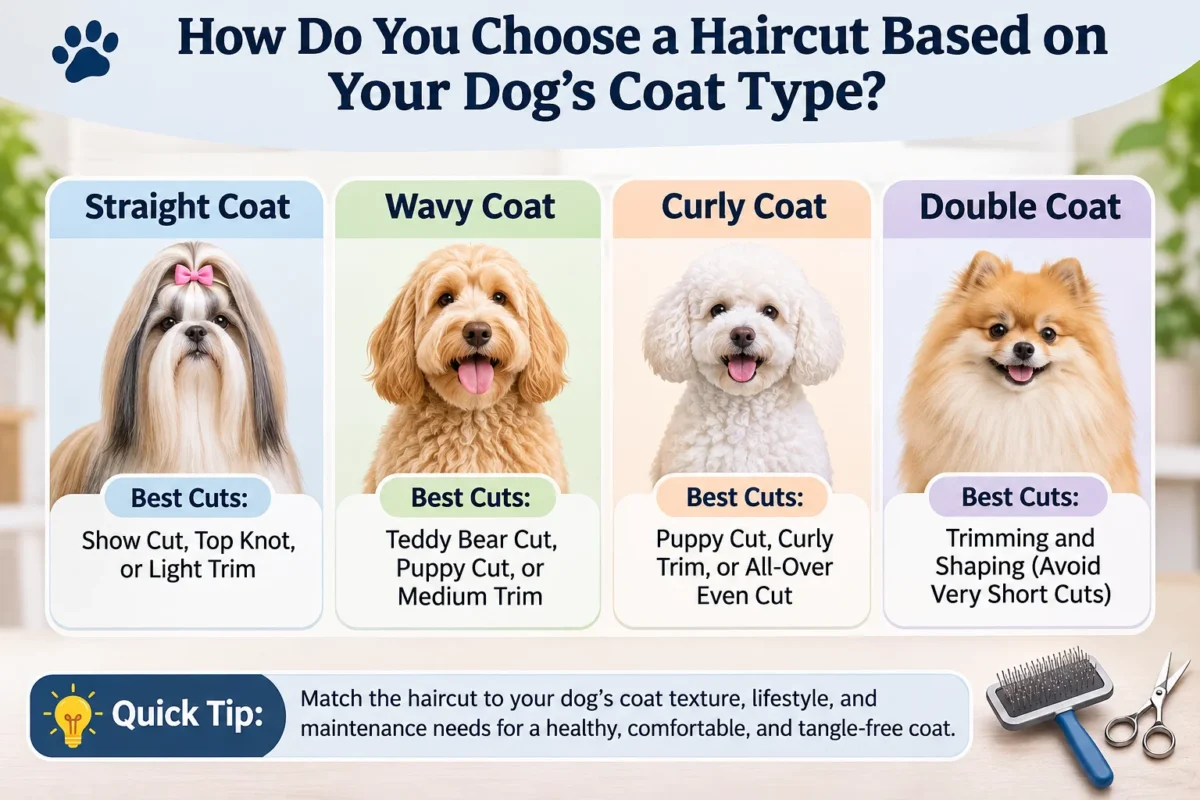
Identify your dog’s coat structure before choosing a haircut. Hair length alone cannot tell you whether extensive clipping is appropriate.
Dogs with continuously growing hair and dogs with dense undercoats have different grooming requirements.
Long, Silky, or Continuously Growing Coats
Breeds such as Yorkshire Terriers, Maltese, and Shih Tzus commonly need regular haircuts to maintain a manageable coat length. Shorter pet trims can make brushing easier without requiring owners to preserve a show-style coat.
Choose a length that matches your grooming routine rather than selecting a hairstyle solely from photographs.
Curly and Wavy Coats
Poodles and many Poodle mixes can develop tangles close to the skin despite having a fluffy, attractive surface. Puppy cuts and teddy bear styles are suitable possibilities when the coat is healthy enough to maintain the desired length.
Mixed-breed coat characteristics vary. A haircut that works for one Goldendoodle may not work equally well for another.
Long Double Coats
Golden Retrievers, Siberian Huskies, Pomeranians, and Rough Collies have coats that generally require brushing and undercoat maintenance rather than routine full-body clipping.
The American Kennel Club’s double-coated dog grooming guidance explains why shaving these coats is generally discouraged.
Ask for a coat assessment if you have a mixed-breed dog and are unsure whether it has a substantial undercoat.
Key Insight
Choose the grooming method before choosing the hairstyle. A haircut removes length, while de-shedding removes loose hair from a suitable coat. If shedding is your main concern, shortening the entire coat may not solve the underlying problem.
How Short Should You Cut a Long-Haired Dog’s Hair?
There is no universally safe or ideal haircut length for every long-haired dog. Coat structure, skin condition, existing mats, and maintenance requirements determine an appropriate finished length.
For dogs with suitable hair types, leaving approximately half an inch to one inch can provide a manageable everyday style. This is an example of a possible pet haircut length, not a universal recommendation.
Consider these practical situations:
- Frequent outdoor activity: A manageable shorter trim may reduce the amount of debris caught in suitable coats.
- Regular brushing at home: A fuller style may be realistic if you can maintain it consistently.
- Limited grooming time: Select a simpler haircut without long facial or leg furnishings.
- Dense double coat: Preserve the main coat and discuss targeted trimming instead.
Remember that the same finished hair length can look very different on straight, curly, and densely textured coats.
Can You Give a Long-Haired Dog a Haircut at Home?
You can perform basic grooming and coat maintenance at home, but extensive haircuts, sensitive-area trimming, and mat removal are better left to trained professionals when you lack experience.
For a calm dog with a healthy, tangle-free coat, preparation is the most useful part of home grooming.
- Check the skin and coat. Look for redness, sores, painful areas, and tightly tangled hair.
- Brush gently. Work through manageable sections without repeatedly pulling on knots.
- Check with a grooming comb. Make sure hidden tangles are not being missed beneath the surface.
- Bathe if appropriate. Remove easy tangles first, use dog-safe shampoo, and rinse thoroughly.
- Dry the coat completely. Avoid excessive heat and rough towel rubbing.
- Assess the areas needing trimming. Arrange professional help if the haircut involves difficult or sensitive areas.
For detailed washing and drying instructions, follow this dog bathing guide for safe home grooming.
Stop if your dog becomes distressed, struggles repeatedly, or shows signs of pain. Completing a haircut is less important than preventing an injury.
What Should You Do If Your Dog Has Matted Hair?
Small, loose tangles may respond to careful brushing, but tight mats should be assessed by a professional groomer. Severe matting can pull on the skin and make ordinary brushing painful.
A mat-free coat may support a fluffy haircut, while a heavily matted coat may need to be clipped shorter than expected.
Warning
Never cut tight mats out with household scissors. Skin can become caught inside the tangled hair, making it difficult to identify a safe cutting point. Seek veterinary care if the affected skin is painful, irritated, or wounded.
Veterinarians at VCA Animal Hospitals recommend professional assistance for extensive matting and advise removing tangles before ordinary bathing.
If your groomer recommends a shorter haircut because of matting, ask which areas are affected and how to prevent the problem from returning.
How Often Do Long-Haired Dogs Need Haircuts?
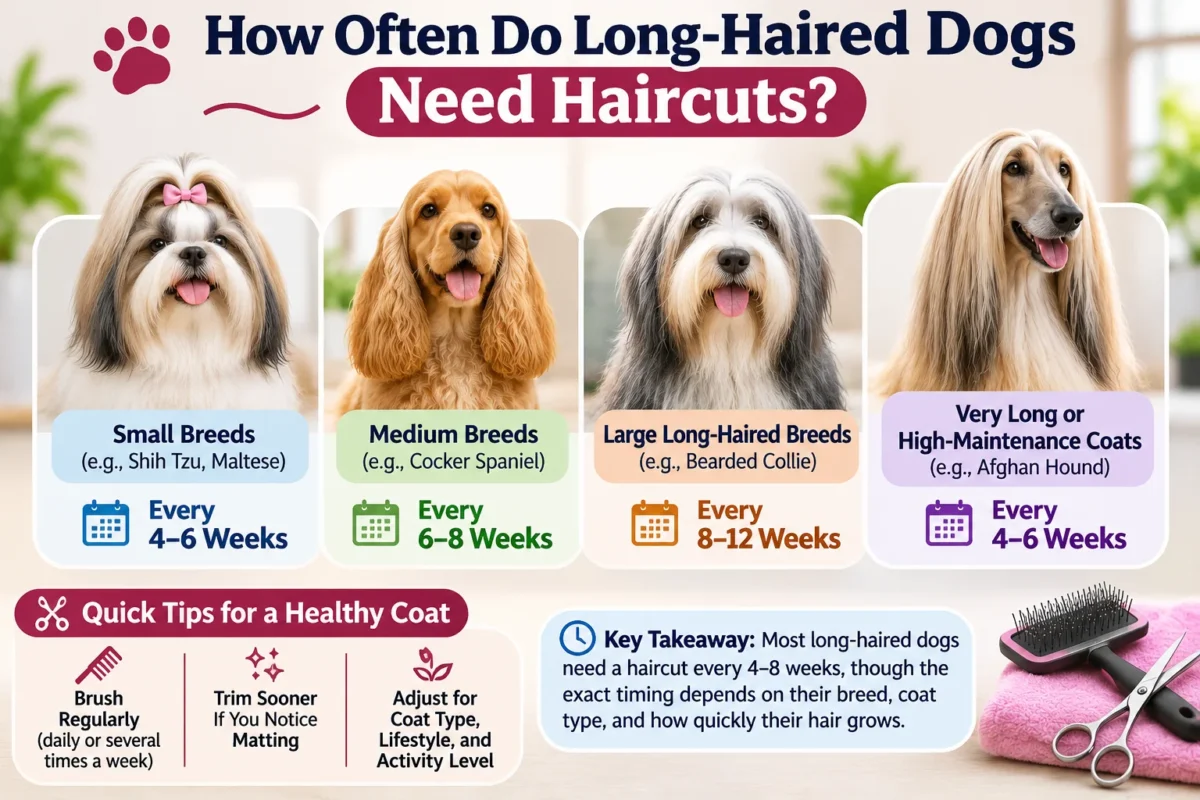
For many continuously growing coats, a professional haircut every six to eight weeks is a reasonable starting schedule. Some dogs need earlier appointments because of rapid hair growth, coat texture, or recurring tangles.
Brushing follows a different schedule. Long, curly, and silky coats often benefit from daily attention, even when the haircut is relatively short.
Pay particular attention to these areas between appointments:
- Behind and underneath the ears.
- Under the front legs.
- Where collars and harnesses rub.
- The inner thighs and rear feathering.
- The lower legs, paws, and tail.
Schedule the next appointment before the coat becomes difficult to brush. Waiting until mats develop can limit the haircut styles your groomer can safely achieve.
What Should You Ask Your Dog Groomer For?
Describe the appearance, finished length, and areas you want preserved instead of relying entirely on a haircut name. Groomers may interpret terms such as puppy cut and summer cut differently.
Before the appointment, discuss the following:
- Your dog’s coat type and current condition.
- The desired body hair length.
- How much hair to leave on the face, ears, legs, and tail.
- Whether a sanitary trim is needed.
- Any sensitive areas or previous grooming difficulties.
- What should happen if severe matting is discovered.
For example, you might request a manageable body trim with a rounded face, natural ears, and a full tail, provided the coat condition allows it.
Bring a reference photograph of a dog with similar hair texture. Ask whether that appearance is realistic for your pet before the groomer begins.
Related Product
Long-Haired Dog Grooming Comb and Brush Set
A coat-appropriate grooming brush and metal comb help manage loose hair and identify hidden tangles between professional haircuts.
As an Amazon Associate, we earn from qualifying purchases.
Frequently Asked Questions
Should long-haired dogs get haircuts in summer?
Dogs with suitable continuously growing coats may benefit from a manageable summer trim. Double-coated dogs should generally receive brushing and de-shedding instead of shaving. Shade, drinking water, and avoiding excessive heat remain essential regardless of haircut length.
Can a long-haired dog get a haircut in winter?
Yes. Dogs can receive appropriate haircuts throughout the year. Avoid unnecessarily short cuts in cold weather, particularly for dogs that are sensitive to low temperatures or spend considerable time outdoors.
Does cutting a dog’s hair reduce shedding?
A haircut may make shed hairs less noticeable because they are shorter, but it does not stop the natural shedding process. Coat-appropriate brushing and removal of loose undercoat are generally more useful for managing shedding.
Will a shaved dog’s hair grow back normally?
Regrowth varies with coat type, age, and health. Some double-coated dogs experience delayed or uneven regrowth after shaving. Seek veterinary advice if substantial hair loss persists or the skin develops abnormalities.
Should a long-haired dog be groomed before or after a bath?
Brush the coat and address manageable tangles before bathing. For routine full haircuts, professional groomers commonly wash and dry suitable coats before final styling. Severe mats may require professional removal before ordinary bathing.
Can puppies have their first haircut before adulthood?
Yes. Puppies can gradually become familiar with gentle grooming before adulthood. The timing of professional appointments should consider vaccination status, coat development, temperament, and your veterinarian’s guidance.
Conclusion
The right long-haired dog haircut should make your dog’s coat comfortable, manageable, and appropriate for its natural structure. Puppy cuts and teddy bear cuts offer attractive options for many continuously growing coats, while outline trimming and de-shedding are better choices for many double-coated breeds.
Base your decision on coat condition, daily brushing habits, and your dog’s comfort rather than appearance alone. Discuss the desired finished length with your groomer, address matting early, and maintain the coat between appointments. A practical haircut that supports healthy skin and comfortable movement is more valuable than a complicated style you cannot maintain.


