
Quick Answer
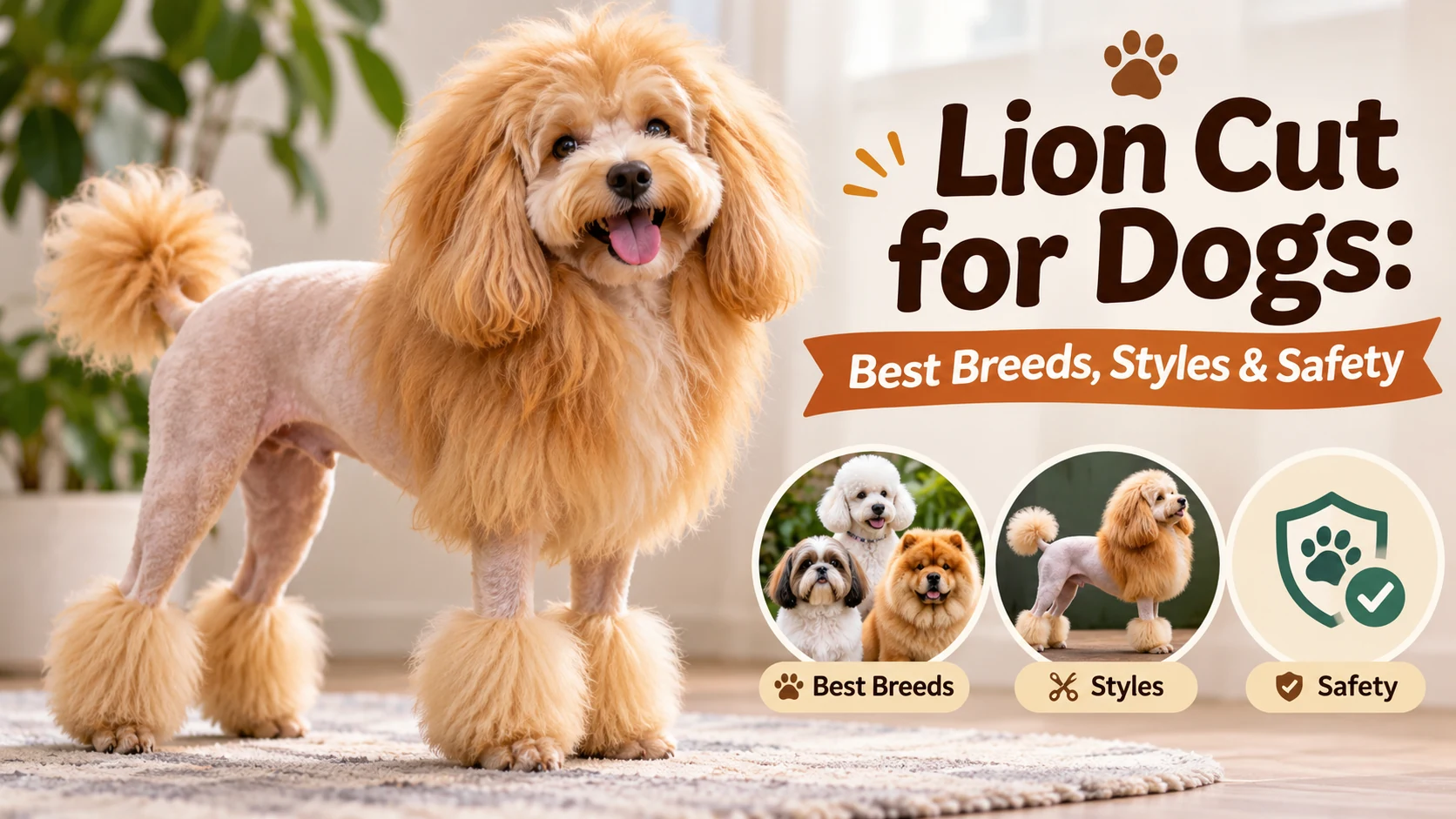
A lion cut for dogs is a grooming style that leaves longer hair around the head, neck, and chest while trimming the body shorter, often with a tuft of hair at the tail tip. It works best with suitable coats, such as those of Poodles and Löwchens. Avoid traditional shaved lion cuts on double-coated breeds like Pomeranians, as close clipping may damage coat function and cause delayed hair regrowth.
A lion cut can give a small dog the appearance of a miniature lion or create a dramatic, sculpted look on a larger dog. The distinctive mane makes this haircut easy to recognize, but choosing it involves more than appearance.
Your dog’s coat type, skin condition, lifestyle, and grooming needs determine whether a traditional lion cut or a less drastic variation is appropriate.
What Is a Lion Cut for Dogs?
A lion cut is a dog haircut designed to resemble a lion’s natural silhouette. The groomer creates contrast between a full mane around the front of the dog and shorter hair across the body or hindquarters.
A typical lion haircut includes:
- Head: Longer hair shaped to frame the face.
- Neck and chest: A full, rounded mane.
- Body: Shorter hair that emphasizes the mane.
- Legs: Short or partially feathered hair, depending on the style.
- Tail: A longer tuft or plume, often concentrated at the tip.
The exact pattern varies by breed. Some traditional lion clips retain substantial hair across the shoulders and front half of the body, while others emphasize a rounded mane around the head and neck.
A lion cut does not always require shaving the body close to the skin. A modified version can preserve more coat length while creating a similar visual effect.
Which Dog Breeds Are Best Suited to a Lion Cut?
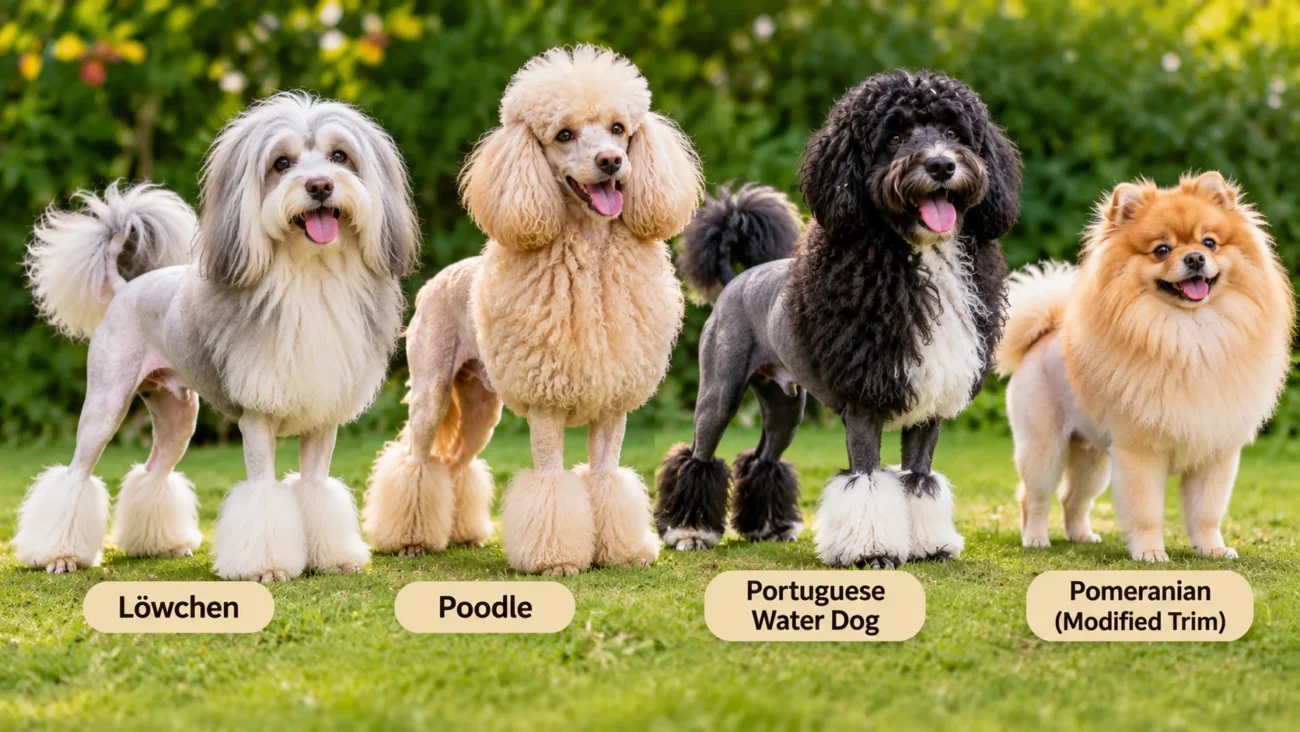
Dogs with suitable long-growing or curly coats are generally better candidates for a lion cut than dogs with dense double coats. However, individual coat condition matters more than breed appearance alone.
| Dog Breed | Suitability | Grooming Consideration |
|---|---|---|
| Löwchen | Well suited | Traditional breed-specific lion trim. |
| Poodle | Well suited | Curly hair supports sculpted grooming styles. |
| Portuguese Water Dog | Well suited | Has an established traditional lion clip. |
| Shih Tzu | Conditional | Consider a longer, modified lion trim. |
| Maltese | Conditional | Silky hair requires careful shaping. |
| Doodle mixes | Varies | Suitability depends on inherited coat characteristics. |
| Pomeranian | Avoid close clipping | Dense double coat and regrowth concerns. |
| Chow Chow, Husky and Samoyed | Not recommended | Preserve the protective double coat. |
Use this comparison as a starting point rather than permission to shave a particular breed. A groomer should assess the individual dog’s coat before choosing a clipping length.
Löwchen Lion Cut
The Löwchen, whose name means little lion, is traditionally associated with this grooming style. The classic trim retains a full front coat while clipping the hindquarters and leaving decorative hair on the legs and tail.
Pet owners can also choose a less elaborate version instead of maintaining a formal show trim.
Poodle Lion Cut
Poodles have curly hair that can be shaped into a defined mane. Their coats allow groomers to create different lengths, rounded transitions, and sculpted features.
A pet-style lion cut can be simpler than a formal Continental or other competition clip.
Portuguese Water Dog Lion Cut
The Portuguese Water Dog has a traditional lion clip that retains longer hair across the front part of the body while shortening the hindquarters and leaving hair at the tail tip.
Owners who prefer a more uniform appearance can consider a retriever-style trim instead.
Is a Lion Cut Safe for Dogs?
A lion cut can be appropriate when the dog’s coat supports regular clipping, sufficient protective hair is retained, and the grooming is performed safely. It is not suitable for every dog.
Potential risks include:
- Sunburn: Closely clipped areas receive less protection from sunlight.
- Skin irritation: Excessively short clipping or hot clipper blades can irritate sensitive skin.
- Delayed regrowth: Some dogs develop prolonged hair loss after close clipping.
- Temperature exposure: Removing protective hair changes how the coat insulates the body.
- Matting: The remaining long mane can develop tangles without regular brushing.
The ASPCA’s guidance on summer grooming advises against shaving pets down to their skin and recommends professional assistance when shortening a dog’s coat.
Warning
Do not request a skin-close lion cut on a double-coated dog for appearance or summer cooling. Medical treatment or severe matting may justify clipping, but these situations require professional assessment.
Can Pomeranians Have a Lion Cut?
Although Pomeranians are frequently shown with lion haircuts, a traditional closely shaved lion cut is not recommended for their double coats.
A Pomeranian has a soft undercoat beneath a protective outer layer of longer guard hairs. Close clipping can remove both layers and interfere with the coat’s natural functions.
Possible problems include:
- Slow or uneven hair regrowth.
- Changes in coat texture and appearance.
- Reduced protection from environmental exposure.
- Persistent thin or bald areas after clipping.
The American Kennel Club’s double-coat grooming guidance generally discourages shaving these coats.
If you want your Pomeranian to resemble a little lion, ask for a light outline trim that preserves the natural body coat and emphasizes the existing neck ruff.
Popular Types of Lion Cuts for Dogs
Lion cuts range from dramatic breed-specific clips to softer pet trims that maintain a recognizable mane without removing as much hair.
1. Traditional Lion Cut
The traditional version creates a strong contrast between the longer front coat and shorter rear body. The groomer may also shape the legs and create a defined tail plume.
This style is particularly associated with breeds such as the Löwchen and Portuguese Water Dog.
2. Modified Lion Cut
A modified lion cut retains additional body length and uses softer transitions between the mane and torso.
It can be a practical choice for suitable coat types when owners want the lion appearance without an extremely short body clip.
3. Fluffy Lion Cut
The fluffy version emphasizes rounded facial hair, a generous mane, and a less dramatic body trim. It creates a softer appearance than the traditional lion clip.
For double-coated dogs, the look should come from natural coat shaping rather than substantial shortening of the undercoat.
4. Poodle-Style Lion Cut
This variation uses the Poodle’s curly coat to create a sculpted front section, shorter hindquarters, and optional leg or tail pompons.
The groomer can simplify the design for everyday pet grooming instead of following competition requirements.
Benefits and Drawbacks of a Lion Haircut
The main benefit of a lion cut is its distinctive appearance. Shorter body hair may also simplify grooming in selected areas when the dog’s coat is suitable for clipping.
| Benefits | Drawbacks |
|---|---|
| Distinctive, customizable appearance. | Requires careful coat-type assessment. |
| Less brushing on suitably trimmed body areas. | The longer mane still requires regular brushing. |
| Makes some body areas easier to inspect. | Short hair may expose sensitive skin. |
| Can be adapted to individual preferences. | Maintaining the shape requires repeat grooming. |
A lion cut reduces hair length in selected areas rather than eliminating overall grooming needs. The longer sections may require just as much attention as they did before the haircut.
How Do Professional Groomers Create a Lion Cut?
Professional groomers create a lion cut by assessing the coat, preparing the hair, shortening suitable body areas, and carefully blending the mane with the remaining coat.
- Assess the coat and skin. Identify coat type, matting, irritation, and whether clipping is appropriate.
- Choose the grooming pattern. Agree on the mane shape, body length, leg finish, and tail design.
- Prepare the coat. Remove manageable tangles, bathe when appropriate, and dry the coat thoroughly before finishing.
- Shorten the body hair. Use an appropriate clipping or trimming technique while retaining suitable coat protection.
- Shape the mane. Create a balanced transition around the shoulders, neck, and chest.
- Finish the legs and tail. Shape the remaining hair without compromising sensitive areas.
- Inspect the finished trim. Check for uneven transitions, irritation, and remaining tangles.
Severe matting may require a different grooming sequence. A groomer may need to remove tight mats before bathing because water can worsen existing tangles.
Attempting a full lion haircut at home is not recommended for inexperienced owners. The ears, tail, armpits, groin, and loose skin folds are especially vulnerable to accidental injury.
What Should You Tell Your Groomer?
Show your groomer a reference photograph and explain which parts of the lion haircut you want. Avoid requesting a lion cut without discussing coat length, because groomers may interpret the style differently.
Discuss these details before the appointment:
- Whether your dog’s coat is suitable for body clipping.
- How much body hair should remain.
- The desired length and fullness of the mane.
- Whether the shoulders should remain fluffy.
- How the legs and tail should be shaped.
- Any previous skin irritation or unusual hair regrowth.
- How frequently the haircut needs maintenance.
Grooming Tip
Ask for a lion-inspired trim with a full mane, soft transitions, and as much protective body hair as your dog’s coat requires. Give your groomer permission to modify the haircut if the requested style is unsuitable.
How Often Does a Lion Cut Need Maintenance?
A lion cut may need professional reshaping approximately every four to eight weeks, depending on hair growth, coat type, and how sharply defined you want the style to remain. This is a practical starting range rather than a universal grooming schedule.
| Maintenance Task | Suggested Frequency |
|---|---|
| Brush the mane | Daily for tangle-prone coats. |
| Check behind ears and beneath collar | Daily or after outdoor activity. |
| Comb tail and leg furnishings | Several times weekly or as needed. |
| Bathe the coat | According to coat condition and individual needs. |
| Professional reshaping | Approximately every 4–8 weeks, if appropriate. |
Dogs with faster-growing hair or sharply sculpted cuts may need earlier appointments. Dogs with slower-growing coats or longer modified trims may require less frequent reshaping.
Prevent Matting Around the Mane
Brush the mane in small sections and gently check whether a suitable grooming comb passes through the hair without catching or pulling.
Pay particular attention to the areas behind the ears, beneath the collar, and where the chest hair meets the front legs. These areas experience friction that can encourage tangling.
Do not pull forcefully through tight mats or cut them away with ordinary scissors. Mats close to the skin should be assessed by a professional groomer.
Protect Short-Clipped Areas
Check shortened areas for redness, dry skin, scratching, and signs of discomfort. Reduce unnecessary exposure to strong sunlight and provide suitable protection during cold weather.
Keeping the body coat at an appropriate length is generally more effective than relying on protective accessories to compensate for excessive clipping.
Will a Dog’s Hair Grow Back After a Lion Cut?
Hair usually grows back after clipping, but the recovery time and final appearance vary. Some dogs develop delayed or uneven regrowth, especially after close clipping.
The University of Minnesota’s veterinary dermatology resource describes canine post-clipping alopecia as delayed hair regrowth following clipping, particularly when the coat is shortened close to the skin.
Regrowth may take many months. In affected dogs, recovery can be considerably longer than the normal interval between grooming appointments.
Contact a veterinarian if clipped areas remain unexpectedly bald, hair loss spreads beyond the shaved sections, or the skin becomes inflamed, uncomfortable, or unusually discolored.
Avoid repeatedly clipping areas that are failing to regrow or applying hair-growth products without veterinary guidance.
Lion Cut vs. Teddy Bear Cut vs. Puppy Cut
The main difference is where the groomer leaves longer hair. A lion cut emphasizes the mane, a teddy bear cut emphasizes a rounded face, and a puppy cut creates a relatively uniform appearance.
| Feature | Lion Cut | Teddy Bear Cut | Puppy Cut |
|---|---|---|---|
| Appearance | Defined mane | Rounded, fluffy face | Soft, even trim |
| Body length | Shorter than mane | Variable | Relatively uniform |
| Maintenance focus | Mane and tail | Face and fluffy sections | Entire coat |
| Best for | Distinctive styling | Rounded appearance | Practical everyday grooming |
A puppy cut may be more practical if you want a consistent length across a suitable coat. Choose a teddy bear cut if you prefer a rounded face without a pronounced mane.
None of these haircut names automatically makes close clipping safe for double-coated dogs.
Safer Alternatives to a Traditional Lion Cut
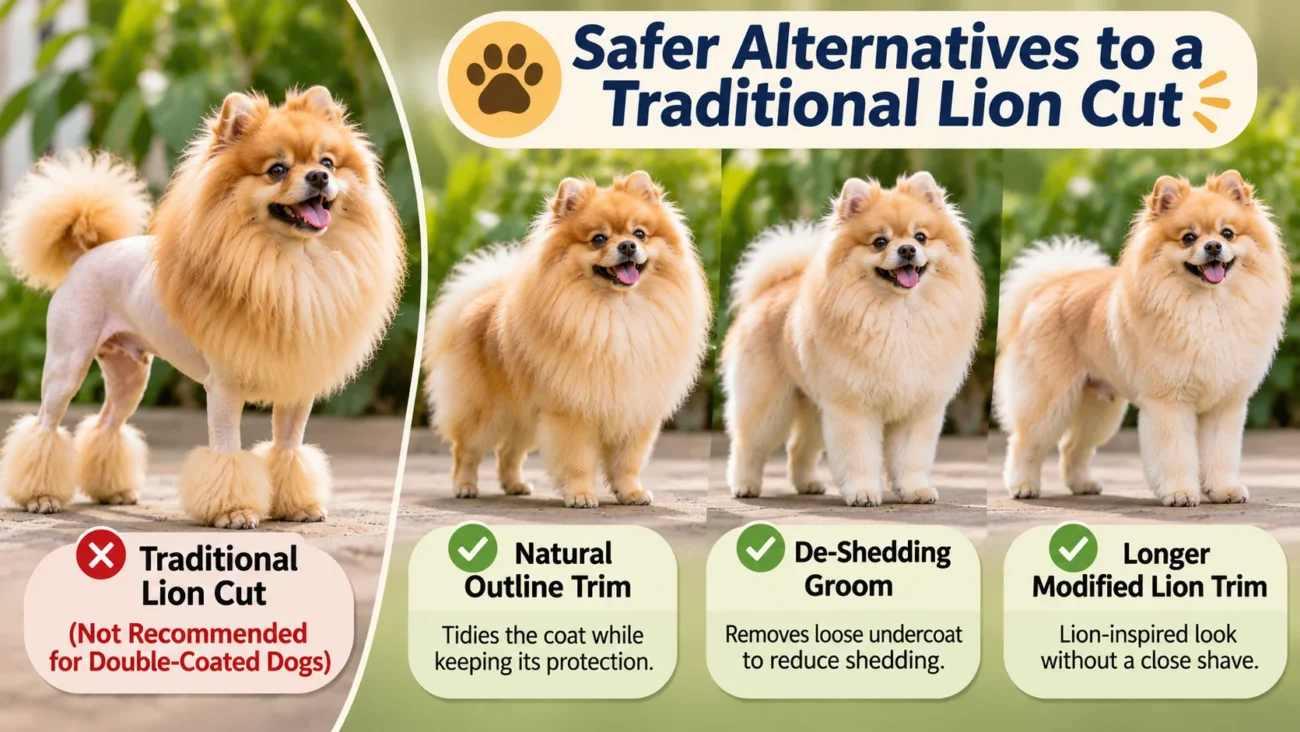
A traditional lion cut is unnecessary if your main goal is to reduce bulk, improve cleanliness, or highlight your dog’s fluffy neck.
Consider these alternatives:
- Natural outline trim: Tidies protruding hair while preserving the underlying coat.
- De-shedding groom: Removes loose undercoat without shaving the body.
- Longer modified lion trim: Creates contrast on suitable coats without an extremely short clip.
- Sanitary trim: Addresses specific hygiene needs instead of shortening the whole body.
- Breed-appropriate tidy: Maintains the natural coat shape with selective trimming.
For double-coated dogs, professional brushing, de-shedding, and conservative outline trimming are generally better choices than a shaved lion haircut.
Useful Grooming Tool: Rounded-Tooth Metal Dog Comb
A suitable metal grooming comb helps identify hidden tangles in the mane, behind the ears, and around the tail. Choose rounded teeth and a spacing appropriate for your dog’s coat. Use gentle passes after brushing rather than pulling through tight mats.
As an Amazon Associate, we earn from qualifying purchases.
Frequently Asked Questions
How much does a lion cut for a dog cost?
The cost depends on your dog’s size, coat condition, grooming complexity, and local salon rates. Request an individual quote because specialized lion styling and mat removal may increase the total grooming cost.
Does a lion cut keep a dog cooler in summer?
Not necessarily. Shortening suitable long-growing coats may help with maintenance, but shaving a protective double coat is not a reliable cooling method. Shade, fresh water, and avoiding excessive heat are more important.
Does a lion cut reduce dog shedding?
A lion cut does not stop the natural shedding cycle. Shorter shed hairs may be less noticeable, but suitable brushing and de-shedding are better ways to manage loose undercoat hair.
Can puppies get a lion cut?
Puppies may receive gentle, coat-appropriate grooming, but a dramatic lion cut should not be the default choice. A groomer should consider coat development, skin sensitivity, and the puppy’s tolerance for grooming.
Can a lion cut help a severely matted dog?
A lion cut may resemble the result of professional mat removal, but severe matting should be treated as a welfare issue rather than a styling opportunity. Painful mats in the mane may also need removal.
Can a lion cut be changed into another haircut?
Yes. A groomer can shorten the remaining mane to create a more balanced trim on a suitable coat, or gradually reshape the haircut as the shorter areas grow back. The available options depend on coat condition and existing hair length.
Final Thoughts
A lion cut can be an attractive grooming choice for dogs with suitable coats, particularly Poodles, Löwchens, and Portuguese Water Dogs. However, closely shaved versions are inappropriate for many double-coated breeds.
Choose a grooming pattern that preserves coat health, protects the skin, and fits your maintenance routine. A longer, professionally shaped lion-inspired trim may provide the appearance you want without unnecessary coat removal.


