
Quick Answer
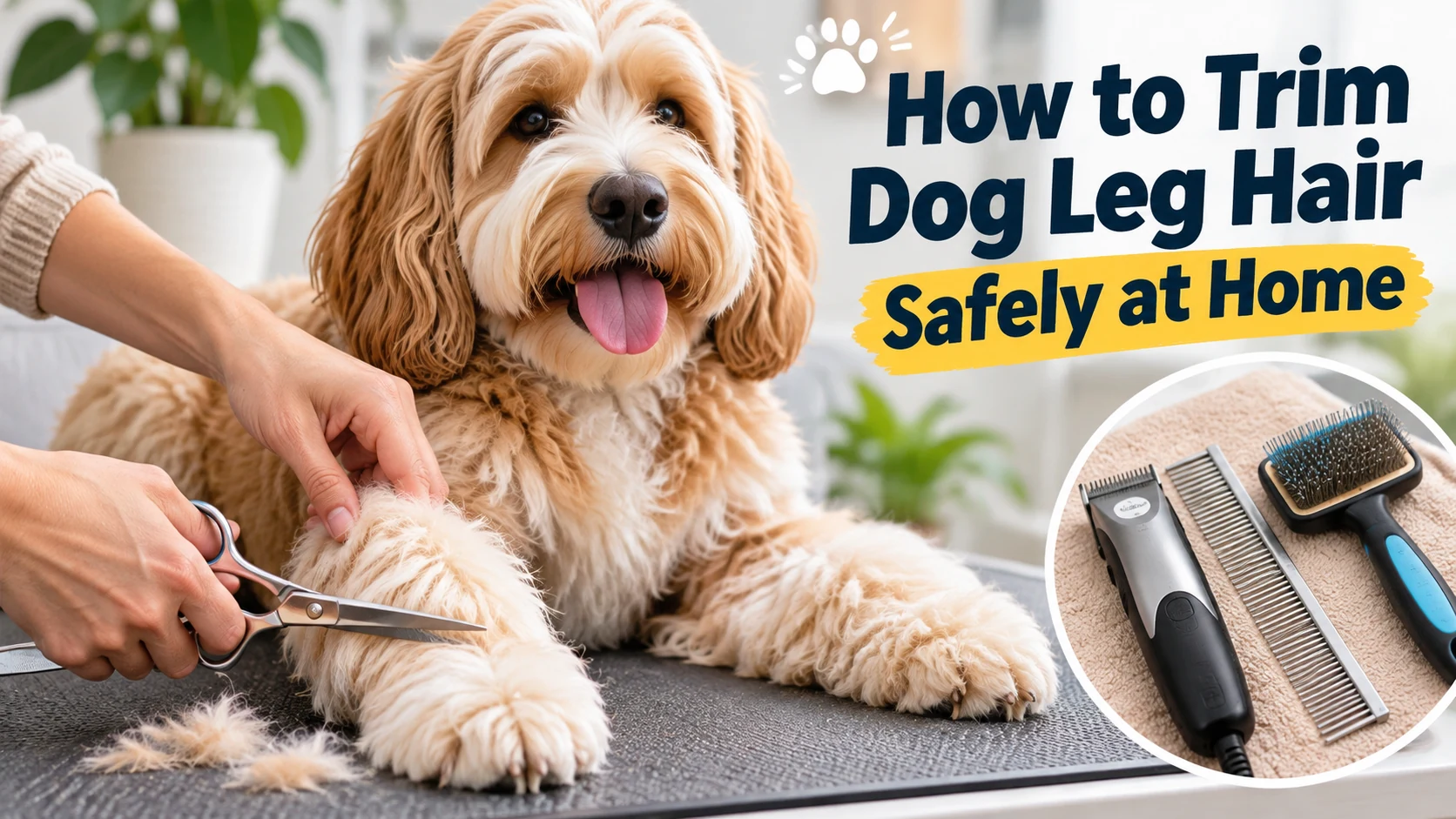
To trim dog leg hair safely, brush and comb the coat, check for mats, and use appropriate grooming clippers with a suitable guard or rounded-tip grooming scissors after learning safe technique. Follow the natural direction of hair growth, work in small sections, and blend the leg hair into the body coat. Keep tools away from skin folds, joints, and paw webbing. Stop if your dog becomes uncomfortable or moves unpredictably.
Long or uneven leg hair can collect dirt, develop tangles, and make your dog’s paws look untidy. A careful trim can improve coat manageability without removing more hair than necessary.
The challenge is that a dog’s legs are not flat surfaces. Ankles, elbows, loose skin, and moving paws require more attention than broad areas of the body. Beginners should focus on a modest tidy-up rather than attempting a complicated grooming style.
What Should You Know Before Trimming Dog Leg Hair?
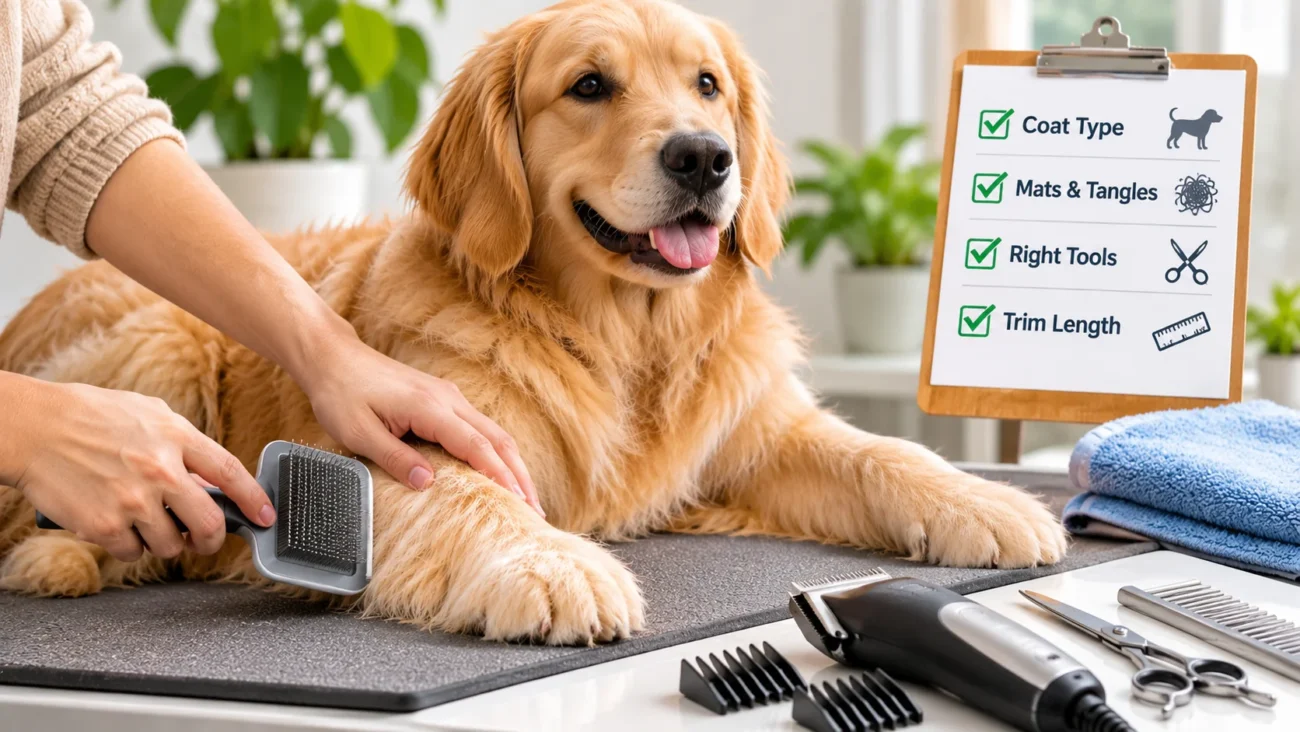
Before trimming, identify your dog’s coat type, check the condition of the hair, and decide how much length actually needs removing.
Dogs with continuously growing, curly, or wavy coats may need regular professional trimming. Dogs with naturally short coats usually need little or no leg trimming. Double-coated breeds may need brushing and limited tidying rather than cutting the coat short.
Look closely at the hair around the elbows, behind the front legs, near the hocks, and above the paws. These areas may develop tangles that are difficult to notice until you separate the coat.
If a comb cannot move through the hair without pulling, do not run scissors underneath the tangle. Tight mats can draw skin into the hair and make accidental cuts more likely.
The American Kennel Club’s home-grooming guidance emphasizes appropriate training and extra care when trimming sensitive areas.
What Tools Do You Need to Trim Dog Leg Hair?
The safest tool depends on the coat texture, the amount of hair being removed, and your grooming experience.
- Dog grooming clippers: Suitable for reducing length on manageable, unmatted coats when used with the correct attachment and technique.
- Clipper guard combs: Help maintain a consistent longer length. They must pass smoothly through fully combed hair.
- Rounded-tip grooming scissors: Useful for small, visible finishing areas after you have been shown safe handling.
- Grooming comb: Separates the coat, reveals tangles, and helps identify uneven sections.
- Appropriate brush: Removes loose hair and helps prepare the coat for trimming.
- Non-slip mat: Provides secure footing on a stable, low grooming surface.
- Small treats: Reward calm cooperation and encourage positive grooming experiences.
A small grooming trimmer may be useful for certain detailed areas, but equipment alone does not make trimming safe. The user must understand the tool, attachment, and dog’s anatomy.
Avoid household scissors, damaged clipper blades, and attachments that snag the hair. Keep grooming equipment clean and follow the manufacturer’s maintenance instructions.
How Do You Prepare Your Dog’s Legs for Trimming?
Proper preparation makes trimming easier and reduces the risk of pulling hair or accidentally cutting skin.
Brush and Comb the Entire Leg
Begin near the upper leg and gently work toward the foot. Separate longer hair into manageable sections so the comb can reach through the coat.
Pay special attention to the areas behind elbows and around joints. If brushing causes discomfort, reduce the pressure and investigate possible tangles.
Make Sure the Coat Is Clean and Dry
Dirt and debris can interfere with grooming tools. If bathing is necessary, use a dog-appropriate shampoo and dry the coat thoroughly before clipping.
Brush again after drying to reveal the hair’s natural shape. Wet hair can lie differently and make it harder to judge the final length.
Help Your Dog Become Comfortable
Allow your dog to investigate the grooming area and become familiar with the tools. Reward calm behavior while gently touching the legs and paws.
If using electric clippers, introduce the sound gradually before attempting to trim. Do not force a frightened dog to remain still.
How to Trim Dog Leg Hair Step by Step
The following process is intended for light maintenance on a calm dog with a clean, unmatted coat. If you have never used grooming scissors or clippers, ask a qualified groomer to demonstrate safe technique first.
Choose a comfortable working position.Place your dog on a stable, non-slip surface, preferably at a comfortable height where you can work without stretching the dog’s legs. Keep the dog supported and never leave it unattended on an elevated table.
Comb the leg hair in its natural direction.Gently comb from the upper leg toward the paw. Check that the coat separates easily and that the skin is visible where you need to work. Do not pull on tangles to make them pass through a clipper guard.
Choose a conservative trimming length.Start with a longer appropriate guard rather than immediately cutting the hair very short. Match the intended shape to the dog’s coat type and existing body trim. You can shorten additional hair later, but you cannot replace hair removed accidentally.
Trim the accessible outer leg.Use the clipper according to its instructions, generally following the natural direction of coat growth with smooth, controlled movements. Keep the attachment properly positioned and avoid pressing the blade against the skin. Stop before reaching narrow joints or loose skin.
Tidy the inner leg cautiously.Inner legs can have thinner skin and awkward folds. Only trim areas that you can see and control safely. Do not lift the leg high, twist it outward, or attempt to reach hidden hair by forcing the dog’s position. Leave difficult sections for a professional groomer.
Blend the upper leg into the body coat.Comb the transition between the torso and the leg. Look for obvious steps in length. Where appropriate, use a longer guard or professionally taught scissor technique to soften the transition rather than creating a sharp horizontal line.
Tidy the lower leg and foot outline.Comb the hair downward and identify strands that extend beyond the desired shape. Remove only clearly visible excess hair using a safe, demonstrated technique. Do not point scissors toward the skin, cut between moving toes, or dig into paw-pad spaces.
Check the result from several angles.Allow your dog to stand naturally and compare the legs from the front, sides, and rear. Comb again to reveal uneven strands. Make only minor adjustments, then reward your dog and check for any redness or irritation.
Safety Warning
Never attempt to cut close-fitting mats from leg skin with scissors. If your dog suddenly jerks, cries, struggles, or shows pain, stop immediately. A veterinarian or qualified groomer should handle tight mats, skin problems, and areas you cannot safely see.
How Can You Make Dog Leg Hair Look Even and Natural?
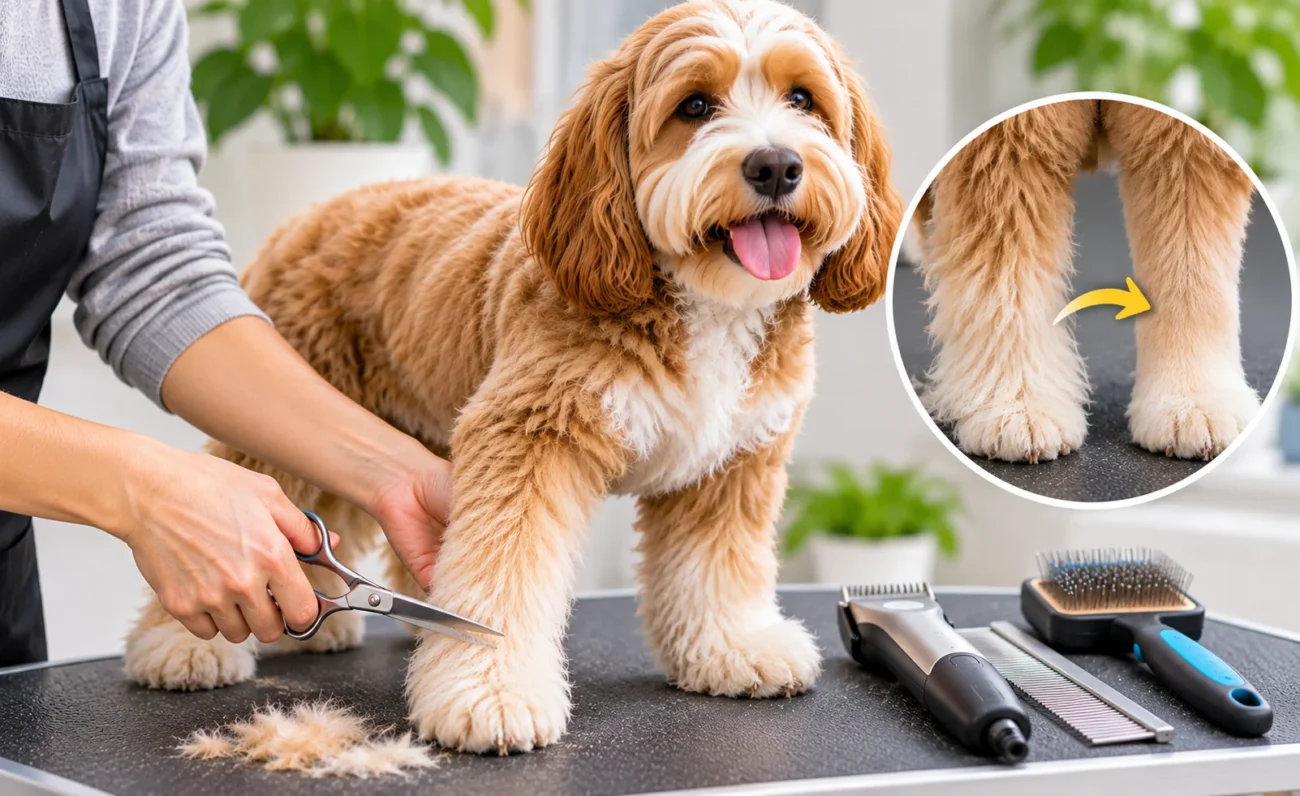
An even result comes from preserving a consistent shape, not simply cutting every hair to exactly the same length.
Look at the dog’s legs while it is standing naturally. The hair should generally follow the shape of the leg and transition smoothly into nearby areas of the coat.
For dogs with fuller leg furnishings, maintaining some length may be part of the intended grooming style. A curly-coated dog may require a different finish from a silky-coated dog.
Comb the hair in its usual direction, then inspect from different angles. Work gradually instead of cutting a large amount to correct one uneven spot.
Do not repeatedly shorten both legs while trying to match tiny differences. Slight natural variations are preferable to an excessively short or uncomfortable trim.
Should You Use Scissors or Clippers on Dog Legs?
Clippers are generally more practical for controlled length reduction on suitable coats, while grooming scissors can help finish visible outlines when used by someone trained in safe handling.
| Consideration | Clippers | Grooming Scissors |
|---|---|---|
| Main use | Reducing larger areas of coat | Minor shaping and finishing |
| Length control | Guide combs can help | Depends on precise hand control |
| Main hazard | Nicks, irritation, hot blades | Cuts from moving blades |
| Best suited to | Prepared coats and trained handling | Controlled detail work after instruction |
Neither tool is automatically safe for beginners. Clippers can catch loose skin, and scissors can cause serious injuries if a dog moves unexpectedly.
The best approach is to learn safe handling from a groomer and begin with simple areas rather than attempting a complete professional-style haircut.
How Should You Trim Hair Around Your Dog’s Paws?
Hair extending beyond the foot outline can sometimes be tidied, but the skin between toes and paw pads requires special care.
Gently examine the feet for debris, redness, painful areas, or tightly packed hair. If the paw is healthy and the hair is simply overgrown, a groomer can show you which visible strands are appropriate to trim.
Hair growing between the pads should not be aggressively removed. Avoid inserting scissor tips into the gaps or spreading the toes excessively to reach hidden hair.
The AKC advises that paw hair trimming should be performed carefully with suitable equipment and proper instruction.
If your dog repeatedly withdraws its paw, do not tighten your grip and continue. Return to short, reward-based paw-handling sessions or arrange professional grooming.
What Common Dog Leg Trimming Mistakes Should You Avoid?
Most preventable problems begin with poor preparation, excessive cutting, or working faster than the dog can comfortably tolerate.
- Cutting through mats: Skin may be hidden beneath tightly tangled hair.
- Starting too short: Removing excessive coat can create an uneven finish and may be inappropriate for the breed.
- Ignoring clipper temperature: Warm blades may irritate skin, especially during repeated passes.
- Forcing awkward leg positions: Twisting or extending a leg can cause discomfort or injury.
- Trimming a struggling dog: Sudden movement increases the chance of cuts.
- Using unsuitable scissors: Ordinary household scissors are not appropriate for close grooming work.
- Overworking one area: Repeated passes can irritate skin and remove more hair than intended.
The RSPCA’s dog grooming guidance recommends gentle coat care and seeking professional help when difficult matting or discomfort makes home grooming unsafe.
When Should You Leave Dog Leg Hair Trimming to a Professional?
Professional grooming is the safer choice when the hair is tightly matted, the dog resists handling, or trimming requires working close to vulnerable skin.
Seek veterinary advice first if you notice swelling, open wounds, significant redness, unexplained pain, or signs of infection. Grooming should not be used to hide or work around a possible medical problem.
A qualified groomer can also help when your dog’s coat requires a particular breed-style finish or when the legs need extensive reshaping.
For your first appointment, explain whether you want a light leg tidy, a longer blended finish, or help learning maintenance techniques. Ask what can safely be maintained at home between visits.
Frequently Asked Questions
1. Can I trim my dog’s leg hair at home?
Yes, light maintenance may be possible at home when your dog is calm, the coat is unmatted, and you have been taught appropriate grooming techniques. Leave difficult or sensitive areas to a qualified groomer.
2. How short should I trim my dog’s leg hair?
There is no single correct length for every dog. Keep enough hair to suit the breed, coat type, season, and intended style. Begin conservatively and avoid shaving down to the skin without professional guidance.
3. How often should dog leg hair be trimmed?
Frequency depends on coat growth, tangling, activity, and grooming style. Inspect the legs regularly and trim when necessary rather than following a fixed schedule that applies to every breed.
4. Can I trim matted leg hair with scissors?
No. Avoid cutting tight mats with scissors because skin can be pulled into the tangle. Ask a trained groomer or veterinarian to assess mats that cannot be separated comfortably.
5. Why does my dog pull away during leg grooming?
Your dog may dislike paw handling, feel anxious about equipment, or experience discomfort from pulling hair or holding a leg awkwardly. Stop, check for possible pain, and rebuild tolerance through short, positive sessions.
6. Should I shave my double-coated dog’s legs?
Routine close shaving is generally unnecessary for a healthy double coat and may interfere with its normal protective function. Brushing and limited tidying are usually more appropriate unless a veterinarian or qualified groomer recommends another approach.
Final Thoughts
Trimming dog leg hair successfully requires more than achieving an even appearance. Good preparation, appropriate equipment, patient handling, and respect for the dog’s coat type are essential.
Start with a small, manageable tidy-up and avoid cutting near skin you cannot clearly see. When the hair is matted, the dog is uncomfortable, or the technique is unfamiliar, professional grooming is the safer option. A comfortable dog with a healthy, manageable coat matters more than a perfectly shaped haircut.


