
Quick Answer
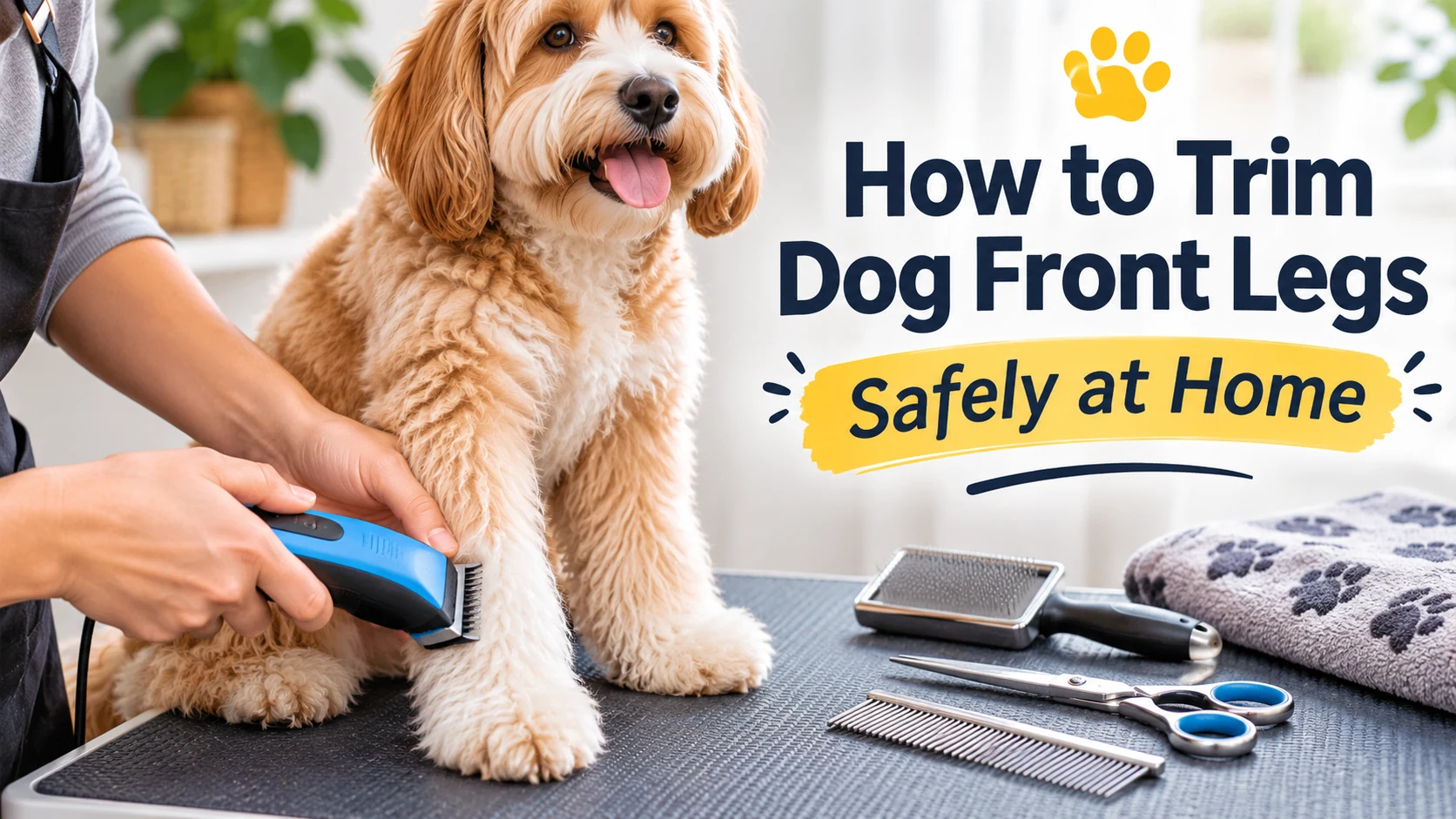
To trim your dog’s front legs, brush and comb the clean, dry hair first, choose a longer clipper guard if the coat is suitable for clipping, and work in slow passes from the shoulder toward the paw. Comb the hair outward to check the shape, then make only small finishing adjustments with appropriate grooming tools. Never cut through mats with scissors, force a leg into position, or continue if your dog is frightened or moving unpredictably.
Front legs are deceptively tricky to groom. Hair grows in different directions around the elbow, wrist, and foot, while the leg itself changes shape as the dog shifts its weight. A rushed trim can produce an uneven result or, more importantly, put delicate skin at risk.
This guide covers conservative home touch-ups, not close scissor work or mat removal.
Before You Start: Should Your Dog’s Front Legs Be Trimmed?
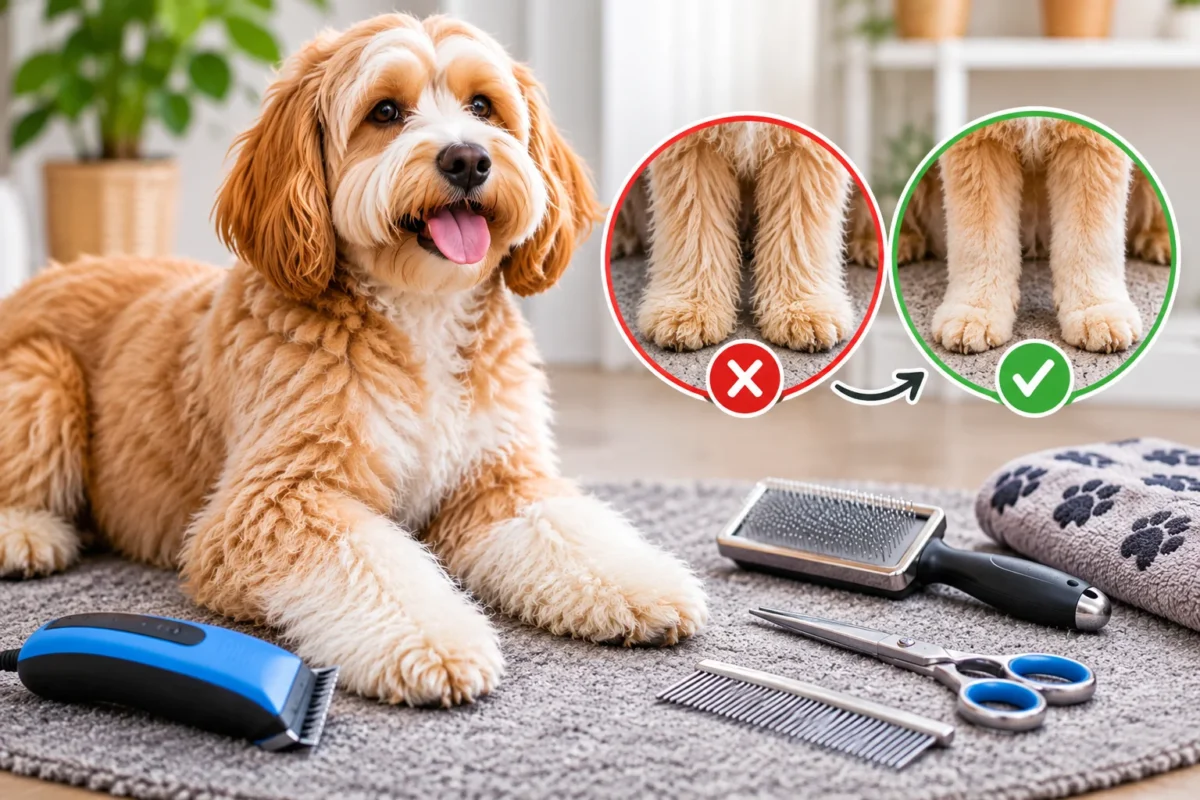
Not every dog needs a haircut on its front legs. Poodles and many other continuously growing coats are often maintained through regular clipping and shaping. Short-coated dogs may need little more than brushing. Thick double-coated breeds usually benefit from coat maintenance rather than close clipping, unless a veterinarian or qualified groomer identifies a specific reason.
Consider the goal before choosing a tool. Are you tidying stray hairs around the feet, reducing excess length on a fluffy leg, or trying to remove a tight tangle? These are different jobs. The last one may require professional help rather than an ordinary home trim.
Check both front legs for redness, lumps, wounds, skin folds, and tangles. If the coat is tightly matted or skin looks inflamed, postpone the haircut. VCA Animal Hospitals’ grooming guidance warns against cutting mats with scissors because skin can be caught in them and recommends professional care for severe tangles.
What Tools Make a Front-Leg Trim Easier?
A safe trim starts with equipment suited to the coat, the dog’s tolerance, and your own skill. You do not need a large professional kit for a modest touch-up.
- Slicker brush or appropriate coat brush: separates loose hair and helps identify tangles before cutting.
- Metal grooming comb: checks whether the coat is truly tangle-free, especially behind the elbows.
- Dog-specific clippers with a longer guide comb: help maintain a more consistent length on suitable coats.
- Rounded-tip grooming shears or thinning shears: for very limited finishing work only if you have been shown safe handling.
- Non-slip floor mat: allows the dog to stand securely without balancing on a slippery surface.
- Small rewards and good lighting: help you work without rushing or restraining an anxious dog.
Ordinary household scissors are a poor choice near moving legs. Keep the work simple if you are new to grooming: brushing and a guarded clipper trim are generally more predictable than attempting detailed scissor sculpting.
How to Trim Dog Front Legs in 7 Safe Steps
Work on one small area at a time, and stop before either of you becomes tired. A short, comfortable session is more useful than completing a perfect-looking haircut at any cost.
Step 1: Set Up a Calm, Stable Grooming Area
Choose a quiet, well-lit place with a non-slip surface. Keep all tools within reach so you never have to leave your dog unattended on an elevated table. For most owners, a secure floor-level setup is easier to manage.
Let your dog sniff the tools and reward calm behavior. If clippers are unfamiliar, introduce the switched-off tool before briefly turning it on at a comfortable distance. Do not proceed until your dog can remain reasonably relaxed.
Step 2: Brush, Comb, and Inspect the Hair
Start near the shoulder and work toward the paw in small sections. Brush gently in the direction appropriate for the coat, then pass a comb through the hair down to the skin without scraping. Pay attention to the backs of the legs, behind the elbows, and around the wrists.
Check that the coat is clean and completely dry before clipping. A guard comb may catch if knots remain, creating pulling or an uneven cut. If the comb will not pass through easily, do not force clippers across that spot.
Step 3: Decide Where the Leg Hair Should End
Stand back and look at both front legs. For a simple pet trim, aim for an even, practical outline rather than a precise breed-specific shape. Leave more length initially: it is easy to remove another small amount, but impossible to put hair back.
Notice the transition between the chest or shoulder coat and the upper leg. A sudden change in length can create a visible shelf. If you are unsure about the intended style, photograph the current coat and ask your groomer to demonstrate a suitable length at your next visit.
Step 4: Trim the Main Leg Coat With Controlled Passes
For a coat suitable for clippers, attach a longer guide comb that glides through the brushed hair. Begin on an accessible, relatively flat section of the upper leg, keeping the clipper level with the coat rather than tipping its cutting edge toward the skin.
Work slowly in the direction the hair lies, usually down toward the paw, without pressing hard or repeatedly going over the same patch. Support your dog’s comfortable stance but do not pull the limb forward or sideways to reach a hidden area.
If the guard snags or the clipper becomes hot, stop immediately and correct the problem before continuing. The Petco grooming guidance on using dog clippers similarly emphasizes clean, dry coats, suitable guides, and controlled strokes.
Step 5: Treat the Elbow and Wrist as Sensitive Areas
The elbow bends, and the skin near the armpit can gather into folds. Do not chase stray hairs into those folds with an exposed blade. Keep the leg in its natural, comfortable position and use a brush or comb to bring accessible outer hairs into view.
If you cannot clearly see the skin or safely keep the cutting tool away from it, leave that section for a professional. A slightly fluffy elbow is much better than a nick or irritated skin.
Step 6: Blend the Leg Into the Paw Without Cutting Between Toes
Comb the longer outer hairs at the bottom of the leg and assess whether they hang awkwardly over the foot. For a beginner, a tidy outer outline is enough; avoid close work between toes, around paw pads, or near the dewclaw without training.
Do not confuse hair trimming with nail trimming. Nails require dog-specific nail tools and a separate technique. The American Kennel Club’s home-grooming advice recommends learning correct procedures before trimming sensitive paw hair and cautions against amateur close clipping.
Step 7: Comb Again and Compare Both Legs
After trimming one leg, comb the coat in its normal direction and look at it from the front and side. Step away for a moment so you can see the overall outline. Trim the other leg conservatively rather than trying to duplicate every tiny detail immediately.
Have your dog take a few comfortable steps. Hair that looks even while standing still may fall differently in motion. Make only minor touch-ups to accessible, clearly visible areas; stop if your dog is restless.
How Do You Keep Front Legs Looking Even?
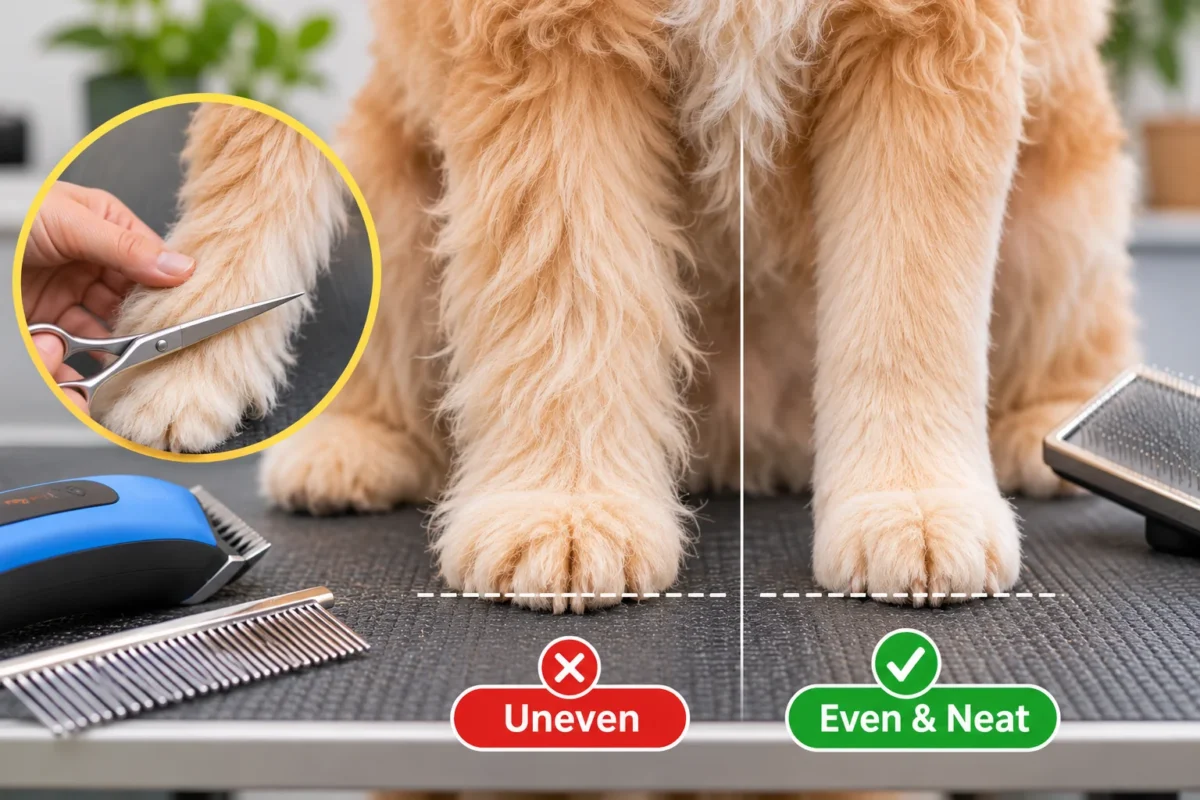
Evenness comes mostly from preparation, consistent hair length, and checking all visible sides of the leg. One side may look fuller because of coat growth, a natural swirl, or the way the dog holds its weight.
Use the comb as a measuring aid rather than guessing at isolated hairs. Comb the front, outside, and back of each leg in turn. Compare the overall silhouette, not individual strands. Avoid repeatedly cutting a shorter side in an attempt to make a naturally uneven coat perfectly symmetrical.
For fluffy coats, the ideal outline also depends on the desired style. A rounded, full leg and a shorter practical pet trim require different techniques. If you want a cylindrical or breed-standard finish, a groomer can demonstrate scissor positioning and safe blending before you attempt it.
What Mistakes Should You Avoid?
- Trimming over knots: clippers can pull, and scissors can cut folded skin hidden inside a mat.
- Starting too short: a longer guard gives room to assess the finish before removing more coat.
- Working on a moving dog: pause instead of holding the dog down while a blade is near its skin.
- Lifting a front leg too high: this can make a dog unstable or uncomfortable, particularly if it has sore joints.
- Ignoring clipper heat: check the cutting head regularly and follow the tool manufacturer’s cooling instructions.
- Overworking the elbow: changing skin folds and coat direction make this an easy place to nick.
- Clipping every coat the same way: dense double coats need a different maintenance plan from continuously growing hair.
Uneven hair is usually a cosmetic concern. Pain, sudden sensitivity, skin redness, or repeated snagging is a reason to end the session and reassess rather than keep trimming.
When Should You Stop and Call a Groomer or Veterinarian?
Choose professional grooming when there are tight mats, a coat that repeatedly catches the guard, an extremely nervous dog, or a shape that requires close scissor work around joints. An experienced groomer can also advise whether clipping is appropriate for your dog’s breed and coat type.
Contact a veterinarian if you discover painful swelling, open wounds, moist inflamed patches, or a new reluctance to bear weight on a front leg. These are health concerns, not grooming problems to conceal by cutting the coat shorter.
If an accidental cut occurs, stop grooming, apply gentle pressure with clean gauze for minor bleeding, and contact veterinary care for deep wounds, persistent bleeding, or signs of significant pain. Do not continue trimming around an injury.
How Can You Maintain the Trim Between Haircuts?
Regular gentle brushing and combing keep the coat easier to inspect and reduce the need for major corrective trimming. Focus on areas that move and rub, including behind the elbows and around the lower legs.
Check paws after walks for debris or damp tangles, particularly on dogs with feathery leg hair. Dry wet coats thoroughly and monitor new knots before they tighten. A grooming schedule should reflect coat growth, activity, comfort, and your groomer’s advice rather than a fixed rule for every breed.
Frequently Asked Questions
Can I trim my dog’s front legs using only scissors?
Detailed scissor work around moving legs is best learned directly from a qualified groomer. Beginners should avoid household scissors and never use scissors to cut out mats.
Should both front legs be exactly the same length?
Aim for a balanced appearance, but natural coat direction and leg posture can make minor differences normal. Do not keep shortening one side to chase perfect symmetry.
Is it okay to trim the hair around the dewclaw?
Only if the area is clearly visible and you have been shown how to work safely around it. The dewclaw and surrounding skin can be injured by close cutting.
Why does the clipper pull my dog’s leg hair?
Possible causes include tangles, a dirty or damp coat, an unsuitable guide, or a blade that needs cleaning or maintenance. Stop and check the coat and equipment instead of increasing pressure.
Can I give a puppy its first front-leg trim at home?
Start with gentle handling, brushing, and brief exposure to grooming tools. For the first actual trim, a groomer can help you choose a safe approach for the puppy’s coat and tolerance.
How short should front leg hair be in hot weather?
There is no single safe short length for every dog. Coat type matters, and shaving a double coat close is generally not recommended just because the weather is warm.
Final Thoughts
Trimming dog front legs safely is less about removing a lot of hair and more about making small, controlled changes on a clean, comfortable coat. Start longer, work only where you can see clearly, and check the shape with a comb. When mats, sensitive skin, or an anxious dog complicate the job, let a professional handle the difficult areas.


