
Quick Answer
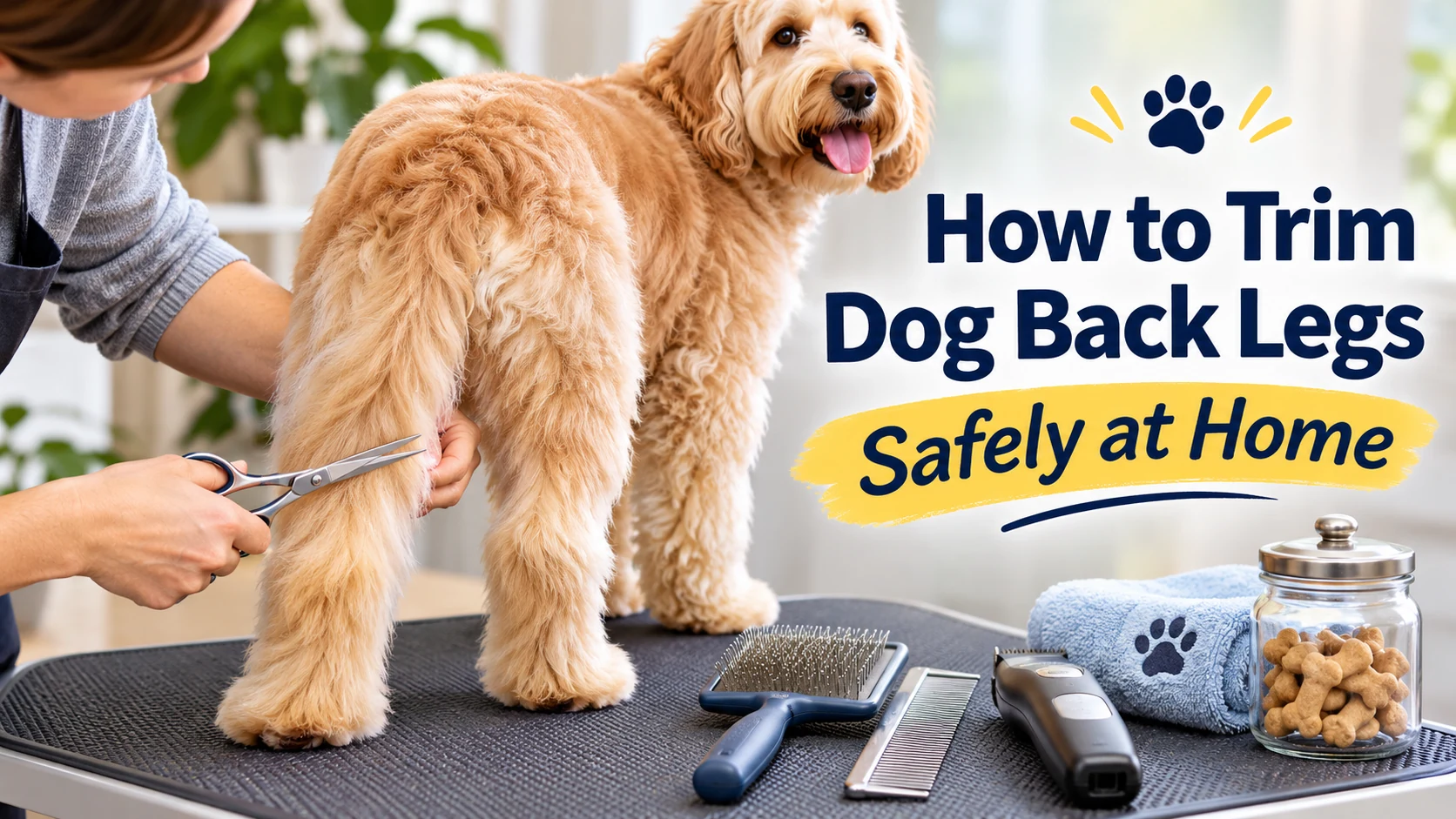
To trim your dog’s back legs safely, brush and comb the fur, check for mats, and stand your dog on a stable, non-slip surface. Carefully shorten only the loose, visible hair using suitable grooming shears or a guarded clipper appropriate for the coat. Work gradually from the thighs toward the hocks and feet, keeping cutting tools away from skin folds and joints. Stop if your dog struggles or the fur is tightly matted.
Trimming your dog’s back legs can make long fur easier to maintain, reduce debris collecting in the coat, and give the hindquarters a tidier appearance. But the shape of a dog’s rear legs makes this area more complicated than trimming a flat section of the body.
The thighs are rounded, the hocks bend, and delicate skin may be hidden beneath thick hair. A safe home trim should preserve your dog’s comfort and natural coat rather than aim for the shortest possible haircut.
This guide explains how to prepare, which tools to use, how to trim different sections of the back legs, and when professional grooming is the safer choice.
What Should You Know Before Trimming Your Dog’s Back Legs?
Start by identifying the coat type and the exact hair that needs shortening. Some dogs have long, flowing leg feathering; others have curly coats that grow continuously or double coats that generally need brushing rather than substantial clipping.
The hind leg has several areas that require different handling:
- Upper thighs: Rounded, muscular areas where longer coat may need light shaping.
- Back-leg feathering: Longer hair that hangs behind the thighs and lower legs.
- Hocks: The ankle-like joints above the rear paws, where the coat changes direction.
- Lower legs and feet: Areas that collect dirt and may develop tangles.
- Inner thighs: Sensitive areas close to skin folds and the sanitary region.
These areas should not all be trimmed to the same length. The goal is to remove excess hair without cutting into the natural leg shape or exposing delicate skin.
For double-coated breeds, the American Kennel Club’s double-coat guidance explains why routine brushing and selective tidying are generally preferable to shaving.
What Tools Do You Need to Trim Dog Back Legs?
You do not need an entire professional grooming station for a minor tidy-up. However, proper equipment makes it easier to see the hair, control the amount removed, and avoid accidental cuts.
| Tool | Purpose |
|---|---|
| Slicker brush or suitable coat brush | Removes loose hair and separates light tangles. |
| Metal grooming comb | Checks for knots and lifts longer hair for trimming. |
| Rounded-tip grooming shears | Tidy loose hair ends when the entire cutting area is visible. |
| Thinning or blending shears | Soften uneven transitions in longer, unmatted coat. |
| Pet clippers with suitable guard comb | Provide a more even trim on appropriate coat types when used correctly. |
| Non-slip mat and treats | Support stable footing and cooperative handling. |
For beginners, a brush, comb, and small grooming shears may be sufficient for a modest trim of loose feathering. Electric clippers require additional training, particularly near the inner thighs, joint creases, and hocks.
Do not substitute kitchen scissors for suitable grooming equipment. Never attempt to cut a tight mat away from the skin with scissors.
How to Trim Your Dog’s Back Legs in 7 Safe Steps
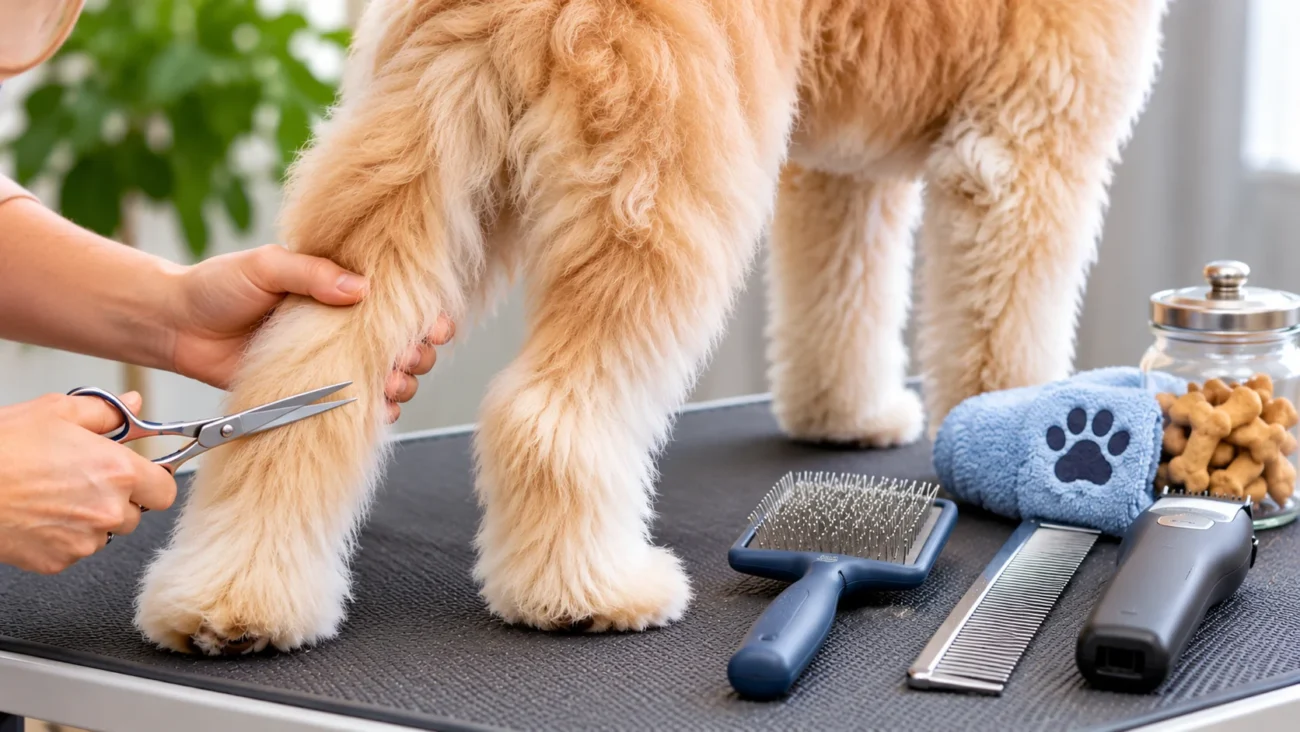
Work in a quiet, well-lit space. Keep the session short enough that your dog remains comfortable, and prioritize light shaping over removing large amounts of fur.
Step 1: Position Your Dog on a Non-Slip Surface
Have your dog stand naturally on a secure floor mat or appropriate grooming surface. All four paws should be supported, and your dog should be able to maintain a comfortable posture.
If possible, ask a calm helper to offer treats and monitor your dog’s body language. Do not pull the hind legs backward or lift a leg beyond its natural range of motion.
Pause if your dog repeatedly sits, turns away, trembles, or tries to escape. Forcing an anxious dog to remain still increases the risk of injury.
Step 2: Brush and Comb the Back Legs Thoroughly
Brush the coat gently in the direction of hair growth, starting with accessible areas of the thighs and working toward the lower legs.
Follow with a grooming comb to check whether the hair separates freely. Pay particular attention to the feathering behind the legs and the places where the inner thighs rub together.
Small, loose tangles may separate with gentle brushing. Never yank through a knot or repeatedly pull on sensitive skin.
If the comb catches in a dense mat, do not continue cutting around it. Tight mats require professional assessment and may need controlled clipper removal.
Step 3: Identify the Hair You Actually Need to Remove
Step behind your dog and look at the natural outline of both hind legs. Identify loose ends that extend noticeably beyond the surrounding coat.
Gently lift longer feathering with a comb, keeping the cutting line well away from the skin. If you cannot see the full length of hair being cut, change your position instead of trimming blindly.
Do not attempt to create perfectly straight legs by removing all the fur. A dog’s natural contours should remain visible, especially around the thigh and hock.
Step 4: Lightly Shape the Outer Thighs
Begin with loose hair on the outer or rear thigh, where visibility is good. Make small cuts only at the ends of the hair that clearly extend past the intended outline.
Keep the scissor tips directed away from the dog’s body. Avoid cutting into the rounded thigh, the crease where the leg meets the abdomen, or any area where the skin is hidden.
If using clippers on a suitable single coat, use a properly attached guard and follow the direction of coat growth. Do not press the blade into joint creases.
Stop periodically, comb the hair back into position, and assess the shape before removing more.
Step 5: Tidy Feathering Behind the Legs
Long-haired dogs may have a curtain of hair extending down the backs of their rear legs. This is commonly called feathering.
Comb the feathering downward and trim only the longest, clearly visible ends to achieve a natural taper. Avoid cutting a sharp horizontal line, which can leave the rear legs looking abruptly shortened.
For a softer finish, experienced handlers may use blending shears on free-hanging coat. Make a small adjustment, comb the hair again, and check the result.
Keep trimming conservative when the feathering is part of the breed’s natural coat.
Step 6: Check the Hocks, Lower Legs, and Feet
The hock is a bending joint, not a flat surface. Hair may change direction here, and the skin can become exposed as the leg moves.
With your dog standing comfortably, comb the lower-leg hair downward and remove obvious stray ends only where you can see a safe cutting path.
Avoid putting scissors into the crease behind the hock. Do not clip directly over tendons or unfamiliar skin folds without proper training.
At the feet, inspect for debris, knots, or overgrown hair. Trimming between paw pads is a separate, delicate grooming task best demonstrated by a groomer or veterinary professional before attempting it yourself.
Step 7: Check Both Legs and Finish Gently
Allow your dog to stand naturally again. Compare the two legs from behind and from the side, rather than trying to judge the haircut while one leg is lifted.
Comb the fur once more to identify visible loose ends. Make only minor corrections, then check the skin for redness, irritation, or accidental nicks.
Offer praise and a reward before ending the session. A slightly uneven haircut is preferable to extending the procedure until your dog becomes restless.
Grooming Tip
Take less hair off than you think is necessary on the first pass. Comb the coat into its natural position and reassess. You can shorten loose ends later, but you cannot immediately restore an overtrimmed area.
Should You Use Scissors or Clippers on a Dog’s Back Legs?
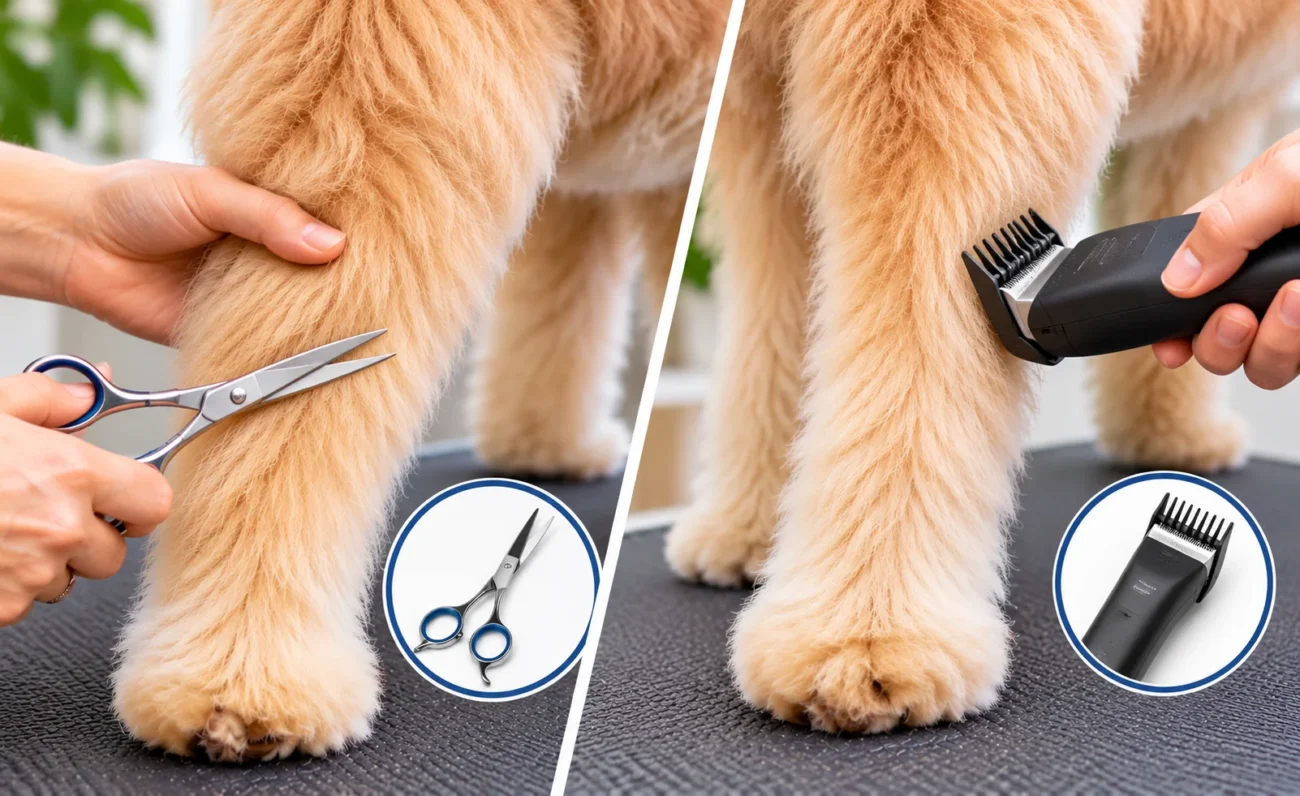
Scissors and clippers serve different purposes. The safer option depends on coat type, hair length, the part of the leg being trimmed, and your experience.
Grooming shears are useful for light shaping of long, free-hanging hair where the skin and full cutting path remain visible. They are not safe for cutting tight mats or working blindly in leg creases.
Guarded clippers can create a more uniform length on suitable coats, but they still pose a risk around thin skin, joints, and sensitive areas. An incorrectly fitted guard or a hot blade can cause injury.
If your goal is simply to tidy a few long strands, extensive clipping may be unnecessary. If your dog needs a full haircut, a professional groomer can select appropriate coat lengths and techniques.
How Does Back-Leg Trimming Change by Coat Type?
Different coats respond differently to cutting, so one trimming method should not be applied to every dog.
Curly or Continuously Growing Coats
Poodles and some similar-coated dogs often need regular grooming to maintain manageable hair length. The back legs may be shaped with a longer guarded clipper setting and careful finishing, depending on the desired haircut.
Because curls can conceal uneven lengths and tangles, complete brushing and combing before clipping are especially important.
Long, Feathered Coats
Spaniels, setters, and other feathered breeds may benefit from selective trimming behind the thighs and near the hocks.
Preserve the natural flow of the feathering rather than removing everything. The goal is to reduce excessive length while maintaining the coat’s characteristic appearance.
Double-Coated Dogs
For breeds with a protective topcoat and dense undercoat, regular brushing is usually more appropriate than shaving.
Some double-coated dogs may have excess hair tidied around the feet or hocks, but extensive clipping can disrupt the coat’s natural structure. Ask a groomer familiar with your dog’s coat before making significant changes.
Short, Smooth Coats
Dogs with naturally short, smooth hind-leg hair rarely need cosmetic leg trimming. Brushing, washing away dirt, and routine skin and paw checks are usually sufficient.
What Back-Leg Grooming Mistakes Should You Avoid?
Most home-grooming problems arise from cutting too close, missing hidden tangles, or trying to finish while the dog is uncomfortable.
- Cutting mats with scissors: Tight mats can contain trapped skin and should be handled professionally.
- Using clippers on dirty or tangled fur: The coat may snag, causing discomfort and an uneven result.
- Trimming inside joint creases: Thin skin can enter the cutting path when the dog moves.
- Removing too much feathering: This can create an unnatural outline and is not necessary for routine maintenance.
- Ignoring clipper heat: Hot blades can irritate or burn skin.
- Forcing an anxious dog: Sudden movements make even a minor trim dangerous.
Safety Warning
Never cut tightly matted hair with scissors, especially around the inner thighs, hocks, or sanitary area. The skin may be pulled into the mat and easily injured. A veterinarian’s guidance on handling matted fur recommends professional removal for tight, painful, or sensitive-area mats.
When Should You Stop and Get Professional Grooming Help?
Stop trimming if you cannot clearly see where the hair ends and the skin begins, your dog becomes frightened, or a mat cannot be loosened without pulling.
A professional groomer is particularly useful when your dog has widespread tangles, needs substantial shaping around the hindquarters, or cannot comfortably tolerate handling of the back legs.
Seek veterinary advice if you notice swelling, painful skin, bleeding, unusual sensitivity, discharge, or difficulty bearing weight. These are not grooming problems to solve with a haircut.
For dogs that react strongly to grooming, gradual handling practice and positive reinforcement may help. The Animal Trust veterinary grooming guide emphasizes short, gentle sessions and avoiding forced handling when a dog is distressed.
How Can You Keep Back-Leg Fur Neat Between Haircuts?
Regular maintenance is usually easier than removing overgrown or tangled fur in one long session.
Brush the hind legs as often as your dog’s coat requires, paying special attention to areas that rub together. After walks, check the feathering and feet for grass seeds, mud, burrs, or other debris.
Keep the coat clean and fully dry before attempting a tidy-up. If you find a developing tangle, address it gently before it becomes tightly attached to the skin.
There is no universal leg-trimming interval. Curly or long-coated dogs may need frequent coat maintenance, while dogs with short coats may need little or no trimming.
Frequently Asked Questions
Can I trim my dog’s back legs at home as a beginner?
Yes, minor trimming of loose, clearly visible hair may be manageable if your dog is calm and the coat is free of mats. Leave close clipping, extensive reshaping, and sensitive areas to a trained groomer.
Should I trim my dog’s back legs while the fur is wet?
For routine home trimming, work with clean, completely dry, combed fur. Wet hair can lie differently and make it harder to assess the finished length.
How often should I trim the hair on my dog’s hind legs?
Trim only when excess length affects cleanliness, maintenance, or the intended coat style. Coat type and hair growth determine the interval; regular brushing is often more important than frequent cutting.
Can I use human hair clippers on my dog’s legs?
Pet-specific clippers are generally more appropriate because they are designed for animal coats. Human clippers may struggle with dense fur, and any clipper can cause injury if used incorrectly.
What if my dog keeps sitting down during trimming?
Pause the session and allow your dog to relax. Try brief handling exercises with rewards on another occasion. If your dog continues to resist or appears painful, seek professional advice instead of forcing the haircut.
Is back-leg trimming the same as sanitary trimming?
No. Back-leg trimming mainly shapes the fur on the thighs, feathering, hocks, and lower legs. Sanitary trimming involves more sensitive areas near the genitals and anus and requires additional care and training.
Final Thoughts
Trimming your dog’s back legs safely starts with proper coat preparation, calm handling, and conservative cutting. Work only on visible, unmatted hair, preserve the natural leg shape, and treat the hocks and inner thighs as sensitive areas.
If the coat is tightly tangled or your dog cannot remain comfortable, professional grooming is a better choice. A safe, modest trim is always more valuable than a perfectly styled haircut achieved at the risk of injury.


