
Quick Answer
To scissor dog legs safely, brush and comb the coat, identify the natural leg shape, and trim only loose, clearly visible hair with suitable grooming shears. Work slowly, keep the blades away from the skin, and use small cuts to create an even finish. The American Kennel Club’s grooming guidance recommends learning proper trimming techniques from a professional before using scissors near sensitive areas.
7 Quick Steps to Scissor Dog Legs
- Step 1 — Prepare: Set up a secure, non-slip grooming area.
- Step 2 — Brush: Gently remove loose hair and minor tangles.
- Step 3 — Comb: Lift and separate the leg coat to expose uneven ends.
- Step 4 — Shape: Follow the natural outline of the dog’s legs.
- Step 5 — Trim: Make small, controlled cuts on hair clearly away from the skin.
- Step 6 — Blend: Soften obvious lines with suitable blending shears.
- Step 7 — Inspect: Comb again and correct only visible uneven ends.
Safety reminder: Never use scissors to cut out mats, and stop immediately if your dog moves unpredictably or becomes distressed.
Learning how to scissor dog legs can help maintain a neat coat between professional grooming appointments. However, a clean finish should never come before your dog’s safety.
In this guide, I’ll explain the tools, preparation, trimming techniques, and common mistakes that matter most. You’ll also learn when it’s safer to leave the job to a professional groomer.
What Does It Mean to Scissor Dog Legs?
Scissoring dog legs means using grooming shears to shape, shorten, and blend the hair around a dog’s front and back legs. Groomers use this technique to create a balanced outline while preserving the coat’s natural appearance.
Unlike clipping, scissoring allows more selective shaping of the outer coat. It works especially well for tidy finishing touches on coats that need regular trimming.
Why Do Groomers Scissor Dog Legs?
Leg scissoring can improve the overall shape of a haircut and remove loose ends that make the coat appear uneven. It also helps create a smooth transition between the body, legs, and feet.
- Balanced appearance: Keeps the leg outline consistent with the body haircut.
- Natural shaping: Preserves the coat’s softness without creating obvious clipper lines.
- Coat maintenance: Removes minor excess length that collects dirt or debris.
- Finishing detail: Blends uneven sections after routine grooming.
Not every dog needs scissor trimming. Short-coated breeds, such as Beagles, usually benefit more from brushing and regular basic grooming.
Which Dogs Benefit Most From Leg Scissoring?
Dogs with continuously growing or longer coats may need regular leg shaping. The correct technique depends on coat texture, breed standards, and the desired haircut.
- Poodles: Often have shaped, fluffy legs that require consistent blending.
- Bichon Frises: Frequently have rounded leg outlines as part of their grooming style.
- Shih Tzus: May benefit from gentle trimming around longer leg furnishings.
- Havanese: Can have loose coat ends tidied while retaining natural movement.
- Doodle mixes: May need careful shaping depending on their individual coat type.
Double-coated breeds require special consideration. Avoid excessive cutting that changes their protective coat structure without professional guidance.
Which Tools Do You Need to Scissor Dog Legs?
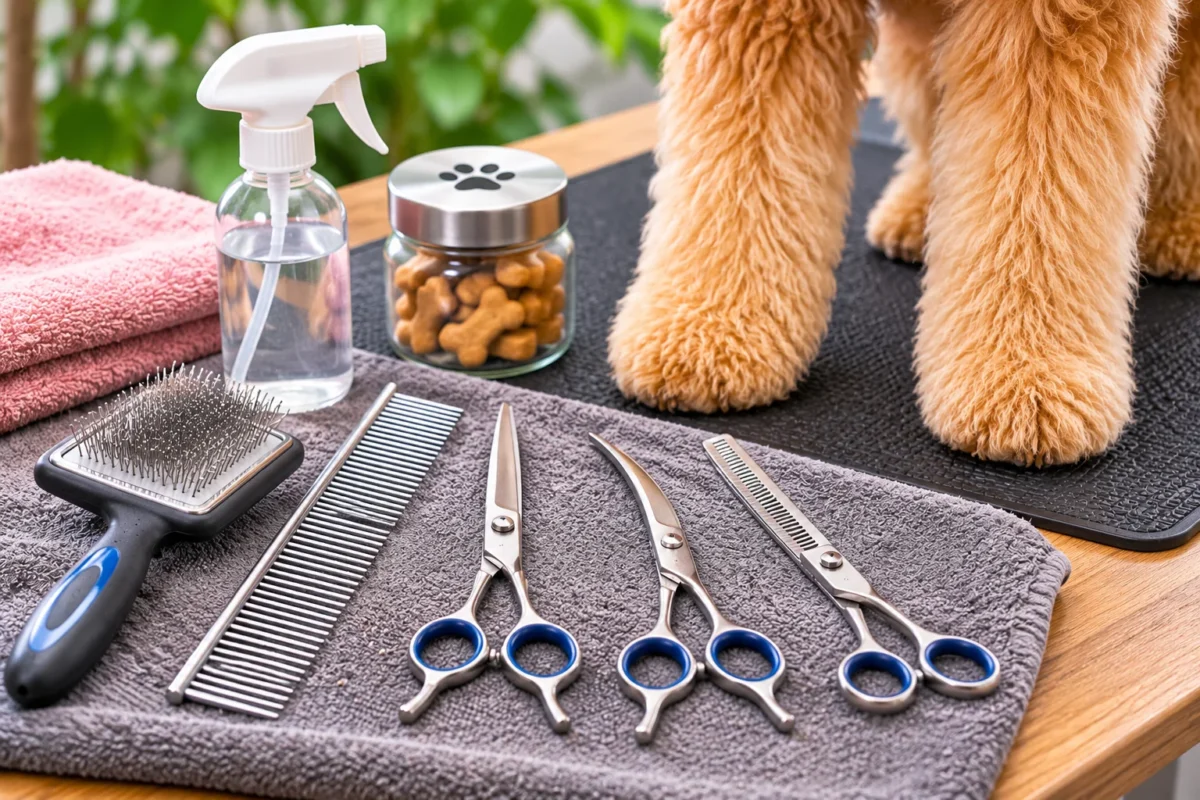
The safest setup combines appropriate grooming shears, a quality comb, a soft brush, and a stable work surface. Sharp, well-maintained tools are easier to control than damaged or poorly adjusted equipment.
Don’t use ordinary household scissors. Professional grooming tools are designed for coat work, although they still require training and careful handling.
Essential Dog Leg Grooming Tools
- Straight grooming shears: Helpful for clearly visible, longer outer coat sections.
- Curved grooming shears: Useful for rounded outlines when handled by a trained user.
- Blending shears: Help soften harsh transitions between trimmed sections.
- Stainless steel comb: Separates the coat and reveals uneven ends.
- Slicker brush: Removes loose hair and works through minor tangles gently.
- Non-slip grooming surface: Helps the dog stand comfortably and steadily.
- Small treats: Reward calm handling and encourage positive grooming experiences.
Straight vs. Curved vs. Blending Shears
Each shear type serves a different purpose. Choosing the correct one reduces unnecessary cutting and improves control.
| Shear Type | Typical Size | Best Use | Main Caution |
|---|---|---|---|
| Straight | 6–8 inches | Long, visible coat outlines | Long blades can reach skin unexpectedly |
| Curved | 6–8 inches | Rounded shapes and finishing | Blade direction needs practice |
| Blending | 6–7.5 inches | Softening trimming lines | Repeated cuts may remove too much hair |
These sizes are common examples, not universal recommendations. Smaller, easier-to-control shears may suit some trained users better than longer professional models.
How Do You Prepare a Dog Before Scissoring Its Legs?
Preparation determines how safely the trimming session goes. A clean, dry, thoroughly combed coat is easier to shape than tangled or damp hair.
Check the Skin and Coat First
Inspect each leg before reaching for scissors. Look for redness, swelling, wounds, skin folds, hidden mats, or areas that seem painful.
If you find a mat close to the skin, don’t cut it with scissors. VCA Animal Hospitals recommends clippers rather than scissors for mat removal and professional care for severe matting.
Brush and Comb the Entire Leg
Gently brush the hair in small sections, following the coat’s natural growth pattern. Avoid forceful pulling, especially around delicate skin.
Next, run a metal comb through the coat from the outer ends toward the base as tolerated. If the comb catches, investigate the tangle before trimming.
Create a Calm Grooming Environment
Choose a quiet place with sufficient lighting. A non-slip mat helps prevent sudden slipping.
- Allow the dog to stand in a comfortable, natural position.
- Keep grooming tools within easy reach but away from the dog.
- Reward calm standing with praise and small treats.
- Work in short sessions with breaks.
- Never leave a dog unattended on an elevated grooming surface.
A helper can offer reassurance and gentle support when appropriate. Never force a frightened or struggling dog to remain still around open scissors.
How to Scissor Dog Legs in 7 Safe Steps
The following process focuses on light maintenance trimming, not a complete professional haircut. Practice the movements with closed shears first, and get hands-on instruction before attempting detailed shaping.
Step 1: Position Your Dog Securely
Place your dog on a stable, non-slip surface at a comfortable working height. Let the dog stand naturally so you can see the leg’s full outline.
Keep your hands relaxed and avoid pulling a leg into an awkward position. Stop if your dog cannot stand comfortably.
Step 2: Brush the Leg Hair Into Its Natural Position
Brush the coat gently to loosen surface tangles and reveal the natural shape. Then comb the hair until it hangs or stands as expected for the coat type.
Do not begin trimming while the coat remains tangled. Uneven preparation often causes uneven results.
Step 3: Identify the Natural Leg Outline
Look at the leg from the front, side, and rear. Identify loose ends that extend beyond the main coat outline.
The aim is a balanced appearance, not an extremely narrow leg. Keep enough coat length to preserve the dog’s intended grooming style.
Step 4: Make Small Cuts on Exposed Hair Ends
Only trim hair that you can clearly see and separate safely from the skin. Keep the cutting blades away from the leg surface and avoid cutting blindly into thick hair.
Use small, controlled cuts rather than one large cut. Reposition yourself instead of twisting scissors toward hidden skin.
Important safety tip
Never slide open scissors between a mat and the dog’s skin. Skin can be drawn into the mat and injured even when the blades appear to be cutting only hair.
Step 5: Refine the Front and Back Leg Shapes
For the front legs, compare the visible coat outline from several angles. Remove only isolated ends that clearly interrupt the intended shape.
For the back legs, follow the natural contours without cutting close to joints or tendons. Leave delicate areas near the hock and inner leg to a trained groomer.
Step 6: Blend Uneven Sections
Blending means softening obvious transitions between different coat lengths. Groomers often use specialized blending shears for this job.
Make minimal finishing cuts on safely separated outer coat ends. Comb and inspect the result before deciding whether anything else needs trimming.
Step 7: Check the Finish From Every Angle
Let your dog stand normally and examine both sides. Comb the coat once more to expose any uneven ends.
Compare the legs for overall balance, but don’t chase perfect symmetry. Natural coat growth, posture, and individual anatomy affect the final appearance.
- Check the front view for a balanced silhouette.
- Inspect each side for abrupt changes in length.
- Look for loose ends that remain clearly away from the skin.
- Confirm that your dog can move naturally and comfortably.
- Finish with praise and a reward.
How Do You Scissor a Dog’s Front Legs Evenly?
Front-leg scissoring focuses on maintaining a consistent outline from the upper leg toward the foot. The coat should complement the body haircut without appearing sharply disconnected.
Begin with light brushing and assess both legs while the dog stands squarely. Uneven posture can make a balanced haircut appear crooked.
Keep the Front Leg Shape Natural
Many fluffy grooming styles use a softly rounded or column-like leg silhouette. The appropriate shape depends on breed, coat type, and grooming preference.
- Compare both front legs before removing hair.
- Preserve enough coat to maintain the intended shape.
- Avoid cutting close to the elbows or joints.
- Keep scissors away from the armpit and skin folds.
- Use a comb to reassess the outline after each small adjustment.
A slightly fuller leg often looks more natural than an overtrimmed one. When uncertain, leave the hair longer.
How Should You Scissor a Dog’s Back Legs?
Back-leg shaping requires extra attention because the leg changes angle around the thigh, stifle, and hock. These contours can hide folds of skin beneath the coat.
Focus on tidying clearly visible outer hair rather than closely sculpting anatomical features. The dog should remain comfortable throughout the session.
Work Carefully Around the Hocks
The hock is the joint on the lower back leg that resembles a backward-facing ankle. It is an area where coat direction and skin contours can be difficult to judge.
Do not cut into hair close to the joint without proper training. Ask a groomer to demonstrate safe hock shaping before attempting it yourself.
Avoid Overtrimming the Thighs
The upper hind legs may carry fuller hair than the lower legs. Excessive trimming can create an unnatural transition between the body and legs.
Instead, inspect the silhouette and remove only obvious stray ends from accessible outer coat sections. Preserve the length needed for a balanced finish.
How Can You Blend Dog Leg Hair Without Leaving Lines?
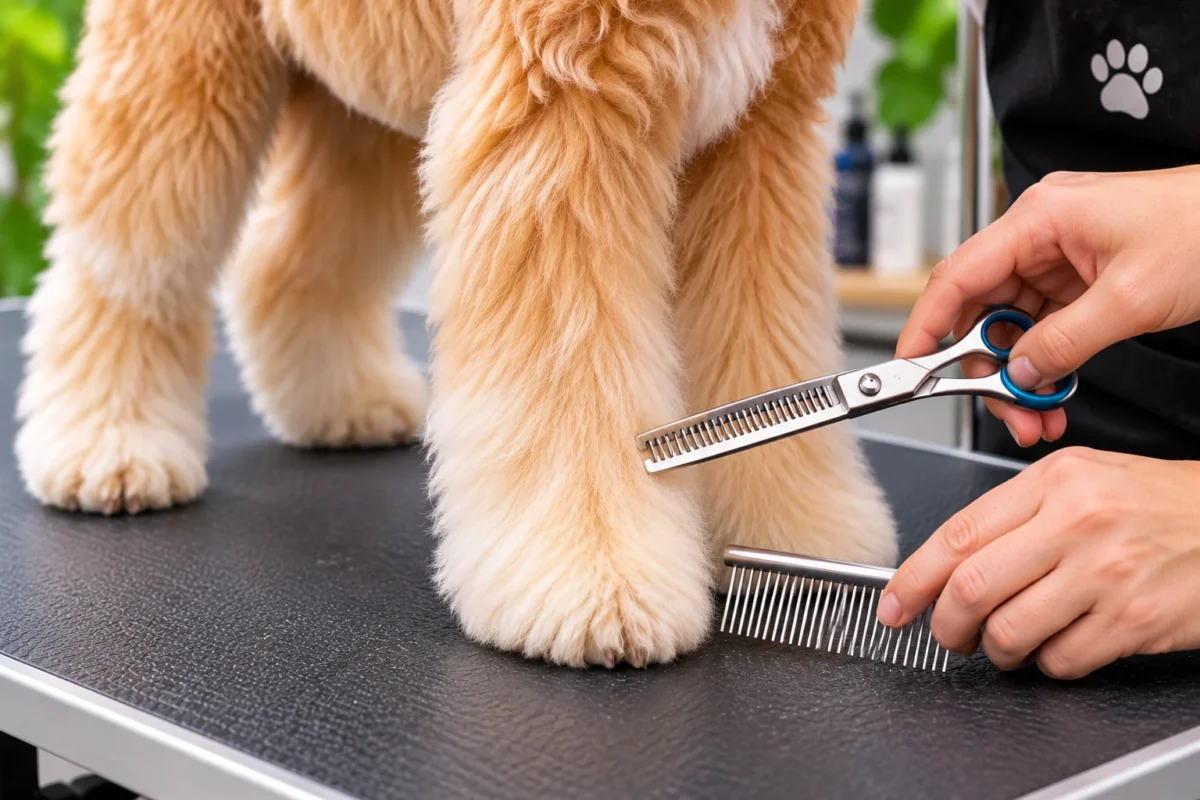
A smooth blend comes from careful preparation and minimal trimming. Strong, visible lines often occur when too much hair is removed at one point.
Use a Comb Between Trimming Passes
Comb the coat back into position after each adjustment. This helps reveal whether the uneven appearance comes from coat direction or actual length differences.
Don’t continuously cut the same section. Hair can settle differently after brushing, making excessive correction unnecessary.
Use Blending Shears Sparingly
Blending shears have one or two toothed blades that remove only part of the hair passing between them. Their purpose is to soften transitions rather than create the entire haircut.
They still have sharp cutting edges and can injure skin. Use them only where the coat can be safely separated and the blades remain clearly visible.
Blend the Body-to-Leg Transition
The shoulder and hip areas connect the body haircut with the leg furnishings. A sudden change in coat length may make this transition look uneven.
Use gentle brushing to see how the coat falls before adjusting anything. A professional groomer can demonstrate the correct blending technique for your dog’s haircut.
What Are the Most Common Dog Leg Scissoring Mistakes?
Most poor results come from rushing, inadequate coat preparation, or trimming without a clear outline. Safety mistakes can have much more serious consequences than an uneven haircut.
1. Cutting Too Much Hair at Once
Large cuts leave little room for correction. Start with a conservative amount and reassess the shape before trimming more.
2. Scissoring a Tangled or Matted Coat
Mats may pull skin into the hair mass, making scissors especially dangerous. Never cut mats with scissors, even when the ends appear easy to reach.
3. Using Dull or Damaged Shears
Poorly maintained blades can snag hair and reduce control. Inspect tools before every grooming session and arrange appropriate sharpening when needed.
4. Ignoring the Dog’s Body Language
Pulling away, repeated lip licking, trembling, growling, or trying to escape may signal stress. End the scissoring attempt when your dog cannot remain calm.
5. Trimming Near Hidden Skin
Skin folds around joints, inner thighs, and armpits can be difficult to see. Leave these areas to someone with practical grooming training.
6. Chasing Perfect Symmetry
Every small adjustment changes the coat’s outline. Repeated corrections can produce increasingly shorter, uneven legs.
7. Skipping the Final Comb
Hair often looks different after it settles. A final comb reveals the true shape and helps prevent unnecessary extra cutting.
Should You Use Scissors or Clippers on Dog Legs?
Scissors are generally used for outer coat shaping, while clippers cut hair more uniformly with an appropriate blade and guide. Neither tool is automatically safe without correct handling and training.
| Consideration | Scissors | Clippers |
|---|---|---|
| Main purpose | Selective shaping | Consistent coat shortening |
| Finish | Soft, tailored outline | More uniform length |
| Matted hair | Never use to cut mats | Professional clipper removal is often appropriate |
| Major risks | Cuts and puncture injuries | Cuts, irritation, and hot blades |
| Training | Needed for safe blade handling | Needed for safe blade and guard selection |
Many professional grooming sessions combine both methods. Clippers establish the main coat length, and shears refine the outline where appropriate.
How Often Should You Scissor Dog Legs?
There is no fixed trimming schedule for every dog. Coat growth, activity, breed, grooming style, and routine brushing all affect how quickly the legs become untidy.
As of 2026, the most useful approach remains an individualized grooming schedule. Ask your groomer how often your dog’s specific haircut needs maintenance.
Signs Your Dog May Need Leg Coat Maintenance
- Loose hair extends noticeably beyond the intended outline.
- Long leg furnishings frequently collect dirt or debris.
- Brushing no longer keeps the coat looking tidy.
- The legs appear uneven after the coat is fully combed.
- Your groomer recommends a scheduled maintenance trim.
Regular brushing may reduce the amount of trimming needed. Avoid cutting healthy coat simply to follow an arbitrary schedule.
When Should You Visit a Professional Dog Groomer?
Professional grooming is the safer choice whenever the task requires cutting near skin, managing mats, or controlling a dog that moves unpredictably. Detailed shaping also benefits from hands-on experience.
The American Kennel Club provides educational resources on responsible dog care and grooming. Its professional grooming standards also emphasize tool safety and assessing grooming risks.
Situations That Call for Professional Help
- Severe matting: Hair is tightly packed near the skin.
- Skin irritation: Redness, swelling, sores, or suspected infection is present.
- Behavioral distress: The dog panics, snaps, or cannot stand safely.
- Medical concerns: Pain, arthritis, injury, or limited mobility affects handling.
- Sensitive trimming: Hair around inner thighs, joints, or skin folds needs cutting.
- Complex styling: The haircut requires precise breed-specific leg shaping.
Contact a veterinarian for painful skin changes, wounds, or unexplained swelling. A groomer can address coat styling, but medical conditions require veterinary assessment.
Recommended Tools for Dog Leg Scissoring
Once a professional has shown you safe handling, the right equipment can make routine coat maintenance more manageable. These are examples of established grooming tools, not products I claim to have personally tested.
Shear selection should reflect your hand size, experience, coat type, and training. Product quality never replaces safe technique.
Affiliate disclosure: The following Amazon search links may earn a commission from qualifying purchases at no additional cost to you.
Best for Straight Outlines
Geib Gator 7.5-Inch Straight Shears
★★★★☆
These stainless steel grooming shears are designed for coat trimming and straight finishing work. Their longer blades are better suited to trained hands working on clearly visible outer hair.
Best for Rounded Finishing
Andis Premium 8-Inch Curved Shears
★★★★☆
This curved grooming shear is intended for professional shaping work. Its blade shape can assist with rounded leg outlines, although careful control and training remain essential.
Best for Blending
Andis Premium 6.5-Inch Thinning Shears
★★★★☆
These grooming thinning shears are designed to remove part of the coat during each cut. They may help experienced users soften transitions without repeatedly cutting with straight shears.
The star symbols above are editorial suitability indicators, not verified customer ratings or hands-on test scores. Compare current listings and product specifications before purchasing.
Frequently Asked Questions About Scissoring Dog Legs
Can I scissor my dog’s legs at home?
You can perform limited coat maintenance at home after learning safe grooming techniques. Use appropriate shears only on clearly separated outer hair, and avoid skin folds, joints, and mats.
For detailed leg shaping or dogs that move frequently, professional grooming is the safer option.
What scissors are best for trimming dog legs?
Straight grooming shears are commonly used for general outlines, curved shears for rounded shapes, and blending shears for soft transitions. The best choice depends on your dog’s coat and your level of training.
Choose tools you can control comfortably rather than assuming longer scissors are better.
Should I scissor dog legs when the hair is wet or dry?
Dry, thoroughly combed hair generally makes it easier to judge a leg’s final shape during routine scissor finishing. Damp hair can settle differently after drying, changing the visible outline.
For a complete grooming session, follow the preparation method recommended by your professional groomer.
How do groomers make dog legs look fluffy?
Groomers combine coat preparation, brushing, drying, combing, and controlled shaping to create a fuller leg silhouette. The technique varies with coat texture and styling requirements.
Fluffiness comes largely from correct preparation and retaining suitable coat length, not simply cutting more hair.
Can I use scissors to remove matted hair from dog legs?
No. Scissors can cut the skin hidden inside or beneath a mat, even when the hair appears separated from the body.
Severe mats should be assessed by a trained groomer or veterinarian, who can determine whether appropriate clipper removal or medical treatment is necessary.
Final Thoughts: How to Scissor Dog Legs Safely
Learning to scissor dog legs starts with coat preparation, patience, and a realistic understanding of grooming risks. The best finish is one that looks natural and keeps your dog comfortable.
Focus on brushing thoroughly, maintaining a visible coat outline, and making only small adjustments when you can do so safely. Never sacrifice safety to achieve a perfectly even haircut.
If you’re new to scissoring, ask a professional groomer to demonstrate the technique on your dog. A little hands-on training can make future maintenance more controlled and less stressful.


