
Quick Answer
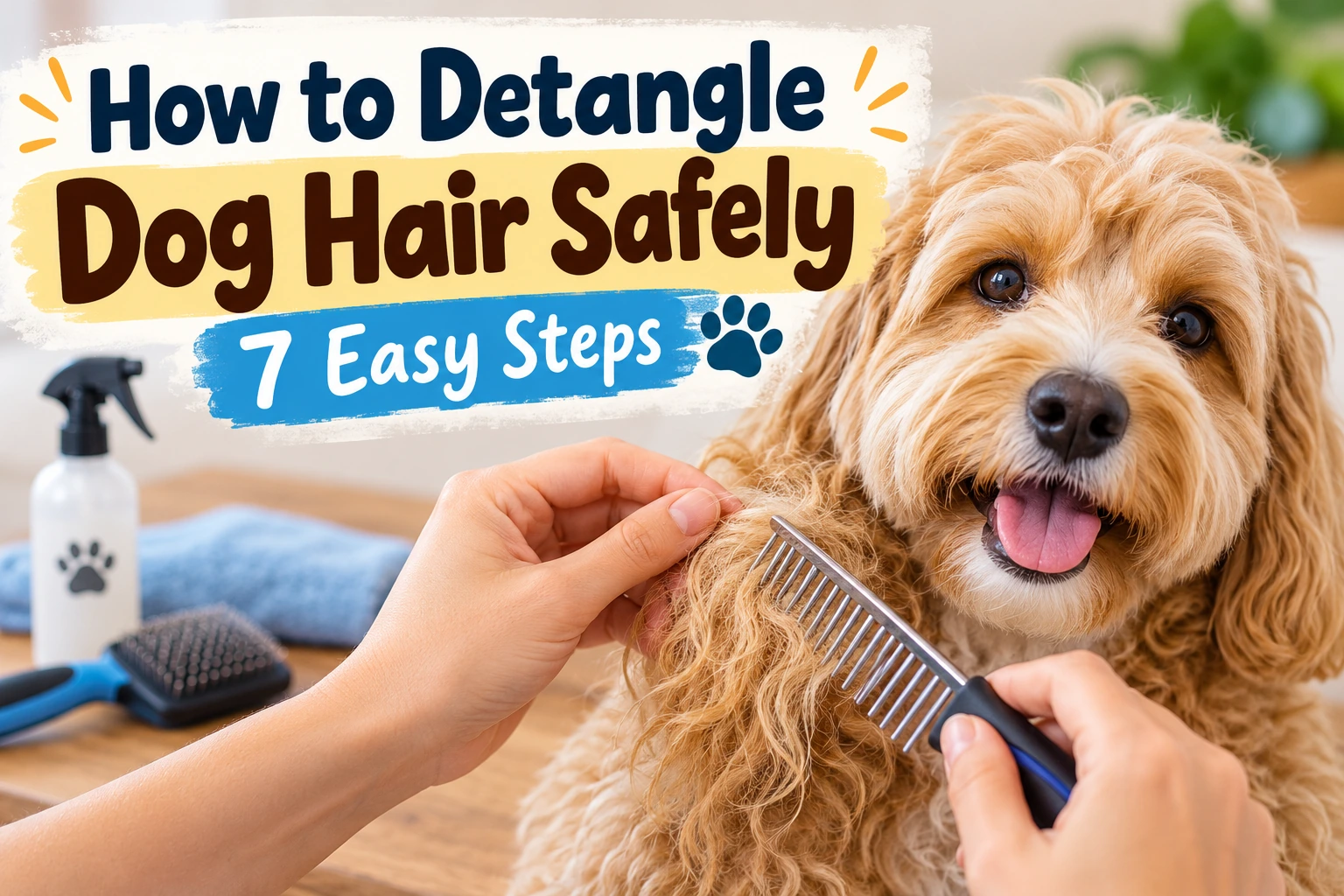
To detangle dog hair, check that the knot is loose and not painful, apply a dog-safe detangling spray if needed, and gently separate the strands with your fingers. Hold the hair near its base to limit pulling, then comb from the loose ends toward the roots. Stop if the mat is tight against the skin, your dog shows pain, or the knot will not loosen easily.
A knot behind your dog’s ear or beneath a harness can seem small until a brush gets stuck. The goal is not to force every strand straight. It is to separate manageable tangles while keeping your dog comfortable and the skin protected.
Can You Safely Detangle Your Dog’s Hair at Home?
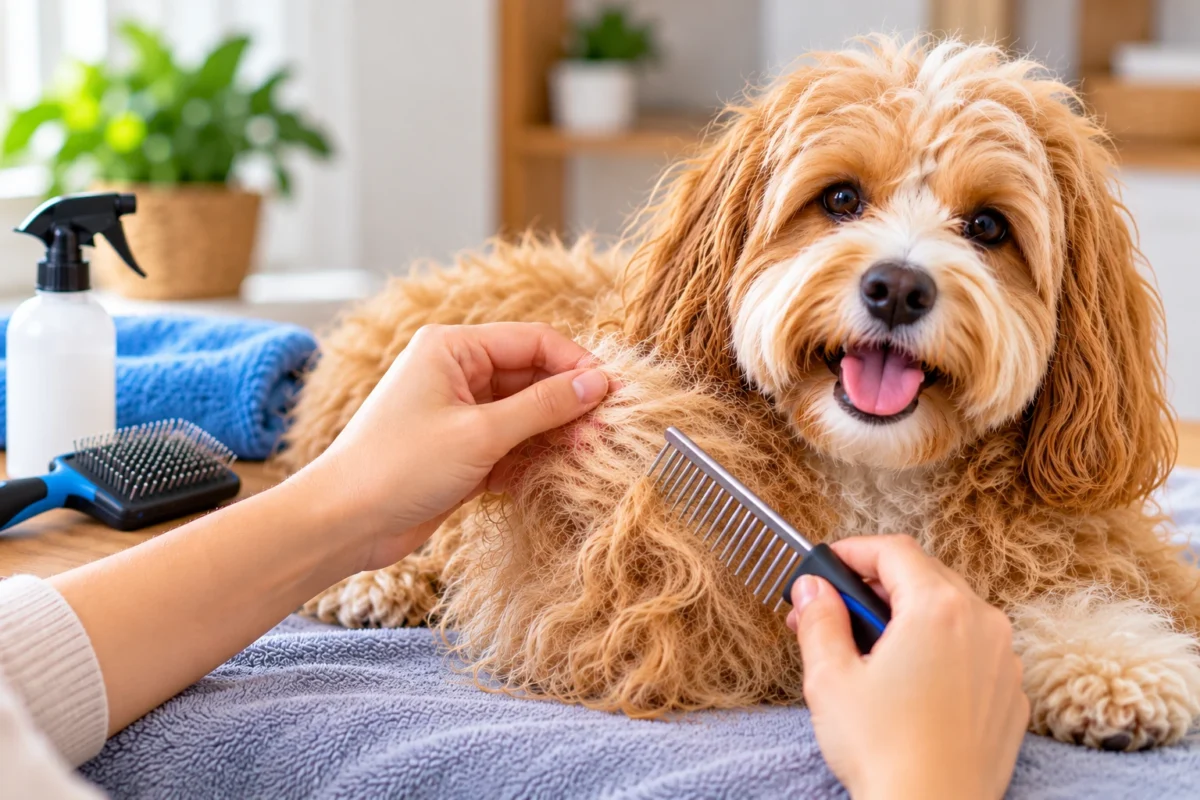
Yes, if the tangle is small, relatively loose, and your dog tolerates gentle handling. A mat is different: tangled hair has compacted into a dense clump that may pull on the skin even when your dog moves.
Use this quick check before starting:
- Loose knot: You can identify individual strands and gently spread part of the tangle with your fingers. Careful home detangling may be reasonable.
- Stubborn clump: The hair stays tightly packed or a comb meets firm resistance. Do not increase force; arrange professional help if it cannot be loosened comfortably.
- Skin-tight or painful mat: The skin seems pulled, the knot lies flat against it, or your dog flinches. Leave removal to a groomer or veterinarian.
Matting is not simply untidy fur. It can conceal moisture, irritated skin, and wounds. The ASPCA’s advice on preventing coat matting explains why advanced mats often need clipping by a professional rather than prolonged brushing.
What Do You Need to Detangle Dog Hair?
You need only a few appropriate tools, not an aggressive de-matting kit. Choose according to coat texture and how easily the knot separates.
- Your fingers: Best for locating the knot’s edges and separating a few hairs without sharp pressure.
- Wide-tooth metal grooming comb: Useful for gently checking longer coats and easing apart loosened strands; never drag it through resistance.
- Suitable slicker or pin brush: Helps finish manageable sections, but should not repeatedly scrape the skin.
- Dog-formulated detangling spray: May reduce friction on a mild knot. Follow its label and keep it away from eyes, ears, and irritated skin.
- Treats and a non-slip surface: Help keep the session steady and positive.
The best brush varies with coat type. For general tool selection and routine handling, see our step-by-step dog brushing guide.
How to Detangle Dog Hair in 7 Gentle Steps
These steps are for small, loose tangles on otherwise healthy skin. If the knot is already dense or painful, skip the procedure and seek professional care.
Step 1: Settle Your Dog and Inspect the Area
Choose a quiet place with secure footing. Let your dog sniff the comb, offer a reward, and touch a comfortable area first. Part the hair with your fingers so you can see whether the skin looks normal.
Check for redness, swelling, dampness, scabs, debris, and sensitive spots. A dog that suddenly objects to touch in one location may be uncomfortable; do not assume the problem is just tangled hair.
Step 2: Isolate One Small Tangle
Move surrounding loose hair aside and find where the knot begins. Work on one section rather than dragging a brush through the whole coat. This makes it easier to feel whether the hair is releasing or tightening.
If the clump is too dense to identify a loose edge, it is not a good candidate for forceful home detangling.
Step 3: Apply a Small Amount of Dog-Safe Detangler
For a dry, lightly tangled section, use a little product formulated for dogs if its directions allow. Apply it to the hair rather than spraying toward the face. Give it the label-directed time to work, if any.
Detangler makes strands easier to separate; it does not make a skin-tight mat safe to brush out. Avoid substituting household oils, fragranced human products, or anything that irritates your dog’s skin.
Step 4: Hold the Hair to Reduce Skin Pulling
Support a small portion of hair between the knot and the skin with your fingers, provided you can do this comfortably. Your hand acts as a buffer so gentle movement at the ends does not tug as strongly at the roots.
Do not pinch the skin, twist the mat, or hold your dog still against strong resistance. If you cannot grip the hair without pulling the skin, stop.
Step 5: Tease the Loose Ends Apart
Use your fingertips to separate a few hairs at the outer edge. Move gradually toward the base only as each portion loosens. Small controlled movements work better than attempting to split a whole knot in one pull.
For a long, silky coat, patience matters more than speed. If you are grooming a coat that tangles throughout its length, our long-haired dog brushing guide explains how to part hair into manageable layers.
Step 6: Comb Gently From Tips Toward Roots
Once the hair has loosened, make short comb passes near the tips. Progress closer to the skin as resistance decreases. Keep the teeth aligned with the hair and use minimal pressure.
If the comb catches, lift it out; never yank through. Go back to your fingers or stop for professional help. A slicker brush may smooth the section afterward when suited to the coat, but repeated hard passes can irritate skin.
Step 7: Check the Coat and End on a Good Note
Gently comb through the finished section once more. The comb should move without snagging or pulling. Check the skin for redness and let your dog rest, especially after working near sensitive areas.
Reward cooperation and stop before the session becomes stressful. It is better to leave a difficult knot for a professional than to finish at the expense of your dog’s comfort.
Which Areas Need Extra Care?
Friction and movement encourage knots behind the ears, under collars and harnesses, in armpits, around the groin, behind the legs, and near the tail. Check these places often, but treat them as sensitive rather than invitations for harder brushing.
Use particularly light handling near the ears, eyes, genitals, and anus. If hair is tightly matted in these areas, do not attempt to remove it with scissors or pointed tools. A groomer can assess safer clipping; a veterinarian is more appropriate if there is pain or damaged skin.
Should You Wet Matted Dog Hair or Bathe First?
Usually, remove manageable tangles before bathing. Wet hair can be harder to separate, and washing a tightly matted coat may make an existing problem more difficult to manage. Water is not a substitute for gentle detangling.
A small amount of dog-specific spray used as directed is different from soaking the whole coat. For a dog with extensive matting, ask a groomer or veterinarian about the safest order of grooming and bathing.
VCA Animal Hospitals’ coat-care guidance recommends removing tangles before a bath and avoiding excessive pulling.
What If the Tangle Will Not Come Out?
Stop when gentle finger work and light combing fail. Repeated attempts can make the dog sore without solving the knot. Do not escalate to sharp scissors, aggressive mat-splitting blades, or pulling harder.
A professional groomer may determine that clipping the affected hair is kinder than trying to preserve its length. This is particularly true for compact mats close to the skin. If the knot hides a rash, wound, discharge, bad odor, or obvious pain, contact a veterinarian rather than booking an ordinary cosmetic groom.
Warning
Never cut a mat out with household scissors. Skin can be pulled into the hair clump, where it is difficult to see, and a sudden movement can cause a serious cut.
How Can You Stop Dog Hair From Tangling Again?
Preventing new knots is easier on the coat than repeatedly detangling old ones. Match your routine to coat length, thickness, activity, and how quickly small knots reappear.
- Check friction areas regularly: Look behind ears and under straps after walks or play.
- Brush in sections: On long or curly coats, part the hair so you reach deeper layers instead of polishing only the surface.
- Finish with a comb: On suitable coats, a gentle comb check can reveal hidden tangles without forcing them apart.
- Dry thoroughly after washing: Pay attention to dense areas where moisture can remain trapped.
- Plan maintenance: Use a groomer to keep a difficult coat manageable, especially if daily home care is hard to sustain.
Some long or curly-coated dogs need daily attention; others need less. Our guide on how often to brush your dog explains how to adjust the schedule instead of following one rule for every breed.
Related Product
Wide-Tooth Dog Grooming Comb
A smooth, wide-tooth comb can help check loosened tangles in suitable long coats without forcing a brush through knots.
As an Amazon Associate, we earn from qualifying purchases.
Frequently Asked Questions
Can I use human hair conditioner to detangle my dog?
Use a conditioner or detangler specifically formulated for dogs instead. Human hair products may contain fragrances or other ingredients unsuitable for your dog’s skin. Follow the label and stop using anything that causes irritation.
Is coconut oil a good solution for tangled dog fur?
It is not necessary for routine detangling. Oils can leave residue and encourage licking, and they cannot make a tight mat safe to brush out. A dog-formulated grooming product is a more predictable choice.
Can I detangle my puppy’s hair?
Yes, if the knot is loose and your puppy is comfortable. Keep sessions brief, introduce tools gradually, and reward calm behavior. Ask a groomer for help if your puppy resists handling or the tangle is tight.
Why does my dog’s hair tangle immediately after grooming?
Friction from harnesses, moisture, and missed knots in deeper coat layers can make tangles return quickly. Check beneath the topcoat, dry the coat appropriately, and shorten the interval between gentle grooming sessions.
Does a de-shedding brush remove mats?
Not reliably. De-shedding tools are intended mainly for removing loose coat in suitable breeds, not pulling apart compact mats. Forcing one through a knot may hurt your dog or damage the coat.
Will shaving a mat make my dog’s hair grow back differently?
Regrowth varies with coat type and individual health, particularly in some double-coated dogs. A groomer or veterinarian can explain the trade-off for your dog’s coat. Painful, tight matting still needs a humane removal plan.
Conclusion
Detangling dog hair should feel like gently loosening a knot, not fighting the coat. Begin with a close inspection, separate only manageable tangles, support the hair near the skin, and work from the ends with light finger and comb movements. Stop whenever the knot pulls, the skin looks irritated, or your dog becomes distressed.
For tight or widespread matting, professional removal is often the more comfortable option. Once the coat is manageable, regular brushing, attention to friction areas, and gentle comb checks can help keep small tangles from becoming painful mats again.


