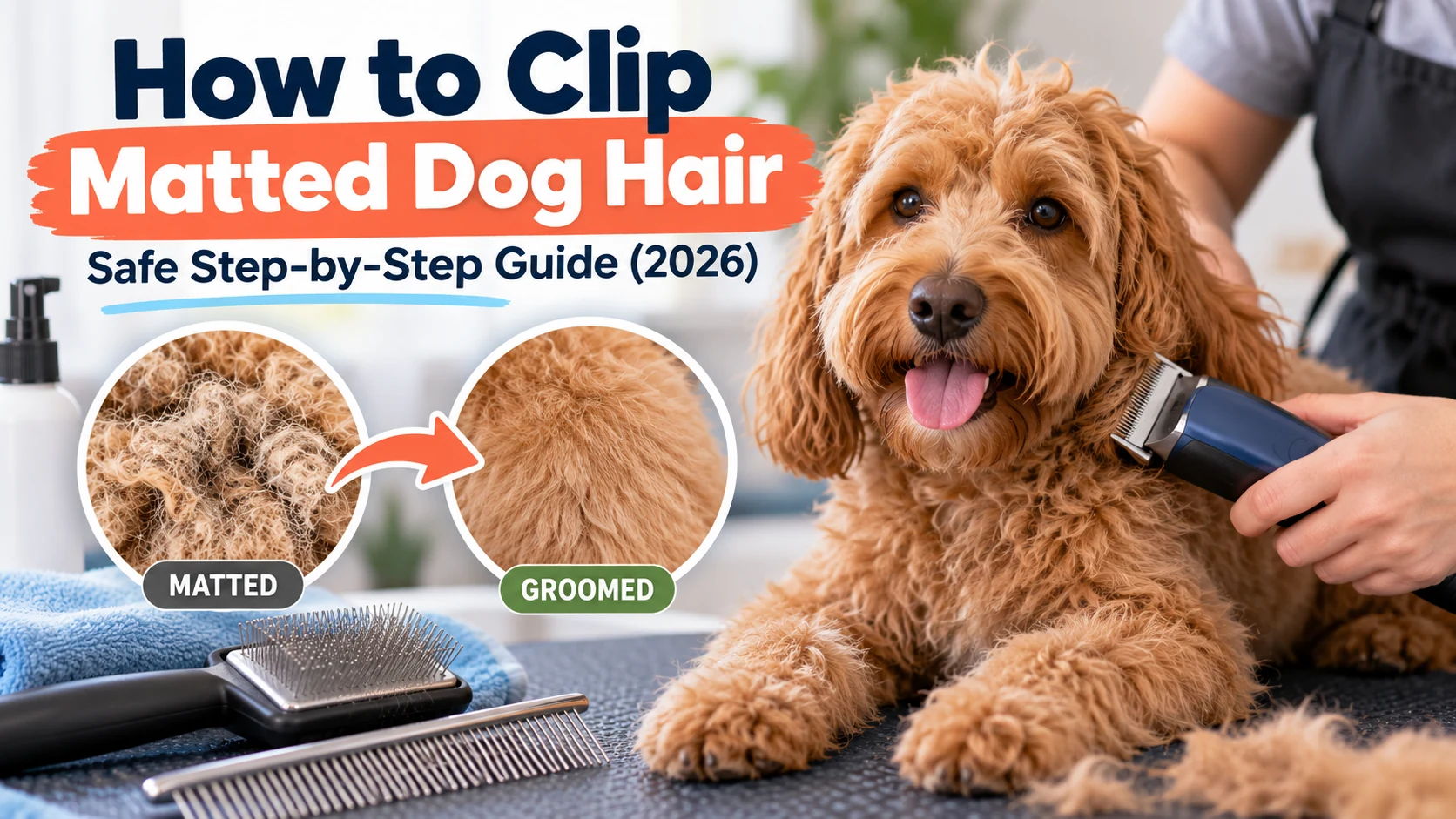
Quick Answer
To clip matted dog hair safely, first check whether the mats are loose enough to handle without pulling or cutting skin. Small, loose tangles may respond to gentle brushing, but tight, extensive, or skin-level mats require a professional groomer or veterinarian. For suitable minor tangles, use the gentle methods recommended in veterinary coat-care guidance. Never force clippers through a mat or cut it out with scissors.
7 Steps for Safer Mat Removal
- 1. Check the coat: Identify loose tangles and tight mats near the skin.
- 2. Check for pain: Stop if the skin appears red, swollen, or injured.
- 3. Gather supplies: Prepare a comb, dog-safe grooming products, and suitable clippers.
- 4. Loosen minor tangles: Use gentle finger separation without pulling.
- 5. Assess clipping safety: Never insert a blade beneath a tight, skin-level mat.
- 6. Clip only suitable areas: Follow your clipper instructions and stop if the blade catches.
- 7. Check the skin: Look for irritation and arrange veterinary care when necessary.
Matted dog hair can turn ordinary grooming into an uncomfortable experience. Dense knots pull against the skin, making brushing, bathing, and clipping more difficult.
In this guide, I’ll explain how to assess matting, what grooming equipment helps, and when professional clipping is the safer choice.
The goal isn’t a perfect haircut. It’s a comfortable dog with healthy skin.
What Is Matted Dog Hair?
Matted dog hair is fur that has become tightly tangled into clumps. These clumps form when loose hairs, dirt, moisture, and friction cause neighboring strands to knot together.
A small tangle may feel soft and movable. A severe mat can form a firm layer close to the skin.
Some coats develop mats faster than others. Curly, long, fine, or high-maintenance coats often need more frequent grooming.
What Causes Matted Hair on Dogs?
- Infrequent brushing: Loose hair accumulates and becomes tangled.
- Moisture: Wet fur can tighten existing knots as it dries.
- Friction: Collars, harnesses, and movement create tangles.
- Seasonal shedding: Trapped loose undercoat may form dense clumps.
- Coat texture: Curly and long coats can knot without regular maintenance.
- Delayed grooming: Small knots become increasingly difficult to remove.
Common trouble spots include the armpits, behind the ears, collar area, legs, and tail.
Can You Safely Clip Matted Dog Hair at Home?

Minor, loose tangles may be manageable at home, but tight mats are not beginner-friendly clipping jobs. If you cannot clearly separate the coat from the skin, professional removal is safer.
According to the ASPCA’s matting guidance, advanced matting may require professional clipping and, in severe cases, veterinary-assisted grooming.
How Do You Know When Matting Is Too Severe?
- The mat feels firmly attached to the skin.
- Several clumps have joined into a continuous sheet.
- The dog cries, snaps, trembles, or pulls away.
- The skin underneath looks inflamed or injured.
- The mats restrict walking or normal movement.
- Hair is tightly tangled around the ears, paws, or genitals.
These signs mean you should stop home removal. A professional can assess the safest method without unnecessary pulling.
What Tools Do You Need for Matted Dog Hair?
Dog grooming clippers, brushes, combs, and detangling products serve different purposes. Not every tool is suitable for every type of mat.
For home coat maintenance, I would prioritize gentle handling and clear visibility over aggressive cutting tools.
Essential Grooming Supplies
- Dog grooming clippers: Designed for canine coats and compatible detachable blades.
- Metal grooming comb: Helps identify loose tangles and check brushing progress.
- Slicker brush: Useful for removing loose hair and manageable surface tangles.
- Dog-safe detangling spray: May help loosen minor knots.
- Clipper blade oil: Supports blade maintenance according to manufacturer instructions.
- Non-slip grooming mat: Helps provide stable footing.
- Treats: Encourage calm, positive grooming experiences.
Don’t assume a stronger clipper makes severe matting safe to remove yourself. The main danger is the skin hidden underneath the hair.
Which Grooming Tool Works Best?
| Tool | Best Use | Limitation |
|---|---|---|
| Metal comb | Checking and separating loose tangles | Can pull painfully on tight mats |
| Slicker brush | Loose hair and light tangling | Not suitable for forceful mat removal |
| Detangling spray | Minor, brushable knots | Cannot release tightly felted mats |
| Dog clippers | Coat trimming and trained mat removal | Can cut folded or hidden skin |
| Household scissors | Not recommended for cutting mats | High risk of accidental lacerations |
How to Clip Matted Dog Hair: 8 Safe Steps
The safest process starts with evaluating your dog’s coat rather than switching on the clippers. These steps help you decide what is manageable and what needs professional care.
Step 1: Examine the Entire Coat
Choose a quiet, well-lit location. Gently feel through the coat to identify loose tangles and dense mats.
Pay special attention to areas where the skin folds or moves.
- Behind the ears
- Under the front legs
- Around the collar and chest
- Inside the thighs
- Near the tail and sanitary area
- Between the paw pads
Don’t pull a mat away from the body to judge its depth. This can stretch sensitive skin and cause discomfort.
Step 2: Check for Hidden Skin Problems
Carefully inspect visible skin around the tangles. Look for redness, swelling, moisture, wounds, or unusual odor.
If you notice an injury or suspect infection, arrange a veterinary appointment before grooming.
Mats can hide problems that aren’t obvious until the coat is removed. This makes close clipping particularly risky.
Step 3: Prepare Your Dog and Grooming Area
Place your dog on a stable, non-slip surface. Keep treats nearby and allow time to become comfortable.
Introduce grooming equipment gradually if your dog dislikes unfamiliar sounds.
- Keep the room quiet and comfortably warm.
- Position supplies within easy reach.
- Check that the clipper blade is clean and maintained.
- Keep the electrical cable away from your dog’s feet.
- Stop if your dog becomes distressed.
Don’t use force or tight restraint to make grooming possible. A nervous dog can move suddenly and become injured.
Step 4: Loosen Only Small, Manageable Tangles
Use your fingers to gently separate loose hair near the outer edges of a small tangle. A dog-safe detangler may help if the product directions allow it.
Follow with careful combing, working gradually from the hair ends toward the base. Stop whenever the coat pulls or the dog shows discomfort.
Never repeatedly scrape the skin with a slicker brush. Excess brushing can create irritation without removing the underlying knot.
Step 5: Decide Whether Clippers Are Appropriate
Before clipping, confirm that the coat area is not tightly matted against the skin. You must be able to identify a safe cutting path.
If a dense mat hides the skin, leave it intact and contact a professional groomer.
Don’t push a blade beneath a mat to search for the skin. A hidden fold can enter the cutting teeth.
Step 6: Clip Only Areas That Are Safe to Trim
For loose, untangled coat areas, follow your clipper manufacturer’s grooming instructions. Use a blade or attachment appropriate for the coat type.
Work slowly with the coat’s natural growth direction where recommended. Keep the blade flat rather than digging its edge into the coat.
- Maintain gentle contact without pressing hard.
- Keep the dog comfortably positioned.
- Stop if the clippers snag or pull.
- Never force the blade through resistance.
- Leave tight mats to a trained groomer.
Don’t attempt skin-close clipping of mats without proper training. Safe blade selection depends on the dog’s coat, skin condition, and mat severity.
Step 7: Check Blade Temperature Frequently
Clipper blades can become hot during operation. Heat may irritate or burn sensitive skin.
Switch the clippers off regularly and check the blade’s temperature using the manufacturer’s recommended method.
If the blade feels uncomfortable against your own skin, don’t continue clipping with it. Allow it to cool or use another properly maintained blade.
Never rely on cooling spray alone to make a hot blade safe.
Step 8: Check Your Dog’s Skin After Grooming
Examine the trimmed areas for redness, scratches, swelling, and signs of discomfort. Give your dog a break before attempting further coat maintenance.
If the skin looks normal, use gentle brushing to maintain the remaining coat.
Persistent redness, pain, bleeding, or moist irritated areas warrant veterinary advice. A healthy-looking haircut should never come at the expense of skin safety.
Should You Brush or Clip Matted Dog Hair?
Brush minor tangles that release without pain; seek professional clipping for tight or extensive mats. Trying to preserve every strand can make severe matting more uncomfortable.
A useful decision rule is simple: if gentle brushing hurts or doesn’t work, stop rather than increase force.
| Matting Condition | Recommended Approach | Who Should Handle It? |
|---|---|---|
| Loose surface tangle | Gentle detangling and combing | Owner, if dog remains comfortable |
| Stubborn localized mat | Professional assessment and possible clipping | Experienced groomer |
| Tight skin-level mat | Careful professional removal | Professional groomer or veterinarian |
| Mats with wounds or infection | Medical examination and treatment | Veterinarian |
What Are the Biggest Mistakes When Clipping Matted Dog Hair?

The biggest mistake is treating tangled hair like ordinary fur. Skin can become trapped inside dense knots, making seemingly simple cuts dangerous.
1. Using Household Scissors
Never cut a mat close to the skin with household scissors. Skin folds can be hidden within the tangled hair.
The American Kennel Club’s home grooming guidance warns against attempting to cut mats out yourself.
2. Forcing Clippers Through a Mat
A clipper that stalls or catches is signaling resistance. Continuing to push can pull hair and damage the skin.
Stop immediately instead of applying extra pressure.
3. Bathing Before Assessing the Mats
Water may tighten existing tangles, making them harder to remove. Check and address matting before bathing whenever possible.
For severely matted dogs, ask a professional which grooming sequence is safest.
4. Ignoring Sensitive Areas
The armpits, ears, groin, and skin folds are especially vulnerable to clipping injuries. These areas can contain thin or folded skin.
Leave tightly matted sensitive areas to a trained professional.
5. Clipping With Hot or Poorly Maintained Blades
Dirty or dull blades can drag through hair. Hot blades may cause painful irritation.
Clean, oil, and maintain your clippers according to the manufacturer’s directions.
6. Continuing When the Dog Is Frightened
Fear increases the likelihood of sudden movement. A moving dog and a sharp blade are a dangerous combination.
Stop the session if your dog struggles or shows persistent distress.
Can You Use Clippers on a Severely Matted Dog?
Professional groomers commonly use clippers to remove severe matting, but the procedure requires careful handling. Skin injuries become more likely when mats are close to the body.
In some cases, a veterinarian may need to provide pain relief or sedation so mat removal can occur humanely.
The ASPCA’s dog grooming tips emphasize regular coat maintenance and caution when clipping dense tangles.
Why Is Severe Matting Dangerous?
- Skin tension: Tight knots continuously pull on the skin.
- Trapped moisture: Damp areas may contribute to irritation.
- Hidden injuries: Wounds can remain concealed under the coat.
- Restricted movement: Large mats can interfere with walking.
- Poor hygiene: Hair may trap urine, feces, or debris.
- Grooming pain: Brushing and handling may become uncomfortable.
The safest goal is to relieve discomfort without creating another injury.
How Should You Care for Your Dog After Mat Removal?
After mat removal, the skin may be more exposed and sensitive. Gentle handling is important while your dog adjusts to the shorter coat.
Check the skin each day for signs of discomfort, particularly where severe mats were present.
Simple Aftercare Checklist
- Keep the resting area clean and comfortable.
- Avoid rough brushing over sensitive skin.
- Check for redness, swelling, or unusual discharge.
- Follow veterinary instructions for any existing irritation.
- Avoid applying human creams without veterinary approval.
- Protect newly exposed skin from harsh weather.
If your dog develops pain or worsening irritation, contact your veterinarian. Do not assume every red patch is harmless clipper irritation.
How Can You Prevent Dog Hair From Matting Again?
Consistent brushing and regular grooming appointments are the most effective ways to reduce recurring mats. The right schedule depends on coat length, texture, and lifestyle.
Instead of waiting for visible knots, build a routine that checks the coat before tangles become tight.
Create a Coat Maintenance Routine
- Daily or frequent checks: Inspect friction areas, especially on curly and long coats.
- Regular brushing: Use a brush suited to your dog’s coat.
- Comb verification: Make sure the comb moves through the coat without pulling.
- After-walk checks: Remove leaves, grass, and debris.
- Thorough drying: Avoid leaving damp tangles behind.
- Professional maintenance: Schedule grooming before severe knots develop.
The USDA Animal and Plant Health Inspection Service also provides animal-care resources covering coat care and mat prevention.
Which Dogs Need More Frequent Brushing?
Poodles, Doodles, Bichon Frises, and other curly-coated dogs often require frequent coat maintenance. Long-coated dogs may also need daily attention.
Double-coated dogs have different grooming needs. Ask your groomer about appropriate undercoat maintenance instead of shaving a healthy coat unnecessarily.
Recommended Grooming Tools for Matted Dog Hair
Good tools help maintain a healthy coat, but they cannot replace professional expertise when matting is severe.
These are three practical equipment options worth comparing. The suitability ratings below are editorial assessments of their intended use, not verified customer review scores.
🏆 Professional Clipper Pick
Wahl KM10 2-Speed Clipper
★★★★★ 4.5/5 Editorial Fit
This corded clipper features a brushless motor, two speed settings, and detachable blades. Its professional design makes it worth considering for experienced groomers handling demanding coats, but it does not make skin-tight mat removal safe for beginners.
🐶 General Grooming Pick
Wahl KM5 2-Speed Clipper
★★★★☆ 4/5 Editorial Fit
The KM5 is a corded, two-speed clipper with detachable blades and constant speed control. Wahl positions it as approachable for developing groomers, although difficult mat removal still requires professional training.
🪮 Coat Maintenance Pick
Chris Christensen Big G Slicker Brush
★★★★☆ 4/5 Editorial Fit
This slicker brush is designed for coat maintenance and loose hair removal. It’s a useful option to consider for suitable curly or long coats, but it should never be forced through tightly matted fur.
Frequently Asked Questions
Can I clip matted dog hair myself?
You can handle minor loose tangles with gentle grooming if your dog remains comfortable. However, tight mats should not be clipped at home without professional training. When the skin is hidden or the dog shows pain, a groomer or veterinarian is the safer option.
What clipper blade should I use for matted dog hair?
Professional groomers choose blade sizes according to coat condition, skin safety, and the location of the mats. There isn’t one universally safe blade for home removal of tight matting. Ask a qualified groomer to assess the coat rather than selecting an extremely short blade yourself.
Should I wash my dog before clipping matted fur?
Check the coat for mats before bathing. Water can make existing tangles more difficult to manage, especially if the coat dries without thorough detangling. For heavy matting, consult a professional before washing because the correct grooming sequence depends on the coat and skin condition.
Does clipping matted dog hair hurt?
Clipping should not cause pain when performed correctly, but severe mats can already make the skin tender. Pulling, snagging, overheating, or clipping hidden folds may injure the dog. Professional groomers can assess whether veterinary care or pain management is needed.
Will matted dog hair grow back after shaving?
Hair generally grows back after mat removal, but regrowth varies by breed, coat type, age, and health. Some double-coated dogs may experience changes in coat appearance after shaving. Ask a veterinarian if the coat fails to regrow normally or the skin shows persistent problems.
Final Thoughts: Remove Mats Safely, Not Quickly
Learning how to clip matted dog hair starts with recognizing which tangles are safe to manage. Small, loose knots may respond to patient brushing, while tight mats require expert handling.
Never force clippers through resistant hair or use household scissors to cut close to the skin. Your dog’s comfort matters more than preserving coat length.
For lasting results, maintain a regular brushing routine, inspect friction areas, and schedule grooming appointments before tangles become painful.
When in doubt, choose professional care. It’s the safer way to protect your dog’s skin and make grooming more comfortable.