Quick Answer
To clip a dog that hates clippers, introduce the tool gradually instead of forcing a haircut. Start with the clippers switched off, reward calm behavior, and build tolerance to the sound and vibration before cutting any hair. Work in very short sessions and stop when your dog becomes frightened. The Fear Free approach to grooming emphasizes reducing fear rather than restraining a struggling pet.
9 Steps for a Calmer Clipping Session
- Identify the trigger: Find out whether your dog fears noise, vibration, handling, or previous pain.
- Prepare a safe space: Choose a quiet room and secure, nonslip surface.
- Introduce the tool: Let your dog observe switched-off clippers while receiving treats.
- Practice the sound: Switch on the clippers at a comfortable distance.
- Introduce vibration: Gradually pair gentle, non-cutting contact with rewards.
- Practice body handling: Reward comfortable positioning and gentle touch.
- Make a tiny trim: Clip a small, accessible area only when your dog is relaxed.
- Take frequent breaks: Stop before stress builds.
- Increase gradually: Extend grooming only as your dog’s confidence improves.
Important: If your dog panics, snaps, or has tight mats, stop and seek help from a qualified groomer or veterinarian.
If your dog runs away whenever the clippers appear, grooming can feel impossible. The solution usually starts before you cut a single hair.
In this guide, I’ll explain how to make clippers less frightening, recognize stress signals, and build a practical grooming routine. You’ll also learn when professional help is safer than attempting another home haircut.
Why Does Your Dog Hate Clippers?
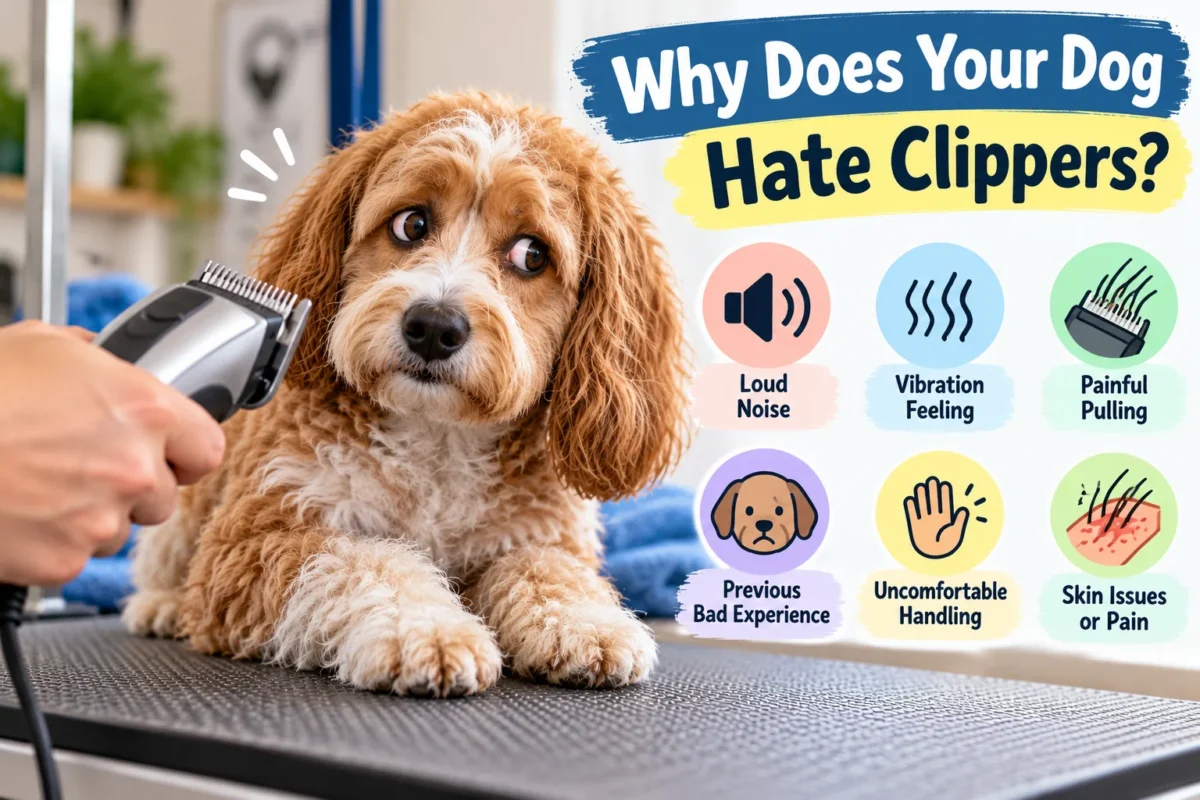
Dogs may dislike clippers because of their sound, vibration, unfamiliar movement, uncomfortable handling, or earlier grooming experiences. Some dogs react to several triggers at once.
A dog that tolerates brushing may still find a buzzing clipper frightening. Identifying the actual trigger helps you choose the right training approach.
Common Reasons Dogs Fear Clippers
- Loud buzzing: Motor noise can startle sensitive dogs, especially near their ears.
- Unfamiliar vibration: The vibrating tool may feel strange against the body.
- Painful pulling: Dull, dirty, or unsuitable blades can tug at the coat.
- Hot blades: Friction can make clipper blades uncomfortable against the skin.
- Restrained movement: Being held firmly may make a frightened dog feel trapped.
- Previous experiences: Rough handling or an accidental nick can create lasting fear.
- Physical discomfort: Skin inflammation, arthritis, or painful mats may make grooming unpleasant.
Watch exactly when your dog reacts. Fear that begins before the clippers switch on requires a different starting point from fear that appears after blade contact.
What Are the Signs Your Dog Is Too Scared to Continue?
A frightened dog may freeze, move away, tremble, pant, or refuse treats. Growling and snapping are stronger warnings that the situation has become unsafe.
The ASPCA’s dog grooming guidance recommends watching for distress rather than forcing a fearful dog through the procedure.
| Behavior | Possible Meaning | Your Response |
|---|---|---|
| Relaxed posture, accepts treats | Comfortable at the current step | Continue briefly |
| Lip licking, turning away | Possible early discomfort | Pause and reduce intensity |
| Trembling, hiding, escape attempts | Significant fear | End the session |
| Growling, snapping, biting | Serious safety warning | Stop and seek professional support |
One important lesson is that stillness doesn’t always mean comfort. A frozen dog may be overwhelmed rather than cooperative.
How Do You Clip a Dog That Hates Clippers? 9 Steps
The safest approach separates clipper training from the actual haircut. Build confidence in small stages, advancing only when your dog remains comfortable.
Step 1: Identify What Frightens Your Dog
Begin by watching your dog’s response to the equipment without attempting a haircut. Keep enough distance that your dog stays relaxed.
- Does your dog retreat when the clippers appear?
- Does fear begin when the motor switches on?
- Does vibration trigger the reaction?
- Does your dog object mainly to paw, face, or leg handling?
- Does clipping appear to cause pulling or pain?
If handling causes pain or sensitivity, consider a veterinary examination before training. Behavior modification cannot fix an underlying painful skin or joint condition.
Step 2: Create a Calm Grooming Space
Choose a familiar, quiet room with good lighting and minimal distractions. Avoid slippery tables, elevated surfaces without proper safety measures, and crowded areas.
- Place a nonslip mat on the floor.
- Keep small, dog-safe treats nearby.
- Prepare clean clippers and suitable grooming tools.
- Remove distractions that could startle your dog.
- Provide a comfortable place where your dog can move away.
Floor-level practice often makes early training easier because your dog doesn’t need to balance on an unfamiliar grooming table. Avoid forcing your dog into a fixed position.
Step 3: Introduce Clippers While They’re Switched Off
Place the switched-off clippers where your dog can see them without showing fear. Reward calm observation, then put the tool away.
Repeat this simple exercise until the clippers no longer produce an anxious response. Your dog doesn’t need to approach or sniff them immediately.
- Show the clippers from a comfortable distance.
- Offer a favorite treat.
- Remove the clippers.
- Repeat briefly while your dog remains comfortable.
Eventually, you can reward voluntary investigation of the switched-off tool. Never push the clippers toward your dog’s face to encourage interaction.
Step 4: Help Your Dog Get Used to Clipper Noise
Once the inactive tool feels familiar, introduce the buzzing sound from a distance. Switch the motor off before your dog becomes uncomfortable.
Pair short bursts of sound with treats your dog enjoys. Move closer gradually across sessions rather than expecting immediate acceptance.
- Start far enough away to avoid a fear reaction.
- Turn the clippers on briefly.
- Give a treat while the sound is present.
- Switch the clippers off.
- Repeat only while your dog remains relaxed.
This process combines desensitization with counterconditioning. These techniques help reduce fear through controlled exposure and positive associations.
Veterinary behavior professionals use similar principles when teaching animals to tolerate handling and unfamiliar sounds.
Step 5: Introduce Vibration Without Cutting Hair
Vibration training begins only after your dog tolerates the clipper sound. Keep the cutting blade safely away from the skin during early contact exercises.
Start by gently touching your dog’s shoulder or side with a switched-off tool, then reward calm acceptance. Progress toward vibration only when handling is comfortable.
- Let your dog see the inactive tool.
- Practice brief contact with the switched-off body of the tool.
- Reward relaxed behavior.
- Introduce vibration using a safe, non-cutting surface.
- End before your dog becomes uncomfortable.
Never press an exposed moving blade against the dog during vibration training. Keep the exercise separate from cutting until proper handling is established.
Step 6: Practice Gentle Body Handling
Many grooming problems involve body handling as much as the clippers themselves. Teach your dog that gentle touch predicts rewards.
- Touch the shoulder briefly and reward.
- Practice brushing a comfortable body area.
- Introduce brief leg handling without lifting or restraining.
- Allow your dog to return voluntarily after breaks.
- Build toward more sensitive areas gradually.
Pay particular attention to paws, ears, and the tail area. Avoid handling these regions with clippers until your dog confidently accepts ordinary touch.
Step 7: Begin With One Small, Easy Trim
When your dog comfortably accepts the sound, vibration, and handling, you can consider a tiny trim. Choose an accessible body area away from sensitive skin folds.
Use a maintained, correctly fitted clipper blade suitable for the coat. Keep the blade flat, use light pressure, and stop immediately if the tool pulls.
- Brush and check the coat for tangles.
- Position your dog comfortably on a nonslip surface.
- Check the blade temperature and condition.
- Make a short, controlled clipping pass on an appropriate area.
- Reward your dog and stop while the experience remains positive.
Don’t start with the face, ears, paw webs, or sanitary areas. These locations are easy to injure, particularly when a dog moves suddenly.
If your dog has tight mats, painful tangles, or irritated skin, don’t attempt to clip beneath them yourself. A qualified groomer or veterinarian can determine the safest removal method.
Step 8: Give Your Dog Frequent Breaks
Short, successful sessions work better than pushing through a full haircut. For an inexperienced, fearful dog, initial training exposures may last only seconds.
A simple starting goal is a few calm repetitions rather than a completed groom. Let your dog’s behavior determine when the session ends.
- Stop when your dog starts avoiding the tool.
- Offer water and a comfortable resting space.
- Check the blade for heat during actual clipping.
- Resume on another occasion if needed.
- Never punish a fearful reaction.
Several comfortable practice sessions are more valuable than one stressful haircut. Progress isn’t measured only by how much fur you remove.
Step 9: Build a Repeatable Grooming Routine
Once your dog accepts brief trimming, build consistency without suddenly increasing the workload. Repeat successful exercises before making them harder.
Continue rewarding cooperation even after your dog improves. This helps maintain the positive association you’ve developed.
- Use the same comfortable grooming space.
- Begin with familiar warm-up exercises.
- Prepare the coat before clipping.
- Reward voluntary cooperation.
- Stop if your dog shows new discomfort.
Some dogs improve quickly, while others need weeks or longer. The goal is safe cooperation, not completing every haircut at home.
How Long Does It Take to Desensitize a Dog to Clippers?
There is no reliable fixed timeline for helping a dog overcome clipper fear. Progress depends on the dog’s history, sensitivity, health, and response to training.
Use the following training progression as a flexible planning example, not a guaranteed schedule.
| Training Stage | Practice Goal | When to Progress |
|---|---|---|
| Stage 1 | See inactive clippers | Dog remains relaxed |
| Stage 2 | Hear distant buzzing | Dog accepts treats normally |
| Stage 3 | Accept safe vibration | Dog willingly stays engaged |
| Stage 4 | Accept a tiny trim | Dog shows no significant fear |
| Stage 5 | Increase trimming gradually | Dog remains consistently comfortable |
If your dog becomes frightened at any stage, return to an easier exercise. Repeating a manageable step isn’t failure.
What Makes Clippers Less Scary for Dogs?

Quieter equipment, comfortable handling, and well-maintained blades can make clipping less unpleasant. However, no clipper is guaranteed to eliminate fear.
Choose Clippers Suitable for the Coat
Different coats require different cutting power and blade options. A small precision trimmer isn’t a substitute for a full-body clipper on a thick coat.
Check manufacturer guidance before purchasing equipment. Consider the tool’s intended coat types, maintenance needs, blade system, and handling comfort.
Maintain Blades Properly
Dirty or poorly maintained blades can pull hair and increase grooming discomfort. Follow the clipper manufacturer’s cleaning, lubrication, and replacement instructions.
- Remove accumulated fur from the blade.
- Use appropriate clipper oil when instructed.
- Inspect cutting edges for damage.
- Check blade temperature frequently.
- Replace damaged or ineffective blades.
A quieter tool won’t help much if the blade is painfully pulling at your dog’s coat. Comfort depends on the entire grooming setup.
Use Rewards Your Dog Values
Small, dog-safe treats can help create positive associations with the clippers. Choose food your dog enjoys and can eat comfortably.
Some owners use a lick mat with veterinarian-approved ingredients as a distraction. Never use food to conceal a procedure that makes the dog panic or struggle.
Should You Hold Down a Dog That Hates Clippers?
No. Holding a frightened dog down to complete a nonurgent haircut can increase fear and the risk of injury.
Instead, use gradual training and voluntary cooperation whenever possible. For dogs that cannot safely tolerate grooming, speak with a qualified professional.
What About Grooming Loops and Muzzles?
Grooming loops are professional safety equipment, not a solution for clipper fear. Improper restraint can create additional danger, particularly when dogs struggle.
A properly fitted basket muzzle may be part of a professional safety plan, but it doesn’t treat anxiety. Muzzle training should be gradual and reward-based.
Never use a muzzle to force a panicking dog through a haircut. Ask a veterinarian or qualified behavior professional for guidance if biting is a concern.
What If Your Dog Still Panics During Grooming?
Stop clipping if your dog panics despite gradual preparation. Continuing may strengthen the negative association with grooming equipment.
Consider a pain-related problem if your dog previously tolerated grooming but suddenly resists it. Skin disease, painful mats, or musculoskeletal discomfort may contribute.
- Sudden fear: Ask your veterinarian to check for pain or medical problems.
- Severe anxiety: Seek advice from a qualified behavior professional.
- Serious matting: Arrange a professional grooming or veterinary assessment.
- Biting or snapping: Stop home clipping until a safe management plan is established.
- Repeated setbacks: Reduce training difficulty and reassess the trigger.
The American Kennel Club’s home grooming guidance warns against attempting risky haircuts without appropriate skills. Professional groomers are trained to manage sensitive areas and different coat types.
Can a Veterinarian Help a Dog That Hates Grooming?
Yes. A veterinarian can investigate pain, discuss behavior support, and recommend appropriate treatment when grooming fear is severe.
Some dogs require a coordinated plan involving a veterinarian, trainer, and professional groomer. Your veterinarian may consider prescribed medication for certain dogs after an individual assessment.
Never give human sedatives, over-the-counter sleep products, or medication intended for another pet. Use only medication specifically prescribed for your dog.
For more information about veterinary behavior resources, visit the American College of Veterinary Behaviorists.
Which Clippers Are Worth Considering for a Nervous Dog?
A low-noise tool can help with sound sensitivity, but equipment alone won’t resolve clipper fear. Choose a model designed for your dog’s coat and the grooming task.
These two products represent different uses: general trimming and small-area touch-ups. Their suitability ratings below are editorial assessments, not verified customer-review averages or hands-on test results.
🏆 Best Versatile Cordless Option
Wahl Bravura Lithium Clipper
★★★★☆ 4.5/5 Editorial Fit
The Wahl Bravura features a cordless design, five-position adjustable blade, and up to 90 minutes of runtime. I’d shortlist it for controlled trimming and suitable small-to-medium dog grooming tasks where a cordless tool is helpful. Confirm coat compatibility before use.
✂️ Best for Small Touch-Ups
Andis Easy Clip Mini II (TC-2, 74025)
★★★★☆ 4.2/5 Editorial Fit
This compact, corded trimmer is intended for light-duty detail work around paws, ears, and faces. I’d consider it for short precision tasks after successful desensitization, not full-body clipping or heavy mat removal.
Affiliate disclosure: As an Amazon Associate, this website may earn from qualifying purchases. Product suitability depends on your dog’s coat, grooming needs, and tolerance.
Frequently Asked Questions
Can You Groom a Dog That Hates Clippers at Home?
Some dogs can learn to tolerate home clipping through gradual training, rewards, and careful handling. Begin without cutting hair and introduce each part of the grooming process separately. If your dog panics, bites, or has painful mats, professional grooming or veterinary assistance is safer.
How Do You Calm a Dog Before Using Clippers?
Prepare a quiet room, use a nonslip surface, and introduce the clippers gradually with rewards. Practice when your dog is comfortable rather than already distressed. Don’t force the procedure or rely on treats to distract a dog that’s actively panicking.
Are Quiet Clippers Better for Nervous Dogs?
Quiet clippers may be helpful for dogs sensitive to motor noise. However, some dogs fear vibration, handling, or earlier painful experiences instead. Choose suitable equipment, maintain the blades, and use gradual desensitization rather than assuming a quieter clipper will solve the problem.
What Should You Do If Your Dog Tries to Bite the Clippers?
Switch off the clippers and end the grooming session safely. Don’t punish growling or physically force the dog to accept trimming. Contact a veterinarian or qualified behavior professional for a plan that addresses the underlying fear and protects everyone involved.
Can You Sedate a Dog at Home for Grooming?
Never give your dog sedatives or human sleep medication without veterinary direction. A veterinarian can determine whether medication is appropriate and prescribe an individualized plan when needed. Some severely fearful dogs require veterinary-supervised grooming rather than an ordinary home haircut.
Final Takeaway: Build Trust Before You Clip
Learning how to clip a dog that hates clippers begins with changing the dog’s response to the equipment. Quiet tools and treats can help, but patient, gradual training makes the biggest difference.
Start with the easiest step your dog can handle comfortably. Reward progress, respect warning signs, and seek professional help when grooming becomes unsafe.
Your next step: Put the switched-off clippers at a comfortable distance and reward one calm interaction. A successful first session doesn’t require removing any fur.