Quick Answer
To brush out a dog’s undercoat, part the fur into small sections, gently lift loose hair with a suitable slicker brush or undercoat rake, and check each section with a metal comb. Follow the direction of hair growth, use very light pressure, and stop if the tool catches painfully or irritates the skin. Remove loose undercoat, not healthy hair.
A thick coat can look smooth while loose, fluffy hair remains packed underneath. This is common in double-coated breeds such as Huskies and German Shepherds.
The solution is reaching the correct layer without force. This guide concentrates on the actual undercoat brush-out; for broader coat maintenance, see our double-coated dog brushing guide.
What Does Brushing Out a Dog’s Undercoat Actually Remove?
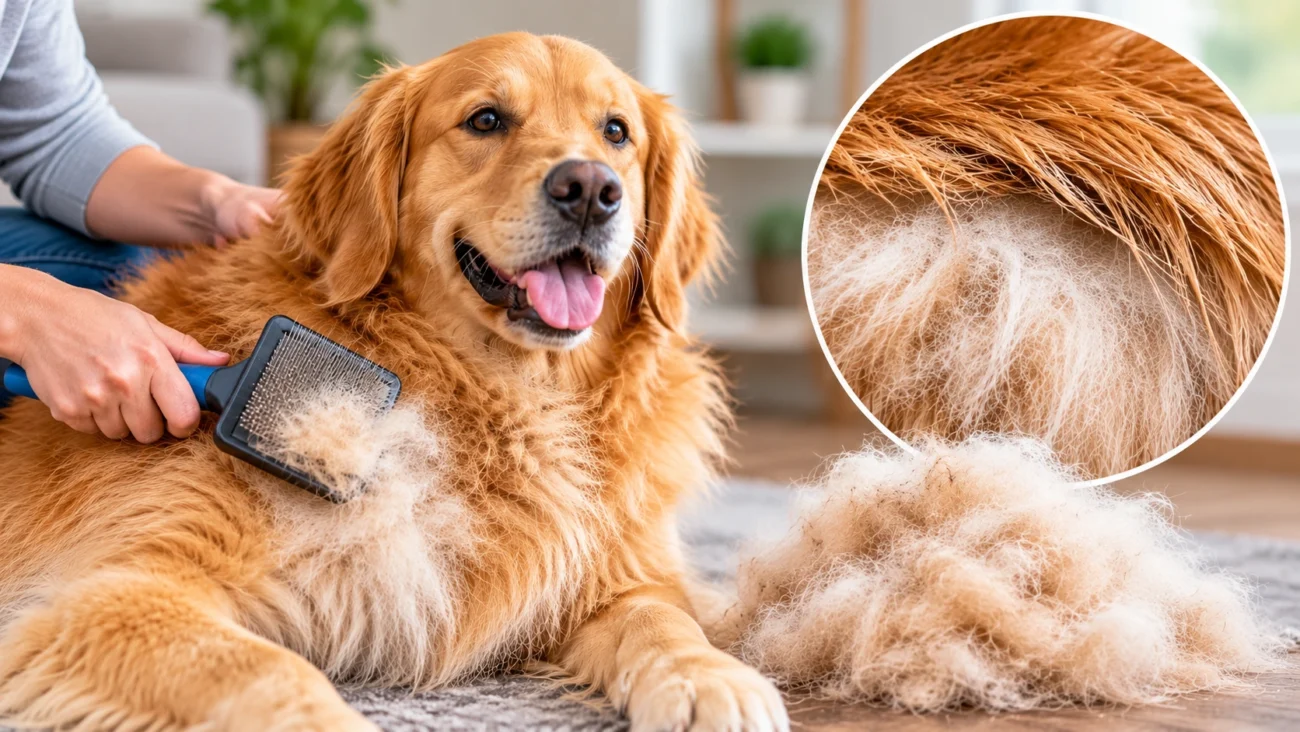
Undercoat brushing removes hair that has already loosened beneath the longer, protective outer hairs, called guard hairs. The undercoat is usually softer and denser. It helps insulate the dog and can shed heavily during seasonal coat changes.
You are not trying to strip every soft hair from the coat. Healthy undercoat still has a job, and guard hairs should remain intact. A successful session clears loose fur without irritating the skin.
The American Kennel Club’s double-coat guidance explains how the two layers work together and why routine brushing is preferred over shaving.
Which Tools Do You Need to Reach the Undercoat?
For most medium or long double coats, a gentle slicker brush, a coat-appropriate undercoat rake, and a metal comb cover different parts of the job. Choose by coat length and density.
| Tool | Useful for | Watch out for |
|---|---|---|
| Slicker brush | Section-by-section brushing and light tangles | Wire pins scraping the skin |
| Undercoat rake | Lifting loose hair from dense undercoat | Teeth too long, sharp, or forceful |
| Metal comb | Checking whether deeper fur is free of snags | Pulling through resistance |
| Rubber grooming brush | Loosening surface fur on short, dense coats | Expecting it to reach a very thick, long undercoat |
An undercoat rake should have teeth suited to your dog’s hair depth. Cutting-style deshedding edges need extra care; repeated passes can damage healthy hair.
How to Brush Out Dog Undercoat in 7 Safe Steps
Begin on a dry, comfortable coat that you can separate with your fingers. Use a non-slip area, treats, and breaks. If the coat is tightly matted or the skin is painful, skip home brush-out and get help.
1. Check the skin and locate packed fur
Part the hair with your fingers around the shoulders, sides, neck, and hindquarters. Look for loose fluffy clumps, knots, burrs, red patches, sores, and areas that make your dog flinch. Check behind the ears, under the collar, and near the tail.
Avoid brushing any tender area.
2. Start with a calm, easy section
Begin at the shoulder or side rather than a sensitive area such as the belly or tail. Let your dog sniff the brush and reward relaxed behavior. Support the coat gently with your free hand.
If your dog struggles, pause and return later.
3. Part the fur for line brushing
Use your fingers or comb to lift the outer hair and expose a narrow line of deeper coat. Brush the small band just below that parting, then move the part a little farther across the body. This is called line brushing.
On longer coats, it often helps to start low on the side and progress upward. Work systematically to avoid revisiting cleared patches.
4. Loosen small tangles before raking
Use your fingers or an appropriate slicker brush to ease apart minor snags. For longer hair, work gently from the free ends toward the roots while supporting the coat near the skin. Never drive a rake through a knot to force it open.
A tight, skin-level mat is not simply loose undercoat. Pulling at it can hurt and may injure the skin underneath.
5. Brush through the separated undercoat gently
With light, controlled strokes, move the slicker through the section in the coat’s natural direction. Keep the tool moving through hair rather than pressing into skin. Lift it clear at the end of each stroke instead of dragging it backward against resistance.
Clear collected hair from the brush frequently. As each patch becomes easier to brush, move to the next narrow line instead of chasing every remaining strand.
6. Use the undercoat rake only where needed
For dense, shedding areas, draw a suitably sized rake gently along the direction of growth. Stop immediately if its teeth snag, pull the skin, or make your dog react. Do not repeatedly rake bony places, thinly coated areas, or one spot that is already clear.
Sometimes a slicker and comb are enough. The rake is a targeted tool, not a mandatory second pass over the entire dog.
7. Check with a comb and finish
On coats long enough for combing, pass a metal comb gently through each finished section. It should travel through without hard catches or pulling. If it stops, part the hair and examine the obstruction; do not yank harder.
Brush away loosened surface hairs, praise your dog, and check that the skin remains comfortable. A little loose fur may still come out afterward. That alone does not mean the session failed.
Tip
Use a two-part check: can you separate the coat to see healthy-looking skin, and can the comb move through the section without painful resistance? That is more useful than measuring the size of the fur pile.
How Should the Method Change for Short or Long Double Coats?
Short, dense undercoats: Labradors and similar dogs may not have long hair to divide into visible lines. Start with a suitable rubber brush or gentle slicker, then use a properly matched undercoat tool only if needed. Keep strokes short and avoid repeated scraping.
Medium and long double coats: On dogs with feathering or thick body hair, parting the coat and comb-checking each section are especially helpful. Concentrate on the ruff, rear-leg furnishings, and tail without yanking tangled hair.
Very thick seasonal coats: When a dog is shedding large amounts of undercoat, work in more than one short session. If hair is compacted so tightly that you cannot separate it comfortably, professional grooming may be safer.
How Do You Know When to Stop Brushing?
Stop when the area is comfortably combable, the coat is no longer packed with obvious loose clumps, and your dog remains relaxed. Do not keep brushing until absolutely no hair comes out; a shedding dog can continue releasing hair throughout the day.
More passes are not automatically better. Redness, a brush that catches repeatedly, flinching, or a visibly thinning patch means you should stop sooner. Revisit another section later if needed.
How Often Should You Brush Out the Undercoat?
Many double-coated dogs benefit from routine brushing at least weekly, with more frequent gentle attention during heavy shedding. The schedule changes with breed, coat density, season, and how quickly loose hair builds up.
A light maintenance brush is not the same as an intensive rake session. During a seasonal coat blow, brief daily gentle brushing may be reasonable for some dogs, while repeated aggressive deshedding is not. For a more detailed schedule, see how often to deshed a dog.
If bathing is part of the plan, remove easy tangles first and dry the thick coat thoroughly afterward. Our double-coated dog bathing guide explains the washing and drying sequence.
Which Undercoat-Brushing Mistakes Cause Problems?
- Brushing only the surface: A neat topcoat can hide loose hair near the skin. Part the fur to check underneath.
- Using too much pressure: A slicker or rake can irritate skin. Let the teeth pass through coat without digging.
- Forcing through mats: Pulling compacted hair can be painful. Separate minor snags gently and refer tight mats.
- Using a tool meant for a different coat: Tooth length and design matter, especially with short or sensitive coats.
- Trying to remove all the fur: Your dog’s undercoat is not disposable insulation. Remove loosened hair, not attached healthy coat.
- Shaving to solve shedding: Shaving is generally not a routine substitute for brushing a healthy double coat.
The ASPCA’s matting advice also warns against cutting tight mats with household scissors because the skin can be injured.
What if the Undercoat Will Not Brush Out?
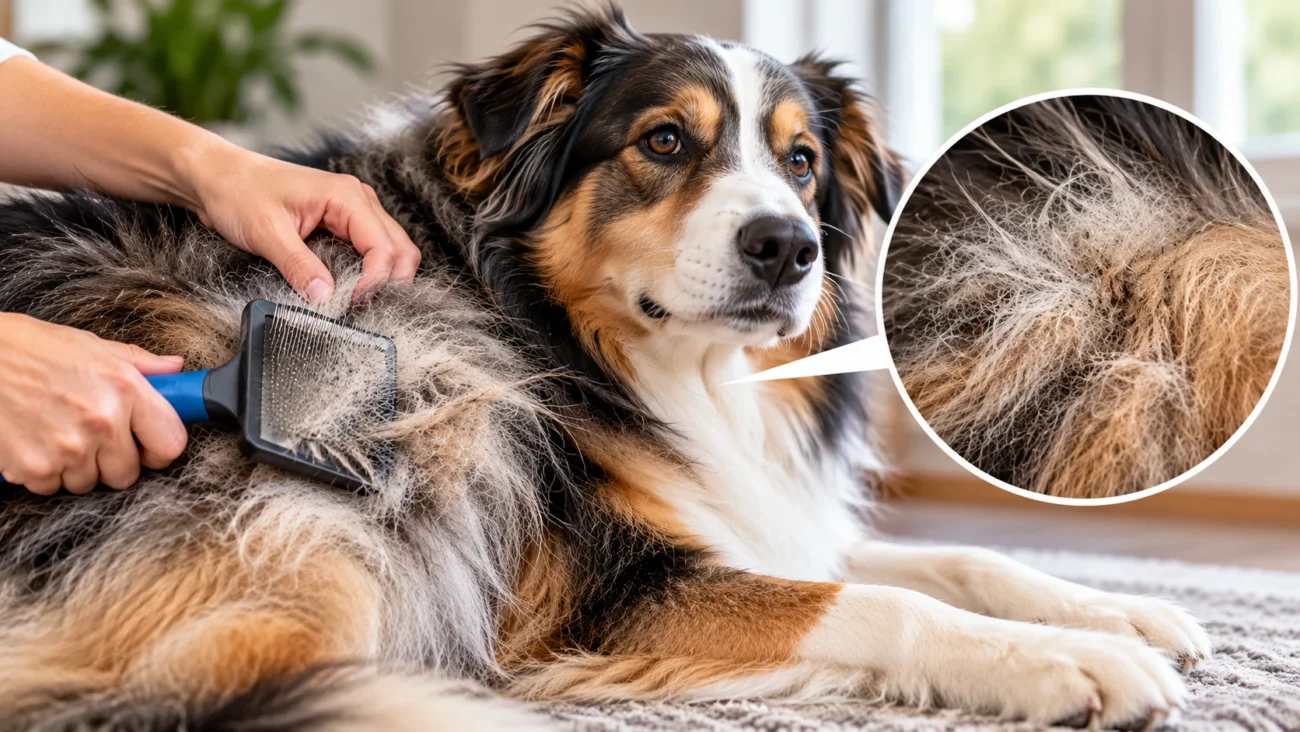
The brush glides over the top: Make a narrower part and choose a tool that reaches the depth of that coat. Check one small area with a comb before moving on.
The rake sticks: Stop and look for a tangle, mat, inappropriate tooth length, or compacted fur. Do not pull through it. A groomer can assess a heavily packed coat.
Your dog dislikes the brush: Reduce the working area, use a gentler tool, pair brief contact with rewards, and end before your dog becomes distressed.
Loose hair keeps coming: Seasonal shedding can continue even after thorough grooming. Judge progress by coat comfort and ease of combing, not whether the brush emerges completely empty.
When Is Professional Help the Safer Choice?
Ask an experienced groomer about tightly packed undercoat, large mats, or a coat you cannot separate without discomfort. A veterinarian should assess open sores, bleeding, persistent redness, a sudden painful response, bald patches, or unusual skin changes.
Do not try to cut a skin-tight mat with scissors. If your dog resists only when one area is touched, treat that as possible discomfort, not misbehavior.
Related Product
Dog Undercoat Rake
A non-cutting rake with teeth matched to coat length can help lift loose undercoat from suitable double-coated dogs. Check the tool design before use.
As an Amazon Associate, we earn from qualifying purchases.
Frequently Asked Questions
Can you brush a dog’s undercoat without an undercoat rake?
Yes. A suitable slicker brush and metal comb may be enough, especially for routine maintenance. A rake is useful mainly when loose hair is trapped in dense coat and its design suits your dog.
Should you brush against the direction of hair growth?
For routine undercoat removal, use controlled strokes following the natural direction of growth. Lift and separate hair with your free hand to reach deeper layers rather than aggressively brushing backward.
Is a little resistance normal when combing a thick undercoat?
Some dense hair offers mild drag, but a comb should not snag sharply or pull the skin. If it catches, stop and inspect the section instead of forcing it through.
Can you brush out undercoat while the dog is wet?
For normal home maintenance, a dry, manageable coat is usually easier to inspect and brush. After bathing, follow a coat-appropriate drying routine before a thorough finishing brush; do not pull at wet tangles.
Why does my dog shed again right after brushing?
Brushing removes loose hair present during the session; it does not stop the natural shedding cycle. During seasonal changes, new hair can loosen soon afterward, so consistent gentle maintenance matters more than one marathon session.
Can puppies and senior dogs use the same undercoat tools?
Not automatically. Puppies may need softer brushes, while older dogs may have sensitive skin, joint pain, or limited tolerance for standing. Choose gentle tools, support their posture, and keep sessions short.
Conclusion
The safest way to brush out a dog’s undercoat is to work with the coat, not against it. Part dense hair into small sections, loosen manageable tangles, lift shedding undercoat with light strokes, and check your progress with a comb. Adjust the tools to coat length and your dog’s comfort.
When a patch brushes easily and your dog remains relaxed, move on or finish. You do not need an empty brush to prove you are done. Regular, gentle sessions protect your dog’s skin and make the next brush-out easier.