
Quick Answer
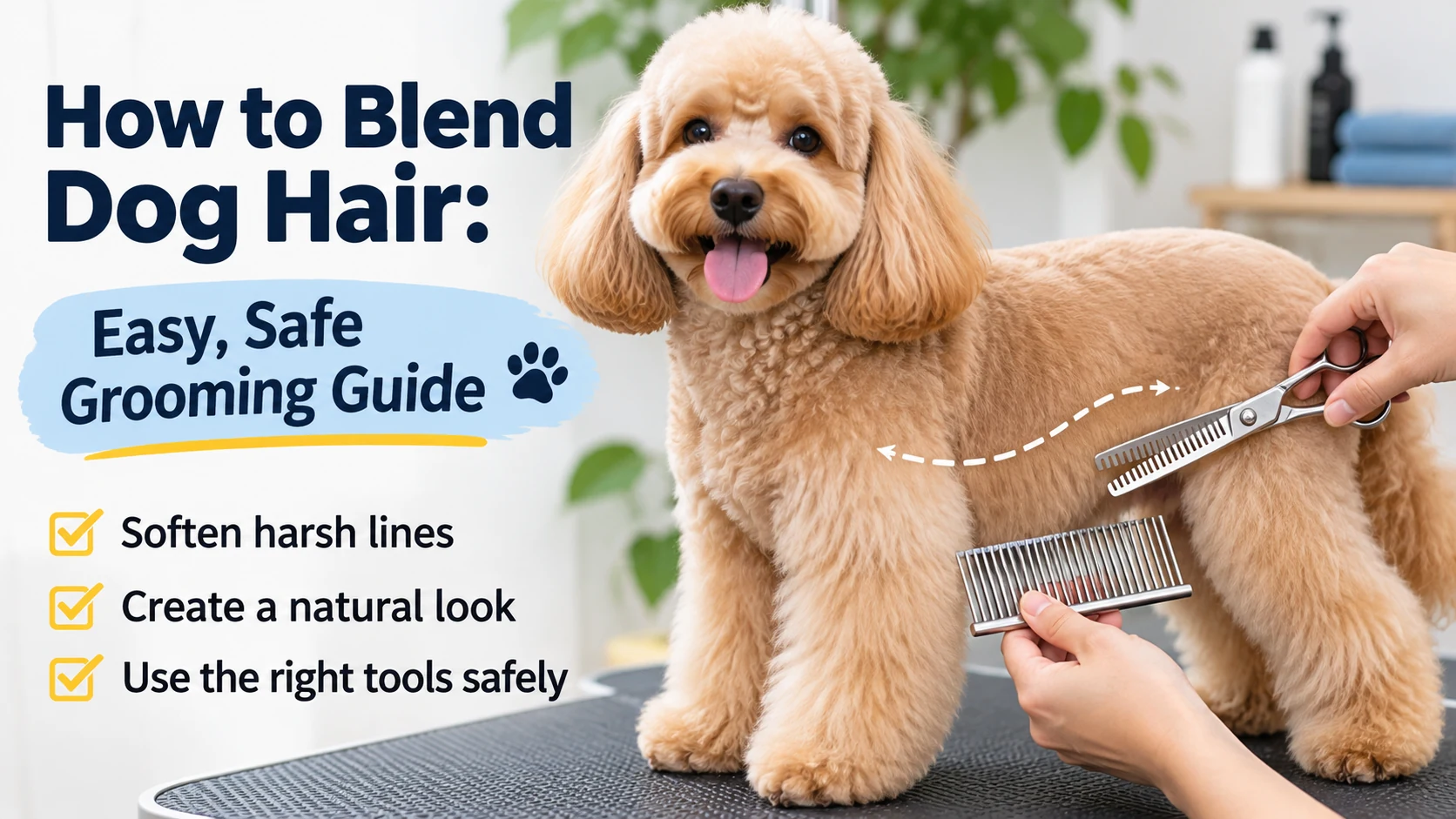
To blend dog hair, brush and comb the coat thoroughly, identify where shorter hair meets longer hair, and use appropriate blending or thinning shears to soften the transition with small, controlled cuts. Comb the hair after each pass to check the result. Work gradually, keep scissors away from the skin, and avoid cutting unfamiliar coat types without professional guidance.
A dog haircut can look uneven when the body is clipped short but the legs, head, or tail retain longer hair. A visible line separates the two lengths, making an otherwise tidy groom appear unfinished.
Blending helps soften these transitions. Instead of removing large sections of fur, the groomer gradually adjusts the coat’s outline so the different lengths flow together naturally.
The technique is especially useful for softening clipper marks and connecting fuller areas to shorter sections. However, the appropriate method depends on your dog’s coat, skin condition, and ability to remain still.
What Does Blending Dog Hair Mean?
Blending dog hair means creating a smooth visual transition between areas of different lengths or shapes. It is a finishing technique rather than a complete haircut style.
For example, a dog may have a short-trimmed body and slightly longer hair on its legs. Blending softens the visible boundary while preserving enough length to maintain the desired leg shape.
Common blending areas include:
- Neck and shoulders: Connecting the head and body coat.
- Legs: Softening the transition from shorter body hair to fuller leg hair.
- Chest: Creating a natural outline around longer decorative hair.
- Hips and rear: Reducing abrupt changes between trimmed areas and feathering.
- Head and ears: Softening changes in length around a rounded hairstyle.
Successful blending does not require making every section the same length. The goal is to create a balanced appearance appropriate for the dog’s natural coat.
Which Tools Are Best for Blending Dog Hair?
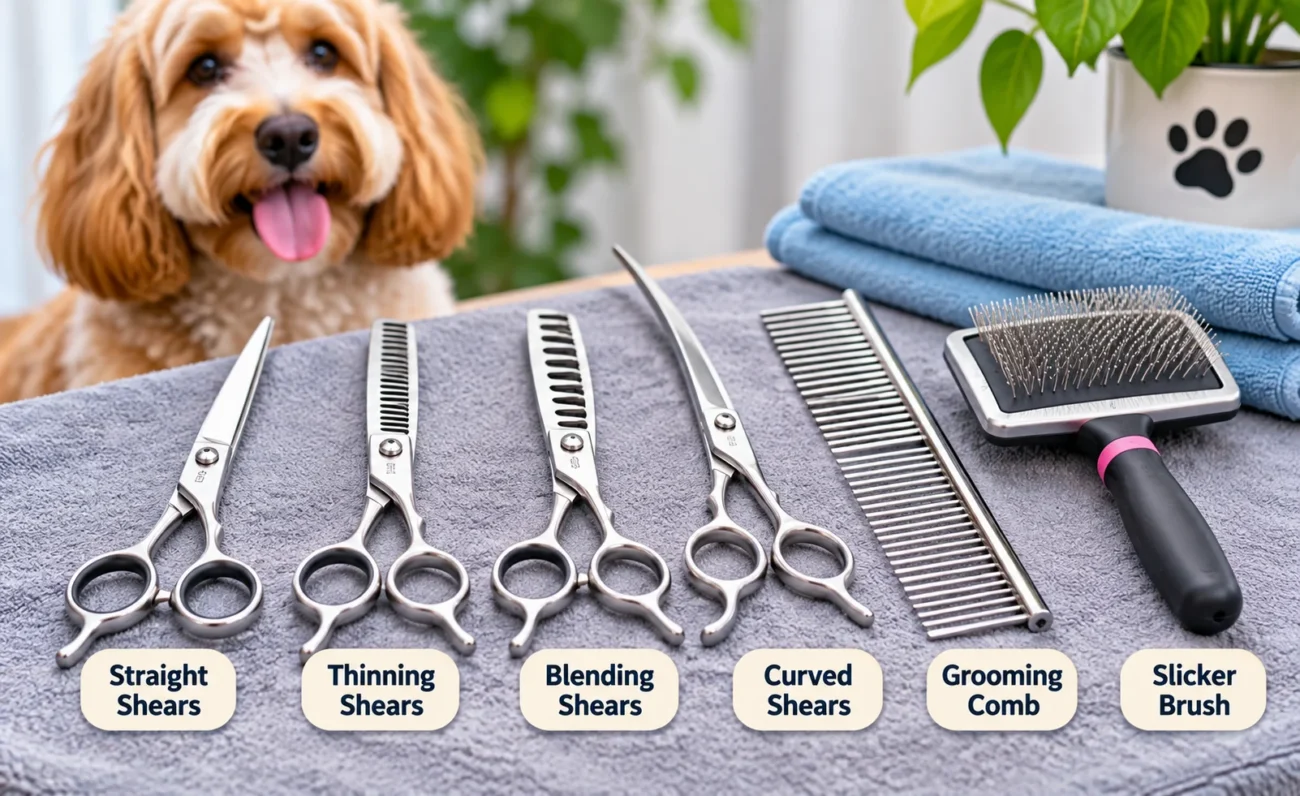
Blending shears are designed to soften visible cutting lines, but they work best when combined with brushing, combing, and suitable tools for the dog’s coat.
The following table explains the main differences.
| Tool | Main Purpose | Important Limitation |
|---|---|---|
| Blending shears | Softening lines and creating gradual transitions | Repeated cutting can remove too much hair |
| Thinning shears | Reducing selected bulk and softening the coat | Can create gaps when overused |
| Straight shears | Establishing clean outlines and trimming length | Can leave visible blunt edges |
| Curved shears | Shaping rounded contours | Require careful handling near curved body surfaces |
| Metal grooming comb | Separating, lifting, and checking coat lengths | Must be used gently on tangled hair |
Manufacturers do not always use the names “blenders” and “thinners” consistently. The blade design, tooth spacing, and amount of hair removed matter more than the label alone.
For additional background, see the differences between blending, thinning, and chunking shears.
How to Blend Dog Hair Step by Step
The safest approach is to begin with a clean, dry, detangled coat and remove only the amount of hair necessary to soften an obvious transition.
These steps are intended for minor finishing work on a cooperative dog, not for removing severe mats or performing a complete haircut without training.
Step 1: Prepare and Comb the Coat
Brush the coat gently to remove loose hair and separate tangles. Then use a suitable metal comb to check whether it moves comfortably through the area you intend to blend.
Hair that looks smooth on the surface can still be tangled underneath. Do not force a comb through tight mats or attempt to hide them with scissors.
Work on a stable, nonslip surface with another adult helping only when needed and when the dog can remain comfortable. Avoid restraining a frightened or struggling dog for cosmetic trimming.
Step 2: Find the Visible Haircut Line
Look at the dog from the side and identify the boundary where the shorter coat changes abruptly into longer hair.
Common examples include a clipped shoulder meeting a fuller front leg or a short neck meeting a longer head.
Do not immediately cut the entire longer section. First determine which small area creates the strongest visible edge.
Step 3: Choose a Safe Working Area
Begin only in an accessible section where the hair can be clearly separated from the skin and the dog is standing or sitting calmly.
Avoid practicing around the eyes, ears, armpits, skin folds, genital area, and moving joints. These areas can be injured by scissors even during a small adjustment.
Keep the cutting blades directed away from the dog’s body and never cut into a section when you cannot see where the skin is located.
Step 4: Make Small Blending Cuts
Comb the longer hair into its natural position. Position the blending shears within the excess hair rather than directly against the skin.
Make one small, controlled cut, remove the shears, and comb the area again.
Observe whether the transition has softened before making another cut. The objective is to remove small amounts gradually, not to shorten the whole area at once.
Do not repeatedly close the shears in the same location. This can create a thin patch or an unexpected hole in the coat.
Step 5: Check the Hair From Different Angles
After a few small adjustments, stop and inspect the hairstyle from the front and side.
Brush the hair into its usual position and look for remaining ridges, uneven bulges, or obvious changes in length.
Natural-looking blending is easier to judge when the dog is standing in a relaxed, normal posture.
Step 6: Stop Before Removing Too Much Hair
Finish when the harsh line is less noticeable and the coat retains its intended shape.
Do not keep cutting to achieve perfect symmetry. Fur can settle differently on each side because of growth direction, body shape, and movement.
Additional trimming is not always an improvement.
Tip
Use a repeatable finishing sequence: comb, identify the uneven edge, make one small adjustment, comb again, and reassess. This makes it easier to recognize when the blend is finished.
How Should You Blend Different Dog Coat Types?
Not every dog coat should be blended using the same cutting technique. Coat structure affects how easily scissor marks show and whether cutting is appropriate.
Curly and Wavy Coats
Curly and wavy coats may show uneven shaping when sections are trimmed to different lengths. Careful combing and gradual finishing can help the coat appear balanced.
Because curls change position as they dry and settle, assess the dog’s hair in its usual dry condition before attempting cosmetic corrections.
For tight curls or coats requiring significant shaping, professional grooming is often the better choice.
Straight and Silky Coats
Straight and silky coats can make cutting lines more visible because the hair naturally falls in smooth layers.
Removing excessive hair from one small area can produce a noticeable gap. Use very conservative adjustments and comb frequently to examine the natural fall of the hair.
Thick and Dense Coats
Thick coats may require both shape control and bulk management, but these are different grooming tasks.
Blending the visible outline does not necessarily require thinning the interior coat. Removing too much hair can alter its appearance and leave uneven patches.
For dense, mixed-texture coats, ask a groomer whether thinning, light finishing, brushing, or another technique is most appropriate.
Double Coats
Double-coated dogs require special consideration. Their outer guard hairs and insulating undercoat perform different functions.
Shaving or aggressively thinning a healthy double coat simply to improve its appearance is generally inappropriate unless there is a specific veterinary or coat-management reason.
Brushing, removal of loose undercoat, and conservative trimming of permitted areas are often more suitable. The appropriate method still depends on the breed and individual coat.
Wire Coats
Some wire-coated breeds are maintained through hand stripping, which removes mature hairs to preserve the characteristic coat texture.
Repeated clipping or heavy blending can change how the coat looks. If preserving the traditional wiry texture matters, consult a groomer experienced with that specific breed.
Which Areas of a Dog’s Haircut Need the Most Careful Blending?
The most noticeable transitions often occur where body contours change, but the most visible areas are not always the safest places for a beginner to cut.
Legs and Shoulders
Longer leg hair can appear disconnected from a shorter body trim. The desired result is a gradual change in outline, not a sudden shelf of fur at the shoulder or hip.
Comb the leg hair into its natural position and evaluate the silhouette before making a minor adjustment. Avoid cutting close to the armpits or around moving joints.
Head, Face, and Ears
Blending helps connect longer head hair to a shorter neck or body, particularly in rounded companion-dog styles.
However, the face contains sensitive structures and can move without warning. Owners without scissoring training should leave close facial and ear blending to a qualified groomer.
Chest and Rear Feathering
Longer feathering on the chest or hindquarters can look abrupt next to a shorter body coat.
Conservative outlining may create a smoother appearance, provided the coat type permits trimming.
Skin folds, thin skin, and areas close to the tail base demand additional caution. A professional is preferable when the skin cannot be clearly identified.
How Can You Fix Uneven or Choppy Dog Hair?
Most visible haircut lines require reassessment before additional cutting. The uneven appearance may be caused by displaced hair, inconsistent clipper length, or an abrupt transition between sections.
Use the following checks to choose an appropriate next step.
| Problem | Possible Explanation | Reasonable Next Step |
|---|---|---|
| Visible line between lengths | Abrupt transition | Consider minimal blending in a safe area |
| Hair looks uneven after brushing | Different growth directions or lengths | Check the natural fall before trimming |
| Thin patch or missing section | Too much hair removed | Stop cutting and allow regrowth |
| Tangled or tightly matted area | Compacted hair near the skin | Arrange professional mat removal |
| Red or irritated skin | Possible irritation or injury | Stop grooming and seek veterinary guidance |
If the coat is already cut too short, further blending may enlarge the problem. Sometimes the safest correction is to leave the area alone until enough hair grows back.
What Mistakes Should You Avoid When Blending Dog Hair?
The biggest blending mistakes come from removing too much hair, working too close to the skin, or overlooking the dog’s coat structure.
- Cutting repeatedly in one place: Can create sparse patches instead of a gradual transition.
- Working without combing: Makes it difficult to distinguish uneven lengths from hair lying in different directions.
- Trying to correct every small difference: Can progressively shorten the hairstyle.
- Using household scissors: Tools not designed for pet grooming may cut unpredictably or be difficult to control.
- Trimming an anxious dog: Sudden movement increases injury risk.
- Cutting through mats: Tight mats may conceal skin and require professional removal.
- Ignoring the coat type: Techniques appropriate for a continuously growing curly coat may not suit a double or wire coat.
Warning
Never use scissors to cut tightly matted fur close to the skin. Mats can pull skin into folds that are difficult to see, creating a serious risk of accidental cuts. Seek professional help for tight matting or sensitive areas.
When Should a Professional Groomer Blend Your Dog’s Coat?
Professional grooming is the safer option when the haircut involves sensitive body areas, complex coat shaping, or a dog that cannot remain comfortably still.
Choose professional assistance when:
- The coat has severe tangles or tight mats.
- The dog becomes frightened, reactive, or restless around scissors.
- The haircut requires close work around the face, ears, paws, or skin folds.
- The breed has a coat that requires specialized maintenance.
- A previous haircut has left large uneven patches.
- You are uncertain whether the coat should be trimmed, clipped, or hand stripped.
A qualified groomer can evaluate the dog’s coat structure and select an appropriate finishing technique.
The American Kennel Club’s professional grooming educational standards address safe tool handling, coat characteristics, grooming procedures, and animal welfare.
If you notice skin wounds, significant irritation, unusual hair loss, or discomfort, a veterinarian should assess the problem rather than treating it as a cosmetic grooming issue.
How Do You Maintain a Smooth Blend Between Grooming Sessions?
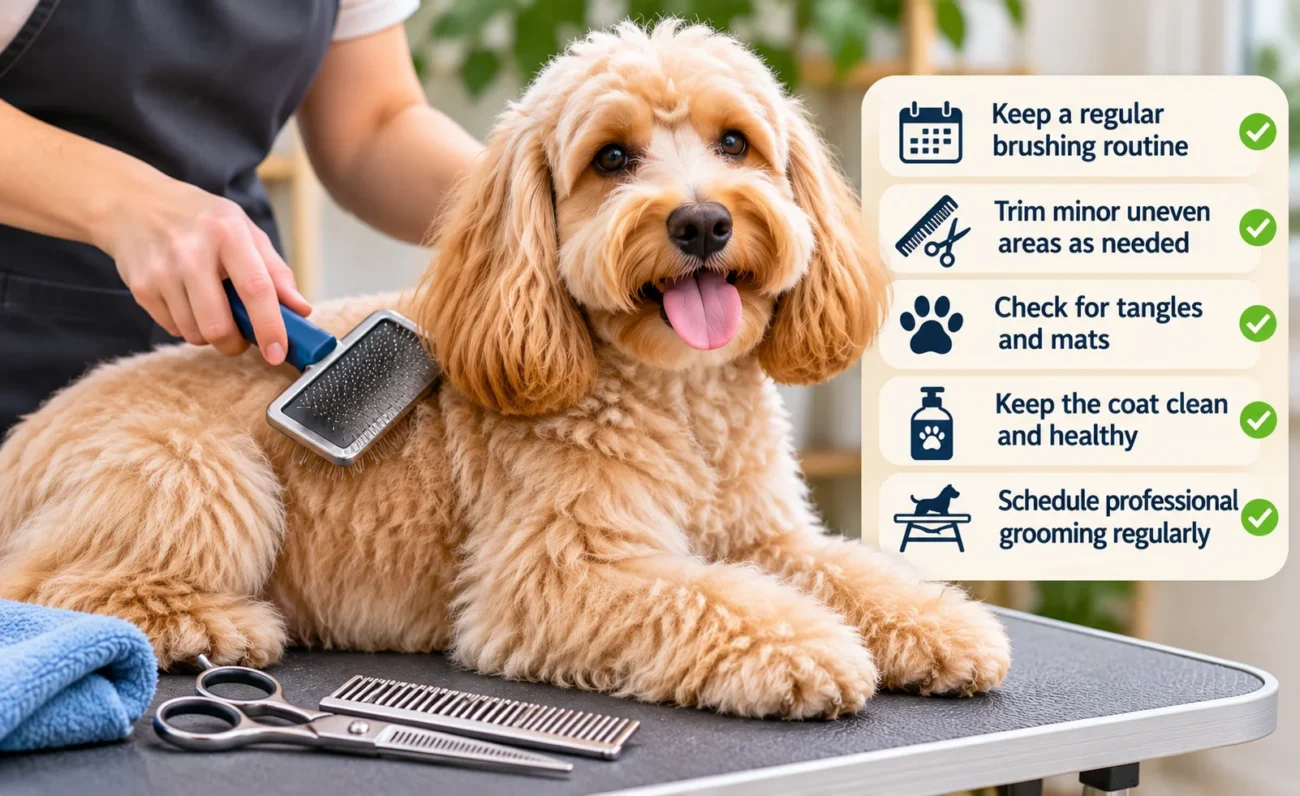
A blended haircut stays more manageable when the coat is kept clean, comfortable, and free from developing tangles.
Maintenance should match the dog’s coat type and growth rate rather than following one fixed trimming schedule.
- Brush and comb as often as the individual coat requires.
- Pay attention to areas where collars and harnesses create friction.
- Check behind the ears and around the legs for developing tangles.
- Keep regular grooming appointments when the coat grows continuously.
- Avoid repeatedly trimming a finished blend simply to maintain its appearance.
- Discuss an appropriate coat length with your groomer based on the dog’s lifestyle and maintenance needs.
The AKC’s home grooming guidance provides additional information about routine hygiene and combining home care with professional grooming.
A natural-looking finish starts with healthy, properly maintained hair. Frequent cosmetic cutting cannot replace regular coat care.
Frequently Asked Questions
Can you blend dog hair without blending shears?
Yes. Experienced groomers can use suitable straight shears, clippers with appropriate guard combs, or other finishing techniques. However, these methods require skill and may not be appropriate for beginners or every coat type.
Is blending the same as thinning dog hair?
No. Blending primarily softens transitions between lengths or shapes, while thinning reduces hair density. Some shears can perform both functions, but the intended result is different.
Can blending shears damage a dog’s coat?
They can produce uneven or sparse areas when used excessively. Some coat types may also be unsuitable for extensive cutting. The method should be selected according to coat structure, not just appearance.
Should you blend dog hair when it is wet?
For ordinary at-home finishing, a clean, fully dry, detangled coat is easier to assess in its natural position. Professional groomers may use other techniques for particular coat types and styles.
How long does it take for a bad blend to grow out?
There is no universal timeframe. Regrowth depends on breed, coat type, growth cycle, health, and how much hair was removed. Avoid further trimming to conceal a thin patch unless a qualified groomer recommends it.
Can you blend a puppy’s hair at home?
Minor grooming should focus first on calm handling, positive experiences, and gentle coat care. Scissor work near a puppy’s moving body or face is best left to a trained groomer until the puppy is comfortable with grooming.
Final Thoughts
Blending dog hair is about softening the transition between different coat lengths while preserving a natural shape. A well-blended haircut does not need to be extremely short or perfectly uniform.
Start with proper coat preparation, work conservatively, and reassess after every small adjustment. When the coat type, dog’s behavior, or trimming area creates uncertainty, professional grooming is the safer choice.


