
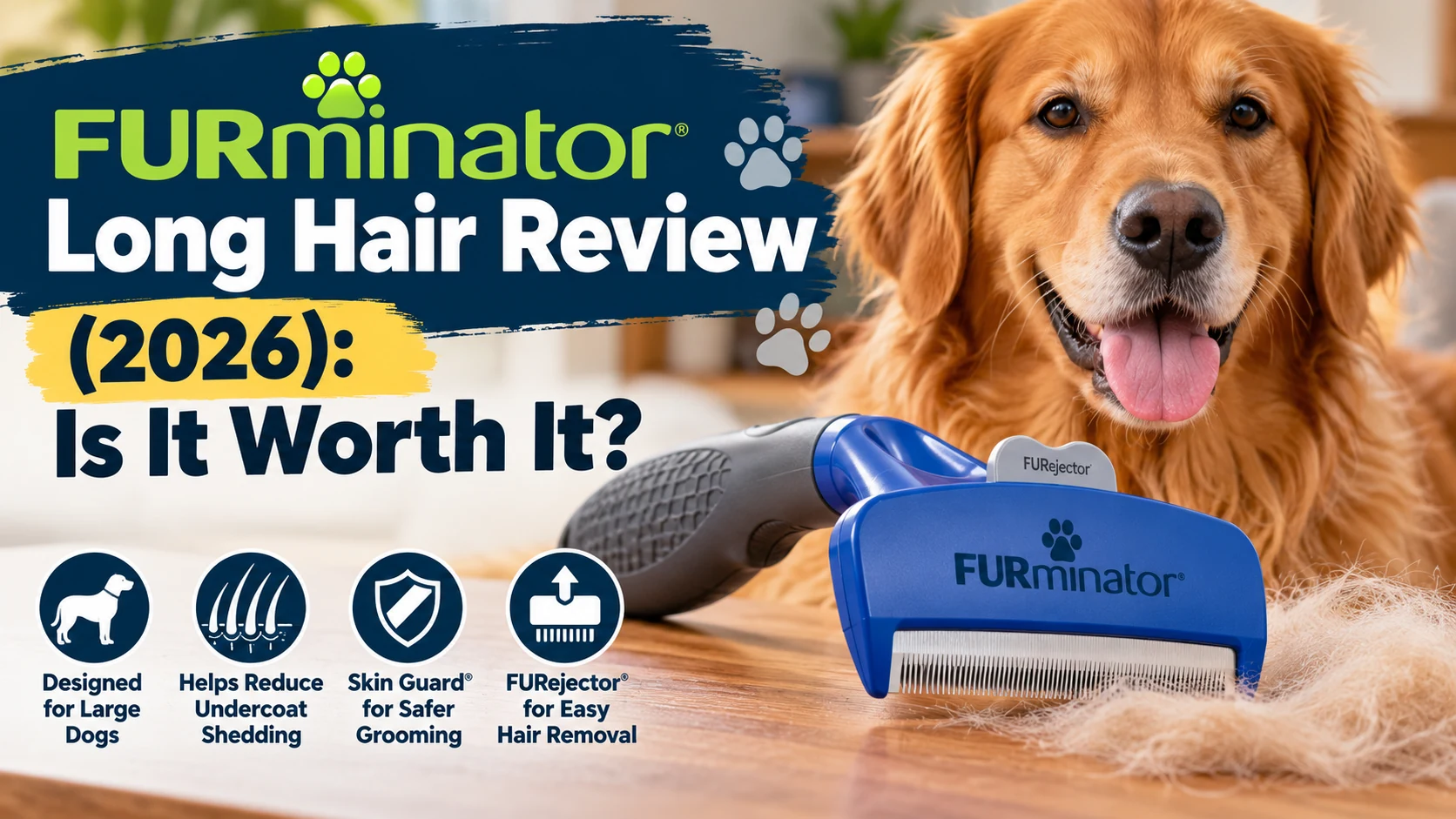
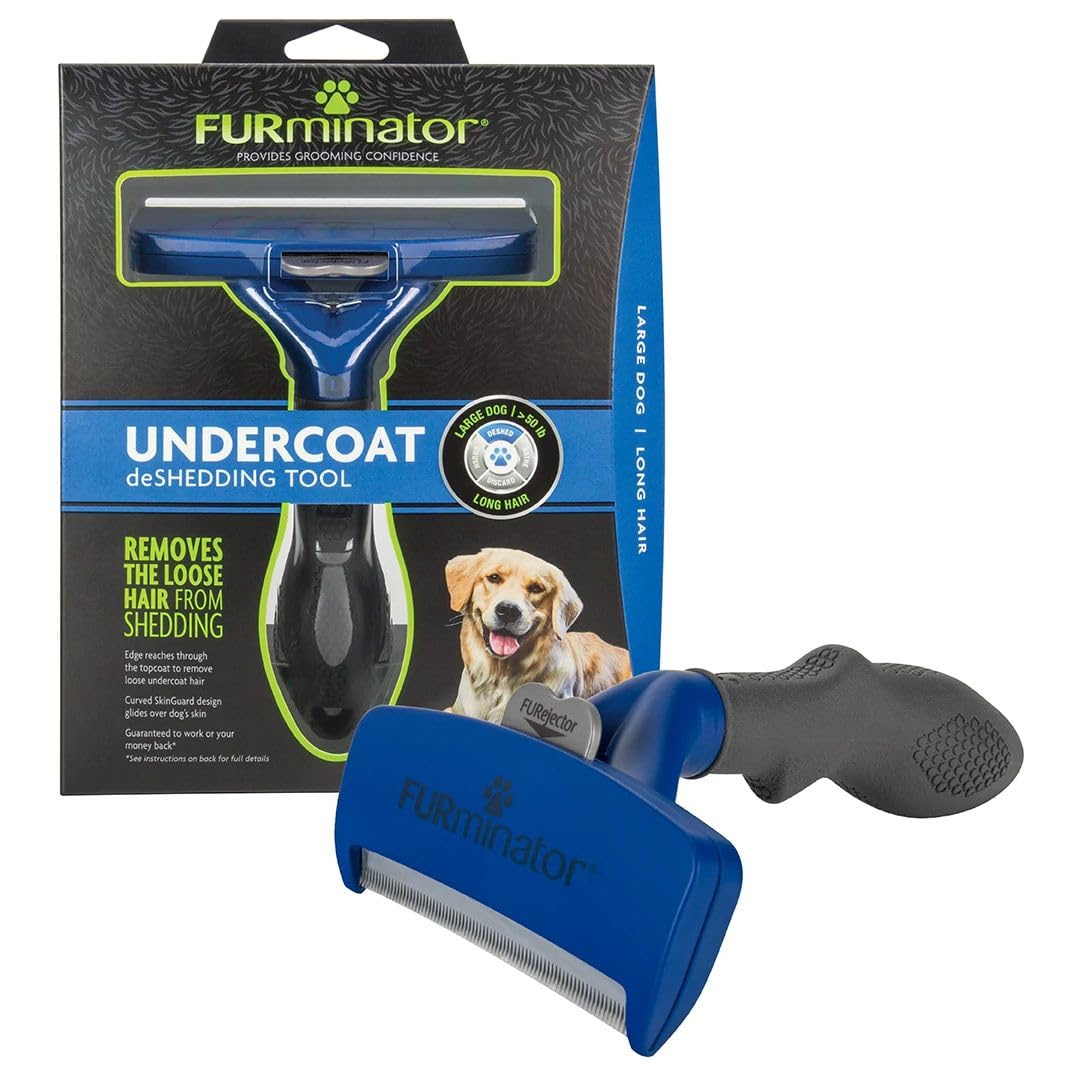
The FURminator Undercoat deShedding Tool for Large Dogs with Long Hair is a handheld grooming tool built to collect loose undercoat from suitable shedding dogs. This FURminator Long Hair review examines the large-dog version, its safety limits, and whether its specialized edge makes sense for your grooming routine.
It is intended for long-coated dogs weighing over 50 pounds, not every pet with visibly long fur. Coat type, skin condition, and careful technique matter more than the quantity of hair collected.
Quick Verdict
Reviewed Product
FURminator Undercoat deShedding Tool – Large Dog, Long Hair
Specialized loose-undercoat removal for large, long-coated shedding dogs.
Rating: ★★★★☆ 4.0/5
Best For: Owners of large dogs with healthy, shedding undercoats and longer outer coats.
Key Specs: Over 50 lb dog size • Long-hair variant • Stainless-steel edge • FURejector button
Key Advantage: Collects loose undercoat beyond routine surface brushing.
Main Trade-off: Unsuitable coats or excessive pressure can cause irritation.
Bottom Line: Consider it for targeted undercoat removal on a compatible large dog. Choose a gentler brush or rake if tangles, sensitivity, or routine finishing are your main concerns.
At a Glance
- Specific version: FURminator large-dog tool for long hair.
- Intended weight range: dogs weighing more than 50 pounds.
- Primary task: removing loose, dead undercoat, not cutting hair.
- Recommended starting schedule: one or two sessions weekly, adjusted to comfort.
- Preparation: completely dry coat, with tangles removed first.
- Important exclusion: non-shedding coats and particularly sensitive skin.
Verified Specifications & Buyer Implications
The manufacturer’s current listing identifies this as the large-dog, long-hair undercoat tool. Its main specifications describe the intended fit and handling features rather than promising that every dog will shed less.
| Attribute | Verified Detail | Why It Matters |
|---|---|---|
| Dog size | Over 50 pounds | This version targets larger bodies. Owners of smaller dogs should select an appropriately sized model instead of assuming one working edge suits every animal. |
| Coat variant | Long hair | Long-hair labeling narrows the intended coat fit, but it does not make the tool appropriate for every curly, silky, single, or non-shedding coat. |
| Working edge | Stainless-steel deShedding edge | The specialized edge reaches through the topcoat to collect loose undercoat. Light, controlled contact remains necessary; metal construction alone does not prove exceptional durability. |
| Skin contact | Curved edge with Skin Guard | Its shape is designed to follow body contours and reduce edge digging. This helps handling but does not prevent irritation if users press too hard. |
| Hair release | FURejector button | Collected hair can be released without repeatedly pulling clumps from the teeth by hand, helping keep a grooming session orderly and controlled. |
Design & Build Quality
The stainless-steel working edge, curved head, and ergonomic handle are meaningful design choices for a tool that moves across a large dog’s back and sides. The manufacturer’s Edge Guard protects the teeth during storage, while the hair-release mechanism addresses buildup during grooming.
These attributes support practical handling, but neither the listing nor the provided material establishes measured grip comfort or long-term reliability. Avoid interpreting a branded metal edge as proof that it cannot bend, corrode, or wear.
Setup & Ease of Use
No powered setup, charging, or attachment changes are required for the described handheld tool. The important first-use work involves evaluating your dog’s coat and using the edge safely.
- Confirm your dog has a suitable shedding undercoat and fits the large size.
- Choose a calm place where loose fur is easy to collect.
- Inspect skin for sores, redness, tenderness, or other problems.
- Remove manageable tangles with a suitable brush or rake beforehand.
- Use gentle strokes with the direction of hair growth on a completely dry coat.
- Stop if the dog flinches or skin appears irritated.
For a detailed technique walkthrough, see how to use a deshedding tool on a dog. Avoid dragging the metal edge through knots or treating it as a mat-removal blade.
How This Review Was Researched
This review evaluates the specific large-dog, long-hair model using FURminator’s official product documentation, its published care instructions, product-listing identification, and manufacturer documentation for comparable grooming tools. No personal hands-on or laboratory testing is claimed; the editorial rating evaluates documented buyer fit and trade-offs.
Category-Specific Performance
Loose-Undercoat Removal
The manufacturer says its deShedding tools can reduce loose shedding hair by up to 90% with regular use. That is a manufacturer claim, not an independently established result for this review or a guarantee for your dog.
The plausible benefit is collecting loose undercoat before it lands on floors and furniture. It will not stop the natural shedding cycle or treat a medical cause of hair loss.
Coat Compatibility
Coat compatibility is the main purchase filter: a large dog with a healthy, actively shedding undercoat is a more sensible candidate than a similarly sized dog with continuously growing or non-shedding hair. Hair length alone cannot establish suitability.
Check which dogs should not be deshedded before using a specialized undercoat edge on unusual or delicate coats. When uncertain, seek advice from a qualified groomer or veterinarian.
Skin Comfort and Grooming Control
The curved Skin Guard is designed to limit digging at the edges, but the maker still warns against rough, deep, or repeated passes. Comfort therefore depends on patient handling as well as physical design.
Work in the direction of hair growth and avoid concentrating strokes on one area. The correct endpoint is a comfortable dog and manageable loose fur, not an empty-looking undercoat.
Hair Clearance During Sessions
The FURejector button pushes collected hair away from the working edge, which is especially relevant when a dog sheds heavily. It simplifies clearing the head but does not remove the need to clean and inspect the tool afterward.
Expert Insight: A deshedding edge and a detangling brush solve different problems. If the tool catches or pulls, first check coat preparation and suitability rather than increasing pressure.
Key Features Explained
Stainless-Steel deShedding Edge
This is the core feature: an undercoat-focused edge intended to reach loose hair beneath the outer coat. Its specialist purpose explains why the tool should supplement, rather than replace, ordinary brushing.
Curved Skin Guard
The curved edge is intended to follow a dog’s body and avoid sharp digging at its corners. It offers some design protection, but sensitive areas still call for restraint and sometimes a different brush.
FURejector and Edge Guard
The release button ejects collected fur during grooming; the Edge Guard protects teeth when stored. Both features concern workflow and maintenance, not evidence of a guaranteed amount of hair removal.
Real-World Usability & Maintenance
FURminator generally recommends using this type of tool once or twice weekly for about 10–20 minutes per session, adjusted to the dog’s condition. Begin with less time if your dog is new to deshedding, and do not treat this schedule as a requirement to finish every minute.
Remove caught fur during use, then inspect the teeth afterward. The manufacturer’s instructions allow warm water and mild soap when necessary; dry the tool fully, engage its Edge Guard, and store it where it cannot fall.
A safe deshedding frequency guide can help distinguish ordinary daily brushing from less frequent intensive undercoat removal. Excess brushing is not a substitute for appropriate tool selection.
Pros & Cons
Pros
- Purpose-built for loose undercoat
- Specific large-dog, long-hair configuration
- Curved Skin Guard design
- Button-operated hair release
Cons
- Not suitable for every long-haired dog
- Can irritate skin if overused
- Does not remove mats or replace brushing
Common Issues & Fixes
Tool Snags on the Coat
Cause: Tangles or mats can obstruct the metal teeth and pull uncomfortably.
Fix: Stop and remove manageable tangles with a suitable rake or brush; use a groomer for tight mats.
Redness After Grooming
Cause: Heavy pressure or repeated strokes can irritate sensitive skin despite the guard.
Fix: Discontinue use, inspect the skin, and consult a veterinarian if irritation persists or appears painful.
Edge Feels Less Effective
Cause: Hair or dander accumulated around the teeth may interfere with smooth movement.
Fix: Clean as directed, dry thoroughly, and stop using the tool if its teeth are damaged.
What to Know Before You Buy
Make sure the listing explicitly identifies the large-dog, long-hair version. FURminator sells different size and coat-length models, so pictures alone are not enough to confirm the configuration.
Check that your dog actually sheds an undercoat, is comfortable with grooming, and has healthy skin. The brand’s up-to-90% claim should not be used as a forecast of your own results, which depend on shedding stage and coat characteristics.
Also compare the latest asking price with a rake or ordinary grooming brush, since prices change and no fixed current price is verified here. Some owners will benefit more from a tool that addresses tangles or daily coat finishing instead.
Who Should Consider It / Who Should Look Elsewhere
Who Should Consider It
- Owners of large, shedding, long-coated dogs
- Households managing loose seasonal undercoat
- Careful groomers seeking targeted undercoat removal
Who Should Look Elsewhere
- Owners of non-shedding or incompatible coats
- Dogs with particularly sensitive or injured skin
- Buyers mainly needing detangling or daily finishing
Alternatives to Consider
The following are different grooming approaches, not an overall ranking. Select the product that solves your dog’s actual coat-care problem.
Reviewed Product
FURminator Large Dog Long Hair deShedding Tool
Best For: Targeted undercoat removal
Key Specs: Over 50 lb; stainless-steel edge; release button
Advantage: Specialized loose-undercoat collection
Trade-off: Limited coat compatibility
Alternative A
FURminator Grooming Rake
Best For: Thick coats with tangles
Key Specs: Rotating metal teeth; ergonomic nonslip handle
Advantage: Helps detangle dense fur
Trade-off: Different from specialist deshedding edge
Alternative B
FURminator Dual Grooming Brush
Best For: Routine brushing and finishing
Key Specs: Metal-pin side; soft bristle side; ergonomic handle
Advantage: Two daily coat-care functions
Trade-off: Not dedicated deep-undercoat removal
Is It Worth It?
For a large dog with a healthy, long, shedding coat, this is a sensible specialist addition if loose undercoat is a recurring nuisance. The design offers a direct route to collecting shed hair, and the release button makes handling accumulated fur simpler.
The value falls when your main task is daily brushing, untangling, or grooming a coat without a substantial shedding undercoat. Because no reliable current price comparison is established, assess value against available prices and the brush or rake you may already own.
Final Verdict
The FURminator Long Hair large-dog tool earns a research-based 4.0/5 editorial rating for its clear purpose, verified handling features, and well-defined buyer fit. Its primary limitation is compatibility: long hair does not automatically mean an undercoat deshedder is appropriate.
Choose it for controlled, occasional removal of loose undercoat on the right dog. Choose the grooming rake for detangling or the dual brush for regular coat maintenance, especially when comfort is the higher priority.
Frequently Asked Questions
Is this the correct FURminator for a Golden Retriever?
It may be suitable for a Golden Retriever over 50 pounds with a shedding undercoat. Confirm the individual dog’s coat and skin condition rather than choosing solely by breed.
Can I use it on a dog weighing less than 50 pounds?
This specific large size is designed for dogs over 50 pounds. Choose a size appropriate to a smaller dog instead of assuming this edge will fit well.
Should I use it on wet fur?
No; the manufacturer instructs use on a completely dry coat. After bathing, dry the coat and remove tangles before deshedding.
Can the tool remove mats?
No; use a suitable rake, brush, or professional grooming help for mats first. Forcing the deShedding edge through tangled hair can pull uncomfortably or damage teeth.
How frequently should I use it?
FURminator generally suggests one or two sessions per week, around 10–20 minutes each. Start conservatively and adjust to coat condition and comfort.
Does it stop shedding permanently?
No; it collects loose hair already present in the coat. Normal shedding continues, and the manufacturer’s up-to-90% reduction statement is not a promise of individual results.
Affiliate disclosure: Go Pet Zone earns a small commission when you purchase through links on this page — at no extra cost to you. Our editorial process is independent: affiliate relationships never influence which products we recommend or how we rank them.


