
Quick Answer
Fine dog hair trimming works best when you first identify the coat type, gently remove tangles, and trim only the length necessary for comfort and cleanliness. For suitable fine, continuously growing coats, careful trimming can reduce maintenance. However, some fine-haired dogs have double coats that should not be routinely shaved. Never cut mats with scissors, and leave close-to-skin or sensitive-area trimming to a qualified groomer.
Fine dog hair can be surprisingly difficult to maintain. It may feel soft and lightweight, yet develop knots behind the ears, around the legs, and wherever the coat rubs against clothing or a harness.
Trimming too much can leave uneven patches, while using unsuitable brushes or aggressive techniques may irritate the skin. The solution is to understand how your dog’s coat grows, prepare it correctly, and choose a trimming method that matches its texture.
What Makes Fine Dog Hair Different?
Fine dog hair generally refers to individual hairs that are relatively thin in diameter. It may feel silky, wispy, soft, or delicate, depending on the breed and coat structure.
However, fine hair is a description of texture, not a complete coat classification. Two dogs may both have fine hair but require very different grooming routines.
For example, a Maltese may have a long, silky coat that benefits from regular trimming, while a Papillon may have fine feathering that is usually maintained through brushing and selective tidying.
Some double-coated dogs also have a layer of fine, soft undercoat beneath longer outer hairs. Their coats require different handling from a continuously growing single coat.
Common Characteristics of Fine Coats
- Easy tangling: Long, fine strands may catch on one another, especially in high-friction areas.
- Visible cutting lines: Uneven trimming can be particularly noticeable in smooth, fine hair.
- Variable coat density: Fine strands may form a sparse coat or a surprisingly dense one.
- Different growth patterns: Some fine coats grow long and need haircuts, while others mainly require brushing and occasional shaping.
- Potential skin sensitivity: Brushing pressure and grooming techniques must suit the individual dog’s skin condition.
The American Kennel Club explains that hair and fur terminology relates to different coat-growth characteristics. Understanding the coat rather than relying on appearance alone helps determine appropriate grooming.
For more detail, see the AKC explanation of dog hair, fur, and grooming differences.
Should You Trim Your Dog’s Fine Hair?
Trim fine dog hair when its length creates a practical problem, such as obstructing vision, collecting dirt, or making routine grooming difficult. A haircut is not automatically necessary simply because the hair is fine.
The appropriate approach depends on the dog’s overall coat structure, current condition, and grooming requirements.
| Coat situation | Recommended approach |
|---|---|
| Fine, continuously growing coat | Regular brushing with occasional or scheduled haircuts |
| Fine feathering on ears or legs | Gentle detangling and minimal shaping when needed |
| Fine undercoat beneath protective outer hair | Coat-appropriate brushing and shedding management rather than routine shaving |
| Severely tangled or tightly matted hair | Professional assessment and safe removal |
| Hair covering the eyes or causing hygiene problems | Careful localized trimming, preferably by a professional in sensitive areas |
A practical rule is to preserve as much healthy coat as possible while addressing the specific issue that makes trimming necessary.
Which Grooming Tools Work Best for Fine Dog Hair?
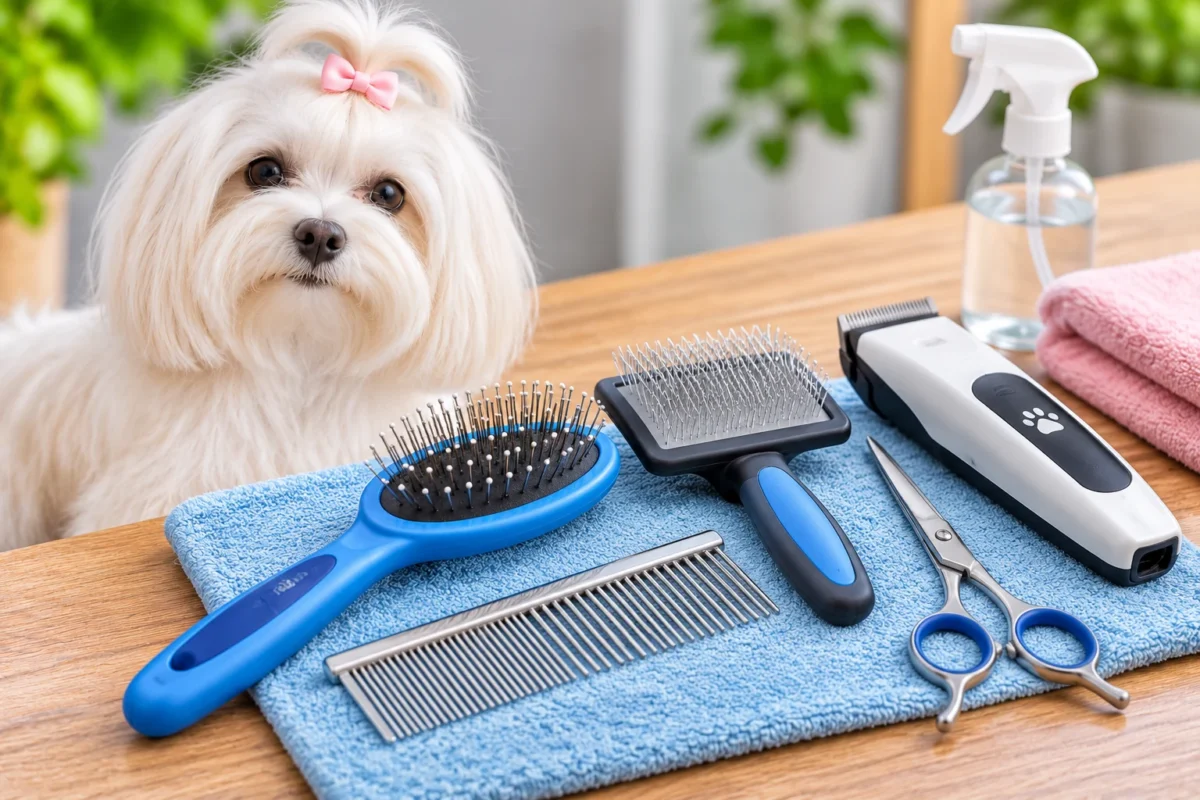
The most useful tools are those that detangle gently, reveal hidden knots, and allow controlled trimming without pulling the coat.
A Gentle Pin Brush or Soft Slicker Brush
A pin brush is often helpful for longer, flowing hair. A soft slicker brush may help with loose hair and tangles, but excessive pressure or repeated strokes can irritate the skin.
Choose a brush appropriate for the length and density of your dog’s coat. Brush in small sections instead of dragging the tool through large tangles.
A Smooth Metal Grooming Comb
A comb with both wider and narrower tooth spacing is useful for checking whether brushing has removed tangles.
Use the wider section first, especially if the hair catches easily. Once it moves freely, use the narrower section when appropriate.
Never force a comb through resistant knots. Doing so can pull the skin and cause discomfort.
Dog Grooming Scissors and Clippers
Rounded-tip grooming scissors can be useful for carefully tidying loose ends in low-risk locations. They are not a substitute for safe handling and should never be used to cut mats close to the skin.
Dog-specific clippers with suitable guards may be appropriate for certain coat types, but a full haircut is best demonstrated by a professional before an owner attempts it independently.
For detailed guidance on equipment selection, see VCA Animal Hospitals’ dog grooming and coat-care guidance.
How to Trim Fine Dog Hair Safely at Home
Start with basic coat maintenance rather than attempting a complete haircut. The following process is intended for small, accessible areas of healthy, untangled hair on a dog that is comfortable being handled.
Step 1: Check the Hair and Skin
Examine the coat for knots, mats, redness, sores, bumps, and irritated areas.
Pay particular attention to the ears, armpits, belly, and areas beneath a collar or harness. If the skin looks inflamed or painful, postpone trimming and seek veterinary advice.
Step 2: Brush and Comb the Coat
Work through the hair in small sections using gentle strokes. Support longer strands with your free hand to reduce pulling.
Begin at the outer ends of loose tangles and gradually work toward the roots. Check the coat with a comb before moving on.
If a knot is too tight to release comfortably, stop rather than pulling harder.
Step 3: Clean and Dry the Hair if Needed
Dirty or damp hair can make trimming less predictable. When a bath is necessary, use a dog-appropriate shampoo and rinse thoroughly.
Dry the coat completely before using clippers unless your grooming professional has given different instructions for a particular technique.
A clean, dry, detangled coat is easier to assess for length and shape.
Step 4: Choose a Small, Low-Risk Area
For a beginner, an appropriate starting point may be a few loose hair tips along an accessible section of the coat, away from skin folds, eyes, ears, paws, and genital areas.
Make sure the dog is standing or sitting comfortably on a stable, nonslip surface. Never leave a dog unattended on a raised grooming table.
Step 5: Remove Only a Small Amount
Comb the section into its natural position and clearly identify the hair ends to be shortened.
If you have been shown a safe technique, make small, controlled trims while keeping the cutting tool away from the skin. Stop immediately if the dog moves unexpectedly.
Fine hair can reveal uneven cuts, so avoid making large corrective cuts in an attempt to achieve a perfectly straight line.
Step 6: Check the Result and Stop Early
Comb the trimmed area again and inspect it from a normal viewing distance.
Remove any loose cut hairs. Finish the session when the necessary maintenance is complete, even if the result is not salon-perfect.
Short, comfortable sessions are preferable to prolonged handling that makes the dog stressed or resistant to future grooming.
Warning
Never use scissors to cut through a mat, particularly when it is close to the skin. Mats can pull skin into hidden folds, increasing the risk of serious cuts. Have tight mats assessed and removed by a qualified groomer or veterinarian.
Which Areas Need Extra Care When Trimming?
Some areas develop tangles more frequently but are also more vulnerable to accidental injury. Identifying these locations helps determine which tasks belong with a professional.
Around the Eyes
Hair that falls over the eyes can interfere with clear vision or contribute to irritation. However, cutting around a moving dog’s eyes can cause serious injury.
A professional groomer should perform close eye-area trimming, particularly when the dog is nervous or difficult to keep still.
Behind the Ears
Fine feathering behind the ears may knot where strands rub against one another. Frequent gentle combing can help prevent the knots from tightening.
Avoid placing scissors near the ear flap, where skin may be concealed beneath the hair.
Paws and Between the Pads
Excess hair around the feet may collect dirt and moisture. Trimming around paw pads requires particular care because the spaces between them contain delicate skin.
For dogs that need pad trimming, professional grooming is the safer starting point.
Belly, Armpits, and Sanitary Areas
These areas may be susceptible to friction, hidden tangles, and skin folds.
Do not attempt close clipping or scissor work if you cannot clearly identify the skin boundaries. Ask a groomer to demonstrate safe maintenance specific to your dog.
How Often Should Fine Dog Hair Be Trimmed?
There is no universal trimming schedule for fine-haired dogs. Frequency depends mainly on coat growth, desired length, tangling, lifestyle, and the dog’s tolerance for grooming.
A long, continuously growing coat might need frequent maintenance and periodic haircuts, while a fine, naturally shedding coat may need little cutting.
As a practical starting point:
- Daily or near-daily checks: Useful for long fine coats that tangle easily, particularly behind the ears and in friction areas.
- Several brushing sessions per week: May suit some shorter or less tangle-prone fine coats.
- Periodic professional trims: Appropriate when growing hair becomes difficult to manage or obstructs normal activities.
- Individualized professional schedules: Important for dogs with recurring mats, skin problems, or difficult coat combinations.
These are maintenance starting points, not fixed requirements for every breed.
The AKC Havanese breed guidance illustrates why some long, fine coats need daily care and may be kept shorter for easier maintenance.
How Can You Prevent Tangles Between Haircuts?
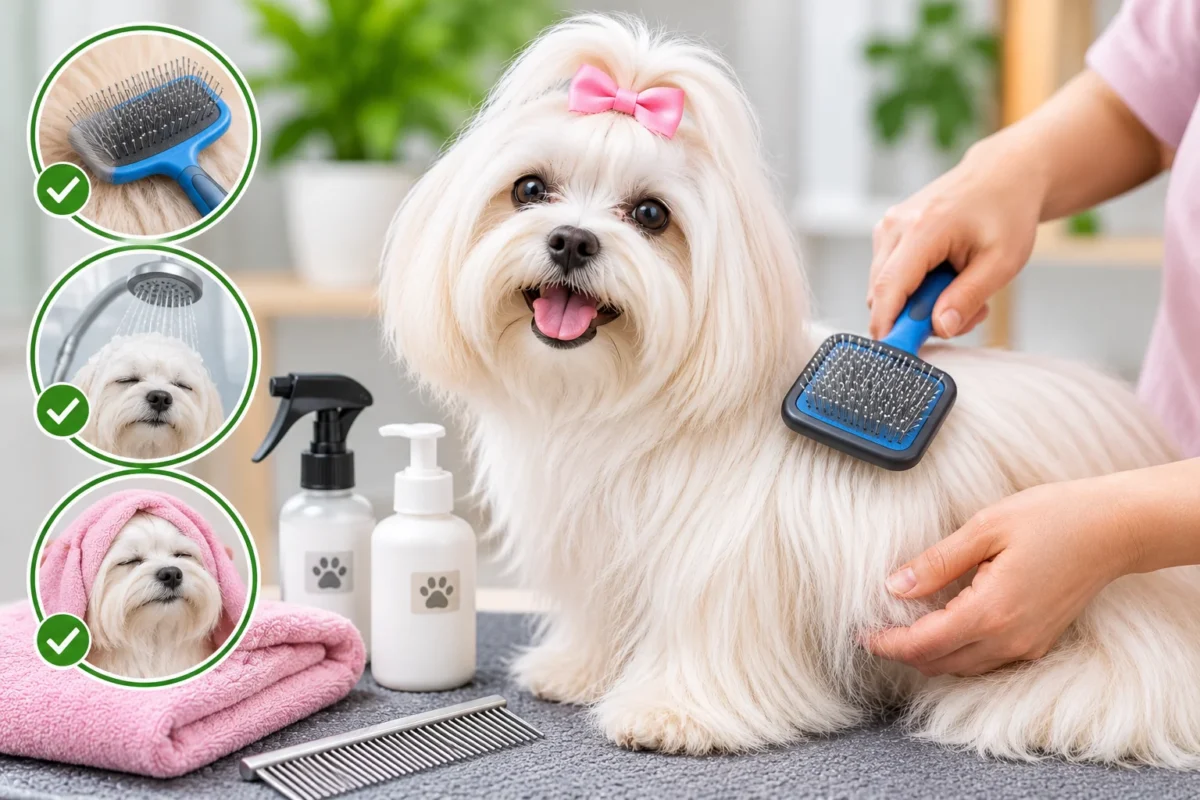
Preventing tangles generally requires less effort and causes less discomfort than removing established mats.
Focus on the places where hair bends, rubs, or remains damp.
- Inspect friction areas: Check behind ears, beneath harness straps, around armpits, and along the legs.
- Brush in sections: Work through the full coat depth gently instead of brushing only the visible surface.
- Finish with a comb: A comb helps locate small knots that a brush may miss.
- Keep the coat clean and dry: Remove debris after walks and dry the hair appropriately after bathing.
- Use dog-appropriate conditioning products: Select formulas suitable for the individual coat and skin, avoiding heavy buildup.
- Respond to small tangles early: Stop and seek help if they cannot be released without discomfort.
Grooming Tip
If a fine coat repeatedly tangles in the same locations, ask your groomer whether a small adjustment in coat length or brushing technique would help. Maintaining manageable hair is often more useful than repeatedly removing knots after they form.
What Are the Most Common Fine Hair Trimming Mistakes?
Many trimming problems occur because the grooming method does not match the coat or because the owner tries to correct too much hair at once.
- Trimming before detangling: Hidden knots can interfere with controlled cutting.
- Using excessive brush pressure: Repeated scraping may irritate the skin.
- Cutting large amounts at once: Fine hair can make uneven areas more visible.
- Shaving without identifying the coat structure: Some double coats should not receive routine close shaving.
- Using scissors on mats: Skin may be trapped inside the tangled hair.
- Ignoring the dog’s behavior: Sudden movement around sharp tools increases injury risk.
- Continuing despite irritation: Redness, pain, or unusual skin changes warrant stopping and reassessing.
In particular, shaving a double-coated dog for convenience or summer cooling can remove protective hair layers without addressing the actual grooming need.
The AKC guide to grooming double-coated dogs explains why their coat structure changes the recommended approach.
When Should You Choose a Professional Groomer or Veterinarian?
Professional grooming is appropriate when the task involves substantial clipping, difficult coat shaping, tight mats, or sensitive areas that cannot be safely handled at home.
Arrange professional grooming when:
- The coat is tightly matted or the skin cannot be seen beneath tangles.
- Your dog pulls away, panics, growls, or cannot remain comfortably still.
- Hair needs trimming very close to the eyes, ears, paws, or genital area.
- You are unsure whether the coat is single-coated or double-coated.
- Your previous attempts have caused significant unevenness, pulling, or discomfort.
Choose veterinary assessment rather than routine cosmetic grooming when you notice open sores, persistent redness, discharge, painful swelling, unexplained hair loss, or other signs of skin disease.
Veterinary guidance on safe grooming and skin irritation is available from VCA Animal Hospitals’ coat-care safety recommendations.
Frequently Asked Questions
Can fine dog hair be trimmed with regular household scissors?
Dog-specific grooming tools are preferable. Household scissors may not handle fine hair cleanly, and sharp blades present a cutting risk. For anything beyond minor, low-risk tidying, use a professional groomer.
Does trimming fine dog hair make it grow back thicker?
No. Trimming cuts the existing hair shaft; it does not increase the number of hair follicles or inherently make individual hairs thicker. The blunt ends may temporarily make the coat look or feel fuller.
Can a dog with fine hair have a puppy cut?
Some dogs with continuously growing coats can have a shorter, puppy-style haircut. However, the term describes a general appearance rather than a universal cutting length. The style must suit the dog’s actual coat structure.
Why does my dog’s fine hair look uneven after trimming?
Fine hair can expose cutting lines because it lies flat or separates into wispy strands. Uneven combing, inconsistent cutting angles, and removing too much hair can make the effect more noticeable.
Should fine dog hair be brushed when wet or dry?
For routine maintenance, gently brush or comb a dry coat using tools suited to its texture. After bathing, follow a coat-appropriate drying and detangling method. Avoid forcefully pulling wet tangles, since this can cause discomfort and hair breakage.
What if my dog has very fine hair and sensitive skin?
Use gentle tools, light pressure, and shorter grooming sessions. Stop if the skin becomes irritated or the dog shows pain. Persistent sensitivity, redness, or unusual hair loss should be evaluated by a veterinarian before further trimming.
Final Thoughts
Successful fine dog hair trimming is about keeping the coat comfortable, manageable, and suited to the dog’s natural hair growth.
Start with gentle brushing, remove only the hair that genuinely needs shortening, and avoid aggressive cutting or unnecessary shaving. For mats, difficult coat types, and sensitive areas, professional grooming provides a safer path to a neat, healthy-looking coat.


