
Quick Answer
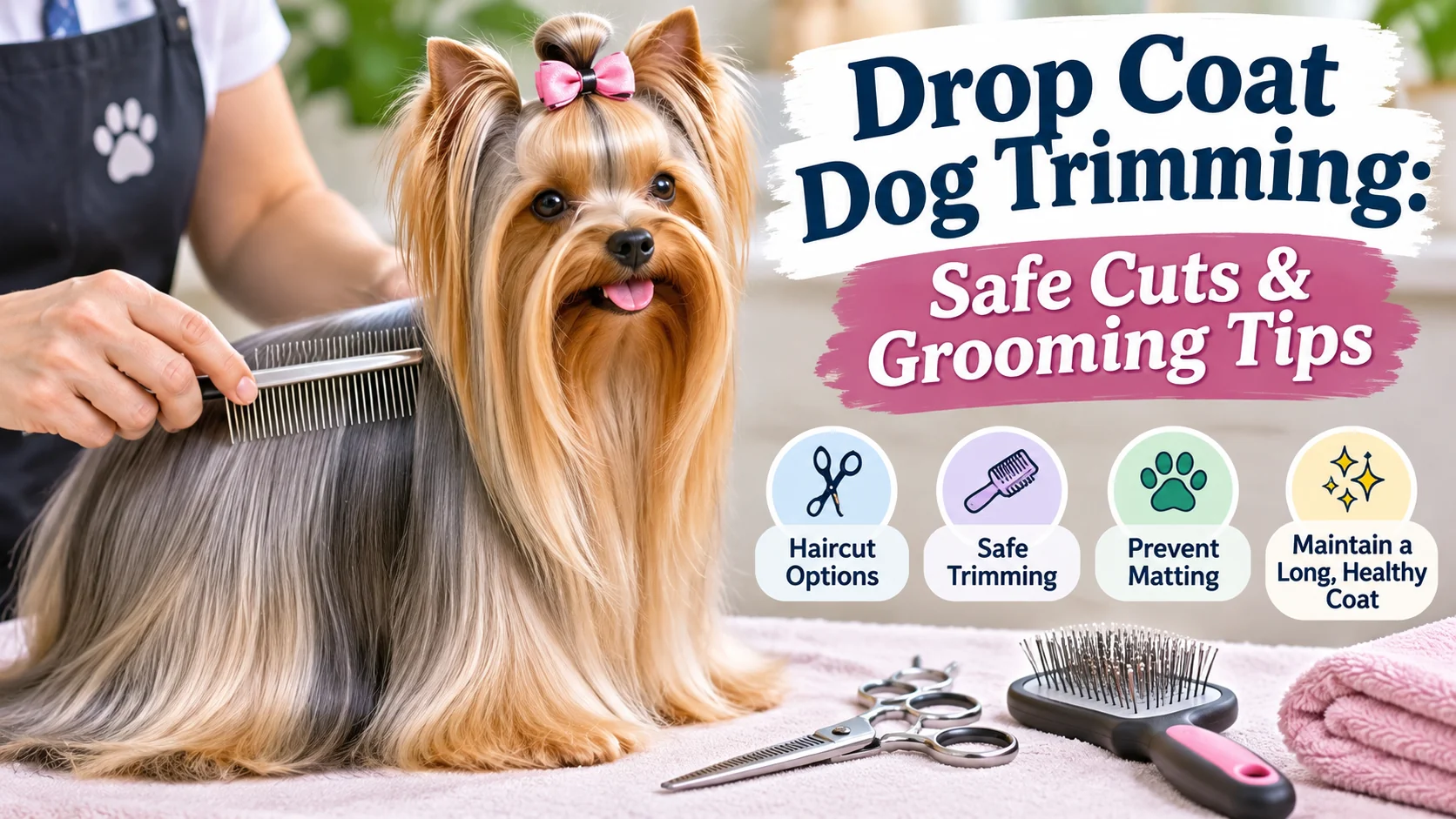
Drop coat dog trimming involves carefully shortening and shaping long, downward-flowing hair while keeping the coat comfortable and manageable. For most companion dogs, a moderate-length pet trim, tidy feet, and clear facial hair are practical choices. Brush and comb the coat thoroughly before trimming, avoid cutting close to the skin, and leave matted or sensitive areas to an experienced groomer.
A beautiful drop coat can quickly become difficult to maintain when long hair collects moisture, tangles around the legs, or falls into a dog’s eyes. The solution is not necessarily a very short haircut. Often, a carefully planned trim makes everyday grooming much easier without removing the coat’s natural flowing appearance.
The best approach depends on the dog’s actual coat texture, condition, activity level, and tolerance for handling. A Yorkshire Terrier with fine, silky hair may need a different trimming routine from a Shih Tzu with a denser coat, even though both are commonly described as drop-coated breeds.
What Is a Drop Coat on a Dog?
A drop coat is a coat that grows downward and falls naturally along the sides of a dog’s body. Instead of standing away from the skin or forming tight curls, the hair generally follows the dog’s outline, creating a smooth, hanging appearance.
The American Kennel Club describes drop coats as coats that naturally fall to either side of the dog. However, not every drop-coated breed has the same underlying coat structure.
Common examples include:
- Yorkshire Terrier: Known for fine, silky, flowing hair that can develop tangles.
- Maltese: Typically has long, straight, silky white hair that requires regular maintenance.
- Shih Tzu: Has a long, dense coat with an undercoat that needs careful brushing.
- Lhasa Apso: Has a long, heavy coat that can develop hidden tangles close to the skin.
- Skye Terrier: Has a long, straight outer coat over a softer undercoat.
The distinction matters because drop coat describes how the hair falls, not whether the dog has one coat layer or two. Grooming tools and trimming decisions should account for both the coat’s texture and its underlying structure.
Does a Drop-Coated Dog Need Regular Trimming?
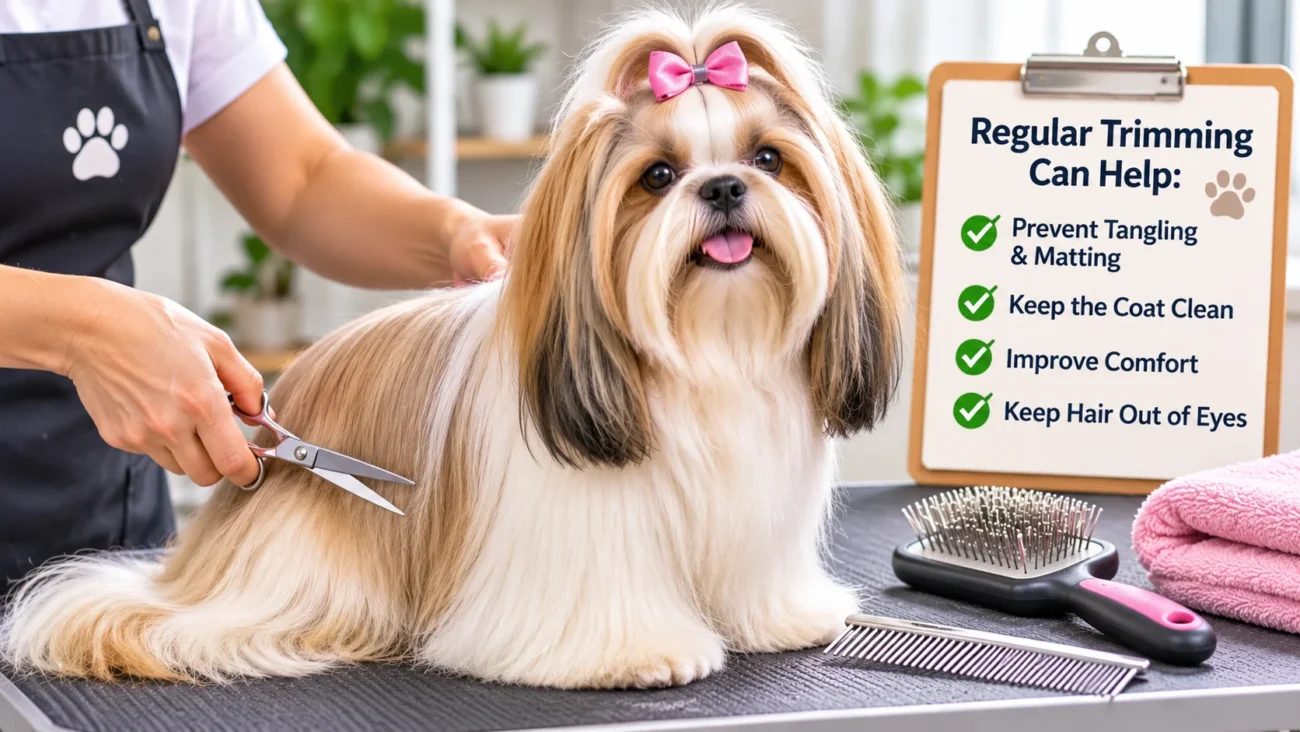
Most pet dogs with long drop coats benefit from occasional trimming, although keeping the coat full length is possible when owners can maintain it consistently.
Trimming can help prevent hair from dragging along wet ground, collecting debris, blocking vision, or becoming tangled around the feet. It can also reduce the daily effort needed to keep the coat manageable.
A shorter haircut is particularly useful when:
- The dog frequently develops tangles despite regular brushing.
- Long hair collects dirt during outdoor walks.
- Hair around the eyes interferes with clear vision.
- The owner cannot comfortably maintain a full-length coat.
- Hair around the paws or sanitary areas needs frequent cleaning.
However, coat length alone does not determine whether trimming is necessary. A healthy, well-maintained long coat can remain comfortable, while a shorter coat that is neglected can still develop mats.
Which Haircut Styles Work Best for Drop-Coated Dogs?
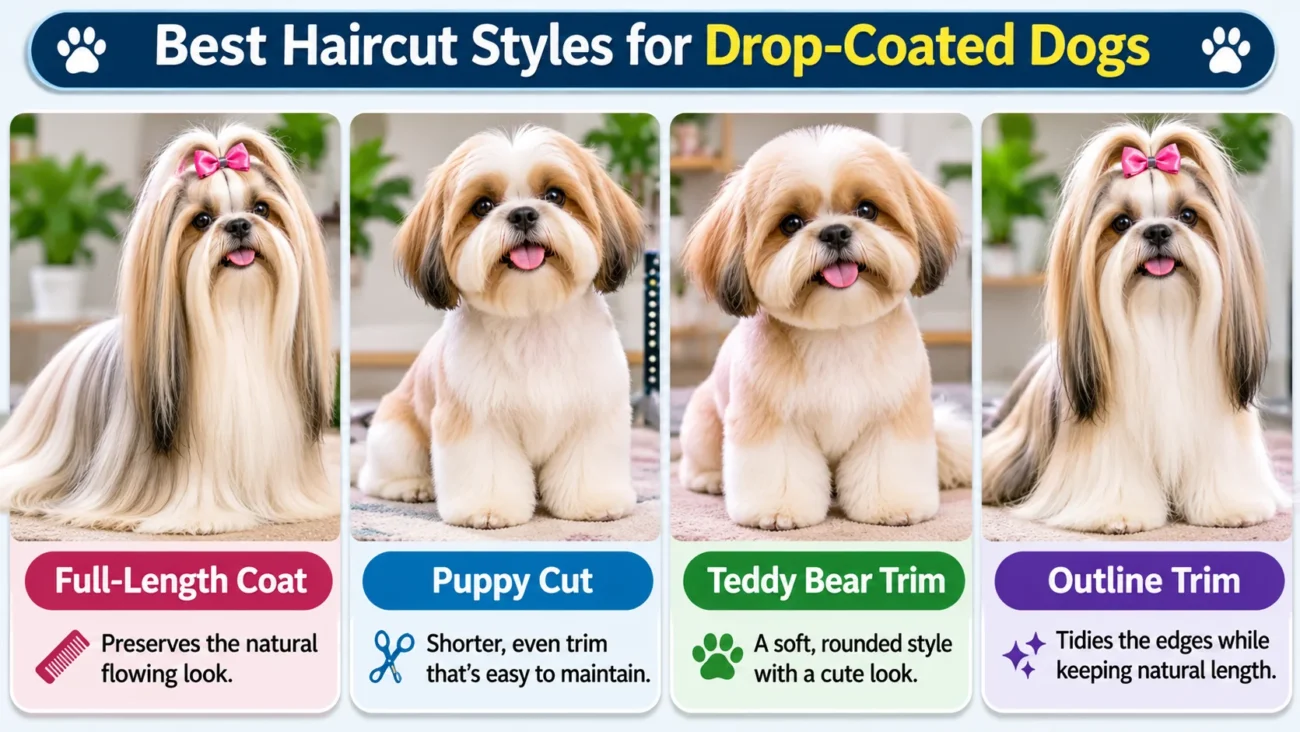
The most suitable haircut is one that balances appearance, maintenance, and the dog’s comfort. There is no single trim that works equally well for every drop-coated breed.
| Haircut Style | Main Feature | Best Suited For |
|---|---|---|
| Full-Length Coat | Preserves the natural flowing length | Owners prepared for extensive grooming |
| Puppy Cut | Shorter, relatively even pet trim | Everyday companion dogs |
| Teddy Bear Trim | Rounded face with a softly shaped body | Dogs with enough coat density for the shape |
| Outline Trim | Tidies the natural edges without major shortening | Owners wanting a flowing appearance |
| Practical Short Pet Trim | Shortens body hair for easier maintenance | Active dogs or dogs prone to tangling |
Haircut names are not standardized measurements. For example, one groomer’s puppy cut may be considerably longer than another’s. When requesting a haircut, describe the desired length and show a reference photograph rather than relying only on the style name.
Is a Puppy Cut Better Than a Full-Length Coat?
A puppy cut is generally easier to maintain because shorter hair is less likely to drag on surfaces or collect debris. However, it still requires brushing, particularly around friction points such as the collar, armpits, and legs.
A full-length coat preserves the traditional appearance of many drop-coated breeds but demands more consistent maintenance. Choose it only when the dog can tolerate thorough grooming and the owner can keep the entire coat free of tangles.
What Grooming Tools Do You Need for a Drop Coat?
A small collection of coat-appropriate grooming tools is usually more useful than several aggressive brushes or cutting attachments.
- Pin brush: Helps separate longer hair and smooth the coat without excessive pulling when used correctly.
- Gentle slicker brush: Can help work through suitable coat textures, provided pressure is light and the pins do not irritate the skin.
- Stainless-steel comb: Checks whether brushing has removed tangles all the way to the skin.
- Dog-specific detangling spray: May reduce friction when working through small, loose tangles.
- Blunt-tipped grooming scissors: Suitable for limited trimming only after learning safe handling techniques.
- Dog grooming clippers with appropriate guards: Can create an even pet trim when used by someone trained to handle them safely.
- Dog shampoo and conditioner: Help clean and condition the coat without using human hair products.
Choose brushes based on the individual dog’s hair texture and skin sensitivity. A tool that works for a dense Shih Tzu coat may be unnecessarily harsh for a fine, delicate Maltese coat.
How Do You Safely Trim a Drop-Coated Dog?
The safest home approach is to start with brushing and limited maintenance trimming rather than attempting a complete professional-style haircut. Full-body clipping, facial shaping, and sanitary trimming require additional handling skills.
Step 1: Check the Coat Before Using Cutting Tools
Begin by examining the coat for knots, mats, irritated skin, and debris. Pay particular attention to areas behind the ears, underneath the collar, around the armpits, and between the legs.
Use your fingers to gently separate loose hair and identify any areas where the coat feels tightly packed.
If the coat contains dense mats close to the skin, avoid cutting into them. The dog’s skin may be pulled into the tangled hair and can be injured by scissors or clippers.
Step 2: Brush and Comb in Small Sections
Work through the coat section by section, moving from the hair ends toward the roots without pulling sharply. A light amount of dog-safe detangling spray may help with minor tangles.
After brushing each section, pass a comb gently through the hair to check for resistance. If the comb repeatedly catches, the area needs additional attention before trimming.
Do not force a comb through a painful knot. Stop if the dog reacts as though the area hurts.
Step 3: Bathe and Dry the Coat When Appropriate
Once the coat is free from significant tangles, bathe the dog with a suitable dog shampoo. Rinse thoroughly and use an appropriate conditioner if needed.
Dry the coat completely before attempting an even finish. Damp hair can clump together, making the finished length difficult to judge.
Use a comfortable dryer temperature, avoid concentrating hot air on one area, and keep the dryer away from the eyes and ears.
Step 4: Trim the Body Conservatively
Comb the dry hair in its natural downward direction. For a simple outline trim, identify only the excess ends that extend beyond the desired shape.
Remove small amounts at a time using appropriate grooming tools. Keep the dog’s skin clearly visible and avoid cutting into folds or areas where the skin may move unexpectedly.
For an all-over puppy cut, a professional groomer can choose a suitable clipper guard and technique based on the actual coat. First-time owners should avoid attempting a close full-body clip without practical instruction.
Step 5: Pay Attention to the Face and Feet
Hair around the eyes should not obstruct vision or repeatedly rub against the eye surface. If the hair can be kept clear with a comfortable topknot or other suitable arrangement, trimming may not always be necessary.
For hair that requires cutting near the eyes, a trained groomer is the safer choice because sudden head movement can cause an injury.
Long foot hair can collect dirt or contribute to slipping on smooth flooring. A groomer can carefully tidy the hair around and underneath the paws without cutting the pads or surrounding skin.
Step 6: Comb Through and Inspect the Finished Coat
After trimming, gently comb the coat in its natural direction. Check for uneven ends, loose hair, and any signs of skin irritation.
Do not keep cutting simply to perfect minor differences. A comfortable dog with a slightly uneven pet trim is better off than a stressed dog subjected to unnecessary handling.
Safety Warning
Never use household scissors to cut tight mats close to a dog’s skin. Avoid attempting precise trimming around the eyes, ears, groin, or skin folds without proper training. Stop grooming if the dog shows pain, significant distress, or skin irritation.
How Short Should You Trim a Drop Coat?
There is no universally correct length. The best length depends on the coat’s condition, the dog’s lifestyle, and how much maintenance the owner can provide.
For an active companion dog, a moderate pet trim often provides a practical balance. It leaves enough hair for a soft, flowing appearance while reducing tangling and the amount of debris collected during walks.
If the dog spends time outdoors, shorter hair around the lower legs and underside may help keep the coat cleaner. A dog with sensitive skin or an existing skin condition may need a different approach recommended by a veterinarian.
Avoid assuming that an extremely short shave is automatically cooler or more comfortable. Coat structure, skin exposure, sun protection, and the reason for shaving all matter.
For double-coated dogs, the decision requires extra care. The American Kennel Club’s guide to double-coated dogs explains why indiscriminate shaving can create additional coat and skin concerns.
How Often Should You Trim and Brush a Drop Coat?
Long drop coats often need daily brushing and comb checks, especially when the hair reaches the floor or the dog develops tangles easily. Shorter pet trims may need less frequent brushing, but neglected friction areas can still mat.
For many dogs, a professional grooming appointment approximately every four to eight weeks is a useful planning starting point, not a fixed rule. Faster-growing coats, longer styles, and dogs that mat easily may need appointments sooner.
The following routine can help guide maintenance:
- Daily or as needed: Check high-friction areas and remove small tangles before they tighten.
- Several times weekly: Brush and comb the coat thoroughly; increase to daily sessions for long or easily tangled hair.
- After dirty or wet walks: Clean and dry affected hair, especially around the feet and underside.
- At grooming appointments: Reassess the coat length, foot hair, facial hair, nails, and sanitary areas.
Adjust the frequency according to what your comb reveals. If knots reappear quickly, increase maintenance or consider a shorter style.
How Can You Prevent Mats Between Haircuts?
Mat prevention depends more on consistent, gentle maintenance than on frequent cutting alone. Even a short drop coat can develop knots where hair rubs against clothing, harnesses, or the dog’s own body.
The most useful practices are:
- Brush in sections instead of smoothing only the visible outer layer.
- Follow with a comb to identify hidden knots.
- Check behind the ears, under the collar, and inside the legs.
- Remove or adjust harnesses that repeatedly rub the same areas.
- Dry the coat thoroughly after bathing or swimming.
- Use dog-safe conditioning products when suitable for the coat.
- Keep the haircut short enough for your realistic grooming routine.
Practical Grooming Tip
Use the comb test after brushing: gently pass a stainless-steel comb through each section toward the skin without scraping it. If the comb catches repeatedly, the coat may still contain tangles beneath the smooth-looking surface.
What Are the Most Common Drop Coat Trimming Mistakes?
Many grooming problems develop because a dog appears well brushed on the outside while tangles remain underneath.
Trimming Before Removing Tangles
Clippers and scissors cannot safely produce an even finish when the coat contains hidden knots. Tight mats may also pull the skin into an unsafe position.
Check and separate the coat before attempting routine trimming. Have compacted mats assessed professionally.
Using Excessive Brush Pressure
Repeated aggressive brushing can irritate the skin, cause discomfort, and damage delicate hair. Use gentle strokes and change tools when the coat resists.
Choosing a Haircut Based Only on Appearance
A full-length haircut may look attractive but becomes impractical if the dog cannot tolerate the time needed to maintain it.
Select a length that you can keep comfortable and free of mats between grooming appointments.
Assuming Every Drop Coat Is Single-Coated
Some drop-coated breeds have a substantial undercoat. The way hair hangs does not reliably tell you how many coat layers are present.
Choose the grooming technique based on breed, individual coat characteristics, and professional assessment rather than appearance alone.
When Should You Use a Professional Groomer or Veterinarian?
Professional grooming is the safer choice when a dog has tight mats, needs detailed trimming in sensitive areas, or becomes distressed during grooming.
A trained groomer can assess whether a coat can be gently detangled or whether a shorter clip is the more humane option.
Seek veterinary attention when you notice:
- Red, inflamed, broken, or bleeding skin.
- A strong unpleasant odor accompanied by skin irritation.
- Pain when an area is touched.
- Persistent scratching, licking, or chewing.
- Moist or damaged skin beneath a mat.
- Discharge, squinting, or irritation around the eyes.
These findings may indicate a skin or eye problem rather than an ordinary grooming issue. Cutting the hair alone may not resolve the underlying cause.
The VCA Animal Hospitals guide to grooming and coat care provides additional veterinary guidance on maintaining healthy skin and hair.
Frequently Asked Questions
Can a drop-coated dog have a short haircut?
Yes. Many drop-coated companion dogs can wear shorter pet trims. The appropriate length depends on coat structure, skin health, and the dog’s individual needs.
Will a drop coat grow back after trimming?
Hair generally grows back after a routine trim, but the rate and final appearance vary by breed, age, health, and coat condition. Unusual or patchy regrowth should be assessed by a veterinarian.
Should you use thinning shears on a drop coat?
Thinning shears can be useful for softening transitions in some coat styles, but they may create an uneven finish or damage the appearance of fine hair if misused. They are best handled by someone trained in the technique.
Can you trim a drop-coated dog while the hair is wet?
Minor adjustments may sometimes be made to damp hair by professionals, but fully dry, properly combed hair is easier to assess for a balanced pet trim. Wet hair can clump and conceal uneven lengths.
Is hand stripping necessary for drop-coated dogs?
Generally, no. Hand stripping is mainly associated with certain wire-haired coats. Drop-coated dogs are usually maintained through brushing, combing, bathing, and suitable scissor or clipper trimming.
What should you ask a groomer before a drop coat haircut?
Explain the desired body length, facial shape, and amount of daily brushing you can manage. Ask the groomer to check for mats and discuss any areas that may require a shorter trim for comfort or safety.
Final Thoughts
Successful drop coat dog trimming begins with understanding the coat and choosing a length that fits the dog’s lifestyle. A well-maintained, moderate pet trim is often more practical than a full-length style that becomes tangled between grooming sessions.
Keep the coat clean, comb it thoroughly, and use professional help for difficult mats or precision work. The goal is not simply an attractive haircut, but a comfortable, healthy coat that remains manageable every day.


