
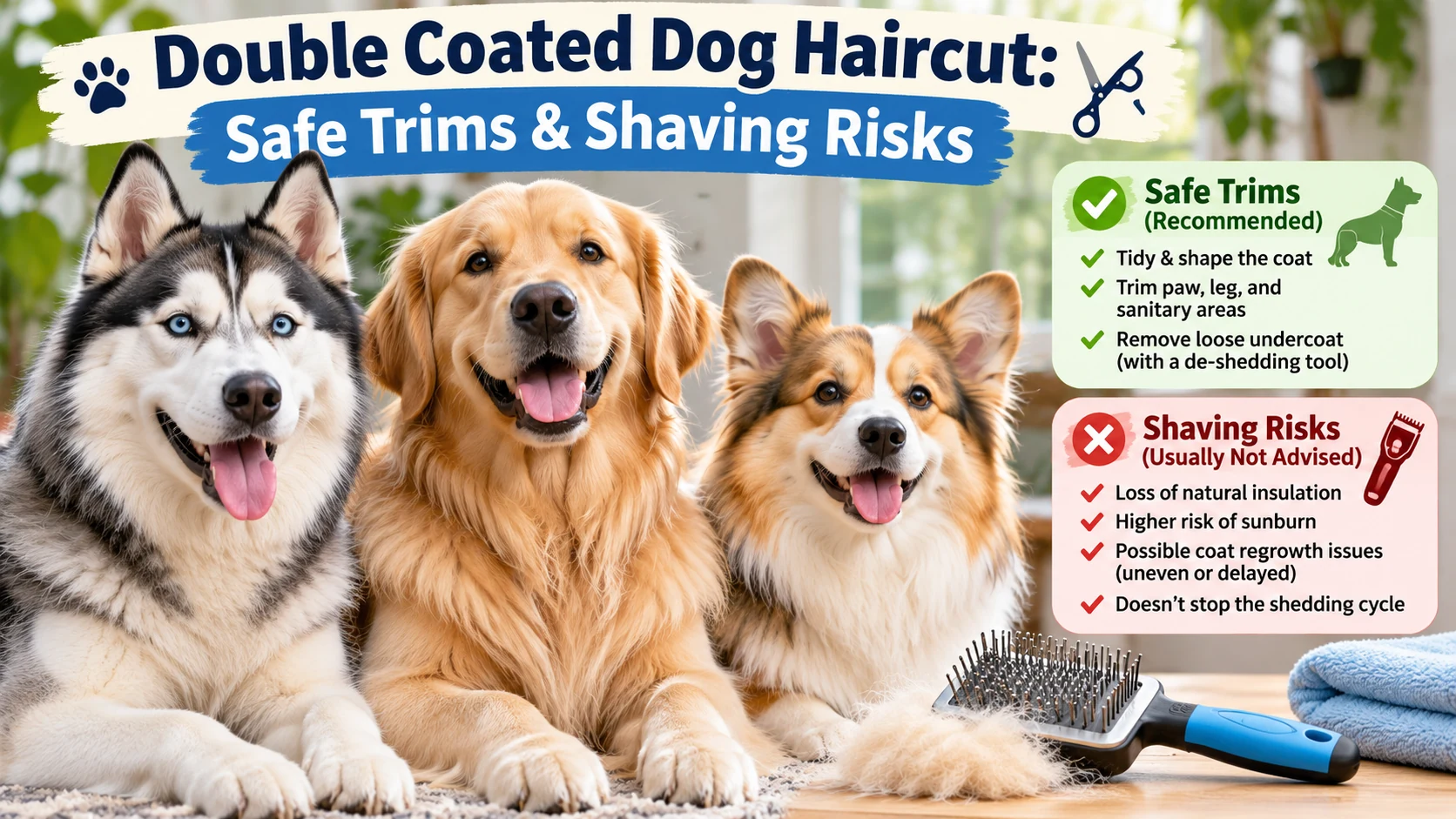
Quick Answer
A double coated dog haircut should usually be a light tidy-up, not an all-over shave. A groomer can carefully neaten paw fur, leg feathering, and messy rear-area hair while preserving the protective outer coat. For excess fluff or shedding, brushing and professional de-shedding are safer first choices. Close clipping is generally reserved for specific medical or severe-matting needs.
If your Husky, Golden Retriever, Corgi, or Pomeranian looks unusually fluffy, a shorter haircut may seem like the simplest fix. But these dogs do not have coats that behave like human hair. Removing length is not the same as removing loose undercoat, and some cuts can leave the skin unnecessarily exposed.
The practical question is not simply whether scissors can touch the fur. It is which hair should be trimmed, how much, and what problem the trim is meant to solve.
What Makes a Double Coat Different From Other Dog Coats?
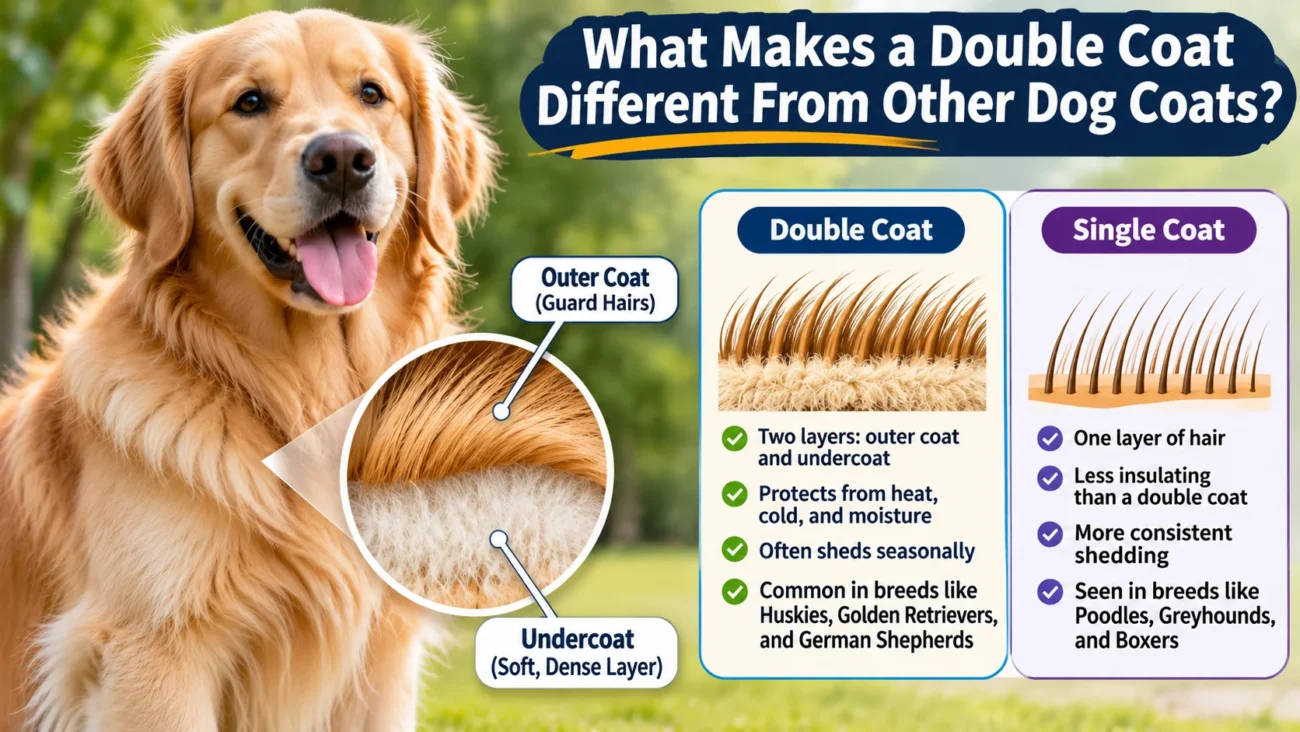
A double coat has two layers: a softer, denser undercoat close to the skin and a longer outer layer of guard hairs. They serve different purposes, so removing both layers with clippers changes more than the dog’s appearance.
The undercoat supplies insulation, while guard hairs help shield the skin from sunlight, moisture, and everyday exposure. Many double-coated breeds shed some of their undercoat seasonally, although shedding patterns vary with breed and living conditions.
Common examples include Siberian Huskies, German Shepherds, Samoyeds, Golden Retrievers, Australian Shepherds, and Labrador Retrievers. Their coats differ considerably. A Labrador’s short, dense fur needs a different grooming approach from a Rough Collie’s long feathering or a Pomeranian’s plush coat.
You can sometimes identify a double coat by gently parting the fur and looking for a soft, woolly layer beneath coarser outer hairs. If the coat type is uncertain, ask a groomer to assess it before requesting an all-over haircut.


