
Quick Answer
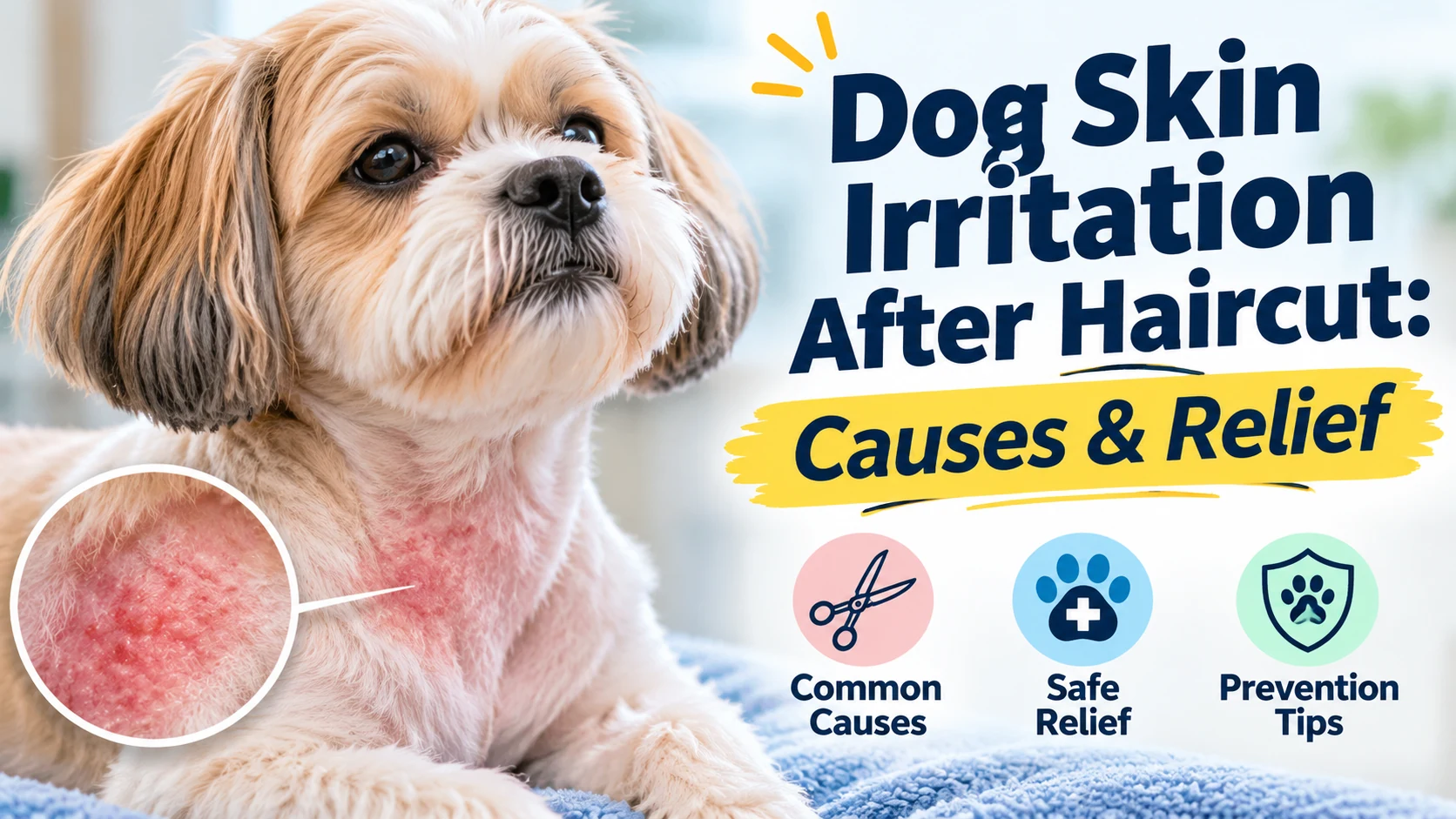
Dog skin irritation after a haircut can result from close clipping, friction, hot clipper blades, grooming products, or skin problems that were previously hidden by the coat. Mild redness may improve with gentle care and protection from licking. If your dog has significant pain, swelling, discharge, spreading redness, or worsening symptoms, contact a veterinarian promptly.
Noticing red, itchy, or sensitive skin after your dog’s haircut can be worrying. Some dogs experience temporary irritation from grooming, particularly around areas with thin or sensitive skin.
However, not every post-haircut rash is simple clipper irritation. Allergic reactions, minor injuries, and infections can sometimes look similar at first.
The safest approach is to examine the affected area, prevent additional skin damage, and determine whether home monitoring or veterinary attention is appropriate.
Why Does My Dog Have Skin Irritation After a Haircut?
Skin irritation after a dog haircut usually develops because grooming has irritated the skin’s surface or exposed an existing skin condition.
Several different problems can cause similar symptoms, so the appearance and location of the irritation matter.
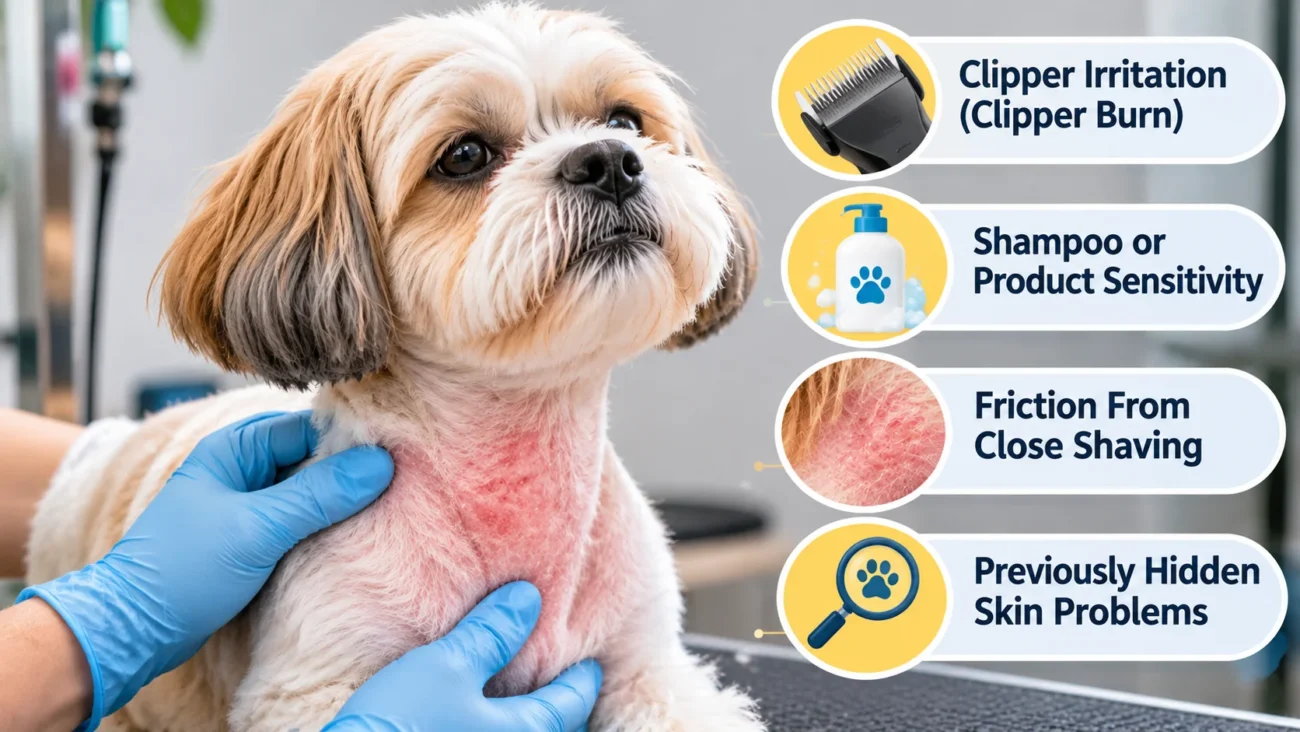
1. Clipper Irritation or Clipper Burn
Clipper irritation is one possible explanation for red or uncomfortable skin after trimming.
It may occur when clipper blades create excessive friction, move too closely against sensitive skin, or become overheated.
Signs may include:
- Red or pink skin in a recently clipped area
- Increased licking or scratching
- Small bumps or superficial irritation
- Discomfort when the area is touched
The term clipper burn is often used broadly, but true heat-related burns are different from friction irritation. A painful burn or visibly damaged skin deserves veterinary assessment.
2. Shampoo or Grooming Product Sensitivity
Some dogs react to shampoos, conditioners, fragrances, or other products used during grooming.
According to the ASPCA’s dog grooming guidance, certain grooming products can irritate a dog’s skin.
Product-related irritation may affect several areas rather than appearing only where clippers touched the skin.
Possible signs include widespread itching, redness, and discomfort after bathing.
3. Friction From Close Shaving
Very short trimming can leave delicate skin more exposed to rubbing and environmental irritants.
Areas such as the belly, groin, armpits, and inner thighs may be especially sensitive.
For example, a dog shaved closely around the belly may experience discomfort when the exposed skin rubs against bedding or other surfaces.
4. Previously Hidden Skin Problems
Sometimes grooming reveals a problem that was already present beneath a thick or matted coat.
Examples include:
- Skin inflammation beneath mats
- Pre-existing allergies
- Parasite-related irritation
- Moist or infected skin lesions
- Scratches or minor wounds
In these situations, the haircut may make the condition more noticeable rather than being its original cause.
VCA Animal Hospitals advises veterinary assessment when matting has caused skin irritation.
What Does Dog Skin Irritation After Grooming Look Like?
Post-grooming irritation can appear as redness, bumps, itching, or localized tenderness. The pattern may help you decide how urgently your dog needs care, although appearance alone cannot confirm the cause.
| Skin Finding | Possible Explanation | Recommended Action |
|---|---|---|
| Mild localized redness | Friction or close clipping | Protect and monitor if otherwise comfortable |
| Widespread itching | Product sensitivity or an underlying skin condition | Contact a vet if persistent or pronounced |
| Small bumps or pustules | Inflammation or possible infection | Arrange veterinary assessment |
| Wet, oozing, painful skin | Hot spot, injury, or infection | Seek prompt veterinary care |
| Swelling with lethargy or fever | Potentially serious reaction or infection | Obtain urgent veterinary attention |
Important distinction: A mildly pink patch on an otherwise comfortable dog is different from a rapidly spreading, painful rash accompanied by unusual behavior.
How Can You Safely Soothe Your Dog’s Skin After a Haircut?
For mild, localized irritation without broken skin or significant pain, simple protective care is usually the safest starting point.
Avoid experimenting with multiple remedies. Adding products may worsen irritation or make it harder for a veterinarian to identify the original cause.
Step 1: Examine the Irritated Area
Move your dog’s remaining fur aside gently and inspect the skin in good lighting.
Look for cuts, swelling, bumps, unusual moisture, or discharge.
Do not rub or press firmly on painful areas. If your dog resists examination because of discomfort, stop and contact your veterinarian.
Step 2: Prevent Excessive Licking and Scratching
Repeated licking and scratching can damage irritated skin further.
If your dog keeps licking the affected area, a properly fitted recovery collar may help prevent additional trauma.
Ensure your dog can drink, eat, and rest comfortably while wearing it.
Step 3: Keep the Area Clean and Dry
Keep the irritated area free from dirt and unnecessary moisture.
If the skin is intact and only mildly irritated, you may gently wipe away surface dirt using a soft cloth dampened with plain, lukewarm water. Pat the area dry without scrubbing.
Avoid repeated washing or additional shampoo unless your veterinarian advises it.
Step 4: Avoid Unapproved Creams and Home Remedies
Do not automatically apply human skincare products to your dog’s irritated skin.
Products such as alcohol, hydrogen peroxide, essential oils, fragranced lotions, and certain medicated creams may irritate skin or present risks if swallowed.
Ask your veterinarian before using hydrocortisone, antibiotic ointments, or other medicated products, especially on broken skin or areas your dog can lick.
Step 5: Monitor for Improvement
Take a clear photograph of the affected skin to help track changes.
Notice whether redness is shrinking, itching is decreasing, and your dog is behaving normally.
If symptoms become worse, new lesions appear, or mild irritation does not begin improving within about 24 hours, contact your veterinarian for advice.
Tip
Photograph the affected skin and record when the haircut occurred, which products were used, and when symptoms began. These details can help a veterinarian distinguish grooming irritation from other skin problems.
When Is Skin Irritation After a Dog Haircut Serious?
Skin irritation warrants prompt veterinary attention when it is painful, spreading, infected-looking, or accompanied by changes in your dog’s overall health.
Contact a veterinarian promptly if you notice:
- Increasing redness or swelling
- Bleeding, open sores, or discharge
- Pustules or rapidly developing bumps
- A strong or unusual skin odor
- Persistent scratching that damages the skin
- Significant discomfort or reluctance to be touched
- Loss of appetite, unusual tiredness, or fever
Seek emergency care for breathing difficulty, collapse, rapidly developing facial swelling, or severe systemic illness.
Could It Be a Serious Post-Grooming Infection?
Yes, although uncommon, a condition called post-grooming furunculosis can cause a serious deep skin infection after bathing or traumatic grooming.
Signs often develop within 24–48 hours and may include painful swelling, pustules, sores, fever, or lethargy.
Veterinary guidance published by the International Society for Companion Animal Infectious Diseases describes this condition and the importance of recognizing its clinical signs.
Dogs with significant pain, rapidly developing lesions, or systemic symptoms need urgent veterinary assessment rather than home treatment.
Warning
Do not assume that severe pain or rapidly worsening skin changes after grooming are ordinary clipper burn. Deep infections and other serious conditions can require urgent treatment.
How Long Does Skin Irritation Last After a Dog Haircut?
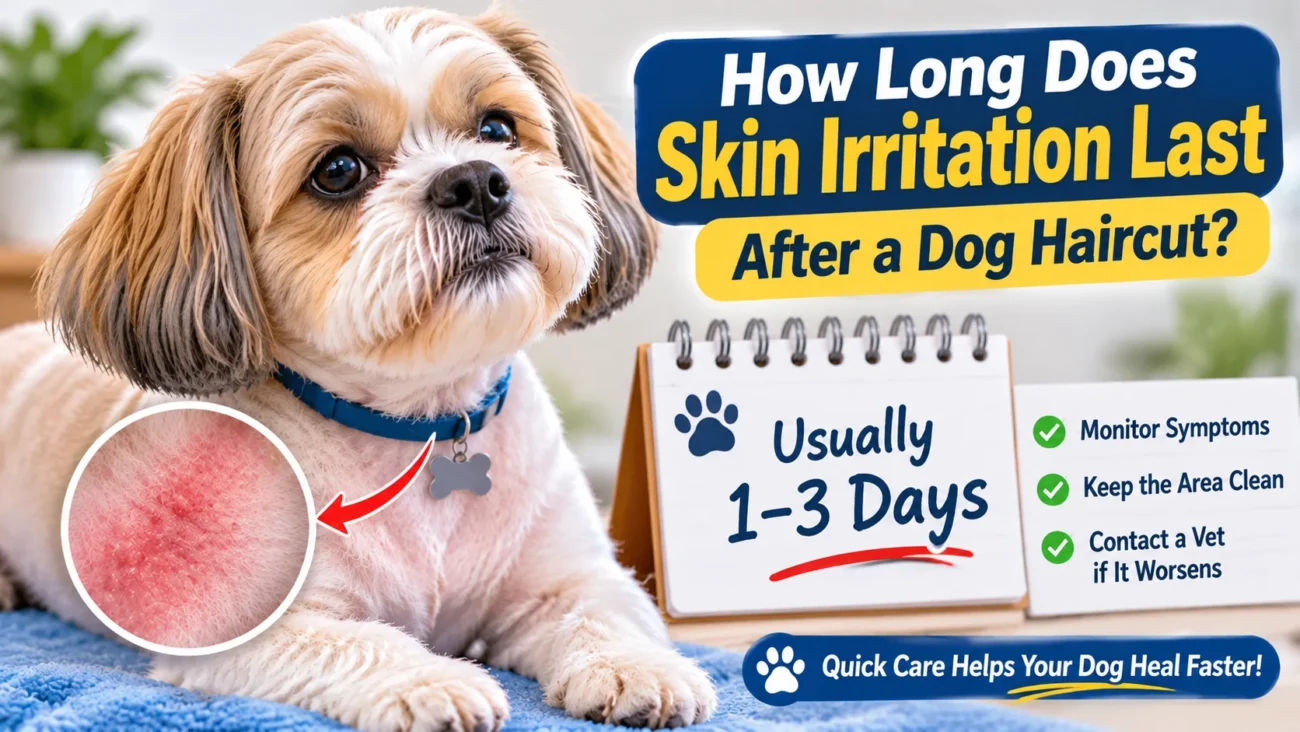
Mild grooming-related irritation may start settling within a day or two once the irritating factor is removed and further licking or scratching is prevented.
However, there is no single reliable healing time for every dog.
Recovery depends on:
- The original cause of irritation
- Whether the skin is broken
- The amount of licking or scratching
- Whether infection is present
- Any underlying skin allergies or conditions
More significant injuries and infections may require veterinary treatment and take longer to heal.
If a dog’s skin becomes more inflamed rather than less inflamed, do not wait for a presumed healing period to pass.
How Can You Prevent Skin Irritation After Future Haircuts?
Preventing future irritation starts with identifying what happened during the previous grooming session.
A dog that reacts to very close clipping may need a different haircut length, while a dog with shampoo sensitivity may need different bathing products.
Choose an Appropriate Haircut Length
Avoid unnecessarily close clipping, especially on delicate areas.
Not every coat should be shaved short. Ask a professional groomer or veterinarian about the appropriate grooming method for your dog’s coat type and skin condition.
Maintain Clippers Properly
Grooming clippers should have clean, properly maintained blades.
During grooming, blade temperature should be checked regularly and hot blades should never touch the skin.
Excessive pressure and repeated passes over the same area should also be avoided.
Use Suitable Grooming Products
Choose dog-specific shampoos suited to your pet’s skin.
If your dog has known skin sensitivities, discuss appropriate products with your veterinarian and tell the groomer before the appointment.
Thorough rinsing and gentle drying also help avoid unnecessary irritation.
Manage Mats Before They Become Severe
Regular coat maintenance can reduce difficult grooming sessions.
Severe matting may pull on the skin, hide inflammation, and make clipping more challenging.
Do not cut tightly attached mats with scissors close to the skin. Seek professional grooming help instead.
Tell Your Groomer About Previous Reactions
Explain where the irritation appeared, how quickly it developed, and whether veterinary treatment was required.
This information may help the groomer adjust clipper technique, haircut length, bathing products, or handling methods.
If the irritation repeatedly returns despite adjustments, arrange a veterinary skin evaluation before another close haircut.
Can You Tell Clipper Burn From an Allergic Reaction?
The pattern of the irritation can provide clues, but it cannot reliably establish the diagnosis.
Clipper-related irritation is often concentrated in closely trimmed areas, while a reaction to grooming products may affect several regions that were washed or exposed.
Both conditions can cause itching and redness.
A dog may also have an existing allergy that becomes more noticeable after grooming.
If the rash is extensive, recurrent, or accompanied by significant discomfort, a veterinarian can help investigate the cause.
Frequently Asked Questions
1. Can dogs develop skin irritation even after a professional haircut?
Yes. Even professional grooming can occasionally cause irritation, particularly when a dog has sensitive skin, a severely matted coat, or an underlying skin condition. Professional technique and suitable equipment help reduce the risk but cannot eliminate every possible reaction.
2. Should I bathe my dog again if the skin looks red after grooming?
Usually, avoid another full bath until the cause is clearer. Repeated shampooing may worsen irritation. If a product reaction is suspected, contact your veterinarian for guidance about whether and how to rinse the skin safely.
3. Can I use aloe vera on my dog’s irritated skin?
Do not apply an aloe plant or an unapproved aloe product automatically. Some preparations contain ingredients that are unsuitable for dogs, and licking products can create additional risks. Ask your veterinarian about an appropriate dog-safe topical treatment.
4. Why is my dog licking its private area after a haircut?
Close trimming around the groin or genital region may cause friction and sensitivity. However, licking can also result from infection, urinary discomfort, or another medical problem. Persistent licking, swelling, discharge, or pain requires veterinary evaluation.
5. Can skin irritation appear a day after grooming instead of immediately?
Yes. Some irritation may become noticeable after repeated licking or scratching. More serious conditions, including post-grooming infections, can also develop later. New painful bumps, swelling, fever, or lethargy after grooming require prompt veterinary attention.
6. Should I cancel my dog’s next haircut after a skin reaction?
Delay further clipping until the skin has recovered and the cause has been considered. For significant or repeated reactions, consult your veterinarian before scheduling another haircut and share the findings with your groomer.
Final Thoughts
Dog skin irritation after a haircut can have several causes, including close clipping, friction, grooming product sensitivity, and previously hidden skin conditions.
For mild irritation, protecting the skin from licking and avoiding unnecessary products can help prevent further damage. Watch for improvement rather than assuming all redness is harmless.
If your dog develops significant pain, swelling, discharge, spreading lesions, or unusual tiredness, arrange veterinary care. Understanding the cause also makes it easier to plan safer future grooming sessions.


