
Quick Answer
Is your dog shedding more in winter? Winter shedding can be normal, especially in dogs living indoors with artificial lighting and heated rooms. Seasonal coat changes, dry indoor air, and coat type also affect how much hair you notice. However, bald patches, intense itching, or inflamed skin require veterinary attention. Understanding when dogs normally shed the most can help you recognize unusual changes.
Common Reasons for Winter Shedding
- Indoor heating: Warm, dry air may contribute to skin dryness and noticeable shedding.
- Artificial lighting: Indoor light exposure may change natural seasonal coat patterns.
- Seasonal transition: Some dogs continue releasing their summer coats as winter approaches.
- Double coats: Thick undercoats can release substantial loose hair.
- Skin problems: Allergies, parasites, and infections can cause abnormal hair loss.
How to Check Your Dog
- Inspect the skin: Look for redness, bald spots, scabs, or excessive scratching.
- Track the pattern: Compare current shedding with your dog’s usual amount.
- Brush gently: Remove loose hair with tools appropriate for the coat.
Finding extra dog hair on your furniture during winter can feel surprising. After all, shouldn’t your dog be keeping that thick coat for warmth?
I prefer looking at coat type, indoor conditions, and skin health before assuming something is wrong. This guide explains winter shedding, practical grooming solutions, and the signs that deserve a veterinarian’s attention.
Why Is My Dog Shedding More in Winter?
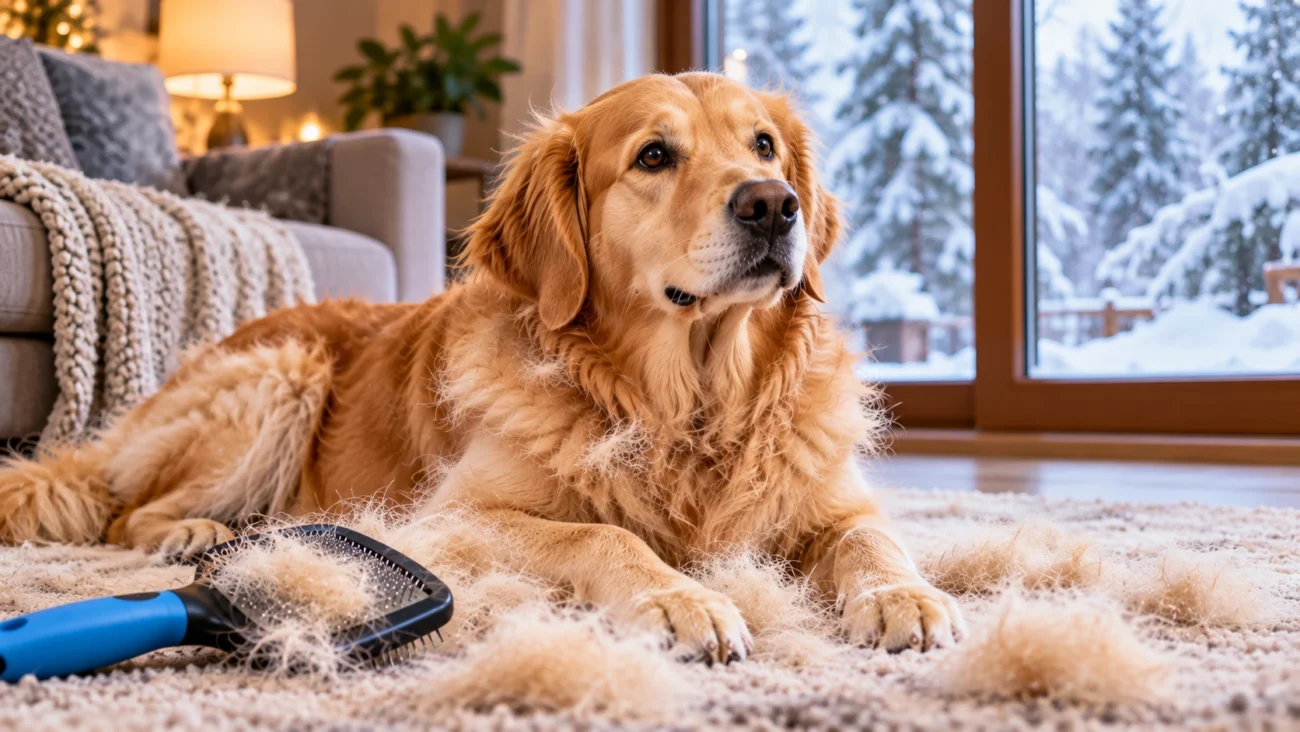
Dogs may shed more during winter because their environment affects the natural hair-growth cycle. Indoor heating, artificial light, seasonal transitions, and individual coat characteristics all play a role.
Winter shedding isn’t automatically a health problem. The important distinction is whether your dog releases normal loose hair or develops abnormal hair loss.
1. Indoor Heating and Dry Air
Central heating can lower indoor relative humidity. This may contribute to dry skin, flaking, and increased shedding in some dogs.
According to the University of Illinois College of Veterinary Medicine, dry indoor heat can affect canine skin and shedding during colder weather.
Look for several possible clues:
- Flaky skin beneath the coat
- More scratching than usual
- Dry-looking fur
- Increased hair around favorite sleeping areas
These signs aren’t specific to dry air. Persistent itching or inflammation may indicate a separate medical problem.
2. Artificial Lighting Changes Seasonal Shedding
Daylight helps regulate seasonal coat changes in many dogs. Artificial indoor lighting can make these patterns less distinct.
Dogs living mostly outdoors may develop clearer seasonal shedding cycles. Indoor dogs often release smaller amounts of hair throughout the year.
This explains why your dog may continue shedding even when temperatures drop. A heated home doesn’t reproduce the natural outdoor environment.
3. Your Dog May Still Be Changing Coats
Fall shedding doesn’t end on the same date for every dog. Some continue releasing older hair during the transition into winter.
Double-coated breeds may shed loose summer undercoat while developing denser winter insulation. Timing varies with climate, daylight exposure, and genetics.
This seasonal change can produce impressive amounts of fur. It shouldn’t leave obvious bald areas.
4. Breed and Coat Type Influence Hair Loss
Some breeds naturally shed more than others. Labrador Retrievers, German Shepherds, and Siberian Huskies often release substantial amounts of undercoat.
Meanwhile, Poodles and certain other continuously growing coat types usually shed less visibly. Their grooming needs focus more on preventing tangles and mats.
The American Kennel Club’s double-coat guidance explains how protective outer hair and insulating undercoat perform different functions.
Is It Normal for Dogs to Shed More During Cold Weather?
Yes, some dogs shed noticeably during cold weather without being ill. Normal shedding generally involves loose hair distributed across the coat while the skin remains healthy.
However, winter isn’t usually the heaviest shedding season for many double-coated dogs. Spring and fall tend to produce more dramatic seasonal coat changes.
Normal Winter Shedding vs. Abnormal Hair Loss
The comparison below helps you decide whether to adjust grooming or seek veterinary advice.
| Feature | Normal Shedding | Possible Problem |
|---|---|---|
| Hair loss pattern | Loose hair across the coat | Bald patches or localized thinning |
| Skin appearance | Healthy-looking skin | Redness, sores, or crusting |
| Itching | Little or no unusual scratching | Persistent scratching or biting |
| Timing | Gradual or familiar pattern | Sudden unexplained change |
| Recommended action | Regular grooming and monitoring | Veterinary examination |
These patterns provide clues, not a diagnosis. Even relatively mild hair loss can need medical attention when it persists.
Which Dogs Shed the Most During Winter?
Dogs with dense double coats often release the most visible hair. However, individual differences and indoor living conditions can outweigh general breed expectations.
Double-Coated Breeds
Double-coated dogs have protective guard hairs over a softer insulating layer. The undercoat can produce substantial loose fur during seasonal changes.
- Siberian Husky: Dense undercoat with noticeable seasonal coat blowing.
- German Shepherd: Consistent shedding with heavier seasonal periods.
- Golden Retriever: A substantial undercoat that needs regular maintenance.
- Labrador Retriever: Short but dense fur that can shed heavily.
- Alaskan Malamute: Thick insulating coat with significant seasonal transitions.
Short-Haired Dogs
Short-haired breeds can also shed during winter. Beagles and Pugs, for example, may leave plenty of loose hair despite their shorter coats.
Short fur doesn’t necessarily mean low shedding. Coat density and the natural hair cycle matter more.
Low-Shedding and Curly-Coated Dogs
Poodles and Bichon Frises often retain more shed hair within their coats. This makes consistent brushing and professional grooming especially important.
These dogs can still develop skin disease and abnormal hair loss. A low-shedding coat doesn’t eliminate medical concerns.
How Can You Reduce Dog Shedding in Winter?
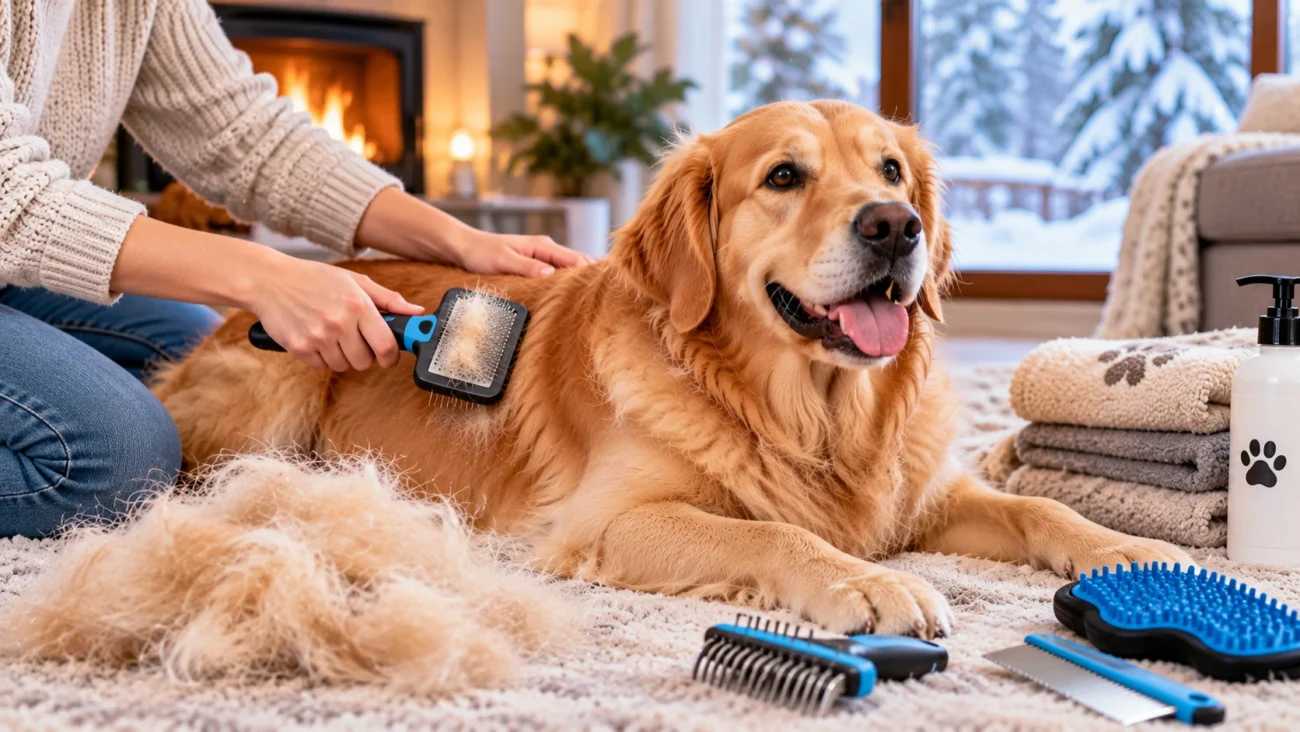
You cannot completely stop healthy, natural shedding. You can remove loose fur, protect the coat, and reduce the amount of hair accumulating indoors.
I recommend beginning with gentle grooming instead of immediately buying an aggressive deshedding tool. Your dog’s coat condition should guide the routine.
1. Brush Your Dog Regularly
Brushing collects loose hair before it reaches furniture and flooring. It also helps reveal tangles or skin changes that may otherwise remain hidden.
For technique and tool selection, follow this dog brushing and combing guide.
- Short, smooth coats: Start with a rubber grooming brush.
- Medium coats: Try an appropriate slicker or pin brush.
- Dense double coats: Use gentle brushing and an undercoat rake when appropriate.
- Long or curly coats: Brush in sections and check carefully with a comb.
Never scrape repeatedly over the same area. Stop if your dog flinches, pulls away, or develops redness.
2. Maintain Comfortable Indoor Humidity
Dry indoor air can make winter skin care more challenging. A clean humidifier may help maintain comfortable household humidity when the air becomes unusually dry.
Consider these practical steps:
- Measure room humidity with a hygrometer.
- Use a humidifier when indoor conditions are excessively dry.
- Clean the humidifier according to its instructions.
- Keep your dog away from direct blasts of hot air.
- Seek veterinary advice if dryness or irritation persists.
Humidifiers aren’t treatments for allergies, parasites, or infections. Medical causes need their own appropriate care.
3. Avoid Excessive Bathing
Frequent bathing with unsuitable products can irritate or dry canine skin. Use a dog-formulated shampoo and a bathing schedule suited to your dog’s needs.
Rinse thoroughly and dry the coat appropriately. Check the skin afterward for irritation or unusual flaking.
If your dog already has inflamed skin, ask a veterinarian which shampoo is suitable. Medicated products should match the underlying condition.
4. Feed a Complete and Balanced Diet
Healthy hair growth requires appropriate nutrition. Protein, essential fatty acids, and other nutrients support normal skin and coat function.
Feed a complete and balanced diet appropriate for your dog’s life stage. Avoid adding supplements without veterinary guidance.
According to PetMD’s veterinarian-reviewed shedding guidance, nutrition and underlying health can influence coat condition.
5. Use Deshedding Tools Carefully
Deshedding removes loose, dead hair, especially from suitable double coats. It doesn’t prevent new hair from entering its natural shedding phase.
Use the gentlest effective tool and avoid pulling healthy hair. For detailed instructions, see how to deshed your dog safely.
Short, comfortable sessions are preferable to forceful grooming. Never use sharp undercoat tools on irritated or damaged skin.
6. Keep Your Home Clean
Regular household cleaning makes winter shedding easier to manage. Focus on the places where your dog rests most often.
- Vacuum rugs and upholstery regularly.
- Wash washable bedding according to its care instructions.
- Use a lint roller or reusable hair remover on furniture.
- Brush your dog in an easy-to-clean area.
- Clean grooming brushes after each session.
These habits won’t change the hair-growth cycle. They simply prevent loose fur from accumulating.
How Often Should You Brush a Dog During Winter?
Winter brushing frequency depends on coat density, tangling risk, and shedding level. Many dogs need several gentle sessions weekly, while heavy shedders may benefit from brief daily brushing.
Use the following schedule as a starting point rather than a rigid rule.
| Coat Type | Starting Schedule | Suggested Tool |
|---|---|---|
| Short, smooth | 1–2 times weekly | Rubber curry brush |
| Medium coat | 2–3 times weekly | Slicker or pin brush |
| Double coat | Several times weekly | Suitable slicker or undercoat rake |
| Long or curly | Frequently, sometimes daily | Slicker and metal comb |
These frequencies refer mainly to gentle maintenance brushing. Intensive deshedding may need less frequent sessions.
For a more specific approach, see how often to deshed a dog.
When Should Winter Shedding Concern You?
Winter shedding deserves veterinary attention when hair loss seems unusual or occurs alongside skin problems. A sudden change can indicate more than a normal seasonal coat transition.
Pay particular attention to these warning signs:
- Bald patches: Clearly visible areas without normal hair coverage.
- Persistent itching: Frequent scratching, licking, or chewing.
- Red or inflamed skin: Irritation, sores, or painful areas.
- Crusting or discharge: Possible evidence of infection or another skin condition.
- Sudden coat thinning: Unexplained changes outside your dog’s usual shedding pattern.
- Other symptoms: Weight changes, lethargy, or unusual thirst accompanying coat changes.
What Medical Conditions Can Cause Excessive Shedding?
Several medical problems can cause abnormal hair loss. A veterinarian may need to examine the skin and perform tests to identify the cause.
- Allergies: Environmental or food-related reactions can cause itching and coat damage.
- Parasites: Fleas and mites may trigger scratching and hair loss.
- Skin infections: Bacterial or fungal conditions can affect hair and skin.
- Hormonal disorders: Hypothyroidism and Cushing’s disease may cause coat changes.
- Nutritional deficiencies: Inadequate nutrition may affect skin and hair quality.
The American Kennel Club’s hair-loss guidance explains how abnormal hair loss differs from ordinary shedding.
Don’t diagnose these conditions by appearance alone. Early veterinary assessment can prevent prolonged discomfort.
Should You Shave a Dog That Sheds Heavily in Winter?
No, shaving a healthy double-coated dog simply to reduce shedding is generally not recommended. The outer coat and undercoat provide important protection and insulation.
Shaving doesn’t stop hair follicles from shedding. It only changes the length of the hair being released.
Consider safer options instead:
- Brush loose undercoat gently.
- Remove manageable tangles before they tighten.
- Schedule professional grooming when necessary.
- Follow veterinary advice for medical coat problems.
There are medical situations where clipping or shaving is appropriate. Those decisions should be made with a veterinarian or qualified groomer.
Best Grooming Tools for Managing Winter Dog Shedding
The right grooming tool depends on your dog’s coat, not simply the amount of hair on your sofa. Here are three established options worth comparing.
Disclosure: Some product links below are Amazon affiliate links. We may earn a commission from qualifying purchases at no additional cost to you.
🏆 Best for Dense Undercoats
FURminator Undercoat deShedding Tool
★★★★☆ 4/5
Designed to remove loose undercoat hair from suitable shedding coats. I would consider this for a dense-coated dog only when the correct model and gentle technique are used. Avoid excessive passes or pressure.
🐾 Best for Short Coats
KONG ZoomGroom Dog Brush
★★★★☆ 4/5
This flexible rubber grooming brush collects loose surface hair and works well for many short-coated dogs. I favor a gentle rubber brush when an undercoat blade would be unnecessarily aggressive.
✨ Best for Routine Brushing
Hertzko Self-Cleaning Slicker Brush
★★★★☆ 4/5
This slicker brush uses fine wire pins and a hair-release mechanism for easier cleaning. I would consider it for compatible medium or longer coats, taking care to avoid scraping sensitive skin.
Editorial ratings indicate general suitability for the stated use case, not customer review averages or hands-on test scores.
Frequently Asked Questions About Winter Dog Shedding
Do Dogs Shed More in Winter or Summer?
Many double-coated dogs shed most heavily during spring and fall, rather than midwinter or summer. However, some indoor dogs shed throughout the year because their lighting and temperature remain relatively consistent. Individual genetics and grooming habits also influence the amount of hair you notice.
Why Is My Indoor Dog Shedding So Much in Winter?
Indoor heating, artificial lighting, and natural coat turnover may contribute to winter shedding. Dry indoor air can also affect skin condition. If your dog develops bald spots, persistent itching, redness, or an unexplained change in hair loss, arrange a veterinary examination.
How Long Does Winter Shedding Last?
There is no fixed duration for winter shedding. Seasonal coat transitions may last several weeks, while indoor dogs can release hair continuously. Monitor your dog’s usual pattern rather than relying on a strict calendar. Persistent or worsening hair loss deserves veterinary attention.
Can Dry Winter Air Cause Excessive Dog Shedding?
Dry indoor air can contribute to skin dryness and may make shedding more noticeable. However, abnormal hair loss can also result from allergies, parasites, infections, or other medical problems. Improving household humidity may support comfort, but it cannot replace a veterinary diagnosis.
Should I Brush My Dog Every Day During Winter?
Daily gentle brushing may help dogs with thick coats or heavy shedding. Short-coated, light-shedding dogs often need less frequent grooming. Avoid aggressive daily use of undercoat blades, especially on sensitive skin. Choose frequency based on coat condition, tool instructions, and comfort.
Final Thoughts: Keeping Winter Shedding Under Control
Dog shedding more in winter isn’t always unusual. Indoor conditions, seasonal coat changes, and breed characteristics can all influence how much fur you find around your home.
As of 2026, the most useful approach remains simple: understand your dog’s coat, brush gently, maintain healthy skin, and monitor changes.
Start with a suitable grooming brush and a consistent schedule. If you notice bald patches, persistent itching, or sudden unexplained hair loss, contact your veterinarian rather than trying more aggressive deshedding.
The goal isn’t to stop natural shedding. It’s to maintain a healthy coat and keep your dog comfortable throughout winter.


