
Quick Answer
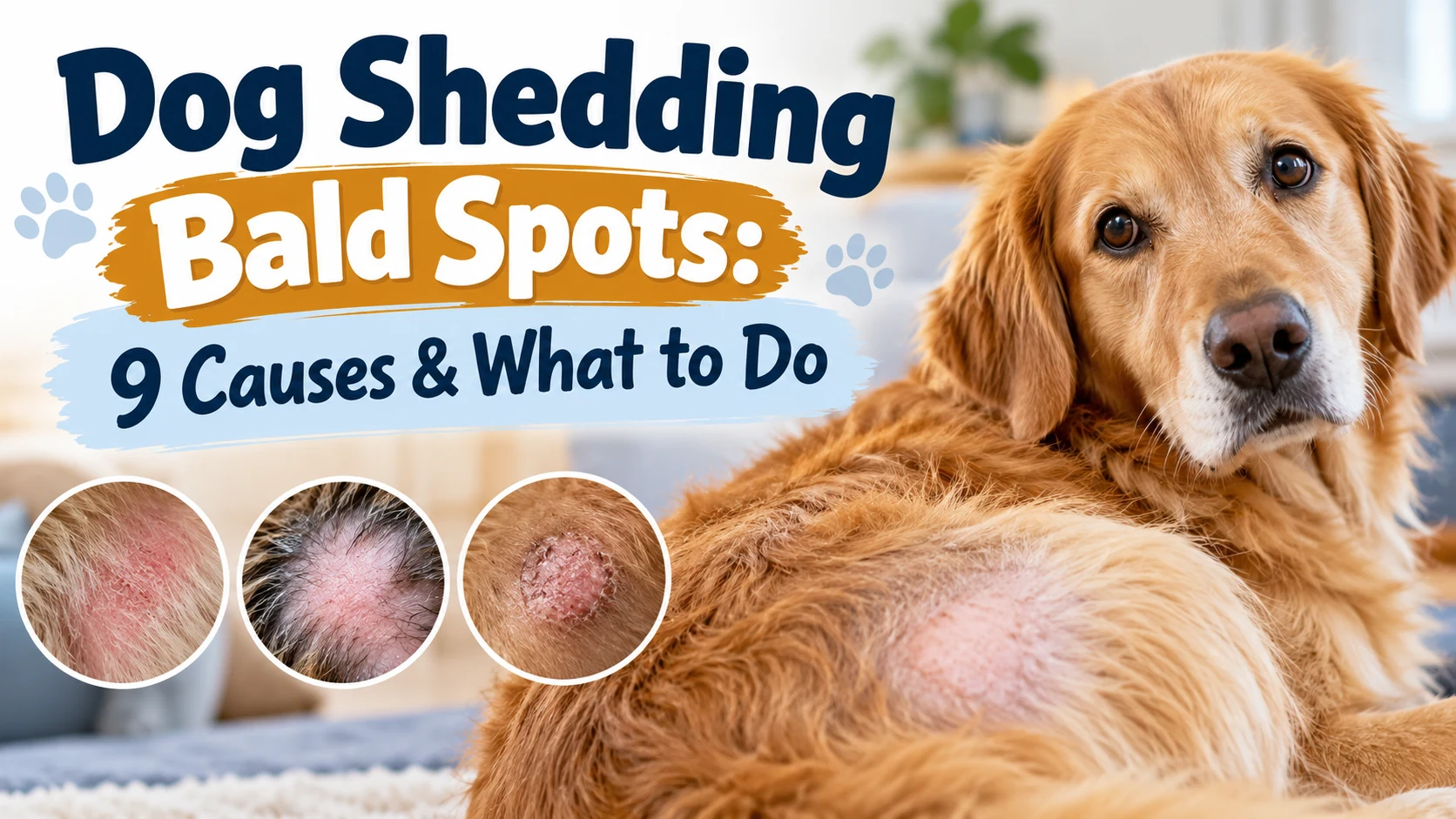
Dog shedding that creates bald spots is usually not normal seasonal shedding. Patchy hair loss, also called alopecia, can result from fleas, mites, allergies, fungal or bacterial infections, excessive licking, friction, hormonal disorders, or inherited coat conditions. Arrange a veterinary examination for new or unexplained bald patches, especially when the skin is itchy, red, crusty, painful, or becoming increasingly exposed.
Finding a bare patch beneath your dog’s coat can be worrying, particularly when loose fur has already been collecting around your home.
The most useful first step is to examine the exposed skin and notice whether your dog is scratching, licking, or otherwise behaving differently. These details help distinguish ordinary coat replacement from a skin problem that needs treatment.
Is It Normal for Dogs to Shed and Develop Bald Spots?
Normal shedding should not usually leave distinct bald patches. Dogs naturally replace old hairs with new ones, and some breeds lose large amounts of undercoat during seasonal changes. Even heavy shedding normally leaves the skin covered.
When the coat becomes visibly thin or an area loses most of its hair, the problem may be alopecia rather than routine shedding.
The Merck Veterinary Manual’s guide to alopecia in dogs explains that hair loss can develop when disease affects hair follicles, interrupts hair growth, or causes discomfort that leads to scratching and other self-trauma.
A bald spot may appear suddenly or develop gradually. It might involve a small circle, several irregular patches, or matching areas on both sides of the body.
The shape alone cannot identify the cause. The surrounding skin, location, itching, and other symptoms matter just as much.
What Are the 9 Most Common Causes of Dog Shedding With Bald Spots?
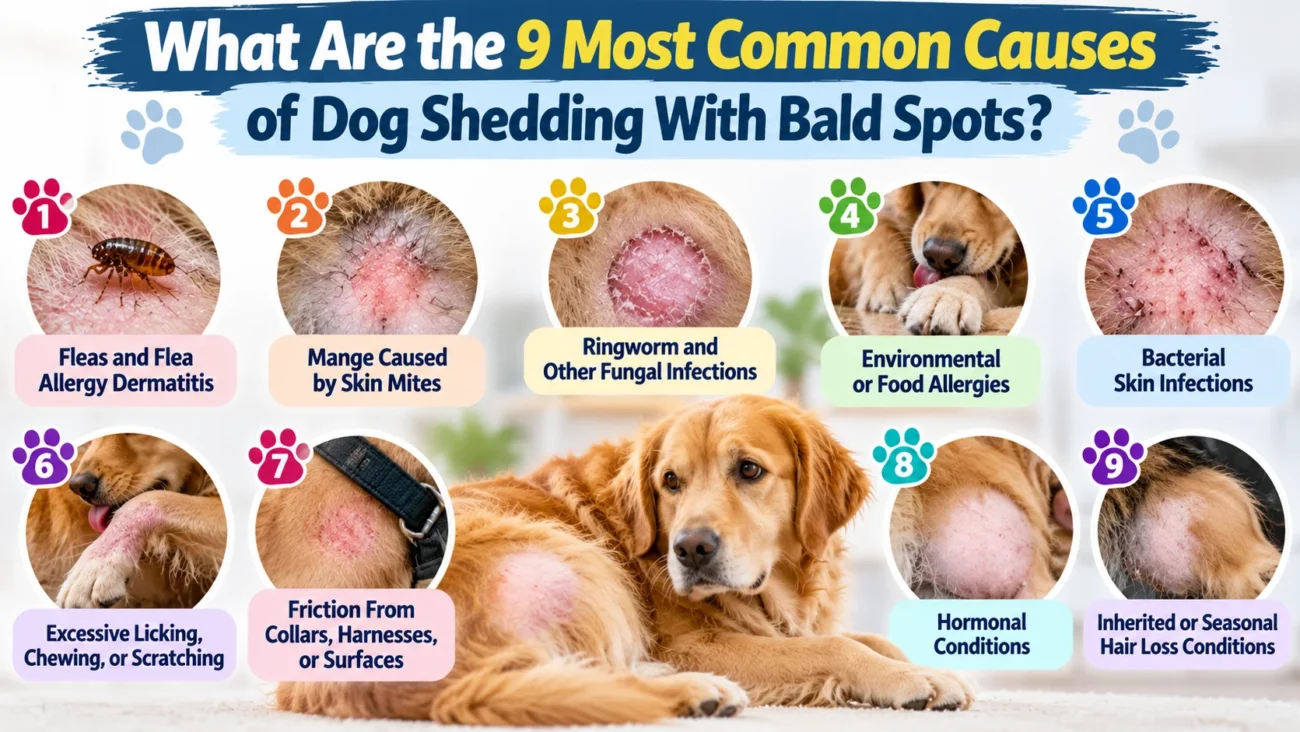
Several skin conditions can produce similar-looking bald patches. The following are important possible explanations, although their likelihood varies with your dog’s age, history, and symptoms.
1. Fleas and Flea Allergy Dermatitis
Fleas can cause intense itching, particularly in dogs that react strongly to flea saliva. Repeated biting, scratching, and chewing may remove hair and irritate the skin.
Hair loss often develops around the lower back, tail base, and hindquarters. Small scabs or irritated bumps may accompany the bald areas.
What to check: Look for flea dirt, which resembles dark specks, and watch for repeated chewing near the tail. Not seeing adult fleas does not rule out flea allergy.
A veterinarian can recommend appropriate parasite control and treatment for any secondary skin infection.
2. Mange Caused by Skin Mites
Mites can cause localized or widespread hair loss. Two important conditions are demodicosis, associated with Demodex mites, and sarcoptic mange, caused by Sarcoptes mites.
Demodicosis may begin with small patches of thinning hair, especially around the face or legs. Sarcoptic mange commonly causes intense itching and crusting.
The symptoms overlap with other skin conditions, so a veterinarian may use skin scrapings or other tests to investigate.
Do not apply an unverified home remedy or parasite treatment without checking that it is appropriate for your dog.
3. Ringworm and Other Fungal Infections
Ringworm is a fungal infection, not an intestinal worm. It can damage hairs and produce bald, flaky, or crusty patches.
Some lesions appear approximately circular, but ringworm does not always create a perfect ring. Itching may be mild or absent.
Ringworm can spread between animals and people. The Merck Veterinary Manual’s ringworm guidance describes the importance of proper diagnosis, treatment, and environmental hygiene.
If ringworm is suspected, wash your hands after handling the dog and avoid sharing grooming tools while arranging veterinary testing.
4. Environmental or Food Allergies
Allergies can make dogs scratch, rub, chew, or lick repeatedly until the coat becomes thin.
Environmental triggers may include pollen, dust mites, or other allergens. Food allergies can also cause persistent skin symptoms in some dogs.
Common clues include itchy paws, irritated ears, facial rubbing, and hair loss in areas receiving repeated attention.
Because infections and parasites can cause similar symptoms, an allergy should not be diagnosed from itching alone. A veterinarian can help determine the appropriate investigation.
5. Bacterial Skin Infections
Bacterial skin infections, sometimes called pyoderma, can affect hair follicles and cause patchy hair loss, redness, pimples, crusts, or flaky skin.
These infections may develop alongside allergies or other skin disorders that damage the skin barrier.
Some dogs develop small circular areas of scale that can resemble ringworm. A veterinary skin examination and cytology can help distinguish possible causes.
Treatment depends on the infection and any underlying condition. Human antibiotic products are not a reliable substitute for veterinary care.
6. Excessive Licking, Chewing, or Scratching
Dogs sometimes repeatedly lick one area because of itchiness, pain, irritation, or behavioral stress. Continued friction can break hairs and produce a distinct bald patch.
The lower legs and paws are common locations for repetitive licking, although other areas may also be affected.
A dog’s behavior does not prove the problem is psychological. Allergies, parasites, orthopedic discomfort, and infection should be considered before attributing hair loss to anxiety.
What to do: Note when the licking happens and whether the skin is moist, thickened, or inflamed. Share these observations with your veterinarian.
7. Friction From Collars, Harnesses, or Surfaces
Repeated rubbing may break hairs or gradually thin the coat in areas exposed to pressure.
A tight collar, poorly fitted harness, or repeated contact with hard surfaces can contribute to localized hair loss.
Check whether the bald patch matches a strap, buckle, or repeated contact point. Look for redness, abrasions, or tenderness.
Correcting the source of friction may prevent additional damage, but persistent baldness or damaged skin still deserves examination.
8. Hormonal Conditions
Hypothyroidism and Cushing’s disease are examples of hormonal disorders that can affect coat growth.
Hormone-associated hair loss may develop gradually and appear relatively symmetrical, particularly across the trunk. The skin may initially show little itching unless another problem develops.
Changes in energy, body weight, thirst, urination, or abdominal shape may provide additional clues depending on the condition.
These disorders require veterinary assessment and appropriate testing. Bald spots alone are not enough to diagnose a hormonal disease.
9. Inherited or Seasonal Hair Loss Conditions
Some dogs develop hair loss associated with inherited follicle abnormalities or seasonal coat-growth patterns.
Seasonal flank alopecia, for example, can cause well-defined hairless areas along the sides of the body, sometimes recurring during particular seasons.
Other inherited conditions may affect specific coat colors, breeds, or body regions.
These possibilities become more relevant when hair loss recurs in a predictable pattern without marked itching. However, infections, parasites, and hormonal diseases still need to be considered before reaching that conclusion.
How Can You Tell What Might Be Causing Your Dog’s Bald Spots?
The appearance of a bald patch can help prioritize possible causes, but it cannot confirm a diagnosis. Use the following comparison to organize your observations.
| What You Notice | Possible Explanation |
|---|---|
| Itchy tail base and hindquarters | Fleas or flea allergy |
| Circular, flaky bald patches | Ringworm or another skin disorder |
| Crusting with intense itching | Mites, infection, or allergy |
| Red bumps, odor, or discharge | Possible skin infection |
| Gradual, symmetrical hair loss | Hormonal or follicular condition |
| Baldness beneath a harness | Friction or pressure |
Several causes can occur together. For example, allergies may trigger scratching that damages the skin and allows a secondary infection to develop.
What Should You Do When Your Dog Starts Developing Bald Spots?
The safest response is to document the changes, minimize further irritation, and arrange a veterinary examination rather than trying multiple treatments at once.
- Examine the affected skin. Look for redness, flakes, crusts, swelling, sores, or broken hairs without rubbing aggressively.
- Record the pattern. Note whether the baldness affects one spot, several areas, or matching locations on both sides.
- Take clear photographs. Photograph the same areas under similar lighting to document whether patches are growing.
- Check for scratching and licking. Observe how frequently your dog focuses on the affected area.
- Review parasite prevention. Confirm whether recommended flea and mite prevention is current, and ask your veterinarian about any gaps.
- Reduce irritation. Avoid harsh shampoos, aggressive brushing, and equipment that rubs the damaged area.
- Arrange veterinary assessment. Bring photographs and details about symptom onset, medications, diet changes, and recent grooming products.
Warning
Do not apply essential oils, concentrated disinfectants, human steroid creams, or random antifungal treatments to unexplained bald patches. Some products can irritate a dog’s skin or be harmful if licked.
When Should You Worry About Bald Spots on a Dog?
New or unexplained bald patches warrant a veterinary appointment, even when your dog otherwise seems comfortable.
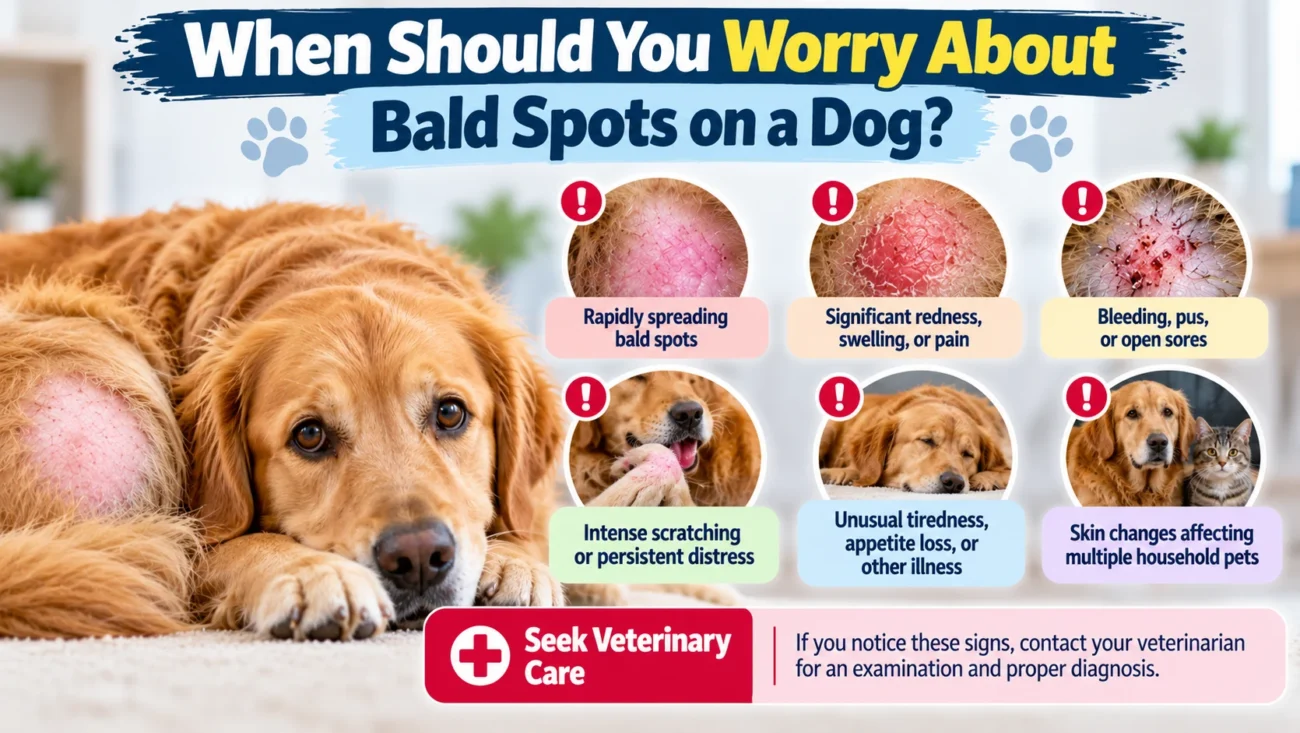
Seek prompt veterinary attention if hair loss is accompanied by:
- Rapidly spreading bald patches
- Significant redness, swelling, or pain
- Bleeding, pus, or open sores
- Intense scratching or persistent distress
- Unusual tiredness, appetite loss, or other illness
- Skin changes affecting multiple household pets
Severe pain, extensive wounds, or significant systemic illness may require urgent veterinary care.
Scaly patches that could indicate ringworm deserve timely assessment because certain fungal infections are transmissible to people and other animals.
How Will a Veterinarian Diagnose the Hair Loss?
A veterinarian typically starts with the history of the hair loss and a physical examination, including the location of bald patches and condition of the surrounding skin.
Depending on the findings, diagnostic procedures may include skin scrapings for mites, cytology for bacteria or yeast, hair examination, fungal testing, or blood tests when an underlying hormonal condition is suspected.
Occasionally, a skin biopsy is useful when the diagnosis remains unclear.
Not every dog needs every test. The examination helps determine which investigations are worthwhile and whether more than one condition may be contributing.
Will Your Dog’s Hair Grow Back After Bald Spots Develop?
Hair often grows back when the underlying condition is successfully treated and the follicles remain functional. However, the outcome depends on the cause, severity, and whether permanent follicle damage has occurred.
Hair regrowth can be gradual. Improvement in itching or inflammation may become noticeable before the coat looks normal again.
Some inherited conditions cause persistent or recurring hair loss, while substantial scarring can prevent complete regrowth.
Follow the recommended treatment and reassessment plan rather than judging recovery entirely by how quickly new hair appears.
Can You Prevent Dog Shedding From Turning Into Bald Spots?
Not every cause of alopecia is preventable. Still, routine care can reduce some avoidable triggers and make new changes easier to identify.
- Maintain veterinarian-recommended parasite prevention.
- Use gentle grooming methods appropriate for your dog’s coat.
- Keep collars and harnesses properly fitted.
- Feed a complete, balanced diet suitable for your dog’s life stage.
- Check the skin periodically while brushing.
- Address persistent itching before scratching causes extensive damage.
Grooming supports coat maintenance, but it cannot cure infections, hormonal disorders, or inherited follicle problems. Avoid forcefully deshedding areas where hair is already sparse.
Frequently Asked Questions About Dog Shedding and Bald Spots
Can stress cause bald spots on dogs?
Stress-related repetitive licking or chewing can contribute to localized hair loss. However, physical causes such as allergies, infection, or pain should be investigated before assuming stress is responsible.
Why does my dog have bald spots but no itching?
Non-itchy hair loss can occur with certain hormonal, inherited, seasonal, or follicular conditions. Ringworm and some mite-related conditions may also produce limited itching. Veterinary testing may be needed to distinguish them.
Can puppies develop bald patches?
Yes. Puppies can develop localized hair loss from mites, ringworm, infections, and other skin disorders. New bald patches in puppies should be checked rather than assumed to be a normal part of coat development.
Can brushing too much cause bald spots?
Aggressive brushing or using unsuitable deshedding tools can break hairs and irritate skin, particularly when the area is already inflamed. Stop brushing affected patches until the skin has been assessed.
Are bald spots on dogs contagious?
Some underlying causes, including ringworm and sarcoptic mange, can spread through contact. Other causes, such as hormonal or inherited hair loss, are not contagious. The appearance of the patch alone cannot establish which applies.
Can changing dog food stop bald spots?
A diet change may help when a properly diagnosed nutritional deficiency or food allergy contributes to the problem. It will not treat most infections, parasites, or hormonal disorders. Avoid unnecessary diet changes without a clear reason.
Final Thoughts
Dog shedding that exposes bald spots deserves closer attention than ordinary seasonal coat loss. Skin irritation, parasites, infections, and underlying health conditions can produce similar symptoms but require different treatments.
Check the affected skin, record changes, avoid irritating grooming methods, and arrange a veterinary examination. Identifying the cause offers the best chance of protecting your dog’s comfort and restoring healthy coat growth.


