
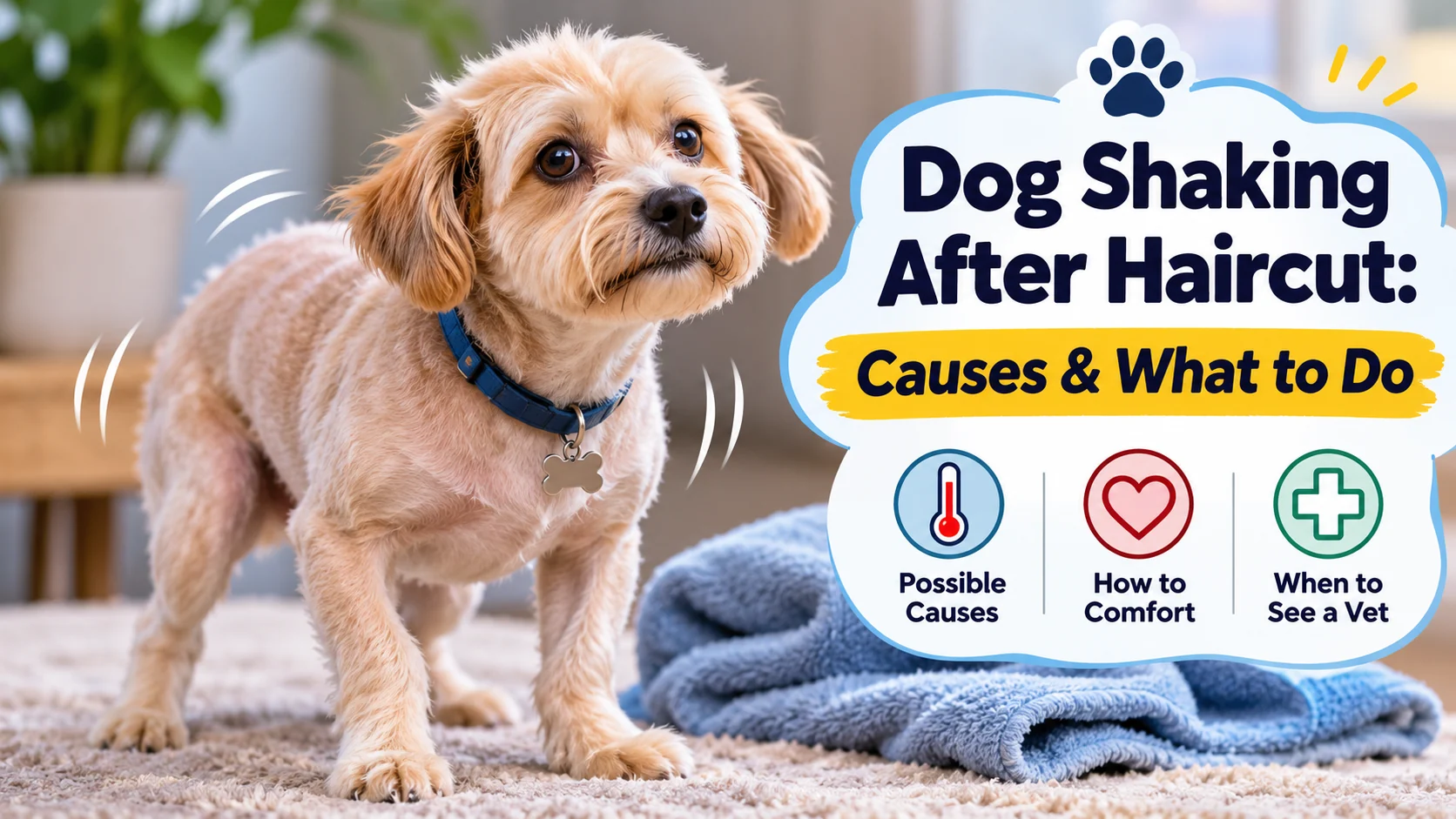
Quick Answer
A dog shaking after a haircut may be cold, stressed by grooming, or uncomfortable from skin irritation. Brief shaking that settles once your dog is warm, dry, and relaxed is often less concerning. However, persistent trembling, pain, weakness, vomiting, or unusual behavior needs veterinary attention. Start by checking your dog’s comfort, skin, movement, and overall behavior.
Seeing your dog shaking after a haircut can be worrying, especially if the trembling begins immediately after a visit to the groomer. Some dogs react to unfamiliar sounds, handling, or a sudden change in coat length. Others may be experiencing discomfort that needs attention.
The most useful clue is not simply whether your dog is shaking. It is how your dog shakes, what else has changed, and whether the trembling improves once the grooming session is over.
Is It Normal for a Dog to Shake After a Haircut?
Some shaking after grooming can be a temporary response to cold, excitement, or stress. However, shaking should not automatically be dismissed as normal just because your dog recently had a haircut.
A dog that briefly shakes its entire body, then walks around comfortably and behaves normally, may simply be releasing tension or shaking off moisture.
Continuous trembling is different. It can suggest that your dog is cold, frightened, painful, or unwell.
According to Dogs Trust guidance on shaking, temperature changes, stress, pain, illness, and ear discomfort are among the reasons dogs may shake.
If your dog is alert, walking normally, breathing comfortably, and gradually settling, careful observation may be reasonable. If the shaking is severe, unexplained, or accompanied by other symptoms, contact a veterinarian.
What Should You Do Immediately if Your Dog Is Shaking?
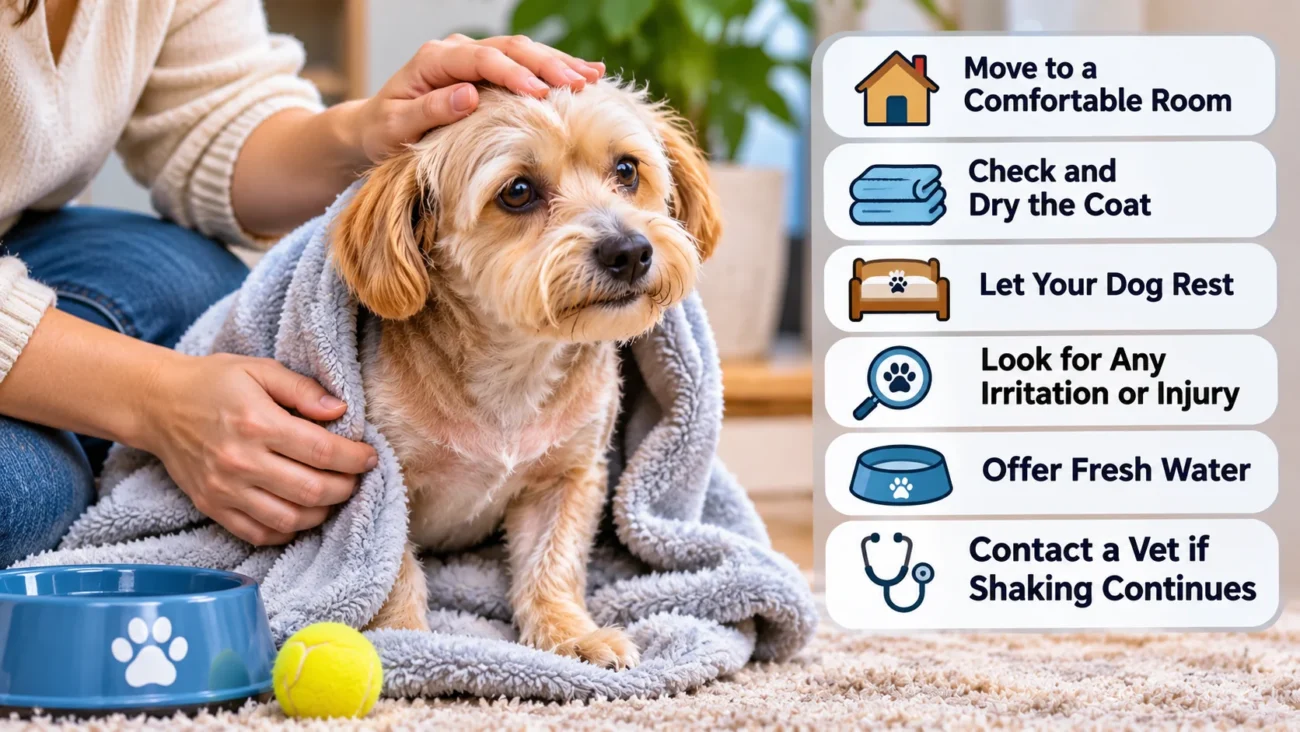
First, move your dog into a quiet, comfortable environment and look for signs of distress or injury. Avoid assuming the problem is simply anxiety.
- Move your dog to a comfortable room. Keep the space free from cold drafts, excessive heat, and unnecessary noise.
- Check whether the coat is damp. If your dog was bathed, gently dry any remaining moisture with a soft towel.
- Let your dog rest. Provide a familiar bed or blanket and allow your dog to approach you voluntarily.
- Look for visible irritation. Check accessible areas for redness, cuts, swelling, or excessive licking without forcing painful handling.
- Observe movement and behavior. Notice whether your dog walks normally, responds as usual, and seems comfortable.
- Offer fresh water. Allow your dog to drink voluntarily and return to normal activities at their own pace.
If the shaking is easing and your dog otherwise seems well, continue observing them. If trembling persists, becomes worse, or occurs with concerning symptoms, call your veterinarian.
Warning
Seek emergency veterinary care if shaking occurs with collapse, seizures, difficulty breathing, severe weakness, loss of coordination, or suspected poisoning. Do not wait for these symptoms to resolve on their own.
Why Is My Dog Shaking After a Haircut?
Several explanations are possible. The most likely cause depends on your dog’s coat, the grooming experience, environmental temperature, and any accompanying symptoms.
1. Your Dog Feels Cold After Losing Hair
A shorter coat can change how comfortable your dog feels in a cool environment. Dogs with thin coats, smaller bodies, or very short haircuts may be especially sensitive to temperature changes.
This is more likely if your dog was clipped closely, bathed shortly before the haircut, or moved into an air-conditioned room.
Possible clues include shivering, curling up, seeking blankets, or moving toward warmer areas.
Provide a comfortably warm resting place. A lightweight, properly fitted dog sweater may help some dogs, provided it does not rub irritated skin or make them too warm.
2. The Grooming Experience Was Stressful
Haircuts can involve unfamiliar noises, restraint, touching sensitive areas, bathing, and separation from familiar people.
For an anxious dog, these experiences can trigger a stress response that includes trembling.
Watch for additional signs such as:
- Panting despite a comfortable temperature
- Hiding or avoiding interaction
- Ears held back or a tucked tail
- Whimpering or pacing
- Reluctance to approach grooming equipment
The Royal Kennel Club identifies fear, stress, and anxiety as possible causes of trembling in dogs.
Give your dog a quiet place to recover. Avoid forcing cuddles, brushing, or another grooming session while your dog appears distressed.
3. Clipping Caused Skin Irritation
Close clipping may sometimes irritate sensitive skin, particularly around the belly, armpits, groin, or other delicate areas.
Discomfort may be associated with trembling, licking, scratching, or reluctance to be touched.
Look for:
- Red or inflamed skin
- Small cuts or abrasions
- Repeated licking of one area
- Flinching when a particular area is approached
- New swelling or sensitivity
Do not apply human pain-relief creams, essential oils, alcohol, or unfamiliar skin products. Some preparations can irritate dogs or be harmful if licked.
If the skin looks painful, damaged, or increasingly inflamed, contact your veterinarian.
4. Your Dog Is Uncomfortable After Mat Removal
Removing severely matted hair can expose skin that was previously covered or place attention on areas already affected by tension and irritation.
If mats were pulling on the skin before grooming, your dog may have pre-existing soreness or inflammation that becomes more noticeable afterward.
Ask the groomer whether extensive mat removal was necessary and whether any sensitive areas were identified.
If your dog seems painful, moves stiffly, or repeatedly protects a particular area, arrange a veterinary assessment rather than assuming the discomfort is harmless.
5. Your Dog Is Shaking Off Water or Tension
A brief, vigorous whole-body shake is not the same as continuous trembling.
Dogs naturally shake to remove water from their coats. Some also shake their bodies after emotionally stimulating experiences.
For example, a dog may leave the grooming table, perform a quick head-to-tail shake, and then resume walking, sniffing, or playing.
That pattern is generally different from a dog sitting motionless while its body continues to tremble.
6. Pain or an Unrelated Health Problem
Sometimes the timing of shaking and a haircut is coincidental. Not every symptom that starts after grooming is caused by grooming.
Pain, nausea, infection, exposure to a toxic substance, and neurological conditions can also cause trembling.
Pay particular attention if your dog refuses food, vomits, seems unusually weak, or has difficulty standing or walking.
Veterinary guidance from the Massachusetts Veterinary Referral Hospital describes both behavioral and medical reasons for shaking.
These possibilities cannot be reliably distinguished from the haircut alone. An examination may be necessary.
How Can You Tell Normal Shaking From a Warning Sign?
The following comparison helps identify whether simple comfort measures may be reasonable or whether veterinary advice is more appropriate.
| Observation | Possible Explanation | Recommended Action |
|---|---|---|
| One brief whole-body shake | Drying off or releasing tension | Observe if otherwise normal |
| Mild shivering in a cool room | Feeling cold | Warm gently and reassess |
| Trembling with hiding or panting | Possible stress or discomfort | Reduce stimulation; call a vet if it continues |
| Shaking with visible skin pain | Possible irritation or injury | Contact a veterinarian promptly |
| Shaking with vomiting or marked lethargy | Possible illness or other medical problem | Seek prompt veterinary assessment |
| Seizures, collapse, or breathing difficulty | Potential emergency | Get emergency veterinary care |
This table is a decision aid, not a diagnosis. A dog can have a serious problem even without obvious visible injuries.
How Long Should Shaking Last After Grooming?
There is no medically established recovery time that applies to every dog. Duration alone cannot determine whether shaking is harmless.
A dog that is briefly cold or stressed may settle after becoming warm, dry, and relaxed. The important observation is whether the trembling decreases and normal behavior returns.
If your dog continues shaking despite a comfortable environment, contact your veterinarian rather than waiting for an arbitrary number of hours.
Seek veterinary advice sooner if your dog:
- Has continuous or worsening tremors
- Appears painful or unusually withdrawn
- Refuses food or water
- Develops vomiting or diarrhea
- Has difficulty walking or maintaining balance
- Develops skin swelling, a rash, or other new symptoms
For puppies, very small dogs, older dogs, or dogs with existing health problems, it is sensible to seek advice early when new shaking is persistent or unexplained.
How Can You Comfort a Dog That Is Shaking After Grooming?
Comfort measures work best when they address the likely trigger without introducing more stress or masking a medical problem.
Provide Comfortable Warmth
Move your dog away from cold floors or drafts and provide dry bedding. If appropriate, offer a lightweight blanket or comfortable garment.
Avoid direct heating pads, hot water bottles, or high-heat hair dryers, which may cause burns or overheating.
Reduce Noise and Handling
Keep the environment calm. Let your dog rest without unnecessary brushing, bathing, or repeated skin examinations.
Some dogs prefer sitting near their owner, while others recover better with a little space.
Offer Familiar Activities
When your dog appears comfortable, familiar routines can help restore a sense of normality.
Offer water, a usual resting place, or a favorite quiet activity. Do not force play, exercise, or treats if your dog seems unwell.
Monitor Whether Comfort Measures Help
Watch for decreasing tremors, relaxed posture, normal movement, and a return to usual behavior.
If simple measures make no difference, it is time to reconsider the cause and speak with a veterinarian.
Tip
If the shaking continues or happens again, record a short video for your veterinarian. Note when the trembling began, whether the dog was bathed or closely clipped, and which other symptoms you noticed. This information may help your veterinarian evaluate the episode.
What if Your Dog Keeps Shaking Its Head After a Haircut?
Repeated head shaking deserves separate attention because it may indicate ear discomfort rather than general anxiety or cold.
If your dog had ear cleaning, bathing, or hair removal around the ears, tell your veterinarian what was done.
Watch for ear scratching, an unusual odor, redness, discharge, head tilting, or sensitivity when the ears are approached.
Ear infections, irritation, or foreign material can cause head shaking. The Dogs Trust also identifies ear discomfort as a possible explanation.
Do not insert cotton swabs into the ear canal or apply ear drops without appropriate veterinary guidance. Arrange an examination for repeated or persistent head shaking, especially with pain or discharge.
When Should You Contact the Groomer?
Contact the groomer when you need factual details about the appointment, particularly if your dog seems uncomfortable or the trembling started immediately after grooming.
Useful questions include:
- Was my dog particularly anxious during the haircut?
- Were any mats removed close to the skin?
- Did you notice redness, irritation, or accidental nicks?
- Which shampoos or grooming products were used?
- Were the ears cleaned or ear hair removed?
- Did anything unusual happen during the appointment?
These details may help a veterinarian assess what happened.
However, contacting the groomer should never delay urgent veterinary treatment. A groomer cannot rule out a medical cause of trembling.
How Can You Prevent Shaking After Future Haircuts?
Prevention depends on the original cause. A dog that becomes cold needs different accommodations from a dog that is frightened by clippers or handling.
Make Grooming Experiences Less Stressful
Practice brief, gentle handling at home when your dog is relaxed. Introduce brushes and grooming sounds gradually, pairing comfortable experiences with rewards.
Never force your dog to tolerate handling when they are showing strong signs of fear or pain.
Discuss Coat Length Before the Appointment
Ask your groomer what haircut length is suitable for your dog’s coat condition and individual needs.
Avoid requesting an unnecessarily close clip, especially if your dog has sensitive skin. Remember that some double-coated dogs have particular coat-care needs and should not be shaved for convenience alone.
Keep the Coat Free From Painful Mats
Regular, gentle coat maintenance can reduce the need for extensive mat removal.
Brushing frequency depends on coat type, hair length, and individual grooming needs. Severe mats should be assessed by an experienced professional rather than pulled or cut close to the skin at home.
Choose a Patient Groomer
Look for someone who uses humane handling, explains grooming decisions, and is willing to adapt the appointment to your dog’s tolerance.
For dogs with repeated severe grooming anxiety, discuss a behavior plan with your veterinarian or a qualified behavior professional before the next appointment.
Frequently Asked Questions
1. Why does my dog shake after being shaved?
A closely shaved dog may feel colder or have uncomfortable skin, particularly if the haircut was stressful or involved mat removal. Check the skin and overall behavior, and contact a veterinarian if shaking continues or your dog seems painful.
2. Can a dog be traumatized by a haircut?
A frightening grooming experience can contribute to lasting fear of handling or grooming equipment. However, shaking alone does not establish psychological trauma. Repeated fear reactions deserve attention from a veterinarian or qualified behavior professional.
3. Should I put a sweater on my dog after grooming?
A soft, properly fitted sweater may help a dog that is cold after a short haircut. Avoid clothing that rubs irritated skin, restricts movement, or causes overheating.
4. Can grooming shampoo cause shaking?
Shampoo may cause skin irritation or an adverse reaction in some dogs, but shaking alone does not prove a shampoo reaction. If your dog develops swelling, vomiting, drooling, weakness, or breathing problems after product exposure, seek urgent veterinary advice.
5. Why is my dog hiding and shaking after grooming?
Hiding with trembling may reflect fear, pain, or illness. Give your dog a calm space, check for other symptoms, and contact a veterinarian if the behavior persists or seems unusual.
6. Can I give my dog medication to stop shaking?
Do not give human painkillers, sedatives, or other medications to stop trembling without veterinary direction. Treatment depends on the underlying cause, and some human medications are toxic to dogs.
Final Thoughts
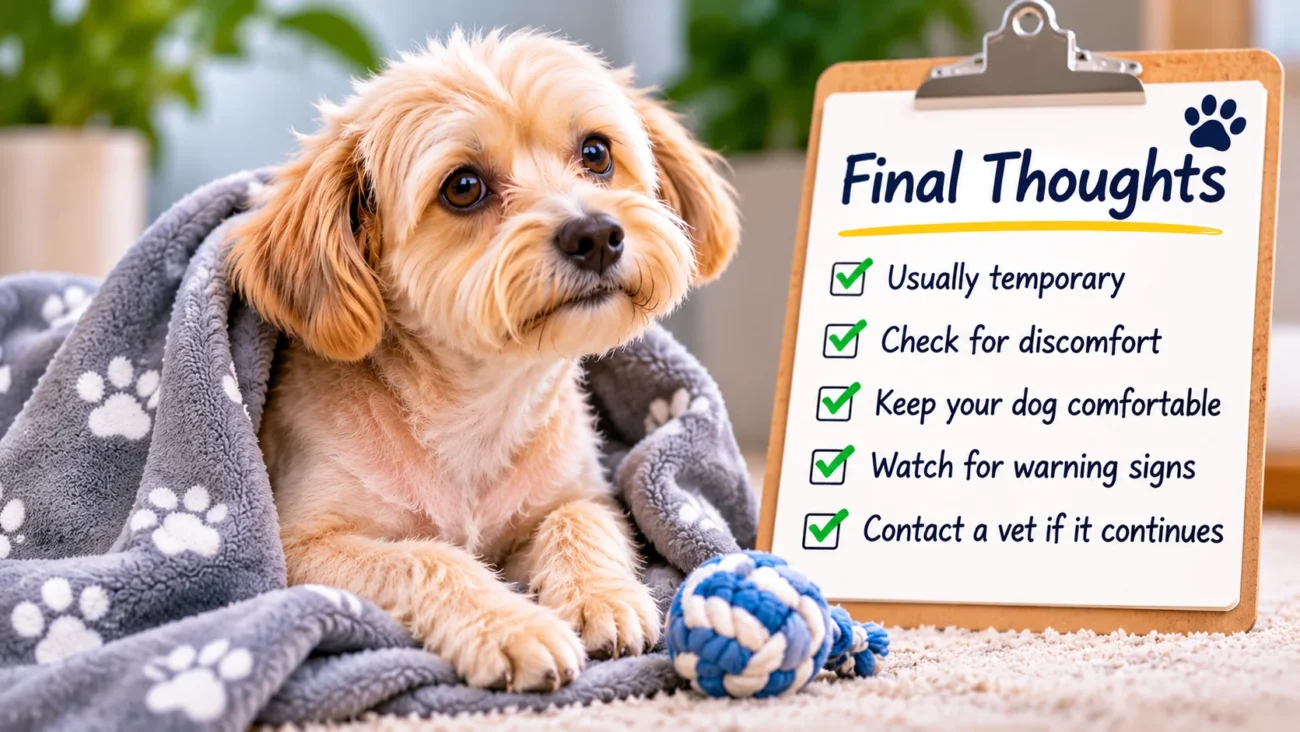
A dog shaking after a haircut may simply need warmth, rest, and relief from a stressful grooming experience. But persistent trembling should never be explained away by the haircut alone.
Check your dog’s comfort, skin, movement, and behavior. If shaking continues, worsens, or appears with pain or illness, seek veterinary advice. Identifying the actual trigger is the best way to protect your dog and make future grooming appointments more comfortable.


