
Quick Answer
The most useful dog scissoring techniques include straight-line cutting for even outlines, curved scissoring for rounded shapes, and thinning or blending for softening visible cut lines. Work on a clean, dry, thoroughly combed coat, move the scissors with controlled thumb movements, and trim only hair that is clearly separated from the skin. Beginners should practice on low-risk coat areas and leave sensitive regions or difficult dogs to a qualified groomer.
Good scissoring is less about cutting quickly and more about controlling the shape of the coat. A smooth finish comes from careful preparation, consistent blade positioning, small corrections, and knowing when to stop.
For beginners, learning a few reliable techniques is more useful than trying to recreate a complicated professional haircut immediately. The goal is to understand what each shear does, how to control it, and which areas can be trimmed safely.
Which Dog Scissoring Techniques Should Beginners Learn First?
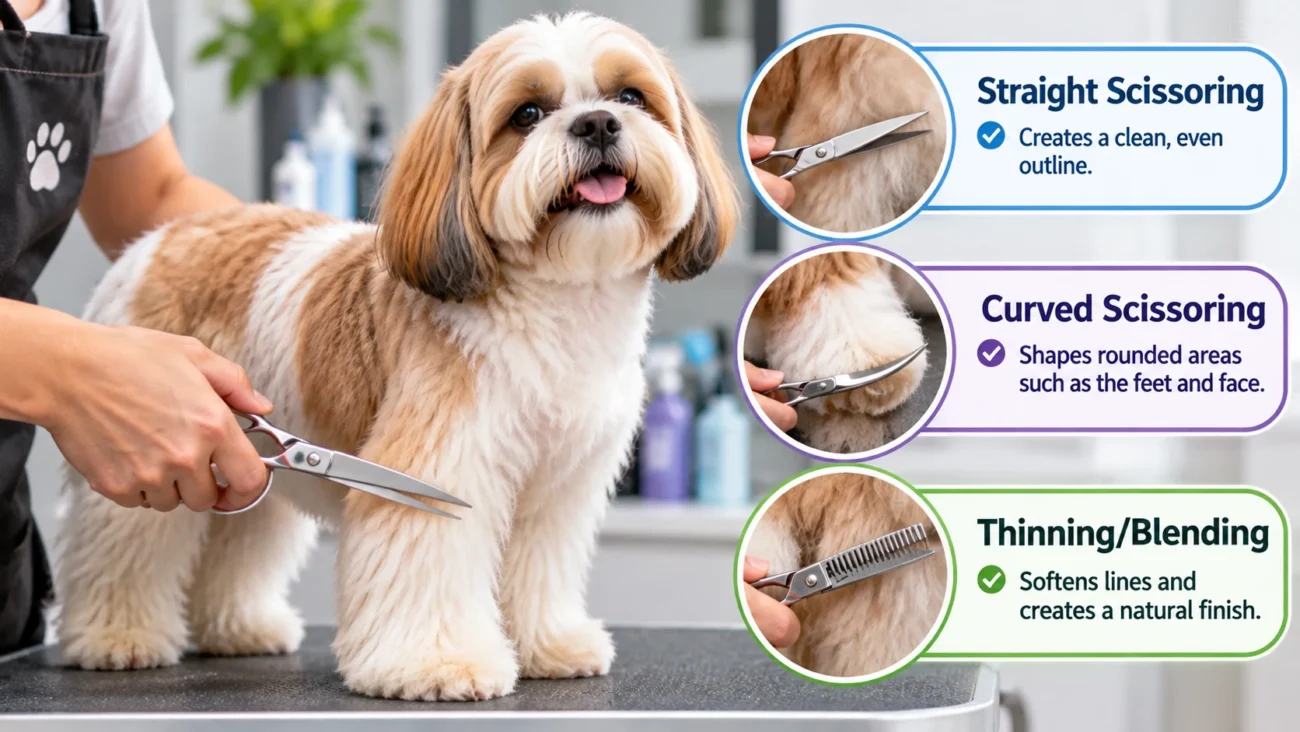
Start with three fundamentals: maintaining a steady cutting plane, shaping with straight or curved shears, and blending harsh lines. These skills form the foundation of many hand-scissored dog haircuts.
| Technique | Main Purpose | Typical Application |
|---|---|---|
| Straight scissoring | Creates a controlled, even outline | Body furnishings and leg outlines |
| Curved scissoring | Shapes rounded contours | Rounded feet and rounded silhouettes |
| Thinning | Removes selected hair without a blunt edge | Small bulky or uneven sections |
| Blending | Softens transitions between lengths | Longer leg hair meeting shorter body hair |
| Comb-and-scissor finishing | Reveals and corrects projecting hairs | Final shaping on suitable longer coats |
These techniques overlap. For example, a groomer might establish a leg shape with straight shears, refine a rounded foot outline with curved shears, and soften the transition using blending shears.
The dog’s coat type matters. A curly, continuously growing coat may tolerate substantial shaping, while a dense double coat often requires brushing and selective tidying rather than an all-over scissor haircut.
How Do You Hold Dog Grooming Scissors Correctly?
Hold grooming scissors with your ring finger in one finger ring and your thumb lightly positioned in the other. Keep the hand relatively stable while the thumb provides most of the opening and closing movement.
This differs from the way many people use ordinary household scissors, where both fingers move and the entire hand can shift during each cut.
Practice the Thumb-Only Movement
- Hold the closed scissors securely with the blades pointing away from yourself and others.
- Place your ring finger in its ring and rest your little finger on the finger rest if one is provided.
- Position only the tip of your thumb comfortably in the thumb ring.
- Keep the supporting fingers steady while opening and closing the blades primarily with your thumb.
- Practice slow, smooth movements away from your dog before attempting any coat trimming.
A balanced grip helps the blades stay on the intended cutting plane. Excessive wrist movement, changing the blade angle mid-cut, or squeezing too tightly can create uneven results and hand fatigue.
Professional scissoring instruction also emphasizes controlled blade movement and consistent cutting angles. For a more detailed explanation, see the scissoring technique guide by Barbara Bird.
How Should You Prepare the Dog Before Scissoring?
Preparation determines how accurately you can see and shape the coat. Trying to scissor through tangles, dirt, or damp hair can make it difficult to achieve a consistent finish.
- Check the dog’s comfort. Choose a time when the dog is calm and comfortable with being handled.
- Inspect the skin and coat. Look for tangles, mats, irritation, unusual lumps, and sensitive areas before starting.
- Brush thoroughly. Remove loose hair and surface tangles with tools appropriate for the coat.
- Bathe if needed. Use a dog-appropriate shampoo and rinse thoroughly.
- Dry completely. Ensure the coat is fully dry and comfortable to handle before precision scissoring.
- Comb in sections. Lift or arrange the coat into its natural styling position so uneven hairs become visible.
- Choose a stable work area. Use a nonslip surface with adequate lighting and safe, continuous supervision.
A grooming table is not automatically safer than the floor. A dog that jumps, struggles, or fears heights may be more safely handled by a professional. Never leave a dog unattended on an elevated surface.
Safety Warning
Never insert scissors beneath a tight mat or cut toward skin you cannot clearly see. Skin can be pulled into matted hair, making injuries more likely. Severe matting should be managed by a qualified groomer or veterinarian rather than cut away with household scissors.
How to Scissor a Dog’s Coat Step by Step
The following method is intended for modest shaping on a calm dog with a clean, combed, suitable coat. It is not a substitute for hands-on training in full-body professional grooming.
Step 1: Establish the Desired Coat Length
Before cutting, decide how much hair actually needs removing. Begin with the longest practical finish rather than immediately cutting to the intended final length.
Comb the hair outward and identify the existing coat outline. This helps distinguish hairs projecting beyond the shape from hair that should remain.
If you are unsure about the correct coat length or whether the coat should be cut at all, ask a qualified groomer before proceeding.
Step 2: Make Controlled Straight Cuts
On a low-risk area with clearly visible hair extending away from the body, position the straight shears along the intended outline. Keep the blades separated from the skin and make a controlled cut.
Work in short sections rather than attempting to complete an entire leg or body outline in one movement.
After a few cuts, close the scissors, lower them safely, and comb the area again. This reveals whether any hairs extend beyond the intended shape.
Step 3: Follow Rounded Contours
Curved shears can help follow the shape of a rounded coat outline. Their advantage is the blade curvature, which supports gradual contouring without needing to construct the shape entirely from straight segments.
For example, a groomer may use them to refine the outer silhouette of a rounded foot or a rounded head shape.
Beginners should practice rounded shapes on a grooming model before attempting detailed facial work on a live dog. Curved shears are still sharp, and their shape does not make them safe near moving eyes, ears, or skin folds.
Step 4: Soften the Scissor Marks
Once the basic shape is established, examine the coat for abrupt transitions or visible cutting lines.
Thinning or blending shears can remove smaller amounts of hair from selected sections, making the transition look less abrupt.
Use a restrained approach:
- Comb the relevant section into its normal position.
- Identify the visible edge or bulk that requires correction.
- Make a limited cut in clearly separated hair.
- Comb the area again to assess the result.
- Stop before repeated cuts make the coat noticeably thin or uneven.
Blending is not the same as cutting more length everywhere. The goal is to soften the transition while preserving the overall silhouette.
Step 5: Check the Shape From Different Angles
Stand back and examine the coat from the front, sides, and rear while keeping the dog safe and supported.
Compare the overall outline rather than focusing on isolated hairs. Recomb the coat and correct only clearly identifiable uneven sections.
Do not continue cutting simply to achieve perfect symmetry. Natural coat growth patterns, posture, and movement can make a balanced trim appear slightly different from one angle to another.
Practical Tip
Follow a comb–cut–recomb routine. Each pass reveals hairs that were previously lying flat and reduces the temptation to remove too much coat in one attempt.
When Should You Use Straight, Curved, or Thinning Shears?
Choose shears according to the finish you need, not simply the area being groomed. Different types of scissors create different edges and remove hair at different rates.
Straight Shears for Clean Outlines
Straight shears are useful when you need a controlled, consistent edge. They can establish the main shape of longer coat furnishings, provided the dog remains still and the hair is safely separated from the skin.
They may leave a visible cutting line, particularly when the coat has not been prepared or combed thoroughly.
Curved Shears for Rounded Shapes
Curved shears are designed to help follow curved silhouettes. Their orientation and direction matter because the blade can move toward the dog’s body depending on how the scissors are held.
They are useful for shaping rounded outlines but require careful control and appropriate experience.
Thinning and Blending Shears for Softer Transitions
Thinning shears usually combine a toothed blade with a cutting blade, removing selected hairs rather than forming the continuous edge produced by straight shears.
Blending shears are commonly used to soften transitions between coat lengths. Exact cutting behavior varies with tooth spacing, blade design, and the amount of hair collected.
Chunkers are another textured shear type that can remove more hair in a pass. They are better suited to trained handlers than to beginners correcting small mistakes.
For more information about equipment differences, see Animal Behavior College’s guide to selecting and caring for grooming shears.
How Do Scissoring Techniques Change With Coat Type?
The safest technique depends partly on the dog’s natural coat structure. Not every dog benefits from the same amount of cutting.
| Coat Type | Scissoring Consideration | Main Caution |
|---|---|---|
| Curly coat | Comb out curls before shaping to identify the intended outline. | Hidden tangles can cause uneven cutting. |
| Straight or silky coat | Use small, controlled corrections along the natural fall of the hair. | Blunt cutting lines can be highly visible. |
| Wavy coat | Allow for the coat’s natural wave and reassess after combing. | The outline may change as the wave settles. |
| Dense double coat | Favor brushing, undercoat care, and limited breed-appropriate tidying. | Extensive cutting can disrupt the natural coat. |
| Wire coat | Consider the intended coat texture and whether hand stripping is appropriate. | Clipping or scissoring can change the appearance and feel of the coat. |
Coat appearance alone does not always identify the correct grooming method. Breed, coat condition, previous clipping, and the dog’s health can change what is appropriate.
Which Areas Require Extra Caution With Scissors?
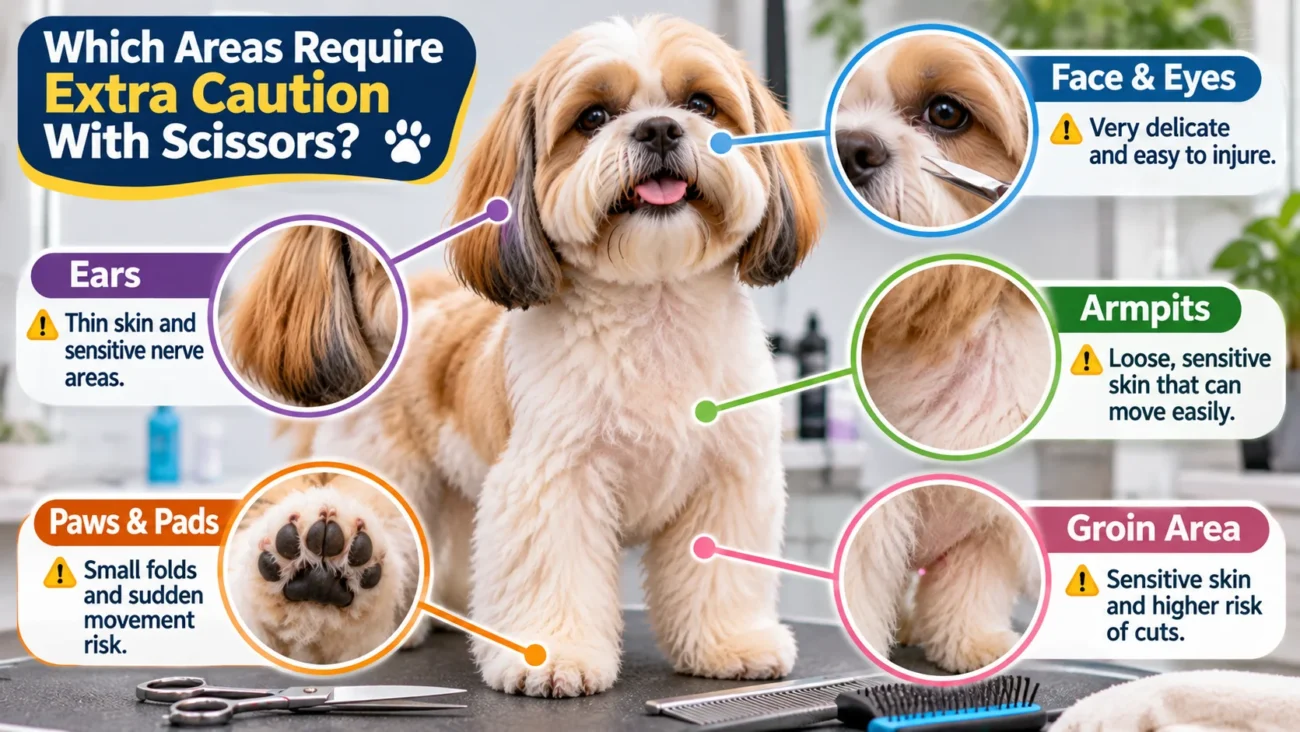
The face, eyes, ears, paw pads, armpits, groin, and skin folds require greater caution because they contain delicate structures or skin that can move into the cutting path.
Face and Eyes
Facial trimming is not a suitable first scissoring exercise. Sudden head movements can bring the eyes, nose, lips, or ears dangerously close to sharp blades.
Do not point scissors toward the eyes or attempt precision facial shaping on a restless dog.
The American Kennel Club’s home grooming guidance recommends learning proper procedures from a groomer, breeder, or veterinary staff before using small scissors or clippers for sensitive grooming tasks.
Paws and Paw Pads
Hair extending around the visible outer foot outline may sometimes be tidied carefully. However, cutting between paw pads introduces risks from small skin folds and sudden paw movement.
Do not insert scissors deeply between pads. If the hair affects traction, collects debris, or forms mats, seek a professional trim when the area cannot be handled safely.
Ears and Other Sensitive Areas
Ear edges and the skin around the groin and armpits are particularly vulnerable to accidental cuts. Avoid scissoring these areas without suitable practical instruction.
Rounded-tip shears can reduce the risk of a sharp tip contacting the dog, but their cutting edges remain sharp. They do not make an unsafe trimming position safe.
What Common Scissoring Mistakes Cause Uneven Haircuts?
Most uneven results come from inconsistent preparation, changing cutting angles, removing too much hair, or trying to correct the coat before reassessing its natural shape.
- Cutting uncombed hair: Hidden strands emerge later and make the outline look uneven.
- Moving the whole hand excessively: The blades shift away from the intended cutting plane.
- Removing too much in one pass: Large corrections can leave gaps that are difficult to blend.
- Repeatedly thinning the same section: The coat may become sparse or irregular.
- Ignoring coat growth patterns: Hair may settle differently after the grooming session.
- Chasing perfect symmetry: Repeated corrections can gradually shorten the entire haircut.
- Continuing when the dog is restless: Movement increases the risk of accidental injury.
If a section becomes noticeably shorter than intended, avoid shortening surrounding hair repeatedly to make it match. A qualified groomer can assess whether blending will improve the appearance or whether allowing the hair to grow is preferable.
How Can Beginners Practice Scissoring Without Risking Injury?
The safest way to develop blade control is to practice away from a live dog before attempting coat shaping.
- Practice opening and closing the scissors with a stable grip.
- Use an appropriate grooming mannequin or practice coat to develop consistent cutting movements.
- Work on straight outlines before moving to rounded shapes.
- Practice combing the material outward, cutting, and reassessing.
- Learn to recognize when thinning improves a transition and when it removes too much volume.
- Seek supervised practical instruction before attempting full-body or sensitive-area grooming.
When working with a real dog for the first time, begin with handling, brushing, and calm exposure to grooming tools rather than immediately cutting hair.
Short, positive sessions help you observe whether the dog can remain comfortable and cooperative. Do not restrain a frightened dog simply to finish a haircut.
When Should You Stop Scissoring and Contact a Professional?
Stop whenever the dog’s movement, coat condition, or the location of the hair makes it difficult to keep the cutting blades safely away from the skin.
Professional grooming is the more appropriate option when:
- The dog struggles, snaps, panics, or repeatedly pulls away.
- Mats are tight against the skin.
- The hair must be removed from around the eyes, ear edges, genitals, or other delicate structures.
- You cannot clearly distinguish the hair from nearby skin.
- The coat requires a substantial breed-specific haircut.
- Your scissors are damaged, dull, or fail to cut cleanly.
If the dog has irritated, painful, broken, or infected-looking skin, obtain veterinary guidance rather than trimming over the affected area.
If an accidental cut occurs, stop grooming immediately. Apply gentle pressure with clean gauze to a minor bleeding wound and contact a veterinarian for appropriate guidance. Deep wounds, persistent bleeding, and injuries involving the eyes or other delicate structures require prompt veterinary attention.
Frequently Asked Questions
Can beginners use professional dog grooming scissors?
Beginners can learn with suitable grooming shears, but professional-grade scissors are often extremely sharp and require controlled handling. Practice on a grooming model and obtain instruction before using them near a live dog’s sensitive areas.
Should dog hair be wet or dry when scissoring?
Precision scissoring is generally easier on clean, fully dry, thoroughly combed hair because the coat’s shape and projecting strands are more visible. The appropriate preparation can vary with coat type and styling method.
Can I use ordinary household scissors on my dog?
Household scissors are not ideal for grooming because they may lack the blade design and control required for coat work. Purpose-made grooming scissors are preferable, but safe technique and a cooperative dog remain essential.
How do groomers make scissor cuts look smooth?
Groomers prepare and comb the coat thoroughly, maintain a consistent cutting plane, and repeatedly reassess the silhouette. They may use blending shears to soften abrupt transitions without unnecessarily shortening surrounding hair.
Do rounded-tip grooming scissors prevent injuries?
No. Rounded tips can reduce some risks from pointed blade ends, but the cutting edges can still injure skin. They must be used only when the dog’s movement and the cutting area can be controlled safely.
What should I do if my dog’s haircut becomes uneven?
Stop cutting and recomb the coat before assessing it from different angles. Avoid repeatedly shortening surrounding sections. For a significant uneven patch or an area close to sensitive skin, ask a professional groomer to evaluate the finish.
Final Thoughts
Developing reliable dog scissoring techniques takes practice, patience, and an understanding of the coat being trimmed. Consistent hand positioning, careful preparation, controlled cutting, and frequent combing produce more predictable results than rushing through a haircut.
Start with simple, low-risk shaping tasks and build your skills gradually. A comfortable dog and an injury-free grooming session are always more important than achieving a perfectly styled finish.


