
Quick Answer
A dog itchy after a haircut may be reacting to close clipping, loose hair, shampoo residue, or irritated skin. Mild itching without visible skin damage may settle once the irritant is removed. Check for redness, bumps, sores, or excessive licking. Prevent scratching, avoid unapproved skin treatments, and contact a veterinarian if symptoms are severe, worsening, or persistent.
If your dog starts scratching, rubbing against furniture, or licking its skin after a haircut, the timing may point to grooming-related irritation. However, the haircut itself is not always the underlying cause.
Clippers can irritate sensitive skin, bathing products can trigger reactions, and a shorter coat may reveal a skin problem that was previously hidden.
The first step is to check where your dog is itching and what the skin looks like. Those details can help you decide whether gentle home care is reasonable or veterinary attention is needed.
Why Is My Dog Itchy After a Haircut?
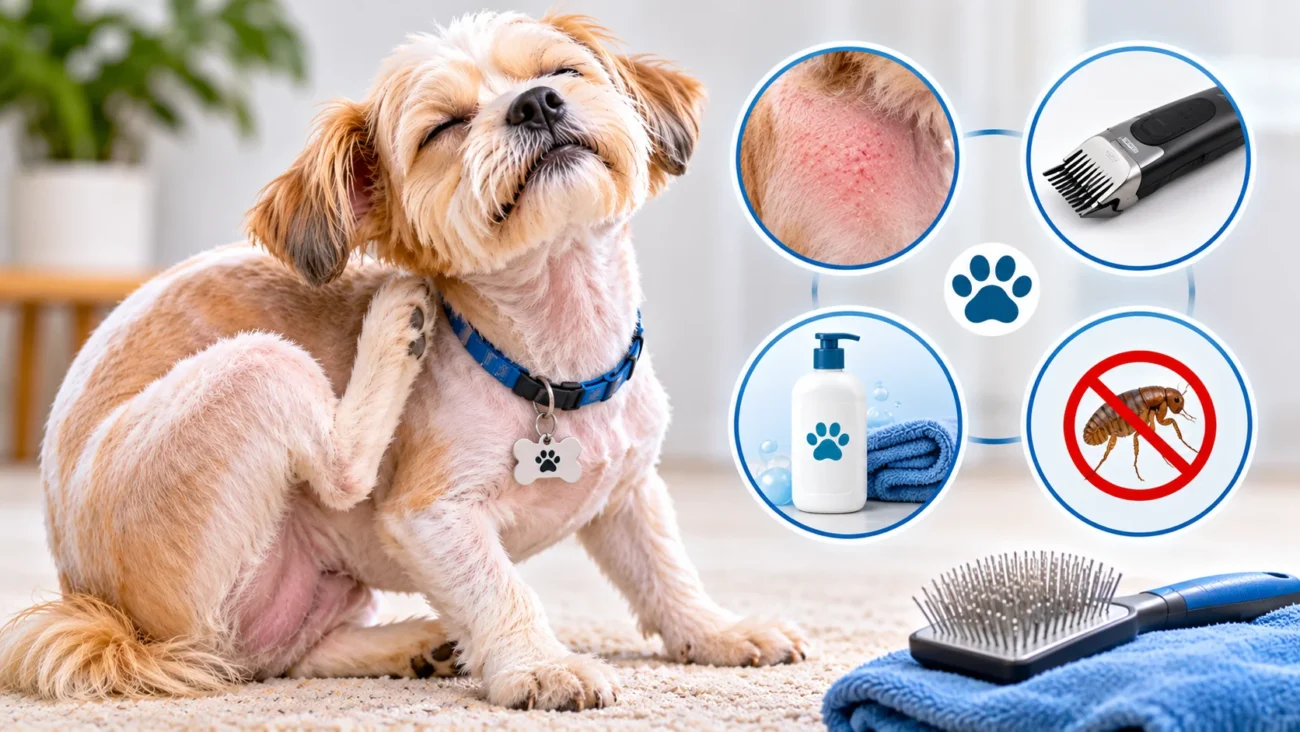
Dogs may become itchy after grooming because the process exposes or irritates their skin. The cause depends on the grooming method, products used, the dog’s skin condition, and the areas affected.
1. Clipper Irritation or Clipper Burn
Clipper irritation occurs when grooming blades rub against or damage the skin. A very close haircut, repeated passes over the same area, or a hot blade can contribute to irritation.
Signs may include:
- Pink or red skin after clipping
- Repeated licking of freshly shaved areas
- Sensitivity when the skin is touched
- Small irritated patches or superficial abrasions
- Rubbing or scratching around the shaved area
The belly, groin, armpits, and areas around the tail can be particularly sensitive because the skin may be thin or frequently exposed to friction.
Not every red patch is a clipper burn. Allergic reactions, infections, and pre-existing inflammation can look similar.
2. Shampoo or Conditioner Irritation
A haircut often includes a bath. Some dogs react to fragrances, cleansing ingredients, conditioners, or other grooming products.
Incomplete rinsing can also leave residue against the skin, causing discomfort after the coat dries.
If itching affects several areas that were washed rather than one closely clipped spot, a bathing-product reaction becomes more plausible.
Veterinary guidance from Virginia Tech Veterinary Teaching Hospital emphasizes gentle bathing methods, thorough rinsing, and avoiding harsh products.
3. Loose Hair Trapped Against the Skin
Short, freshly cut hairs can remain trapped in the coat, especially around skin folds, collars, and harnesses.
These hair fragments may produce a prickly sensation or contribute to friction. This is a possible explanation when the skin looks normal and discomfort starts immediately after clipping.
Gentle removal of loose hair may help, provided the skin is not already sore.
4. Sensitive or Previously Irritated Skin
Grooming may aggravate skin that was already inflamed, dry, or damaged beneath a thick coat.
Dogs with a history of allergies, skin infections, or recurring itching may react more noticeably to bathing, brushing, and clipping.
A haircut can also make existing redness, scabs, bumps, or hair loss easier to see. Finding those signs after grooming does not necessarily mean grooming caused them.
5. Mat Removal and Skin Sensitivity
Removing tightly matted hair can expose irritated skin and change how the area feels.
Mats can pull on the skin, hold moisture, and hide inflammation. After they are removed, a dog may lick or scratch exposed areas.
If the underlying skin is broken or painful, additional grooming should stop until the area has been assessed.
6. An Existing Skin Condition
Sometimes the timing is coincidental. Fleas, mites, environmental allergies, bacterial infections, and yeast infections can cause itching regardless of a recent haircut.
According to VCA Animal Hospitals, itching is a symptom with several possible underlying causes, and examination or diagnostic tests may be needed to identify the problem.
Recurring itching, ear discomfort, unusual skin odor, or irritation in areas that were not groomed may suggest a broader issue.
What Should You Do If Your Dog Is Itchy After a Haircut?
Start by checking the skin and reducing anything that could make the irritation worse. Mild discomfort without sores or other concerning signs may be monitored briefly, but persistent or intense itching needs veterinary advice.
- Inspect the affected areas. Part the remaining coat gently and look for redness, bumps, cuts, scabs, swelling, or discharge. Check the belly, groin, paws, armpits, and tail area.
- Prevent excessive licking and scratching. Interrupt repeated licking gently. If your dog is damaging its skin, ask your veterinarian about an appropriate protective collar or other barrier.
- Remove loose hair carefully. If the skin is intact and not tender, use a soft brush or a gentle wipe with a clean, slightly damp cloth to remove loose clippings.
- Reduce friction. Temporarily remove unnecessary clothing and avoid tight harnesses or collars rubbing against freshly clipped areas. Maintain safe identification and supervision.
- Avoid applying random products. Do not use human anti-itch creams, essential oils, alcohol, powders, or medicated ointments without veterinary approval.
- Monitor changes. Note when itching started, which areas are involved, and whether the skin looks better or worse. Photograph visible irritation to help document changes.
If you suspect shampoo residue, contact the groomer to learn which products were used. A gentle rinse with lukewarm water may sometimes be appropriate for intact skin, but repeated washing can worsen irritation. Ask your veterinarian first if the skin is red, painful, broken, or inflamed.
Practical Tip
Ask the groomer which clipper length and bathing products were used. Record where the irritation appeared. This information can help your veterinarian investigate the cause and help the groomer adapt future appointments.
How Can You Tell Mild Irritation From a More Serious Problem?
The intensity of scratching and the appearance of the skin matter more than the haircut alone.
Use the following comparison to decide what deserves closer attention.
| What You Notice | Possible Meaning | Reasonable Next Step |
|---|---|---|
| Occasional scratching, normal-looking skin | Possible temporary irritation or loose hair | Monitor and reduce friction |
| Localized redness after close clipping | Possible clipper irritation | Protect the area and seek veterinary advice if painful or persistent |
| Widespread itching after bathing | Possible product irritation or allergy | Identify products used and contact a veterinarian if symptoms continue |
| Moist sores, discharge, or increasing pain | Possible infection or significant skin damage | Arrange prompt veterinary assessment |
| Facial swelling, breathing difficulty, or collapse | Possible severe allergic or systemic reaction | Seek emergency veterinary care |
This is a general guide, not a diagnostic test. Two conditions may look similar, and visible redness alone does not establish the cause.
When Does Itching After Grooming Require a Veterinarian?
Contact a veterinarian promptly if your dog’s itching is intense, worsening, or causing skin damage. Even seemingly mild irritation deserves assessment when it does not improve or repeatedly returns after grooming.
Concerning signs include:
- Continuous scratching, biting, or licking
- Open wounds, bleeding, or raw skin
- Swelling, spreading redness, or painful bumps
- Pus, discharge, or unusual skin odor
- Moist, inflamed patches that develop quickly
- Lethargy, fever, or loss of appetite
- Recurring itching after multiple grooming sessions
Dogs that develop painful skin lesions, fever, or unusual behavior after bathing may need urgent evaluation for an infection or another complication.
One uncommon but important condition is post-grooming furunculosis, a deep bacterial skin infection associated with some bathing or grooming exposures. It may produce painful skin lesions and systemic illness.
Warning
Seek emergency veterinary care if your dog develops breathing difficulty, collapse, or significant facial swelling. Painful spreading lesions, marked lethargy, or fever after grooming also warrant urgent veterinary assessment. Do not delay care while trying home remedies.
How Long Does Itching After a Dog Haircut Last?
There is no reliable fixed recovery time because post-haircut itching has several possible causes.
Mild mechanical irritation or discomfort from loose hair may improve relatively quickly after the irritant is removed. Clipper-related inflammation can take longer, while allergies, infections, and other skin conditions may continue until properly treated.
A dog that scratches briefly but otherwise behaves normally is different from one that cannot stop licking or is developing sores.
If itching continues beyond the first day, does not show clear improvement, or becomes more uncomfortable, contact your veterinarian rather than assuming it will resolve on its own.
How Do You Prevent Your Dog From Itching After Future Haircuts?
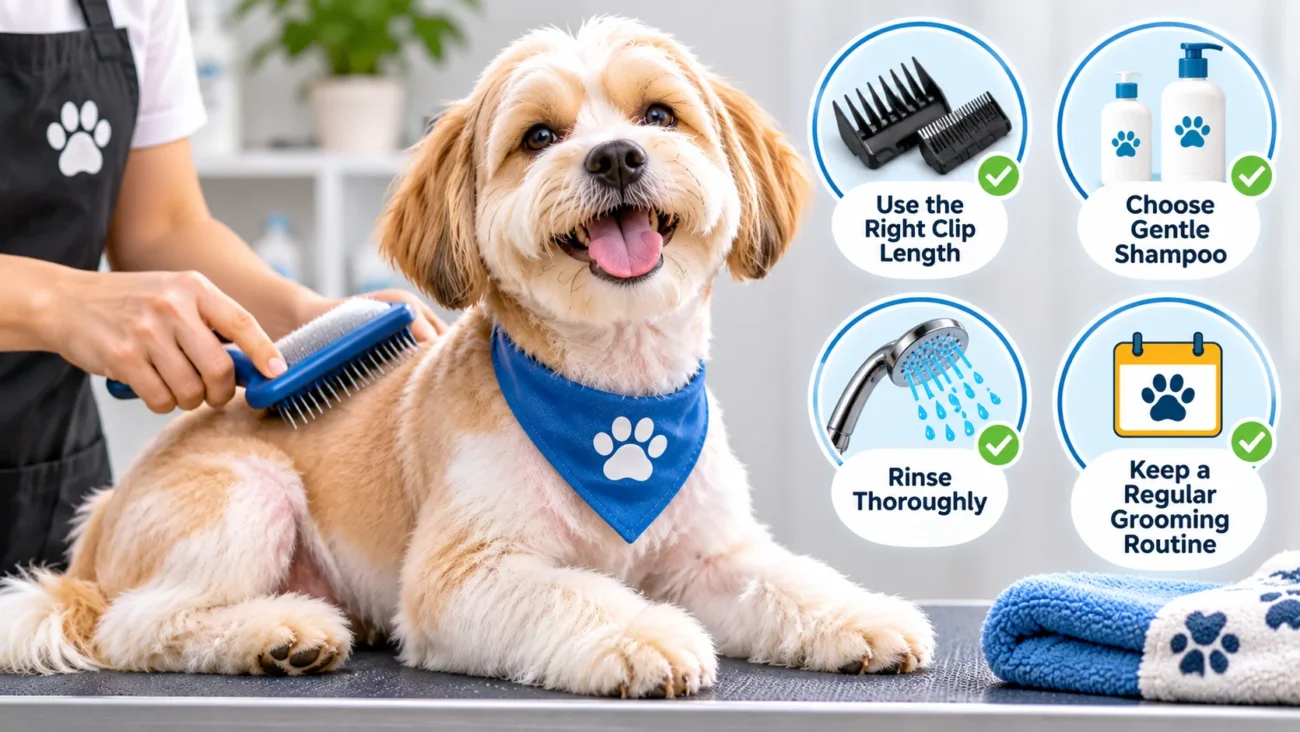
Prevention begins with identifying what triggered the previous episode and adjusting the grooming process accordingly.
Avoid Unnecessarily Close Clipping
Ask the groomer to avoid cutting closer than necessary, particularly over sensitive skin. Coat type, existing matting, hygiene requirements, and veterinary recommendations may affect the appropriate length.
Clippers should be properly maintained, clean, and checked for excess heat during grooming.
Use Appropriate Bathing Products
Choose dog-specific grooming products suited to your pet’s skin needs.
Fragrance-free or sensitive-skin formulas may be preferable for some dogs, but these labels do not guarantee that a product will prevent irritation.
If a particular product appears to trigger symptoms, avoid using it again until the cause is evaluated.
Rinse and Dry Carefully
Thoroughly remove shampoo and conditioner according to product instructions. Avoid aggressive rubbing and excessive dryer heat.
Use gentle drying methods, especially around thin-skinned and sensitive areas.
Maintain a Regular Grooming Routine
Regular brushing and appropriate coat maintenance can reduce tangles and severe matting that may require very close clipping.
However, brushing should never be so forceful that it causes redness or skin injury.
Dogs with recurring skin problems may need a grooming plan developed with veterinary input.
Tell the Groomer About Previous Reactions
Share details about your dog’s symptoms before the next appointment.
Useful information includes which body areas became irritated, whether the reaction followed bathing or clipping, and whether your veterinarian identified a specific condition.
This allows the groomer to consider alternative products, clipping lengths, handling techniques, and grooming schedules.
Can a Haircut Reveal a Skin Problem That Was Already There?
Yes. Removing or shortening a thick coat can reveal inflammation, parasites, sores, and other skin changes that were previously difficult to see.
This distinction matters because an apparent post-grooming reaction does not always mean the haircut caused the condition.
For example, a dog with an existing allergy may already have irritated skin beneath its coat. Clipping can make that redness more visible, while friction from the grooming process may increase discomfort.
A veterinarian may examine skin samples, check for parasites, or investigate infections and allergies when symptoms do not fit a straightforward grooming irritation.
Identifying the underlying problem is more useful than repeatedly changing shampoos or haircut lengths without knowing the cause.
Frequently Asked Questions
1. Is it normal for a dog to scratch after a haircut?
Occasional scratching immediately after grooming can happen, particularly when loose hair or mild friction irritates the skin. However, persistent scratching, visible redness, repeated biting, or skin damage should not be dismissed as normal.
2. Can a haircut make my dog’s skin dry?
A haircut does not necessarily dry out the skin itself, but bathing products, repeated washing, and irritation during grooming may affect the skin barrier. Dogs with existing skin conditions can be more sensitive to these changes.
3. Can I put coconut oil on my dog after grooming?
Do not automatically apply coconut oil to irritated skin. Oils may encourage licking, complicate skin care, or be inappropriate for certain skin conditions. Ask your veterinarian before applying topical products to red, broken, or inflamed areas.
4. Why does my dog keep licking its private area after grooming?
The groin and surrounding areas are sensitive to close clipping and friction. Licking may reflect local irritation, but urinary, anal gland, or other medical problems can cause similar behavior. Persistent licking, pain, swelling, or difficulty urinating needs veterinary assessment.
5. Can I use human anti-itch cream on my dog?
Do not use human anti-itch creams unless your veterinarian specifically approves the product and instructions. Some ingredients may be harmful if swallowed, and the wrong treatment can worsen a skin condition or delay appropriate care.
6. Should I bathe my dog again if it is itchy after grooming?
Not automatically. Another bath may help remove suspected residue in some circumstances, but repeated washing may worsen irritation. If the skin is inflamed, painful, or broken, ask your veterinarian whether rinsing or bathing is appropriate.
Final Thoughts
A dog itchy after a haircut may be experiencing temporary irritation from clippers, loose hair, or bathing products. However, persistent itching can also reveal allergies, infections, or another skin problem.
Check the skin carefully, reduce scratching and friction, and avoid unapproved remedies. If your dog develops sores, marked redness, pain, or worsening symptoms, veterinary evaluation is the safest next step.
For future appointments, communicate previous reactions to your groomer and adjust the grooming routine according to your dog’s individual needs.


