
Quick Answer
A dog haircut schedule by coat type depends on hair growth, length, texture, and shedding. Curly and silky-coated dogs generally need haircuts every 4–8 weeks, while wire-coated dogs often need maintenance every 6–12 weeks. Short-haired and double-coated dogs usually need brushing rather than full haircuts. The American Kennel Club’s double-coat guidance explains why shaving is generally inappropriate for these breeds.
Recommended Haircut Schedule
- Curly coats: Every 4–6 weeks for Poodles, Bichons, and many Doodles.
- Silky coats: Every 4–8 weeks for Yorkies, Maltese, and Shih Tzus.
- Wire coats: Every 6–12 weeks, depending on clipping or hand-stripping.
- Double coats: Generally no full haircut; brush and de-shed regularly.
- Short coats: Usually no haircut; weekly brushing is often sufficient.
How to Choose the Right Interval
- Identify the coat: Check whether the dog has growing hair, shedding fur, or a dense undercoat.
- Check for tangles: Shorten the grooming interval if knots form between appointments.
- Adjust for lifestyle: Outdoor activity, coat length, and home brushing affect the schedule.
If you’re unsure how frequently your dog needs a haircut, the coat is the best place to start. Two similar-sized dogs can have completely different grooming needs.
I’ll explain the practical haircut intervals for common coat types, which dogs shouldn’t be shaved, and how to build a manageable routine.
What Is a Dog Haircut Schedule by Coat Type?
A dog haircut schedule by coat type is a grooming plan based on how a dog’s hair grows, sheds, and tangles. It helps owners determine when trimming, brushing, bathing, and professional grooming are necessary.
The goal isn’t simply keeping fur short. A good schedule helps maintain a comfortable, manageable coat and reduces preventable matting.
Why Does Coat Type Matter More Than Dog Size?
Hair texture determines how quickly grooming problems develop. A small Yorkshire Terrier may need frequent trimming, while a much larger Labrador Retriever rarely needs a haircut.
The difference comes from coat structure rather than body size.
- Continuously growing coats: Need regular trimming to maintain comfortable lengths.
- Shedding coats: Need loose-hair removal rather than routine clipping.
- Dense double coats: Require careful undercoat maintenance.
- Wire coats: May require clipping or specialized hand-stripping.
- Mixed coats: Need schedules based on actual texture and matting risk.
According to VCA Animal Hospitals’ coat-care guidance, long, silky, and curly coats need especially consistent brushing to prevent tangles.
How Often Should Dogs Get Haircuts Based on Coat Type?

Most haircut-dependent dogs benefit from professional appointments roughly every 4–8 weeks. However, many shedding breeds don’t need routine haircuts at all.
Use this comparison table as a starting point, then adjust it with your groomer.
| Coat Type | Example Breeds | Haircut Interval | Home Brushing |
|---|---|---|---|
| Curly or woolly | Poodle, Bichon Frise | 4–6 weeks | Daily or every other day |
| Long and silky | Maltese, Yorkie, Shih Tzu | 4–8 weeks | Daily for longer coats |
| Wire or rough | Schnauzer, Wire Fox Terrier | 6–12 weeks | 2–3 times weekly |
| Double coat | Husky, Golden Retriever | No routine full haircut | 2–4 times weekly; more during shedding |
| Short and smooth | Beagle, Boxer, Labrador | Usually unnecessary | 1–2 times weekly |
| Mixed or variable | Goldendoodle, Cockapoo | 4–8 weeks if clipping is needed | Often daily |
Important: These intervals are general planning ranges, not veterinary rules. Individual coat length, health, skin sensitivity, and grooming tolerance may change them.
How Often Do Curly-Coated Dogs Need Haircuts?
Curly-coated dogs commonly need haircuts every 4–6 weeks. Their coats can trap loose hair, producing tangles that become difficult to remove.
Poodles and Bichon Frises are familiar examples. Many Doodles also need similarly frequent maintenance, although their coats vary.
Which Curly-Coated Dogs Need Frequent Trimming?
- Poodles: Regular clipping maintains a manageable coat and keeps hair away from the eyes and paws.
- Bichon Frises: Consistent trimming helps preserve coat shape and prevents compacted tangles.
- Goldendoodles: Dense or curly coats may mat quickly without thorough brushing.
- Cockapoos: Wavy and curly coats need individualized grooming intervals.
I’d use a six-week booking cycle as a starting point for a curly-coated family dog. A longer style or persistent tangles may justify four-week appointments.
How Can You Prevent Matting Between Haircuts?
Brush the coat in small sections and finish with a metal comb. This technique helps reveal tangles hiding beneath the surface.
- Separate the coat into manageable layers.
- Brush gently from the ends toward the roots.
- Check each section with a metal comb.
- Pay attention to armpits, ears, legs, and collar areas.
- Stop if brushing pulls painfully or the skin becomes irritated.
Grooming tip: A brush that glides over the surface doesn’t guarantee the underlayers are free from mats.
What Is the Best Haircut Schedule for Long-Haired Dogs?
Long, silky-coated dogs often need trimming every 4–8 weeks. Dogs kept in full-length coats may need more intensive daily maintenance than dogs with shorter pet trims.
Yorkshire Terriers, Maltese, Shih Tzus, and Lhasa Apsos are common examples.
Does a Short Puppy Cut Reduce Grooming Work?
A shorter pet trim can make daily coat care easier, but it doesn’t eliminate brushing. Hair still tangles around the ears, legs, and friction points.
For a busy household, I favor a practical, maintainable length over an elaborate style that becomes uncomfortable between appointments.
Which Areas Need Extra Attention?
- Face: Hair can obstruct vision or collect food residue.
- Ears: Long hair frequently develops knots behind the ears.
- Paws: Excess hair may collect dirt and debris.
- Sanitary areas: Neat trimming can support everyday cleanliness.
- Under the collar: Friction can encourage hidden tangles.
Use a professional groomer for trimming close to the eyes, skin folds, and other delicate areas. Sharp scissors near moving dogs can cause injuries.
How Often Should Wire-Haired Dogs Be Groomed?
Wire-haired dogs commonly need coat maintenance every 6–12 weeks. The correct technique depends on breed, coat condition, and whether the owner wants to preserve the traditional wiry texture.
Miniature Schnauzers, Border Terriers, and Wire Fox Terriers may need different grooming approaches.
Hand-Stripping vs. Clipping: Which Is Better?
Hand-stripping removes dead, ready-to-release coat hairs to help maintain a traditional harsh texture. Clipping cuts the hair shorter and is often chosen for convenient pet maintenance.
| Feature | Hand-Stripping | Clipping |
|---|---|---|
| Technique | Removes mature, loose coat hairs | Cuts hair to a selected length |
| Coat texture | Helps preserve characteristic wire texture | May soften the appearance over time |
| Best use | Suitable coats and traditional styling | Routine pet trims |
Hand-stripping should involve only coat that is ready to release. Ask an experienced groomer whether the technique suits your dog’s coat and comfort.
Do Double-Coated Dogs Need Regular Haircuts?
Double-coated dogs usually don’t need full-body haircuts. They benefit more from appropriate brushing, bathing, drying, and undercoat removal.
Huskies, German Shepherds, Pomeranians, and Golden Retrievers have protective outer hairs and a softer undercoat.
Why Shouldn’t You Shave a Double-Coated Dog?
Shaving can disrupt the coat’s protective function and may affect how it grows back. It also exposes previously covered skin to more sunlight.
The American Kennel Club’s summer shaving guidance recommends coat-appropriate grooming instead of routine shaving.
There are exceptions, including medical procedures and severe matting. A veterinarian or experienced groomer should assess those situations.
What Should Replace Haircuts?
- Regular brushing: Remove loose undercoat without damaging healthy guard hairs.
- Seasonal de-shedding: Increase brushing when shedding becomes heavier.
- Bathing: Clean the coat as needed with dog-appropriate products.
- Thorough drying: Prevent dampness from lingering in dense fur.
- Limited trimming: Request appropriate paw or sanitary tidying when necessary.
A professional de-shedding appointment every 6–12 weeks can provide a useful starting routine for some dogs. Adjust the interval to shedding, coat condition, and home maintenance.
Do Short-Haired Dogs Need Haircuts?
Most short-haired dogs don’t need regular haircuts. Their coats remain manageable through brushing, occasional bathing, and routine hygiene care.
Boxers, Beagles, Bulldogs, and smooth-coated Dachshunds generally fall into this category.
What Should Their Grooming Routine Include?
- Weekly brushing: Use a suitable soft brush or rubber grooming tool.
- Skin inspection: Check for unusual redness, bumps, or irritation.
- Nail care: Trim or file nails as their growth requires.
- Ear checks: Watch for odor, redness, discomfort, or discharge.
- Bathing: Wash when dirty or according to veterinary guidance.
Short fur doesn’t always mean low shedding. Labradors, for example, have short double coats that require regular loose-hair removal.
How Should You Schedule Haircuts for Mixed-Breed Dogs?
Mixed-breed grooming schedules should follow the dog’s actual coat, not the breed label alone. Two Goldendoodles from the same litter may have noticeably different coat textures.
Look at the hair’s density, curl pattern, growth, and tendency to tangle.
How Can You Identify a Mixed Coat’s Needs?
- Observe whether the dog sheds noticeably.
- Check whether the coat is smooth, wavy, curly, or wiry.
- Comb through the coat to find hidden tangles.
- Record how quickly hair becomes difficult to maintain.
- Ask a groomer to recommend a coat-specific interval.
For a curly Doodle that needs clipping, a 4–6-week schedule is a practical starting point. A shorter coat and consistent home brushing may allow more time between full trims.
What Signs Mean Your Dog Needs Grooming Sooner?
Visible tangles, blocked vision, and trapped debris can mean your dog needs grooming before the scheduled appointment. Don’t wait for the calendar if the coat becomes uncomfortable.
Six Warning Signs to Check
- Persistent tangles: Hair knots repeatedly around the ears, legs, or belly.
- Restricted vision: Facial hair falls across the eyes.
- Dirty paw hair: Excess fur collects mud or outdoor debris.
- Sanitary problems: Waste becomes trapped in the coat.
- Heavy undercoat buildup: Loose fur collects in dense layers.
- Discomfort: The dog reacts when certain coat areas are touched.
Safety note: Severe mats can pull painfully against the skin. Don’t cut tight mats with household scissors because folded skin may be trapped underneath.
Contact a professional groomer or veterinarian for safe removal. Redness, sores, odor, or persistent itching deserve veterinary assessment.
How Can You Build a Weekly Dog Grooming Schedule?
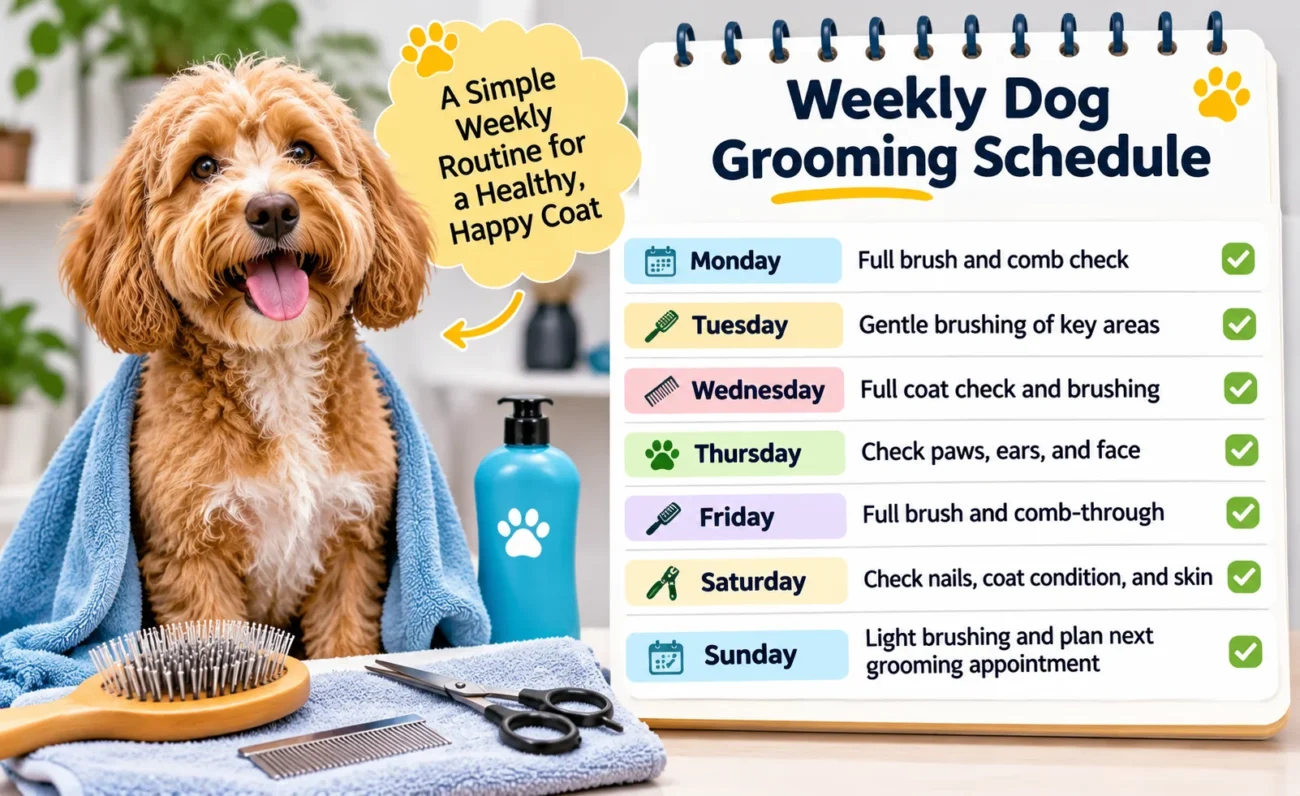
A reliable grooming schedule combines small home-care sessions with professional appointments. Regular attention is usually easier than dealing with accumulated tangles.
Example Weekly Routine for a Curly-Coated Dog
| Day | Grooming Task |
|---|---|
| Monday | Full brush and metal-comb check |
| Tuesday | Gentle brushing of friction areas |
| Wednesday | Full coat check and brushing |
| Thursday | Check paws, ears, and face |
| Friday | Full brush and comb-through |
| Saturday | Check nails, coat condition, and skin |
| Sunday | Gentle brushing and appointment check |
This sample schedule suits a frequently brushed coat. Smooth-coated breeds usually need fewer brushing sessions.
How Often Should You Bathe Your Dog?
Bathing depends on coat condition, activity, skin health, and veterinary advice. Many healthy dogs can start with bathing approximately every 4–8 weeks, but some need different intervals.
The AKC’s home grooming guide offers practical advice for selecting grooming supplies and maintaining healthy routines.
Always use dog-appropriate shampoo. Thorough rinsing and drying are especially important for thick or curly coats.
Should You Groom Your Dog at Home or Visit a Professional?
Home grooming works well for brushing, gentle combing, basic hygiene, and routine checks. Professional grooming is usually preferable for complex haircuts, difficult coats, and sensitive trimming areas.
When Is Professional Grooming the Better Choice?
- The dog needs regular full-body clipping.
- The coat contains extensive or tight matting.
- The desired haircut requires specialized shaping.
- The dog becomes fearful or difficult to handle.
- Trimming is required around sensitive body areas.
I recommend discussing a realistic home-care routine during each professional appointment. A manageable haircut is more valuable than a complicated style that quickly becomes tangled.
What Grooming Mistakes Should Dog Owners Avoid?
Common grooming mistakes include shaving unsuitable coats, delaying appointments, and relying only on surface brushing. These habits can increase coat problems and discomfort.
- Shaving double coats unnecessarily: Maintain the protective coat unless a professional identifies a valid reason.
- Waiting until mats form: Schedule maintenance before tangles become painful.
- Using unsuitable tools: Select brushes and combs for the dog’s coat structure.
- Brushing too aggressively: Avoid scraping skin or forcing through tight knots.
- Ignoring grooming anxiety: Introduce handling slowly and use positive reinforcement.
- Cutting close to skin: Leave delicate trimming and severe mat removal to trained professionals.
As of 2026, the most useful grooming approach remains coat-specific rather than following a single haircut interval for every dog.
Which Dog Grooming Tools Are Worth Buying?
A few suitable tools can make brushing between haircuts easier. I would prioritize a quality brush, a finishing comb, and an appropriate undercoat tool over an oversized grooming kit.
The following are practical product options for different coat needs. Suitability ratings are editorial estimates, not verified customer-review averages.
🏆 Best for Dense Curly Coats
Chris Christensen Big G Slicker Brush
★★★★★ 5/5
This long-pin slicker brush is designed for dense coats and removing loose hair and tangles. I’d consider it for owners maintaining longer Poodle or Doodle coats who can brush gently and consistently.
💰 Best Everyday Comb
Andis Steel Pet Comb
★★★★☆ 4.5/5
A metal grooming comb helps reveal tangles that surface brushing misses. I’d make a steel comb a basic part of a long-haired dog’s maintenance kit.
🐕 Best for Loose Undercoat
FURminator Grooming Rake
★★★★☆ 4/5
This rake uses rotating metal teeth to help remove loose hair from thick coats. I’d consider it for suitable double-coated dogs, using light pressure and avoiding irritated skin.
Affiliate disclosure: This article contains affiliate links. If you purchase through them, the website may earn a commission at no additional cost to you.
Frequently Asked Questions About Dog Haircut Schedules
How often should a dog get a haircut?
Dogs with continuously growing curly or silky coats generally need haircuts every 4–8 weeks. Wire-coated breeds may need maintenance every 6–12 weeks, while short-haired and double-coated dogs usually don’t need routine full-body haircuts. Coat condition and home brushing determine the best individual schedule.
Can I cut my dog’s hair every month?
Yes, monthly haircuts can suit dogs with quickly growing or easily tangled coats. Poodles, Bichons, and some Doodles may benefit from frequent appointments. However, monthly full-body clipping isn’t appropriate for every breed, especially dogs with protective double coats.
Do dogs need more frequent haircuts in summer?
Not necessarily. Some owners prefer shorter, manageable trims for dogs whose coats regularly require clipping. Double-coated dogs generally shouldn’t be shaved for summer cooling. Regular brushing, shade, water, and avoiding excessive heat are more appropriate than removing their protective coats.
How often should I groom a Goldendoodle?
Many Goldendoodles benefit from professional grooming every 4–6 weeks, especially when their coats are dense or curly. Daily or near-daily brushing may also be necessary. Since Goldendoodle coats vary, a groomer should assess the individual dog’s texture, length, and matting risk.
What happens if I wait too long between dog haircuts?
Dogs with growing coats may develop tangles, painful mats, and poor hygiene when grooming is delayed. Severe matting can conceal skin problems and may require professional clipping. The safest approach is to adjust appointments before hair becomes difficult to maintain.
Final Takeaway: Choose Your Dog’s Haircut Schedule by Coat Type
The best dog haircut schedule by coat type starts with understanding what your dog’s coat actually needs. Curly and silky breeds often require frequent trimming, while short-haired and double-coated breeds usually need maintenance without full haircuts.
Start with the recommended interval, watch how the coat changes, and adjust the schedule with your groomer. Consistency makes grooming more comfortable and manageable.
Next step: Identify your dog’s coat type today, check for tangles, and schedule the next appropriate grooming appointment before problems develop.


