
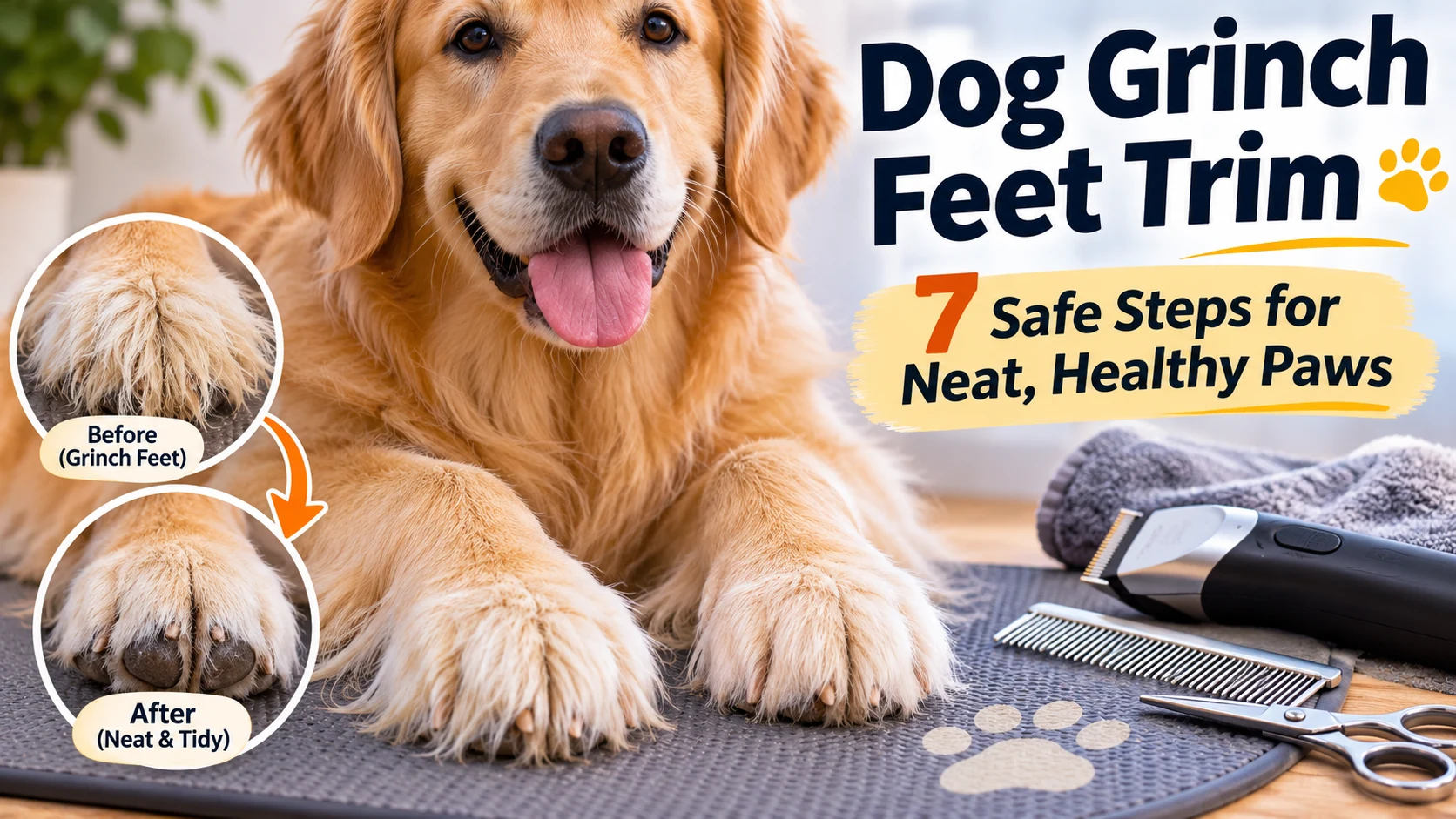
Quick Answer
To trim dog Grinch feet safely, brush the paw fur, inspect the skin, and shorten loose hair that extends beyond the paw pads using a small pet trimmer. Tidy the outside edges only if your dog stays comfortable. Avoid cutting into toe gaps, shaving sensitive skin, or removing tight mats yourself. The American Kennel Club’s home grooming guidance recommends learning proper techniques from a qualified professional.
7 quick grooming steps
- Step 1 — Prepare: Gather a narrow pet trimmer, comb, towel, and treats.
- Step 2 — Inspect: Check every paw for injuries, irritation, and painful mats.
- Step 3 — Brush: Gently separate loose tangles without pulling sensitive skin.
- Step 4 — Trim pads: Shorten protruding fur without digging between the pads.
- Step 5 — Tidy edges: Lightly shape the outer paw outline.
- Step 6 — Recheck: Examine the paws for missed tufts or irritation.
- Step 7 — Reward: Finish with praise and monitor your dog’s comfort.
Safety rule: Stop whenever your dog struggles, the skin looks unhealthy, or you cannot clearly see where the hair ends and the skin begins.
Those fluffy, oversized paws might look adorable, but excessive toe hair can create everyday problems. Dog Grinch feet trim techniques help manage overgrown fur without sacrificing your dog’s natural coat.
I prefer a conservative approach to paw grooming: remove only the hair causing a problem, and leave sensitive areas to professionals. This guide explains the tools, trimming process, common mistakes, and warning signs.
What Are Grinch Feet on Dogs?
Dog Grinch feet describes long, shaggy fur growing around and between a dog’s toes. The name comes from the fuzzy, oversized feet of the fictional Grinch character.
It isn’t a medical condition or an official grooming classification. It’s an informal description of overgrown paw furnishings.
Why Do Some Dogs Develop Grinch Feet?
Long-haired dogs naturally develop more noticeable fur around their paws. Genetics, coat type, grooming routines, and seasonal coat changes influence the appearance.
Common examples include:
- Golden Retrievers: Long feathering may extend beyond their toes.
- Cocker Spaniels: Dense paw furnishings can collect moisture and debris.
- Australian Shepherds: Fluffy feet may develop visible tufts.
- Border Collies: Longer-coated individuals often have feathered paws.
- Shih Tzus: Hair may grow continuously around their feet.
- Poodles: Curly hair requires regular paw inspection and maintenance.
Not every fluffy foot needs a haircut. The important question is whether excess hair affects cleanliness, comfort, or traction.
Are Grinch Feet Bad for Dogs?
Grinch feet aren’t automatically harmful. However, hair covering the paw pads can reduce traction on smooth surfaces.
Excess fur may also collect mud, ice, moisture, or small debris. Tangled hair can become uncomfortable when left unattended.
Watch for these possible warning signs:
- Sliding frequently on hardwood or tile floors.
- Visible knots between the toes.
- Wet fur that remains damp after walks.
- Dirt collecting underneath the paw.
- Repeated licking or chewing around the feet.
- Unusual reluctance to place weight on a paw.
Persistent licking or limping isn’t simply a grooming issue. Contact your veterinarian to investigate the underlying cause.
Should You Trim Your Dog’s Grinch Feet?
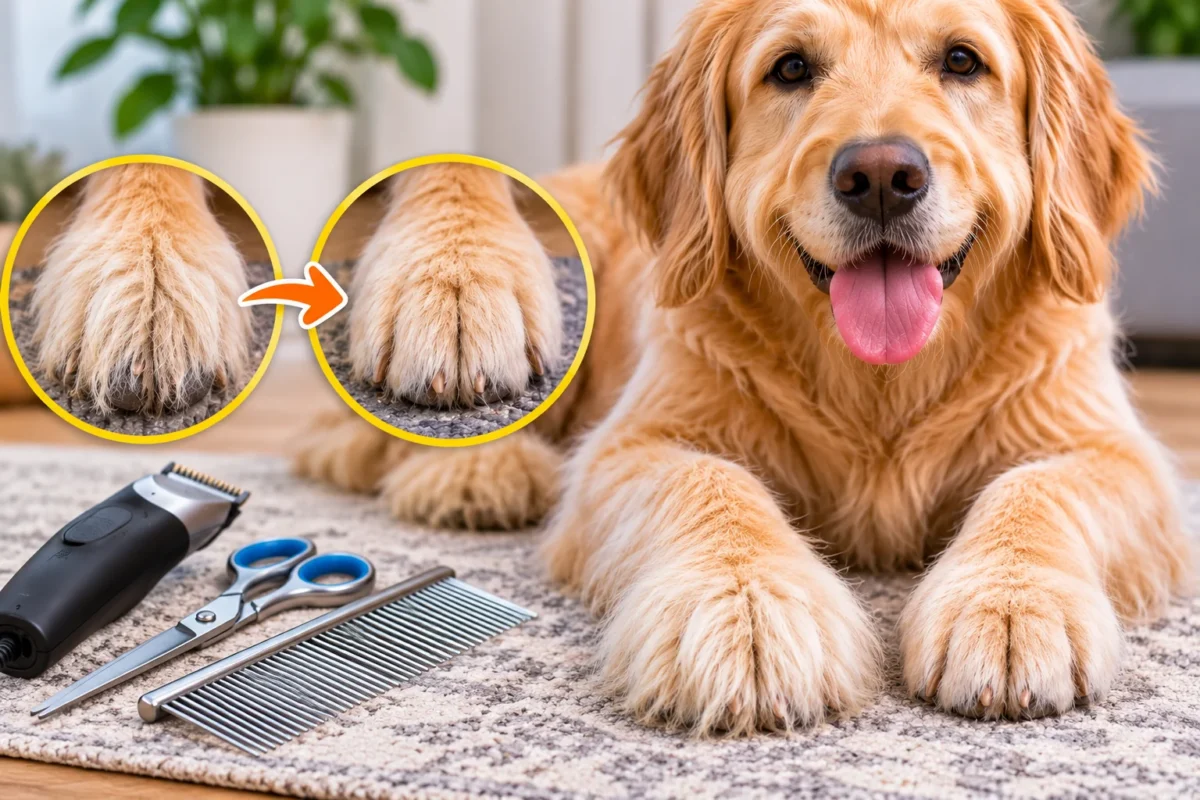
Trim excess paw fur when it covers the pads, becomes tangled, or repeatedly collects debris. Preserve healthy feathering that doesn’t interfere with your dog’s comfort.
A functional paw trim doesn’t require making every foot look perfectly sculpted. The goal is a clean, comfortable walking surface.
What Happens If You Never Trim Paw Hair?
Some dogs maintain comfortable paws without frequent trimming. Others develop problems as their hair grows beyond the pads.
Potential consequences include:
- Reduced traction: Long fur can interfere with contact between the pads and the floor.
- Matting: Hair may tighten into painful knots.
- Debris buildup: Grass, mud, and grit can become trapped.
- Moisture retention: Dense fur may remain wet and complicate skin care.
- Hidden irritation: Thick hair makes it harder to inspect the paw.
The USDA’s Animal and Plant Health Inspection Service provides animal-care information covering coat maintenance and mat prevention. Its guidance identifies the feet as areas requiring attention.
Should You Remove All the Hair Between Paw Pads?
No. A proper maintenance trim generally shortens hair extending over the pad surfaces without aggressively removing deeper fur.
The skin between the toes is sensitive and easily injured. Deep clipping requires appropriate training and careful control.
A neat paw doesn’t have to look shaved. Leaving appropriate natural coat coverage is usually preferable to unnecessary close trimming.
Which Tools Are Safest for a Dog Grinch Feet Trim?
A small pet-specific trimmer, gentle comb, and non-slip work surface form a practical grooming kit. Select equipment based on your dog’s coat and tolerance.
The most expensive tool isn’t automatically the safest. Visibility, blade control, and calm handling matter more.
Essential Grooming Tools
- Narrow pet trimmer: For accessible fur protruding around the paw pads.
- Metal grooming comb: For separating loose hair and locating tangles.
- Soft slicker brush: For gently brushing suitable coat types.
- Non-slip mat: For keeping your dog stable.
- Clean towel: For drying and wiping paws.
- Small treats: For positive reinforcement during handling.
- Good lighting: For seeing the boundary between hair and skin.
Blunt-tipped grooming scissors may help trained handlers tidy outer feathering. Beginners should avoid scissors near paw pads, toe webbing, and mats.
Dog Paw Trimmer vs. Scissors: Which Is Better?
A narrow electric trimmer offers controlled hair removal on accessible surfaces when used correctly. Scissors are better reserved for trained grooming work away from delicate skin.
| Feature | Narrow pet trimmer | Grooming scissors |
|---|---|---|
| Best use | Accessible pad-level fur | Outer paw shaping |
| Major risk | Blade irritation or cutting skin | Accidental cuts from sharp edges |
| Noise | Motor noise and vibration | Generally quiet |
| Tight mats | Professional removal recommended | Do not cut mats with scissors |
| Beginner suitability | Only with proper instruction | Not suitable for pad or webbing work |
Never use ordinary household scissors to cut close to paw pads. Dog paws can move suddenly, even when the animal appears relaxed.
How to Trim Dog Grinch Feet in 7 Safe Steps
A safe dog Grinch feet trim starts with preparation and ends with careful inspection. Work slowly, and stop before your dog becomes distressed.
These steps cover basic maintenance of loose, accessible fur. They don’t replace hands-on professional instruction for close clipping or mat removal.
Step 1: Prepare Your Grooming Area
Choose a quiet, well-lit room where your dog feels comfortable. Place a non-slip mat on the floor to create secure footing.
Keep your tools within reach before beginning. Avoid elevated grooming tables unless you have appropriate equipment and handling experience.
- Charge and inspect your trimmer.
- Clean and dry your dog’s paws.
- Remove visible surface dirt with a towel.
- Prepare small rewards.
- Ensure your dog can stand or rest comfortably.
Let your dog investigate the switched-off equipment first. Reward calm curiosity rather than forcing contact.
Step 2: Inspect the Paw Pads and Skin
Examine the underside and outer edges of each paw before trimming. Look for redness, swelling, broken skin, foreign objects, or sensitive areas.
Notice whether the hair is loose or tightly matted. Pulling on a mat may cause considerable discomfort.
- Healthy skin: Continue only with appropriate grooming.
- Loose tangles: Try gentle brushing without tugging.
- Tight mats: Arrange professional removal.
- Redness or swelling: Contact your veterinarian.
- Open wounds: Avoid grooming the affected area.
A useful grooming rule is to inspect before clipping. The condition of the paw determines whether trimming is appropriate.
Step 3: Brush and Separate Loose Paw Hair
Gently brush the fur around the toes to identify longer sections. Use a small comb without pressing into the skin.
Start at the outer ends of the hair and work toward the base only when comfortable. Never force a comb through resistance.
For a dog with thick feathering, support the paw gently while brushing. Stop immediately if your dog pulls away or shows discomfort.
Step 4: Trim Hair Extending Beyond the Paw Pads
After proper hands-on instruction, use a small pet trimmer to shorten visible loose fur extending over the pad surface. Keep the cutting edge away from the skin and toe webbing.
Use short, gentle passes over accessible hair. Don’t press downward, dig into spaces, or attempt to make the entire underside hairless.
- Keep the paw in a comfortable, natural position.
- Make sure you can see the blade and surrounding skin.
- Trim only loose hair clearly extending beyond the pads.
- Check blade temperature regularly.
- Stop whenever the dog moves unexpectedly.
If the trimmer pulls hair, becomes hot, or causes discomfort, switch it off. A professional groomer can demonstrate suitable blade positioning.
Step 5: Tidy the Outer Paw Outline
Remove only excessive fur extending beyond the natural outline of the foot. This creates a tidier appearance without excessive coat removal.
Brush the outer feathering into its natural position first. If shaping would require cutting near skin or moving toes, leave it to a groomer.
Golden Retrievers and spaniels can retain some of their characteristic feathering. A neat result doesn’t require a closely shaved paw.
Step 6: Check Both Sides of Every Paw
Look at the paw from above and underneath after trimming. Check for missed tufts, trapped debris, and signs of discomfort.
Don’t repeatedly trim the same spot simply to achieve symmetry. Excessive grooming can irritate sensitive areas.
- Confirm that paw pads remain visible.
- Check for irritated or pink skin.
- Make sure no hair is caught in the clipper.
- Observe whether your dog places weight normally.
If your dog begins limping after grooming, inspect the foot without probing painful areas. Contact your veterinarian if discomfort persists or you suspect an injury.
Step 7: Reward Your Dog and Finish
End the session with calm praise and a favorite treat. Let your dog walk away without additional restraint.
One short, positive session is more valuable than a stressful attempt at perfection. You can return to ordinary handling practice another day.
Make a note of which parts your dog tolerated comfortably. This helps you plan safer future sessions.
How Can You Keep Grinch Feet Neat Between Trims?
Regular inspection and brushing help control paw hair between grooming appointments. Simple maintenance is often more effective than occasional aggressive trimming.
Brush the Paws Regularly
Check long-haired paws several times each week, especially after muddy walks. Gently remove loose debris and examine areas where fur starts tangling.
Dogs with dense or curly coats may require more frequent attention. Adjust the routine to the individual coat.
Dry the Feet After Wet Walks
Use a clean towel to dry the paws after rain, bathing, or muddy outings. Pay attention to accessible fur around the toes.
Persistent dampness, odor, or redness deserves veterinary attention. Don’t assume every skin problem results from long hair.
Check Nail Length Separately
Long nails and excessive paw hair can contribute to poor footing for different reasons. A hair trim doesn’t replace proper nail care.
The ASPCA’s dog grooming tips explain basic nail-maintenance considerations. Ask your groomer or veterinarian to demonstrate safe nail trimming if needed.
How Often Should You Trim Dog Grinch Feet?
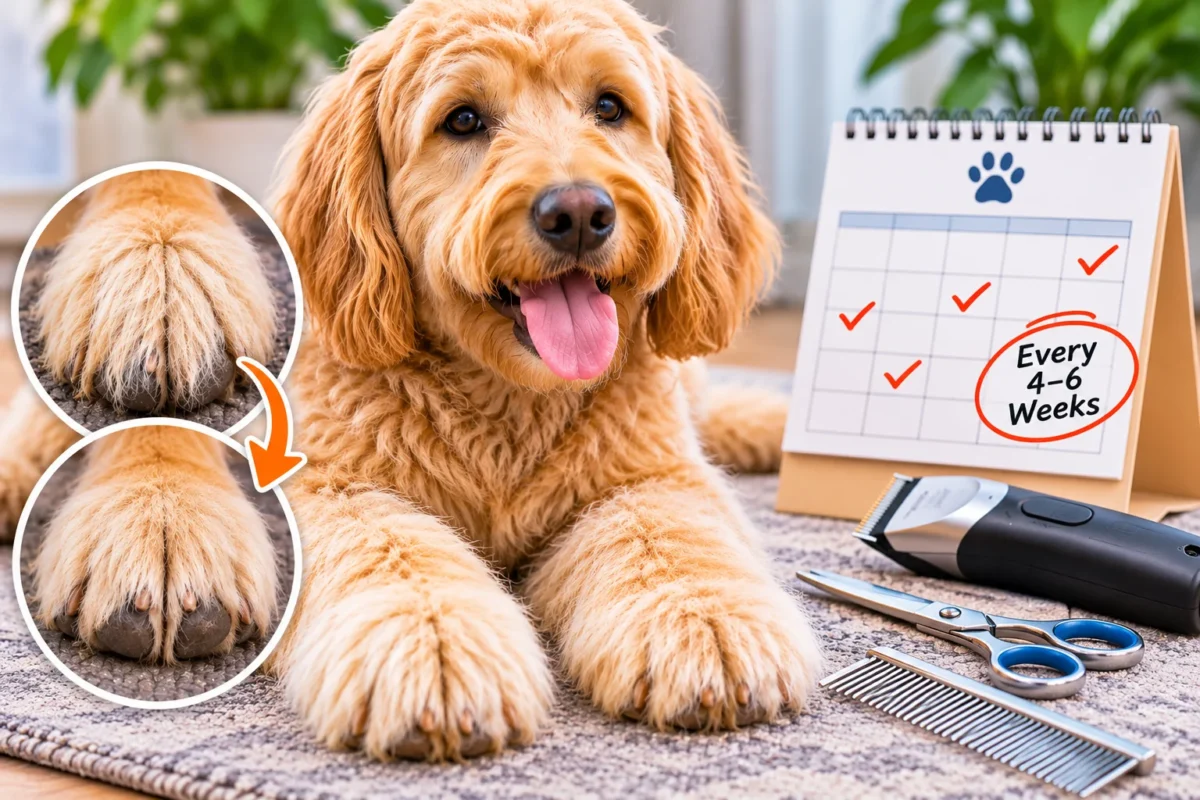
Many long-haired dogs benefit from checking their paw hair every few weeks. An actual trim is necessary only when the fur becomes excessive or difficult to manage.
Some dogs may need maintenance around every four to six weeks. Growth rate, activity, coat texture, and grooming habits vary significantly.
| Maintenance task | Suggested check | What to look for |
|---|---|---|
| Visual paw inspection | After walks | Debris, injuries, irritation |
| Gentle brushing | Several times weekly as needed | Loose tangles and dirt |
| Hair-trim assessment | Every 2–4 weeks | Hair covering pads |
| Professional grooming | Individual schedule | Coat maintenance and safe shaping |
These intervals are practical starting points, not mandatory schedules. Your dog’s comfort and actual hair growth should determine the frequency.
What Are the Biggest Mistakes When Trimming Grinch Feet?
The most common problems come from cutting too close, rushing, or ignoring a dog’s warning signals. Careful grooming should never require force.
Cutting Too Close to the Skin
Close clipping increases the risk of irritation or injury, especially between paw pads. Removing the longest protruding hair is often sufficient.
Using Scissors on Matted Fur
Mats can pull skin into the tangled hair, making the underlying surface difficult to identify. Cutting them with scissors can cause serious injuries.
Leave tight mats to a qualified professional. The Preventive Vet paw-care guide explains why improper mat removal is dangerous.
Forcing an Anxious Dog to Stay Still
Holding a frightened dog firmly while using sharp equipment increases the likelihood of sudden movement. Stress may also make future grooming harder.
Practice touching and briefly lifting the paws without trimming. Reward cooperation and build tolerance gradually.
Ignoring Blade Heat
Electric trimmer blades can become warm during use. Heat can irritate or burn delicate skin.
Check the blade regularly against your inner wrist, with the trimmer switched off. Stop using it if it becomes uncomfortable.
Trimming Over Irritated Skin
Redness, swelling, unusual odor, discharge, or persistent licking can indicate a medical problem. Grooming alone cannot reliably resolve these symptoms.
Contact a veterinarian before clipping around the affected area. Early assessment can prevent unnecessary discomfort.
When Should a Groomer or Veterinarian Trim Your Dog’s Feet?
Professional grooming is the safer choice for tight mats, difficult paw access, or dogs that cannot tolerate handling. Medical symptoms should be evaluated by a veterinarian first.
Choose professional help when you notice:
- Dense mats close to the skin.
- Hair tangled tightly between the toes.
- Frequent pulling away, growling, or attempts to bite.
- Unclear visibility around the pads.
- Previous grooming injuries.
- Redness, swelling, discharge, or persistent licking.
- Limping or discomfort when walking.
Qualified groomers can also demonstrate appropriate trimming technique for your dog’s specific paw structure. That instruction is particularly useful before attempting maintenance at home.
Which Grooming Tools Are Worth Considering?
If you’re building a paw-grooming kit, prioritize control, reliability, and ease of cleaning. These two models suit different needs, although neither eliminates the need for proper training.
Affiliate disclosure: This article contains affiliate links. Purchases through these links may earn a commission at no additional cost to you.
🏆 Precision trimming pick
Wahl BravMini+ Cordless Trimmer
★★★★☆ 4/5 — Editorial suitability
This professional compact trimmer offers a narrow cutting head and approximately 100 minutes of cordless operation according to its specifications. I’d prioritize it for owners seeking a dedicated detail trimmer after receiving proper paw-grooming instruction. Its close-cutting blade requires particular care around sensitive areas.
💡 Compact paw-grooming option
Oneisall FC13 Dog Paw Trimmer
★★★★☆ 4/5 — Editorial suitability
The FC13 features a 19 mm cutting head, two speed settings, an LED light, and a rechargeable cordless design. I like the concept of improved visibility for detail work, especially around dark-colored paw fur. The light doesn’t make deep clipping or mat removal safe for beginners.
Frequently Asked Questions About Dog Grinch Feet Trim
Can I trim my dog’s Grinch feet myself?
You can perform limited maintenance on loose, accessible paw fur after learning the correct technique. However, close clipping between pads and removing mats can cause injuries. Seek professional instruction before using sharp tools around sensitive paw areas.
Do dogs need hair between their paw pads?
Dogs naturally grow hair around and between their toes, with the amount depending on coat type. Not all this hair needs removing. Grooming generally focuses on excess fur that covers the pads, traps debris, or contributes to uncomfortable matting.
Will trimming Grinch feet help my dog stop slipping?
Trimming excessive hair that covers the paw pads may improve contact with smooth flooring. However, slipping can also result from long nails, orthopedic problems, weakness, or other health issues. Ask your veterinarian about persistent or unexplained slipping.
How short should I trim my dog’s paw fur?
A conservative trim keeps excess fur from covering the walking surfaces of the paw pads without shaving into sensitive skin. The exact amount depends on coat type and paw structure. Avoid cutting deep between the pads or removing protective-looking fur unnecessarily.
How do I trim Grinch feet on a nervous dog?
Begin with short handling exercises instead of immediate trimming. Reward your dog for calm paw contact, introduce the sound of the trimmer gradually, and end sessions before distress develops. If your dog resists strongly, work with a qualified groomer or veterinarian.
Final Thoughts: Keep Your Dog’s Paws Comfortable
A good dog Grinch feet trim is about maintaining healthy, functional paws, not creating a perfect haircut. Concentrate on loose excess hair, gentle handling, and clear visibility.
Check the paws regularly and avoid cutting close to delicate skin. If matting, anxiety, or irritation complicates grooming, professional help is the safest next step.
Your next step: Inspect your dog’s paws today. If the pads are hidden by long fur, arrange a safe maintenance trim or ask a groomer to demonstrate the technique.


