
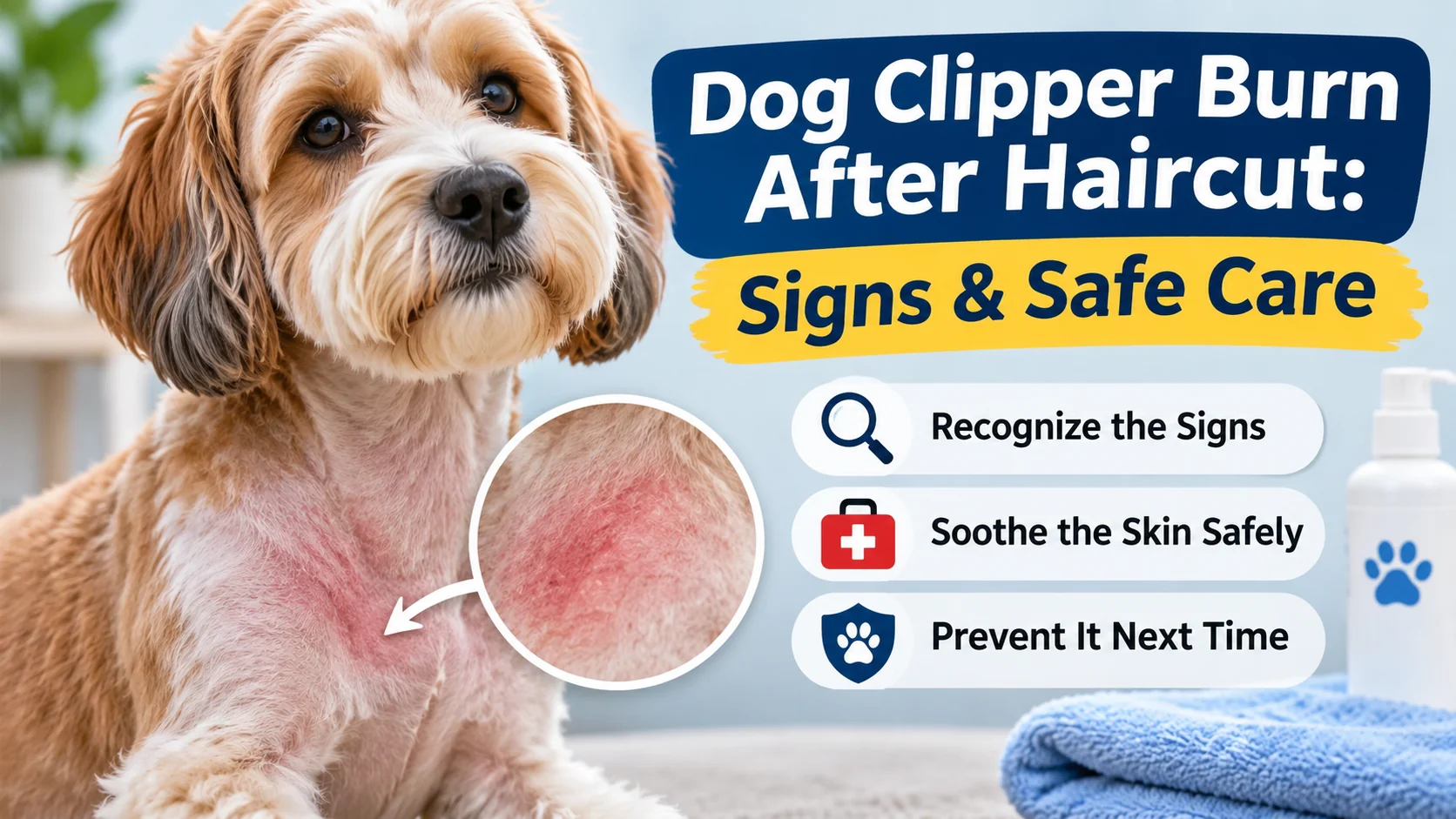
Quick Answer
Dog clipper burn after a haircut may cause redness, itching, tenderness, or small bumps where the coat was shaved. Mild irritation can settle with gentle care and prevention of licking, but worsening redness, significant pain, open skin, discharge, or swelling requires veterinary attention. Stop clipping the area, avoid unapproved creams, and monitor the skin closely.
Noticing red, uncomfortable skin after your dog’s haircut can be worrying. Clipper irritation is one possible cause, particularly around closely shaved areas such as the belly, groin, paws, and sanitary region.
However, not every post-grooming rash is a clipper burn. Shampoo sensitivity, scratches, underlying skin disease, and infections can produce similar symptoms. The first priority is to assess the skin and prevent further irritation.
What Is Dog Clipper Burn After a Haircut?
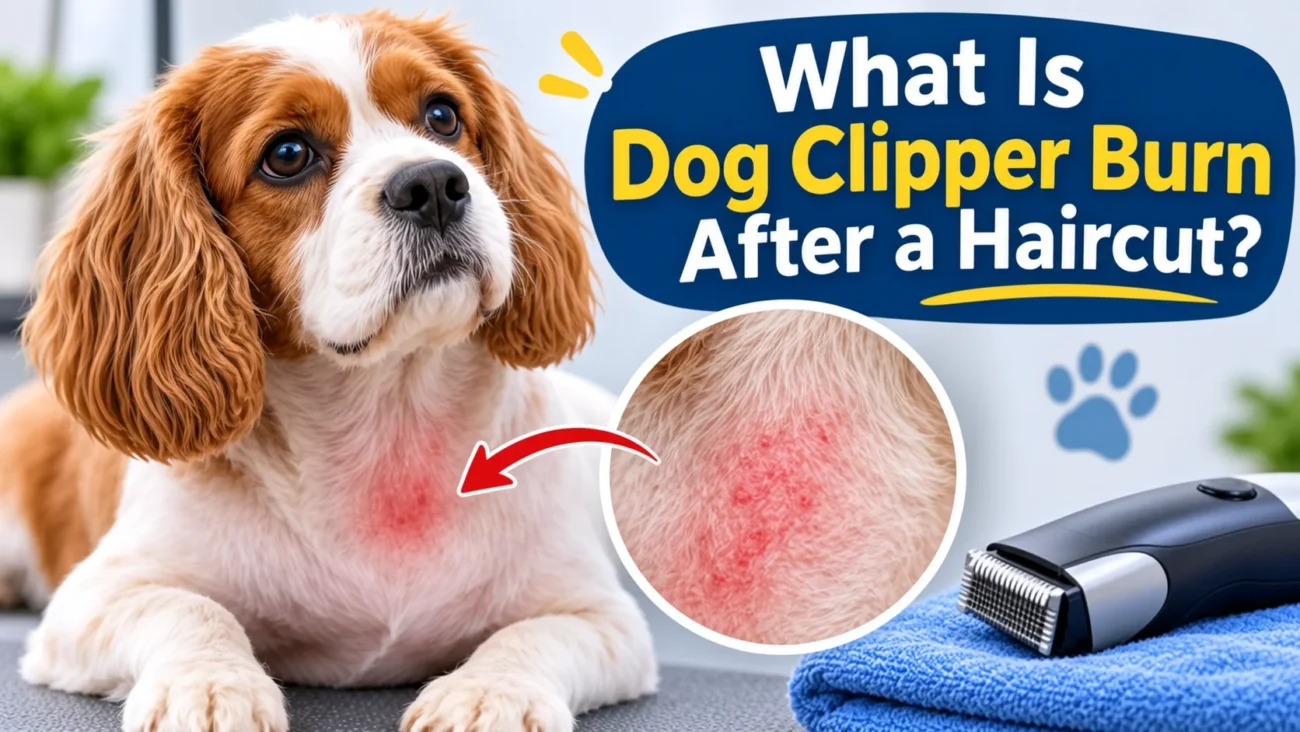
Dog clipper burn is a term commonly used for skin irritation or injury associated with grooming clippers. It may involve friction from close clipping, contact with a hot blade, or minor surface abrasions.
A true thermal burn occurs when excessive blade heat damages the skin. Clipper rash, by contrast, may result from repeated friction or very close shaving without an actual heat injury.
Both can leave the skin looking red or feeling uncomfortable. The distinction matters because a deeper burn requires different care from a minor superficial irritation.
PetMD’s professional grooming guidance distinguishes hot-blade injuries from the smaller scratches that clippers may cause.
What Are the Signs of Clipper Burn on Dogs?
Common signs include redness, sensitivity, and increased attention to a freshly clipped area. Symptoms may become more noticeable after the grooming session when the dog starts walking, rubbing, or licking the exposed skin.
- Red or pink skin: A patch of irritation appears where the clippers passed.
- Scratching or licking: The dog repeatedly tries to soothe an uncomfortable area.
- Small bumps: Tiny raised spots may appear after close clipping.
- Tenderness: The dog pulls away when the affected skin is touched.
- Surface scratches: Fine abrasions may follow repeated passes with the blade.
- Scabbing: Damaged skin may form crusts, particularly if the dog keeps scratching.
These signs cannot confirm clipper burn by themselves. Check whether the irritation follows a shaved pattern and whether other symptoms, such as discharge or a strong odor, are present.
Where Does Clipper Irritation Usually Appear?
Areas with thin, sensitive skin or closely clipped hair deserve particular attention. These include the lower abdomen, groin, armpits, sanitary area, muzzle, and paw regions.
A visible mark in one of these locations is not proof of grooming injury. The pattern, timing, severity, and dog’s behavior all help determine what may have happened.
How Do You Soothe Mild Dog Clipper Burn Safely?
For minor redness with intact skin and a dog behaving normally, the safest approach is gentle observation and protection from further irritation. Avoid aggressive cleaning or trying several treatments at once.
- Stop additional clipping. Do not shave the red area again to inspect it. Further blade contact can worsen discomfort.
- Examine the skin gently. Look for cuts, broken skin, swelling, blisters, wet patches, and discharge without rubbing or squeezing the area.
- Use a cool, damp cloth for comfort. If the skin is intact and the dog tolerates it, briefly hold a clean, cool (not icy) cloth against the irritated area. Stop if your dog resists or seems painful.
- Prevent licking and scratching. Supervise your dog and consider a properly fitted recovery collar if the area can be reached. Persistent licking can quickly worsen surface damage.
- Keep the area clean and dry. Avoid unnecessary bathing, rough towels, fragrant products, and clothing that rubs against the irritated patch.
- Monitor for changes. Take a clear photograph and compare the redness and size later. Contact your veterinarian if the area worsens or does not begin improving within about 24 hours.
If you suspect a genuine heat burn rather than ordinary shaving irritation, seek veterinary advice promptly. Significant pain, blistering, or damaged skin should not be managed as a routine grooming rash.
Warning
Do not apply human pain-relief creams, essential oils, alcohol, hydrogen peroxide, diaper-rash products, or medicated ointments without veterinary approval. Some products irritate damaged skin or create risks when licked or swallowed.
When Does Clipper Burn Need Veterinary Attention?
Contact a veterinarian promptly if the redness spreads, the skin becomes very painful, or your dog develops swelling, broken skin, pus, or persistent scratching. Severe reactions may need an examination to distinguish burns from infection or another skin problem.
Use the following guide to decide how urgently to act.
| What You Notice | Recommended Action |
|---|---|
| Small, mildly red patch; intact skin; normal behavior | Prevent licking, observe closely, and contact a vet if it persists or worsens. |
| Increasing redness, bumps, scratching, or tenderness | Arrange a prompt veterinary assessment. |
| Open sores, pus, moist lesions, or unpleasant smell | Seek veterinary care the same day. |
| Blistering, severe pain, substantial swelling, or damaged skin | Seek urgent veterinary evaluation. |
| Collapse, breathing trouble, or marked weakness | Go to an emergency veterinary service immediately. |
Moist, inflamed lesions may indicate a hot spot rather than simple clipper irritation. The PDSA guidance on canine hot spots explains why prompt assessment and stopping licking are important.
What Causes Clipper Burn During Dog Grooming?
Several grooming conditions can irritate the skin. Identifying the likely contributing factor helps prevent the problem from happening during the next haircut.
Overheated Clipper Blades
Metal blades can heat up during prolonged use. A blade that becomes excessively hot may injure the skin on contact, especially in closely clipped areas.
The USDA’s canine coat-care guidance specifically warns that hot clippers can burn a dog’s skin.
Excessive Pressure or Repeated Passes
Pressing a blade against the skin or repeatedly shaving the same patch can produce friction and abrasions. Using an extremely close cutting length may increase irritation in sensitive areas.
Dirty, Dull, or Poorly Maintained Blades
Clippers that pull hair or fail to cut smoothly may encourage repeated passes. Poorly maintained equipment also creates avoidable hygiene and skin-injury risks.
Matted Hair and Sensitive Skin
Removing tight mats may reveal skin that was already inflamed or delicate beneath the coat. This irritation may be noticed only after clipping, even when the clipper itself was not the original cause.
Skin allergies, previous scratching, and existing dermatitis can also make a grooming session more uncomfortable.
How Can You Tell Clipper Burn From Other Grooming Rashes?
The location and appearance provide clues, but they are not reliable enough for a diagnosis. A rash appearing after a haircut may result from more than one cause.
- Clipper irritation: Often follows recently shaved areas and may look like localized redness or fine abrasions.
- Shampoo reaction: May affect larger areas exposed to a grooming product, sometimes with widespread itching.
- Hot spot: Often develops into a moist, painful area as licking or scratching damages the skin.
- Skin infection: May produce pustules, crusts, discharge, swelling, or odor and requires veterinary evaluation.
Timing alone does not establish the cause. If the appearance is unusual, the dog is uncomfortable, or the rash is progressing, avoid guessing at treatment.
For general bathing precautions, see our dog bathing guide. It explains dog-safe shampoo selection and rinsing, although a current skin injury may require different instructions from your veterinarian.
How Long Does Dog Clipper Burn Take to Heal?
Mild, superficial clipper irritation may begin improving within 24–48 hours once further rubbing and licking stop. Complete recovery varies with the depth of injury, the dog’s skin condition, and whether secondary infection develops.
A true burn, an open wound, or a hot spot can take longer and may need veterinary treatment. There is no single healing timeline that safely applies to every post-grooming rash.
Rather than relying only on the number of days, look for a shrinking area of redness, less discomfort, and reduced licking. Increasing pain, swelling, moisture, or discharge means the condition is not following a reassuring course.
Tip
Photograph the irritated patch in consistent lighting and note your dog’s licking, scratching, and comfort. These details can help a veterinarian evaluate whether the problem is improving or spreading.
How Can You Prevent Clipper Burn During Future Haircuts?
Prevention starts with well-maintained grooming equipment, appropriate cutting lengths, and careful attention to delicate skin.
- Check blade temperature: Stop regularly to check for excessive heat and allow blades to cool or switch to a cool blade.
- Maintain the clippers: Clean, lubricate, and service blades according to the equipment manufacturer’s instructions.
- Avoid unnecessary close shaving: Use a suitable cutting length for the coat and body area.
- Use gentle technique: Avoid heavy pressure and repeated passes over the same spot.
- Address mats carefully: Severe matting can hide damaged skin and may require professional grooming.
- Discuss previous reactions: Tell the groomer exactly which areas became irritated after earlier haircuts.
Dogs with repeated reactions may benefit from a different grooming plan, but persistent skin sensitivity should first be discussed with a veterinarian.
Routine coat care also matters. Brushing appropriate to the coat type can reduce tangles that make grooming more difficult, while careful handling helps protect vulnerable areas.
Should You Contact the Groomer About Clipper Burn?
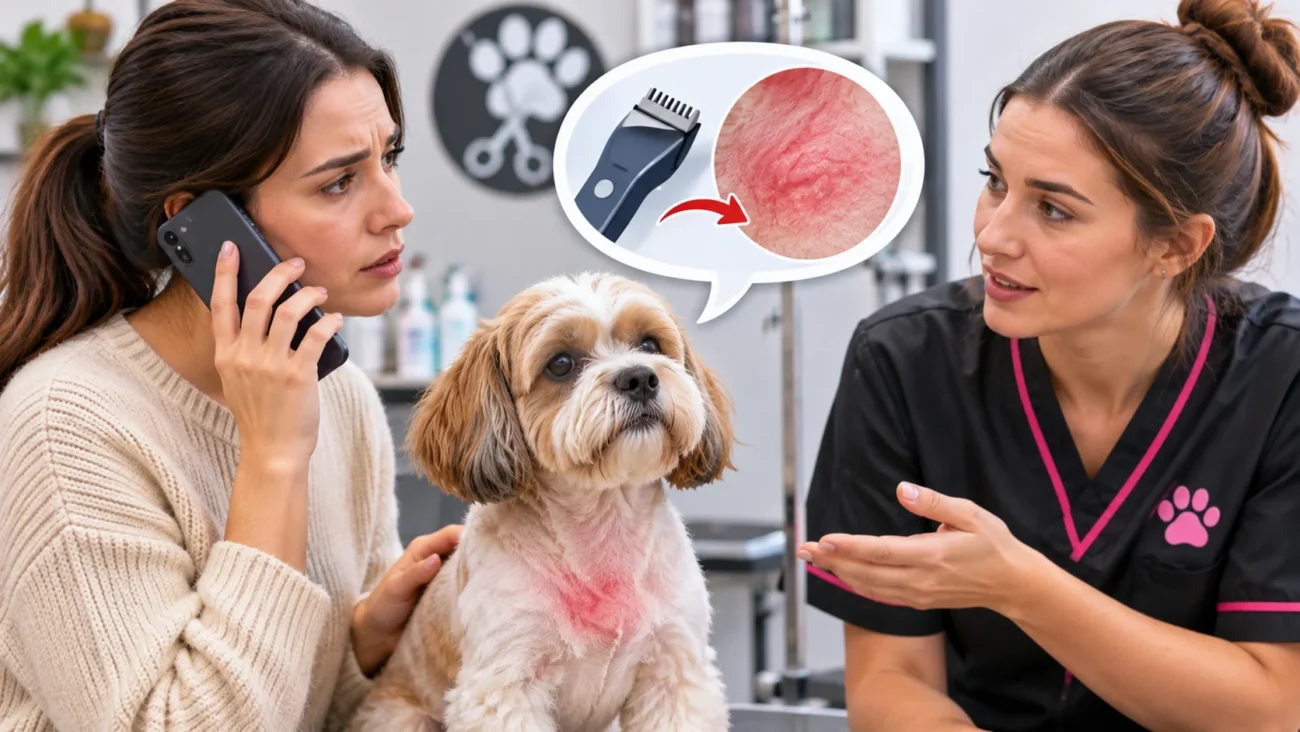
Yes. Informing the groomer helps establish which tools and techniques were used and whether any irritation was noticed during the appointment.
Provide a photograph and describe when the symptoms appeared. Ask whether the area was closely shaved, whether mats were removed, and whether any cuts or redness were observed.
A professional discussion can help prevent recurrence, but it should not delay veterinary care. A groomer cannot reliably diagnose an infected lesion or determine the depth of a burn from its appearance alone.
Related Product
Adjustable Dog Recovery Collar
A properly fitted recovery collar can help prevent your dog from licking or chewing an irritated area while you arrange appropriate care. Choose a size and shape that actually prevents access to the affected skin.
As an Amazon Associate, we earn from qualifying purchases.
Frequently Asked Questions
1. Can a dog get clipper burn even if the blade was not hot?
Yes. Close shaving, friction, and minor abrasions can irritate the skin without a thermal burn. The term clipper burn is often used broadly for these grooming reactions.
2. Can I put aloe vera on my dog’s clipper burn?
Ask your veterinarian before applying aloe vera products. Formulations vary, and added ingredients or ingestion during licking can create problems.
3. Why is my dog licking the sanitary area after grooming?
Close shaving can irritate sensitive skin, but urinary, anal gland, and other medical problems can also cause licking. Persistent licking, pain, or visible skin damage warrants veterinary advice.
4. Can clipper burn develop into a hot spot?
Yes. Repeated licking and scratching of irritated skin may contribute to a hot spot. A moist, expanding, or painful lesion needs veterinary evaluation.
5. Should I bathe my dog immediately after noticing clipper rash?
Not routinely. Another bath, shampoo, or vigorous drying may increase irritation. Ask your veterinarian before bathing damaged skin, particularly if sores or discharge are present.
6. Will my dog’s hair grow back after clipper irritation?
Hair usually grows back after superficial irritation resolves, although regrowth varies by coat type and individual dog. Severe injury, scarring, or underlying skin disease may affect regrowth and requires veterinary assessment.
Final Thoughts
Dog clipper burn after a haircut is often associated with close clipping, friction, or blade heat, but other skin conditions can look similar. For mild irritation, prevent licking, avoid further grooming, and watch for improvement. Seek veterinary care for pain, spreading redness, broken skin, discharge, or persistent symptoms. Proper equipment maintenance and gentler grooming can help reduce future irritation.


