
Quick Answer
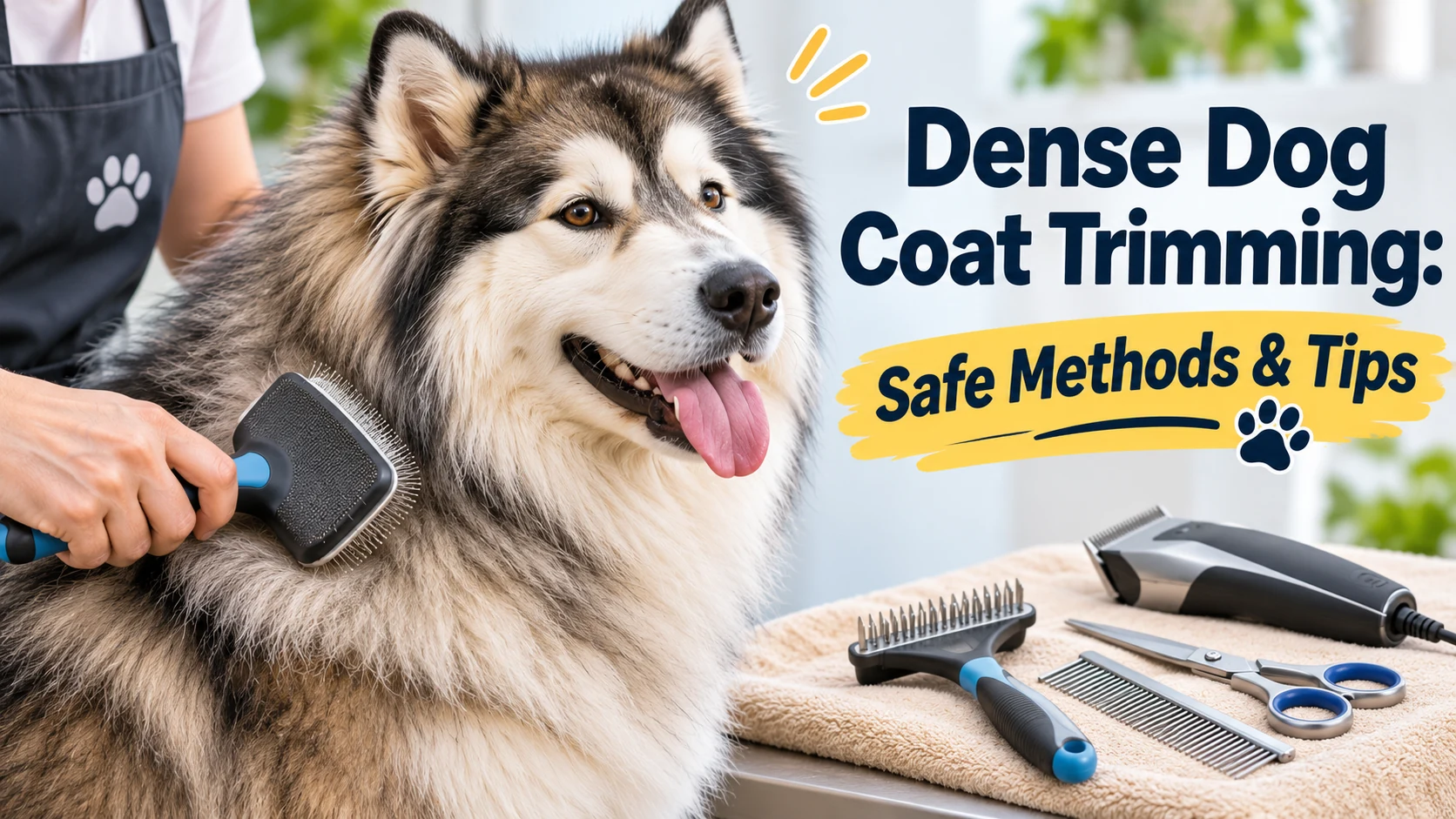
Dense dog coat trimming should begin with identifying the coat type. Most thick double-coated dogs need thorough brushing, loose-undercoat removal, and selective tidying rather than a full-body haircut. Dogs with dense, continuously growing hair may need regular clipping. Avoid shaving a protective double coat unless severe matting, a medical need, or another individual welfare concern makes close clipping necessary.
A dense coat can make grooming surprisingly difficult. Loose hair collects beneath the surface, tangles form in hidden areas, and an ordinary brush may glide over the top without reaching the undercoat.
The solution is not always a shorter haircut. Successful dense dog coat trimming depends on coat structure, skin condition, and the reason trimming is needed. Understanding these differences helps prevent uncomfortable grooming sessions, unnecessary shaving, and damage to healthy fur.
What Makes a Dog’s Coat Dense?
A dense dog coat contains a large amount of hair within a relatively small area. However, density does not automatically mean the hair is long or that the dog needs clipping.
Many breeds have a double coat consisting of two distinct layers:
- Outer coat: Longer or coarser guard hairs that help protect the skin from environmental exposure.
- Undercoat: Softer, shorter hairs that provide insulation and contribute to the coat’s fullness.
Examples of densely double-coated breeds include Siberian Huskies, German Shepherds, Samoyeds, Golden Retrievers, and Pomeranians. Coat thickness and grooming requirements vary between breeds and individual dogs.
Other dogs, including Poodles and some Poodle mixes, can have extremely dense hair that grows continuously and requires periodic trimming. Their grooming needs differ substantially from those of a shedding double-coated breed.
This distinction matters because removing loose undercoat and shortening continuously growing hair are two different grooming tasks.
Should You Trim or Shave a Dense Dog Coat?
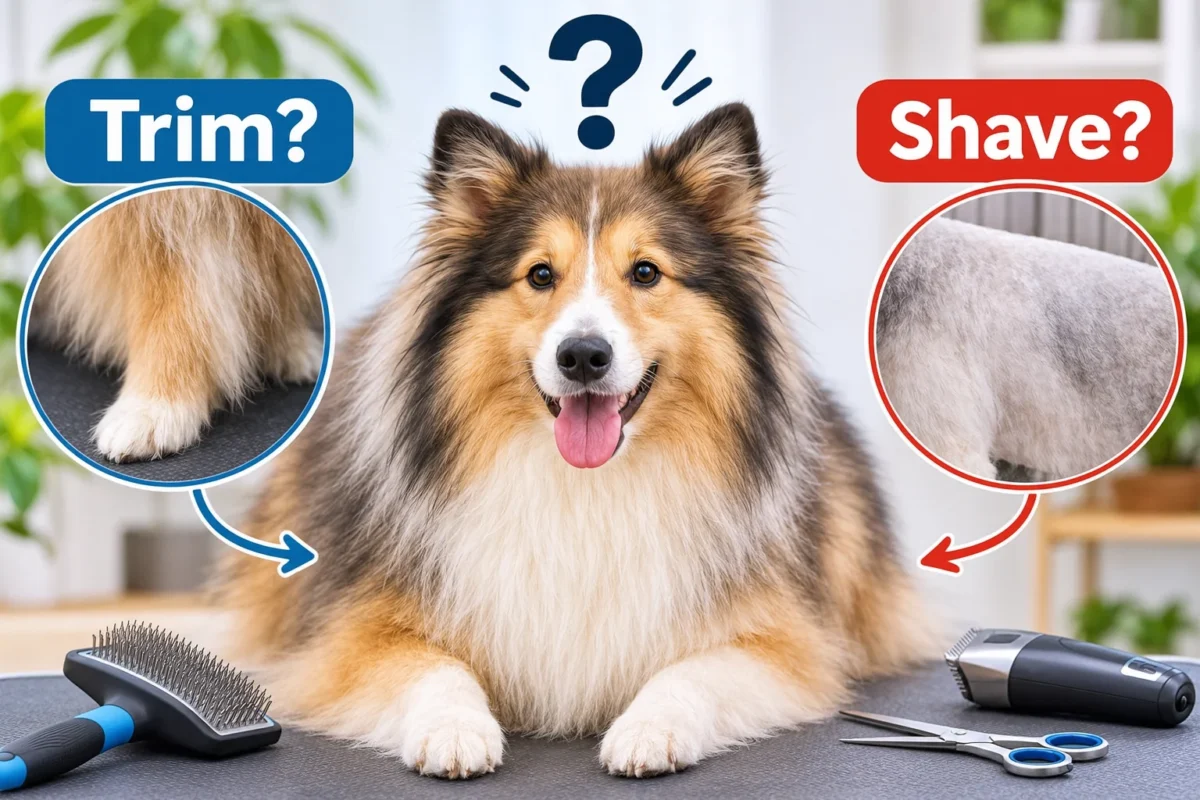
Most healthy double-coated dogs should not be routinely shaved. Removing substantial portions of their protective coat can expose the skin and may interfere with normal coat appearance and regrowth.
The American Kennel Club’s double-coat grooming guidance recommends regular brushing and generally discourages shaving except when coat condition makes it necessary.
Trimming can still be appropriate when limited hair removal improves hygiene, reduces troublesome feathering, or keeps the paws tidy.
| Coat condition | Usually appropriate care |
|---|---|
| Healthy, dense double coat | Brush, comb, and remove loose undercoat |
| Long feathering around feet | Careful, limited trimming |
| Dense, continuously growing hair | Regular coat-appropriate clipping |
| Severe, tight matting | Professional assessment and possible clipping |
| Inflamed or injured skin | Veterinary evaluation before grooming |
The guiding principle is simple: remove hair that creates a problem without unnecessarily removing hair that protects the dog.
Which Grooming Tools Work Best for Dense Coats?
Dense coats require tools capable of working through the hair without scraping or pulling the skin. Choose equipment according to hair length, coat structure, and the dog’s tolerance.
- Slicker brush: Helps loosen shed hair and work through manageable tangles, especially in medium and longer coats.
- Undercoat rake: Reaches loose undercoat in suitable double coats. Rounded, appropriately spaced teeth are preferable.
- Metal grooming comb: Checks whether brushing has reached the base of the coat and reveals remaining tangles.
- Pin brush: Offers gentle everyday maintenance for certain longer coats.
- Round-tipped grooming scissors: Useful for limited tidying where safe visibility and control are possible.
- Dog grooming clippers: Appropriate for coats that require clipping, with blade and attachment choices matched to coat condition.
A single aggressive deshedding tool is not necessarily better than several gentle passes with suitable equipment. Repeated pressure over the same area can irritate the skin.
For heavily coated dogs, a professional wash and controlled drying session can also help release loose undercoat. High-velocity dryers require careful handling, especially around the face and sensitive areas.
How to Groom and Trim a Dense Dog Coat Safely
Begin with a calm dog, good lighting, a stable nonslip surface, and enough time to work without rushing. The following process suits routine maintenance of a healthy dense coat; it is not intended for severe mats or painful skin conditions.
Step 1: Examine the Coat and Skin
Run your fingers gently through the coat and check behind the ears, beneath the collar, around the armpits, and along the hindquarters.
Look for tight tangles, irritated skin, moisture, parasites, or areas that cause discomfort when touched. Stop if the dog appears painful or the skin looks abnormal.
Examination also helps determine whether you are dealing with normal shedding or actual matting. Loose undercoat usually separates with appropriate brushing, while a tight mat can pull against the skin.
Step 2: Brush in Small Sections
Part the coat to expose a manageable section. Brush gently from the accessible base of the hair outward, working through the coat in layers rather than repeatedly brushing only the surface.
Hold longer hair near the skin when necessary to reduce pulling. Avoid pressing brush pins directly into the skin.
Continue gradually across the body, paying extra attention to areas where friction causes tangling. Take breaks when the dog becomes restless.
Step 3: Remove Loose Undercoat
For a shedding double coat, use a suitable undercoat rake with light pressure and movements following the direction of hair growth.
Focus on removing already-loose hair. Do not repeatedly scrape an area to force out additional fur.
During heavy seasonal shedding, small, frequent sessions are generally more comfortable than attempting to remove every loose hair in one prolonged session.
Step 4: Check the Coat With a Comb
Pass a grooming comb through the brushed sections without forcing it against resistance. A comb that repeatedly catches may indicate remaining tangles or densely packed undercoat.
Return to gentle brushing when needed. If the comb cannot move through an area without significant pulling, avoid using force or cutting blindly into the coat.
Step 5: Trim Only Where Appropriate
Once the coat is detangled, identify whether any hair genuinely needs shortening. For many double-coated dogs, this means limited tidying rather than a body haircut.
Hair extending beyond the paw outline may sometimes be carefully trimmed. Thick feathering that collects dirt may also benefit from minor shaping, depending on the breed.
Use controlled movements and keep sharp tools away from skin folds, paw pads, eyes, and moving body parts. Leave delicate areas to a professional if you cannot see the skin clearly.
Step 6: Recheck and Reward
Finish by checking for remaining tangles, loose hair, or redness. Offer praise and rewards so the dog associates grooming with a predictable, comfortable routine.
A successful session does not require completing the entire coat at once. Several short sessions may work better for a dog that is unfamiliar with grooming.
Grooming Tip
Check your progress with a comb rather than judging only by appearance. A thick coat can look smooth on the surface while tangles and shed hair remain close to the skin.
Which Areas of a Dense Coat May Need Trimming?
Selective trimming can make daily care easier without dramatically changing the coat.
Paws and Feet
Excess hair around the feet can trap dirt and obscure the paw outline. Minor trimming may help keep the area tidy.
Hair between paw pads requires particular caution because the skin is delicate and the dog may move suddenly. Professional trimming is preferable when visibility or control is limited.
Hindquarters and Sanitary Areas
Long hair near the rear may collect waste or moisture. A modest sanitary trim can improve cleanliness when performed with appropriate equipment.
Avoid cutting close to sensitive skin without training. Dogs with heavy matting or skin irritation in this region may require professional care.
Feathering and Long Furnishings
Some dense-coated breeds develop longer hair around the legs, chest, and tail. Light shaping may be appropriate, but excessive cutting can change the coat’s natural outline.
For breed-specific trimming, ask an experienced groomer how much hair can safely be removed.
What Common Trimming Mistakes Should You Avoid?
The most consequential mistakes usually involve choosing the wrong method, applying excessive force, or attempting to remove difficult mats without adequate visibility.
- Shaving to reduce shedding: Shortening a double coat does not stop normal hair turnover and removes protective hair.
- Brushing only the surface: Hidden tangles can remain beneath an apparently smooth outer layer.
- Using excessive pressure: Aggressive brushing and deshedding can cause discomfort or skin irritation.
- Cutting through tight mats with scissors: Skin may be drawn into the mat and accidentally cut.
- Ignoring coat-specific needs: A Husky and a Poodle may both have dense coats but require different grooming approaches.
- Continuing when the dog is distressed: Restraint and repeated pulling can make future grooming more difficult.
Warning
Never insert scissors beneath a tight mat or attempt to pull a severely matted coat free. Mats can conceal and stretch the skin, increasing the risk of injury. Seek help from a qualified groomer or veterinarian.
How Often Should You Groom a Dog With a Dense Coat?
Grooming frequency depends on coat length, shedding activity, lifestyle, and the dog’s tendency to develop tangles.
Many double-coated dogs benefit from brushing at least weekly, while long, heavy, or actively shedding coats often require more frequent attention. Some dogs need daily checks around friction-prone areas.
Dogs with continuously growing dense hair may need professional haircuts on a recurring schedule, with regular brushing between appointments.
Rather than relying on a fixed interval, watch how quickly tangles return and whether a comb can still pass comfortably through the coat.
A seasonal increase in loose fur is not automatically a reason for shorter clipping. It often signals the need for more thorough undercoat maintenance.
Can Trimming Help a Dense-Coated Dog Stay Cool?
Removing loose, trapped undercoat can help maintain a clean, functional coat, but shaving is generally not the recommended method of cooling a healthy double-coated dog.
Double coats provide insulation and help protect skin from environmental exposure. The AKC’s guidance on shaving dogs in summer explains why routinely removing this protective coat is discouraged.
Temperature management also depends on shade, drinking water, exercise timing, ventilation, and avoiding excessive heat exposure.
A haircut should never replace sensible hot-weather precautions. Dogs can overheat regardless of coat length, particularly during strenuous activity or in hot, humid conditions.
When Does a Dense Coat Need Professional Attention?
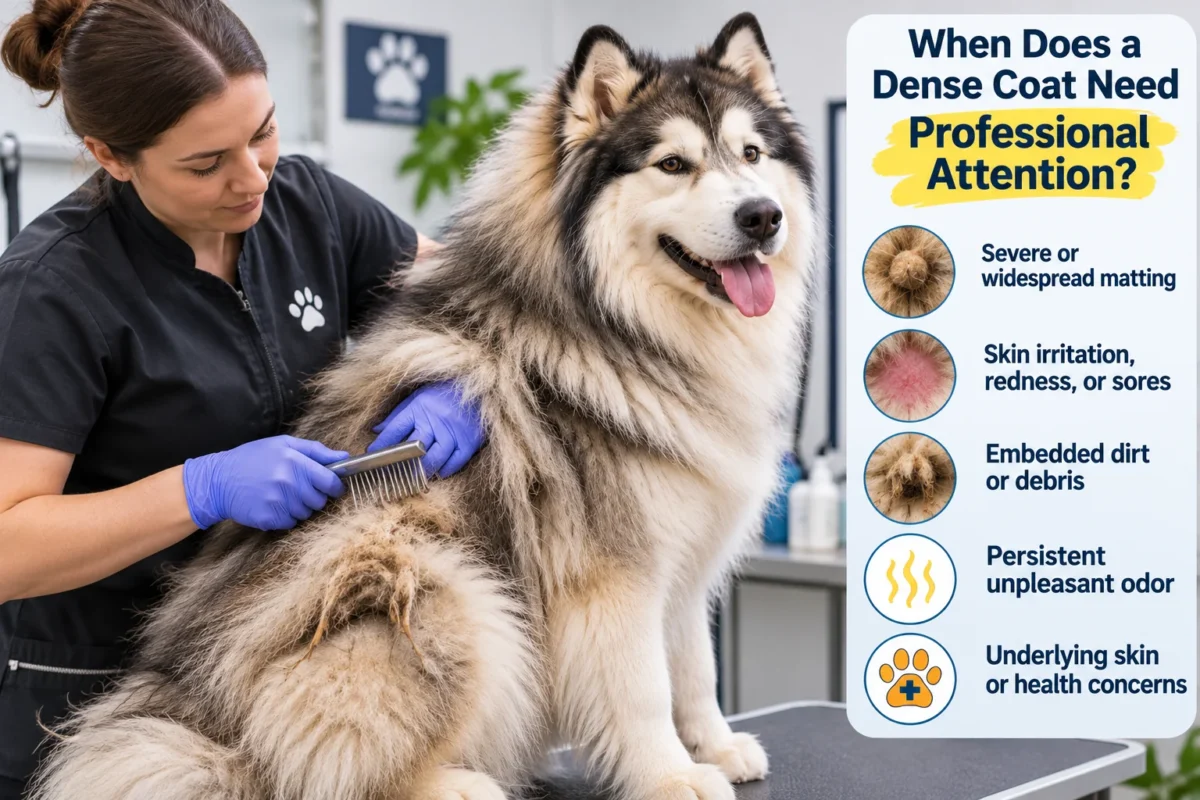
Professional grooming is advisable when a dense coat has extensive tangles, difficult-to-reach mats, or a history of uncomfortable grooming sessions.
Veterinary attention is more appropriate when the dog has painful skin, persistent redness, unusual odor, discharge, sores, or irritation beneath matting.
VCA Animal Hospitals’ coat-care guidance recommends veterinary care when mats have caused skin irritation.
A professional can also help distinguish normal dense undercoat from coat compaction and advise whether careful deshedding, clipping, or medically supervised treatment is appropriate.
Frequently Asked Questions
Can you use clippers on a dog with very thick fur?
Yes, when clipping is appropriate for the coat type or necessary for welfare. However, routinely clipping a healthy double-coated dog short is usually unnecessary. Blade choice and coat preparation matter, particularly when hair is tangled.
Does trimming make a double coat grow back thicker?
Trimming does not create additional hair follicles. However, regrowth can look or feel different as undercoat and guard hairs return at different rates. Coat changes vary between dogs.
What is the safest way to remove thick undercoat?
Use gentle, section-by-section brushing with a tool suited to the coat, followed by a comb check. Avoid forceful raking, prolonged brushing over one area, and attempts to pull out hair that is not loose.
Should you bathe a dense-coated dog before trimming?
Bathing can help remove dirt and loosen shedding hair, but significant mats should be assessed before washing because they may become more difficult to manage. Rinse thoroughly and dry the dense undercoat carefully.
Final Thoughts
Dense dog coat trimming works best when the grooming method matches the coat rather than simply reducing its length. For most healthy double-coated dogs, routine brushing, loose-undercoat removal, and occasional selective tidying are the foundation of good care.
For coats that continuously grow, scheduled clipping may be essential. When mats become tight or skin problems develop, professional assessment protects the dog’s comfort and safety.


