
Quick Answer
The best curly hair dog haircut is a puppy cut or teddy bear cut for most Poodles, Doodles, and Bichon Frises. A body length of ½ to 1 inch offers a practical balance between appearance and maintenance. According to the American Kennel Club, regular brushing and grooming are essential to prevent curly coats from matting.
Best haircut options for curly-haired dogs:
- Puppy cut: An even, manageable trim suitable for everyday wear.
- Teddy bear cut: Creates a rounded face and soft, fluffy appearance.
- Kennel cut: Keeps the coat short for easier maintenance.
- Lamb cut: Combines a shorter body with fuller legs.
- Regular grooming: Schedule haircuts approximately every 4–8 weeks.
Essential maintenance tip:
- Daily coat checks: Brush and comb through the coat to detect hidden tangles before they become painful mats.
Choosing a curly hair dog haircut involves more than finding an adorable style. The right trim should keep your dog comfortable while making everyday grooming easier.
In this guide, I’ll explain the best haircut styles, recommended lengths, breed-specific considerations, and practical ways to maintain healthy curls between grooming appointments.
What Is a Curly Hair Dog Haircut?
A curly hair dog haircut is a grooming style designed to manage the texture, density, and length of a dog’s naturally curly coat. Its purpose is to improve comfort, maintain appearance, and reduce tangling.
Unlike straight hair, curly hair can intertwine as it grows. Loose hairs may remain trapped within the coat instead of falling away.
A suitable haircut helps manage these challenges by:
- Reducing the amount of hair that can become tangled.
- Making brushing and combing easier.
- Keeping hair away from the eyes and mouth.
- Improving access to the skin during grooming.
- Maintaining the dog’s natural coat shape.
However, not every curly-coated breed needs the same haircut. Coat growth, shedding patterns, and natural protective properties vary between breeds.
7 Best Curly Hair Dog Haircut Styles
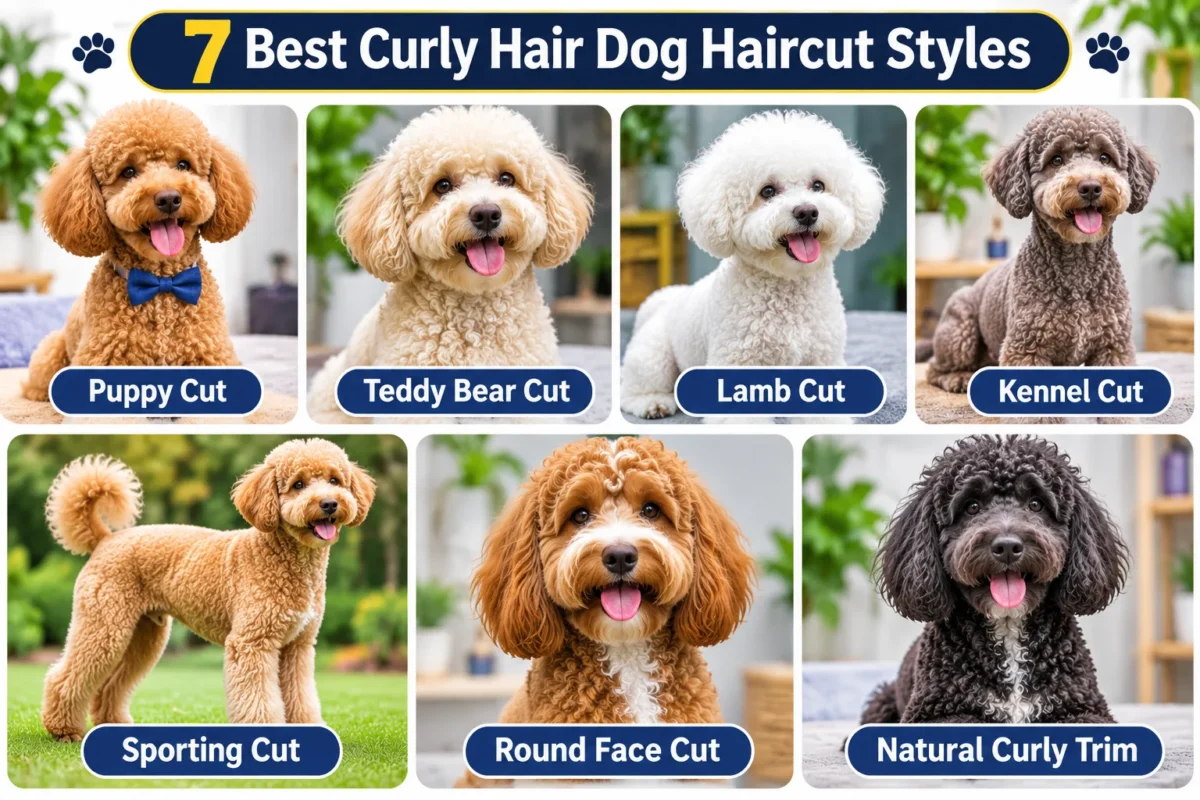
The best haircut styles for curly-haired dogs include the puppy cut, teddy bear cut, lamb cut, kennel cut, sporting cut, round face cut, and natural curly trim.
Each style offers a different balance of appearance and grooming effort.
1. Puppy Cut
The puppy cut keeps the body hair at a relatively uniform length. It creates a youthful appearance without requiring elaborate shaping.
- Typical length: ½–1½ inches.
- Best for: Poodles, Cavapoos, Cockapoos, and Goldendoodles.
- Maintenance: Moderate.
I recommend this style as a starting point for owners who haven’t established a consistent grooming routine. It remains attractive as the coat grows.
2. Teddy Bear Cut
A teddy bear cut features a rounded face, soft ears, and a plush body. Curly coats naturally support the rounded silhouette that defines this style.
- Typical body length: ½–1½ inches.
- Best for: Bichons, Toy Poodles, Maltipoos, and Doodles.
- Maintenance: Moderate to high.
The fuller facial hair requires regular combing. Ask your groomer to maintain clear visibility around the eyes.
3. Lamb Cut
The lamb cut combines a shorter torso with longer, shaped hair on the legs. This creates a distinctive silhouette while keeping much of the body manageable.
- Typical body length: ⅜–¾ inch.
- Best for: Poodles and similar continuously growing coats.
- Maintenance: Moderate to high.
The longer leg hair needs particular attention after outdoor activities. Dirt, moisture, and plant debris can contribute to tangling.
4. Kennel Cut
A kennel cut is a practical, relatively short haircut with minimal decorative shaping. It suits active dogs and owners who prefer straightforward grooming.
- Typical length: ¼–½ inch, when appropriate.
- Best for: Active Poodles and curly-coated Doodles.
- Maintenance: Relatively low.
Shorter hair still requires regular care. Avoid requesting an unnecessarily close shave merely to extend the time between appointments.
5. Sporting Cut
The sporting cut maintains a neat, athletic appearance without removing all the coat’s natural volume. The body stays manageable while selected areas retain additional length.
- Typical length: ½–1 inch.
- Best for: Active Poodles and suitable Poodle mixes.
- Maintenance: Moderate.
This style works well for dogs that hike, play outside, or regularly accompany their owners on adventures.
6. Round Face Cut
A round face cut emphasizes the dog’s head shape while allowing flexibility in body length. Groomers shape the facial coat into a balanced, rounded outline.
- Typical body length: ½–1 inch.
- Best for: Bichon Frises, Cavapoos, and small Poodles.
- Maintenance: Moderate to high.
The finished appearance depends heavily on coat density. Tight curls usually hold rounded shapes better than loosely wavy hair.
7. Natural Curly Trim
A natural curly trim preserves the coat’s original texture while removing excess length. It offers a relaxed alternative to heavily scissored grooming styles.
- Typical length: Variable according to breed and coat.
- Best for: Dogs with healthy, well-maintained curly coats.
- Maintenance: Moderate to high.
This option works best when the owner can maintain the coat consistently. Natural curls should remain free from compacted tangles.
Curly Hair Dog Haircut Styles Compared
Use this comparison to find a haircut that matches your dog’s lifestyle and your available grooming time. The lengths below represent suggested pet-grooming ranges rather than official breed standards.
| Haircut | Body Length | Maintenance | Best Purpose |
|---|---|---|---|
| Puppy cut | ½–1½ in. | Moderate | Everyday grooming |
| Teddy bear cut | ½–1½ in. | Moderate–high | Fluffy appearance |
| Lamb cut | ⅜–¾ in. | Moderate–high | Shaped legs |
| Kennel cut | ¼–½ in. | Low | Easy upkeep |
| Sporting cut | ½–1 in. | Moderate | Active dogs |
| Round face cut | ½–1 in. | Moderate–high | Facial shaping |
| Natural curly trim | Variable | Moderate–high | Natural texture |
How Long Should a Curly Hair Dog Haircut Be?
A length of ½ to 1 inch is a practical starting point for many continuously growing curly dog coats. Longer styles offer more volume but generally require more frequent brushing.
The ideal length depends on how easily the coat tangles and how much time you can dedicate to maintenance.
Short Curly Haircuts
Short haircuts of approximately ¼ to ½ inch reduce the amount of hair you need to brush. They may suit dogs with suitable coat types and active lifestyles.
- Easier coat inspections.
- Reduced drying time after bathing.
- Less opportunity for loose hairs to intertwine.
Medium Curly Haircuts
Medium-length trims between ½ and 1 inch provide noticeable texture without excessive volume. They work particularly well for puppy and teddy bear styles.
I consider this range a sensible compromise for owners who enjoy fluffy coats but want manageable grooming sessions.
Long Curly Haircuts
Longer haircuts retain more than 1 inch of coat and create a fuller appearance. They require careful daily maintenance, especially around friction points.
A long haircut will only remain comfortable if you can comb through the entire coat without resistance.
Grooming tip: Specify your preferred finished length in inches or millimeters. Haircut names can mean different things to different groomers.
Which Dog Breeds Benefit From Curly Haircuts?
Poodles, Bichon Frises, and many Poodle mixes benefit from regular haircuts because their coats require consistent length management. Other curly-coated breeds may need specialized grooming rather than routine clipping.
- Poodles: Suitable for puppy, lamb, sporting, and teddy bear cuts.
- Bichon Frises: Often groomed with rounded faces and full, shaped bodies.
- Goldendoodles: Benefit from trims tailored to their individual curl pattern.
- Labradoodles: May suit puppy or practical medium-length cuts.
- Cavapoos: Often look attractive with soft, rounded facial shaping.
- Portuguese Water Dogs: Benefit from breed-appropriate grooming styles.
- Lagotto Romagnolos: Require grooming that respects their characteristic natural curls.
Dogs with mixed ancestry can inherit different coat textures, even within the same litter. A groomer should assess the individual coat before choosing a haircut.
The Curly-Coated Retriever’s grooming requirements, for example, differ substantially from those of a Poodle. Its natural coat generally requires a different maintenance approach.
How Do You Prevent Matting in Curly Dog Hair?
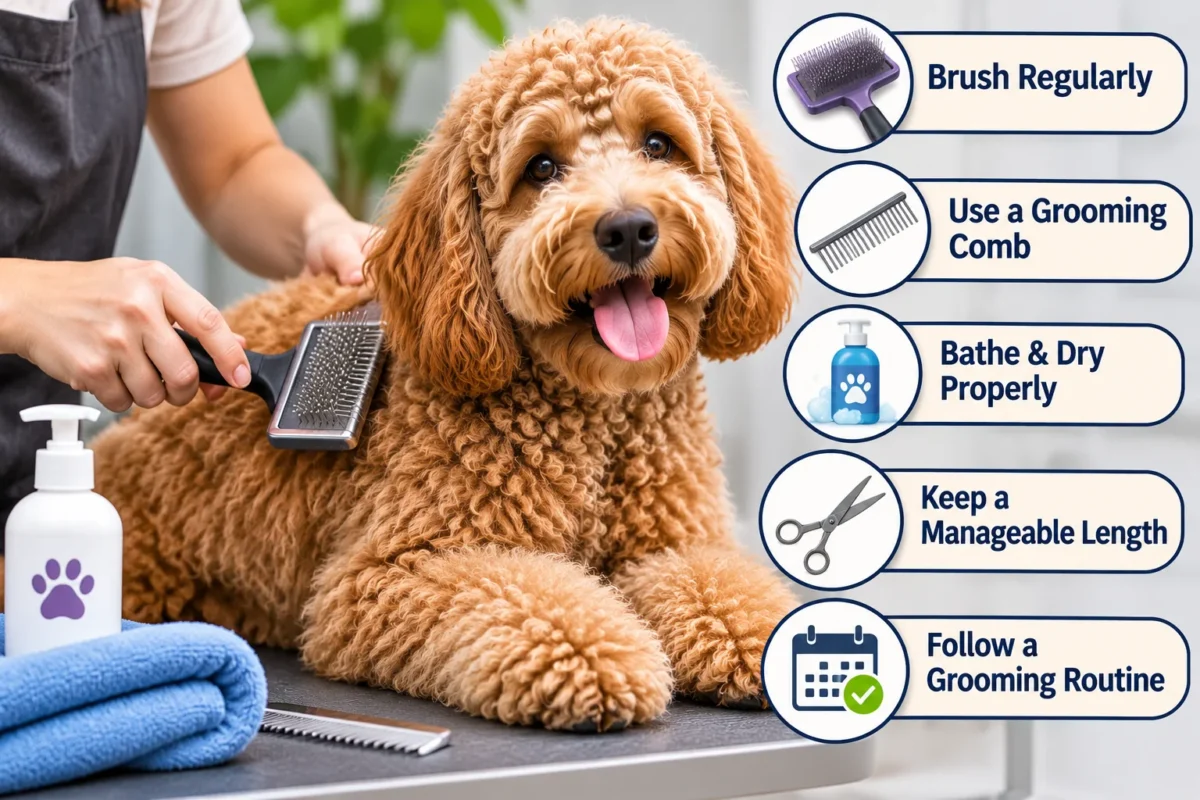
Prevent matting by brushing appropriate curly coats regularly, checking the roots with a metal comb, and maintaining a suitable haircut length. Pay particular attention to areas where movement creates friction.
Curly hair can appear fluffy on the surface while hiding tangled sections underneath.
Check Common Matting Areas
- Behind and underneath the ears.
- The armpits and inner legs.
- Underneath the collar or harness.
- Around the chest and neck.
- Near the tail base.
- Around frequently damp facial hair.
These areas deserve additional attention because rubbing and trapped moisture can encourage tangles.
Use the Line-Brushing Method
Line brushing involves dividing the coat into small sections so you can reach the hair beneath the surface.
- Choose a comfortable position for your dog.
- Separate a manageable section of hair.
- Support the hair near its roots to reduce pulling.
- Brush gently through the section without scraping the skin.
- Check the brushed area with a metal comb.
- Continue until you have checked the entire coat.
One useful test is to compare the results of brushing with combing. If the brush moves freely but the comb catches, hidden tangles may remain.
Never force grooming tools through a painful mat. According to VCA Animal Hospitals, scissors should not be used to remove mats because of the risk of cutting the skin.
How Often Should Curly-Haired Dogs Get Haircuts?
Many curly-haired dogs with continuously growing coats need professional haircuts every 4–8 weeks. Longer styles, faster-growing coats, and frequent outdoor activities may require shorter intervals.
| Grooming Task | Suggested Frequency |
|---|---|
| Coat inspection | Daily |
| Brushing and combing | Daily for longer, mat-prone coats |
| Bathing | Every 3–6 weeks or as needed |
| Professional haircut | Every 4–8 weeks |
| Face and paw inspection | Several times weekly |
These intervals provide a starting point rather than a fixed schedule. Adjust them according to coat condition, skin health, and professional advice.
Can You Give a Curly-Haired Dog a Haircut at Home?
Experienced owners can perform basic body trims at home when their dogs have healthy, tangle-free coats. Professional grooming remains the safer option for complicated shaping, severe matting, and sensitive areas.
Essential Grooming Supplies
- A suitable slicker brush.
- A stainless steel grooming comb.
- Dog-specific shampoo and conditioner.
- Pet grooming clippers with appropriate attachments.
- A stable, non-slip grooming surface.
- Clean towels.
How to Prepare a Curly Coat for Trimming
- Inspect the skin and coat for irritation or severe matting.
- Gently brush and comb out manageable tangles.
- Bathe your dog using suitable canine grooming products.
- Rinse thoroughly to remove product residue.
- Dry the coat completely without excessive heat.
- Confirm that a comb passes through the coat freely.
- Choose a suitable clipper attachment and check blade temperature frequently.
Stop if your dog becomes distressed or uncomfortable. Leave trimming around the eyes, ears, skin folds, and sanitary areas to a qualified groomer if you lack experience.
Common Curly Hair Dog Grooming Mistakes
The biggest mistake is assuming that a fluffy coat is automatically healthy. Curly hair can conceal matting close to the skin.
- Surface brushing: Brushing the outer curls without checking the deeper coat.
- Bathing matted hair: Washing a tangled coat before addressing the mats.
- Leaving damp sections: Failing to dry dense hair thoroughly.
- Using excessive pressure: Scraping the skin with slicker brush pins.
- Choosing excessive length: Keeping more hair than you can maintain comfortably.
- Delaying appointments: Waiting until tangles become compacted.
- Ignoring breed differences: Applying Poodle grooming techniques to every curly-coated breed.
Comfort should always come before appearance. If extensive mats develop, a professional may recommend a shorter haircut to avoid painful brushing.
What Should You Tell Your Dog Groomer?
Tell your groomer your preferred body length, facial shape, and daily brushing routine. Mention any previous matting problems or sensitivity during grooming.
For a practical teddy bear style, you could request:
I’d like a fluffy teddy bear haircut with approximately ¾ inch on the body, a rounded face, tidy feet, and clear visibility around the eyes. Please adjust the length if the coat condition requires it.
Bring a reference photograph showing your preferred haircut on a dog with a similar coat texture. This helps establish realistic expectations before grooming begins.
Best Grooming Tools for Curly-Haired Dogs
A quality slicker brush and metal comb are two useful investments for maintaining curly dog hair between professional appointments. My 2026 recommendations focus on practical tool design and coat suitability.
As an Amazon Associate, I earn from qualifying purchases.
🏆 Best for Dense Curls
Chris Christensen Big G Slicker Brush
★★★★½ Editorial assessment
Features 27mm stainless steel pins designed for dense coats. I’d choose this brush for fuller Poodle and Doodle coats that need careful section-by-section brushing.
💰 Best Budget Essential
Andis 7½-Inch Steel Grooming Comb
★★★★½ Editorial assessment
A stainless steel finishing comb suitable for checking tangles after brushing. I recommend keeping this tool nearby whenever you groom a curly coat.
🐾 Best for Gentle Brushing
Andis Soft-Tooth Slicker Brush
★★★★☆ Editorial assessment
Features soft teeth for routine grooming and manageable tangles. I’d consider it for shorter curly coats that don’t require a long-pin slicker.
Frequently Asked Questions
What is the best haircut for a curly-haired dog?
A puppy cut or teddy bear cut is a practical choice for many curly-haired dogs, particularly Poodles and Doodles. Both styles maintain natural coat volume while reducing grooming difficulty. Choose a finished length suitable for your dog’s coat density and brushing routine.
Can a curly-haired dog have a short haircut?
Yes, many continuously growing curly coats can have short haircuts when the breed and skin condition allow it. A short trim can simplify maintenance, but unnecessarily close shaving may reduce natural protection. Ask your groomer to recommend a suitable length.
Why does my dog’s curly hair become matted after bathing?
Water, rubbing, and movement during bathing can tighten existing tangles and cause loose hairs to intertwine. Inspect and gently detangle a healthy coat before bathing, then dry it thoroughly. Seek professional assistance if the coat already contains tight or extensive mats.
Will my dog’s curly hair grow back after a haircut?
Healthy, continuously growing curly coats generally grow back after trimming. Growth speed and texture depend on genetics, age, nutrition, and health. If your dog’s coat fails to regrow normally or develops bald patches, consult a veterinarian rather than assuming another haircut will help.
Should you brush a curly-haired dog every day?
Daily brushing and combing benefit many Poodles, Bichons, and long-coated Doodles because their hair tangles easily. Shorter trims may need less intensive sessions. However, some breeds with naturally protective curls or corded coats require different techniques, so follow breed-specific grooming advice.
Final Thoughts
The best curly hair dog haircut combines an attractive appearance with practical coat maintenance. Puppy cuts, teddy bear cuts, and medium-length trims are excellent starting points for many curly-haired pets.
Choose a style you can maintain comfortably between grooming appointments. Consistent brushing, appropriate tools, and regular coat inspections matter more than keeping the longest or fluffiest haircut.
Talk to your groomer about your dog’s individual coat, lifestyle, and grooming needs. Start with a manageable length and adjust it as you discover what works best for your dog.


