
Quick Answer
A combination coat dog haircut should focus on gently trimming longer feathering around the ears, legs, paws, chest, and tail while preserving the shorter natural body coat. Light scissor trimming and careful blending usually work better than an all-over shave. If the dog also has a dense undercoat, prioritize brushing and removing loose hair rather than clipping the entire coat short.
A dog with short hair across its back and longer, flowing hair around its legs or tail does not necessarily need a full-body haircut. Different sections of the coat perform different functions and may require separate grooming techniques.
The safest approach is to identify which areas need trimming, which need brushing, and which should remain largely untouched. This is particularly important for dogs with both feathering and a substantial undercoat.
What Is a Combination Coat on a Dog?
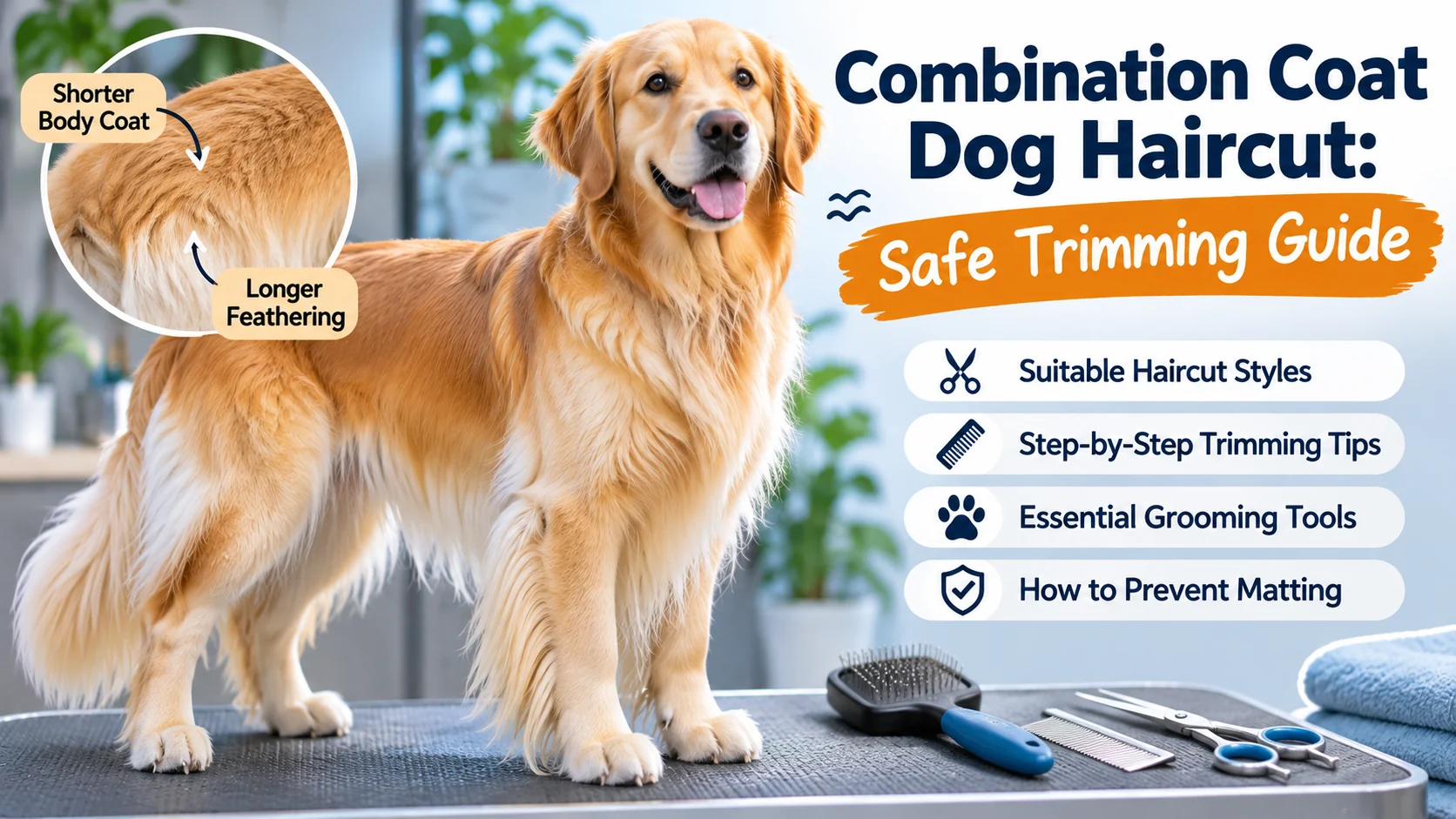
A combination coat has noticeably different hair lengths or textures across the dog’s body. The back and sides may have relatively short, smooth hair, while the ears, chest, belly, legs, and tail carry longer feathering.
Examples commonly associated with this coat description include Golden Retrievers, feathered Border Collies, long-haired Dachshunds, and Papillons. However, individual coat patterns vary, even within the same breed.
A combination coat is not automatically a single coat or a double coat. These terms describe different characteristics:
| Coat type | Defining feature | Grooming priority |
|---|---|---|
| Combination | Different lengths or textures across the body | Trim longer sections selectively |
| Double | Outer guard hairs over a softer undercoat | Remove loose undercoat; avoid unnecessary shaving |
| Continuously growing hair | Hair that needs periodic length maintenance | Brush thoroughly and trim as needed |
This distinction matters because the appropriate haircut depends on the hair’s growth pattern and undercoat, not simply its appearance.
Which Haircut Styles Are Safest for Combination-Coated Dogs?
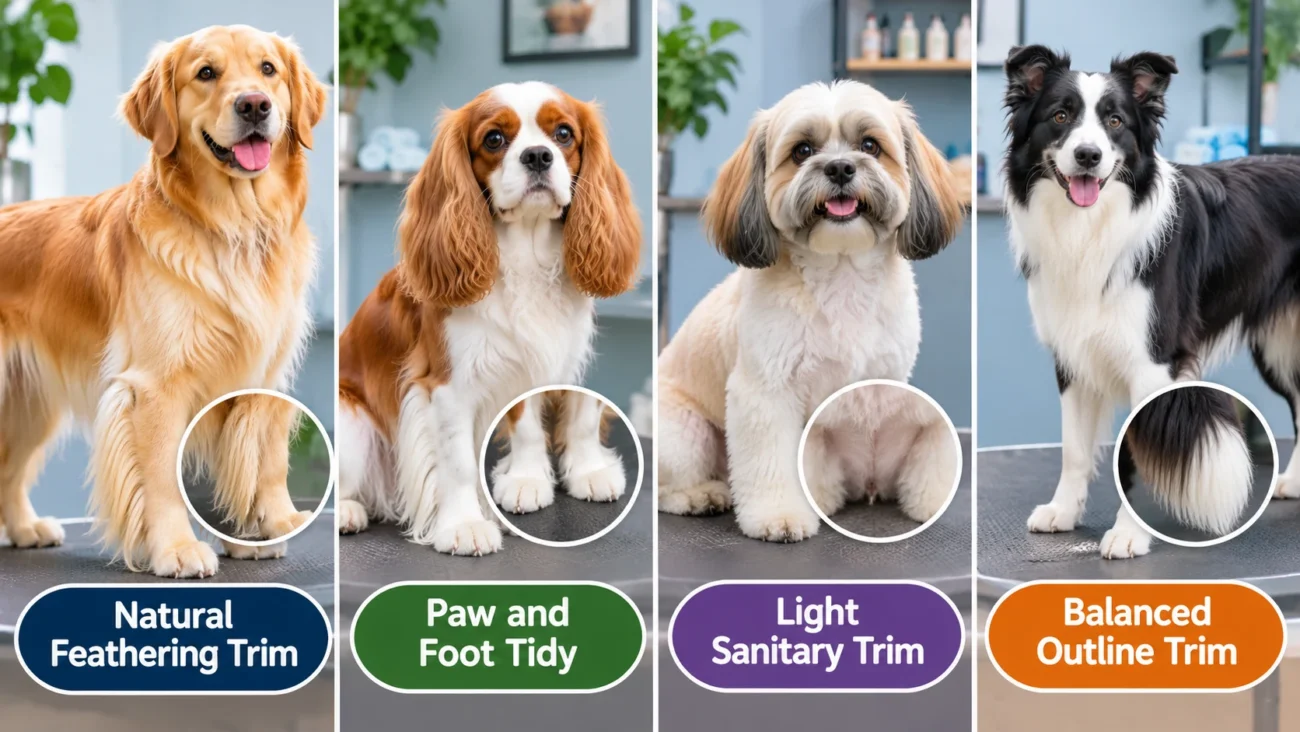
The safest styles usually preserve the natural outline while removing excessive length from areas that collect dirt or develop tangles. Four practical options cover most routine grooming needs.
1. Natural Feathering Trim
A natural feathering trim shortens the longer hair on the legs, belly, chest, and tail without changing the main body coat.
It suits dogs whose coat already lies neatly but has untidy ends or feathering that frequently catches debris. A groomer can use thinning or blending shears to soften the outline rather than creating an abrupt, straight edge.
2. Paw and Foot Tidy
A paw tidy removes excess hair that extends beyond the natural outline of the feet. Long hair around the toes can collect mud, seeds, and moisture.
Hair between the paw pads may also need careful shortening when it becomes excessive. Because the skin between the pads is delicate, close trimming is best handled by an experienced groomer.
3. Light Sanitary Trim
A sanitary trim reduces long hair around areas where urine or fecal material may become trapped.
Only the necessary hair should be shortened, with particular care near sensitive skin. A groomer can choose suitable tools and retain enough length to avoid unnecessary irritation.
4. Balanced Outline Trim
An outline trim gently reshapes longer hair around the chest, belly, rear legs, and tail to create a tidier silhouette.
This is a useful option when the feathering grows unevenly but the dog does not need a dramatic haircut. The goal is to retain the coat’s natural appearance, not make every section the same length.
Key Insight
A combination-coated dog does not need uniformly short hair to look well-groomed. Selective trimming preserves the natural differences between shorter body hair and longer feathering.
Should You Shave a Dog With a Combination Coat?
Usually not as a routine grooming choice, especially when the dog has a double coat. An all-over shave removes the natural outer coat along with the longer feathering, even when only a few areas require attention.
Shaving some double-coated dogs can interfere with normal coat appearance and regrowth. Their outer hairs and undercoat may return at different rates, making the coat look uneven for an extended period.
However, not every combination coat behaves the same way. Some mixed-breed dogs have continuously growing hair that requires regular clipping. Others carry a substantial shedding undercoat that is better maintained through brushing and deshedding.
The correct decision therefore depends on the actual coat structure and condition.
Shaving may occasionally be necessary when severe matting prevents safe brushing, or when a veterinarian recommends clipping for medical care. These situations require an individual assessment rather than a standard haircut request.
Warning
Never use scissors to cut beneath a tight mat close to the skin. Mats can pull or conceal skin folds, creating a serious cutting risk. Have tightly matted areas assessed by a qualified groomer or veterinarian.
How Do You Safely Trim a Combination Coat at Home?
Home maintenance should focus on brushing and small, accessible tidying jobs. Detailed shaping, close clipping, and removal of severe mats require greater skill.
Before beginning, gather a suitable slicker or pin brush, a metal grooming comb, dog-safe grooming scissors with rounded tips, treats, and a nonslip surface. Choose tools appropriate for the dog’s coat density and sensitivity.
- Inspect the coat. Check the ears, armpits, chest, rear legs, belly, and tail for tangles, mats, redness, or sore areas. Do not attempt to trim irritated skin.
- Brush in sections. Separate longer feathering into small sections and brush gently from the ends toward the roots. Avoid pulling at knots or scraping the skin.
- Check with a comb. Run a metal comb through the groomed sections. If it catches, look for remaining tangles before attempting any trimming.
- Identify the hair that needs shortening. Focus on loose ends and minor overgrowth that can be safely separated from the skin. Leave the shorter body coat intact unless a professional has advised otherwise.
- Trim conservatively. With the dog standing calmly, shorten small amounts of accessible feathering using dog-safe scissors. Keep the blades away from skin folds and moving body parts.
- Check the outline. Brush the hair back into its natural position and assess the result. Stop once the coat is comfortable and reasonably tidy.
Do not attempt close scissor work around the eyes, ears, genitals, or paw pads without appropriate training. Stop immediately if the dog becomes distressed, struggles, or cannot remain safely still.
For more detailed clipper work, the RSPCA’s dog grooming guidance recommends using a trusted professional groomer because operating electric clippers safely requires skill.
Which Grooming Tools Work Best for a Combination Coat?
A combination coat often needs more than one grooming tool because shorter, smoother hair and longer feathering respond differently.
| Tool | Best use | Precaution |
|---|---|---|
| Slicker brush | Longer feathering and loose hair | Use light pressure |
| Metal comb | Finding remaining tangles | Never force through mats |
| Pin brush | Long, flowing hair | Use appropriately spaced pins |
| Undercoat rake | Loose undercoat, when present | Choose a suitable type; do not scrape skin |
| Blending shears | Softening feathering edges | Best used by trained handlers |
Not every combination coat needs an undercoat rake. A dog with fine, sparse hair may benefit from gentler brushing, while a densely coated dog may need more careful undercoat maintenance.
The American Kennel Club’s professional grooming educational standards emphasize matching tools and grooming techniques to individual coat types.
How Often Does a Combination-Coated Dog Need Grooming?
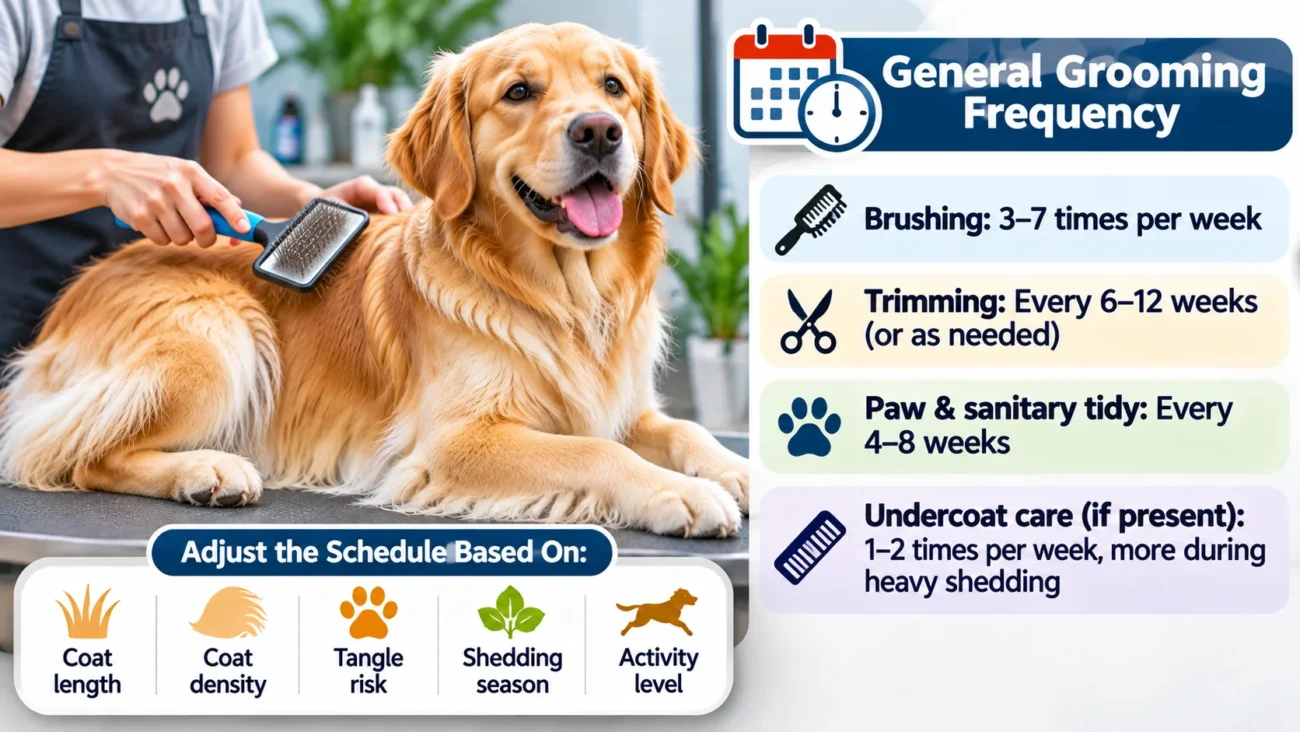
Most combination-coated dogs benefit from regular brushing, but the frequency depends on coat density, feathering length, shedding, activity, and how easily tangles form.
Check longer areas several times weekly, increasing to daily attention when the coat tangles readily. Particularly dense double-coated sections may need daily maintenance during heavy shedding.
A haircut is a separate decision. Dogs with naturally short body hair may only need occasional feathering, paw, or sanitary trims. Continuously growing areas may require more frequent professional shaping.
Use these signs rather than relying on a fixed appointment interval:
- The comb no longer passes smoothly through the feathering.
- Hair repeatedly collects dirt or debris around the paws and belly.
- Long hair obstructs normal movement or vision.
- Loose undercoat builds up despite ordinary brushing.
- The coat requires more maintenance than can comfortably be completed at home.
Some dogs can maintain a neat outline for months, while others need much more frequent grooming. A professional can recommend a schedule after examining the coat.
How Can You Prevent Matting Between Haircuts?
The most effective prevention is thorough, gentle brushing that reaches beneath the visible surface of longer hair. A coat may look smooth from the outside while tangles remain close to the skin.
Pay particular attention to friction areas, including behind the ears, under the collar, in the armpits, and along the backs of the legs.
After wet walks or bathing, ensure long feathering dries thoroughly. Moisture and movement can tighten existing tangles, making later brushing more uncomfortable.
For dogs with a dense undercoat, remove loose hair using appropriate tools rather than repeatedly thinning the protective outer coat. Avoid aggressive deshedding or excessive brushing that causes redness.
Tip
Use a comb after brushing the longer sections. If it passes gently from near the roots to the ends without catching, that area is less likely to contain hidden tangles.
When Should You Visit a Professional Groomer or Veterinarian?
Professional help is appropriate when coat maintenance becomes difficult, painful, or unsafe to perform at home.
Book a grooming assessment for tight mats, extensive undercoat buildup, difficult-to-reach tangles, or a dog that cannot tolerate ordinary trimming. Explain which areas you want shortened and whether preserving the natural coat is a priority.
Veterinary assessment is more appropriate when you notice persistent redness, sores, unusual hair loss, swelling, a strong skin odor, or signs of pain. These concerns may need medical attention rather than a cosmetic haircut.
A good grooming plan addresses the dog’s actual coat condition instead of automatically selecting a short clip because its hair has become difficult to manage.
Frequently Asked Questions
Can a combination-coated dog have a puppy cut?
Sometimes, but the term puppy cut does not describe one standard length or technique. A short, even clip may be suitable for certain continuously growing coats but unsuitable for a dog with a substantial double coat. Ask the groomer to explain the proposed length and method.
Will trimming reduce shedding?
Trimming longer hair does not stop normal shedding. Brushing and suitable undercoat removal are more directly useful for managing loose hair in dogs that shed heavily.
Is a combination coat the same as a mixed-breed coat?
No. Combination coat describes the hair’s characteristics, while mixed-breed describes ancestry. Purebred and mixed-breed dogs can both have combination coats, and mixed-breed dogs may have many other coat types.
Should you cut a combination coat shorter in summer?
Not automatically. For double-coated dogs, removing loose undercoat, maintaining airflow, providing shade, and offering water are generally preferable to shaving the body. Any significant haircut should be based on the individual coat rather than the season alone.
What should you tell your dog groomer?
Explain where tangles develop, how much brushing you can maintain, and which feathered areas you want tidied. Ask the groomer to assess the undercoat before clipping and to preserve the natural body coat wherever appropriate.


