Quick Answer
Yes, deshedding can damage a dog’s coat when the wrong tool is used, excessive pressure is applied, or the same area is brushed repeatedly. Possible problems include broken guard hairs, uneven thinning, skin irritation, and discomfort. Gentle deshedding with a suitable tool usually helps remove loose undercoat without harming healthy fur. Stop immediately if you notice redness, pain, or unusual hair loss.
Deshedding is supposed to remove loose fur, not leave a dog’s coat thinner, rougher, or irritated. Yet a tool that collects impressive amounts of hair can sometimes remove more than the coat comfortably tolerates.
The important distinction is between releasing naturally loose hair and mechanically damaging hair or skin. The right technique depends on your dog’s coat type, the tool’s design, and how the dog responds during grooming.
How Can Deshedding Damage a Dog’s Coat?
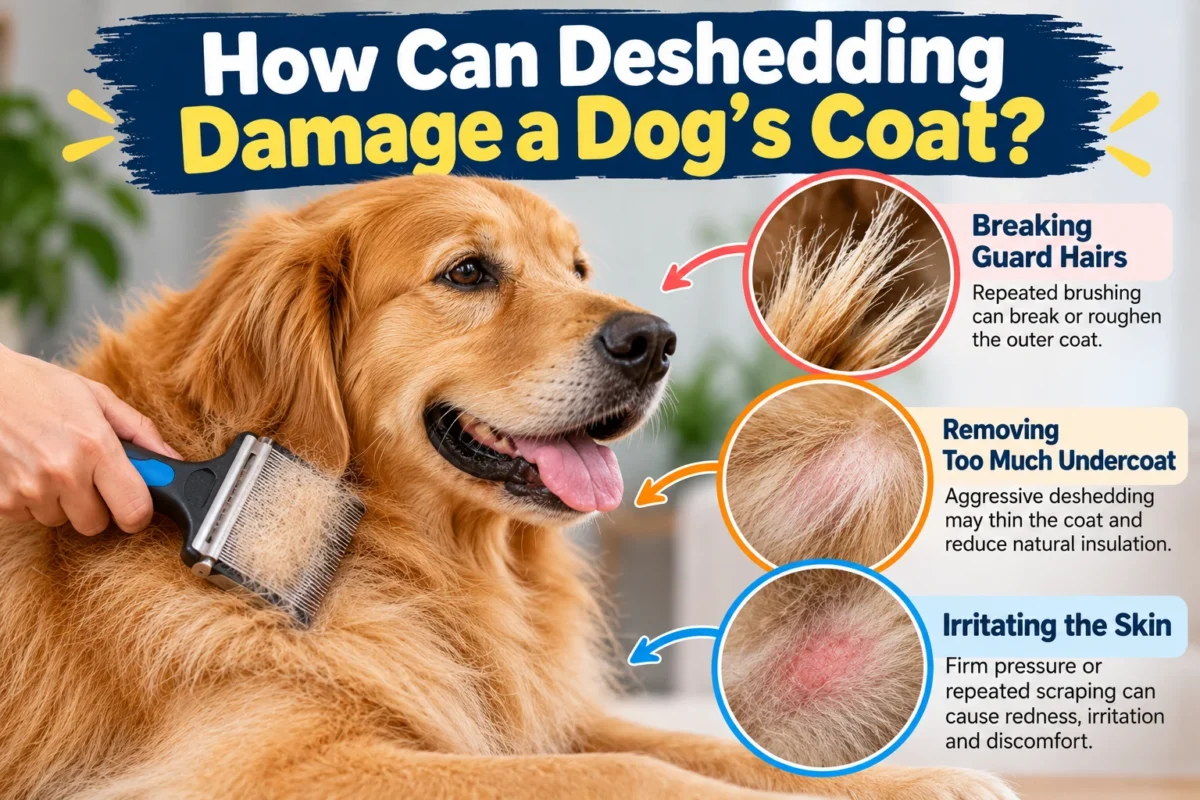
Deshedding can damage a coat through repeated friction, pulling, breakage, or excessive removal of fur. The risk increases when a grooming tool is poorly matched to the dog’s coat or used aggressively.
1. Breaking or Roughening Guard Hairs
Guard hairs form the outer layer of many dogs’ coats. They help protect the skin and contribute to the coat’s texture and weather resistance.
Some grooming tools have close-set metal teeth or cutting components. If they catch attached hairs, repeated strokes may cause breakage or leave the coat looking rough. However, not every deshedding tool cuts hair, and the risk varies by design and technique.
A noticeably fuzzy or uneven outer coat after grooming is a reason to reconsider the tool rather than brushing harder to smooth it.
2. Removing Too Much Undercoat
The soft undercoat helps insulate many double-coated breeds. Loose undercoat should be removed, but aggressively working through hair that is still firmly attached may leave the coat unnecessarily thin.
For example, a dog experiencing seasonal shedding may release large amounts of fluffy undercoat with gentle brushing. Continuing after loose hair removal has slowed offers diminishing benefits and can increase friction.
More hair in the brush does not automatically mean better grooming. The goal is a comfortable, healthy coat rather than collecting the greatest possible amount of fur.
3. Irritating the Skin Beneath the Fur
Firm pressure and repeated scraping can irritate the skin, particularly around the belly, armpits, inner thighs, and other sensitive areas.
Dogs with existing inflammation, wounds, or allergies may tolerate grooming poorly even when the tool seems gentle. Redness, licking, scratching, or attempts to escape the brush are reasons to stop.
What Are the Signs of Coat Damage After Deshedding?
Potential coat damage becomes easier to recognize when you compare the coat’s appearance and your dog’s behavior before and after grooming.
Watch for these changes:
- Uneven thinning: Certain areas look noticeably less dense than surrounding fur.
- Broken hairs: The coat appears unusually short, fuzzy, or rough.
- Red or tender skin: Brushed areas look irritated or feel uncomfortable to the dog.
- Patchy hair loss: Distinct spots have little or no fur.
- Increased scratching: Your dog repeatedly scratches, rubs, or licks groomed areas.
- Grooming avoidance: Your dog flinches, pulls away, growls, or shows other signs of distress.
Not every change indicates grooming damage. Normal seasonal shedding can make a dense coat look lighter, while allergies, infections, parasites, and hormonal conditions can also cause thinning or irritation.
If abnormalities persist or worsen, a veterinarian can help distinguish a grooming-related problem from an underlying skin condition.
Warning
Stop using the deshedding tool if your dog develops raw skin, bleeding, obvious pain, or sudden bald patches. Do not repeatedly brush an irritated area to remove remaining hair. Seek veterinary guidance, especially if the skin is broken or your dog appears uncomfortable.
Which Dogs Are More Vulnerable to Deshedding Damage?
Dogs with sensitive skin, fine coats, limited undercoat, or existing skin disease may be more vulnerable to inappropriate deshedding techniques. Breed alone does not determine whether a tool is safe.
Double-Coated Dogs
Breeds such as Golden Retrievers, German Shepherds, and Huskies often have an insulating undercoat beneath longer guard hairs.
These dogs may benefit from tools designed to lift loose undercoat. However, repeated aggressive grooming can potentially disturb the coat’s protective outer layer.
A wide-toothed undercoat rake, suitable slicker brush, or comb may be useful depending on the coat’s density and length.
Single-Coated and Fine-Coated Dogs
Dogs with little or no undercoat generally do not need the same deep deshedding approach as heavy-shedding double-coated breeds.
Some short-haired dogs respond better to soft bristle brushes or rubber grooming mitts. Certain long, continuously growing coats need regular detangling and trimming instead of aggressive undercoat removal.
Dogs With Existing Skin Problems
Dogs with allergies, dermatitis, sores, or other skin conditions may experience discomfort when brushed over affected areas.
According to VCA Animal Hospitals’ coat-care guidance, gentle grooming and appropriate tool selection are important, and irritated skin associated with matting warrants veterinary attention.
How Can You Deshed a Dog Without Damaging Its Coat?
Safe deshedding starts with a suitable tool, a comfortable dog, and gentle strokes that remove loose fur without tugging.
- Identify the coat type. Check whether your dog has a dense undercoat, a short single coat, or hair that requires a different grooming approach.
- Inspect the skin first. Look for redness, sores, unusual bumps, and painful areas before brushing.
- Remove tangles gently. Use an appropriate comb or detangling method. Do not force a deshedding blade through mats.
- Follow the tool instructions. Some tools specify a dry, untangled coat and particular brushing directions.
- Brush with the hair growth. Use smooth, light strokes and avoid pressing the teeth into the skin.
- Move between sections. Work methodically over appropriate areas rather than scraping the same patch repeatedly.
- Stop when needed. End the session when loose fur removal slows, the dog becomes restless, or any discomfort appears.
The American Kennel Club’s shedding guidance also emphasizes gentle pressure, working with hair growth, and dealing with tangles before proceeding with shedding tools.
Practical Tip
Use a gentle grooming pass as a comfort check. If the tool catches, pulls, or requires force, stop and investigate the coat rather than increasing pressure. A compatible brush should move through prepared fur without making your dog flinch.
Can Too Much Deshedding Make a Dog’s Coat Thinner?
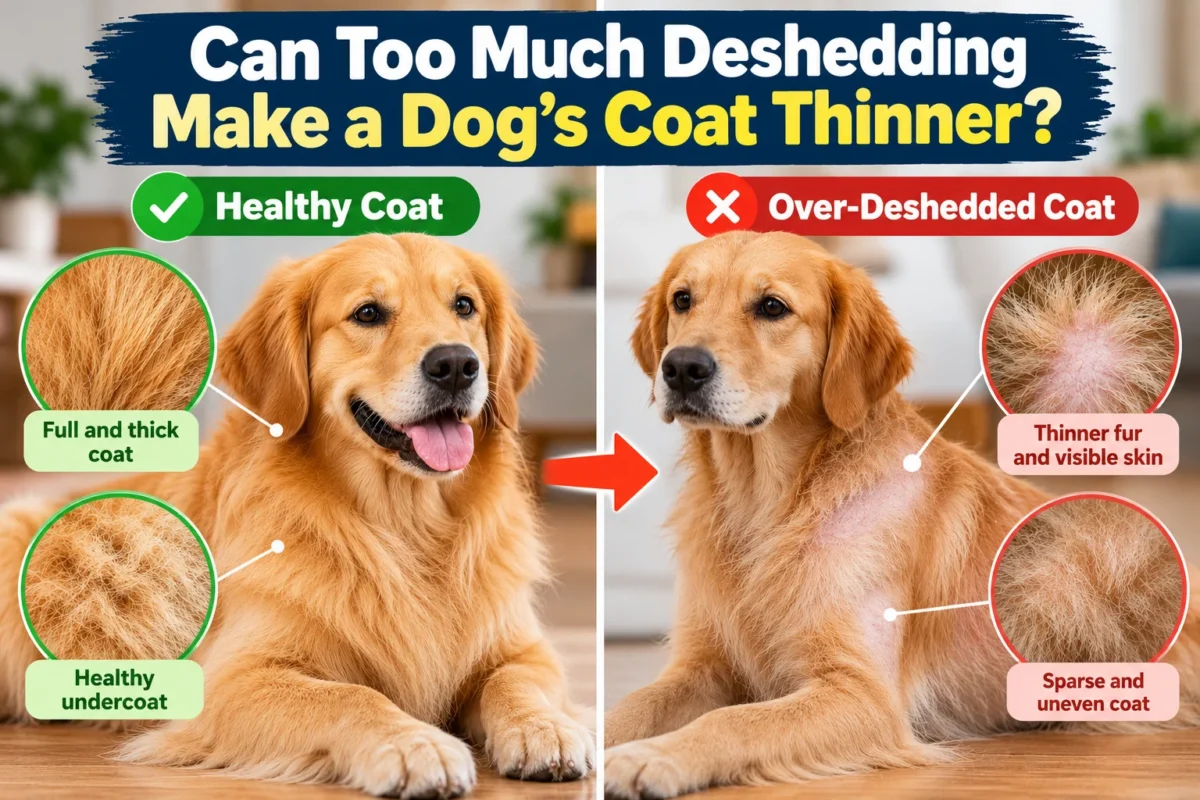
Yes. Excessive deshedding can make a coat appear thinner, particularly when repeated brushing removes or breaks hairs beyond those naturally ready to shed.
However, a thinner-looking coat is not always damaged. During seasonal shedding, a double-coated dog may naturally lose substantial amounts of loose undercoat while retaining a healthy protective outer coat.
The more useful questions are whether the coat remains evenly covered, whether the skin looks healthy, and whether grooming is comfortable.
A suddenly patchy coat, exposed skin, or noticeable irritation should not be dismissed as normal seasonal shedding.
How Often Can You Deshed a Dog Safely?
There is no single safe schedule for every dog. Frequency depends on the coat, the amount of loose fur, the tool, and skin sensitivity.
For its undercoat deshedding tool, FURminator recommends approximately one or two sessions weekly, lasting 10–20 minutes each, while following its instructions and monitoring coat condition. That is a product-specific recommendation, not a universal rule for all breeds or grooming tools.
A dense double coat undergoing seasonal shedding may need more frequent gentle maintenance. A short or sparse coat may need only occasional brushing with a softer tool.
Daily light brushing and daily deep deshedding are not the same activity. Brushing can help maintain the coat, while intensive undercoat removal should be adjusted to the dog’s actual needs.
What Should You Do if Deshedding Has Already Damaged the Coat?
If you suspect that deshedding has caused damage, stop using the tool until you understand what happened. Repeated grooming may worsen irritation or hair breakage.
Use the following approach:
- Pause intensive deshedding. Avoid the suspected tool and do not work over sore areas.
- Examine the coat and skin. Look for broken hair, uneven patches, redness, or wounds.
- Document visible changes. Photographs taken in consistent lighting can help track whether thinning spreads or improves.
- Choose gentler maintenance when appropriate. If the skin is healthy and brushing is needed, use a suitable soft brush without disturbing affected areas.
- Get professional help when necessary. A groomer can assess technique and tool fit; a veterinarian should assess pain, irritation, wounds, or unexplained hair loss.
Broken hair may gradually regain a normal appearance as it grows and the coat cycles. Recovery time varies widely with breed, coat type, hair growth cycle, and the nature of the damage.
Avoid assuming that all patchy regrowth is temporary. Persistent hair loss may have a medical cause requiring diagnosis.
Which Grooming Tools Are Gentler Alternatives?
The best alternative depends on what the dog’s coat actually needs. A tool intended to loosen undercoat may not be suitable for smoothing a short, thin coat.
| Tool | Typical Use | Main Caution |
|---|---|---|
| Soft bristle brush | Surface grooming and loose hair | May not reach dense undercoat |
| Rubber grooming mitt | Gentle maintenance on many short coats | Limited deep detangling ability |
| Slicker brush | Removing loose hair and light tangles | Wire pins can irritate skin if pressed hard |
| Undercoat rake | Lifting loose fur from dense double coats | Teeth and blade designs vary; avoid pulling |
| Metal grooming comb | Checking tangles and coat sections | Never force through tight mats |
A gentle tool is not automatically safe in every situation. Incorrect technique can make even a soft grooming routine uncomfortable.
When Should You Contact a Veterinarian?
Contact a veterinarian when grooming is followed by persistent irritation, painful skin, unexplained thinning, or hair loss that continues after deshedding stops.
Particularly concerning signs include open sores, bleeding, persistent scratching, expanding bald areas, skin discharge, or changes in your dog’s general health.
These symptoms may have causes unrelated to grooming, including infection, parasites, allergies, or hormonal disease. A veterinary examination helps avoid treating a medical problem as a simple brushing mistake.
Related Product
Gentle Dog Grooming Brush
A coat-appropriate soft brush can help with routine grooming between deeper deshedding sessions. Select the design based on your dog’s coat type.
As an Amazon Associate, we earn from qualifying purchases.
Frequently Asked Questions
Can a deshedding brush cause permanent coat damage?
Many cases of minor hair breakage can improve as the coat grows. However, severe skin injury or underlying health problems may cause prolonged or incomplete regrowth. Persistent changes should be evaluated by a veterinarian.
Does a FURminator damage a dog’s topcoat?
FURminator states that its properly used deshedding tools are designed to remove loose undercoat without damaging the topcoat. However, inappropriate tool selection, pressure, or repeated passes can cause problems. Follow the manufacturer’s instructions and monitor the coat.
Is it normal for a dog to lose a lot of fur during deshedding?
Yes. Heavy seasonal shedding can produce surprisingly large amounts of loose fur, especially in double-coated dogs. Concern increases if grooming causes pain, visible skin exposure, or sharply defined bald spots.
Can deshedding make a dog’s skin dry?
Deshedding does not necessarily dry the skin, but excessive brushing friction can cause irritation or visible flaking. Dryness and dandruff may also have unrelated causes, so persistent symptoms deserve assessment.
Should you deshed a dog with tangled or matted fur?
Do not force a deshedding tool through mats. Gentle detangling may help with small knots, but tight or extensive matting is best handled by a professional groomer or veterinarian.
How do you know when to stop deshedding?
Stop when loose fur removal has slowed, the coat has been adequately groomed, or your dog shows discomfort. Never keep brushing simply because the tool continues collecting some hair.
Final Thoughts
Deshedding can damage a dog’s coat when grooming is too aggressive, the tool is unsuitable, or brushing continues beyond what the coat needs.
The safest approach is to remove loose fur gently, protect the skin and guard hairs, and let your dog’s comfort guide each session. If thinning, redness, or pain develops, stop deshedding and investigate the cause before restarting.