
Quick Answer
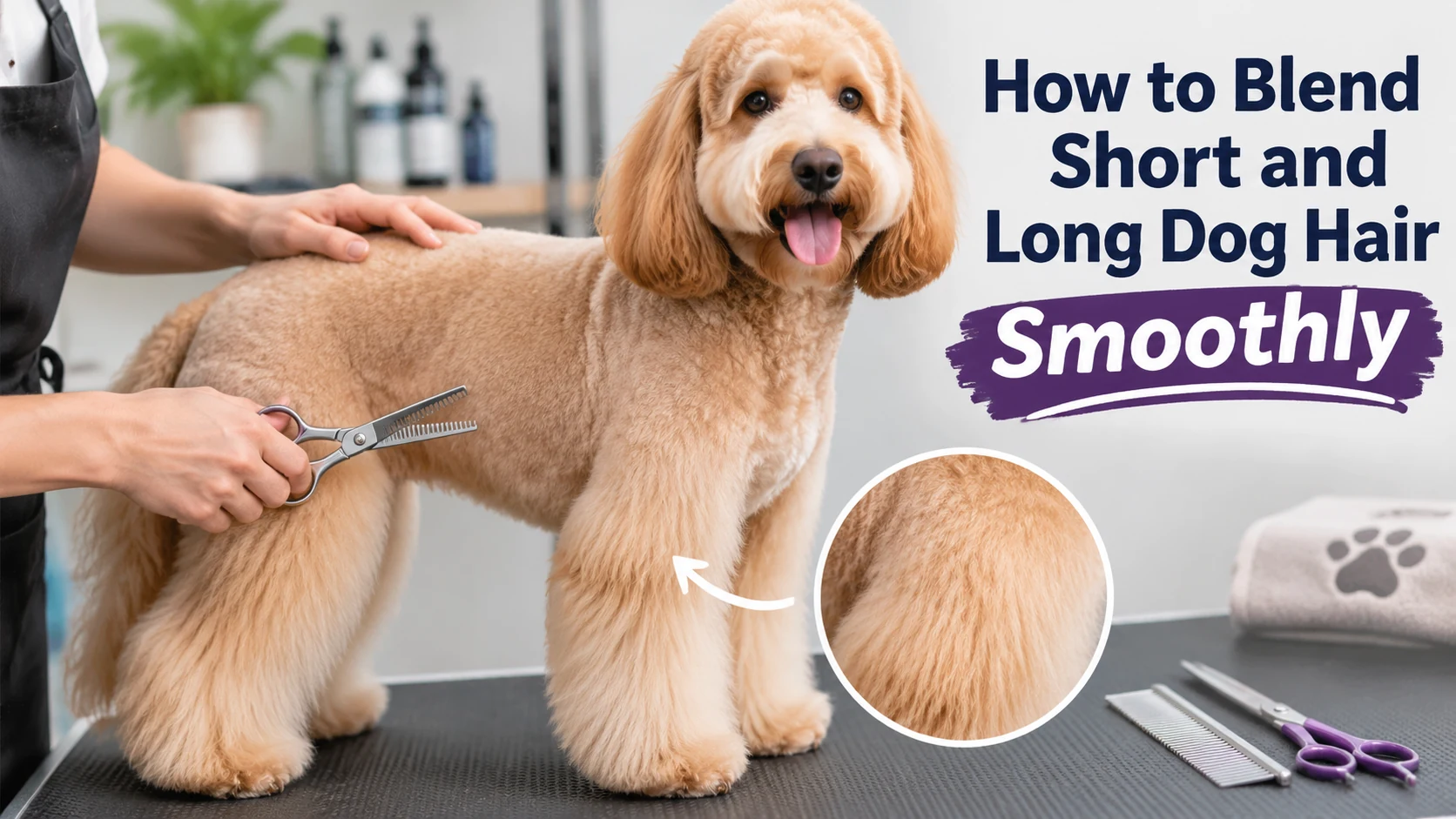
To blend short and long dog hair, brush and comb the coat thoroughly, identify where the lengths meet, and gradually soften the transition using appropriate blending shears. Work on small sections, comb between passes, and remove only a little hair at a time. This technique is best suited to coats that can safely be trimmed; double-coated and severely matted dogs need a different approach.
A sharp line between short and long fur can make an otherwise tidy dog haircut look uneven. The problem often appears where a clipped body meets longer legs, around the shoulders, or along the chest and belly.
The secret to a natural-looking finish is not cutting every area to the same length. It is creating a gradual transition so one section flows into the next.
Here is how to approach that transition, which grooming tools can help, and when trimming is better left to a professional.
What Does Blending Short and Long Dog Hair Mean?
Blending means softening the visible boundary between two different coat lengths. Rather than creating a straight, abrupt edge, the groomer gradually reduces excess hair around the transition.
For example, a dog may have a neatly trimmed body but longer, fuller fur on its legs. Without blending, the shorter coat can appear disconnected from the leg furnishings.
A successful transition preserves the intended shape while making the change in length less noticeable.
Blending is different from thinning the entire coat. Thinning removes bulk; blending selectively adjusts hair where two lengths meet. The same tool may perform both tasks, but the objective is different.
Which Dogs Can Have Their Hair Blended Safely?
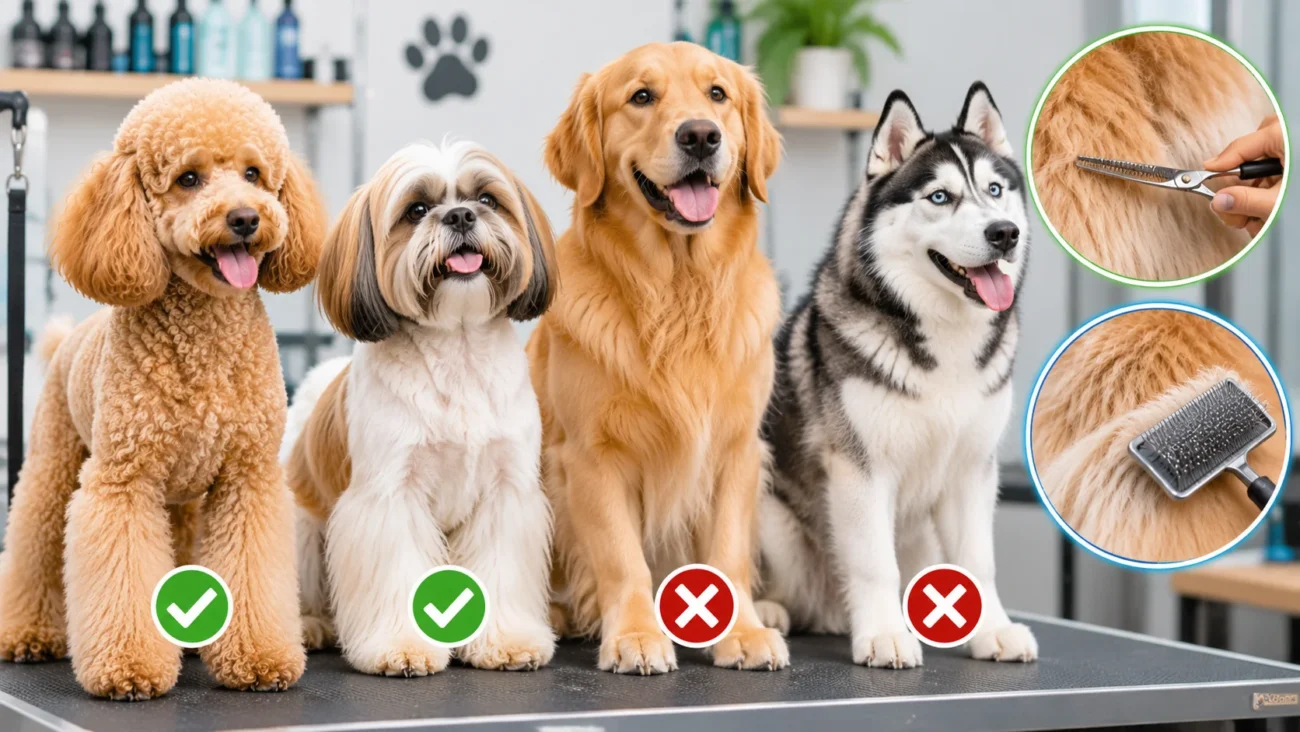
Blending is generally most useful for dogs whose coats are routinely trimmed or styled, such as Poodles, many Poodle mixes, and other breeds with suitable continuously growing or trim-friendly coats.
However, the correct grooming method depends on the coat structure rather than the breed name alone.
| Coat Type | Blending Approach |
|---|---|
| Curly or wavy coats | Careful trimming and blending can help soften differences in length. |
| Long, silky coats | Light blending may soften cut edges, but mistakes can be conspicuous. |
| Short, smooth coats | Usually need brushing and routine care rather than a blending haircut. |
| Dense double coats | Prioritize brushing, loose-undercoat removal, and coat-specific grooming instead of routine close clipping. |
| Wire coats | May require specialist methods, including hand-stripping where appropriate. |
A Husky with a dense double coat and a Poodle with a curly, trim-friendly coat should not receive the same haircut simply because both have areas of longer fur.
The American Kennel Club’s guide to double-coated dogs explains why shaving these coats is generally discouraged.
What Tools Help Blend Short and Long Dog Hair?
For a trim-friendly coat, a comb and suitable blending shears are often more useful for softening a line than repeatedly cutting with straight scissors.
The tools below serve different purposes.
| Tool | Main Purpose | Important Limitation |
|---|---|---|
| Metal grooming comb | Separates hair and reveals uneven areas. | Must not be forced through tangles. |
| Slicker brush | Helps prepare appropriate coats before trimming. | Excess pressure can irritate skin. |
| Blending or thinning shears | Softens visible lines with controlled hair removal. | Can still cause cuts or remove too much hair. |
| Straight grooming scissors | Establishes a shape and trims longer outlines. | Can leave obvious blunt lines. |
| Dog grooming clippers with suitable guards | Creates controlled lengths on coats appropriate for clipping. | Requires training and careful blade selection. |
Blending Shears vs. Thinning Shears vs. Chunkers
These terms sometimes overlap between manufacturers, so tool labels alone do not guarantee a particular cutting effect.
- Fine-tooth thinning shears: Generally remove smaller amounts of hair per cut and can help soften subtle lines.
- Blending shears: Designed to create smoother transitions and reduce visible marks from previous trimming.
- Chunkers: Have wider-spaced cutting teeth and typically remove more hair, making them better suited to experienced handling of heavier coat sections.
For an inexperienced owner, a conservative approach is more important than buying a specialized collection of cutting tools.
How Do You Blend Short and Long Dog Hair Step by Step?
For a dog with a suitable, already-trimmed coat, the safest starting point is to prepare the hair and identify the transition without cutting. If you have not been taught to use grooming shears safely, have a groomer demonstrate the technique before attempting it.
Step 1: Brush and Comb the Coat Thoroughly
Begin with a clean, fully dry coat. Brush gently using a tool suited to the dog’s hair, then pass a grooming comb through the area you plan to blend.
Make sure the coat is free of tangles and mats before considering any trimming.
Hair that is clumped together can hide its actual length and make an otherwise simple transition look uneven.
Do not force a comb through tight knots or use scissors to cut mats close to the skin. A professional should handle severe matting.
Step 2: Locate the Line Between Short and Long Hair
Stand where you can see the dog’s overall silhouette and identify the area where the shorter fur meets the longer section.
Common transition areas include:
- The shoulders and upper legs.
- The body and fuller chest furnishings.
- The sides of the body and longer belly hair.
- The hips and rear-leg furnishings.
- The base of the tail, depending on the grooming style.
Look for the most noticeable change in length rather than trying to adjust every strand.
Step 3: Plan a Gradual Transition
The objective is to preserve the short section, keep the desired fullness in the longer section, and soften the visible boundary between them.
Imagine three sections: short hair, an intermediate transition, and longer hair.
You do not need to create three precise lengths. This is simply a useful way to visualize how the finished coat should flow.
Before cutting, decide how much length you want to preserve. A very short clipped patch cannot always be made invisible without removing substantial surrounding hair.
Step 4: Make Small, Controlled Blending Cuts
Once an experienced groomer has confirmed the technique and tool are suitable, work only on the outer hair tips in the transition area.
Use small, deliberate cuts rather than cutting deeply into the coat. Keep cutting edges away from the skin and avoid pointing them toward the dog’s body.
Follow the natural lay of the hair instead of cutting a new straight line across the transition.
Do not attempt scissor work if the dog is wriggling, frightened, or unable to remain comfortably still.
Step 5: Comb the Hair and Inspect the Result
After a small amount of hair has been removed, stop and comb the section back into its natural position.
Inspect the coat from the side, then from slightly above and behind the dog.
This reveals whether the transition looks softer or whether one area still protrudes.
Avoid repeatedly cutting the same spot simply because a few individual hairs remain visible.
Step 6: Refine Only the Areas That Need It
Continue with conservative adjustments only where a visible ledge remains and where the hair can be reached safely.
Compare both sides of the dog without forcing perfect symmetry. Coat density, hair growth, and body shape may differ naturally.
Stop once the transition looks balanced. Excess trimming can create a new short patch that is harder to correct than the original line.
Tip
Comb and inspect the coat after every small adjustment. The goal is a natural transition, not perfectly identical hair lengths.
How Do You Blend Different Areas of a Dog’s Coat?
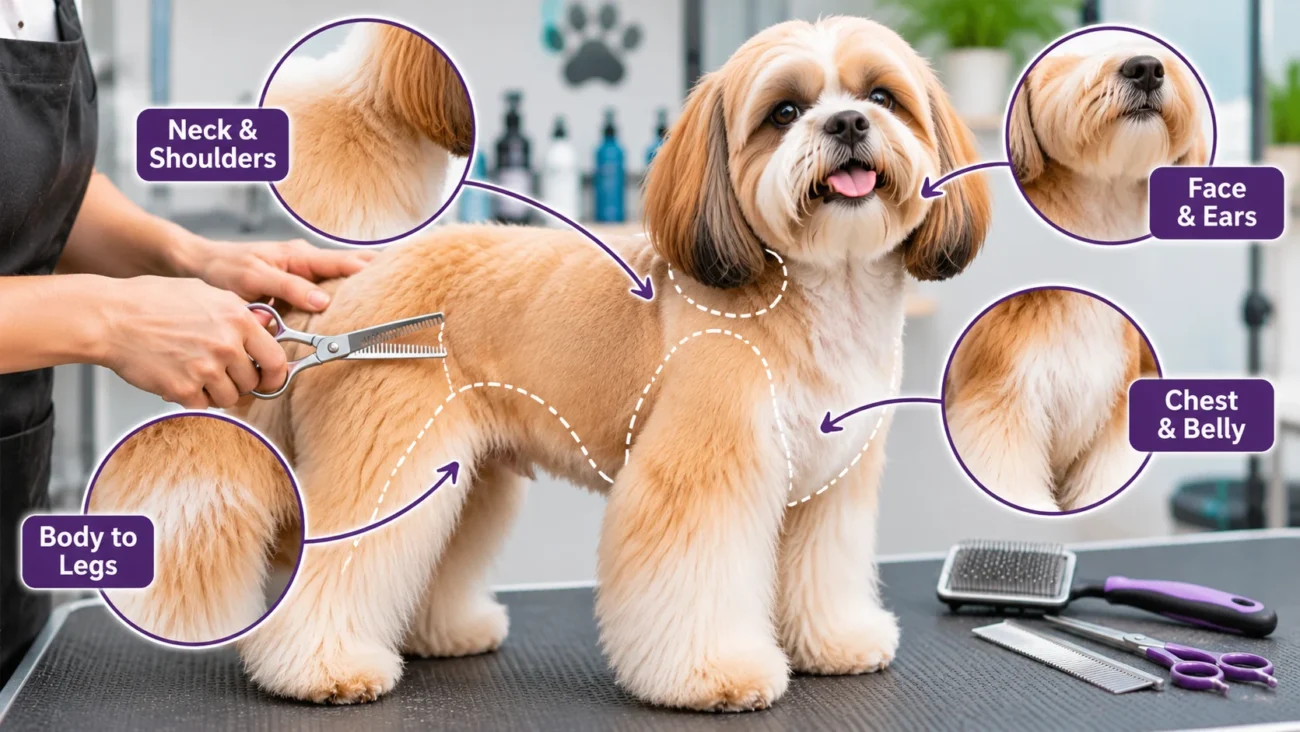
Different body areas have different contours, movement, and safety considerations. The same cutting approach should not be applied everywhere.
Blending the Body Into Longer Legs
Where a short body coat meets longer leg hair, an abrupt line around the upper leg can make the furnishings look disconnected.
Retain the intended fullness of the legs and focus on softening the visual change around the shoulder or hip.
The goal is a gradual contour rather than a sharply defined band around the leg.
Blending the Chest and Belly
Longer chest or belly furnishings often create a noticeable edge against a shorter body.
Begin by combing the longer hair into its natural position. Check the outline while the dog is standing normally.
A groomer can then soften the boundary without unnecessarily removing the fuller shape.
Because the belly, armpits, and skin folds are sensitive, inexperienced owners should avoid cutting these areas.
Blending Around the Neck and Shoulders
The neck and shoulders change shape as a dog moves, so a transition that looks smooth in one position may look different when the dog turns.
Check the coat with the dog standing naturally and keep the intended silhouette in mind.
Do not pull or stretch the skin to force a particular outline.
Blending the Face and Ears
The face and ears require much greater caution than broad body areas.
Eyes, ear edges, lips, and loose skin can be injured by grooming tools. Owners without specific hands-on training should leave these transitions to a qualified groomer.
A professional can soften the outline while preserving visibility, comfort, and the dog’s intended style.
How Can You Fix Visible Clipper Lines or an Uneven Haircut?
Visible clipper lines are not always a blending-shear problem. Sometimes the difference between two sections is too large, the coat is lying unevenly, or a shorter blade has created a distinct patch.
Use the following guide to identify a reasonable next step.
| Problem | Likely Explanation | What to Do |
|---|---|---|
| A hard line between lengths | Abrupt change in cutting length. | Ask a groomer to soften the transition while preserving length. |
| Uneven, protruding strands | Hair is lying inconsistently or needs minor finishing. | Comb first and reassess before trimming. |
| A very short patch | Too much coat was removed. | Avoid widening the patch; seek professional correction or allow regrowth. |
| Patchy or rough-looking fur | Possible coat texture, preparation, or cutting issue. | Check for tangles and coat condition; stop cutting if the cause is unclear. |
| Red or irritated skin | Possible grooming-related irritation or another skin problem. | Stop grooming and contact a veterinarian if irritation persists, worsens, or the skin is injured. |
One especially important distinction is that blending cannot restore hair that has already been cut too short. It can only change the surrounding outline.
Attempting to conceal a deep patch by trimming progressively larger areas may make the haircut worse.
What Mistakes Should You Avoid When Blending Dog Hair?
The most common problems come from removing too much hair, overlooking coat type, or trying to correct a line without preparing the coat.
- Making large cuts: Removing too much hair at once can create gaps that cannot be immediately reversed.
- Skipping brushing: Tangled or flattened hair makes it difficult to judge the finished length.
- Trimming into the undercoat: An unsuitable haircut can interfere with the appearance and function of certain double coats.
- Using ordinary household scissors: They are not designed for controlled pet grooming and may increase handling risks.
- Working too close to skin: Loose skin and hidden folds make accidental cuts possible.
- Continuing when the dog moves: Unexpected movement makes scissor and clipper work hazardous.
- Trying to achieve perfect uniformity: Natural coat growth and body contours do not always produce identical-looking sides.
Warning
Never cut through tight mats with scissors close to a dog’s skin. Mats can pull skin upward, making it difficult to distinguish hair from skin. Have a trained groomer or veterinary professional assess severe matting, painful areas, or skin injuries.
For more general safety guidance, see the AKC’s advice on grooming dogs at home and VCA Animal Hospitals’ grooming and coat-care guidance.
How Do You Keep Blended Dog Hair Looking Natural?
A well-blended haircut is easier to maintain when the coat remains clean, untangled, and regularly checked.
Routine maintenance should match the dog’s coat type and individual needs rather than follow the same schedule for every breed.
- Brush consistently: Prevent tangles and help longer sections retain their intended shape.
- Use a comb to check the coat: Pay attention to friction areas such as behind the ears and beneath the legs.
- Keep the coat appropriately clean: Follow a bathing routine suited to the dog’s skin and coat.
- Maintain a consistent grooming style: Tell your groomer which areas should remain short and which should retain fullness.
- Watch for changes: Unusual hair loss, persistent irritation, or changes in texture may need veterinary assessment.
Coat maintenance is not just about appearance. Regular grooming provides opportunities to notice skin changes, discomfort, or developing mats before they become more difficult to manage.
When Should You Ask a Professional Groomer for Help?
Professional assistance is the safer choice when trimming involves sensitive areas, an unfamiliar coat type, extensive matting, or a dog that cannot remain calm during the procedure.
Consider booking a qualified groomer when:
- You have never been shown how to handle grooming scissors or clippers safely.
- The transition involves the face, ears, armpits, groin, or skin folds.
- The dog’s coat is heavily tangled or matted.
- A very short clipper patch needs corrective styling.
- The dog becomes distressed, pulls away, or struggles during trimming.
- You are unsure whether the coat should be clipped at all.
If the skin is cut, bleeding, painful, or unusually inflamed, contact a veterinarian rather than attempting further cosmetic grooming.
For owners who want to learn, requesting a hands-on demonstration from a groomer can be more useful than trying to copy an unfamiliar cutting technique from photographs.
Frequently Asked Questions
Can you blend dog hair without thinning shears?
Yes. Professional groomers can use appropriate scissors and clipper techniques to create transitions on suitable coats. However, thinning or blending shears often make subtle finishing work easier. Beginners should receive hands-on instruction before trying cutting techniques.
Should you blend dog hair when it is wet or dry?
Final blending is generally easier to judge on a clean, fully dry, properly prepared coat. Wet hair can lie differently and conceal how the finished shape will appear after drying.
How do you blend short body hair into long leg hair?
Preserve the intended fullness of the legs while gradually softening the boundary at the shoulders or hips. A groomer may use blending shears and suitable clipper techniques to avoid a visible step between the lengths.
Can you blend a dog’s hair after accidentally cutting it too short?
Sometimes, but only to a limited extent. A professional may soften the surrounding transition, although a very short patch can remain visible until the coat grows back. Avoid cutting increasingly large areas in an attempt to hide it.
Are blending shears safe for all dog breeds?
No. Suitability depends on coat type, skin condition, the area being trimmed, and the handler’s experience. Dogs with dense double coats or sensitive skin may need different grooming methods.
How often does blended dog hair need maintenance?
There is no single schedule for every dog. Maintenance depends on coat growth, texture, grooming style, and the dog’s tendency to develop tangles. Regular brushing and periodic professional grooming can help preserve the desired shape.
Final Thoughts
To blend short and long dog hair successfully, focus on gradual transitions, proper coat preparation, and preserving the dog’s natural shape rather than cutting everything to one length.
For suitable coats, careful finishing with blending shears can soften visible lines. However, safe tool handling and coat-specific grooming matter more than achieving a perfectly smooth haircut. When the coat type or cutting technique is unfamiliar, professional guidance is the best starting point.


