
Quick Answer
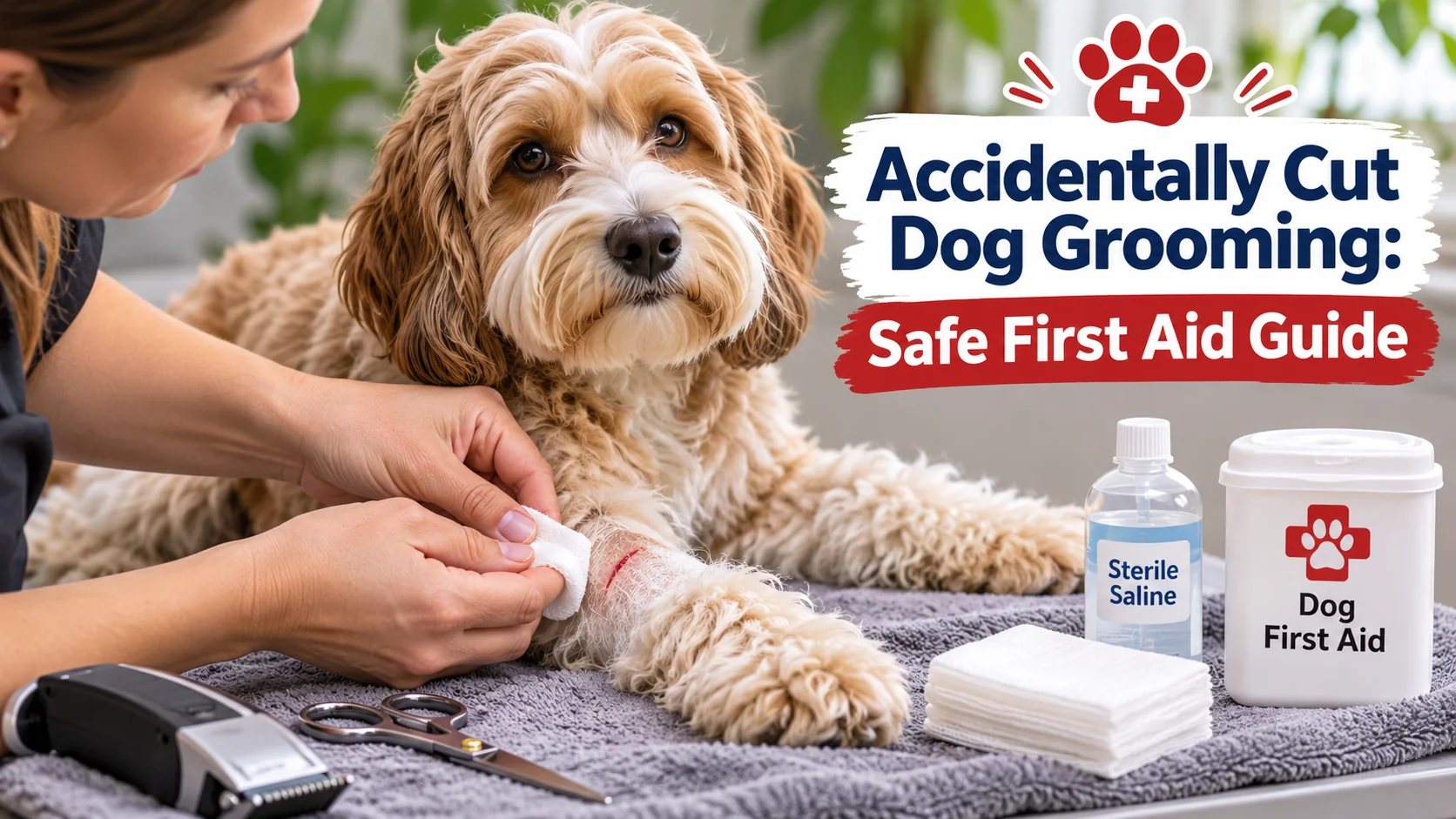
If you accidentally cut your dog while grooming, stop grooming immediately. Apply steady pressure with clean gauze if the wound is bleeding. Once bleeding stops, gently rinse a small, superficial cut with sterile saline or clean water. Contact your veterinarian for advice. Deep, gaping, heavily bleeding, or sensitive-area injuries require prompt veterinary attention. Do not use hydrogen peroxide, alcohol, or human painkillers.
Accidentally cutting a dog’s skin with scissors or clippers can happen quickly, particularly when loose skin, mats, or sudden movements are involved. A small nick may need only basic first aid and monitoring, while a deeper injury can require professional treatment.
The important first step is to assess the injury without causing additional pain. The wound’s depth, location, bleeding, and your dog’s behavior matter more than how small the cut initially looks.
What Should You Do Immediately After Accidentally Cutting Your Dog?
Stop using grooming tools, keep your dog as calm as possible, and control any bleeding. Avoid continuing the haircut or repeatedly touching the injured area.
- Put the grooming tools down. Switch off clippers and move sharp scissors away from your dog.
- Prevent sudden movement. Speak calmly and avoid forcing your dog to stay still if handling causes pain or fear.
- Find the injured area. Gently separate surrounding hair without pulling the skin or probing the wound.
- Apply direct pressure if bleeding. Hold clean gauze or a clean towel against the injury. Maintain steady pressure rather than repeatedly lifting it to check.
- Assess the wound. Once bleeding is controlled, look for gaping edges, swelling, unusual depth, and injury to sensitive areas.
- Contact your veterinarian. Explain the grooming tool involved, where the cut occurred, and whether bleeding continues.
If bleeding is heavy, spurting, or not responding to steady pressure, seek emergency veterinary care immediately. Continue direct pressure during transport when it is safe to do so.
Warning
Do not delay emergency veterinary care to wash, photograph, bandage extensively, or finish grooming a severely injured dog. Bleeding control and safe transportation take priority.
These first-aid priorities are consistent with guidance from the American Red Cross on bleeding in dogs.
How Can You Tell Whether a Grooming Cut Is Serious?
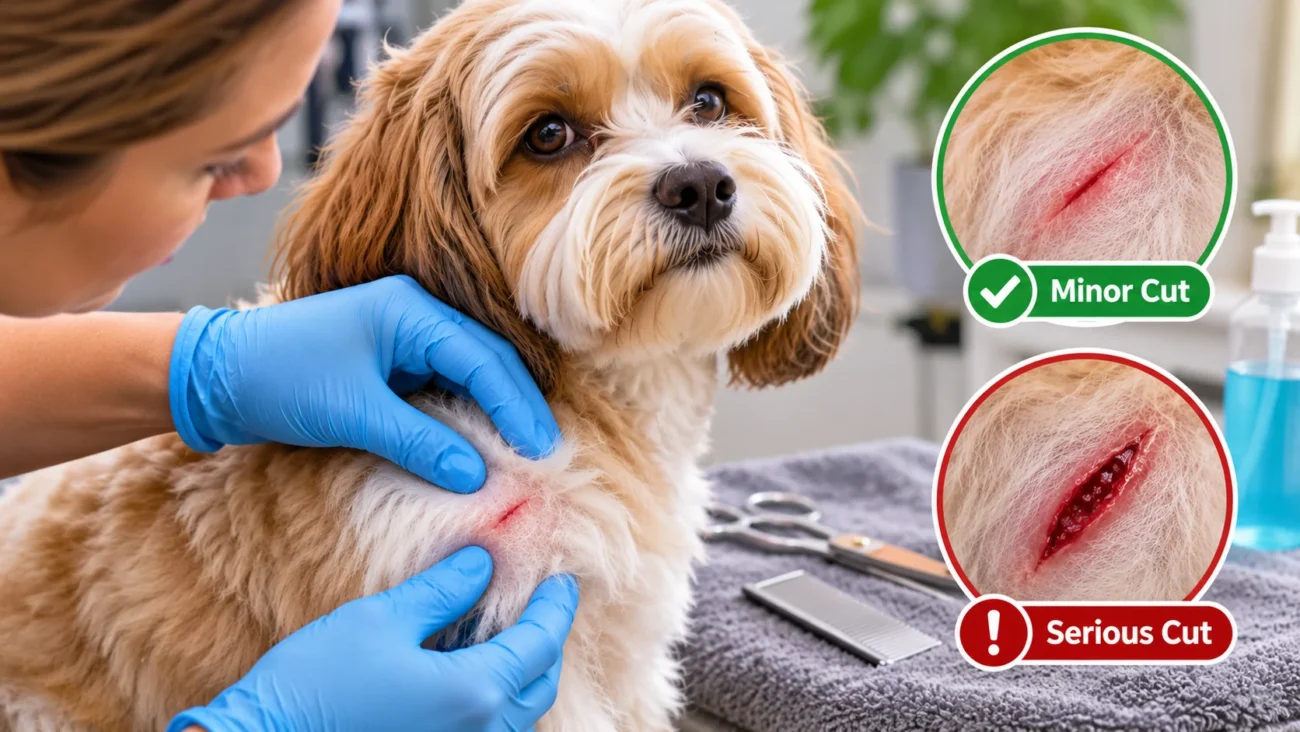
A serious grooming cut may involve persistent bleeding, separated skin edges, significant pain, or a location where underlying structures are vulnerable. A superficial scratch is generally less concerning, but appearance alone cannot always establish its depth.
Use the following guide to decide how urgently to seek help.
| What you notice | What to do |
|---|---|
| Small surface nick, minimal bleeding, normal behavior | Provide basic first aid and contact your vet for guidance. |
| Gaping or visibly deep wound | Seek prompt veterinary examination; closure may be needed. |
| Heavy, spurting, or uncontrolled bleeding | Apply pressure and go to an emergency veterinary hospital immediately. |
| Injury near the eye, ear, genital area, or other delicate tissue | Arrange urgent veterinary assessment. |
| Weakness, collapse, pale gums, or unusual breathing | Treat as an emergency. |
A short cut can still be deep. Scissors may create a narrow opening that does not clearly reveal the extent of tissue damage, especially beneath a thick coat.
How Do You Safely Clean a Minor Grooming Cut?
For a small, superficial wound with controlled bleeding, gently rinse the injured skin with sterile saline or clean, lukewarm water. Do not scrub or attempt to clean deep inside the wound.
Step 1: Make Sure Bleeding Is Controlled
Cleaning should not interrupt efforts to control active bleeding. If blood continues to flow significantly, maintain pressure and seek veterinary care instead of repeatedly washing the area.
Step 2: Gently Rinse the Injured Skin
Use a gentle stream of clean water or sterile saline to remove loose hair and surface debris. Avoid vigorous rubbing, which may aggravate damaged tissue.
Do not pull away firmly attached material or manipulate exposed deeper tissue. Those situations need veterinary assessment.
Step 3: Avoid Irritating Chemicals
Do not apply rubbing alcohol, hydrogen peroxide, concentrated disinfectants, or essential oils. These can irritate tissue or interfere with healing.
Do not assume a human antibiotic cream is appropriate for your dog. Ask your veterinarian before using topical medication, especially where licking is likely.
Step 4: Keep the Area Protected
Prevent your dog from licking, scratching, or rubbing the injury. Your veterinarian may recommend a properly fitted recovery collar or another protective method.
Do not apply a tight homemade bandage. Incorrect bandaging can create pressure and circulation problems, and not every cut should be covered.
For further guidance, see VCA Animal Hospitals’ wound-care recommendations.
When Does an Accidental Grooming Cut Need a Veterinarian?
Veterinary assessment is especially important when the cut is deep, gaping, contaminated, painful, or located close to delicate structures. Even minor cuts are worth discussing with your veterinary clinic because hidden injury may not be obvious at home.
Seek urgent attention when:
- Bleeding is heavy or continues despite steady pressure.
- The wound edges separate or deeper tissue is visible.
- Your dog cries, resists handling, or shows marked pain.
- The injury involves an eyelid, ear flap, paw, genital region, or skin fold.
- Your dog seems weak, unusually quiet, or physically unstable.
- You cannot examine the wound safely.
Some lacerations need cleaning under veterinary supervision, stitches, or other treatments. Waiting until the next day may make appropriate wound management more difficult, so call promptly when a cut appears deeper than a surface nick.
The American Red Cross guidance on dog lacerations explains why cuts and tears often warrant veterinary attention.
Why Do Dogs Get Accidentally Cut During Grooming?
Most grooming cuts result from a combination of sharp equipment, moving skin, difficult coat conditions, and an animal that cannot remain perfectly still.
Loose Skin and Hidden Folds
Dogs have movable skin, and some areas form folds that can slip between scissor blades or into poorly positioned clipper heads. The armpits, groin, and areas around the ears require particular caution.
Matted or Tangled Fur
Tight matting can pull skin upward, making the boundary between coat and skin difficult to identify. Placing scissors underneath a mat is particularly risky because skin may be trapped inside it.
Severely matted areas should be handled by an experienced groomer or veterinarian rather than cut away at home.
Sudden Movement
A dog may turn toward a noise, pull away when uncomfortable, or shift position without warning. A tool that was safely positioned a moment earlier can then contact the skin.
Incorrect Clipper Technique
Damaged blades, unsuitable attachments, excessive pressure, and poor tool angles can contribute to cuts or skin irritation.
Not every red patch after clipping is an open wound. Friction-related irritation, often called clipper burn, differs from a laceration. However, broken skin or significant pain should not be dismissed as ordinary irritation.
How Should You Monitor Your Dog After a Minor Cut?
Monitor a minor wound for renewed bleeding, increasing redness, swelling, discharge, odor, and changes in your dog’s behavior. Follow your veterinarian’s instructions about cleaning and protection.
Check the area gently without repeatedly picking at a developing scab. Keep the coat and surrounding skin reasonably clean, and postpone further trimming around the injury.
Contact your veterinarian if the area becomes increasingly painful, swollen, warm, or begins producing cloudy or yellow-green discharge. Also seek advice if the wound reopens, your dog develops lethargy, or healing does not appear to be progressing.
Key Insight
The absence of bleeding does not prove that a grooming cut is harmless. Wound depth, location, pain, and skin separation are important when deciding whether your dog needs treatment.
How Can You Prevent Accidental Cuts During Future Grooming?
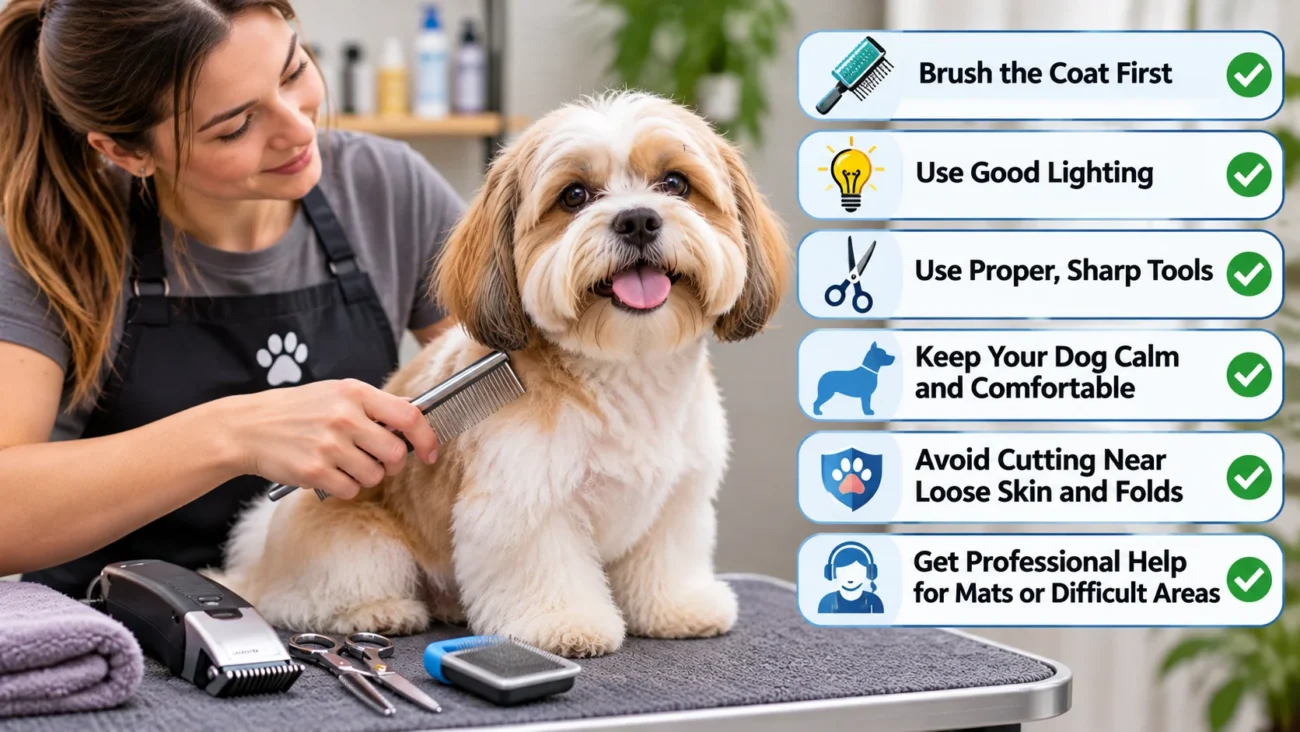
The safest approach is to improve visibility, reduce unnecessary tool pressure, and avoid cutting in areas where skin cannot be clearly distinguished from fur.
- Brush and assess the coat first. Identify tangles, tight mats, irritated skin, and sensitive areas before using sharp tools.
- Work in good lighting. Make sure you can clearly see the grooming area and the position of the skin.
- Use appropriate grooming equipment. Maintain clean, undamaged tools and follow their operating instructions.
- Avoid cutting blindly beneath mats. Ask a professional to remove mats that sit tightly against the skin.
- Keep sessions manageable. Give breaks when your dog becomes restless or stressed.
- Stop if your dog resists. Never force scissors or clippers close to moving or struggling skin.
It is reasonable to leave difficult areas unfinished. A professional groomer can often handle challenging coat sections more safely, while a veterinarian may be needed for painful matting or pre-existing skin injuries.
If grooming has already caused an injury, allow the area to heal and obtain veterinary clearance where appropriate before attempting to trim nearby hair again.
Frequently Asked Questions
1. Can a small grooming cut heal on its own?
Some very superficial cuts heal with appropriate basic care, but size alone does not establish severity. Contact your veterinarian for guidance, particularly if the injury’s depth is unclear.
2. Can I put hydrogen peroxide on a dog’s grooming cut?
No. Hydrogen peroxide can damage healthy tissue and delay healing. Clean a minor wound with sterile saline or clean water unless your veterinarian directs otherwise.
3. Should I cover a grooming cut with a bandage?
Not automatically. Bandaging depends on the location and type of wound. A poorly applied bandage can cause additional problems, so follow veterinary instructions.
4. What if my dog keeps licking the injured area?
Prevent repeated licking with a veterinarian-recommended recovery collar or protective device. Excessive licking may irritate the wound and interfere with healing.
5. Can grooming scissors cause a deep cut without much blood?
Yes. Visible blood loss is not a reliable measure of wound depth. Gaping skin, exposed tissue, or significant discomfort warrants veterinary examination.
6. When can I groom my dog again after an accidental cut?
Wait until the injured area has healed sufficiently and your veterinarian confirms that grooming is safe when necessary. Avoid sharp tools near any wound that remains tender, open, or irritated.
Final Thoughts
If you accidentally cut your dog while grooming, stop immediately, control bleeding, and assess the injury before attempting further care. Small superficial cuts may be manageable with veterinary guidance, while deep, painful, or heavily bleeding injuries require prompt professional treatment.
Once your dog has recovered, gentler handling, better coat preparation, and avoiding risky trimming near hidden skin folds can help make future grooming sessions safer.


