
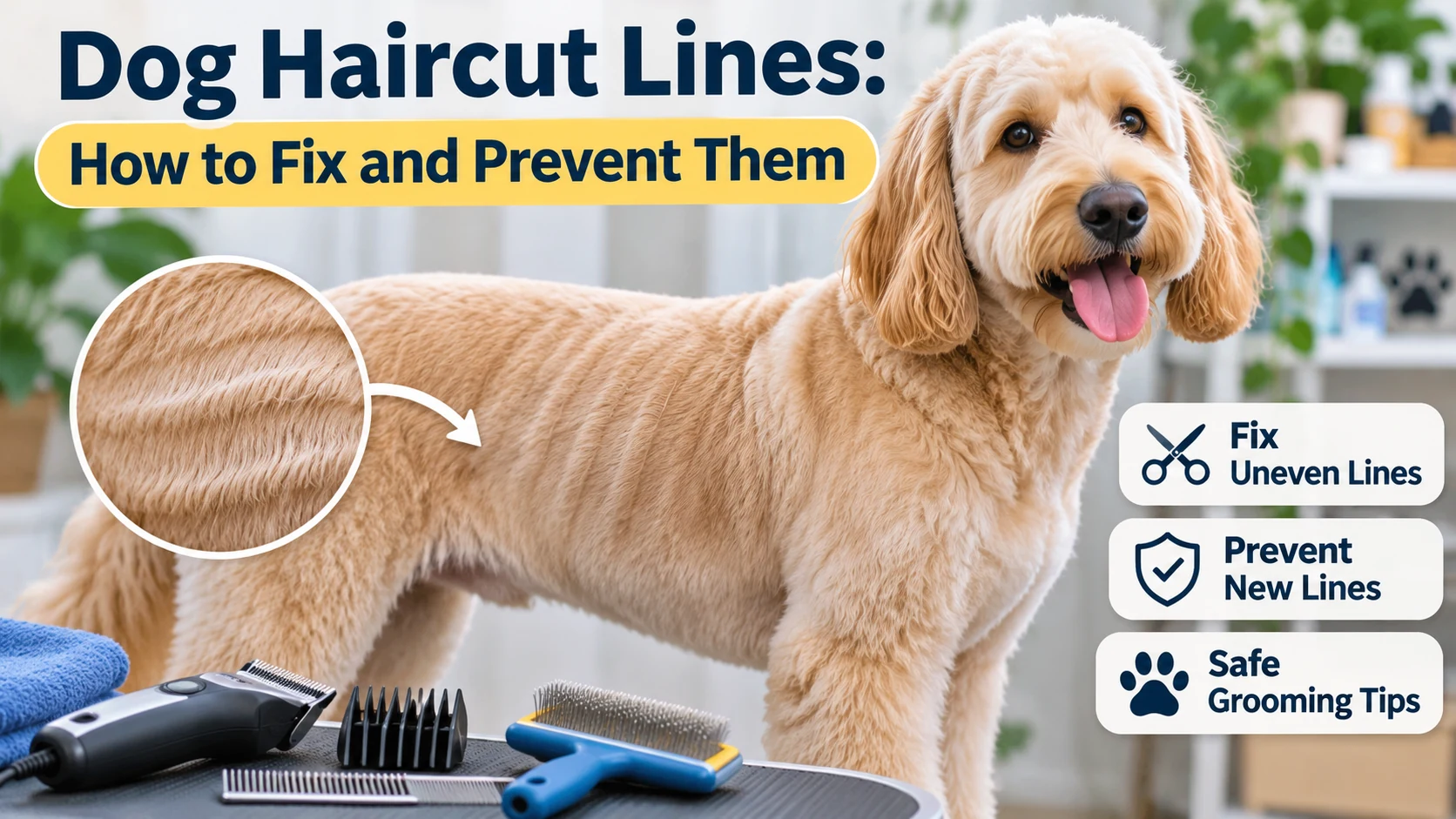
Quick Answer
Dog haircut lines are visible ridges, stripes, or uneven patches left after clipping a dog’s coat. They commonly appear because of inconsistent clipper pressure, incorrect blade angles, poor coat preparation, or missed sections between passes. To fix them, brush and comb the coat, check your equipment, and make gentle, overlapping passes using the same cutting length. Stop if the skin becomes irritated or your dog is uncomfortable.
Dog haircut lines can make an otherwise neat grooming session look patchy. You may notice long stripes across your dog’s back, uneven sections along the sides, or sharp transitions where two lengths meet.
The good news is that many superficial clipper marks can be improved without starting the entire haircut again. However, the right solution depends on whether the lines come from missed hair, uneven cutting, coat texture, or an equipment problem.
Before reaching for the clippers again, identify what caused the marks. This helps you avoid creating shorter patches while attempting to correct the original problem.
What Are Dog Haircut Lines?
Dog haircut lines are visible differences in coat length, texture, or direction that appear after grooming. They are commonly called clipper lines, clipper tracks, grooming lines, or track marks.
They can appear as straight stripes, raised ridges, shallow grooves, or abrupt transitions between longer and shorter fur.
Not every visible line is a grooming mistake. Some breed-specific haircuts deliberately use defined pattern lines to separate different coat lengths. The problem is usually an unintended stripe or uneven finish.
The appearance of a line can help identify its cause:
- Raised ridges: Hair may have been missed between clipper passes.
- Short grooves: The blade may have cut closer in one area.
- Patchy sections: Coat preparation, tangles, or inconsistent cutting may be responsible.
- Sharp transitions: Different cutting lengths may not have been blended.
- Wavy tracks: Changes in clipper speed, angle, or coat direction may have affected the finish.
These distinctions matter because a raised strip of longer hair is easier to correct than a groove that has already been clipped too short.
Why Do Dog Haircut Lines Appear?
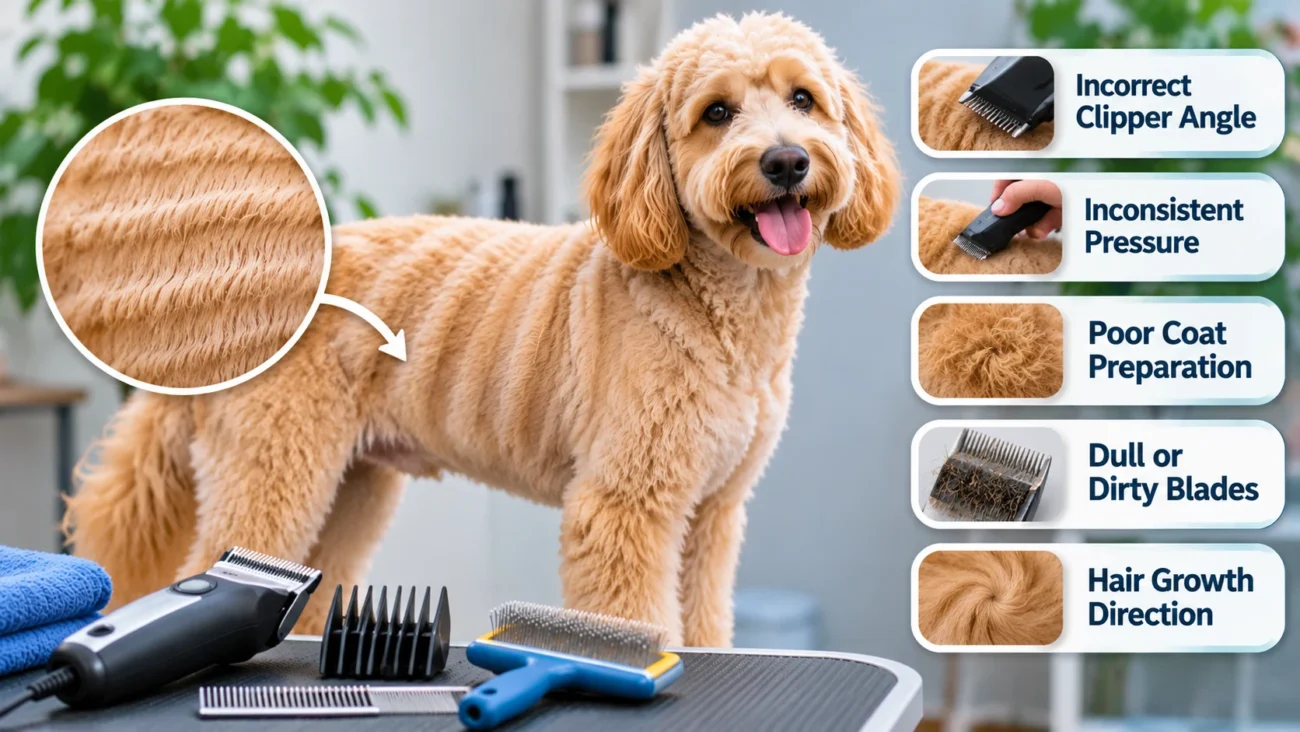
Dog haircut lines usually develop when the clippers do not remove hair evenly. Several factors can produce similar-looking marks, so examine both your technique and the condition of the coat.
1. Inconsistent Clipper Pressure
Applying different amounts of pressure during a stroke can create uneven cutting lengths. Pressing harder around the ribs or shoulders may also increase the risk of scraping or nicking the skin.
Use steady, light contact and avoid forcing the blade into the coat. Beginners should prioritize control rather than speed.
2. Incorrect Blade Angle
Tilting a clipper excessively can change how closely it cuts. This is particularly noticeable on curved body areas where maintaining a consistent position becomes more difficult.
Keep the clipper stable and follow the body’s contours without digging the blade edge into the skin. The appropriate angle varies with blade design and coat type.
3. Skipping Overlapping Passes
When clipper strokes do not overlap, narrow strips of longer hair remain between them. These strips can look like raised lines.
Professional grooming guidance recommends overlapping passes by approximately one-third to one-half of the blade width to reduce missed sections.
4. Poor Coat Preparation
Dirty, damp, tangled, or compacted fur does not feed through clippers consistently. Hair may bend under a guard comb instead of being cut at the intended length.
Proper brushing, bathing when appropriate, and thorough drying help create a more consistent cutting surface.
5. Dull or Dirty Clipper Blades
Blades containing trapped hair or buildup may drag instead of cutting smoothly. Dull cutting edges can leave uneven sections or pull at the coat.
If the clippers begin snagging, stop and inspect the blade. Cleaning, lubrication, or professional servicing may be necessary.
6. Changes in Hair Growth Direction
Hair does not grow in one direction across a dog’s entire body. Swirls and changes in coat direction commonly occur around the shoulders, chest, hips, and legs.
A stroke that follows the coat on the back may move across the grain on the side, producing a different finished length.
How Do You Fix Dog Haircut Lines Step by Step?
To fix dog haircut lines safely, first determine whether the uneven area contains longer hair that can be trimmed or a shorter groove that needs time to grow out.
Use the following process only when your dog is calm, the coat is suitable for clipping, and there is no skin irritation.
Step 1: Examine the Coat in Good Lighting
Place your dog on a secure, nonslip surface and examine the haircut from several angles. Look across the coat rather than only from above.
Identify whether each line is raised, recessed, or simply a change in hair direction. Check the underlying skin for redness, cuts, or tenderness before attempting corrections.
Step 2: Brush and Comb the Uneven Area
Gently brush the hair to separate strands that may be lying flat. Follow with a grooming comb to check whether the coat is free of tangles.
Some apparent lines become less noticeable once the hair is lifted and arranged evenly. Never force a comb through tight matting.
Step 3: Inspect the Clippers
Switch the clippers off and unplug them, or remove the battery when applicable, before cleaning or changing attachments.
Remove loose hair, check for damaged teeth, and follow the manufacturer’s blade-cleaning and lubrication instructions. Inspect the guard comb to ensure it is securely attached.
Check blade temperature before resuming. If the blade feels hot, allow it to cool or change to a suitable cool blade.
Step 4: Test a Small Area
Start with the same blade or guard-comb length used for the surrounding coat. Work on a small, accessible area of longer hair rather than the shortest part of the haircut.
Use a controlled stroke following the natural direction of hair growth. Check whether the line becomes less noticeable.
If the line is a shorter groove, do not repeatedly clip around it. Further cutting may create a larger short patch.
Step 5: Blend Longer Sections Gradually
When raised strips of hair remain, make smooth passes that slightly overlap the surrounding clipped area.
Maintain consistent cutting pressure and avoid repeatedly working over the same section. A longer guide comb may help preserve coat length when blending is appropriate.
Advanced blending around difficult contours may require professional grooming shears and experience.
Step 6: Check the Finished Coat
Brush the corrected area lightly and inspect it under natural or bright indoor lighting.
Look for remaining ridges without chasing every tiny difference in length. A natural-looking, slightly uneven coat is preferable to repeated close clipping that risks irritating the skin.
Safety Warning
Never try to erase a haircut line by pressing the clipper harder, shaving closer to the skin, or repeatedly cutting irritated areas. Stop immediately if your dog pulls away, yelps, or shows signs of pain.
How Can You Tell Which Fix Your Dog Needs?
The safest correction depends on the appearance and location of the marks.
| What You See | Likely Explanation | Best Next Step |
|---|---|---|
| Raised strips | Missed longer hair | Brush and make controlled overlapping passes |
| Short grooves | Uneven close cutting | Allow regrowth or request professional blending |
| Uneven patches | Tangles or inconsistent cutting | Reassess preparation before trimming |
| Sharp length changes | Unblended transition | Use gradual blending or a groomer |
| Red or painful tracks | Possible skin irritation or injury | Stop clipping and seek veterinary advice |
A useful rule is to correct only hair that is clearly longer than the desired finished length. Shorter grooves cannot be filled in by clipping surrounding fur.
How Can You Prevent Dog Haircut Lines?
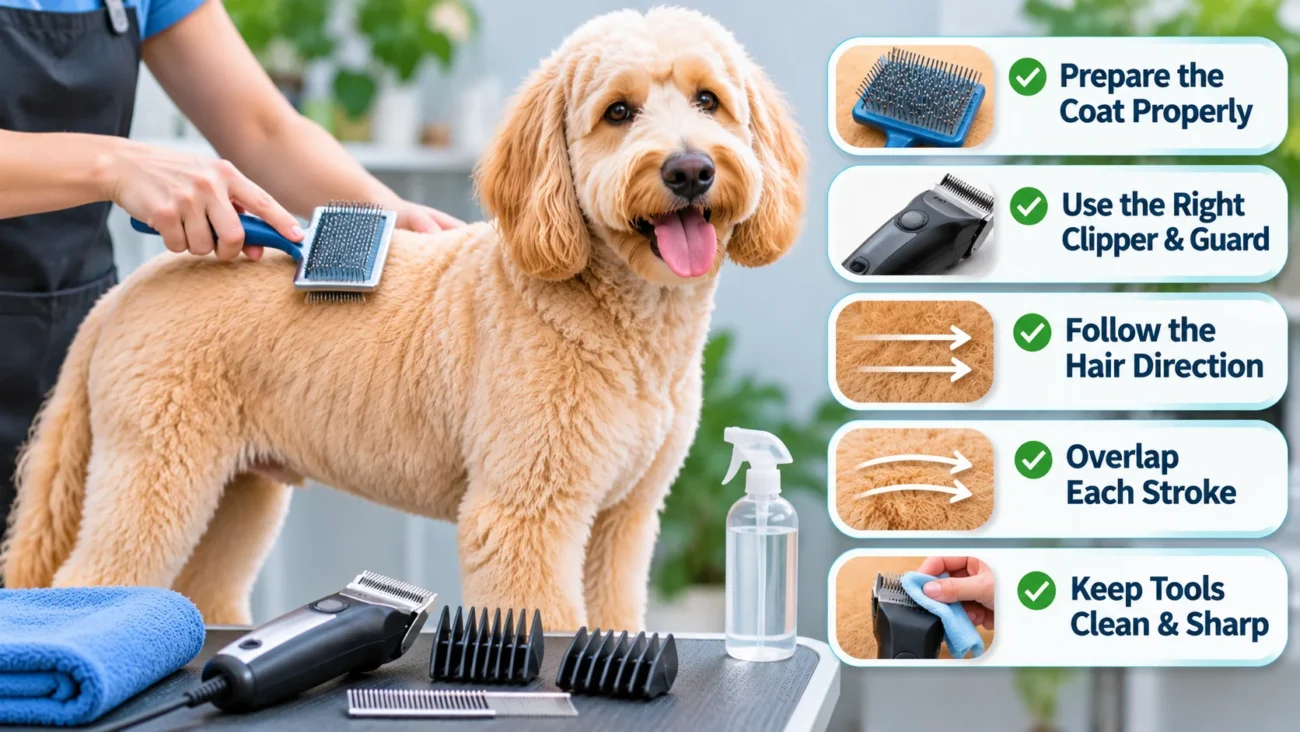
Preventing clipper lines is usually easier than correcting them afterward. Most improvements come from consistent preparation and controlled cutting technique.
Prepare the Coat Before Clipping
Brush and comb thoroughly, remove loose hair, and ensure the coat is clean and fully dry before a standard clipper haircut.
If tight mats are present, avoid pulling them away from the skin or attempting to cut underneath them with ordinary scissors.
Follow the Natural Hair Direction
Study how the fur grows across different parts of your dog’s body. Change the direction of your clipper strokes as the coat direction changes.
Going against the grain can produce a shorter result, even when using the same attachment. Beginners generally achieve more predictable results by following the coat’s natural lay.
Overlap Each Stroke
Use smooth, slow passes with a small overlap. Keep the clipper position consistent and avoid suddenly accelerating at the end of a stroke.
When approaching a longer section, gradually lift the clipper away rather than stopping abruptly and creating a noticeable boundary.
Maintain the Equipment
Remove accumulated hair, clean and lubricate blades according to the manufacturer’s instructions, and replace damaged or worn parts.
Clippers that pull, chatter abnormally, or fail to cut consistently should be inspected before further use.
Grooming Tip
After finishing an accessible body section, gently brush the hair upward and inspect it from the side. This can reveal missed longer strands before you move on to another area.
For additional guidance on equipment handling, see proper clipper technique explained by grooming educator Michell Evans.
Does Coat Type Affect Dog Haircut Lines?
Yes. Coat texture, density, and growth direction influence how visible clipper marks become and whether clipping is appropriate.
Curly coats: Uneven preparation and hair that has not been properly lifted can produce a patchy finish. Thorough brushing, combing, and drying are particularly important.
Straight or silky coats: Lines may be more noticeable because the hair lies flat and reflects light in a consistent direction.
Dense coats: Loose or compacted undercoat may interfere with smooth clipping, making preparation essential.
Double coats: Breeds such as Golden Retrievers and Siberian Huskies generally should not receive routine close body clipping for cosmetic reasons. Their coat structure requires a different grooming approach, usually focused on brushing and removing loose undercoat.
Never assume that a technique suitable for a Poodle will also suit a double-coated breed. Choose the grooming method according to the individual dog’s coat and skin condition.
When Should You Stop Fixing a Dog Haircut?
Stop attempting corrections when further cutting could hurt the dog, worsen the uneven appearance, or create excessive stress.
Situations requiring extra caution include:
- Visible redness, swelling, cuts, or tender skin
- A dog repeatedly moving, struggling, or showing distress
- Severe matting close to the skin
- Lines near eyes, ears, armpits, or skin folds
- Large areas already clipped much shorter than intended
- Equipment that overheats, snags, or cuts inconsistently
A professional groomer can evaluate uneven lengths and determine whether blending is practical. If the skin is injured, painful, or persistently red, a veterinarian should assess it before more grooming.
For general home clipping precautions, consult Petco’s dog clipper safety and technique guide.
Frequently Asked Questions
1. Do dog haircut lines disappear on their own?
Yes, many cosmetic haircut lines become less noticeable as the coat grows. How quickly they fade depends on the original cutting length, coat type, and individual hair growth.
2. Can brushing remove clipper lines?
Brushing can reduce marks caused by flattened or unevenly arranged hair. However, it cannot correct a genuine difference in hair length.
3. Should you use a shorter blade to remove haircut lines?
Not automatically. A shorter blade may make the surrounding coat unnecessarily short and increase irritation risk. First identify whether the line consists of longer hair or an already-short groove.
4. Why do clipper lines appear more clearly after bathing?
Bathing and drying can change how the hair lies, making existing differences in length or direction easier to see. Proper drying and combing can also reveal areas missed during clipping.
5. Can guard combs cause lines in a dog’s haircut?
Yes. A loose attachment, tangled fur, inconsistent pressure, or hair that is not feeding evenly through the comb can produce visible tracks. Check the attachment and coat preparation before continuing.
6. Is it safe to fix dog haircut lines around the face?
Facial trimming requires special caution because the eyes, lips, ears, and moving skin are vulnerable to injury. If the dog moves unpredictably or you lack experience, leave facial corrections to a trained groomer.
Final Thoughts
Dog haircut lines are often the result of uneven clipper technique, missed hair, or insufficient coat preparation. Identifying the cause before trimming again is the safest way to improve the finish.
Focus on clean, dry, well-combed fur, properly maintained equipment, and gentle overlapping strokes. If a section has already been clipped too short, allowing the coat to grow back may be better than cutting more hair.
A comfortable dog and healthy skin should always take priority over a perfectly smooth haircut.


