
Quick Answer
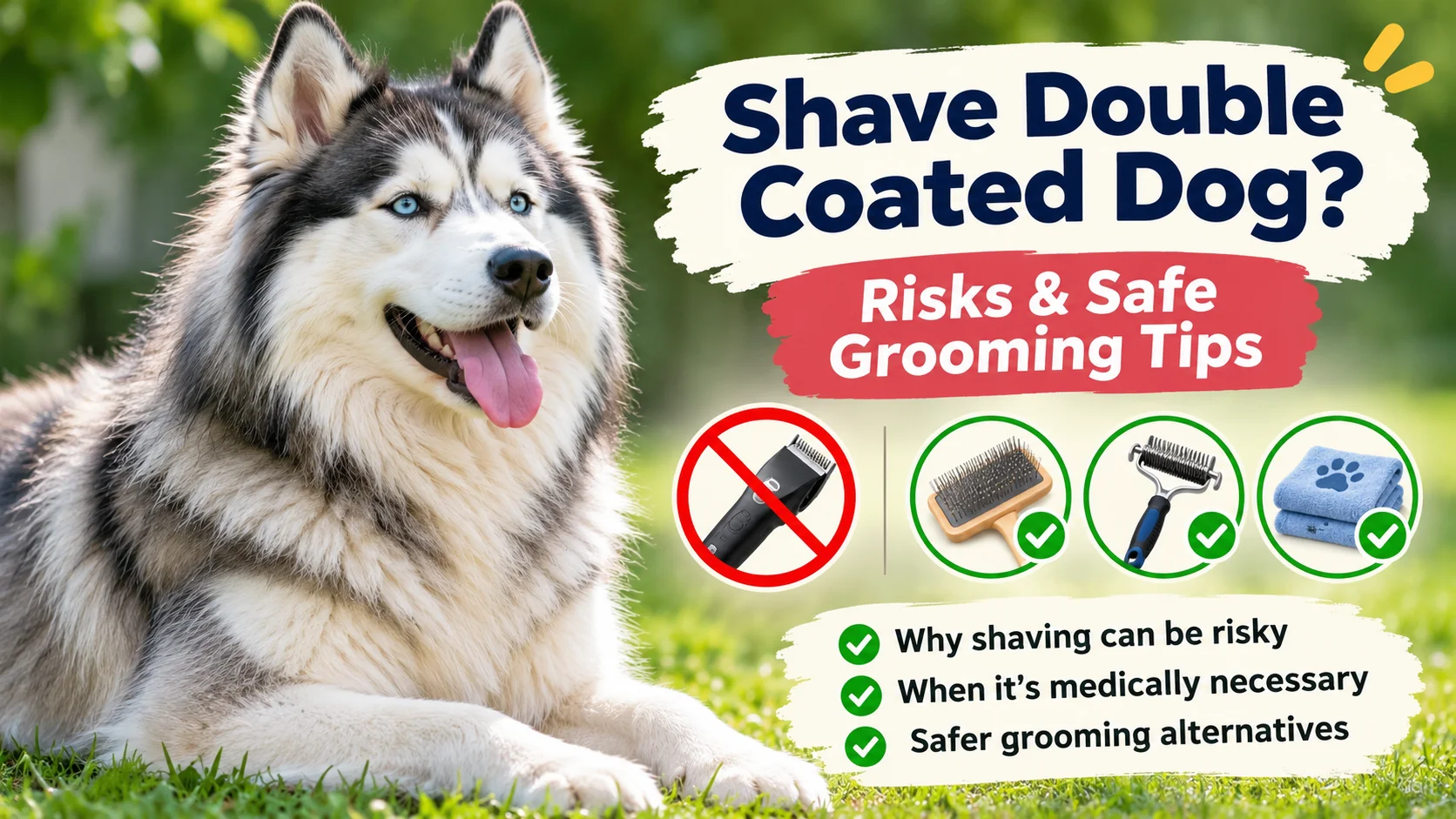
You generally should not shave a double coated dog. The protective outer coat and insulating undercoat help shield the skin and manage exposure to heat and cold. Shaving can increase sun exposure and sometimes cause uneven or delayed regrowth. Exceptions include veterinary procedures, certain skin treatments, and severe matting that cannot be safely removed otherwise. Regular brushing and professional deshedding are usually safer alternatives.
A thick, fluffy coat can make a dog look uncomfortable during summer. Shaving it might seem like the simplest solution, especially when loose fur covers the furniture and floors.
But a double coat works differently from human hair. Removing it can create problems without solving the underlying cause of your dog’s discomfort.
The right decision depends on your dog’s coat condition, health, and the reason you’re considering shaving. Here’s how to make that decision safely.
Why Shouldn’t You Shave a Double Coated Dog?
Routine shaving is discouraged because it removes two layers of fur that serve different protective functions. It can expose previously covered skin and interfere with normal coat regrowth.
A double coat consists of:
- Guard hairs: Longer outer hairs that help protect against sunlight, moisture, dirt, and environmental exposure.
- Undercoat: Shorter, softer hairs that provide insulation and are often shed seasonally.
These layers work together, although their thickness and grooming requirements differ among breeds.
Removing both layers does not automatically make a dog more comfortable in hot weather. Dogs primarily cool themselves by panting, rather than sweating across their bodies like humans.
According to the American Kennel Club’s guidance on double-coated breeds, shaving is generally discouraged because it can affect skin protection and coat regrowth.
However, a thick coat is not a guarantee against overheating. Double-coated dogs can still experience heat stress, especially during strenuous activity, high temperatures, or humid conditions.
What Happens When You Shave a Double Coated Dog?
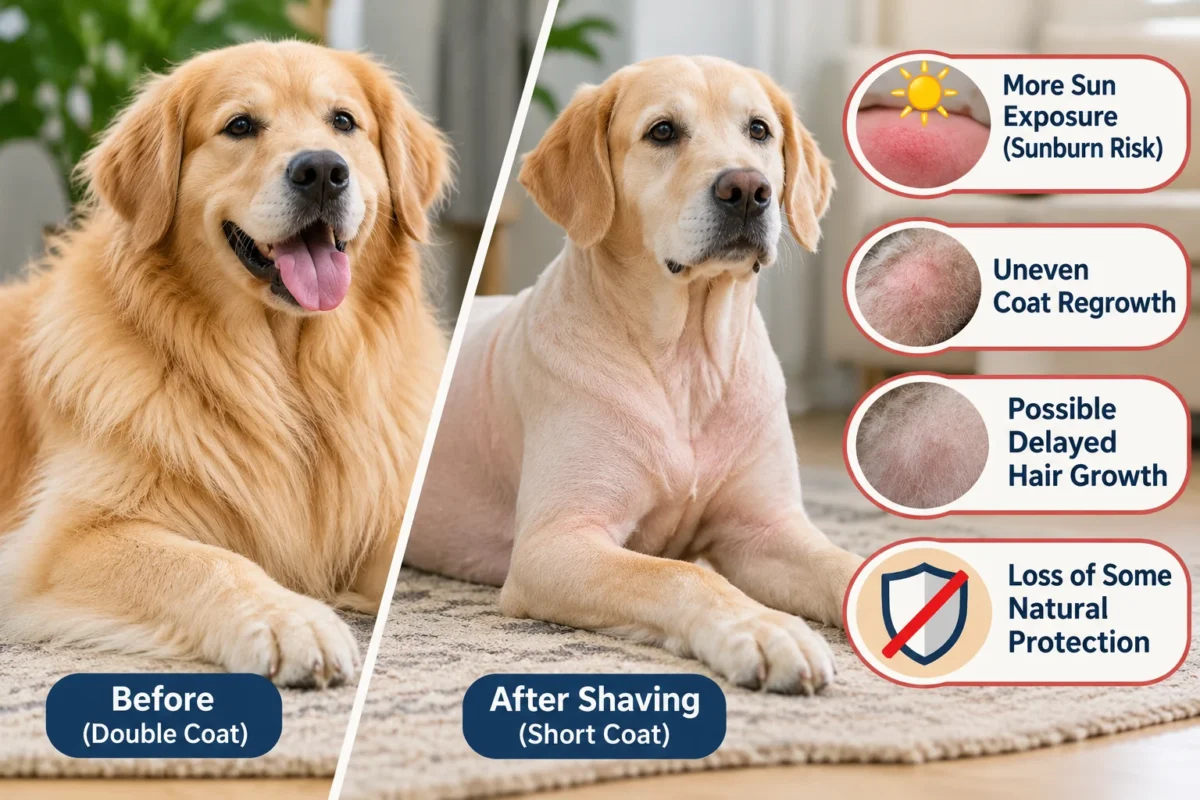
Shaving can leave the skin more exposed, change the coat’s appearance, and sometimes delay normal hair regrowth. These outcomes are possible risks, not guaranteed consequences for every dog.
1. The Skin Loses Some Natural Protection
Guard hairs help shield the skin from direct sunlight, dirt, and environmental contact.
When these hairs are removed, the dog’s skin becomes more exposed. This is particularly concerning for dogs with sensitive or lightly pigmented skin.
A very close shave can increase the likelihood of sunburn or irritation, especially when the dog spends time outdoors.
2. The Coat May Grow Back Unevenly
The outer coat and undercoat do not necessarily follow identical growth cycles.
After clipping, the softer undercoat may become visible before the longer guard hairs return. The coat can temporarily look patchy, woolly, dull, or unusually fluffy.
Some dogs eventually regain their previous coat appearance. Others experience prolonged changes, and the outcome cannot be predicted from breed alone.
3. Hair Regrowth May Be Delayed
Some plush-coated breeds can develop post-clipping alopecia, a condition associated with unusually slow hair regrowth after clipping.
VCA Animal Hospitals identifies this as an uncommon complication that can affect breeds such as Huskies and Pomeranians.
Delayed regrowth is not proof that shaving permanently destroyed the hair follicles. Hormonal problems and other medical conditions can also contribute to abnormal hair growth.
Warning
Do not use close-cutting clippers or scissors to remove tight mats against your dog’s skin. Mats can pull the skin into folds, making accidental cuts more likely. Severe matting should be evaluated by an experienced groomer or veterinarian.
When Is It Necessary to Shave a Double Coated Dog?
Shaving can be justified when a specific medical or welfare concern outweighs the disadvantages of removing the coat.
These circumstances differ from shaving simply for appearance, convenience, or summer comfort.
- Veterinary surgery: Hair may need to be removed so an area can be properly prepared for a procedure.
- Skin treatment: A veterinarian may recommend localized clipping to examine or treat wounds, infections, or other skin problems.
- Severe matting: Removing compacted, painful mats may require clipping if gentler methods are unsafe or unsuccessful.
- Special care needs: A veterinarian may recommend an individualized grooming approach for a dog whose health or mobility makes normal coat maintenance difficult.
The important distinction is between necessary clipping and elective full-body shaving.
A small treatment area does not require shaving the entire dog. Similarly, a dog with localized mats may need only particular areas clipped.
Before agreeing to a complete shave, ask the groomer or veterinarian whether a less extensive approach would safely address the problem.
Which Dog Breeds Should Generally Not Be Shaved?
Many northern, herding, sporting, and working breeds have double coats that should generally be maintained through brushing instead of full-body shaving.
Common examples include Siberian Huskies, German Shepherds, Golden Retrievers, Pomeranians, Samoyeds, and Australian Shepherds.
The following examples show why grooming methods should match coat type.
| Breed | Coat Characteristics | Preferred Care |
|---|---|---|
| Siberian Husky | Dense northern double coat | Regular deshedding and brushing |
| Golden Retriever | Medium-long feathered coat | Brushing and appropriate feather trimming |
| German Shepherd | Dense shedding undercoat | Undercoat maintenance and combing |
| Pomeranian | Plush, abundant coat | Gentle line brushing and careful shaping |
| Australian Shepherd | Medium-length double coat | Routine brushing and modest tidy-ups |
This list is illustrative, not exhaustive. Mixed-breed dogs can also have double coats, and their grooming needs should be assessed individually.
How Can You Keep a Double Coated Dog Cool Without Shaving?
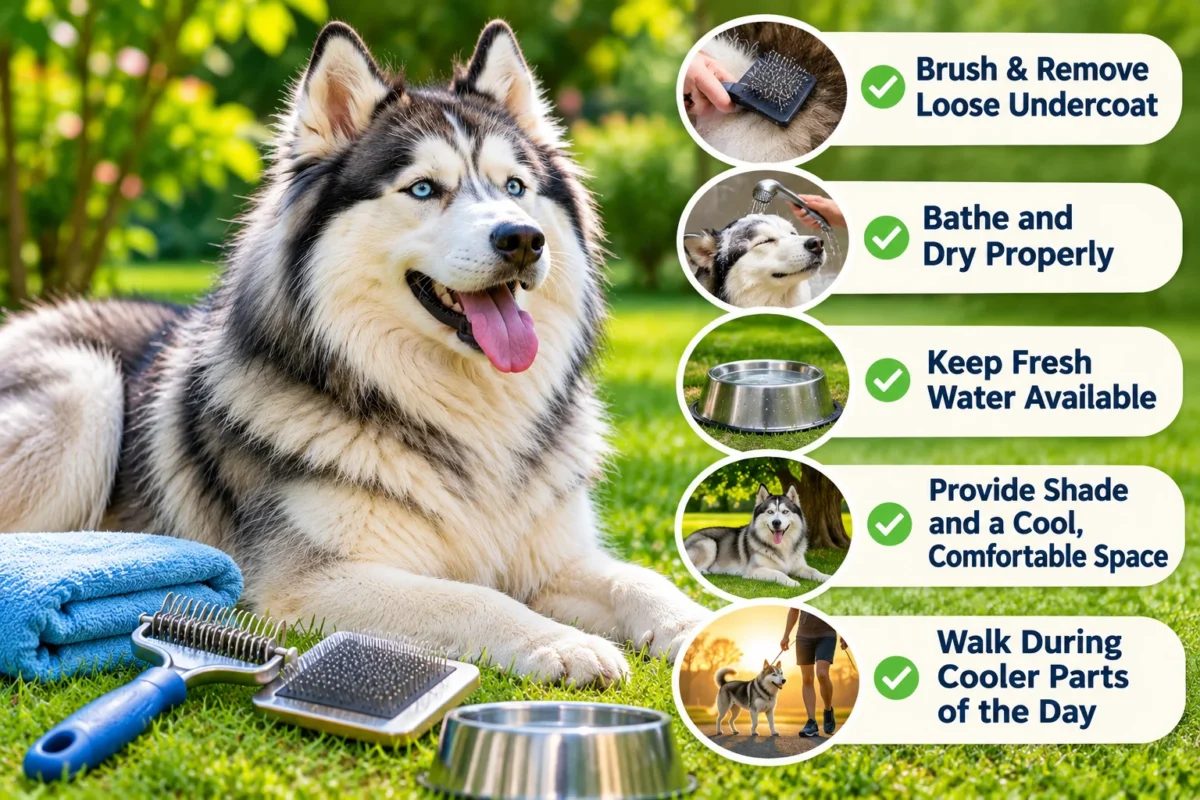
The safer approach combines appropriate coat maintenance with environmental cooling. Neither grooming nor the coat itself can replace protection from excessive heat.
Remove Loose Undercoat Regularly
Brush through the coat in manageable sections, working gently in the direction of hair growth.
Use a suitable undercoat rake, slicker brush, or metal comb according to the coat type. Avoid repeatedly scraping the same area or pulling through resistance.
Many dogs benefit from brushing several times weekly. During heavy seasonal shedding, some require more frequent sessions.
VCA Animal Hospitals recommends regular brushing to remove dead and loose hair while maintaining coat comfort.
Bathe and Dry the Coat Properly
Bathing with dog-specific shampoo can loosen dirt and shed hair, but excessive washing may irritate the skin.
Rinse thoroughly, particularly through the dense undercoat. Afterward, dry carefully using towels and appropriately controlled airflow when your dog tolerates it.
For a complete washing routine, see our guide to bathing a dog safely at home.
Change the Dog’s Environment
Access to a cooler space is more reliable than a haircut for preventing heat stress.
- Provide fresh drinking water and consistent shade.
- Use air conditioning or appropriate ventilation when necessary.
- Walk during cooler parts of the day.
- Limit strenuous activity in hot or humid conditions.
- Offer a comfortable, cool resting surface.
Watch the individual dog rather than relying only on the outdoor temperature. Age, fitness, body condition, breed, humidity, and underlying illness can affect heat tolerance.
Practical Grooming Tip
Ask a groomer for a bath, blowout, and gentle undercoat removal rather than a full-body shave. Explain that you want to retain the protective guard coat while removing loose, shed hair.
What Should You Do If Your Double Coated Dog Has Already Been Shaved?
If your dog has already been shaved, focus on protecting the exposed skin and monitoring regrowth. There is no need to assume that permanent coat damage has occurred.
- Limit direct sun exposure. Provide shade and avoid prolonged time outdoors when the skin is exposed.
- Check the skin regularly. Look for redness, irritation, scratching, sores, or unusual sensitivity.
- Avoid additional close clipping. Allow the coat to recover unless further treatment is medically necessary.
- Resume gentle grooming. Use tools appropriate for the new coat length without scraping exposed skin.
- Observe hair regrowth. Monitor whether the coat fills in evenly and whether the skin remains healthy.
- Seek veterinary guidance when needed. Persistent bald areas, inflammation, or unexplained coat changes warrant assessment.
Regrowth time varies. Some coats recover over months, while others take considerably longer.
Do not apply human hair-growth products, essential oils, or unprescribed treatments in an attempt to speed recovery. Some substances may irritate the skin or be unsafe if licked.
If the coat remains thin or abnormal, a veterinarian can consider both clipping-related changes and unrelated medical causes.
How Do You Know If a Double Coated Dog Is Overheating?
Signs of overheating can include unusually heavy panting, excessive drooling, weakness, restlessness, and difficulty recovering after activity.
More serious signs include collapse, confusion, seizures, or abnormal gum color. Suspected heatstroke is a veterinary emergency.
Immediately move a potentially overheated dog away from the heat and begin cooling with cool, not ice-cold, water while arranging urgent veterinary care. Use airflow to support cooling, and do not delay treatment while waiting to see whether symptoms improve.
Shaving is not an appropriate emergency treatment for overheating.
The AKC guide to overheating in dogs explains the warning signs and immediate response.
How Can You Choose the Right Grooming Method?
Choose the least invasive method that addresses the actual grooming problem safely.
If your dog is shedding heavily but the skin and coat are healthy, brushing and deshedding are the appropriate starting points.
If the coat contains ordinary tangles, gentle detangling or professional coat maintenance may be sufficient. Tight mats that cause pain or restrict normal movement need professional assessment.
If the problem is excessive heat, improve cooling conditions rather than removing the protective coat.
And if a veterinarian identifies a condition requiring clipping, follow the recommended treatment plan, including any guidance for skin protection afterward.
The goal is a healthy, comfortable dog—not simply the shortest possible coat.
Frequently Asked Questions
Does shaving a double coated dog permanently damage its coat?
Not necessarily. Many dogs regrow their coats, but uneven texture or delayed regrowth can occur. Some plush-coated dogs experience post-clipping alopecia. Persistent hair loss should be assessed by a veterinarian rather than automatically attributed to shaving.
Will shaving a Husky keep it cooler in summer?
Shaving a healthy Husky is not recommended as a summer cooling strategy. Removing the coat exposes the skin and changes its protective insulation. Regular deshedding, shade, fresh water, and cooler exercise times are more appropriate.
Can you trim a double coated dog without shaving it?
Yes. Limited trimming around the paws, feathering, or other appropriate areas can be suitable for some breeds. The correct approach depends on the coat type. Avoid close, full-body clipping unless there is a specific welfare or medical reason.
Does shaving a double coated dog stop shedding?
No. Shaving shortens existing hairs but does not stop the natural shedding cycle. The dog can continue shedding shorter hairs as the coat regrows. Regular brushing and removal of loose undercoat are better ways to manage seasonal shedding.
How long does a double coat take to grow back after shaving?
There is no reliable universal timeline. Growth depends on breed, age, health, coat cycle, and how closely the coat was clipped. Some dogs recover over several months, while others experience prolonged or abnormal regrowth that requires veterinary evaluation.
Can you shave a double coated dog with severe mats?
Sometimes. When severe matting causes discomfort or cannot be safely removed through gentler grooming, professional clipping may be necessary. A groomer or veterinarian should assess the mats and determine whether localized or more extensive removal is appropriate.
Final Thoughts
For most healthy double-coated dogs, shaving is not the best solution to summer heat or heavy shedding. Maintaining the protective coat through gentle brushing, appropriate bathing, and careful deshedding is usually safer.
When severe matting or medical treatment makes clipping necessary, choose a professional approach tailored to the individual dog. Protect the skin afterward and monitor the coat as it regrows.


