
Quick Answer
A dog haircut in winter can be safe when it preserves enough coat for warmth. Most dogs benefit from gentle trimming around their paws, face, and sanitary areas rather than a close body shave. Long-haired breeds may need regular haircuts to prevent painful mats, while double-coated dogs generally need brushing instead of shaving. Follow the ASPCA dog grooming recommendations and adjust grooming to your dog’s coat, health, and local weather.
Six winter grooming essentials
- Keep protective fur: Avoid unnecessarily short haircuts during freezing weather.
- Brush regularly: Remove loose hair and prevent mats that hold moisture.
- Trim paw hair: Reduce snow and ice buildup between paw pads.
- Avoid double-coat shaving: Preserve the natural insulating undercoat unless medically necessary.
- Dry the coat: Never leave your dog damp before entering cold conditions.
- Watch for discomfort: Shivering, weakness, or unusual behavior may signal dangerous cold exposure.
Wondering whether your dog needs a haircut when temperatures drop? You’re not alone, because winter grooming creates a tricky balance between cleanliness and warmth.
I recommend thinking about coat health before choosing a hairstyle. This guide explains winter haircut options, safe trimming methods, breed differences, and practical grooming tools.
What Is a Dog Haircut in Winter?
A winter dog haircut is a seasonal grooming trim designed to maintain coat hygiene without unnecessarily removing protective fur. Unlike a close summer-style cut, it usually preserves more coat length.
The right haircut depends on your dog’s breed, coat structure, daily activities, and exposure to cold weather. A Poodle’s grooming needs differ substantially from those of a Siberian Husky.
Why does winter coat length matter?
Dog fur helps trap air close to the body, providing insulation against cold conditions. Removing too much hair can reduce that protection.
However, longer hair isn’t always healthier. Tangled, dirty, or wet fur may compromise comfort and create skin problems.
- Insulation: Healthy fur helps reduce heat loss.
- Skin protection: The coat limits direct exposure to wind and environmental irritation.
- Moisture management: Clean, properly maintained fur dries more effectively than tightly matted hair.
- Comfort: Appropriate trimming keeps hair away from sensitive areas.
The goal isn’t simply growing the longest possible coat. It’s maintaining the protective coat your individual dog needs.
Should You Cut Your Dog’s Hair During Winter?
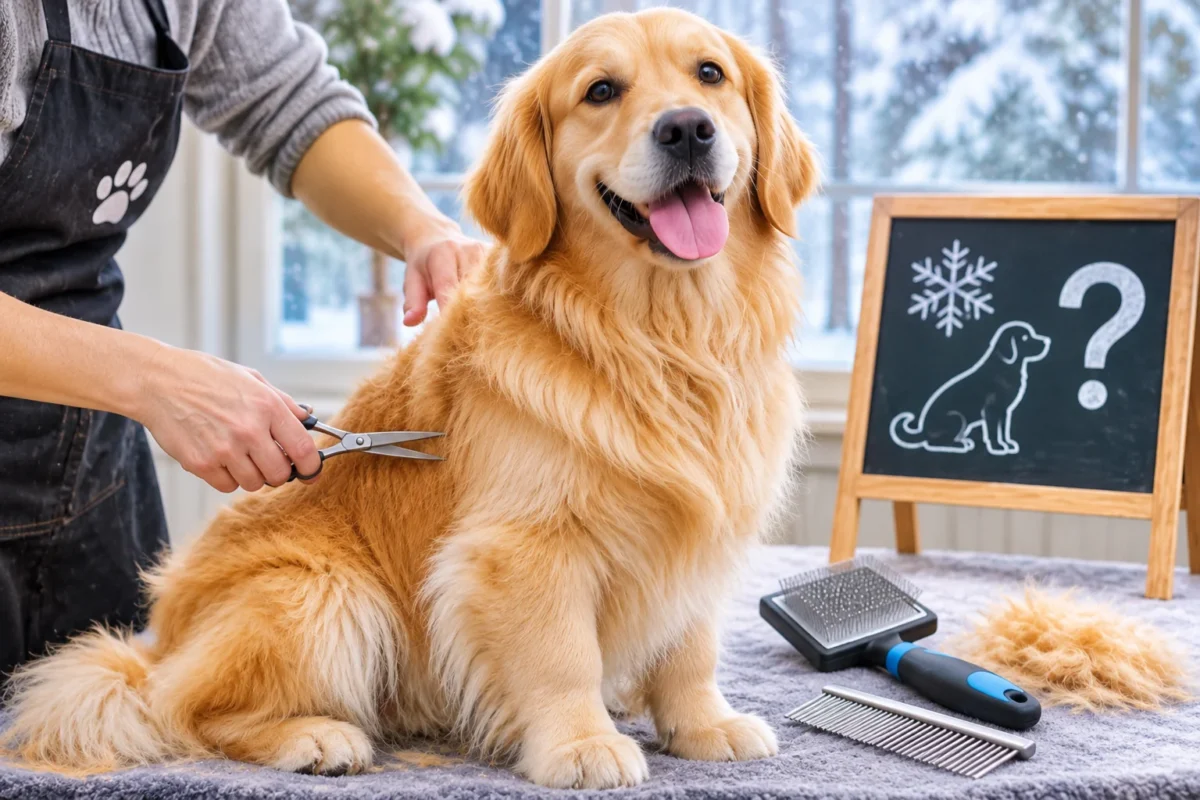
Yes, many dogs can receive haircuts during winter, provided the cut suits their coat and environment. Regular grooming remains important throughout the colder months.
For breeds with continuously growing hair, skipping every appointment can create serious tangles. For naturally short-haired breeds, full-body trimming is usually unnecessary.
When is a winter haircut helpful?
A haircut becomes useful when excess hair interferes with hygiene, movement, visibility, or coat maintenance. Small targeted trims often solve these problems.
- Long facial hair obstructs your dog’s vision.
- Hair between paw pads collects snow, ice, or debris.
- Sanitary-area hair becomes dirty or difficult to clean.
- Long coats develop recurring knots despite brushing.
- A groomer recommends a manageable length for your dog’s coat.
When should you avoid a short haircut?
A close haircut deserves extra caution when your dog already struggles with cold weather. Puppies, senior dogs, thin dogs, and dogs with certain health conditions may need additional protection.
Dogs spending significant time outdoors also need careful consideration. Your veterinarian can help assess their individual cold tolerance.
Which Dog Breeds Need Winter Haircuts?
Dogs with continuously growing hair often require scheduled trimming throughout winter. Double-coated and short-coated breeds usually need different maintenance.
Breed labels provide a starting point, but individual coat texture matters too. Mixed-breed dogs can have unpredictable grooming requirements.
| Breed or coat type | Winter haircut approach | Main priority |
|---|---|---|
| Poodle | Longer maintenance trim | Prevent matting |
| Shih Tzu | Tidy face and longer body coat | Hygiene and comfort |
| Maltese | Moderate-length trim | Tangle prevention |
| Golden Retriever | Light feathering and paw trim | Preserve double coat |
| Siberian Husky | Brush and tidy paws | Maintain insulation |
| Labrador Retriever | Brush without body clipping | Remove loose fur |
These recommendations describe general coat-care approaches rather than fixed haircut rules. A professional groomer should adjust them for matting, coat condition, and climate.
What Are the Best Dog Haircuts for Winter?
The best winter haircut preserves useful coat length while keeping high-maintenance areas manageable. A practical style is usually better than an elaborate one.
1. Longer puppy cut
A longer puppy cut creates an even, manageable appearance without exposing the skin. It can work well for many Poodles, Maltese, and Shih Tzus.
Ask your groomer to retain enough length for the expected weather. There is no single ideal length for every dog.
2. Winter teddy bear trim
A teddy bear trim gives the face a soft, rounded appearance while maintaining a fuller body coat. It’s popular for many curly and wavy coats.
The hairstyle still requires brushing around the ears, legs, and collar. Decorative fullness shouldn’t hide uncomfortable mats.
3. Sanitary trim
A sanitary trim removes excess hair around areas that become soiled. It helps keep your dog cleaner without shortening the entire body coat.
These areas contain sensitive skin. Professional grooming is preferable when precise clipping is required.
4. Paw-pad and foot trim
A paw trim removes excess fur extending between the pads or collecting debris. It can reduce the formation of uncomfortable ice balls.
Trimming should not damage the pads or remove protective hair unnecessarily. Ask a groomer to demonstrate the correct technique.
5. Light feathering trim
Feathering trims neaten longer hair around the legs, feet, and tail. This approach suits many Golden Retrievers and similar breeds.
It avoids removing the main insulating coat. Regular brushing remains essential afterward.
How Do You Give Your Dog a Safe Winter Haircut?
Safe winter trimming starts with coat inspection, appropriate tools, and a calm environment. Never rush around sensitive areas or attempt to cut through tight mats with scissors.
Step 1: Inspect the coat and skin
Check for tangles, redness, bumps, tenderness, and wet patches before grooming. Pay attention to the ears, armpits, legs, and collar area.
If you discover painful mats or inflamed skin, contact a professional. Cutting close to trapped skin can cause serious injuries.
Step 2: Brush out loose hair
Choose a brush appropriate for your dog’s coat texture. Work in small sections with light pressure.
Use a grooming comb to check whether the coat is free from knots. Stop if your dog shows pain or discomfort.
Step 3: Decide what actually needs trimming
Identify problem areas before reaching for any cutting tool. Avoid shortening healthy body fur merely for appearance.
- Trim only obstructive facial hair with appropriate professional guidance.
- Remove excess paw hair that extends beyond the pads.
- Keep sanitary areas clean and manageable.
- Leave healthy insulating undercoats intact.
Step 4: Trim carefully or book a groomer
Use only equipment intended for pet grooming. Keep sharp blades away from skin folds, ears, paws, and other delicate areas.
I would leave full-body clipping and close trimming to an experienced groomer. Home grooming is better focused on brushing and simple maintenance unless you’ve learned safe clipping techniques.
Step 5: Check the finished coat
Run a comb gently through the remaining hair to check for hidden tangles. Inspect trimmed areas for irritation.
Offer a small reward and allow your dog to rest. Keep them warm and dry after grooming.
How Short Should You Cut Dog Hair in Winter?
There is no universal winter haircut length. The safest choice depends on coat type, weather conditions, indoor temperature, and your dog’s cold tolerance.
For a curly-coated dog, a longer practical clip may provide a balance between warmth and easier brushing. A thick double coat generally shouldn’t be clipped short for routine grooming.
Does a half-inch haircut keep dogs warm?
A half-inch cut doesn’t guarantee adequate warmth. Hair length alone cannot predict insulation across different breeds and coat types.
A dog accustomed to a longer coat may become noticeably colder after a close trim. Discuss length with your groomer rather than requesting a fixed measurement without context.
How do you know if the haircut is too short?
Look for changes in your dog’s response to cold after grooming. Discomfort becomes especially important during outdoor walks.
- Repeated shivering or trembling.
- Reluctance to walk outside.
- Seeking unusually warm places.
- Hunching or repeatedly lifting paws.
- Visible skin irritation after clipping.
Persistent shivering, lethargy, weakness, or confusion after cold exposure warrants immediate veterinary attention. Bring the dog into a warm, dry environment while seeking help.
Should You Shave a Double-Coated Dog in Winter?
Generally, no. Shaving a healthy double-coated dog removes protective fur and can interfere with its natural insulation.
Double-coated breeds have a soft undercoat beneath longer outer hairs. The layers work together to protect the dog from environmental conditions.
The American Kennel Club’s guidance on double-coated dog grooming recommends preserving this coat in ordinary circumstances.
Which dogs commonly have double coats?
- Siberian Huskies
- Alaskan Malamutes
- German Shepherds
- Golden Retrievers
- Labrador Retrievers
- Pomeranians
For these breeds, brushing and removing loose undercoat are usually preferable to close shaving. Coat-specific grooming tools help maintain airflow and remove shed hair.
Exceptions exist for severe matting, surgery, and medical treatment. A veterinarian or experienced groomer should determine the safest approach.
How Often Should You Groom Your Dog During Winter?
Winter grooming frequency depends more on coat type than the calendar. Curly and long-haired dogs often require frequent brushing, while shorter coats generally need less intensive maintenance.
Use the following schedule as a starting point, not a strict rule.
| Coat type | Suggested brushing | Haircut needs |
|---|---|---|
| Curly or continuously growing | Daily or near daily | Regular professional trims |
| Long, silky | Daily | As needed for hygiene |
| Dense double coat | Several times weekly; adjust for shedding | Usually no body haircut |
| Short, smooth | About weekly | Usually unnecessary |
For example, a curly-coated dog wearing a winter jacket may develop friction tangles beneath the harness. I recommend checking those spots after every outing.
If your comb repeatedly catches in the coat, increase your brushing frequency. Persistent tangles may also mean the hairstyle is too difficult to maintain.
What Winter Grooming Mistakes Should You Avoid?
The biggest winter grooming mistakes involve removing too much hair, ignoring mats, and leaving the coat damp. Each can make cold-weather care more difficult.
- Shaving for convenience: Avoid removing protective fur solely to reduce shedding.
- Ignoring tight mats: Matting can pull on the skin and conceal irritation.
- Overbathing: Excessive washing may strip natural skin oils.
- Using human products: Choose grooming products formulated for dogs.
- Cutting mats with scissors: Hidden skin folds make accidental cuts likely.
- Skipping paw checks: Ice, grit, and deicing products may irritate paws.
- Using excessive dryer heat: Hot airflow can damage sensitive skin.
Winter skin dryness also deserves attention. The VCA winter skin-care guidance explains why grooming and appropriate bathing matter during cold months.
How Can You Keep Your Dog Warm After a Winter Haircut?
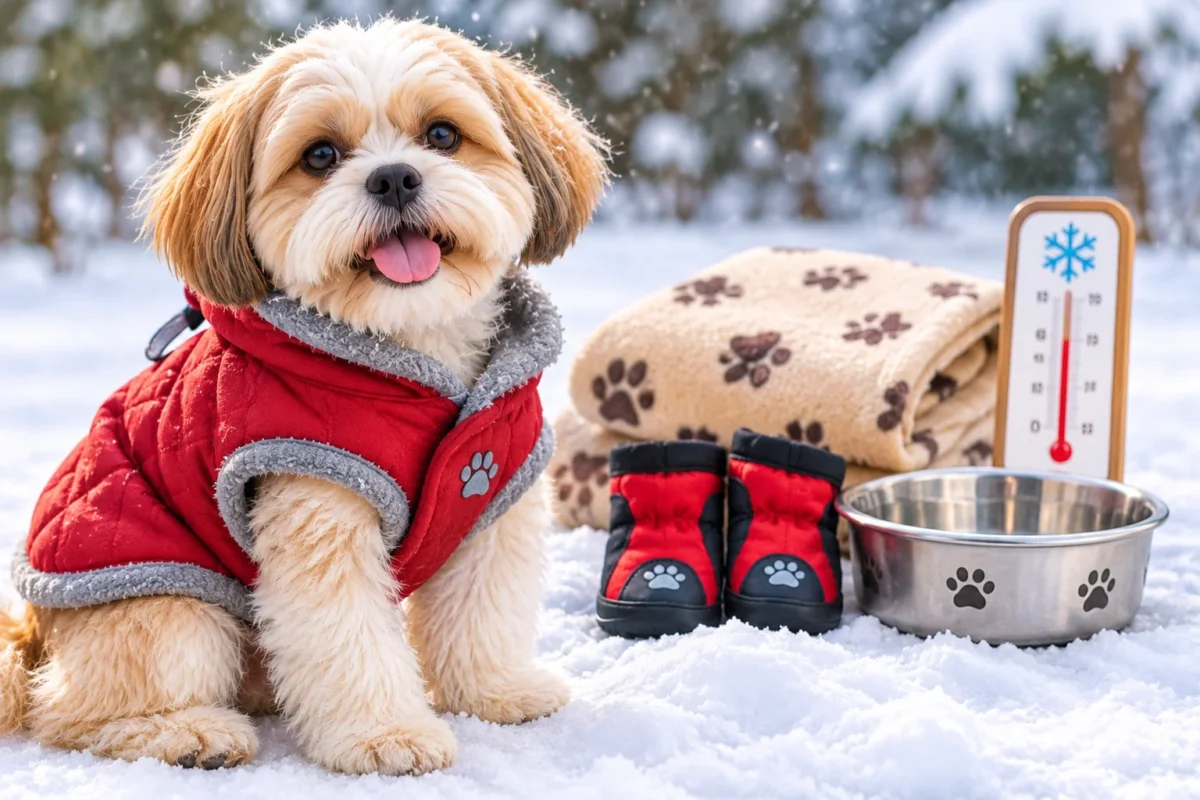
Keep your dog indoors until their coat is completely dry and comfortable. Reduce exposure to freezing conditions after a noticeably shorter haircut.
A well-fitting winter jacket may help dogs that have lost insulating coat length. Whether a jacket is necessary depends on your dog and the weather.
Choose clothing that protects without irritating
A jacket should cover the torso comfortably without restricting movement or trapping moisture. Check beneath straps for rubbing and tangles.
Remove wet clothing promptly after walks. Brush friction-prone areas before mats develop.
Protect your dog’s paws
Wipe and dry paws after snowy or icy walks, especially where deicing chemicals are used. Inspect between the toes for ice buildup or irritation.
Dog booties may be helpful when paws need extra protection. Introduce them gradually and check their fit.
Adjust outdoor activities
Shorten walks when conditions exceed your dog’s tolerance. Watch behavior rather than relying solely on temperature readings.
For broader seasonal precautions, review the VCA cold-weather pet safety recommendations.
What Tools Do You Need for Winter Dog Grooming?
The most useful winter grooming tools support brushing, detangling, and basic coat maintenance. Most owners don’t need professional clippers for routine care.
- Slicker brush: Helps remove loose hair and small tangles from suitable coat types.
- Stainless steel comb: Checks for hidden knots after brushing.
- Soft grooming brush: Maintains many short, smooth coats.
- Dog-specific shampoo: Cleans the coat without using harsh human formulations.
- Absorbent towels: Help dry fur after washing or wet-weather walks.
- Pet nail trimmers: Maintain appropriate nail length when used correctly.
Match each tool to your dog’s coat and tolerance. Aggressive brushing can irritate skin even when the tool itself is suitable.
Which Winter Dog Grooming Products Are Worth Considering?
For regular winter maintenance, I’d prioritize a reliable brush and a metal comb before investing in cutting equipment. These three real grooming tools address different needs.
🏆 Premium dense-coat brush
Chris Christensen Big G Slicker Brush
★★★★☆ 4.5/5 — Editorial fit rating
Features long, bent stainless steel pins designed for grooming dense coats. I’d consider this for owners maintaining curly or thick coats who can use a slicker gently and correctly.
💰 Convenient everyday brushing
Andis Self-Cleaning Slicker Brush
★★★★☆ 4.3/5 — Editorial fit rating
A slicker brush with a self-cleaning mechanism for removing collected hair. I like this style for convenient maintenance of compatible coats between professional appointments.
🔍 Best for checking tangles
Andis Steel Pet Comb
★★★★☆ 4.4/5 — Editorial fit rating
A stainless steel grooming comb designed for routine coat maintenance. I’d use it after brushing to identify tangles before they become difficult mats.
Product ratings above are editorial suitability assessments, not verified customer-review averages. Product availability and prices may change. Affiliate links may earn a commission from qualifying purchases.
Frequently Asked Questions About Dog Haircuts in Winter
Can I give my dog a haircut in December or January?
Yes, dogs can receive haircuts during December or January when grooming is necessary. Choose a style that preserves appropriate insulation, consider your dog’s health and climate, and avoid close shaving unless a veterinarian or professional groomer recommends it.
Do dogs get cold after a haircut?
Some dogs become more sensitive to cold after losing significant coat length. Small, elderly, thin, and short-coated dogs may be especially vulnerable. Monitor your dog’s behavior, provide appropriate clothing when needed, and limit exposure during harsh weather.
Is it better to leave dog hair long during winter?
Keeping a coat longer may improve protection, but extra length isn’t always beneficial. Mats can cause discomfort and trap moisture, so regular brushing remains essential. The ideal length allows your dog to stay comfortable while keeping the coat clean and manageable.
Can I shave my Poodle during winter?
Poodles can receive professional clipping during winter, but an extremely short haircut may reduce warmth. Ask your groomer about a longer maintenance style and consider protective clothing during cold walks. Severe matting may require a shorter cut for health reasons.
Should I bathe my dog before a winter haircut?
Bathing can help remove dirt before grooming, but heavily matted coats require special care. Washing tight mats may make them harder to manage. Ask a professional groomer for guidance, use dog-specific shampoo, and ensure the coat is thoroughly dry afterward.
Final Verdict: What’s the Safest Dog Haircut for Winter?
The safest dog haircut in winter is one that protects natural insulation while preventing mats and hygiene problems. For many dogs, a longer maintenance trim or targeted paw and sanitary grooming works better than a short shave.
Start by identifying your dog’s coat type and checking its condition. Brush regularly, choose weather-appropriate grooming, and consult a professional when cutting is necessary.
Most importantly, pay attention to your dog’s comfort. A healthy, clean, well-maintained coat matters far more than following a fashionable seasonal haircut.


