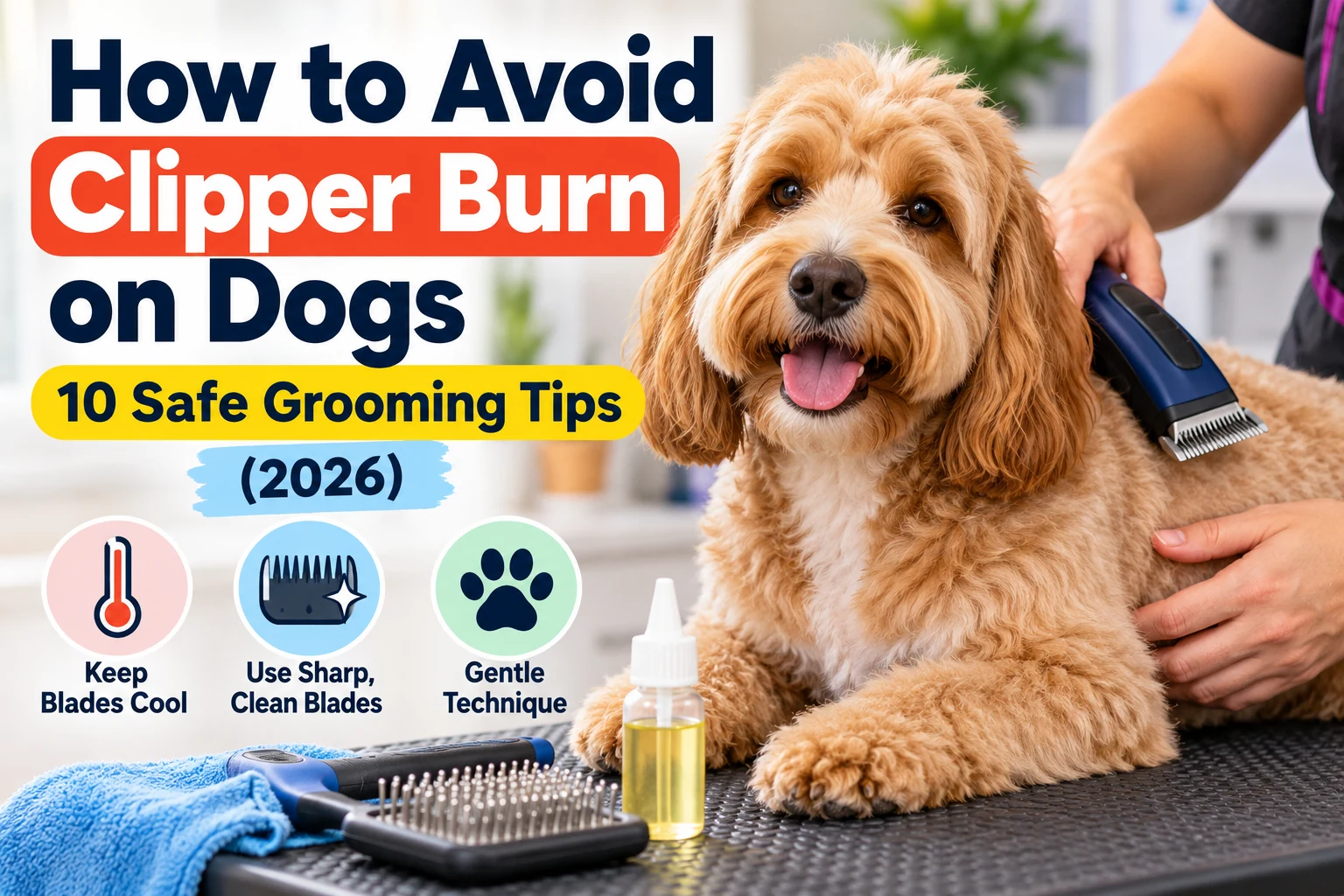
Quick Answer
To avoid clipper burn on dogs, use clean, sharp, properly lubricated blades, check their temperature frequently, and avoid shaving too close to sensitive skin. Keep the clipper moving gently with the direction of hair growth, without pressing or repeatedly clipping the same spot. For additional guidance, see the VCA dog grooming guide.
7 essential prevention steps
- Clean the coat: Remove loose dirt and tangles before clipping.
- Inspect the blades: Replace damaged, dull, or misaligned cutting parts.
- Check blade heat: Stop when the cutting surface feels uncomfortably warm against your wrist.
- Choose a safe length: Avoid unnecessarily close shaving, especially on delicate areas.
- Use light pressure: Let the clipper cut without forcing it into the skin.
- Take breaks: Allow blades to cool and your dog to relax.
- Watch the skin: Stop immediately if you notice redness, discomfort, or scraping.
Important safety rule
- Never continue over irritated skin: Stop grooming and contact your veterinarian if your dog develops painful, damaged, or worsening skin.
Learning how to avoid clipper burn on dogs can make home grooming safer and more comfortable. Even a routine haircut can irritate sensitive skin when a blade gets hot or cuts too closely.
In this guide, I’ll explain the practical checks I recommend before, during, and after clipping. You’ll also learn what to do if your dog already has irritated skin.
What Is Clipper Burn on Dogs?
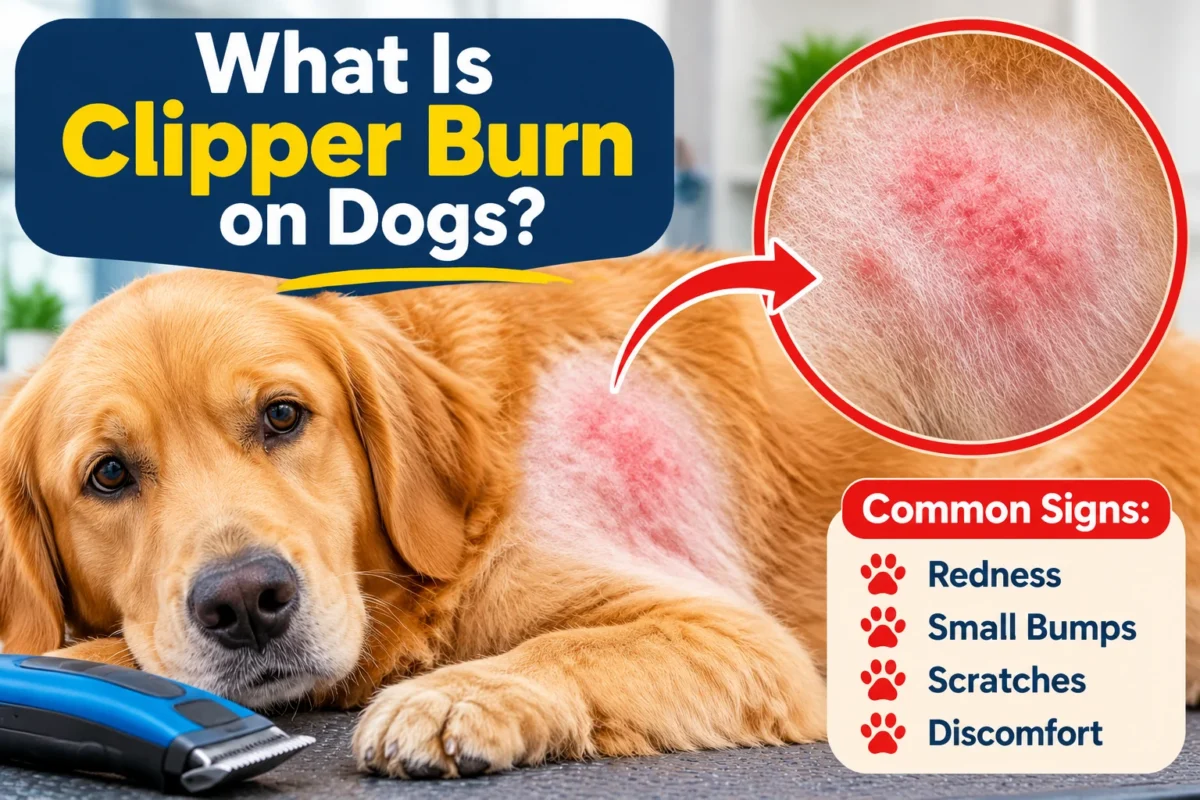
Clipper burn is a common term for skin irritation or injury that appears during or after grooming with electric clippers. Despite its name, it isn’t always a true heat burn.
Some cases involve friction, close shaving, or microscopic scratches from the blade. Others result from a cutting surface becoming too hot.
Clipper irritation can affect dogs of any breed. Those with sensitive skin, existing skin problems, or heavily matted coats may need extra precautions.
What Does Clipper Burn Look Like?
Symptoms may appear immediately or become noticeable after the grooming session. Watch for changes in both skin appearance and your dog’s behavior.
- Redness: Pink or red patches where hair was clipped.
- Small bumps: Raised spots or rash-like irritation.
- Scratches: Superficial marks caused by blade contact.
- Excessive licking: Repeated attention to a newly clipped area.
- Discomfort: Flinching, scratching, or avoiding touch.
- More serious damage: Blisters, broken skin, swelling, or discharge.
These signs aren’t specific to clipper burn. Allergies, infection, and existing skin conditions can produce similar symptoms.
Seek veterinary advice for persistent irritation, pain, broken skin, or worsening symptoms.
What Causes Clipper Burn on Dogs?
Clipper burn usually involves excessive heat, friction, or physical irritation from the cutting blade. Several grooming mistakes can contribute to these problems.
1. Overheated Clipper Blades
Metal blades generate heat as their cutting surfaces move against each other. Friction can increase when blades lack lubrication or contain trapped hair.
Even professional-grade equipment can become hot during extended clipping sessions. Never assume a blade is safe simply because the clipper is expensive.
2. Dull or Dirty Blades
A dull blade may pull hair rather than cutting it cleanly. This creates discomfort and encourages the groomer to make repeated passes.
Hair buildup can also interfere with smooth blade movement. Regular cleaning and appropriate oiling help maintain cutting performance.
3. Shaving Too Close
Very short blades expose sensitive skin to more direct contact. Certain dogs develop irritation even when a short blade isn’t excessively hot.
The groin, belly, armpits, and other thin-skinned areas deserve particular caution.
4. Excessive Pressure and Repeated Passes
Pressing down with clippers increases mechanical friction against the skin. Repeatedly clipping the same patch can compound this irritation.
A well-maintained blade should cut smoothly without requiring force.
5. Clipping Matted or Sensitive Skin
Severe mats can pull the skin into folds and hide inflammation. Removing them improperly raises the risk of injury.
Don’t force a blade underneath tight matting. Ask a professional groomer or veterinarian for help when the skin isn’t clearly visible.
How to Avoid Clipper Burn on Dogs: 10 Safe Grooming Tips
Preventing irritation starts before the clippers touch your dog’s coat. Follow these ten steps to reduce avoidable grooming risks.
1. Examine Your Dog’s Skin Before Grooming
Inspect the coat and skin before turning on the clippers. Look for redness, wounds, bumps, mats, parasites, or other abnormalities.
Pay attention to areas your dog frequently scratches or licks.
- Check the belly, chest, and armpits.
- Examine the groin and inside the legs.
- Look around the neck and behind the ears.
- Avoid clipping directly over sores or inflamed skin.
If your dog has a painful rash or skin infection, postpone cosmetic grooming until your veterinarian advises otherwise.
2. Brush, Bathe, and Dry the Coat Properly
Clippers generally work more smoothly through a clean, prepared coat. Dirt, loose hair, and debris can interfere with blade movement.
Brush away manageable tangles before bathing. Use a dog-appropriate shampoo and rinse thoroughly.
- Brush the coat gently to identify tangles.
- Address minor knots without pulling the skin.
- Wash with an appropriate dog shampoo when needed.
- Rinse until shampoo residue is removed.
- Dry the coat thoroughly before using standard dry-coat clippers.
Don’t bathe over tightly matted areas without professional advice. Wetting severe mats can make them harder to manage.
3. Use Sharp, Clean, Properly Aligned Blades
Blade condition is one of the most important parts of safe clipping. Dull or damaged blades can snag hair and increase irritation.
Inspect the cutting teeth before each session.
- Remove accumulated hair with a blade brush.
- Look for chipped or bent cutting teeth.
- Check that the cutting surfaces are properly aligned.
- Replace blades that drag or cut unevenly.
- Follow manufacturer instructions for cleaning and disinfection.
Never attempt to sharpen or adjust delicate cutting teeth without the appropriate tools and training.
4. Check Clipper Blade Temperature Frequently
A hot blade can cause genuine thermal injury. Temperature checks should become a routine habit throughout every grooming session.
I recommend using a simple check-stop-resume routine rather than assuming a blade stays cool.
- Switch off the clipper before checking it.
- Carefully touch the blade’s flat cutting surface against your inner wrist.
- Stop if the surface feels uncomfortably warm.
- Let the blade cool or exchange it for a cool spare.
- Resume only when the cutting surface feels safe.
Check every few minutes, particularly during long clipping sessions. There isn’t one universally safe interval or temperature for every clipper model.
Safety tip: A clipper housing that feels cool doesn’t guarantee its cutting blade is cool.
5. Select the Right Clipper Blade Length
Very short blades create a closer shave, but they can increase irritation risk on sensitive dogs. Use a longer cutting length when the coat and grooming goal allow it.
Blade sizes aren’t the same as guard-comb lengths. Check the manufacturer’s measurements before selecting a cutting attachment.
Common Clipper Blade Lengths Compared
The following table shows approximate cutting lengths for common detachable dog-grooming blades.
| Blade size | Hair remaining | Practical consideration |
|---|---|---|
| #4F | 9.5 mm (3/8 in) | Longer finish; useful when less skin exposure is desired. |
| #5F | 6.3 mm (1/4 in) | Moderate coat length for suitable grooming styles. |
| #7F | 3.2 mm (1/8 in) | Shorter finish; requires extra care around skin folds. |
| #10 | 1.5 mm (1/16 in) | Close clipping; use cautiously on sensitive skin. |
| #30 | 0.5 mm (1/64 in) | Extremely close cutting; commonly paired with compatible guard combs. |
These figures reflect standard approximate blade lengths, including Andis blade specifications. Actual results vary with blade design, coat texture, and clipping direction.
No blade size automatically prevents irritation. Proper technique and temperature control remain essential.
6. Follow the Natural Direction of Hair Growth
For many routine body trims, clipping with the direction of hair growth creates a less aggressive cut. Going against the coat often produces a closer finish.
Start with the gentler direction and watch how the skin responds.
- Use smooth, controlled strokes.
- Keep the blade properly positioned against the coat.
- Avoid scraping or digging into the skin.
- Work around loose skin folds carefully.
- Stop if the clipper begins pulling hair.
Different coats may require different grooming techniques. Seek breed-specific guidance when you’re unsure.
7. Avoid Excessive Pressure on the Skin
Let the clipper do the cutting. Pressing harder rarely solves a dragging or poorly cutting blade.
Keep your movements controlled, especially near delicate anatomy.
If the clipper doesn’t cut easily, inspect the blade and coat preparation. Don’t compensate by pushing harder.
8. Take Regular Grooming Breaks
Breaks help manage blade temperature and reduce stress for both you and your dog. Long, uninterrupted grooming sessions can make technique less precise.
A simple routine can help:
- Pause periodically to inspect the blade.
- Remove trapped hair when necessary.
- Lubricate according to manufacturer directions.
- Allow an overheated blade to cool fully.
- Give your dog a short rest before continuing.
End the session when your dog becomes excessively stressed or difficult to handle safely.
9. Use Extra Caution Around Sensitive Areas
Thin skin, folds, and curved body surfaces are more difficult to clip safely. These areas often require slower movements and experienced handling.
- Belly: Watch for nipples, loose skin, and existing irritation.
- Armpits: Avoid catching folded skin in the blade.
- Groin: Use careful positioning around delicate anatomy.
- Behind the ears: Watch for folds and concealed mats.
- Face: Keep cutting teeth away from eyes and moving lips.
- Paws: Avoid forcing the blade between tightly positioned toes.
When visibility or control is poor, let a qualified groomer handle the area. It’s safer to leave some hair than risk an injury.
10. Maintain Your Clippers After Every Grooming Session
Good maintenance makes your next session safer. Clean, lubricated equipment is less likely to drag through the coat.
Follow your clipper manufacturer’s exact maintenance instructions.
- Turn off and unplug the equipment when appropriate.
- Remove loose hair with the recommended brush.
- Clean and disinfect blades using approved products.
- Dry components according to manufacturer guidance.
- Apply the correct clipper blade oil.
- Inspect the blade before storing the equipment.
Blade coolant spray doesn’t necessarily replace dedicated lubricating oil. Andis specifically recommends regular blade oil even when using its Cool Care Plus product.
You can review the manufacturer’s guidance on the Andis Cool Care Plus information page.
Hot Blades vs. Clipper Friction: What’s the Difference?
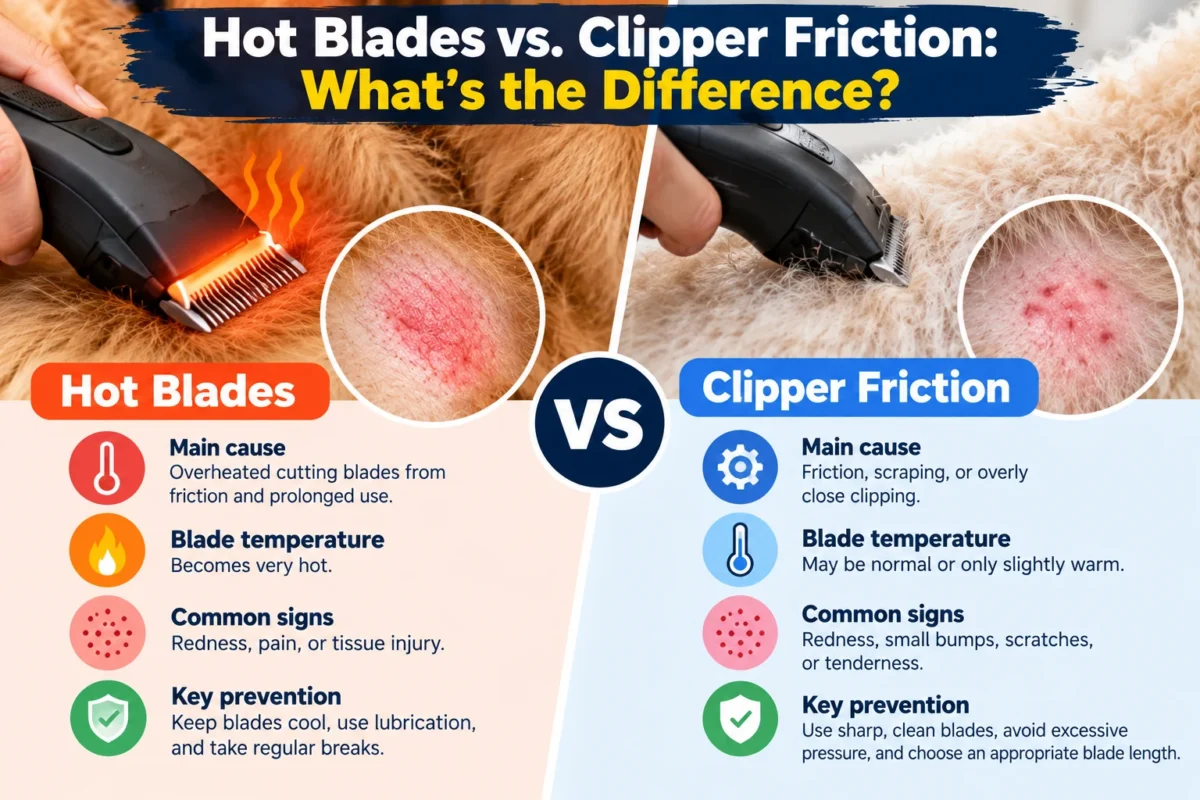
Heat-related burns and mechanical clipper irritation may look similar, but they occur through different mechanisms. Understanding the distinction helps you prevent both.
| Factor | Heat-related burn | Mechanical irritation |
|---|---|---|
| Main cause | Overheated cutting surface | Friction, scraping, or overly close clipping |
| Blade temperature | Excessively hot | May be normal |
| Possible signs | Pain, redness, or tissue injury | Redness, bumps, scratches, or tenderness |
| Key prevention | Cooling, lubrication, and temperature checks | Appropriate blade length and gentle technique |
Both problems can occur together. Skin appearance alone cannot reliably identify the exact cause.
What Should You Do If Your Dog Already Has Clipper Burn?
Stop grooming immediately if you notice redness, pain, or damaged skin. Don’t continue clipping over the affected area.
Your next steps depend on the severity of the injury.
For Mild, Superficial Irritation
- Stop clipping the irritated area.
- Keep the skin clean and avoid rubbing it.
- Prevent excessive licking or scratching.
- Avoid tight clothing or equipment that causes friction.
- Contact your veterinarian for guidance if irritation persists or causes discomfort.
Don’t apply human antiseptics, essential oils, numbing creams, or medicated products without veterinary approval. Some products may irritate the skin or cause problems if licked.
For a Suspected Heat Burn
Move the hot clipper away immediately. If a thermal burn has just occurred, gently cool the area with cool running water, if your dog tolerates it safely.
Never use ice, butter, oils, or adhesive dressings on a burn. Contact a veterinarian promptly for assessment and further instructions.
When Does Clipper Burn Need Veterinary Attention?
Seek prompt veterinary care if you see any of these warning signs:
- Blisters, open wounds, or bleeding.
- Significant pain or swelling.
- Discharge, crusting, or an unpleasant odor.
- Redness that spreads or gets worse.
- Constant licking, chewing, or scratching.
- A dog that seems unwell after grooming.
Grooming irritation can sometimes develop into a more serious skin problem. The ASPCA’s dog grooming guidance explains why abnormal skin changes and excessive licking deserve attention.
Can Clipper Burn Turn Into a Hot Spot?
Yes. Clipper irritation can trigger licking and scratching that contributes to a hot spot, although not every irritated patch becomes infected.
A hot spot is an inflamed skin lesion, often made worse by repeated licking or chewing. It may become moist, painful, and enlarged.
According to VCA Animal Hospitals’ hot spot guidance, managing the underlying trigger is important for preventing recurrence.
If your dog starts chewing a freshly clipped area, intervene before the irritation worsens. Ask your veterinarian about appropriate protection and treatment.
How Can You Make Home Grooming Safer?
The safest routine is one your dog can tolerate calmly. Working slowly helps you notice pulling, blade heat, and early signs of discomfort.
A Simple Before-and-During Grooming Checklist
- Before starting: Inspect the skin, brush the coat, and check equipment.
- At the first pass: Use light pressure and a suitable cutting length.
- During clipping: Check blade temperature and watch your dog’s reactions.
- When changing areas: Reposition carefully around folds and delicate skin.
- After finishing: Inspect the skin for redness or small injuries.
- Before storage: Clean and maintain the clipper according to its manual.
For anxious or inexperienced dogs, shorter sessions may be safer than finishing everything in one attempt.
Which Grooming Products Help Reduce Clipper Burn Risk?
No grooming product can completely prevent clipper burn. However, properly maintained blades, appropriate lubrication, and compatible attachments can support safer clipping.
These three Andis products address different grooming needs. My preference is to prioritize blade maintenance before spending more on additional equipment.
Disclosure: The following links are affiliate shopping links. If you purchase through them, the website may earn a commission at no extra cost to you.
🏆 Blade maintenance
Andis Clipper Blade Oil
★★★★☆ 4/5
Designed to lubricate clipper blade cutting surfaces and reduce friction. I would prioritize a compatible blade oil because regular lubrication is a basic maintenance requirement, not an optional upgrade.
🌡️ Blade option
Andis CeramicEdge Detachable Blade
★★★★☆ 4/5
Ceramic cutter technology is designed to reduce heat buildup compared with conventional steel cutters. I’d consider it for a compatible detachable-blade clipper, while continuing regular temperature checks.
🐕 Multi-speed clipping
Andis Excel 5-Speed Clipper
★★★★☆ 4/5
Features five motor speeds, a detachable blade system, and a CeramicEdge blade on the referenced model. I favor adjustable-speed equipment for users who understand how to match cutting performance to coat conditions.
Product ratings above reflect editorial suitability assessments, not verified customer-review averages or hands-on test scores. Confirm model compatibility and current specifications before purchasing.
Frequently Asked Questions About Clipper Burn on Dogs
How long does clipper burn take to heal on dogs?
Minor surface irritation may settle within a few days when the cause stops and the dog doesn’t lick the area. Healing time varies with severity and underlying skin health. True burns, open wounds, or infections can require veterinary treatment and longer recovery.
Can I put aloe vera on my dog’s clipper burn?
Don’t apply aloe vera or other topical products without veterinary approval. Ingredients and formulations vary, and dogs may lick treated skin. If your dog has painful redness or damaged skin, ask your veterinarian which treatment is appropriate.
Do ceramic clipper blades prevent clipper burn?
No. Ceramic cutter technology may help reduce heat buildup, but it doesn’t eliminate friction, excessive pressure, or very close shaving. Ceramic blades can still become warm during use, so regular temperature checks and proper technique remain necessary.
Should I shave my dog against the direction of hair growth?
Clipping against hair growth usually produces a closer cut, which may increase irritation risk on sensitive skin. For routine trimming, start with the direction of growth when practical. Follow coat-specific grooming guidance rather than forcing a very close finish.
Can I groom my dog again after clipper burn?
Wait until the affected skin has recovered before clipping it again. If the area was painful, blistered, infected, or remains irritated, obtain veterinary clearance first. When grooming resumes, review blade condition, cutting length, temperature checks, and your technique.
Final Takeaway: Prevent Clipper Burn Before It Starts
The best way to avoid clipper burn on dogs is to combine clean equipment, controlled blade temperature, gentle technique, and appropriate cutting lengths. No single blade or grooming product replaces careful handling.
Start with a well-prepared coat, make regular heat checks, and stop whenever your dog shows discomfort. If you aren’t confident around severe mats or sensitive areas, a professional groomer or veterinarian is the safer choice.
Make your dog’s comfort the priority. A slightly longer haircut is always preferable to irritated or injured skin.