
Quick Answer
The most common dog deshedding mistakes include using the wrong brush, applying too much pressure, brushing the same area repeatedly, pulling through mats, and ignoring skin irritation. To deshed safely, choose a tool suitable for your dog’s coat, use gentle strokes, remove tangles first, and stop if your dog shows discomfort. The goal is to remove loose hair, not strip away healthy fur.
Deshedding can make a noticeable difference to the amount of dog hair collecting on your furniture. But removing more hair is not always better. Poor technique can leave your dog uncomfortable, irritate the skin, or damage the appearance of the coat.
Many problems come from treating every dog the same way. A Husky with a thick undercoat needs a different grooming approach from a Boxer with short, smooth hair or a Poodle with a curly coat.
Here are 11 mistakes worth avoiding, along with practical ways to make grooming safer and more comfortable.
What Are the 11 Most Common Dog Deshedding Mistakes?
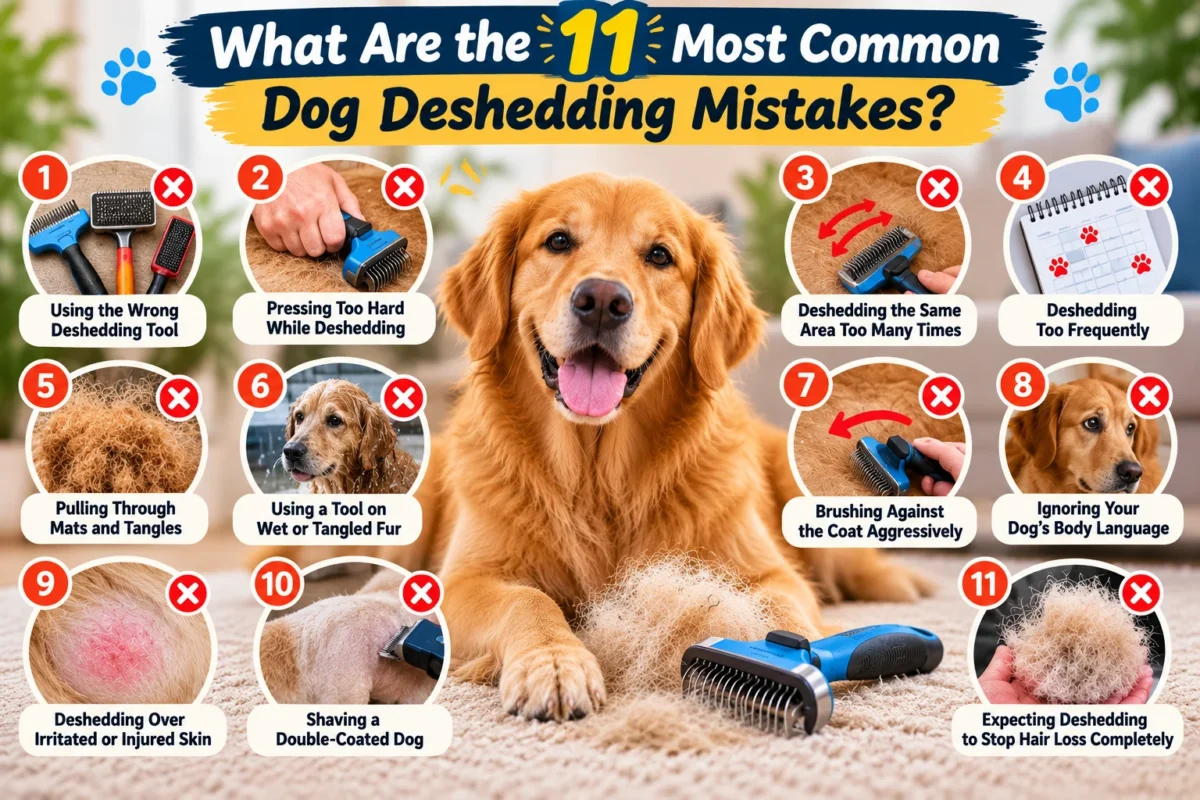
The biggest mistakes usually involve choosing an unsuitable tool, using excessive force, grooming for too long, or overlooking the dog’s coat and skin condition.
1. Using the Wrong Deshedding Tool for Your Dog’s Coat
A deshedding tool that works well on one dog may be ineffective or uncomfortable for another. Tools designed to reach thick undercoats may be unnecessarily harsh on dogs with fine, thin, or sensitive coats.
Double-coated breeds, including many German Shepherds and Labrador Retrievers, often benefit from tools that lift loose undercoat. Smooth-coated dogs may need only a rubber grooming mitt or soft brush.
Curly-coated breeds such as Poodles generally require detangling and coat maintenance rather than aggressive undercoat removal.
How to avoid this mistake: Identify whether your dog has a dense undercoat before selecting a deshedding tool. Consider coat length, texture, density, and skin sensitivity rather than relying on breed name alone.
The American Kennel Club’s guide to dog brushes explains which brush designs suit different coat types.
2. Pressing Too Hard While Deshedding
Firm pressure does not necessarily remove loose hair more effectively. Metal teeth and deshedding edges can rub against the skin, causing discomfort or irritation.
This is particularly concerning around the belly, legs, and areas where the coat is thinner.
How to avoid this mistake: Use light, controlled strokes and let the tool move through the coat without digging into the skin. If a stroke requires force, stop and check for tangles, incorrect tool positioning, or an unsuitable brush.
A properly matched tool should collect loose hair without pulling sharply on attached fur.
3. Deshedding the Same Area Too Many Times
Repeatedly scraping one section is a common cause of over-grooming. Even when a brush continues collecting hair, that does not mean repeated passes are beneficial.
Excessive brushing can irritate the skin, damage individual hairs, and leave some areas looking thinner than surrounding fur.
How to avoid this mistake: Make a few gentle passes over one section, then move to another. Do not keep brushing one patch simply because hair continues appearing in the tool.
Stop when the easily removed loose fur decreases, the brush begins dragging, or your dog becomes uncomfortable.
4. Deshedding Too Frequently
Using an intensive undercoat-removal tool every day can be excessive for some dogs, even when ordinary gentle brushing is appropriate daily.
Frequency depends on coat type, seasonal shedding, tool design, and individual skin tolerance. Everyday coat maintenance should not automatically mean everyday intensive deshedding.
How to avoid this mistake: Follow the manufacturer’s directions and adjust grooming to your dog’s response.
For example, FURminator recommends its undercoat deshedding tool one or two times weekly in typical conditions, although individual needs vary. This is product-specific guidance, not a universal schedule for every grooming tool.
During heavy seasonal shedding, dogs may benefit from more frequent gentle brushing without necessarily needing more intensive undercoat removal.
5. Pulling a Deshedding Tool Through Mats and Tangles
A deshedding tool is not a substitute for carefully removing tangled or matted hair. Forcing metal teeth through a knot can pull painfully on the skin.
Mats may also conceal irritated skin, making rough handling especially risky.
How to avoid this mistake: Inspect the coat before deshedding. Work through minor loose tangles gently using an appropriate comb or detangling brush.
Do not force a tool through a resistant knot. Extensive or tightly attached mats are safer to address with a professional groomer or veterinarian.
Avoid cutting mats with ordinary scissors because skin can be pulled into the matted fur and accidentally injured.
6. Using a Deshedding Tool on Wet or Tangled Fur
Some grooming brushes are designed for wet use, but many metal undercoat deshedding tools are intended for a completely dry coat.
Wet fur can clump together, making it harder to identify tangles or move certain tools smoothly through the coat.
How to avoid this mistake: Check the instructions for your specific tool. When using a dry-coat deshedding tool, bathe your dog if needed, rinse thoroughly, and dry the coat before starting.
Brush out accessible tangles before bathing, since washing can make existing mats more difficult to manage.
Do not assume that a brush suitable for use in the bath is also appropriate for intensive undercoat removal on wet fur.
7. Brushing Against the Coat With an Aggressive Tool
Brushing against hair growth is not automatically wrong. Certain soft brushing techniques deliberately lift loose hair in more than one direction.
However, repeatedly dragging a metal deshedding edge against the direction of growth can increase pulling and discomfort, especially through a dense coat.
How to avoid this mistake: For most edge-style deshedding tools, follow the direction of hair growth using short, gentle strokes.
Lift the tool away before repositioning it rather than dragging it sideways across the coat. Follow the tool manufacturer’s directions if the recommended technique differs.
8. Ignoring Your Dog’s Body Language
A dog that repeatedly pulls away, stiffens, cries, snaps, or turns toward the brush may be showing discomfort, fear, or pain.
Continuing to groom despite these signals can make future grooming sessions more difficult. Some dogs develop an increasingly negative association with the brush.
How to avoid this mistake: Begin with short sessions in a comfortable area. Let your dog investigate the brush, reward calm behavior, and gradually introduce gentle strokes.
If your dog shows persistent resistance, stop rather than restraining them to finish the session.
Sudden sensitivity around a specific body area deserves attention because an underlying skin problem, injury, or painful joint may be responsible.
9. Deshedding Over Irritated, Injured, or Sensitive Skin
Brushing directly across redness, scratches, scabs, hot spots, or inflamed skin can make an existing problem worse.
Thick coats can hide skin changes, so a dog may appear healthy until the fur is parted.
How to avoid this mistake: Examine the skin before grooming, especially around the neck, belly, armpits, and areas where your dog frequently scratches.
Avoid using intensive tools on affected areas. If your dog has persistent redness, broken skin, discharge, or painful patches, arrange a veterinary assessment before resuming deshedding.
10. Shaving a Double-Coated Dog to Stop Shedding
Shaving does not stop the natural shedding cycle. A double coat contains an outer layer of guard hairs and an insulating undercoat, and unnecessary close clipping can change how that coat grows back.
Some dogs also experience delayed regrowth after clipping.
How to avoid this mistake: Manage routine shedding through coat-appropriate brushing, removal of loose undercoat, and sensible bathing instead of automatically shaving.
There are exceptions. Severe matting, certain medical conditions, or necessary procedures may justify clipping under professional guidance.
The decision should be based on the individual dog’s coat and health rather than the assumption that shorter fur always means less shedding.
11. Expecting Deshedding to Stop Hair Loss Completely
Normal shedding is part of a dog’s hair-growth cycle. Deshedding removes loose hair that is ready to come away; it does not permanently prevent new shedding.
Trying to remove every loose hair can encourage excessively long grooming sessions.
How to avoid this mistake: Judge success by your dog’s comfort, healthy coat condition, and more manageable loose hair around the home—not the size of the hair pile after grooming.
If shedding suddenly increases or is accompanied by bald patches, unusual scratching, or changes in the skin, consider whether a medical problem rather than an ordinary grooming issue is involved.
How Can You Tell if You Are Deshedding Your Dog Incorrectly?
Unusual skin reactions, apparent discomfort, or changes in coat coverage can indicate that the grooming technique needs to change.
Use this quick comparison to identify possible problems.
| What You Notice | Possible Explanation | What to Do |
|---|---|---|
| Red or irritated skin | Excessive pressure, friction, or an existing skin problem | Stop grooming and assess the skin |
| Hair looks noticeably thinner | Repeated passes, coat damage, or another cause of hair loss | Stop intensive deshedding and seek veterinary advice if thinning persists |
| Dog flinches or pulls away | Pain, pulling, anxiety, or sensitivity | Pause and check the tool and affected area |
| Brush keeps snagging | Tangles, mats, or unsuitable teeth | Switch to gentle detangling; do not force the tool |
| Heavy shedding continues | Normal shedding cycle or an underlying health issue | Review the routine and watch for abnormal hair loss |
A dog can shed heavily without having a skin disorder. The important distinction is whether loose hair is being released normally or whether thinning, irritation, and other symptoms are developing.
Warning
Do not continue deshedding if your dog develops skin redness, bleeding, obvious pain, or new bald patches. Stop the session, inspect the affected area, and contact a veterinarian when symptoms are significant, persistent, or worsening.
How Do You Deshed a Dog Safely Without Making These Mistakes?
Safe deshedding starts with a suitable tool and a comfortable dog. Follow these steps to reduce the risk of excessive pulling, irritation, and unnecessary coat damage.
- Identify the coat type. Determine whether your dog has a dense undercoat or needs another brushing method. Ask a groomer if you are unsure.
- Inspect the skin. Look for redness, sores, sensitive spots, and unusual hair loss before using metal grooming tools.
- Remove loose tangles. Gently detangle manageable knots with the right comb or brush. Leave severe mats to a professional.
- Use the tool on the correct coat condition. Follow wet- or dry-use instructions and make sure the coat is ready.
- Brush gently in small sections. Use light pressure and short strokes, usually following hair growth for metal deshedding tools.
- Watch your dog’s response. Pause if the brush catches, your dog becomes uncomfortable, or the skin starts looking irritated.
- Finish before overworking the coat. Stop after removing a reasonable amount of loose hair and check the skin again.
Practical Tip
For a dog that dislikes grooming, divide coat care into several brief, positive sessions rather than trying to complete every area at once. Calm participation and healthy skin matter more than finishing quickly.
Which Dogs Need Extra Care During Deshedding?
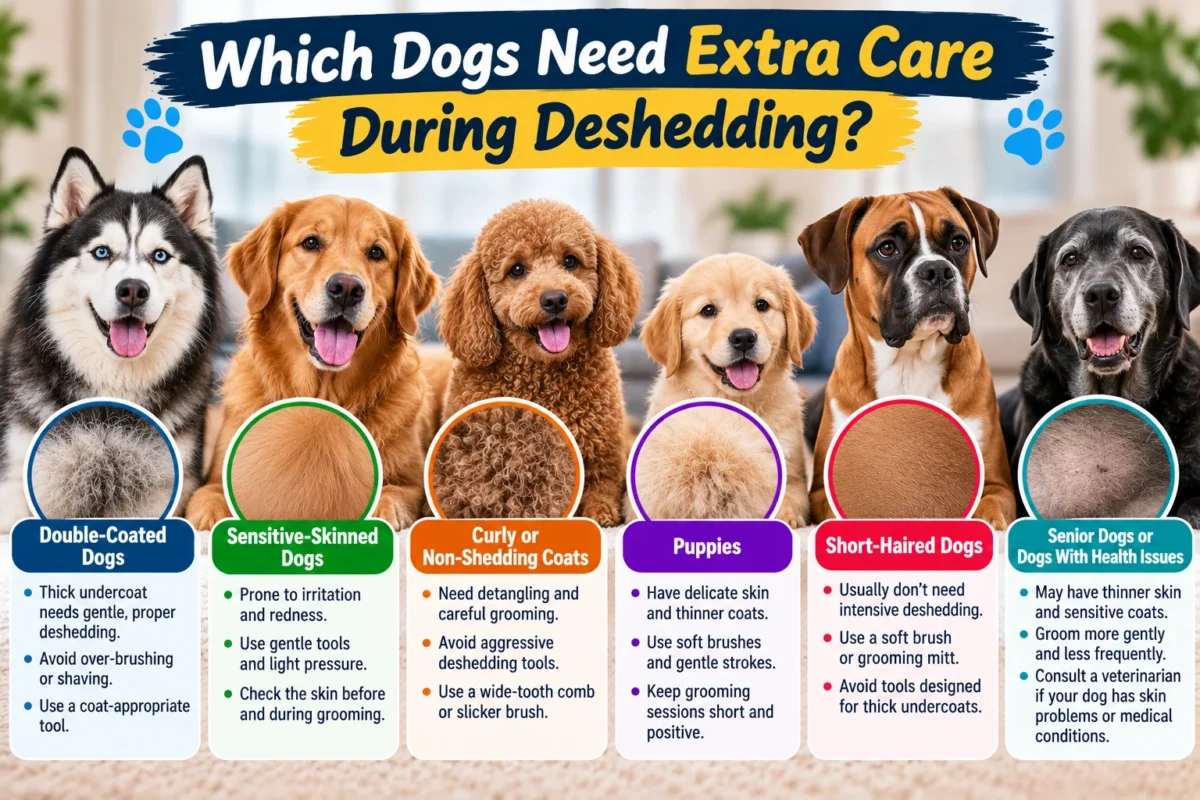
Dogs with sensitive skin, thin coats, significant matting, or medical conditions need a more cautious grooming approach. Puppies may also require gentler tools and gradual introduction to brushing.
Double-coated dogs can benefit from targeted undercoat removal, but a dense coat is not permission to use more pressure.
Dogs with curly, silky, or continuously growing coats often need regular combing, detangling, or professional trimming instead of an aggressive deshedding edge.
The tool manufacturer’s suitability guidance matters. For instance, FURminator identifies coat types and skin conditions unsuitable for its undercoat deshedding tool.
Coat characteristics vary even within a breed. When uncertain, ask a qualified groomer to demonstrate a suitable method before attempting intensive home grooming.
When Should You Stop Deshedding and Contact a Veterinarian?
Stop deshedding when the process causes obvious pain or skin injury. Veterinary assessment is appropriate when symptoms suggest more than temporary grooming discomfort.
Reasons to seek veterinary advice include:
- Bleeding, broken skin, or painful swelling after brushing
- Redness that persists or becomes worse
- New bald patches or unexplained coat thinning
- Severe scratching, sores, crusting, or discharge
- Sudden excessive shedding accompanied by changes in the dog’s health
Hair loss can have causes unrelated to grooming, including allergies, parasites, infections, and hormonal disorders. Do not assume that a deshedding tool caused every coat change.
Veterinary guidance from VCA Animal Hospitals on grooming and coat care explains how coat condition can reflect broader health concerns.
Frequently Asked Questions About Dog Deshedding Mistakes
Can deshedding damage a dog’s coat?
Yes. Excessive brushing, inappropriate tools, and repeated pulling can cause hair breakage, thinning, or skin irritation. Properly matched tools used gently are less likely to cause these problems.
How often should you use a deshedding tool on a dog?
Frequency depends on the tool, coat, and shedding pattern. Some undercoat deshedding tools are recommended once or twice weekly, while ordinary gentle brushing may be suitable more often. Follow product instructions and your dog’s individual needs.
Should you stop deshedding when hair keeps coming out?
Yes, once you have removed a reasonable amount of loose hair or the coat begins showing resistance. Continuing until absolutely no hair comes out is unnecessary and may irritate the skin.
Is it normal for a dog to scratch after deshedding?
An occasional scratch does not necessarily indicate a problem. However, repeated scratching, redness, or obvious discomfort after grooming may indicate irritation or an underlying skin condition and deserves attention.
Can you use a deshedding tool on a puppy?
Some puppies may tolerate gentle coat-specific grooming, but aggressive undercoat removal is often unnecessary. Begin with a soft brush and short positive sessions, and ask a groomer or veterinarian whether a deshedding tool suits the puppy’s coat and age.
Why is my dog still shedding after deshedding?
Deshedding removes loose hair but does not stop the normal hair-growth cycle. Some shedding afterward is expected. Sudden heavy hair loss, bald spots, or skin irritation should be investigated rather than treated with more brushing.
Final Thoughts
Avoiding common dog deshedding mistakes comes down to choosing the right tool, applying gentle pressure, respecting your dog’s comfort, and knowing when to stop.
Effective grooming does not require removing every possible hair. A healthy-looking coat, comfortable skin, and a dog that willingly participates in grooming are better signs of success.


