

Quick Answer
Yes, deshedding is generally safe for dogs when you use the correct grooming tool, apply gentle pressure, and avoid irritated skin. It removes loose hair without needing to pull healthy fur. However, excessive brushing or an unsuitable tool can cause skin irritation and coat damage. Follow a safe dog deshedding guide to protect your dog’s coat.
5 Essential Deshedding Safety Rules
- Choose the right tool: Match the brush to your dog’s coat type and length.
- Use light pressure: Brush gently without scraping the skin.
- Remove tangles first: Never force a deshedding tool through mats.
- Avoid overbrushing: Limit repeated passes over the same area.
- Watch for discomfort: Stop if your dog flinches, yelps, or develops redness.
When Should You Avoid Deshedding?
- Skin problems: Avoid sores, rashes, infections, and painful areas.
- Unsuitable coats: Avoid aggressive undercoat tools on coats without a substantial shedding undercoat.
- Unexplained hair loss: Seek veterinary advice before brushing bald or thinning patches.
If you’re wondering whether deshedding is safe for dogs, you’re asking the right question. Removing loose fur sounds simple, but the wrong grooming technique can make an uncomfortable mess.
I’ve found that the most useful way to judge a grooming routine is to focus on the dog’s comfort, not the pile of collected hair. This guide explains when deshedding helps, when it becomes risky, and how to keep each session gentle.
What Is Deshedding for Dogs?
Deshedding is the process of removing loose, naturally shedding hair from a dog’s coat before it falls around the home. Specialized brushes and undercoat rakes can reach fur that ordinary surface brushing might miss.
It doesn’t stop natural shedding. Instead, it collects hair that’s already loosening as part of the coat’s normal growth cycle.
How Does Deshedding Work?
Dogs with double coats have two important layers. Their outer guard hairs protect the skin, while a softer undercoat provides insulation.
A suitable deshedding tool reaches loose undercoat beneath the longer surface hairs. The goal is to collect that hair without damaging either protective layer.
- Loose hair removal: Collects naturally released fur before it falls.
- Undercoat maintenance: Helps prevent dead hair from becoming trapped in thick coats.
- Coat inspection: Makes it easier to notice tangles or unusual skin changes.
- Shedding management: Reduces loose hair around furniture and clothing.
The American Kennel Club’s double-coat guide explains why both coat layers matter.
Understanding those layers helps you avoid removing healthy protective hair.
Is Deshedding Safe for All Dogs?
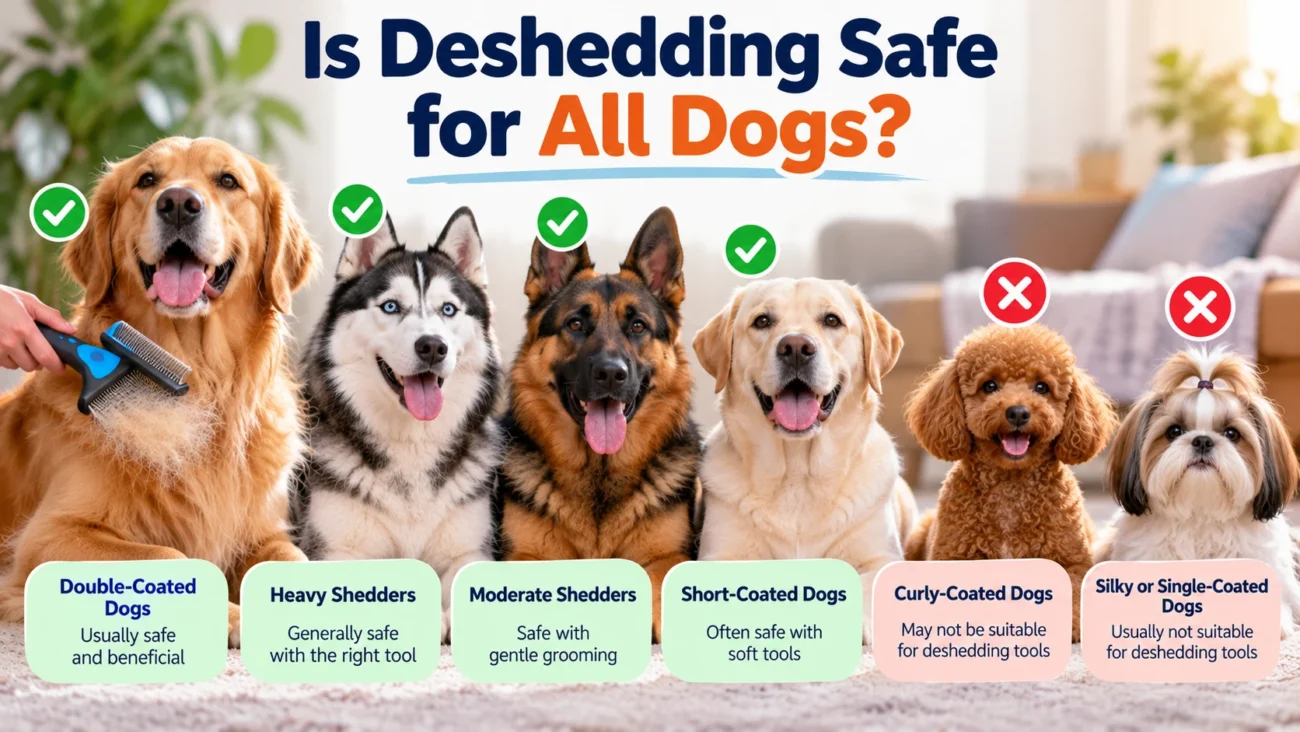
No, the same deshedding method isn’t appropriate for every dog. Safety depends on coat type, skin health, age, grooming tool, and brushing technique.
A Labrador Retriever may tolerate an appropriate undercoat tool well. A Poodle with a continuously growing coat usually needs a different grooming approach.
Which Dogs Benefit Most From Deshedding?
Dogs with substantial shedding undercoats often benefit from regular loose-fur removal. Their undercoats can become especially dense during seasonal changes.
- Golden Retrievers: Have dense double coats that release loose undercoat.
- German Shepherds: Often shed considerable amounts throughout the year.
- Siberian Huskies: Have thick undercoats that may shed heavily during seasonal changes.
- Labrador Retrievers: Have short, dense double coats that benefit from suitable grooming tools.
- Pembroke Welsh Corgis: Have double coats that require regular brushing.
These breeds still need individual assessment. A dog’s skin condition and coat texture matter more than its breed label alone.
Which Dogs Need a Different Grooming Approach?
Dogs with continuously growing, curly, silky, or sparse coats may not benefit from aggressive undercoat removal. Their grooming needs often focus more on detangling and preventing mats.
Examples include Poodles, Maltese, and some Yorkshire Terriers. A slicker brush, comb, or professional grooming routine may be more suitable.
Dogs with thin skin or medical skin conditions also need special care. Ask your veterinarian before using a metal-edged tool on sensitive areas.
Deshedding vs. Regular Brushing: What’s the Difference?
Regular brushing maintains the coat by removing surface hair, dirt, and manageable tangles. Deshedding focuses more directly on loose hair trapped within suitable coat types.
Both methods can complement each other. However, intensive deshedding shouldn’t automatically replace ordinary brushing.
| Feature | Regular Brushing | Deshedding |
|---|---|---|
| Main purpose | Maintain coat and remove surface debris | Remove loose shedding hair |
| Common tools | Pin brush, bristle brush, slicker, comb | Undercoat rake, deshedding edge |
| Best use | Routine grooming | Targeted loose-fur removal |
| Typical frequency | Daily to weekly, depending on coat | Often less frequent; follow tool guidance |
| Main risk | Tugging tangles or scratching skin | Irritation, hair breakage, overworking the coat |
For most households, gentle regular brushing should provide the foundation. Add targeted deshedding only when your dog’s coat needs it.
Can Deshedding Damage a Dog’s Skin or Coat?
Yes, improper deshedding can cause skin irritation, hair breakage, and uncomfortable pulling. The risk increases when someone applies too much pressure or repeatedly brushes the same area.
A healthy grooming session shouldn’t leave skin visibly inflamed. It also shouldn’t create new thin patches in the coat.
What Are the Main Risks of Deshedding?
- Skin irritation: Hard brushing can create friction, redness, and discomfort.
- Hair breakage: Unsuitable tools may catch and damage healthy hairs.
- Coat thinning: Excessive passes can remove or break more hair than intended.
- Painful pulling: Working through mats can tug tightly against the skin.
- Grooming anxiety: Repeated discomfort may cause a dog to resist future brushing.
- Worsening skin conditions: Brushing inflamed areas may aggravate an existing problem.
These problems are preventable with correct tools and careful handling. Still, some skin conditions require veterinary treatment rather than a different brush.
How Can You Tell If You’re Over-Deshedding?
Look for changes in both the coat and your dog’s behavior. Discomfort can appear before obvious skin damage develops.
- Skin turns pink or red after grooming.
- Your dog repeatedly pulls away from the brush.
- Hair appears broken or uneven.
- Previously thick areas become noticeably thinner.
- Your dog scratches or licks recently brushed spots.
- The brush catches healthy hair instead of gliding through loose fur.
Stop the session when these signs appear. Don’t continue simply because more hair remains in the coat.
The VCA Animal Hospitals guide to healthy skin and coats explains what normal skin and fur should look like.
How Do You Deshed a Dog Safely? 7 Easy Steps
To deshed safely, inspect the skin, choose a suitable tool, remove tangles, and work gently in small sections. Let your dog’s comfort determine how long you continue.
Here’s a practical routine that works as a starting point for suitable shedding coats.
Step 1: Check Your Dog’s Skin and Coat
Before brushing, gently part the hair and inspect the skin. Look for redness, sores, scabs, swelling, or unusual bald patches.
Skip any irritated areas. Contact your veterinarian if the changes are unexplained or persistent.
Step 2: Choose a Coat-Appropriate Tool
Select a brush that suits your dog’s coat length and density. A soft rubber brush may suit short coats, while a rounded-pin rake can help with dense undercoats.
Choose the correct tool size, too. A wide grooming head can be awkward around small bodies and narrow areas.
Step 3: Remove Tangles Before Deshedding
Use an appropriate comb or gentle detangling brush to address manageable knots. Hold the fur near the skin when necessary to reduce pulling.
Don’t drag a deshedding edge through a mat. Severe matting often needs help from a professional groomer.
Step 4: Make Sure the Coat Is Ready
Follow the manufacturer’s instructions for your particular tool. Metal-edged undercoat deshedders commonly require completely dry fur.
If you’ve just bathed your dog, rinse thoroughly and dry the coat appropriately. Wet tangles can make grooming more difficult.
Step 5: Brush in the Direction of Hair Growth
Begin with gentle strokes along the back or shoulders. Keep the tool moving naturally with the direction of the coat.
Never press the tool firmly against the skin. Let the grooming edge or pins do the work.
Step 6: Work in Small Sections and Take Breaks
Move across the coat rather than repeatedly brushing one small patch. Clear collected hair from the tool as needed.
Pay attention to your dog’s body language. A calm dog with relaxed posture is a better indicator than a large pile of removed fur.
Step 7: Inspect the Coat and Reward Your Dog
Finish by checking the skin for irritation. Run your fingers gently through the coat to identify any missed tangles.
Offer praise or a favorite treat. Positive grooming experiences make future sessions easier.
How Often Is It Safe to Deshed a Dog?
Many dogs need regular brushing, but intensive deshedding should happen less often. The ideal schedule depends on coat type, shedding season, skin health, and the tool used.
For example, FURminator recommends using its undercoat deshedding tool about once or twice weekly for 10–20 minutes. That guidance isn’t a universal requirement for every dog.
What Is a Practical Grooming Schedule?
- Short shedding coats: Start with gentle weekly brushing and adjust according to loose fur.
- Dense double coats: Brush routinely and add targeted undercoat removal when appropriate.
- Heavy seasonal shedders: Increase gentle grooming as needed without repeatedly scraping the same areas.
- Long or curly coats: Focus on preventing tangles and mats with suitable brushes and combs.
- Sensitive skin: Follow individualized guidance from a veterinarian or qualified groomer.
A short session may be enough for a small dog. Larger dogs with thick coats might need several comfortable sessions across different days.
For additional guidance, read how often to use a deshedding tool.
Is Deshedding Safe for Puppies and Senior Dogs?
Gentle grooming can be safe for puppies and senior dogs, but aggressive undercoat removal may be inappropriate. Their individual skin condition and tolerance deserve extra attention.
Deshedding Puppies
Puppies should learn that grooming is comfortable and predictable. Begin with a soft brush or grooming mitt rather than immediately using a metal deshedding edge.
- Introduce the brush gradually.
- Reward calm behavior.
- Keep the first sessions brief.
- Avoid pulling puppy fur or scratching delicate skin.
A puppy’s coat can change significantly during growth. Ask a professional groomer which tools suit the current coat.
Deshedding Senior Dogs
Older dogs may have sensitive skin, joint discomfort, or difficulty standing for long periods. Adjust their position and grooming duration accordingly.
Let senior dogs rest on a comfortable, nonslip surface. Pause immediately if handling or brushing causes pain.
What Grooming Mistakes Make Deshedding Unsafe?
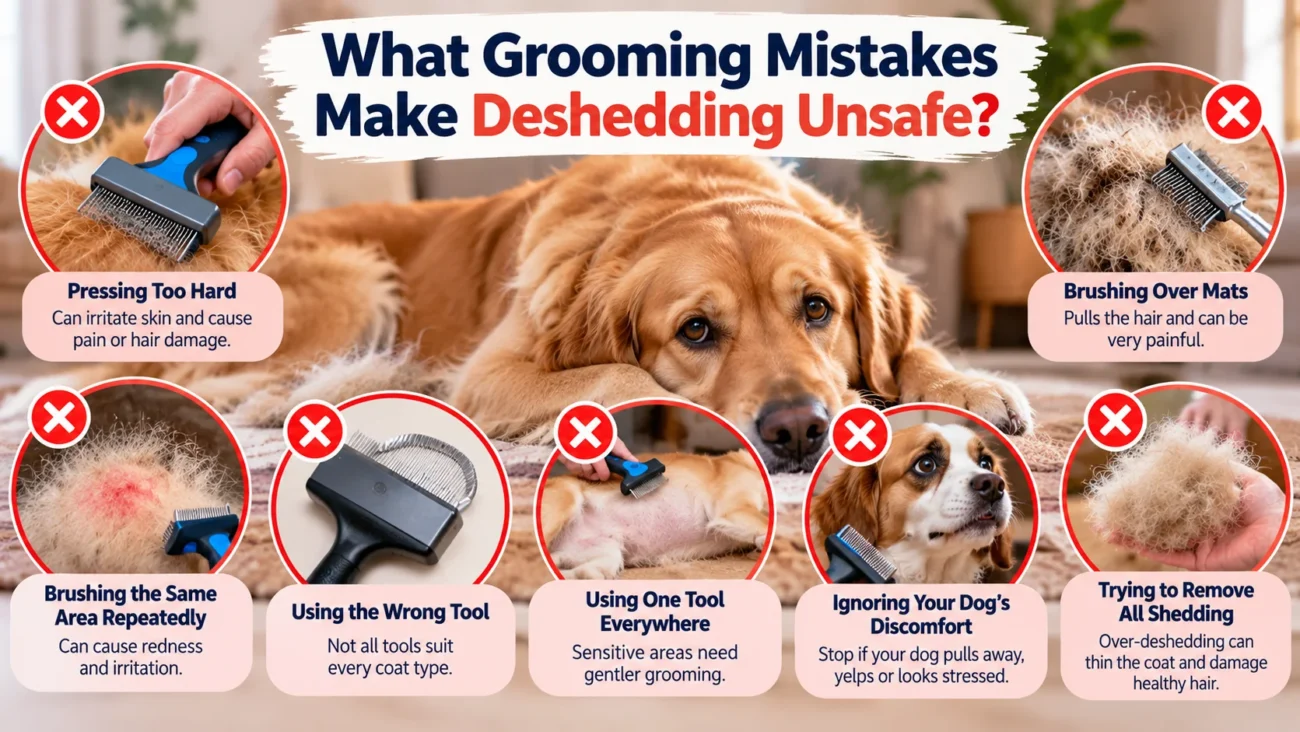
The biggest mistakes involve using too much force, choosing an unsuitable tool, and ignoring early signs of discomfort. These errors can turn routine coat maintenance into an unpleasant experience.
- Pressing too hard: Metal edges should not scrape the skin.
- Brushing over mats: Tight tangles can pull painfully.
- Repeating the same strokes: Excessive friction can irritate one area.
- Using one tool everywhere: The belly, legs, and face need different handling.
- Ignoring coat type: Not every dog has an undercoat suited to deshedding tools.
- Continuing despite resistance: Pulling away or yelping means you should stop.
- Trying to eliminate all shedding: Healthy dogs naturally lose hair.
One useful rule is to stop focusing on how much fur a brush collects. Instead, check whether the tool moves freely and your dog remains comfortable.
If your dog already seems uncomfortable, switch to gentler brushing before trying another intensive session.
What Should You Do If Your Dog Hates Deshedding?
If your dog avoids the deshedding brush, stop forcing the session. Resistance may come from painful pulling, unfamiliar handling, fear, or previous unpleasant experiences.
Start again with a softer tool. Pair short grooming interactions with praise and rewards.
How Can You Make Grooming More Comfortable?
- Choose a calm time: Groom when your dog is relaxed.
- Start with easy areas: Begin along the back rather than sensitive spots.
- Use gentle contact: Introduce the brush without immediately pulling through fur.
- Reward cooperation: Reinforce calm behavior with praise or treats.
- Allow breaks: Stop before your dog becomes overwhelmed.
If avoidance seems linked to pain, get professional advice. A dog that suddenly dislikes brushing may have a new skin or medical problem.
When Should You Stop Deshedding and Contact a Veterinarian?
Stop deshedding when your dog develops pain, bleeding, skin inflammation, or unexplained hair loss. These symptoms shouldn’t be treated as ordinary grooming reactions.
Veterinary assessment can help identify whether an underlying skin condition is contributing to the problem.
Warning Signs That Need Attention
- Persistent skin redness or swelling.
- Open sores, bleeding, or scabs.
- Sudden bald patches or unusual thinning.
- Repeated scratching, licking, or biting.
- Strong skin odor or discharge.
- Pain when touched.
- Hair loss accompanied by changes in appetite, energy, or behavior.
Possible causes include allergies, parasites, infections, and other health problems. Deshedding alone cannot diagnose or treat these conditions.
For more background, see the AKC guide to hair loss in dogs.
What Are the Benefits of Safe Deshedding?
Safe deshedding helps manage loose fur while supporting routine coat maintenance. It can also give owners regular opportunities to spot changes in the skin.
- Less loose fur indoors: Collects shedding hair before it reaches furniture.
- Better coat maintenance: Helps clear loose undercoat from suitable breeds.
- Earlier skin checks: Makes unusual irritation or hair loss easier to notice.
- Reduced loose-hair buildup: Helps prevent trapped undercoat from contributing to tangles.
- Positive handling practice: Gentle sessions can strengthen a dog’s comfort with grooming.
These benefits depend on suitable tools and technique. Deshedding won’t permanently stop shedding or replace medical care.
Learn more about whether deshedding reduces shedding and what results you can realistically expect.
What Are the Safest Deshedding Tools for Dogs?
The safest grooming tool is one that suits your dog’s coat and doesn’t cause discomfort. A specialized undercoat tool isn’t automatically better than a simple brush.
The AKC guide to dog brush types explains how different tools serve different coats.
Which Tool Should You Choose?
- Rubber grooming brush: A gentle option for many short-coated dogs.
- Soft slicker brush: Useful for appropriate coats that need surface brushing and careful detangling.
- Rounded-pin undercoat rake: Helpful for reaching loose fur in thicker coats.
- Undercoat deshedding edge: Suitable for selected shedding coats when used carefully.
- Steel grooming comb: Helps identify tangles and check whether brushing has reached the coat’s deeper layers.
Don’t assume that every dog needs every tool. A comfortable grooming routine may require only a brush and comb.
Recommended Dog Deshedding Tools
If you’re selecting grooming equipment, I would prioritize coat compatibility and comfort over claims about maximum hair removal. These three established products serve different grooming needs.
Product ratings below are editorial suitability scores, not verified customer review averages. Choose the correct size and confirm manufacturer instructions before buying.
🏆 Best for Suitable Shedding Undercoats
FURminator Undercoat deShedding Tool for Dogs
★★★★☆ 4.5/5
This tool features a stainless steel deshedding edge, ergonomic handle, and hair-release button. Its different size and coat-length options make it worth considering for suitable shedding breeds. I would choose it only when a dog has the appropriate coat and tolerates gentle use.
🐕 Best for Thick, Long Coats
Safari by Coastal Dog Double Row Undercoat Rake with Rotating Pins
★★★★☆ 4.4/5
This rake uses two rows of rounded, rotating metal pins designed for thick undercoats. I favor this type of design when a dense coat needs careful loosening rather than repeated scraping with an edge. Never force it through tight mats.
🌿 Best for Gentle Routine Brushing
Safari by Coastal Soft Tip Curry Brush for Dogs
★★★★☆ 4.3/5
This curry-style brush offers a gentler approach to surface grooming and loose-hair removal. I would consider it for dogs that need comfortable regular brushing rather than intensive undercoat removal. It isn’t a replacement for a rake on thick, deeply shedding coats.
Affiliate disclosure: Some product links are affiliate links. We may earn a commission from qualifying purchases at no additional cost to you.
Frequently Asked Questions About Dog Deshedding Safety
1. Is deshedding painful for dogs?
Deshedding shouldn’t be painful when performed gently with an appropriate tool. Removing loose hair normally requires little force. However, brushing through mats, scraping skin, or using excessive pressure can hurt. Stop immediately if your dog yelps, flinches, or tries to escape.
2. Can I deshed my dog every day?
Daily gentle brushing may suit some dogs, but daily use of an intensive undercoat deshedding tool is usually unnecessary. Follow the manufacturer’s instructions and adjust to your dog’s coat and skin condition. Frequent aggressive brushing can cause irritation or hair breakage.
3. Can deshedding cause bald spots?
Improper deshedding may break or remove healthy hair, making areas appear thinner. However, genuine bald spots can also result from allergies, parasites, infections, or other medical conditions. Stop brushing affected areas and consult a veterinarian about unexplained hair loss.
4. Is deshedding safe for double-coated dogs?
Yes, appropriate deshedding can be helpful for many double-coated dogs. It removes loose undercoat while preserving protective guard hairs. Choose a tool that suits the coat’s length and density, avoid excessive pressure, and never treat shaving as a routine substitute for deshedding.
5. Is a deshedding brush safer than shaving a dog?
For many healthy double-coated dogs, gentle brushing and undercoat removal are preferable to routine shaving. Shaving removes protective coat layers and may interfere with coat regrowth. Some medical procedures or severe matting cases require clipping, so follow veterinary or professional grooming advice.
Final Takeaway: Is Deshedding Safe for Dogs?
Yes, deshedding is generally safe when the tool, technique, and schedule match your dog’s needs. It can help manage loose fur without damaging healthy coat layers.
The key is knowing when to stop. Never sacrifice your dog’s skin health or comfort just to collect more hair.
Start with a gentle brush, inspect the skin, and work in small sections. Add specialized undercoat removal only when appropriate for the coat.
For a manageable long-term plan, follow this dog deshedding routine and adjust it to your dog’s comfort, coat condition, and shedding pattern.
Remember: The goal isn’t a completely shed-free dog. It’s a comfortable dog with healthy skin and a well-maintained coat.


